

China Coastal Methanol Market to Keep Firm Despite Weak Fundamentals
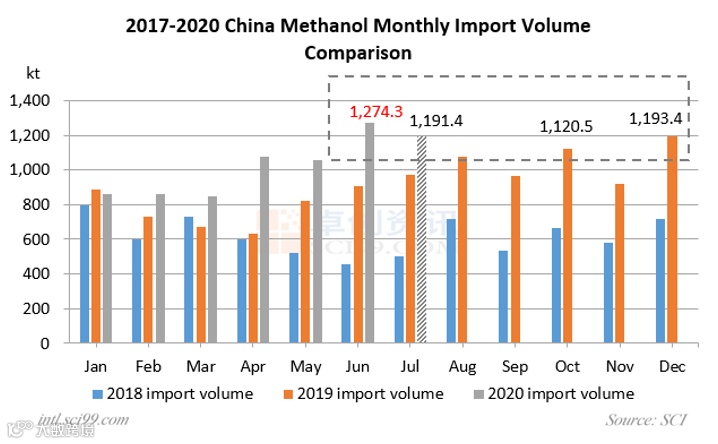
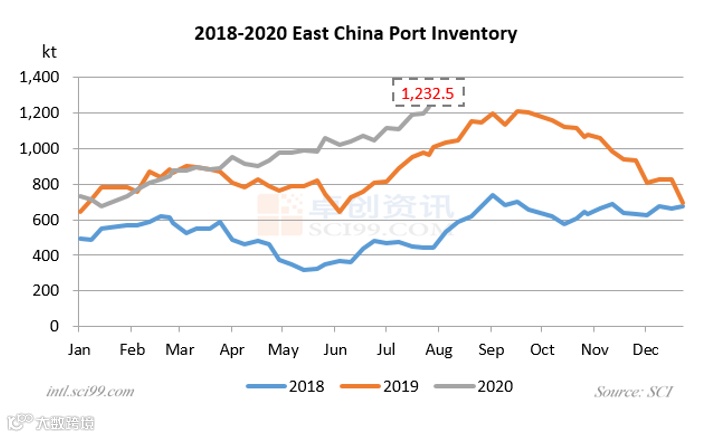
In Q3, 2020, China’s methanol market still faces tough macro-environment. For example, the global public health event is still potentially influencing China’s economic growth, and China has tightened its real estate regulation policies, etc. In such a climate, the methanol demand from traditional downstream industries remains sluggish. On the other hand, China’s monthly import volume of methanol hit a historic high again in Q2, 2020. Meanwhile, the inventory in East China kept rising. However, against the background of weak fundamentals, the methanol prices in East China didn’t drop heavily. How the coastal methanol market prices will go on in the near term? SCI will make a brief analysis here.
Import volume kept rising, and port inventory rose to a new high.
SCI has mentioned before that from April to end-July, many foreign units were shut down for maintenance in Europe, South America, Southeast Asia, the Middle East, etc. The methanol inventory in most Asian areas (except China and Iran) was low or even zero. With many methanol units restarted gradually from early August, the inventory at methanol plants began to accumulate again in some Asian areas, especially Southeast Asia and non-Iran areas in the Middle East. However, the situation was different in China. Since Q2, foreign methanol producers have actively transferred the inventory to China’s direct customers, agencies and downstream plants by cutting prices. Thus, China’s methanol import volume kept increasing in Q2, and the import volume reached 1,274.3kt in June, up 40.45% Y-O-Y. The monthly average import volume rose to 1,173.8kt in Q2, up 37.07% Y-O-Y. Meantime, the port inventory also kept climbing to a historic high level. Up to July 31, the inventory in East China rose to 1,232.5kt, breaking through the record high of 1,206.6kt on September 21, 2019.
Downstream plants purchased actively, and methanol inventory was transferred.
Recently, the methanol inventory in East China was mainly transferred to downstream plants and futures market. From mid-July, the methanol inventory at important downstream plants kept slipping, so they stocked up or purchased on rigid demand, especially the cargoes from the minor storage areas. With the inventory at the minor storage areas getting abundant, the downstream plants chose to stock up at the minor storage areas, given the price and geographical advantages.