

In the first half of 2020, for the propylene market, there have been many situations that have never appeared before, and the market had a lot of points to watch. There were many influencing factors, including public health events and unexpected conditions. However, the overall development trend and laws of the industry continued the previous situation, indicating that these unexpected conditions cannot change the development direction of the general trend.
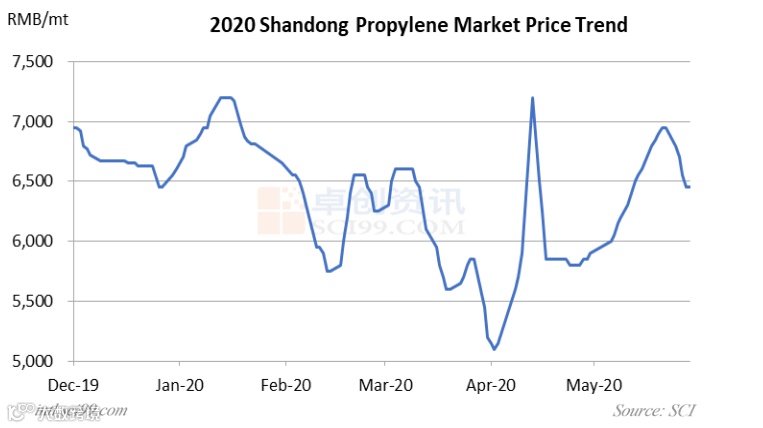
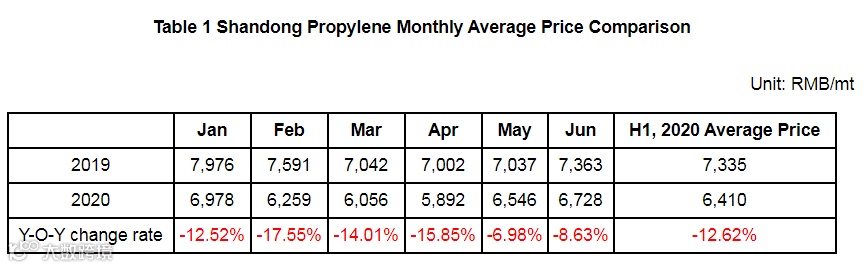
Although the extreme market appeared, but the overall market trend was basically in line with previous expectations. From the perspective of monthly average price, the monthly average price in the first half of 2020 fell by different degrees compared with 2019, while the decrease in the average price reached 12.62%. This indicated that the propylene market in the first half of 2020 has continued the weak trend since 2019.
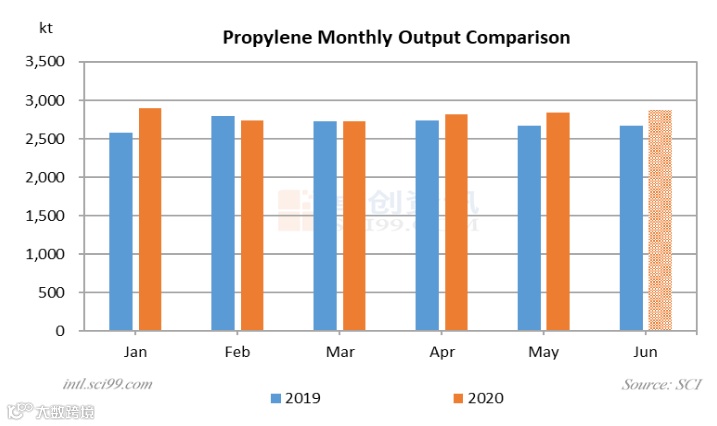
In the first half of 2020, the overall propylene supply volume grew Y-O-Y. From January to May 2020, the total output of propylene was 14,020kt, up 3.80% Y-O-Y. It is predicted that the total output in the first half of 2020 will be 16,900kt, up 4.45% Y-O-Y.
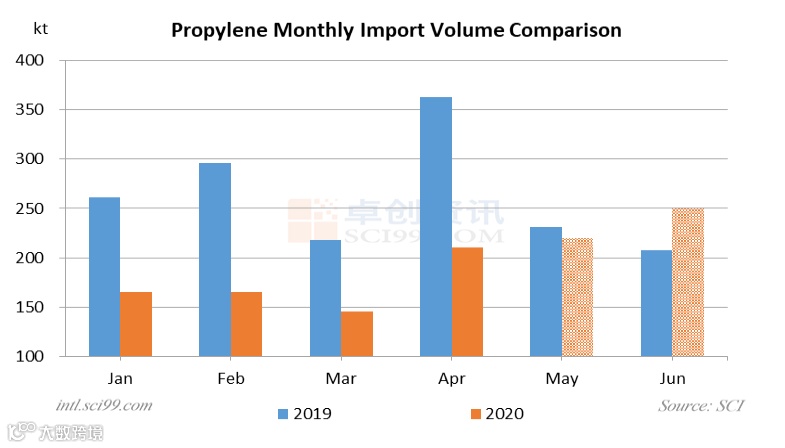
The import volume of propylene shrank significantly. From January to April, China’s total import volume of propylene was 687.6kt, down 39.59% Y-O-Y. SCI predicts that the import volume of propylene will total 1,157.6kt, down 26.59% Y-O-Y.
From the specific month, the monthly import volume from January to April was all much lower than that in the same period of 2019. There were many reasons for this situation, such as increasing foreign propylene units, public health events, increasing domestic supply and falling output of some downstream products. However, the decrease in import volume was in line with expectations, but it was somewhat larger than expected.
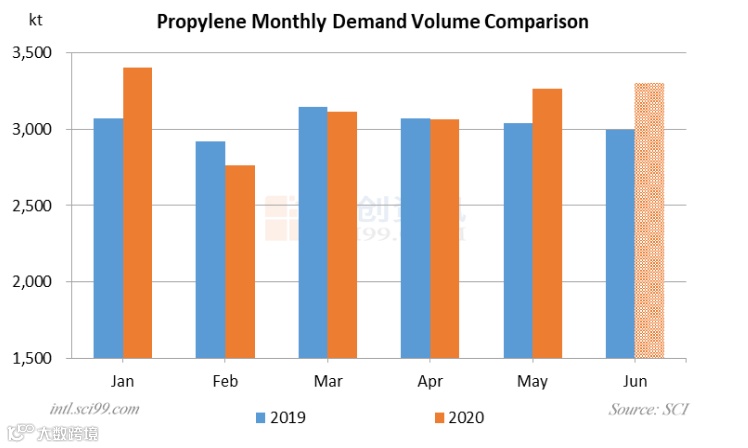
Since 2020, not only propylene output has expanded, but also downstream demand has increased to a certain extent. From January to May 2020, the actual domestic demand for propylene was 15,610kt, up 2.39% Y-O-Y. SCI predicts that the actual domestic demand for propylene in the first half of 2020 will be 18,910kt, up 3.67% Y-O-Y, which will be slightly less than the propylene output.
From the downstream demand, PP is still the most important downstream product of propylene, and is also the main force of demand growth. From January to May 2020, the demand for propylene from the PP granule rose by 11.29% Y-O-Y, while the demand from other downstream products, such as PP powder, PO and oxo-alcohols dropped Y-O-Y in different degrees. The main reason for this situation was that the operating rates of many downstream units remained low affected by special events, resulting in insufficient output, which directly affected the demand for propylene.
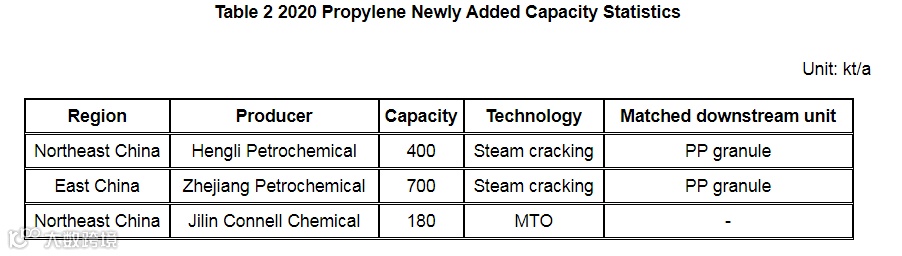
Since 2020, the newly added capacity of propylene totaled 1,280kt/a. Producers included Hengli Petrochemical, Zhejiang Petrochemical and Jilin Connell Chemical, and regions included East China and Northeast. The technology included steam cracking and MTO, and most newly added propylene units were matched with downstream units.
From the technology, the capacity of traditional technologies expanded again, and the refining-chemical integration project also increased, which became the main force for propylene capacity expansion. However, there was no PDH unit put into operation.
From regions, except for East China with relatively much capacity expansion, the newly added capacity in Northeast China grew, and the first MTO unit in Northeast was put into operation. This showed that the propylene capacity layout was wide.
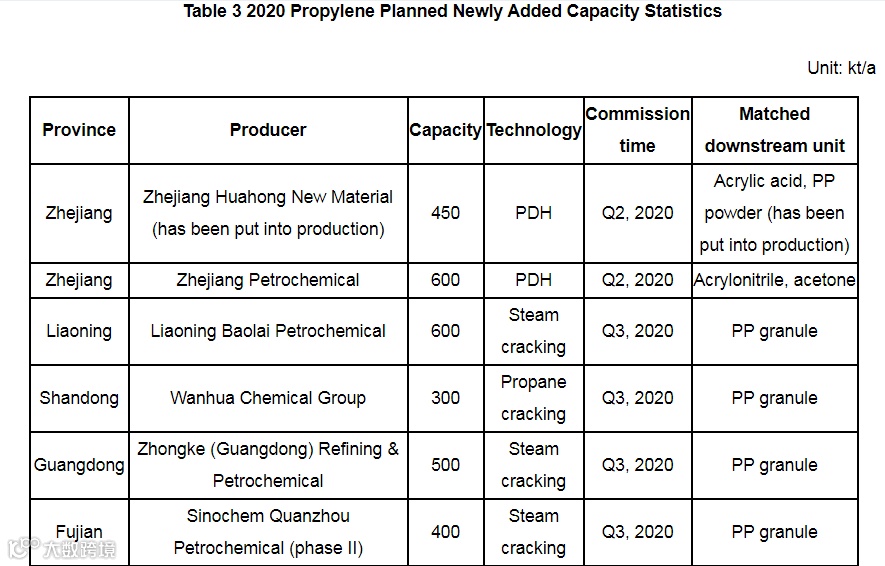
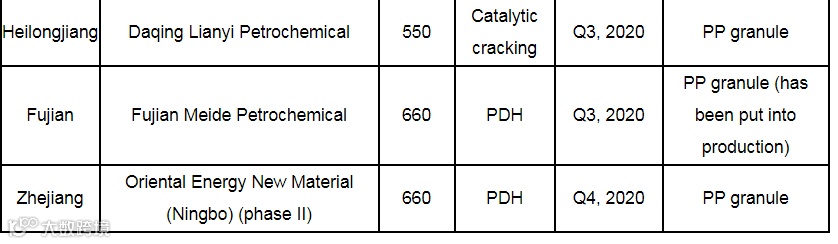
In the second half of 2020, it is estimated that the increase in supply and demand of propylene will speed up. From regions, the newly added capacity will be concentrated in East China, Northeast China and Shandong Province. From Technology, PDH and steam crocking will be mainstream technologies. From matched downstream unit, the integration trend will be obvious, and PP granule will still be the most important downstream product.
In the second half of 2020, there will still be many factors affecting the propylene market, including the feedstock cost, planned newly added capacity, unit status, public health events, etc.
From the historical point of view, Q3 often belongs to the relative peak season of the propylene market, and the highest level of propylene prices often appear from September to October. In Q4, especially from November to December, it is an event with high possibility that mainstream prices of propylene drop. However, there will be much planned newly added capacity of propylene in the second half of 2020, so this impact will lift. Moreover, the influence of public health events still exists, so there will be some uncertainties.