

Changes in PE Exports to China from Major Overseas Markets
Preface: In the past five years, China’s PE import dependence degree has maintained positive growth. According to SCI, the import dependence degree will be 48.2% in 2020. In the context of high import dependence degree, the supply from overseas markets is particularly important to the supply changes in China’s PE market, directly or indirectly affecting the PE market price.
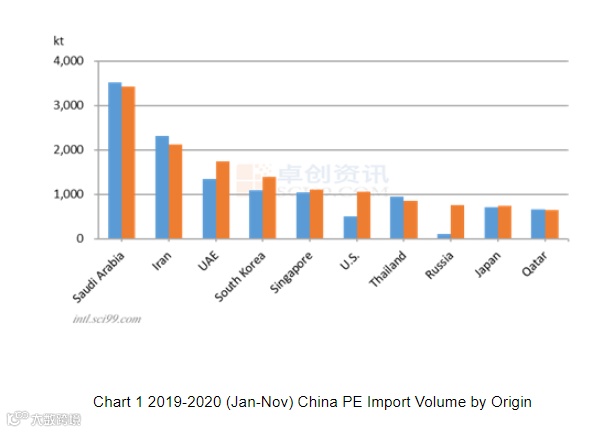
Source: GACC
As shown in the above chart, the UAE, South Korea, the U.S. and Russia have significantly increased their supply to China, while the supply of Middle Eastern countries such as Saudi Arabia and Iran has declined slightly.
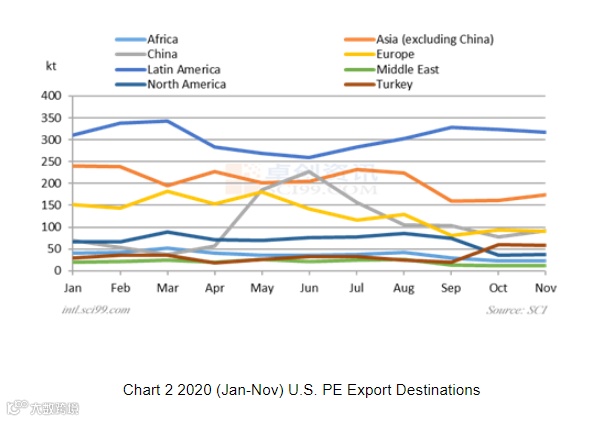
Affected by the pandemic in 2020, the PE industry operating rate in the U.S. dropped to 60% from March to May. At the same time, due to poor domestic demand, local PE inventory was increasing. As a result, U.S. export orders increased sharply from March to April. U.S. producers turned their targets to China, which had excellent performance in pandemic prevention and control and rapidly increasing demand, and they offered ultra-low prices. Offers for some HDPE grades once dropped to $680/mt. Buyers in China’s market made procurements in large amounts. According to the official import data from China’s customs and the official export statistics from the U.S., it’s obvious that the U.S. supplies have flowed to China significantly after April. Due to the delay in the offer time and arrival time, the offers from March to May were most of the U.S. pre-sale May-Jul shipment resources, which was reflected in the arrivals in China’s market from June to August. Starting from mid-to-late April, Dow took the lead in announcing the maintenance of several units. Basel and other producers also announced to lower the operating rate to 70%. Meanwhile, local demand in the U.S. increased in May, and offers from the U.S. fell sharply. Starting in July, exports from the U.S. to China entered a callback period.