

PBR Market Price Hit Two-Year High Bolstered by Cost
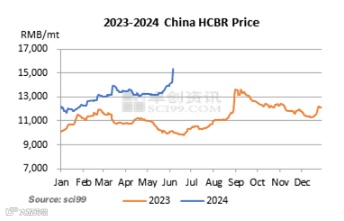
Snapshot: Since late May, the PBR price has been rising steadily. These days, the price of synthetic rubber futures has constantly refreshed the record high. The highest point reached RMB 15,915/mt. up over 9% from the last trading day. Players are focusing on the changes in the spot PBR price and the PBR fundamentals.
The PBR price rose notably.
Since late May, the PBR price has been rising at a slow pace. The increment enlarged on June 6 and June 7, and the PBR price hit a two-year high. On June 7, the market price of HCBR 9000 in North China closed at around RMB 15,200-15,500/mt, up RMB 2,100/mt or 15.85% from May 20. Cost was the main driving force for the increase and fundamentals had limited impact on it.
The operating rate of the PBR industry trended down.
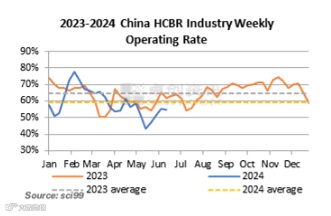
Since mid-February, the overall operating rate of the PBR industry fluctuated downwards. Only a few PBR units took maintenance as scheduled, while most of them were shut down to balance the feedstock supply and cost pressure. At present, the PBR units at Zhenhua New Materials, Shandong Wintter Chemical, PetroChina Dushanzi Petrochemical, Xinjiang Lande Fine Petrochemical, Shandong Yihua Rubber & Plastic Technology, and Nanjing Yangzi Petrochemical and Rubber remained offline. The unit at Zibo Qixiang Tenda Chemical resumed normal production. Sinopec Qilu Company ran one production line. Overall, the operating rate of the PBR industry fell to around 55%.
The operating rate of the downstream tire industry hovered at highs.
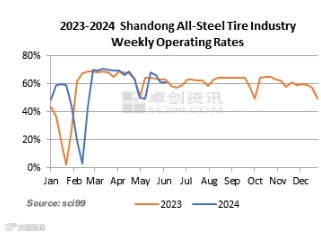
The operating rate of the tire industry mainly trended at highs. According to SCI, despite that during holidays, China’s operating rate of the all-steel tire industry trended at highs, and the fluctuation range was narrow. Yet, with the Dragon Boat Festival holiday approaching, some tire enterprises shut their units for maintenance, so the overall operating rate was expected to drop somewhat. Besides, sales at tire enterprises were relatively slow, putting pressure on the inventory, thereby curbing the overall operating rate.
The cost is likely to rise in the short term, expanding profit losses of the PBR industry.
Since late May, China’s butadiene market price has been rising continuously. Sinopec’s EXW price in East China rose from RMB 11,200/mt to RMB 12,500/mt, with an increase of 11.61%. During this period, the import price rose somewhat, and there were scant resources available in the market, bolstering China’s butadiene market atmosphere. Besides, although sales at most butadiene producers for outside sales were normal, the spot supply in East China was still tight. The butadiene unit in Fujian remained offline, and the restart of the butadiene unit at Zhejiang Satellite Petrochemical was postponed. Some butadiene resources in Jiangsu flowed into the East China market. Sales pressure at most butadiene producers was passable, and there was still some rigid demand in the market. Thus, the bidding price at producers rose constantly, and the negotiated price continued to rise. The downstream markets were mediocre. At present, the butadiene price is at an annual high, putting high cost pressure on most downstream producers. Players mainly purchased butadiene on rigid demand, and some were still cautious about the high butadiene price.
In the short term, China’s butadiene market price is likely to fluctuate at highs. With some PBR units being restarted, there may be fewer spot resources available for outside sales at northern butadiene producers compared with this week, and there is expected to be a tight supply of butadiene resources in Jiangsu. Thus, China’s butadiene supply will possibly continue to bolster the butadiene price. With some cargo arriving at ports, the tight supply is likely to ease somewhat despite limited spot resources available. In terms of demand, most downstream enterprises purchase butadiene on rigid demand and are cautious about the high prices at present. Yet, in the context of expected stable operating rates in the short term, the demand is expected to weigh on the butadiene price limitedly. The expected rise in the butadiene price may drive up the PBR price.
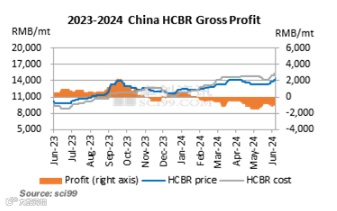
The cost pressure of PBR production increased in line with the rise in the feedstock price. At present, the profit losses reached around RMB 1,000/mt. The long-term pressure of profit losses bolsters players’ bullish sentiments for the PBR price, resulting in a recovery in the PBR price.
Backed by high costs, the PBR price is more likely to rise than fall in the short term.
In mid-June, the operating rate of the PBR industry is expected to ramp up with the PBR units at PetroChina Jinzhou Petrochemical, Heze Kexin Chemical, and Shandong Yihua Rubber & Plastic Technology being restarted. In terms of demand, affected by the Dragon Boat Festival holiday and the pileup in the inventory of finished products, the operating rate of the tire industry is likely to slide. Overall, the fundamentals may affect the PBR market limitedly. As for the cost side, the tight supply of butadiene resources is expected to be the main factor driving up the butadiene price. Yet, buyers show thin acceptance to current butadiene prices, so dealings at high prices may be hardly conducted, putting pressure on the cost transfer. Therefore, the PBR price is predicted to mainly move up, but the increment may be limited.
All information provided by SCI is for reference only, which shall not be reproduced without permission.
Please click "Read more" for the full article.