

Q3 Styrene Prices May Fluctuate Upward
In Q2 2025, the styrene price went range-bound. From April to May, styrene prices mirrored feedstock trends, declining first before rebounding amid tariff disputes. Firm supply-demand fundamentals provided support and drove the recovery. In June, price movements were primarily feedstock-driven, rising first before retreating. However, a weaker supply-demand balance capped gains during the uptrend, while paper market dynamics limited downside during the correction. The quarterly average price in Jiangsu was RMB 7,665.9/mt, down 8.86% QoQ and 19.95% YoY, marking a five-year low. The peak of RMB 8,205/mt was reached on June 20, with the trough of RMB 7,130/mt recorded on May 6.
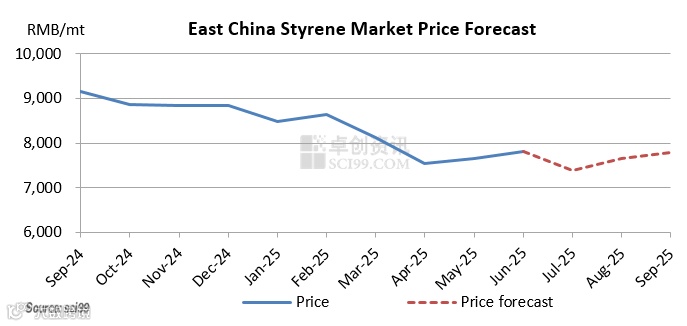
The market will hinge on the interplay between cost and supply-demand dynamics in Q3. Benzene prices may stage a low-level rebound, offering upward support. Meanwhile, styrene fundamentals are expected to soften first before tightening later in Q3. Prices will likely bottom out in July, followed by a gradual uptrend from August to September. However, ongoing tariff negotiations remain a key uncertainty.
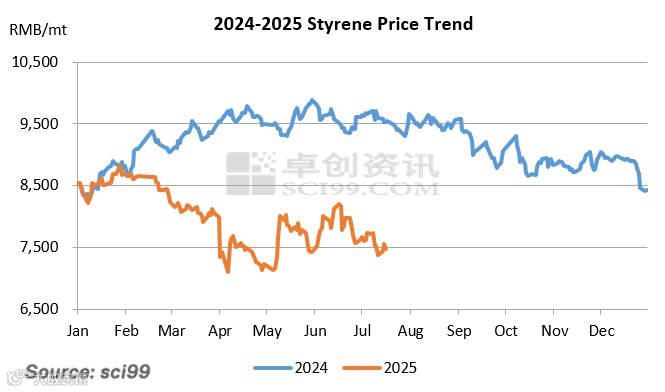
The cost dragged the styrene prices in Q2.
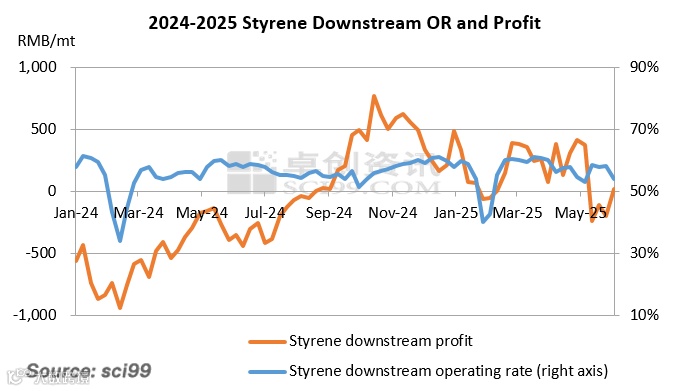
In Q2, falling feedstock prices negatively impacted styrene prices, with crude oil prices dropping 21.54% QoQ, benzene prices down 32.65%, and ethylene prices decreasing 6.43%. However, strong styrene market fundamentals limited the price decline to just 8.86% QoQ and supported profit recovery across the industry. Affected by the U.S. tariff policies, the quarter began saw synchronized declines in crude oil and benzene prices during April and May. After mid-May, crude oil staged a moderate rebound as tariff negotiations resumed, while benzene prices remained range-bound at low levels due to significant supply-demand imbalances. June witnessed extreme volatility in crude oil prices driven by recurring Middle East geopolitical tensions, with prices first surging sharply before retreating rapidly. The monthly average crude oil price rose 9.4% MoM. Although benzene prices followed crude oil movements, its weaker fundamentals restrained its gains compared to crude oil. The narrower decrement in styrene prices relative to its key feedstocks led to improved profits. Non-integrated units saw profits increase 69.93% QoQ, while PO/SM units recorded a remarkable 334.25% growth. In contrast, integrated units experienced a 22.6% profit decline. Despite numerous plant maintenance shutdowns during April and May, the profit recovery mainly translated into higher operating rates in June.
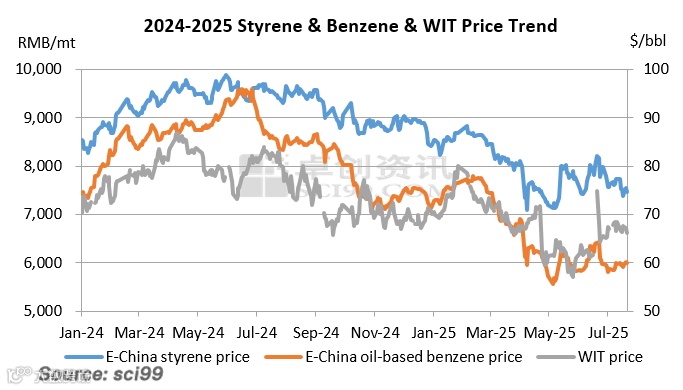
The supply gave some support for the styrene market in Q2.
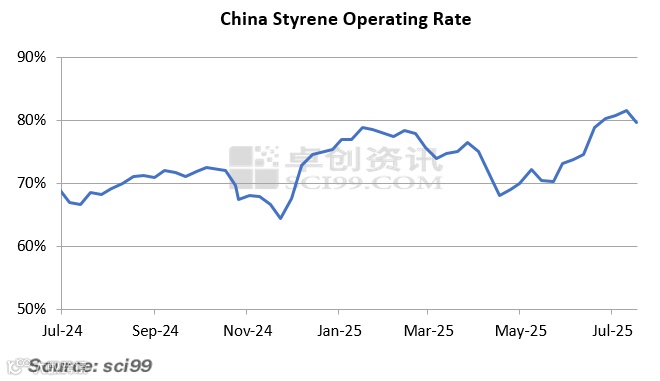
In Q2, China’s styrene supply decreased 5% QoQ. The reduced supply during April and May provided price support, while the gradual supply recovery in June had a limited bearish impact due to tight port inventory liquidity. Concentrated plant maintenance pushed the operating rate down to 68% by mid-April, the lowest H1 level, creating strong market support. From late May, restarts of idled units (some dormant over six months) and improved margins drove production recovery. By June 26, weekly operating rates hit 80.29%, a two-year peak. Although East China ports began stockpiling in June, concentrated ownership and poor liquidity of port inventory, coupled with the late-June restarts or higher operating rates, the bearish pressure from supply growth was limited.
The styrene cost supported the styrene market limitedly in Q2.
China’s Q2 styrene demand increased 7% QoQ and 4.89% YoY, primarily driven by expanded downstream production capacity. The demand growth mainly came from a 6% QoQ rise in actual downstream consumption and an estimated 83% QoQ surge in exports. In April, downstream consumption declined more than expected. First, tariff issues are weakening end-user demand, with high finished product inventory limiting operating rates. The second was because the production halts during the Qingming holiday. May saw consumption rebound as tariff tensions eased and rising prices stimulated orders, temporarily boosting operating rates. However, June witnessed another demand contraction as downstream plants reduced operations amid profit losses and weakening end-user demand, compounded by fewer working days. This quarterly demand pattern (decline-rise-decline) created alternating bearish and supportive impacts on styrene markets.
Rising benzene prices may boost the styrene market in Q3.
In Q3, feedstock costs may remain key drivers of styrene prices. Near-term factors like suspended U.S. trade disputes and seasonal demand may support crude oil prices, but OPEC+ output hikes and slowing global demand could pressure prices later. Brent crude may trade at $64-68/bbl. For benzene, July may face pressure from rising supply and port inventory, but prices may rebound from August as lower levels boost downstream margins, with potential seasonal demand growth in September if end-user orders recover.
The styrene fundamentals may first weaken and then strengthen.
The styrene market is expected to see strengthening fundamentals through Q3. July may face weak supply-demand dynamics as the units at ZPC, Hengli Petrochemical and Shenghong Petrochemical Group may be restarted, boosting supply amid seasonal demand weakness and downstream losses. Conditions should improve in August with demand recovery - new PS unit startups and pre-peak season restocking will likely outpace supply growth from Tangshan Risun Aromatic Hydrocarbon’s restart and JCIC North Jinjiang Petrochemical’s new output. September should see further tightening as maintenance at PetroChina Fushun Petrochemical’s 60kt/a unit and Ningbo ZRCC Lyondell Chemical Phase II’s 660kt/a unit may offset new capacity additions from Shandong Chambroad Sidarui New Material Technology and Guoen Chemical Dongming, coinciding with peak seasonal demand.
In Q3, styrene market fundamentals are expected to follow a “weak-to-strong” pattern while the cost side may also transition from bearish to bullish. July prices may face downward pressure from weak cost support and soft supply-demand dynamics. Subsequently, both fundamentals and cost factors are projected to strengthen, supporting a price recovery. Monthly averages are forecast at RMB 7,600/mt in July, RMB 7,850/mt in August and RMB 8,150/mt in September, with the quarterly high likely reaching RMB 8,300/mt in September and potential interim lows around RMB 7,400/mt in July. The July and August tariff negotiations represent a critical market driver. The cancellation of the suspended 24% duty could boost end-demand and styrene prices, while the tariff may constrain demand recovery and limit price upside if it is sustained.

All information provided by SCI is for reference only, which shall not be reproduced without permission.
Please click "Read more" for the full article.