

1. China Total PP Inventory Decreased
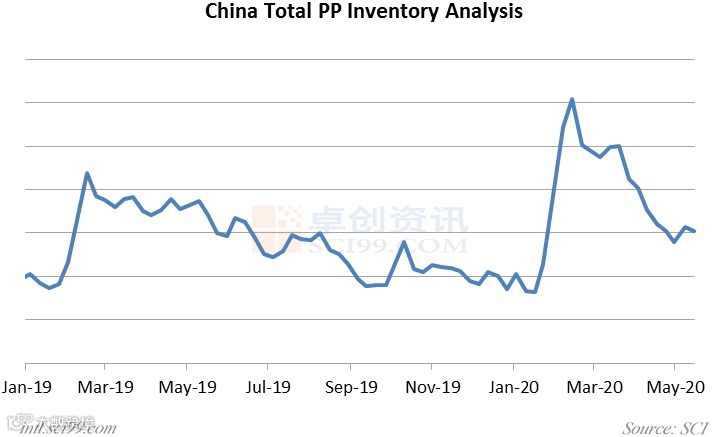
According to SCI, China’s PP inventory on May 15, 2020 decreased by 2.32% from May 8, 2020. Therein, the PP inventory at major PP producers and ports slipped, while that at trading companies declined.
2. China PP Inventory at Petrochemical Companies Decreased
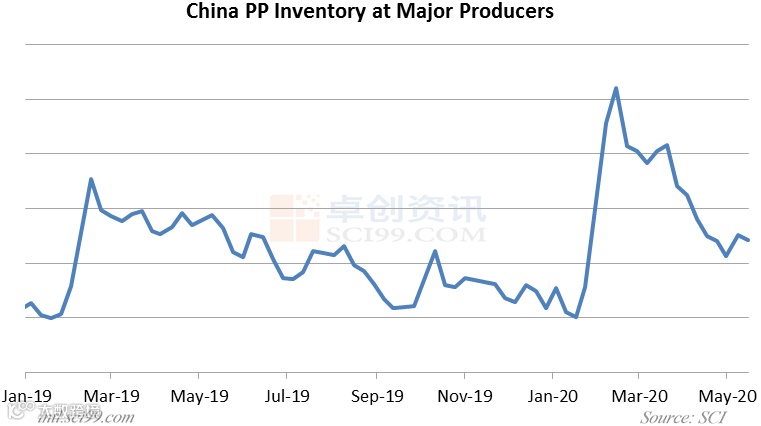
According to statistics, the PP inventory at major PP producers on May 15, 2020 decreased by 2.75% W-O-W. The loss volume of output caused by the maintenance was about 66.8kt, up 30.88% W-O-W. Thus, the supply of PP declined. Buyers maintained basic purchases, and inventories at PP producers were reduced slowly.
3. China PP Inventory at Ports Decreased
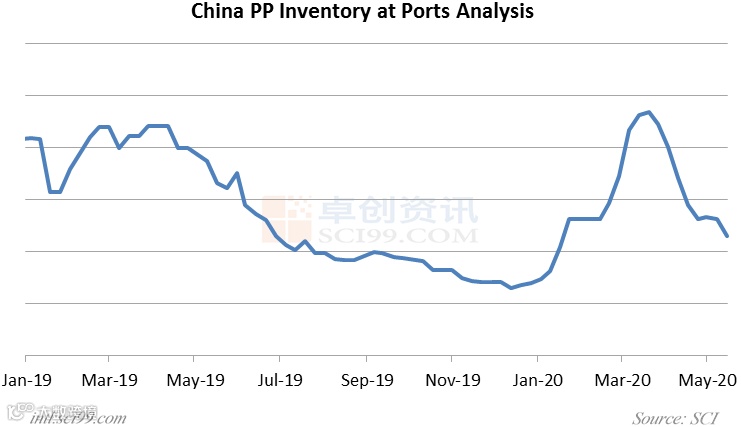
The PP inventory at ports on May 15, 2020 decreased by 12.21% W-O-W. In the week ended May 15, 2020, the import volume of PP in primary forms edged down from last week. In H2 May, some pre-sale resources will arrive at ports intensively, represented by Southeast Asian resources. The delivery on PP futures contract promoted the trading volume in spot PP market to rise greatly. Most of the mainstream inventories declined, leading to an increase in overall inventory at ports.
4. China PP Inventory at Trading Companies Increased
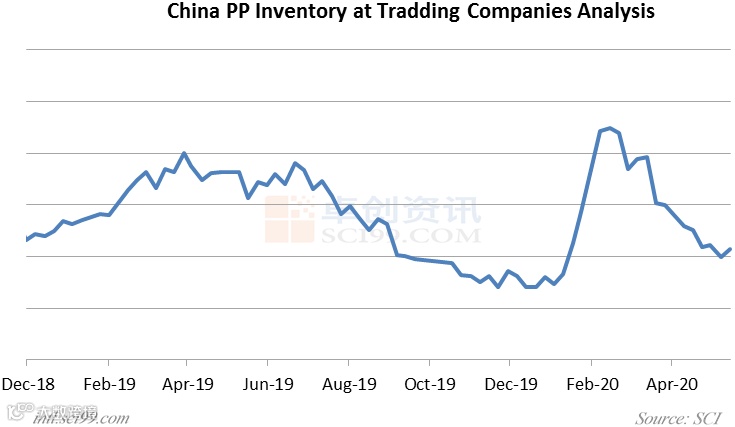
The PP inventory at trading companies on May 15, 2020 increased by 3.33% W-O-W. Traders suffered slack sales, so PP inventories at sample trading companies inched up.
5. Summary
The PP futures went public on February 28, 2014, since then, the financial property of the spot products became stronger. The quantifiable data about supply-demand fundamentals played a more important role in judging PP market trend. The data of production and import were transparent and hysteretic, hence, the data were hard to become the main factor to forecast the market trend. Concerning raw materials inventory, it was difficult to collect its data, let alone collect it timely. Thus, the inventory data became an irreplaceable and prominent factor to analyze the future market situation.
In terms of supply, more and more units undergo maintenance, while PP producers cut inventories more slowly. With the production scheduling ratio of PP fiber declining, the supply of PP raffia rebounds gradually, failing to support PP raffia prices a lot. Besides, some low-priced imported resources will arrive at ports successively, which will exert larger and larger pressure on domestic sellers and weigh down PP market prices. In terms of demand, downstream enterprise will purchase PP on a need-to basis. SCI predicts that PP producers will keep cutting inventories slowly in the short run.