



Follow-Up: Advancing LNG in China
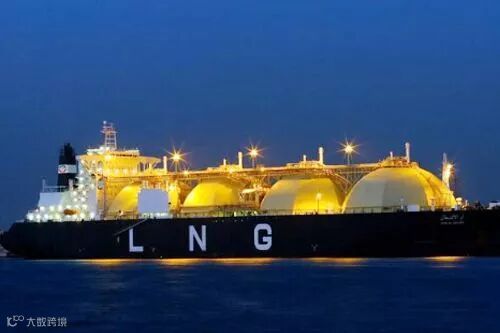
According to SCI, China’s LNG imported totaled at 38.26 million tons in 2017, and the receiving terminals’ LNG sales reached 9.39 million tons. Comparing with the domestically produced LNG volume which totaled at 10.12 million tons in 2017, the imported LNG has rubbed its shoulder against the domestic production. The ratio of the two rapidly has risen from 1:3 in 2014 to 1:1.07 in 2017, and the adequate profit will eventually propel the imported resources to be the majority of the domestic market in the near future.
China’s LNG import expanded as expected due to the commissioning of the two new terminals, Guanghui Qidong Terminal and CNOOC Yuedong Terminal, and the utilization rate also rose from around 50% in 2016 to 74% in 2017. Therefore, in several months, especially in winter, the LNG supply from terminals had exceeded the domestically produced supply, and the ratio once topped at over 70%. Meanwhile, CNOOC also rents over 100 tank trucks to deliver LNG directly from South China to North China to help to deal with the supply deficit.
There will be more terminals to be put into operation in 2018, including Sinopec Tianjin Terminal, ENN Zhoushan Terminal, Sinoenergy Jiangyin Terminal, Shenzhen Gas Terminal and CNOOC Diefu Terminal, with totaled capacity at 12.7 Mtpa. However, new terminals will not run at full loads at the commissioning stage, and the existing terminals already run at high loads. Therefore, it is estimated that the LNG import in 2018 will further expand but with a slower pace, and the growth rate will drop from 46% in 2017 to 15%-20% in 2018.
However, the terminals still enjoy the great profits. Due to the coal-to-gas reform and the P2P LNG supply, China’s LNG demand exploded in 2017 and even caused a serious supply deficit in North China in the winter heating season. Accordingly, the LNG price buoyed far higher than previous several years. In the meantime, the pipeline import gas and the domestic non-residential gas price were high, and the domestically produced LNG price was without any price advantage, compared with the imported LNG.
According to NDRC’s Clean Winter Heating Scheme for 2018-2021 which was issued in December 2017, the coal-to-gas reform will undergo further. In the next four years, there will be over 150,000 T/h of coal-fired boilers capacity to be eliminated and upgraded to gas-fired boilers in the industrial fields, and the potential demand for residential gas will also be tremendous. Considering the slow growth of the domestic gas field output, and the also slow construction of the gaseous natural gas import pipelines (Russia-China East Line in 2019), the domestic natural gas supply will more depend on the LNG import via marine and terminals.
On the other hand, the high feedstock cost and in-to-plant price have rendered over a half of LNG reliquefaction plants into downtime. LNG plants gain enough feedstock during the off-peak season, but the price is low. When in peak season, the price skyrockets, but LNG plants suffer the feedstock requisition and remain in low loads. Therefore, many LNG plants choose long-term shutdowns, and some with large storage capacity tried to transform to LNG transmission stations.

For more information please contact us at
overseas.sales@sci99.com
+86-533-6296499