



Third Historical Record in a Row: China Imported 5.28 Mt LNG in January 2018
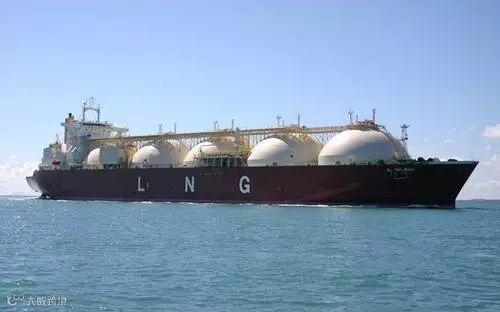
According to sources, in January 2018, there were 29.38 million tons of LNG discharged at LNG terminals across the globe, the highest level in the history. Japan, China, South Korea were still the top three by 67% of the total world LNG delivery in January. Japan ranked first by 8.64 million tons via 141 vessels, and China ranked second by 5.28 million tons via 71 vessels. South Korea ranked third by 3.99 million tons via 58 vessels. India ranked fourth by 1.91 million tons via 27 vessels.
China’s LNG import volume by month had made the third historical record in a row, right after 4 million tons in November 2017 and 5 million tons in December 2017. China imported over 38.13 million tons LNG in 2017, 46% higher than that in 2016 at 26.15 million tons. Meanwhile, the LNG import took up over 56% of the total natural gas import volume in 2017 and exceeded the gaseous natural gas import to become the major import method for the first time since 2012. In this winter, China’s LNG import was so remarkable that the growth shocked the world frequently.
CNOOC, China’s largest LNG importer and also one of the three state-owned oil and gas giants in China, usually occupied over a half of China LNG imports. In this winter heating season from November 2017 to January 25, 2018, CNOOC received and unloaded over 104 vessels with the total volume at 6.56 million tons, and it was estimated that in the whole winter heating season, CNOOC planned to import over 11 million tons of LNG from November 2017 to March 2018, which was over 60% higher than that in 2016 winter at 6.7 million tons.
CNPC and Sinopec, another two state-owned oil and gas giants in China, also set their terminals at high utilization level to import as much LNG as possible in this winter. Especially, Sinopec Qingdao Terminal (Dongjiakou Port) reached a 150% annual average utilization rate in 2017. CNPC’s Caofeidian Terminal and Rudong Terminal also exerted great efforts to the residential gas supply prevention in this winter heating season. Rudong Terminal even managed to unload three LNG vessels in four days and 10 vessels in 20 days.
At the current stage, LNG receiving terminals in China actually play the role of strategic reserves for winter peak-shaving. China’s underground natural gas reserve clusters have reached 10 bcm peak-shaving capacity but only account for less than 4% of the total natural gas consumption of China. Comparing with the international advanced countries which usually exceeded 10% in that proportion, China’s natural gas reserves capacity has become the bottleneck of the gas industry.
In the meantime, China’s LNG terminals reached 17 in 2017, including 15 receiving terminals and two transship terminals. The LNG receiving capacity totaled at 51.65 Mtpa, and the terminal storage capacity totaled at 3.33 million tons. Moreover, five new terminals may be put into operation in 2018, and the total receiving capacity in 2018 is estimated to be around 65 Mtpa. There are many large-scaled enterprises put their interest in the LNG import and distribution, such as ENN, Huadian, Poly-GCL, Hanas and Guangzhou Gas, and it is estimated that the receiving capacity may break through 100 Mtpa by 2020 and 150 Mtpa by 2025.
“With all the emerging LNG receiving capacity, underground reserves capacity and the emergency backhauling or resources swap from South China to North China, China’s winter heating peak-shaving capacity may support the total consumption volume at 350 bcm per annum, and the volume in 2017 is estimated at 247 bcm only.” cited by Michael Mao, SCI Energy Analyst.

For more information please contact us at
overseas.sales@sci99.com
+86-533-6296499