

China-Iran Methanol Trade Changes Under the Influence from U.S. Sanctions Against Iran
Background: Over the past year, the U.S. has been gradually reinstating sanctions against Iran suspended under the agreement. The U.S. has stopped sanctions immunity for some countries and regions in importing Iranian oil since May 2. On May 3, the U.S. announced that it was going to strengthen the restrictions on Iran's nuclear activities. On May 17, the U.S. released a list of Iranian sanctions that included the name of one Iranian 1,650kt/a methanol plant under secondary sanction. (Secondary sanction means that the U.S. will restrict financial and trade dealings between the companies or individuals in third countries and the sanction target, and it will impose penalties for violations.) On June 7 and June 8, the U.S. Treasury Department announced sanctions against Iran's largest petrochemical company, Persian Gulf Petrochemical Industries, and its 39 subsidiaries and overseas sales networks. The target's assets in the U.S. will be frozen and U.S. citizens will not be allowed to trade with them, according to the statement. In addition, an important Iranian trade company was also added to the U.S. sanctions list. All these measures showed that the U.S. has heavily tightened sanctions against Iran.
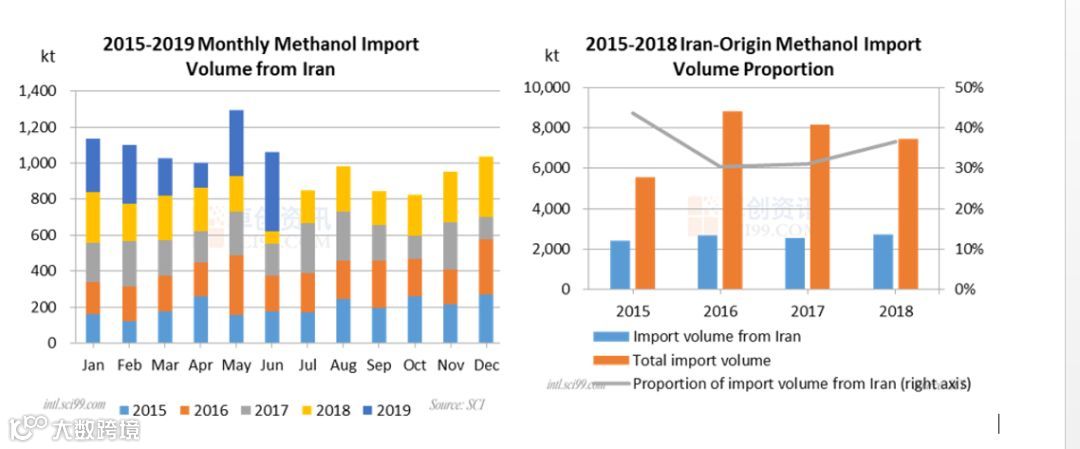
Interpretation: According to the above two charts, we can see that Iran plays a significant role in China’s methanol import. The proportion of Iranian resources kept increasing from 2016 to 2018. Iranian cargoes are settled in Euros or US dollars, and the major payment method is T/T. Although the U.S. sanction against Iran remains as a negative influence to the market, Asian buyers flexibly change the ways to buy Iranian petrochemicals. Iranian methanol cargoes have been flowing into China since 2011, and the monthly import volume tends to reach 500kt in recent two years.
For the methanol trade between China and Iran, there are several changes needed to be paid attentionto: First, the way of negotiations for long-term contract gradually changed from “one buyer to one producer” to “multiple buyers to one producer”. Second, the Iranian producers cut premiums actively to promote the sales, but the rebates were reduced accordingly. Third, the process of negotiation was extended. In the previous years, the negotiation for long-term contracts of Iranian cargoes would be finished during November this year to January next year. However, there were still long-term contract negotiations between Chinese buyers and Iranian producers till end April this year. Fourth, except those regular traders and downstream plants, there were more new downstream plants, traders and distributors in China concluding long-term contracts of Iranian cargoes in 2019. Fifth, with the downstream plants obtaining stronger pricing power and the influences from the month-end settlement and other factors, the price spread between Iranian and non-Iranian cargoes was enlarged. According to SCI, the price spread had widened from $5-10/mt to $20-25/mt by the end of 2018. In H1 June 2019, the price spread was further enlarged to $25-30/mt.
……
More detailed information, please click "Read more".

For more information please contact us at
overseas.sales@sci99.com
overseas.info@sci99.com
+86-533-6090596