China-Russia East Pipeline (CREP) Kicks Off
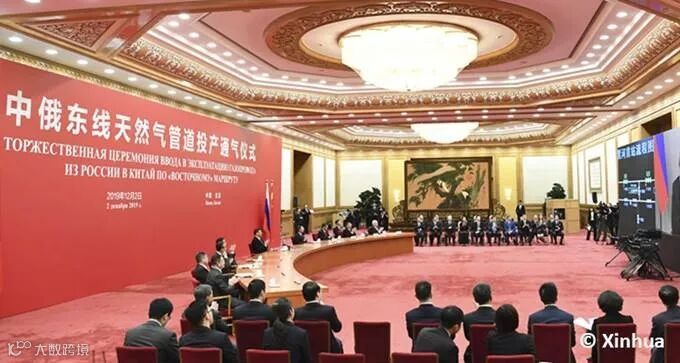
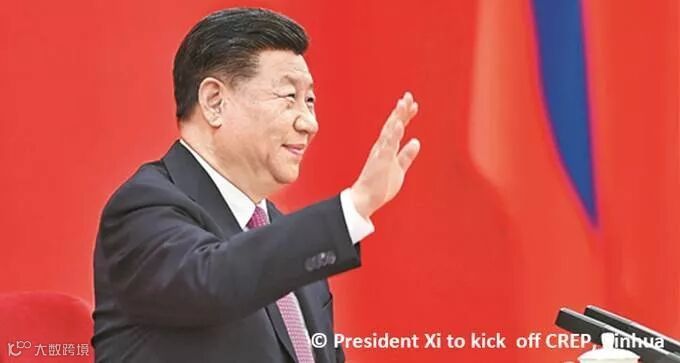
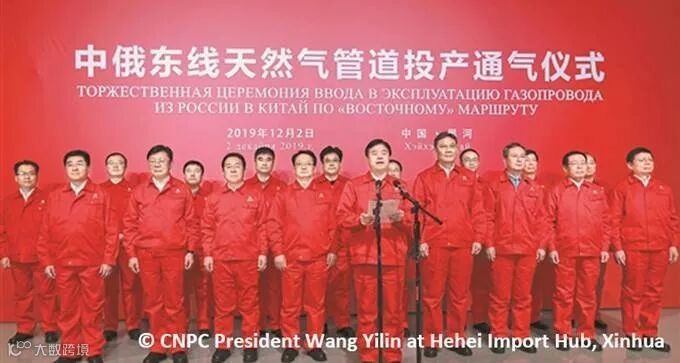
China-Russia East Pipeline (CREP) is facing its first milestone as well as China and Russia’s strategic cooperation in the energy sector. On December 2, under witness of President Xi and Putin, the whole project, including the China Russia East Pipeline CREP in China and the Power of Siberia in Russia, was kicked off officially, aiming to transmit 5 bcm for a beginning year and 38 bcma at max capacity in five years.
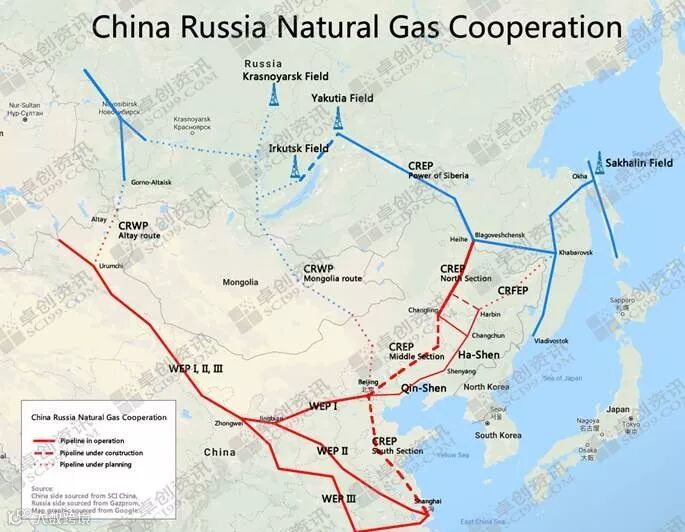
CREP was designed with the total capacity at 38 bcma, and Gazprom planned to deliver up to 10 bcm for the first year 2020. For the first stage, CREP will deliver Russian natural gas into Northeast China’s Heilongjiang, Jilin province, and via a subline of CREP (Changling to Changchun) and Chang-Chang-Ji Line (Changling to Changchun to Jilin (city)), the imported gas will be transmitted to existing main pipelines at Changchun Hub, and then through Ha-Shen Line (Harbin to Shenyang), Qin-Shen Line (Shenyang to Qinhuangdao) to join North China’s grid and help China’s winter heating season supply significantly.
An Arduous History of China Russia Natural Gas Cooperation
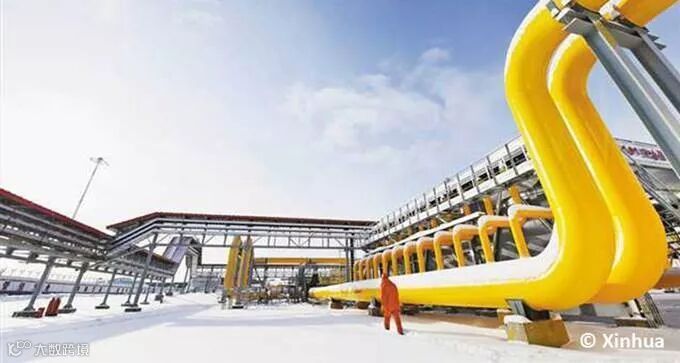
As the direct cooperation between the world’s top natural gas supplier and consumer and with unprecedented future potentials, CREP was set in the initiative MoU in 1994 and started feasibility evaluation from three decades ago in 1996. Since China and Russia signed the famous 30-year deal to build this $400b cost and 38bcma capacity onland artery in 2014, the two sides pushed construction into a boost mode. Russia side operator Gazprom started the building of Power of Siberia and matched gas fields in Yakutia from 2014, and China side operator CNPC started the north section of CREP from 2015. The full length of those two parts summed up over 8,000 kilometres, longest pipeline in the world, and the China side totalled up to 5,111 km through Northeast China, North China and East China.
CREP is only the beginning of China-Russia energy cooperation, and according to Gazprom, they are also planning two more pipelines from Russia to China. The first one is considered as China-Russia Far East Line, which may add a subline from Khabarovsk to Northeast China’s Harbin or Changchun. The resource of this line is from the Sakhalin gas field via the Sakhalin-Khabarovsk-Vladivostok pipeline. The other one is the well-known CRWP, China-Russia West Line. The CRWP was speculated to enter China from Xinjiang Province’s Altay so to utilization Russia’s West Siberia’s existing pipelines and adequate production capacity, but in September 2019, Russia President Putin proposed another route, the trans-Mongolia pipeline, to make it more feasible and reachable in a near future, as a Mongolia pipeline would be much shorter than Altay route and closer to the developed eastern side of China rather than to cross nearly the whole nation from west to east. According to Gazprom, they are evaluation the Altay route with matured infrastructure and Mongolia route with more efficient transmission, but as a matter of fact, CNPC, Gazprom’s China partner, are showing less and less enthusiasm on this west route due to multiple reasons.
Beside all the pipelines, China also cooperated with Gazprom to acquire LNG resources from Sakhalin terminal and Yamal Terminal. And even beside all the natural gas, one of the world’s largest gas processing plants, the Amur Gas Processing Plant at Blagoveshchensk, has put two processing trains into the final construction stage, and the third train is still under construction. This processing plant is designed to process 42 bcma natural gas and produce over 2 Mtpa LPG as well. Most of the processed natural gas is for exporting to China, and Gazprom also plans to sell LPG by road and train delivery to Northeast China as well.
 CREP is widely considered to bring magnificent impacts to China’s natural gas supply, consumption and trading patterns, as it’s the direct cooperation between the world’s top natural gas supplier and consumer and with unprecedented future potentials. However, according to SCI’s interviews and statistics, this impact is not designed to flood China market at once, but to work step by step so to moisten the market gradually. This procedure would be divided into three phases with apparent boundaries.
The first phase is the north section, which starts from Heihe to Changling with a total length of 1,067 kilometers and a total designed capacity at 38 bcma. This section is designed to provide natural gas mainly to Northeast China and to transmit part of the delivered gas to North China through some existing trunk pipelines before the completion of the middle section. Northeast China is the former heavy industrial centre of China, but its natural gas utilization in the energy mix was below 4% in 2018, far lower than the national level at 8.3%. The initiation of CREP will bring the last piece of the puzzle to Northeast China’s coal-to-gas switch in residential and industrial sectors, and the Russia-origin piped gas is expected to be one of the major measures to support the switch, in arrears of Daqing gas field’s production and CNPC Dalian Terminal’s LNG import. Also, the trunk lines from North China to Northeast China, such as Ha-Shen Line, Qin-Shen Line, etc., which used to deliver to north and now would turn to supply North China backward. According to Gazprom, the work plan of CREP for the first year 2020 would reach up to 10 bcm, and the delivery will gradually increase by 8 bcma per year to reach max capacity in five years.
The second phase is the middle section of CREP, which starts from Changling to Hebei Province’s provincial hub Yongqing Station, with a total length of 1,110 kilometers. This section is the major purpose of the CREP to provide natural gas supply to North China, which suffered from the gas supply shortage in the winter heating season for years. After 2017’s great deficit of gas supply in North China, this region has become the barometer of China’s natural gas balance, and China government also implemented several crucial policies to secure the winter gas supply to avoid another 2017 winter happening. North China used to receive piped gas from WEP Line, Shan-Jing Line and Yu-Ji Line from Northwest China and Central Asia, while LNG terminals around Bohai Bay rim also imported a great volume of LNG as a supplementary measure. On the one hand, the government plans to build new terminals and expand existing terminals to double the regional LNG receiving capacity in less than three years, on the other hand, with operation of the middle section of CREP in 2021 as expected, North China will be released from burden to supply Northeast China for good, and the CREP will bring an extra natural gas supply from the Russian piped gas imports, which is believed to be no less than 5 bcma for the beginning (bypassed via existing pipelines), over 10 bcma from 2021 and over 20 bcma from 2025. According to CNPC, the middle section’s construction has started from July 4, 2019, and the whole middle section will be put into operation in 2021.
The third phase is the south section of CREP, which starts from Yongqing to Shanghai, with a total length of 1,194 kilometers. This section is the long-term plan of CREP, and its operation may be set to 2024-2025 (2023 in official announcement). Till then, East China’s natural gas supply route map would be accomplished by CREP from the north, WEP I and Sichuan-East Line from the west, WEP II from the south and LNG imports and offshore gas fields from the east.
CREP’s supply rate at Russia side and utilization rate at China side are widely concerned by both nations.
On the one hand, despite a total capacity at 38 bcma, the supply of Power of Siberia is considered at a lower rate at the beginning of the operation. According to Gazprom, the supply of 2020 will be only at 5-10 bcm and will increase by 8-10 bcm each year until reaching its max capacity. The Chayandinskoye gas field needs at least four years to reach its max capacity, and the Kovyktinskoye gas field’s construction is also behind progress. Gazprom had planned to put the Power of Siberia into operation by 2022 at the beginning when CNPC and Gazprom sealed the cooperation in 2014, but after 2016’s coal-to-gas promotion and 2017’s winter supply shortage in China, CNPC insisted to accelerate the whole project ahead to 2019’s winter. The two parties put great efforts and accomplished the project in time, but the development of the gas fields was behind the schedule, unfortunately.
CREP is widely considered to bring magnificent impacts to China’s natural gas supply, consumption and trading patterns, as it’s the direct cooperation between the world’s top natural gas supplier and consumer and with unprecedented future potentials. However, according to SCI’s interviews and statistics, this impact is not designed to flood China market at once, but to work step by step so to moisten the market gradually. This procedure would be divided into three phases with apparent boundaries.
The first phase is the north section, which starts from Heihe to Changling with a total length of 1,067 kilometers and a total designed capacity at 38 bcma. This section is designed to provide natural gas mainly to Northeast China and to transmit part of the delivered gas to North China through some existing trunk pipelines before the completion of the middle section. Northeast China is the former heavy industrial centre of China, but its natural gas utilization in the energy mix was below 4% in 2018, far lower than the national level at 8.3%. The initiation of CREP will bring the last piece of the puzzle to Northeast China’s coal-to-gas switch in residential and industrial sectors, and the Russia-origin piped gas is expected to be one of the major measures to support the switch, in arrears of Daqing gas field’s production and CNPC Dalian Terminal’s LNG import. Also, the trunk lines from North China to Northeast China, such as Ha-Shen Line, Qin-Shen Line, etc., which used to deliver to north and now would turn to supply North China backward. According to Gazprom, the work plan of CREP for the first year 2020 would reach up to 10 bcm, and the delivery will gradually increase by 8 bcma per year to reach max capacity in five years.
The second phase is the middle section of CREP, which starts from Changling to Hebei Province’s provincial hub Yongqing Station, with a total length of 1,110 kilometers. This section is the major purpose of the CREP to provide natural gas supply to North China, which suffered from the gas supply shortage in the winter heating season for years. After 2017’s great deficit of gas supply in North China, this region has become the barometer of China’s natural gas balance, and China government also implemented several crucial policies to secure the winter gas supply to avoid another 2017 winter happening. North China used to receive piped gas from WEP Line, Shan-Jing Line and Yu-Ji Line from Northwest China and Central Asia, while LNG terminals around Bohai Bay rim also imported a great volume of LNG as a supplementary measure. On the one hand, the government plans to build new terminals and expand existing terminals to double the regional LNG receiving capacity in less than three years, on the other hand, with operation of the middle section of CREP in 2021 as expected, North China will be released from burden to supply Northeast China for good, and the CREP will bring an extra natural gas supply from the Russian piped gas imports, which is believed to be no less than 5 bcma for the beginning (bypassed via existing pipelines), over 10 bcma from 2021 and over 20 bcma from 2025. According to CNPC, the middle section’s construction has started from July 4, 2019, and the whole middle section will be put into operation in 2021.
The third phase is the south section of CREP, which starts from Yongqing to Shanghai, with a total length of 1,194 kilometers. This section is the long-term plan of CREP, and its operation may be set to 2024-2025 (2023 in official announcement). Till then, East China’s natural gas supply route map would be accomplished by CREP from the north, WEP I and Sichuan-East Line from the west, WEP II from the south and LNG imports and offshore gas fields from the east.
CREP’s supply rate at Russia side and utilization rate at China side are widely concerned by both nations.
On the one hand, despite a total capacity at 38 bcma, the supply of Power of Siberia is considered at a lower rate at the beginning of the operation. According to Gazprom, the supply of 2020 will be only at 5-10 bcm and will increase by 8-10 bcm each year until reaching its max capacity. The Chayandinskoye gas field needs at least four years to reach its max capacity, and the Kovyktinskoye gas field’s construction is also behind progress. Gazprom had planned to put the Power of Siberia into operation by 2022 at the beginning when CNPC and Gazprom sealed the cooperation in 2014, but after 2016’s coal-to-gas promotion and 2017’s winter supply shortage in China, CNPC insisted to accelerate the whole project ahead to 2019’s winter. The two parties put great efforts and accomplished the project in time, but the development of the gas fields was behind the schedule, unfortunately.
On the other hand, from 2018, China’s natural gas supply sharply reversed to ample side due to over-preparation, and from 2019, the utilization rate of Central Asia lines are reported below expected in off-peak season. In that case, it is possible that the capacity of CREP will be used more to shave winter peaks of North China and Northeast China’s winter heating season, and the utilization rate in the summer season may drop to an as-less-as-possible level as concerned. Also, the establishing progress of China National Pipeline Corporate, the continued coal-fired civil heating policy in Northeast China, etc., a lot of policy adjustments and changes will bring further influences to the running of CREP from the China side, as well as the geopolitical issues and NEA’s LNG price level.
Considering all aspects mentioned above, SCI estimates that the impact of CREP will be more on its significance, and the fundamental impacts will be far below expected. Its increasing delivery capacity is important to the supply pattern of the nation, but its capacity is far not enough for China’s natural gas consumption growth. Assuming China’s natural gas consumption annual growth rate at 10%-15% in the next five years and the domestic production at around 10%, the impact of CREP on the whole picture will be limited, and it is expected that the LNG import growth rate will still continue the 20% annual growth rate in the upcoming three years.
Please click "Read more" for more information

For more information please contact us at
overseas.sales@sci99.com
overseas.info@sci99.com
+86-533-6090596