

2025 Methanol Industry Spring Overhaul Analysis
Spring overhaul refers to the large-scale centralized unit overhaul and maintenance in the spring. It is understood that the “spring overhaul season” of the chemical market is mainly concentrated in March to May. For one thing, enterprises usually take maintenance intensively before the summer, considering the safety risks of chemical units under the high temperatures in summer. For another, some units need to keep running in the cold weather in winter to ensure normal operation, such as those in the northwest region, so taking maintenance in Spring has become the inevitable choice for them. Intensive maintenance in the spring will generally drag down the industry operating rate to a relatively low level, reducing market supply and thereby boosting the market.
However, in recent years, the market pattern has quietly changed. With the constant maturity of production technologies and the recovery of production profits, enterprises’ willingness to shut down units or cut loads has declined. The traditional significance of spring overhaul is gradually fading. The reductions of maintenance scale and frequency as well as unplanned maintenance have put a new label on spring overhaul.
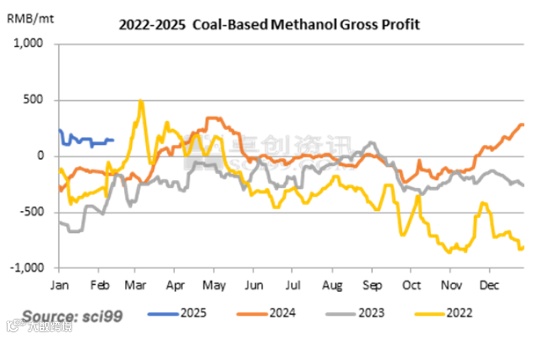
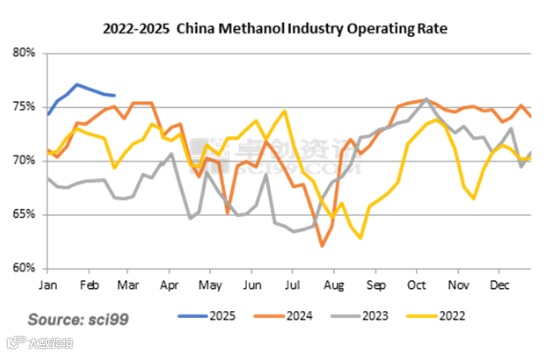
The spring overhaul has been downsized, and the intensity is not as strong as before.
According to public information, the scale of spring overhaul reached about 12 million mt/a in terms of capacity in 2022, while that dropped notably to about 7 million mt/a in 2023. In the same period of 2024, the scale was about 5-6 million mt/a. But it is worth mentioning that although the spring overhaul scale didn’t shrink heavily in 2024, influenced by the anti-expected decline in imports in the first and second quarters of 2024, the profits rallied at inland methanol producers, so many maintenance plans were postponed to the third quarter, resulting in significant elevation of autumn overhaul scale.
The maintenance frequency has stepped down, and the rule of time has weakened.
According to SCI, the unit maintenance strategy of large methanol production enterprises in China, especially in the northwest region, is undergoing significant adjustments. It is learned that the large-scale maintenance period of some leading enterprises has been gradually extended, and the maintenance time is not concentrated from March to May. The reduction of maintenance frequency and the adjustment of maintenance time are the comprehensive embodiment of methanol production technology improvement and cost-benefit optimization. Taking cost and profit as an example, when the methanol market is good, enterprises will be more inclined to maintain high operating rates in order to maximize profits, but when the market is poor or even at a loss, enterprises are less willing to produce and may take maintenance to avoid losses.
The 2025 spring overhaul scale may fall short of expectations.
Since the beginning of 2025, methanol prices have remained relatively high. According to SCI, up to February 19, the theoretical gross profit of coal-based methanol in Northwest China was RMB 146/mt, an increase of 184% over the same period in previous years. Against this background, methanol enterprises show high production enthusiasm, leading to notable YoY increases in the operating rate and output of methanol. As of mid-February 2025, the average operating rate of domestic methanol units remained above 75%, a historical high. According to incomplete statistics, the scheduled maintenance capacity this spring is only about 5 million mt/a, down 58% compared with that in 2022.
Forecast: The methanol market may be relatively weak in March and April.
After the Spring Festival holiday, the methanol market price rebounded in advance, but combined with the characteristics of spring overhaul and the current market supply and demand pattern, the performance in the peak season of “Gold March, Silver April” this year may be not as strong as that in previous years.
First of all, the current spring overhaul shows characteristics of fewer planned maintenance and more uncertain maintenance, resulting in the supply contraction significantly weaker compared with the same period in previous years, and the market supply hasn’t significantly reduced.
Secondly, although the traditional downstream demand is poor, the post-holiday demand from olefin enterprises has been concentrated and continuously released. With the demand fulfilled in advance, there may be limited space for demand growth in March and April.
Thirdly, according to the market, the recovery of import supply in March is below expectations, and with the continuous narrowing of the price spread between inland and coastal markets, the follow-up procurement sustainability of some olefin enterprises remains to be seen.
Overall, given that the pattern of strong supply but weak demand may continue, the price lacks effective support. In the future, the key to the market trend is still the continuity of the demand from olefin enterprises, so it is necessary to pay close attention to their procurement rhythm and dynamic impacts on market supply and demand.
All information provided by SCI is for reference only, which shall not be reproduced without permission.
Please click "Read more" for the full article.