

Propylene Market to Inch Up amid Fading Sino-U.S. Tariff Impact
Introduction: China and the U.S. have virtually no direct trade in propylene, while tariffs indirectly impact propylene prices by affecting propane prices. During the reciprocal tariff escalation phase, PDH plants primarily consumed the previous feedstock inventory, avoiding widespread shutdowns, so the impacts on propylene prices were limited. The subsequent partial tariff reduction buoyed broader commodity markets, leading to a slight rise in propylene prices. However, propylene price rises may be limited on newly added capacity releases and sluggish demand.
China imports approximately 60% of its propane from the U.S. For PDH producers, a prolonged Sino-U.S. tariff standoff could likely force some plants to shut down due to high feedstock costs, leading to periodic spikes in propylene prices. However, PDH producers consumed the previous inventory, and the Sino-U.S. tariff lowered periodically. Overall, the tariff impact on the propylene industry may be limited in the near term. In the medium to long term, the key factors to watch will probably be propylene industrial operating rates and downstream demand.
Most PDH plants maintained normal operations without mass shutdowns.
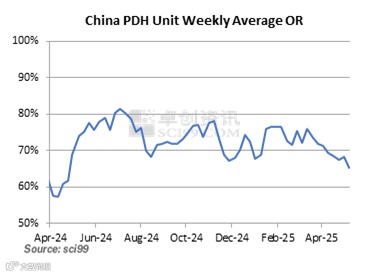
In May 2025, with some units taking scheduled maintenance or shutting down unexpectedly, the operating rate lowered somewhat but remained above its two-year low. In the short term, the operating rate may recover to a medium-to-high level amid expected unit restarts. During the peak Sino-U.S. tariff period, SCI conducted a survey on the feedstock sources of PDH units and found that most PDH units in northern China heavily relied on propane imports from the U.S. At the time, SCI estimated that if high tariffs persisted for several months, the operating rate of the PDH industry might drop to around 40%. A significant reduction in propylene supply under such circumstances could trigger a price surge. However, in reality, PDH enterprises typically maintained about one month of feedstock inventory, and most continued with their original production plans, with only a few units delaying restarting or slightly reducing operating rates. PDH unit operating rate dropped somewhat in H2 April but remained at a medium-to-high level. Currently, with the phased reduction of Sino-U.S. tariffs, propane imports may see increased volume at reduced prices.
Therefore, some PDH units may resume production or run at higher loads, and the previously predicted price surge may not appear.
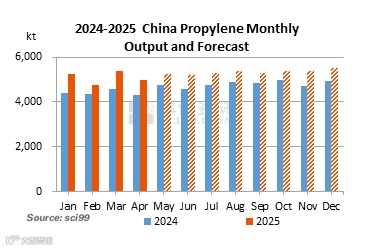
The propylene output from January to April saw ups and downs. In March, the output reached a periodic high due to some newly added capacity releases, while April saw a slight decline in monthly output due to increased unit shutdowns for maintenance. Given that newly added propylene units are expected to come online in the coming months, SCI predicts that the propylene monthly output may remain at relatively high levels, with supply pressure likely to further rising, thereby exerting downward pressure on propylene prices.
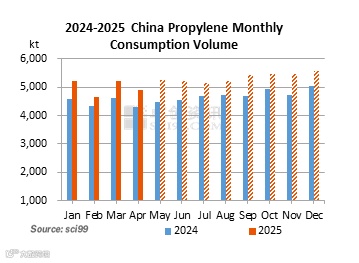
Over the past five years, propylene consumption volume continued to grow, but the growth rate of consumption lagged behind that of supply, gradually leading to a market oversupply. From January to April 2025, downstream demand for propylene remained tepid, and downstream plants showed insufficient restocking positivity, with few engaging in bargain-hunting. Therefore, the demand recovery now rests on the traditional peak seasons of September and October. An improvement in demand may provide some support for the propylene market, potentially driving a slight price increase.
Based on the above analysis, we have forecast the monthly average price of propylene for 2025. From May to December, propylene prices may first inch up and then fall, with the peak likely in September and the low in May. The overall cost trend may remain correlated with fluctuations in crude oil, propane and other feedstock prices. Moreover, the propylene industry may continue to experience rapid capacity expansion, with more newly added units to come online, weighing down propylene prices. The demand for propylene may increase amid an increase in downstream newly added capacity, while the boost for propylene prices may be limited due to relatively weak downstream profitability.
All information provided by SCI is for reference only, which shall not be reproduced without permission.
Please click "Read more" for the full article.