
点击“蓝字”
关注+星标我们

联系电话 |021-5407-5836
联系邮箱 |PR@frostchina.com
SUMMARY
近年来,全球区块链技术向分片架构、零知识证明等深度应用演进,推动区块链矿机从 “算力竞争” 向 “高效合规 + 绿色智能” 全面升级。行业发展逻辑已发生深刻转变,矿机的核心竞争力不再局限于单纯算力提升,而是聚焦能效比优化、低碳技术集成与 PoW/PoS 混合共识、多算法适配能力,以匹配区块链网络对安全算力、隐私计算的多元需求,同时响应全球环保监管要求。AI 与大数据技术的深度融合,让智能矿机在运维管理、算力调度等方面实现效率突破,各国监管政策的逐步明朗也为矿机行业的合规化发展划定清晰路径。Frost & Sullivan最新发布的《2025 全球区块链矿机行业白皮书》深入探讨了该行业的创新与趋势,为行业参与者提供了前瞻性市场洞察。
In recent years, with the acceleration of global digital transformation, blockchain technology has rapidly evolved into a critical component of modern economic systems. From financial and industrial applications to digital assets, blockchain’s application scenarios are continually expanding, fueling the rise of decentralized economic models. within this transformation, blockchain hardware plays a foundational role, ensuring the efficiency and security of blockchain networks. The release of the "2025 Global Blockchain Mining Machine Industry White Paper" by Frost & Sullivan aims to provide industry stakeholders with in-depth market insights, revealing key trends and future opportunities in the sector.
The white paper covers not only innovations in cryptocurrency mining hardware but also delves into the future of blockchain technology in emerging fields such as AI computing and quantum computing. Through comprehensive global market analysis and authoritative data, the report offers invaluable strategic guidance for industry participants and investors, helping them seize opportunities in the highly competitive blockchain mining machine market.
扫码获取完整报告

PART.
01
Overview of Global Blockchain and Cryptocurrency Industry
Introduction of Blockchain
Blockchain is a decentralized data management and value transfer system built upon Distributed Ledger Technology (DLT). Its core mechanism lies in the use of cryptographic algorithms to encapsulate data into sequential “blocks,” which are then linked through hash functions to form a continuous and tamper-resistant “chain” of information. This structure ensures the integrity, security, and chronological order of data during its creation and transmission. Within a blockchain network, all nodes operate without reliance on a central authority, achieving consensus through algorithmic protocols that verify and synchronize transaction records across the distributed ledger. This enables a system characterized by decentralized storage, immutability, traceability, and transparent information sharing. Fundamentally, blockchain represents an institutional innovation that replaces traditional trust intermediaries with algorithmic trust. It establishes a reliable foundation for multi-party collaboration and provides the technological infrastructure for secure value exchange, digital identity verification, and smart contract execution in the digital economy.
Introduction of Cryptocurrency
Cryptocurrency is a form of digital asset built upon blockchain technology and cryptographic principles. Its fundamental characteristic lies in decentralized issuance and management, meaning it operates without reliance on central banks or traditional financial institutions. Instead, transactions are verified and recorded through a distributed ledger maintained collectively by network nodes under a consensus mechanism. Each transaction is secured by encryption algorithms, ensuring data integrity, anonymity, and immutability. Beyond functioning as a medium of exchange and store of value, cryptocurrencies also serve as incentives and governance instruments within applications such as smart contracts and decentralized finance (DeFi). Representative examples include Bitcoin and Ethereum, which together form the trustless value transfer infrastructure underpinning the broader digital economy.
PART.
02
Overview of Global Blockchain Hardware Industry
Definition and Value Chain of Blockchain Hardware
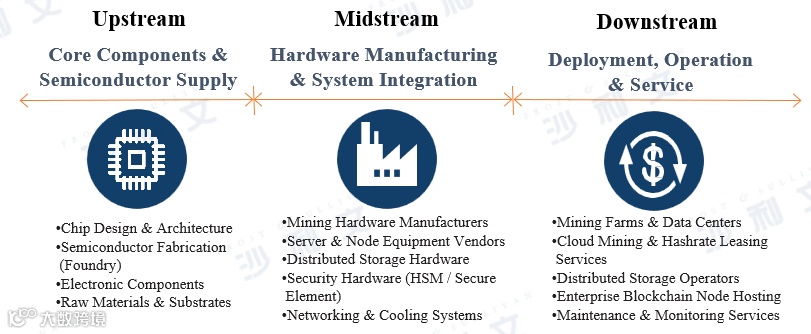
The blockchain hardware industry refers to the complete industrial ecosystem that provides physical device support for blockchain technologies and applications. It encompasses hardware facilities used for blockchain network operation, data storage, computational processing, and security assurance. This industry spans from underlying computing and storage equipment, mining hardware, and dedicated cryptographic chips to auxiliary networking devices, supporting high performance, robust security, and scalability of blockchain systems.
The blockchain hardware value chain includes upstream core components and semiconductor supply, midstream hardware manufacturing and system integration, downstream deployment and operation, and peripheral support in security, energy, and compliance. Upstream provides computing foundations, while midstream ensures performance and reliability. In the midstream, hardware suppliers, such as Canaan (NASDAQ: CAN), which was the first Bitcoin mining hardware company to go public and ranked second in terms of computing power sold among all ASIC-based bitcoin mining hardware manufacturers in 2024 and the first half of 2025. In addition, downstream realizes commercial value, and the peripheral layer secures system stability, forming a complete ecosystem.
Source: Frost & Sullivan
Introduction of Blockchain Mining Machine
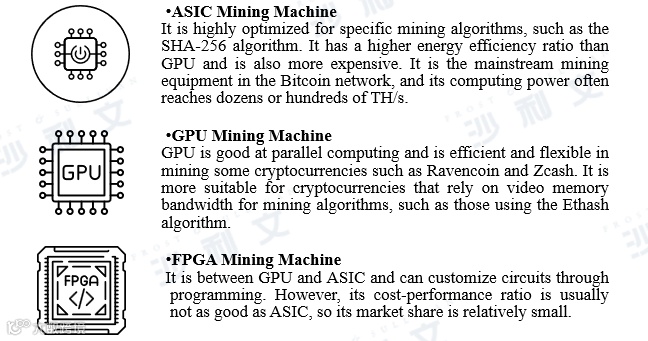
A blockchain mining machine is a computer device specifically used for cryptocurrency mining. It maintains the security of the blockchain network by performing complex computational tasks, verifying the authenticity of transaction records, and obtaining network rewards in return.
The main customers of mining machines are still 2B-oriented, mainly including large-scale mining farms and institutional investors. These customers usually purchase a large number of mining machines for large-scale cryptocurrency mining to obtain greater benefits. There are also some 2C customers in the mining machine market, mainly individual miners. Some mining machines with low power consumption and quiet design have reduced the technical and financial thresholds for individuals to enter the mining field, making it possible for individuals and small-scale miners to engage in mining.
Source: Frost & Sullivan
Cost Structure and Profitability of Mining Machine
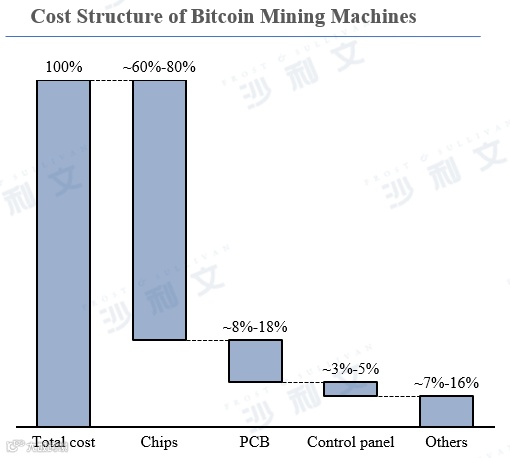
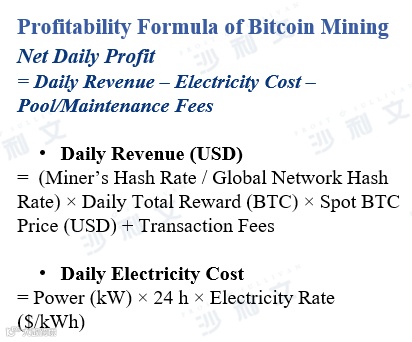
Take the ASIC mining machine as an example, the single biggest cost and strategic lever in a Bitcoin miner is the ASIC chip, which ultimately dictates hash rate, joules-per-terahash, thermal headroom, and how fast a product line can iterate. Real competitiveness comes from choices around foundry node, wafer pricing and yields, binning, and package/test, all of which drive COGS volatility. Around the silicon, power delivery and thermal design determine whether rated efficiency holds up in real farms, while board stack-up, control firmware, and autotuning shape stability, uptime, and fleet manageability. Vendors compete as much on supply-chain reliability (wafer allocation, lead times, field failure rates, and warranty logistics) as on headline specs. In short, winners’ pair leading silicon with disciplined PCB/control/cooling engineering to deliver predictable efficiency at scale.
The profitability of a mining machine is influenced by three major factors: bitcoin price, network hash rate, and electricity price. Bitcoin price is the most significant driver, as changes in its market value directly impact the monetary worth of mining rewards, with price movements proportionally affecting overall revenue and profit margins. Network hash rate also plays a crucial role; as the global network's computing power grows with more miners participating, an individual miner's share of total network capacity decreases, reducing the proportion of blocks they can mine and thus lowering their daily cryptocurrency earnings. Additionally, electricity price is a critical cost management factor, since energy consumption constitutes a large portion of operational expenses, so fluctuations in electricity rates directly affect total costs, with higher prices squeezing profit margins and vice versa.
Source: Frost & Sullivan
PART.
03
Market Trends of Blockchain Mining Machine Industry
Expansion into Home and SMB Miniature Mining Solutions
In recent years, a notable trend in blockchain mining equipment has been its penetration from large-scale mining farms into home and small-to-medium enterprise settings. This shift is driven by both technological advancements and diversifying market demands. For individual home users, the ideal mining rig prioritizes quiet operation, ease of use, and compatibility with home environments. By combining near-industrial hash rates with silent operation and simple plug-and-play installation using common home voltages, these miners make powerful cryptocurrency mining accessible for the first time in residential settings.
Innovative products utilize waste heat generated from mining for home heating, creating a dual-benefit model. This not only enhances the comprehensive utilization efficiency of energy but also significantly reduces the net energy cost of mining, making home mining more economically viable. By capturing this waste heat for space heating, the effective net energy cost of mining is drastically reduced. The cost of electricity for mining is partially or fully offset by the savings from not using a traditional heating system. This makes mining profitable at higher electricity price points than would otherwise be feasible.
The rise of Home and SMB miniature mining solutions signifies a pivotal democratization and maturation of the blockchain mining industry. Technological advances have successfully miniaturized professional-grade hardware into accessible, quiet, and efficient consumer products. Companies like Canaan (NASDAQ: CAN) are pioneering and leading the way in delivering consumer-grade mining solutions tailored for home users and SMEs. Additionally, the integration of heat utilization is a revolutionary step, transforming mining from a pure cost-center into a potential dual-revenue (crypto + energy savings) appliance for the household. In the future, this trend is expected to accelerate, further blurring the lines between consumer electronics and blockchain infrastructure, and opening up the ecosystem to a much broader global audience.
Efficiency Escalation and Operational Cost Optimization
Innovations in ASIC chips have propelled the industry into a new era characterized by low power consumption and high computational power. Combined with synergistic upgrades in cooling systems and supporting hardware, these advancements have collectively fueled a leapfrog growth in the network's total computing power. This innovation directly translates into exceptional energy efficiency, with the latest mining hardware achieving remarkable performance metrics. The outcome of this hardware upgrade has been the Bitcoin network's sustained explosive growth in total computing power, soaring from approximately 100 EH/s in 2020 to over 900 EH/s by mid-2025.
Electricity costs typically make up 60% to 80% of total Bitcoin mining expenses, so optimizing energy strategies has become a core market driver for the mining machine industry, directly boosting miners’ profitability. Relocating facilities to low-cost electricity regions is a mainstream tactic. Large-scale use of renewable energy also plays a key role, with hydropower, wind, and solar now powering over half of global mining. These strategies, along with waste heat recovery and AI tools to optimize real-time energy use, not only lower operational costs but also shape mining machine innovation, favoring rigs with low energy use and flexibility for diverse energy setups.
The dual forces of efficiency escalation and operational cost optimization are fundamentally reshaping the Bitcoin mining industry. The continuous advancement in technology has improved hardware efficiency and promoted the continuous upgrading of Bitcoin mining machines. Simultaneously, the industry's strategic pivot toward low-cost energy regions and renewable sources not only sustains individual mining profitability but also propels the entire industry toward greater scalability and sustainability, ensuring its continued evolution in the face of rising network difficulty and evolving market conditions.
Rise of Mining Hosting and Cloud Mining Services
The Bitcoin mining industry is becoming increasingly specialized. The rise of mining rig hosting and cloud mining services has significantly lowered the barrier to entry, emerging as a key market driver propelling the growth of the mining hardware industry. Mining hosting is a service model in which the customer retains ownership of the miners while the operator furnishes the facility, low-cost electricity, and round-the-clock maintenance to keep the hardware hashing. Cloud mining is a lease-based model where customers rent a defined quantity of hash power, bypassing the purchase, transport, and upkeep of physical rigs and receiving daily BTC proceeds directly to their wallets.
The rise of mining hosting and cloud mining services directly stimulates demand for mining rigs by dramatically lowering participation barriers. Hosting services create a reliable customer base for hardware manufacturers by enabling individuals and institutions to own equipment without operational complexities, particularly driving demand for the latest high-efficiency ASICs. Simultaneously, cloud mining platforms function as large-scale institutional buyers, purchasing hardware to support their hash rate offerings, thus providing stable bulk orders for manufacturers. Together, these models establish a powerful symbiotic ecosystem: they democratize access to mining while ensuring continuous hardware upgrades, directly fueling both the technological advancement and commercial expansion of the Bitcoin mining hardware market.
The abovementioned content is just the illustration of the White Paper. The above-mentioned content is just the illustration of the White Paper. For the full report, please scan the QR code.

本文推荐阅读
↓↓长按扫描下方二维码获取报告↓↓

往期回顾👉

联系电话:021-5407-5836

联系邮箱:PR@frostchina.com
转载须知
感谢您对沙利文的关注与支持。如若想转载我司微信公众号的文章,请:
在原文留言,告知转载机构的名称、介绍及微信公众号ID;
在编辑页作者处填写“沙利文”;
所有转载不得对原文进行任何篡改、曲解、诠释和改编。沙利文保留对所有原创文章的版权及解释权。如有违反,沙利文保留依法追究相应法律责任的权利。
关于沙利文
全球增长咨询公司,弗若斯特沙利文(Frost & Sullivan,简称“沙利文”)融合全球64年的咨询经验,27年来竭诚服务蓬勃发展的中国市场,以全球化的视野,帮助超10,000家客户加速企业成长步伐,助力客户在行业内取得增长、科创、领先的标杆地位,实现融资及上市等资本运作目标。
沙利文深耕全球资本市场及企业咨询服务,通过创新性提出的“全域投资管理 (Total Investment Management, TIM)”为企业提供全方位的投融资及其他各类专业咨询服务,包括投融资CDD、估值服务、技术顾问、财务顾问、ESG、募投可研、债券发行行业顾问、行业顾问、评估服务、奖项服务、行业白皮书、战略及管理咨询、规划咨询、技术洞察等。
沙利文中国的投融资业务实现了对中国国民经济的全行业覆盖,包括对新经济、新基建等所有经济热点的高度关注,涵盖数字基础设施、消费电子、双碳新能源、医疗与生命科学、餐饮与新零售、半导体与集成电路、智能家居、汽车与出行、康养服务、食品与饮料、信息通信技术、金融科技、地产与物业、矿业冶炼、美容时尚、大数据与人工智能、物流与供应链、建筑科技与装饰装潢、特种新材料、文化娱乐、企业级服务、跨境电商贸易、基础设施建设、环保节能科技、教育与培训等。
沙利文团队为企业领袖及其管理团队开展投融资顾问咨询服务以来,已帮助近千家公司成功在香港及境外上市,是国内投融资战略咨询领域的领军企业。近10年来,沙利文连年蝉联中国企业赴香港及境外上市专业行业顾问市场份额的领导地位;且近年来,沙利文报告也被广泛引用于业内领先的A股、科创板等上市公司的招股文件、一级和二级市场研究报告及其他资本市场公示文件中。
64年以来,沙利文通过其遍布全球的近50个办公室,利用强大的数据库和专家库、运用丰富的专业知识和咨询工具,帮助大量客户(包括全球1,000强公司、国内外顶级金融机构以及其他各类领先企业等)完成了包括但不限于尽职调查、估值分析和第三方评估工作等工作,达成了战略目标;创立市场地位确认体系,创新性提出“FSBV沙利文品牌价值模型”,已向超1,000家企业提供市场地位确认及品牌估值服务,持续助力大量中国品牌实现国内与出海增长战略。