-
Packets and Capture, an Open Source Journey - Loris Degioanni, Sysdig -
How We Convinced the Pentagon To Use Open Source Drones - Chris Anderson, 3D Robotics -
Lessons learned building software with a fully remote team - Corey Hulen, Mattermost, Inc. -
Truth and Lies - The Real Story Behind Open Source Communities and Commercial Success - Idit Levine, Solo.io -
Seeking the Virtuous Cycle - Kal De , Docker -
The paradox of success: How to maintain innovation performance as the codebase grows - Hans Dockter, Gradle Inc. -
Open Core Data - What Data Science can learn from Open Source Software - Tobi Knaup , D2iQ (formerly Mesosphere) -
Licensing: One Size Does Not Fit All - Gian Merlino, Imply -
Making the Cloud Era a Golden Age for Open Source - Richard Kreuter, MongoDB -
Coherent Open Source: Let's scrap the Babel Tower of 100 Open Source licenses! - Bruce Perens, OSS Capital -
Session Details Coming Soon - Michael Cheng, Facebook -
Evolutionary Means for Revolutionary Ends: The Art of Transforming Software Systems and Ecosystems - Nick Schrock , Elementl -
From Open Source to Open Core: the hard way - Caleb Hailey , Sensu -
Open Source Product Panel - Shinji Kim , Something New (Moderator) -
Evolving Beyond Open Core, Lessons Learned - Yasmin Rajabi, Puppet -
The OSS Builder's Journey - Daniel Lopez, VMware / Bitnami -
"COSS from the perspective of VC" Panel moderated by Joseph Jacks -
Build an Open Source Business with Kubernetes - Sheng Liang , Rancher -
Betting on SaaS - Building a Multi-Cloud DbaaS on Vitess - Jiten Vaidya, PlanetScale -
From the bedroom to the boardroom — how Gatsby grew from a fun side project to a large VC-backed open source company - Kyle Mathews, Gatsby -
Pivot? Or is it? The story of Salt from open automation to IT security. - Thomas Hatch, SaltStack

Session Details Coming Soon

We originally created open source drones to break the military-industrial complex monopoly. We swore we wouldn't allow governments to weaponize our work. But then a funny thing happened. Our drones got better, faster and cheaper than the aerospace industry's and the Pentagon came to us -- not to shut us down, but to learn how we did it. This is the story of what happened next.

无人机这个新事物,和开源相结合引起了五角大楼的注意,不知当中有什么样的故事。

We have learned quite a few lessons about communication tools and how to get work done from our experience of working with hundreds of customers who use Mattermost, an open source messaging workspace, and a distributed team of 50 with hundreds of additional contributors all working remotely.
I’ll share several examples of good and suboptimal communication working with remote teams and the infrastructure and tools we found help us, our contributors and our users become more effective teams and provide clarity in their work.

和远程工作者沟通协作也是企业团队的一个可 pick 的技能点。
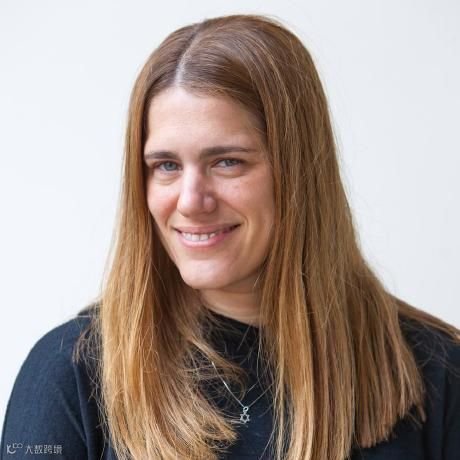
The perception of what makes open source successful is wildly different than the reality. Building the best tool and open sourcing it does not mean that it will gain adoption or recognition by your end users. As a current or future founder, what should you expect and anticipate in working within open source, navigating the community and working alongside large corporations with entire engineering departments and multi-million dollar marketing budgets dedicated to open source.
This is not to say that it is not possible to be successful with a new idea, the key is to go into the endeavor with your eyes open and aware of the realities at the technical, business and industry level.
This session will discuss these truths by breaking down experiences at Solo.io and others in the ecosystem to look at what happened, the dynamics at play, what we can learn from them and how to incorporate the approach into your strategy.

这个摘要里提及了制作 Open Core 策略所需要留意的点,至于具体是什么,就需要你看这个 Topic 了,希望你能有所收获。

Evolving ideas and developing foundational work in the open has immense potential to create a value chain that mutually benefits customers, developers and the community at large.For an OSS rooted company or commercial enterprise that aspires to participate, contribute, and leverage this value chain, there is a virtuous cycle that must be sought and nurtured. Finding a balance between open innovation and commercial goals is hard, but viable.
Docker CTO, Kal De, will share a perspective on how Docker is approaching the challenges inherent from going from an OSS rooted startup to a commercially successful enterprise, and why from a Docker lens, this is a quest that’s worth its while for Docker, its customers and vibrant ecosystem.

Docker 如何从基于开放源码软件的初创企业转变成为商业上成功的企业,这就是 Docker 的 CTO 带来的故事,虽然现在Docker 生态充满活力而言,也许之前也有不少辛酸史。

“Software is eating the world” means all innovations in the company must be channeled through software. Developers are the fuel of this innovation. But can your talented software development team perform at its full potential?The paradox of a successful software team is that as the codebase and team sizes grow - it becomes harder for developers to maintain the quick feedback cycles that are necessary to work creatively and productively.
Compared to other industries, the software development process is in the dark ages, with little data to observe and optimize the process itself. Symptoms of this problem include not>
Join Hans Dockter, founder and CEO of Gradle for a discussion of how you can use data from across the development process to understand what breaks your codebase and how to speed up cycle times to enable developers to remain creative and innovative even as your code base grows.

一个代码库相关话题。

The reason is that modern deep learning algorithms take copious amounts of compute and storage, and therefore money, to train state of the art models. We’ve seen this movie before in software engineering. Only large companies used to have the resources to develop complex software like an operating systems. Open source fundamentally changed these dynamics. Today Linux is one of the most popular operating systems, and continues to be the foundation on which many companies build their products.
In this talk I’ll share how successful patterns from open source software may be transferred and applied to the data science space in order to democratize access to state of the art tools and data, so the entire data science community can accelerate innovation.

大家都知道机器学习火,其实它也带动了数据科学领域的发展,那么开源的软件又是如何应用到这个领域让它大放异彩的呢,👀 这个 Topic 主要讲解了这个故事。

Session Details Coming Soon

Over the last few years, software licensing has begun making headlines again as open core companies from Mongo to Elastic and Confluent have launched new licenses, and the open-source community at large has started to pay more attention to how exactly these documents work. The venerable Apache, GPL, BSD, and MIT licenses now have an entire spectrum of flavors and competitors.
License choices are critically important, impacting adoption and positioning in the marketplace. These days, how should we think about the available options and how they fit into an open-core business model? There isn’t a one-size-fits-all answer to this question.
In this talk, Gian Merlino, committer on Apache Druid and CTO of Imply Data, will offer a framework for making these licensing decisions.

正如摘要所说的:在过去的几年里, 从 MongoDB 到 Elastic 和 Confluent 等 Open Core 公司发布了新的许可证,软件许可证再次成为头条,而开源社区也开始更加关注这些文档的工作方式。

Open Source faces a real threat in the Cloud, but MongoDB believes that threat can be turned into an opportunity: the Cloud permits new ways for Open Source companies to operate, but only if Open Source licensing is able to evolve with the larger tech landscape.

Imply 演讲提及的 MongoDB 用一句话来概述它的许可证演变,最恰当的莫过于:有危便有机。

Coherent Open Source: Let's scrap the Babel Tower of 100 Open Source licenses! A minimal set of licenses fits most purposes and eliminates license incompatibility!
Session Details Coming Soon

Infiltrating and transforming existing software systems and ecosystems is a subtle, difficult art form. Nearly all open source projects and company must grapple with this problem, and there is little public art about how to do this effectively.
Drawing upon his experiences at Facebook and in the OSS ecosystem, Nick explains his theory and approach to this process, which involves providing transformational change but delivered with incremental process. This requires a combination of technical and organizational strategy, along with a full understanding of the incentives of every stakeholder working within a technical system. Nick will detail this approach with case studies from within Facebook, and from open source successes such as React and GraphQL.

看 Nick 如何利用他在 Facebook 和 OSS 生态系统中的经验,通过 React 和 GraphQL 的经验解释了他对渗透和改造现有软件系统和生态系统的感悟。

This is the story of a journey. A long and challenging journey in which a small, bootstrapped team has taken Sensu from humble beginnings as an open source software project, to a VC-backed open core platform and burgeoning commercial product (Sensu Enterprise). What have we learned along the way? Open source software development is hard, but open core product development is harder.
I'll explore this realization and discuss what's next.

Sensu 团队的“旅行”小故事,希望现场能议题描述的那样轻松。

Product management in a commercial open source company is a different beast from other types of product management. You have a community of contributors and users>
In this panel, we have four product leaders in the industry to talk about building a successful open source business in today's market.Moderator:Shinji Kim, Founder, Something NewPanelists:Amy Leeland, Director of Cloud Infrastructure Software, IntelDustin Kirkland, Product Manager, Google Cloud PlatformGaurav Gupta, Partner, Lightspeed Venture PartnersMartin Van Ryswyk, Planet

一个商业开源公司的圆桌会谈。

Open core is a very common model used by traditional commercial open source companies. Puppet started out as an open-source project and quickly expanded to multiple projects that made up a platform that represented our "core". Puppet Enterprise became a combination of proprietary add-ons on top of the core platform.
Since then we have experimented with different models and have tested new approaches with various new products and projects we've released in the last two years. We believe you don’t need to be tied to a specific Open Source business model to be successful and that it’s more important to be agile as a business, experiment with different approaches.- Common pitfalls COSS companies run into- Top lessons we've learned throughout the years- What questions to ask as you're building your portfolio

Puppet 在自家的多个产品上进行了开源方法试验,想必是一个不错的开源方式选择参考。

Modern software development involves a mixture of open source software, third-party services and spans developer's laptops, Kubernetes clusters and cloud infrastructure.
This session will share the lessons learned at Bitnami helping developers and ops teams in their builder's journey: simplifying OSS adoption at the ideation and development stages while addressing the concerns of IT organizations tasked with running it in production.

如果你的开发团队正在思考如何选择 OSS ,或许可以参考下 VMware 对简化 OSS 的经验。

Panelists:Jerry Chen, GreylockScott Raney, Redpoint VenturesDan Scholnick, Trinity Ventures


k8s 爱好者应该会喜欢的一个议题 :)

Session Details Coming Soon

Every commercial open source project has its own origin story. In this session, Kyle will tell the story of how he created an early React web framework for fun and grew it to a widely used open source project with millions of funding & dozens of full-time employees. Many open source maintainers would like to do this. Kyle will discuss what made Gatsby unique and extract some lessons that will be helpful for other maintainers looking to make the same journey.

Don't call it a pivot. This is the story of the intentional evolution of Salt from open source infrastructure automation tools to the industry's first event-driven SecOps automation platform. Attend this session to get insight into the evolutionary development of SaltStack SecOps, from parts to product to profit, direct from the technical founder and CTO of SaltStack.
Tom created the Salt open source project in 2012 to fill a gap in the infrastructure automation market. He started with a high-speed remote execution engine that would go on to serve as a platform for configuration management, cloud control, and event-driven automation modules among others. What he built was quickly adopted at massive scale by SRE and DevOps teams at organizations like LinkedIn, Hulu, Lyft, and Wikimedia. In 2017 SaltStack released SaltStack Enterprise and in 2019 SaltStack SecOps to provide purpose-built, solution-oriented products for IT operations and security teams. Tom will share insights into the balancing act needed to maintain a vibrant open source project while building revenue-generating enterprise IT security products.

SaltStack SecOps 自动化的开源故事。
第二天的议题比第一天丰富多了,由于摘要的内容有限,如果你对某个议题有兴趣的话,欢迎加入 Nebula Graph 交流群获得更多议题的内容,进群的请添加微信:NebulaGraphbot