

“英语从何而来?当我们谈论英语时,我们常常把它看作是一种单一的语言。但是,世界上几十个国家所说的方言有什么共同之处呢?“这是克莱尔·鲍恩在这段说明性视频中提出的问题,它展示了英语是如何通过几代人的说话者演变而来的:
What is certain is that like most languages, English has evolved through generations of speakers. Undergoing many changes over time, now it is possible to trace the language from the present day back to its ancient roots.
可以肯定的是,和大多数语言一样,英语也是通过一代又一代的说话者进化而来的。随着时间的推移经历了许多变化,现在有可能将这种语言从今天追溯到其古老的根源。
Modern English shares many similar words with Latin-derived Romance languages like French and Spanish. They started entering the language with the Norman invasion of England. This meant adding a big amount of French and Latin vocabulary to the English language previously spoken there. Today that language is called “Old English”, the language of “Beowulf”, which probably doesn’t look very familiar. It may be more recognisable if you know some German, because Old English belongs to the Germanic language family.
现代英语与源自拉丁语的罗曼语(如法语和西班牙语)有许多相似的词汇。随着诺曼人入侵英国,他们开始进入这门语言。这意味着在那里以前使用的英语中增加了大量的法语和拉丁语词汇。今天那种语言被称为“古英语”,“贝奥武夫”的语言,可能看起来并不是很熟悉。如果你懂一些德语可能会更容易辨认,因为古英语属于日耳曼语系。
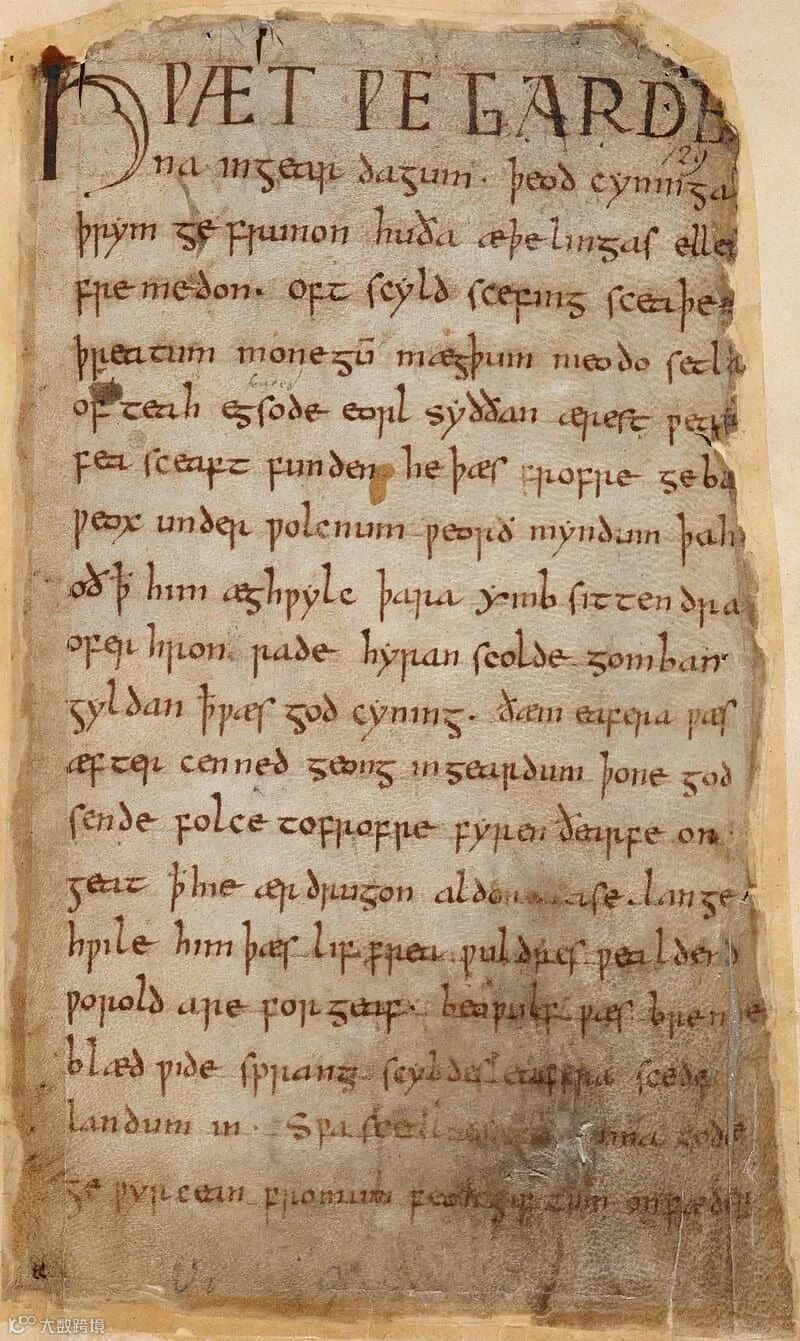
Here you can see the first page of the epic poem “Beowulf” written in Old English. It is considered the oldest piece of literature in the English language and is the basis of the English we speak today.
在这里你可以看到用古英语写的史诗《贝奥武夫》的第一页。它被认为是英语中最古老的文学作品,也是我们今天所说英语的基础。
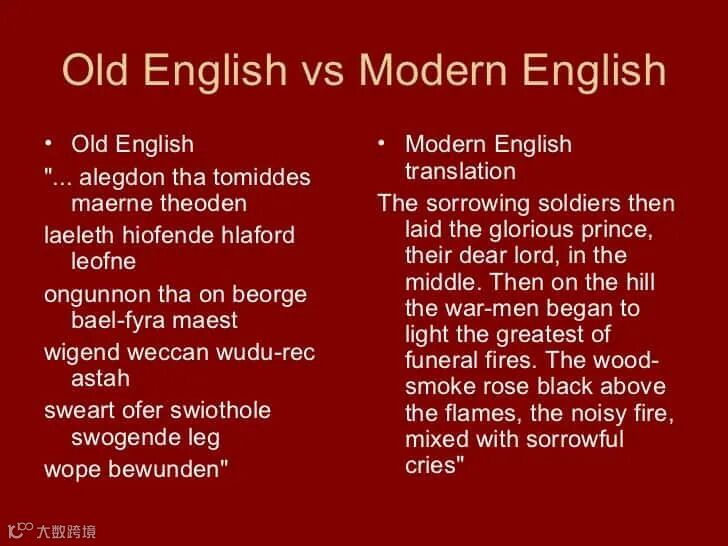
In this other picture you can also compare the Old English and Modern English versions and notice the differences in the language. It’s perhaps hard to see the roots of modern English, but linguistic experts have helped us by focusing on details and nuances related to structures and vocabulary. English is a West Germanic language that originated from the Anglo-Frisian dialects and was brought to Britain by Germanic invaders (8th and 9th centuries AD). One second invasion took place by the Normans of the 11th century, who spoke Old Norman and developed an English form of this. That is why a large portion of the modern English vocabulary comes from the Anglo-Norman languages. A new vocabulary introduced at this time heavily influenced many organizations, including the church, the court system and the government. European languages, including German, Dutch, Latin and Ancient Greek influenced the English vocabulary during the Renaissance. The Old English period was from the mid-5th century to the mid-11th century, the Middle English period from the late 11th century to the late 15th century, the Early Modern English period from the late 15th century to the late 17th century, and the Modern English period from the late 17th century to the present.
在这张图中,你也可以比较古英语和现代英语的版本,并注意到语言的差异。也许很难看出现代英语的根源,但语言学专家们通过关注与结构和词汇有关的细节和细微差别帮助了我们。英语是一种西日耳曼语,起源于盎格鲁-弗里斯兰方言,由日耳曼入侵者带到英国(公元8世纪和9世纪)。第二次入侵发生在11世纪的诺曼人,他们说古老的诺曼语,并发展了这种语言的英语形式。这就是为什么大部分现代英语词汇来自于盎格鲁-诺曼语。这时引进的一个新词汇严重影响了许多组织,包括教会,法院系统和政府。欧洲语言,包括德语,荷兰语,拉丁语和古希腊语影响了文艺复兴时期的英语词汇。古英语时期为5世纪中叶至11世纪中叶,中世纪英语时期为11世纪后期至15世纪后期,早期现代英语时期为15世纪后期至17世纪后期,现代英语时期为17世纪后期至今。
Due to several historical influences over time, English frequently makes use of loanwords originating from other languages.
由于历史的影响,英语经常使用来自其他语言的外来词。
In any case, the amazing fact remains: nearly 3 billion people around the world, many of whom cannot understand each other, nevertheless speak English, using the same words shaped by six thousand years of history.
无论如何,令人惊奇的事实依然存在:全世界有近30亿人,其中许多人彼此听不懂,但他们仍然说英语,使用的是由六千年历史形成的相同词汇。
作者:Lidia Capitan Zamora