At a high-profile globalization think tank forum held on Friday, diplomats, scholars and policymakers voiced growing confidence in China's 2025 economic trajectory, citing tech breakthroughs, thriving private-sector entrepreneurship, and targeted policy momentum from the two sessions, while Asian and European envoys pledged to deepen trade and investment ties despite global headwinds.
The meeting, hosted by the Center for China and Globalization (CCG), a leading Chinese non-governmental think tank, marked its first VIP Luncheon of the year, aiming to brief representatives from foreign embassies, international organizations, business groups, multinational corporations, and academic experts on China's latest developments and policy priorities, particularly following the just-concluded two sessions.
Friday's discussions centered on the key outcomes of this year's two sessions, with a focus on several critical areas, including the green transition, technological progress, rural revitalization, social governance, and infrastructure development.
The two sessions in China are a spectacular annual political event that serves to build consensus, restore the confidence and chart a course for the years ahead, Wang Huiyao, president of CCG and a former counsellor of the State Council, said during the meeting.
Jin Li, member of the National Committee of CPPCC, vice president of Southern University of Science and Technology, pointed to China's ongoing efforts to embrace entrepreneurship, support the private sector, and encourage more scientific breakthroughs, which are serving as the means to develop the new quality productive forces to enhance the quality of economic growth in China.
"With the measures outlined during the two sessions, I am very confident that the Chinese economy is on a trajectory of stabilizing and achieving better outcomes in the years ahead," Jin noted.
Tian Xuan, a delegate to the 14th National People's Congress, dean of the National Institute of Financial Research at Tsinghua University, expected looser monetary policy to provide more liquidity to the markets, stock market, capital markets, and reduce the financial burdens, financial cost of households, and companies in 2025.
"These will be very powerful policies to help China achieve the 5 percent growth target, so I'm very encouraged," Tian told the meeting.
Djauhari Oratmangun, the Ambassador of the Republic of Indonesia to China, also expressed optimism about China's economic prospects in 2025. "I believe China's economy will do better this year," he told the Global Times on the sidelines of the meeting.
China's rising capabilities in technological innovation, such as AI and quantum technology, are key drivers for the country's economic growth, Oratmangun said, highlighting that the policies outlined during this year's two sessions send a "positive signal" to the world, and "the market reaction will also be quite favorable."
"I've seen this positive market response in cities like Hong Kong, Shenzhen, and Shanghai, and I think it's the same in the whole Asian area," he noted.
Oratmangun also pointed to China's policy emphasis on rural development, specifically on how to accelerate rural income. He believes that the combination of these factors will "make China's economy perform much better this year."
Regarding bilateral cooperation, Oratmangun emphasized the growing synergy between Indonesia's global strategy and the Belt and Road Initiative. "We see the relationship getting stronger and stronger," he noted, adding that the increasing volume of bilateral trade, Chinese investment, and closer ties between leaders will "continue to strengthen cooperation between Indonesia and China, bringing benefits to the people of both countries."
Massimo Ambrosetti, the Italian ambassador to China, expressed confidence in two-way investments between Italy and China. "We welcome very much Chinese investments to Italy. Over the past five years, we have seen very few qualified Chinese investments in Italy. Meanwhile, we have continued to invest in China," the ambassador told the Global Times.
Despite facing some challenging times, both sides can find a growth model based on cooperative interaction, cultural dialogue, and a peaceful international context, one that will be mutually beneficial for the two economic systems. "I believe this is what we also refer to as strategic stability in our relations," Ambrosetti added.
From GLOBAL TIMES, 2025-3-15
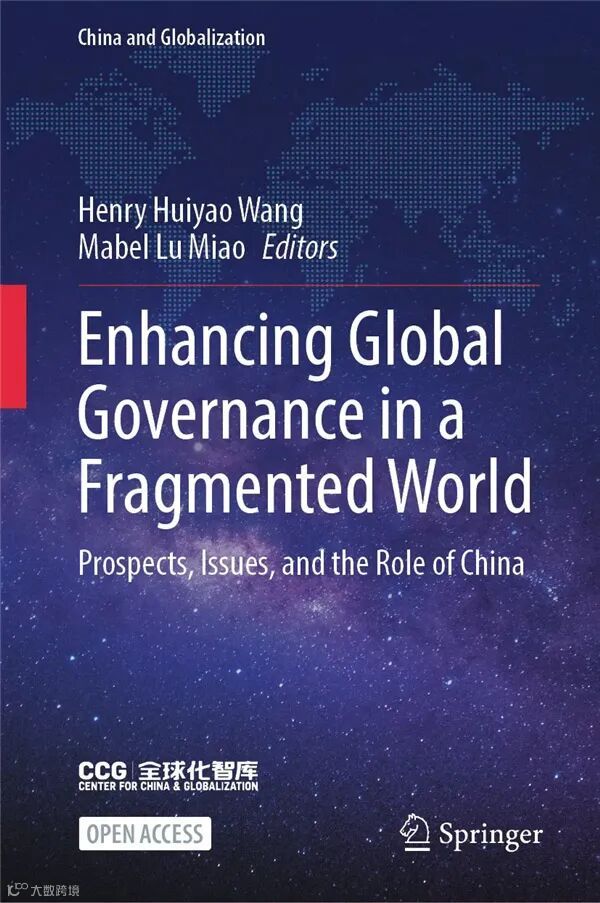
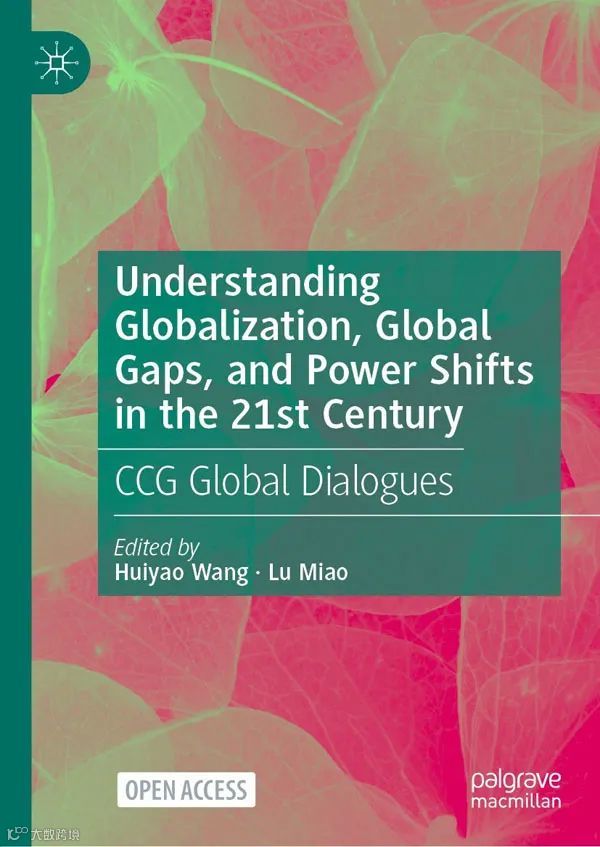
● Editors: Henry Huiyao Wang, Mabel Lu Miao
This open access book explores the ‘polycrisis’ currently affecting nearly all nations by exploring key themes such as multilateralism and globalization from the perspective of think tanks from nearly every continent, searching for various solutions to the ills that currently plague the world and a way to create a future in which everyone benefits.
As China’s preeminent non-governmental think tank, the Center for China and Globalization (CCG) has invited 30 leading figures from the global think tank community to sift through the myriad layers of multilateralism and global governance and provide a contextual analysis of major themes both from a theoretical and practical perspective, focusing on China in detail, but also examining the world as a whole.
● Links:
https://link.springer.com/book/10.1007/978-981-97-2558-8
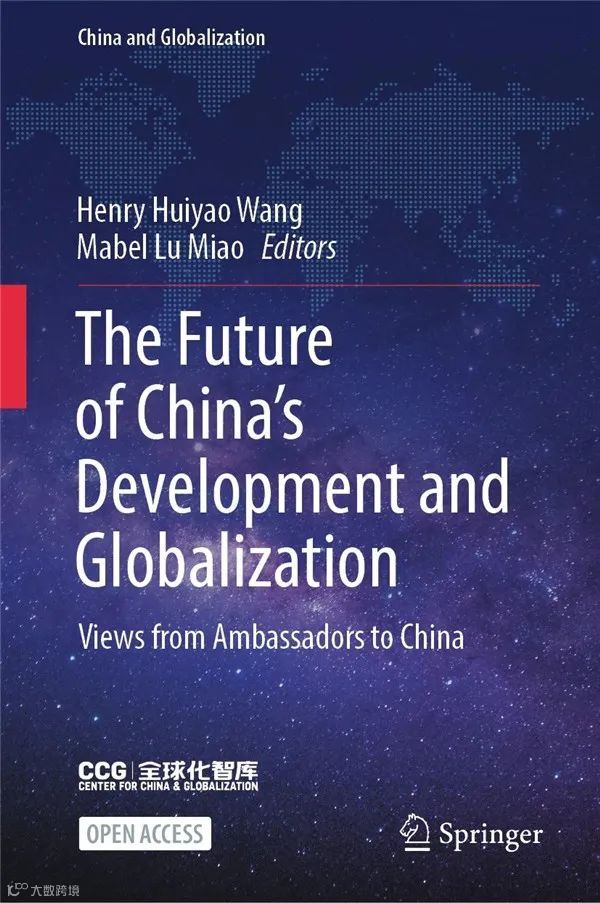
● Editors: Henry Huiyao Wang, Mabel Lu Miao
As the world continues to recover from the fear and uncertainty of the Covid-19 pandemic, a new set of challenges like increased geopolitical tensions and climate change have become increasingly prominent. This open access book, which contains the views of ambassadors to Beijing on topics ranging from bilateral relations to potential cooperation, global development and even more of the most immediate issues, aims to help readers make sense of our changing world and China’s role in it.
Building on the success of our previous volume China and the World in a Changing Context: Perspectives from Ambassadors to China, the Center for China and Globalization (CCG) has invited 27 ambassadors to examine China’s role in this context of constant flux, focusing specifically on China’s perspective, including its trade and investment ties with other countries, as well as its role in multilateral regional relations and global governance.
● Links:
https://link.springer.com/book/10.1007/978-981-99-7512-9
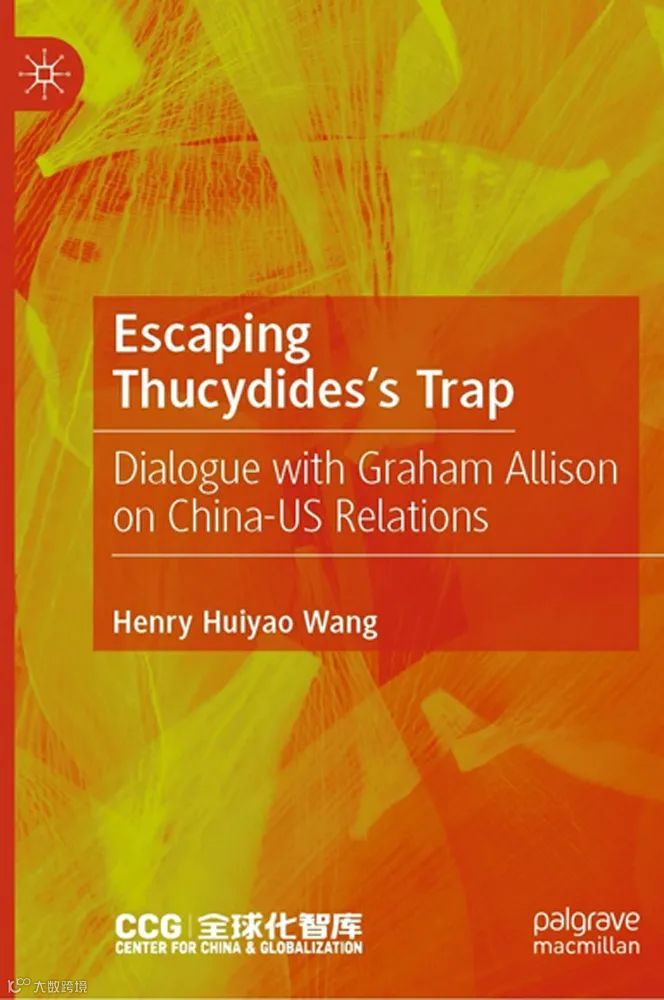
The book raised the question of how relations between the US and China will unfold is one of the most consequential of the 21st century. In the past decade, perhaps no thinker has had a greater influence on how this question is understood in both the US and China than eminent Harvard scholar Graham Allison, who developed the idea of the Thucydides Trap to warn of the risk of war erupting between a rising power and a ruling power in the power transition process.
This book presents a comprehensive collection of Allison’s views and writings on US-China relations from 2017 to 2022, covering a range of topics including the balance of power between the two sides, where the relationship is headed, and lessons from history on how conflict can be avoided.
● Links:
https://link.springer.com/book/10.1007/978-981-99-2236-9
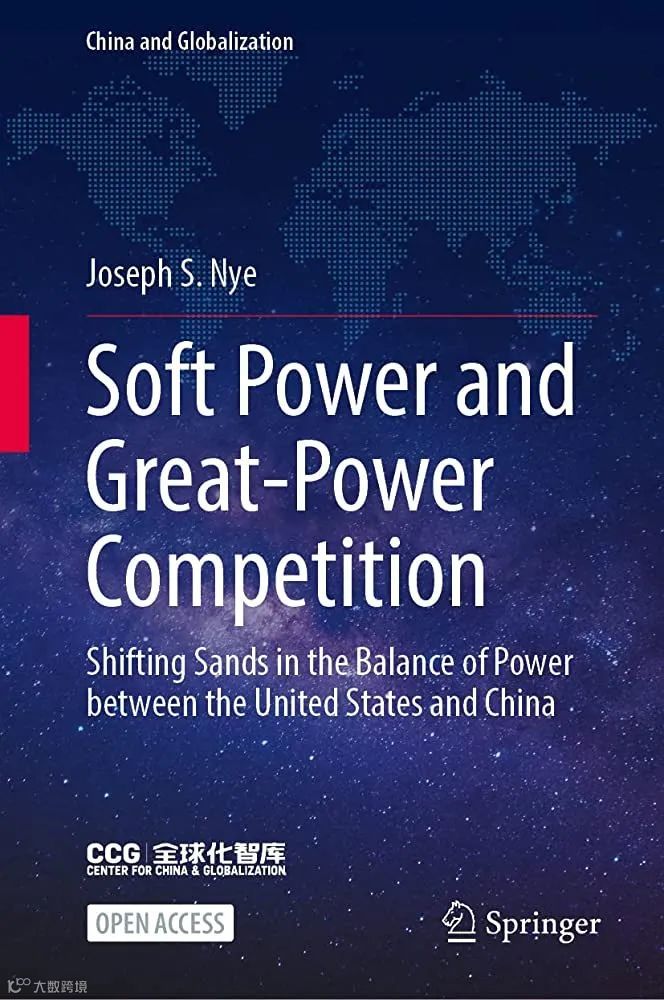
This open access book consists of essays selected from Joseph S. Nye, Jr.’s last three decades of writing and illustrate a variety of perspectives on the nature of power, the role of the United States in the world and US-China relations. Through this collection, it is hoped that readers will gain a better understanding of today’s global environment and find that while great power competition may be inevitable in a world as centers of power shift, cooperating to address transnational challenges can be a positive sum game.
● Links:
https://link.springer.com/book/10.1007/978-981-99-0714-4
● Published by Palgrave Macmillan Singapore
● Editors: Wang Huiyao, Miao Lu
This book aims to help readers make sense of our changing world by sharing the views of global thought leaders on some of the most important issues of our time, from US-China relations and global governance to climate change and the COVID-19 pandemic.
The ten dialogues in this book were part of the “China and the World” series of online discussions hosted by the Center for China and Globalization (CCG). The series features CCG President Huiyao Wang in conversation with experts from a range of fields, from renowned scholars of international relations, economics, and history, to journalists, policymakers, and business leaders.
● Links:
https://link.springer.com/book/10.1007/978-981-19-3846-7
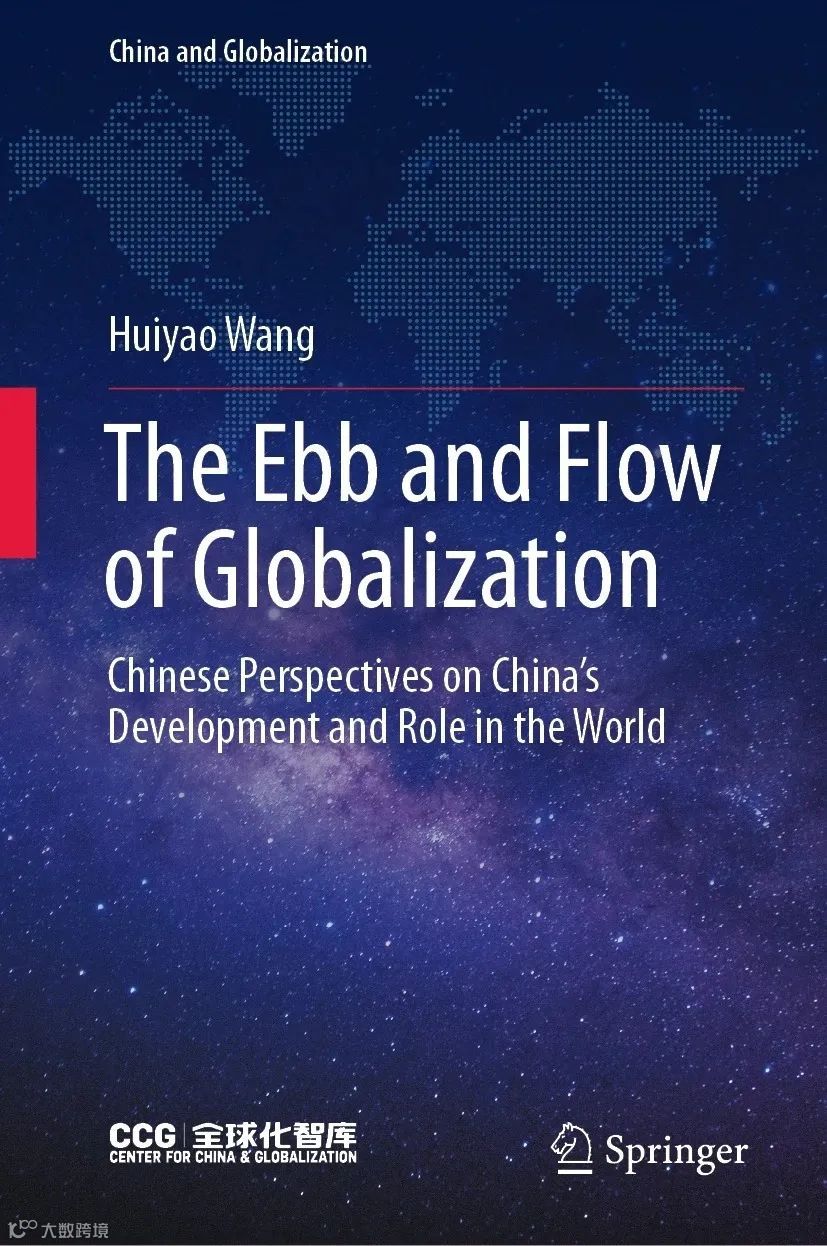
This book focuses on globalization and China’s evolving role in the world, offering unique perspectives on a number of developments during a tumultuous period that began with Donald Trump’s election and ended with the outbreak of the Covid-19 pandemic. This period saw the global landscape reshaped by China’s continued rise, intensifying great power competition, and a public health crisis that has changed how we live.
The essays center on three interconnected themes – China’s remarkable development under its policy of Reform and Opening-up, China’s deepening integration into the global economy and rise in an increasingly multipolar world, as well as the quest to revitalize global governance and multilateralism to address the pressing global challenges of the 21st century.
● Links:
https://link.springer.com/book/10.1007/978-981-16-9253-6
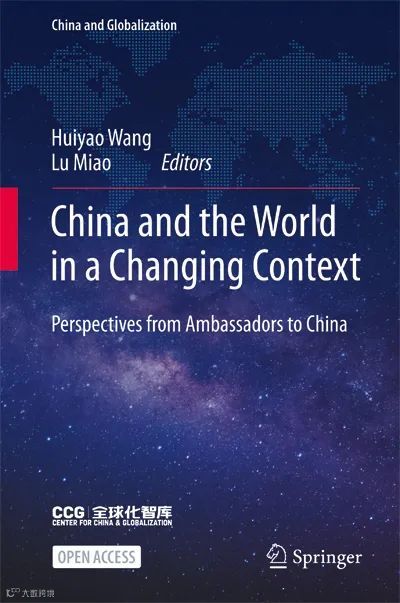
● Edited by Wang Huiyao and Miao Lu
China and the World in a Changing Context-Perspectives from Ambassadors to China is the latest volume in CCG’s “China and Globalization” series, which seeks to create a balanced global perspective by gathering the views of highly influential scholars, practitioners, and opinion leaders from around the world on issues of policy and governance.
Ambassadors are a kind of vehicle and bellwether for globalization. These diplomatic envoys serve as pivotal contact points between nations across a wide range of fields, from economics and culture, to health and the environment. The special group of ambassadors in this book – all based in Beijing – are at the forefront of what, for many countries, is one of their most important bilateral relationships and the platform for one of the most striking and consequential developments in global affairs in the 21st century: the rise of China on the world stage.
● Links:
https://link.springer.com/book/10.1007/978-981-16-8086-1
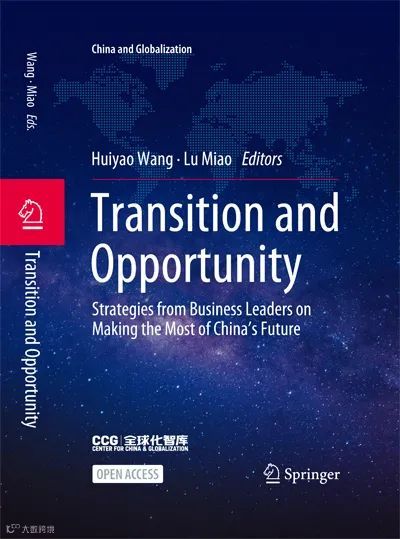
● Edited by Wang Huiyao and Miao Lu
Released nearly two years after the outbreak of COVID-19, Transition and Opportunity brings together an array of CEOs and senior executives from leading multinationals, leaders of foreign trade associations and representatives of advocacy groups on the ground in China to share their views on the potential and risks China holds for business as the world economy recovers.
The 22 entries in this book include contributions from the heads of Beijing-based chambers of commerce representing the EU, the US, France, Switzerland and Brazil and others, CEOs and senior executives of MNCs like Airbus, Royal DSM, Michelin, LinkedIn and Herbalife as well as representatives of global consulting firms like KPMG, PwC, Accenture and Roland Berger.
Divided into three parts - ‘The Big Picture,’ ‘Analysis and Advice,’ and ‘On the Ground’ - content progresses from looking at how countries balance their own interests with China’s for that elusive ‘win-win’ formula, to the role consultancies and advisors play in helping companies succeed, then looking at the experiences of individual companies to see how they have adapted and thrived in China.
.
● Links:
https://link.springer.com/book/10.1007/978-981-16-8603-0
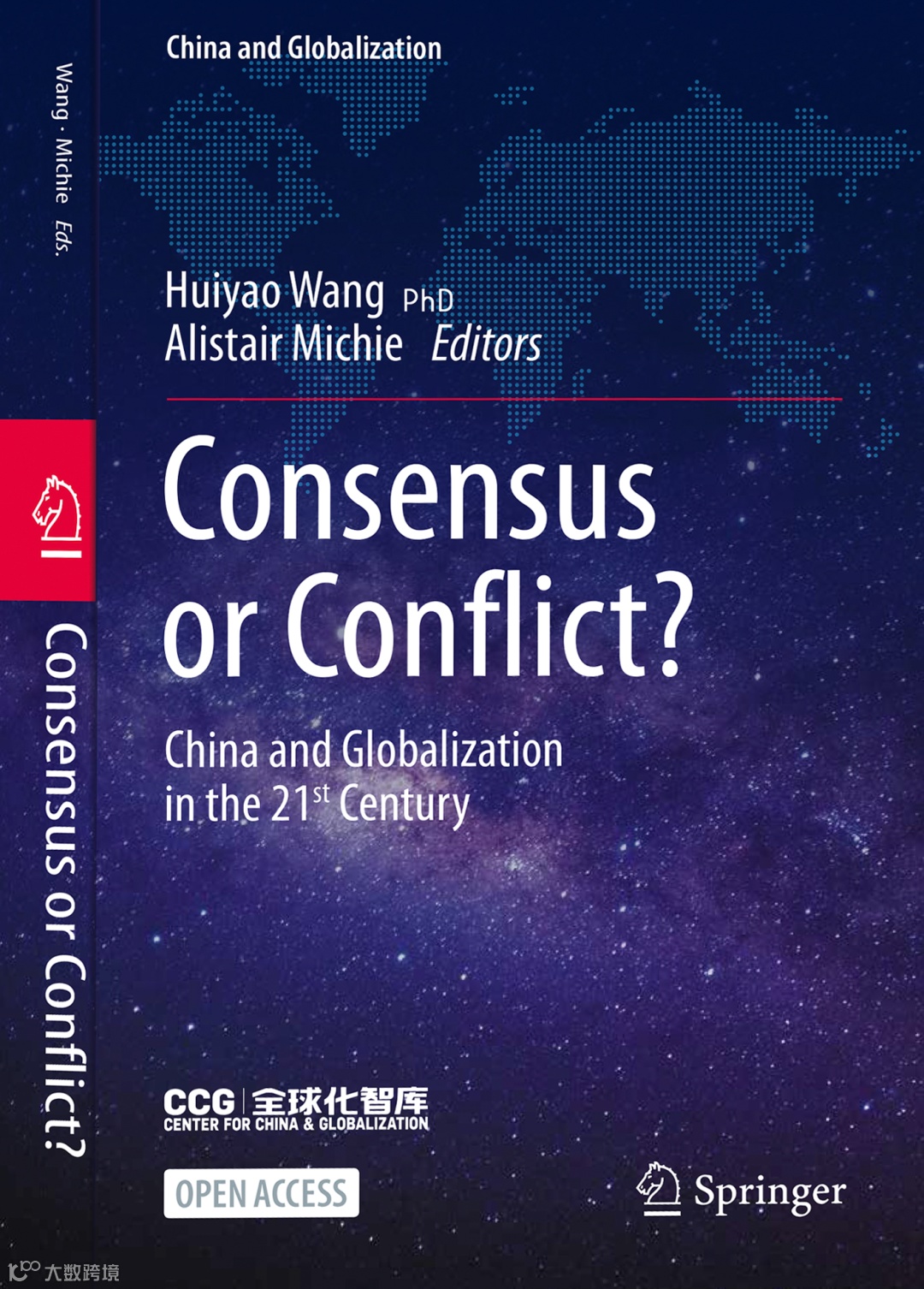
● Edited by Wang Huiyao and Alistair Michie
This book brings together leading international scholars and policy-makers to explore the challenges and dilemmas of globalization and governance in an era increasingly defined by economic crises, widespread populism, retreating internationalism, and a looming cold war between the United States and China. It provides the diversity of views on those widely concerned topics such as global governance, climate change, global health, migration, S&T revolution, financial market, and sustainable development.
● Links:
https://link.springer.com/book/10.1007/978-981-16-5391-9
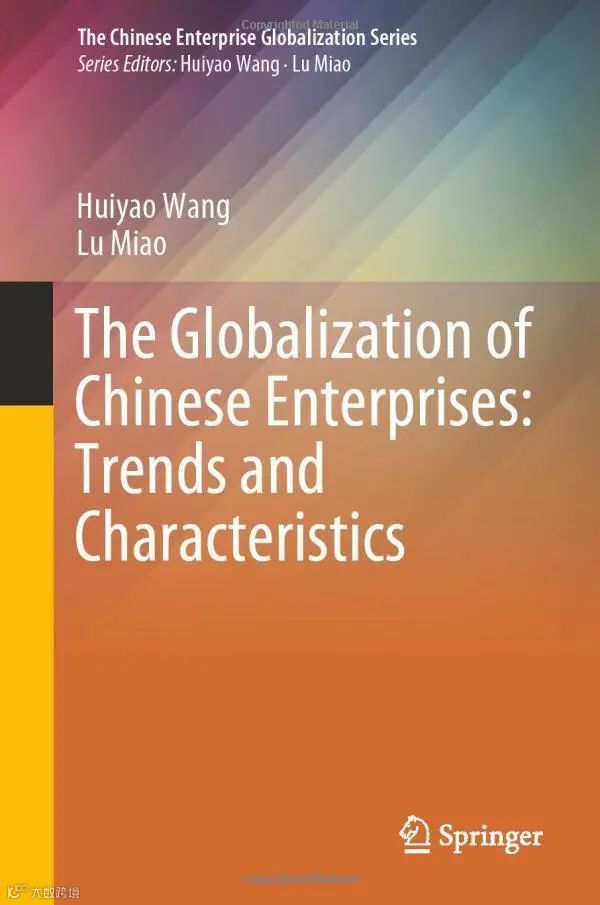
● Edited by Wang Huiyao, President and Miao Lu, Vice President, Center for China and Globalization(CCG), Beijing, China
The internationalization of Chinese enterprises is one of the most notable aspects of economic globalization in the 21st century. Despite the 2008 financial crisis and weak global outbound investment, under the “go global“ initiative, Chinese outbound investment has gone from strength to strength, while also diversifying in terms of investment modalities, destinations, and industries. However, growing anti-globalization sentiment in some countries has also created new challenges for Chinese firms expanding internationally.
Drawing on nearly 3000 data samples, using both quantitative and qualitative research methods, this book presents unique insights into the features and patterns of Chinese enterprises’ globalization. The analysis provides a useful reference for enterprises that have already gone global and those that plan to. In particular, this book investigates challenges confronted by Chinese companies when doing business in foreign countries. It summarizes research covering three angles, namely: the current situation, causation analysis and corresponding solutions, and recommendations for firms, government agencies and other institutions.
This book provides a comprehensive overview to help readers to grasp the broad picture of the international expansion of Chinese enterprises. It has important reference value for enterprises to help devise foreign investment strategy, seize opportunities, and navigate challenges in the course of globalization.
● Links:
https://www.springer.com/cn/book/9789811546457
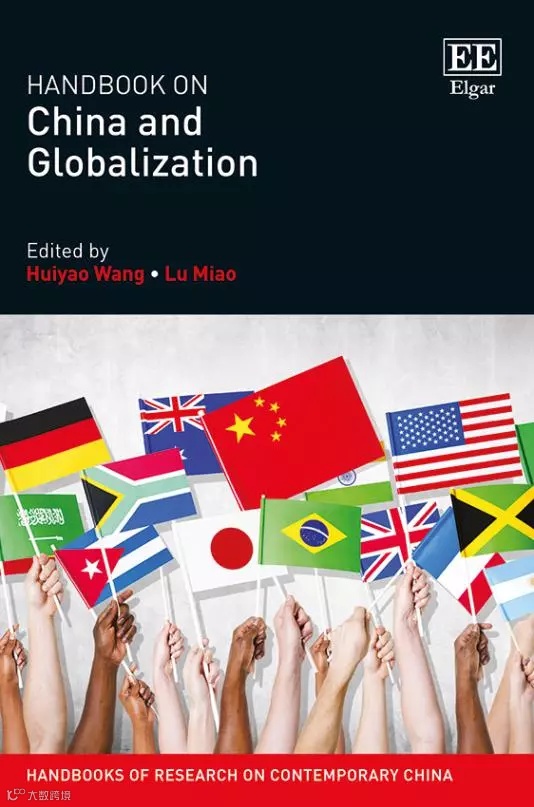
● Published by Edward Elgar
● Edited by Wang Huiyao, President and Miao Lu, Vice President, Center for China and Globalization(CCG), Beijing, China
An excellent guide for understanding the trends, challenges and opportunities facing China through globalization, this Handbook answers the pertinent questions regarding the globalization process and China’s influence on the world.
With contributions from leading experts and international researchers, each chapter covers key topics regarding China’s participation in globalization, including: China’s new role in global economic governance; outward direct investment; China’s soft power and the implications for foreign relations; global migration, diaspora and talent. An enriching range of case studies and extensive empirical research are used to explore the successes and failures of globalization in China, and to discuss the dilemmas facing decision makers in today’s globalized world. A major contribution to the field, this Handbook offers valuable insights to China’s often misunderstood globalization process.
An essential reference for academics and researchers looking for a go-to empirical resource, this Handbook provides scholars of economics, politics and East Asian studies with an exemplary selection of contemporary research on China and globalization.
● Links:
https://www.e-elgar.com/shop/handbook-on-china-and-globalization
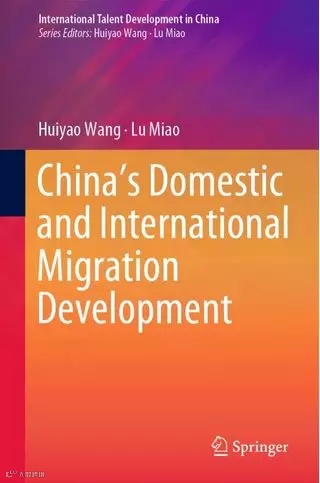
● Authors: Wang Huiyao, President and Miao Lu, Vice President, Center for China and Globalization(CCG), Beijing, China
The first effort to address the gap regarding higher-end talent within the scholarly work on internal labor migration in China
Provides an essential overview of the major milestones in China’s talents attraction policies, as well as several recommendations to help further improve those policies
Investigates corresponding policies in Germany, Japan, and Singapore to serve as a basis for comparison
Provides a snapshot of first-hand reference material for relevant stakeholders involved in cooperation with China
This book offers the most comprehensive, up-to-date assessment of China’s domestic and international migration. Restructuring economic development requires large numbers of educated and skilled talents, but this effort comes at a time when the size of China’s domestic workforce is shrinking. In response, both national and regional governments in China have been keen to encourage overseas Chinese talents and professionals to return to the country. Meanwhile, the Chinese government has initiated a number of policies to attract international highly-skilled talents and enhance the country’s competitiveness, and some Chinese policies have started attracting foreign talents, who are coming to the country to work, and even to stay. Since Chinese policies, mechanisms, and administration efforts to attract and retain skilled domestic or overseas talents are helping to reshape China’s economy and are significantly affecting the cooperation on migration and talent mobility, these aspects, in addition to being of scholarly and research interest, hold considerable commercial potential.
● Links:
https://www.springer.com/gp/book/9789811362552#aboutBook





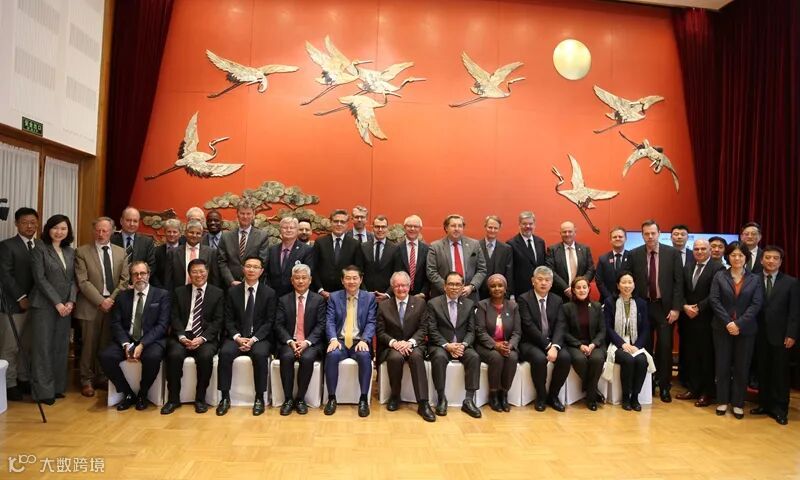 Diplomats, experts, and business representatives attending the Center for China and Globalization (CCG)'s first VIP Luncheon in 2025 in Beijing, which is held on March 14, 2025.