



NDRC researcher, Tsinghua scholar, and renowned environmentalist discuss China’s ambition in green transition and pathways for international cooperation.
On August 28, the Centre for China and Globalisation (CCG) hosted its latest CCG VIP Luncheon themed “New Energy and Global Green Transition.”
The featured speakers were
ZHAO Yongqiang, Director of the Renewable Energy Centre, Energy Research Institute, National Development and Reform Commission (NDRC)
ZHANG Jian, Vice Dean, Institute of Climate Change and Sustainable Development (ICCSD), Tsinghua University; Deputy Secretary-General, Global Alliance of Universities on Climate (GAUC)
MA Jun, Director, Institute of Public & Environmental Affairs (IPE)
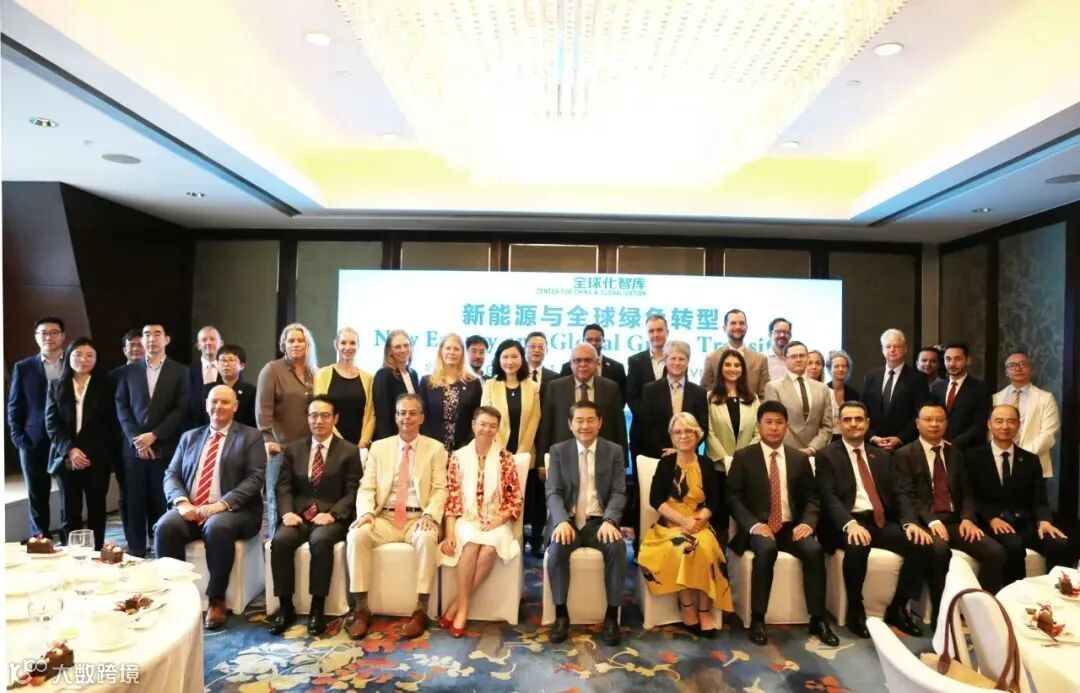
Five ambassadors—from Germany, Greece, Japan, New Zealand, and Turkey—were in attendance, alongside diplomats from Barbados, Canada, Croatia, Finland, Hungary, Iceland, Marta, Norway, Romania, the UAE, and the United States. Representatives from international organisations, chambers of commerce, multinational corporations, and both Chinese and international media also took part.
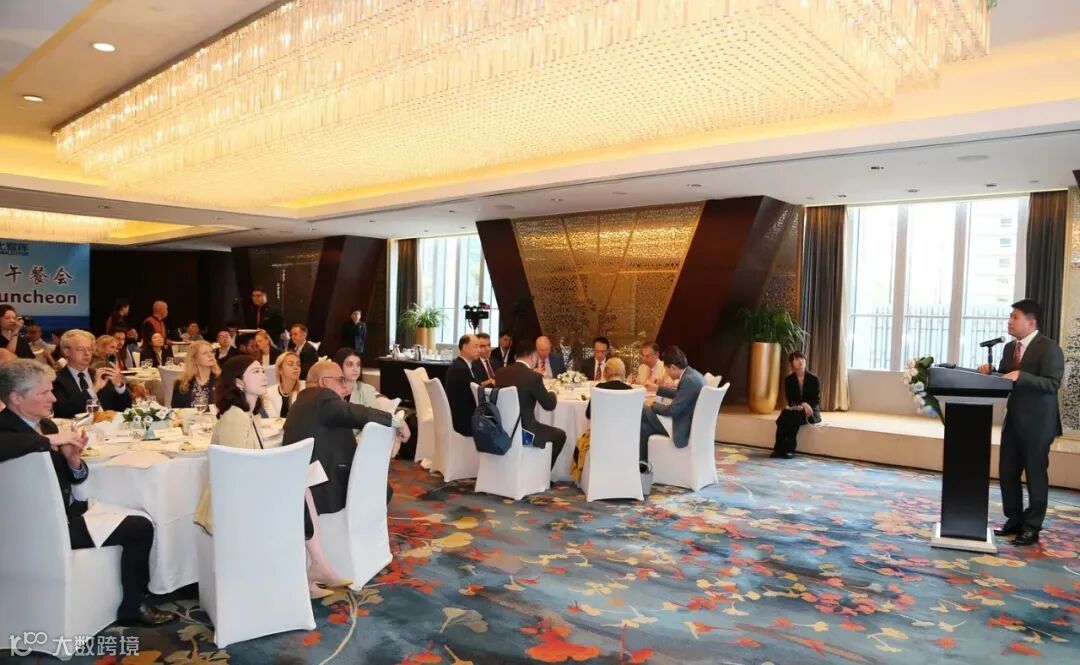
The following transcript is based on the video and has not been reviewed by any of the speakers.
Mabel Lu Miao, Secretary General, CCG
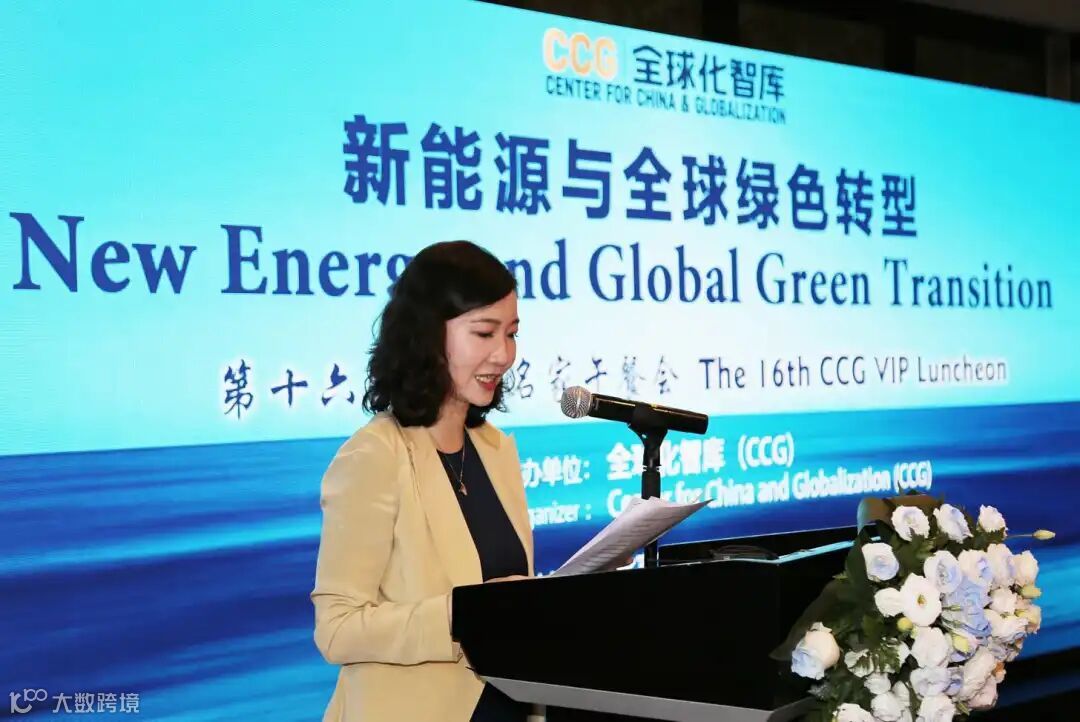
Your Excellencies, distinguished guests, ladies and gentlemen,
Good afternoon. It is my great pleasure to welcome you all to the 16th CCG VIP Luncheon. Thank you very much for taking the time to join us today. The CCG VIP luncheon series, initiated and hosted by the Centre for China and Globalisation, has become an important platform for dialogue and exchange. It brings together diplomats, international organisations, leading enterprises, and academic experts to share insights on China’s development and foster mutual understanding and cooperation in an increasingly interconnected world.
Today’s luncheon is particularly timely as it focuses on trends in clean energy under the green transition. In the context of rising global awareness about climate change and environmental sustainability, the transition to clean energy has become a defining challenge and opportunity of our era. Governments, businesses, and societies worldwide are increasingly recognising that addressing carbon emissions and resource depletion is not only essential for the plants, health, but also critical for long-term economic resilience and social well-being.
We are honoured to have with us three distinguished speakers later who will share their expertise and perspectives. Please allow me to introduce them.
Mr. ZHAO Yongqiang, Director of the Renewable Energy Centre, Energy Research Institute, NDRC. Welcome.
Dr. ZHANG Jian, Vice Dean, Institute of Climate Change and Sustainable Development (ICCSD), Tsinghua University; Deputy Secretary-General, Global Alliance of Universities on climate, Welcome.
Dr. MA Jun, Director, Institute of Public and Environmental Affairs (IPE). Welcome.
Before we proceed, I would like to extend a special welcome to our distinguished guests. We are privileged to have diplomatic representatives from 16 countries today, including five ambassadors with us. Especially, we have invited the Ambassador of Germany, the Ambassador of Greece, the Ambassador of Japan, the Ambassador of New Zealand, and the Ambassador of Turkey to join us.
Additionally, diplomatic representatives from the Embassy of Barbados, Embassy of Canada, Embassy of Croatia, Embassy of Finland, Embassy of Hungary, Embassy of Iceland, Embassy of Marta, Embassy of Norway, Embassy of Romania, Embassy of the UAE, Embassy of the United States. All of them are participating in today’s event.
In addition, representatives from international organisations—IMF, OECD, SCO, UNDP, and UNFPA—are also participating in our event. Welcome, all of you.
Furthermore, today’s luncheon features participation from leading companies, including BASF China, Grupo Bimbo China, Li Auto, CICC Pucheng Investment, and NewLink. Welcome, all of you.
Last but not least, the presence of media representatives from outlets including Asahi Shimbun, CGTN, China Daily, DER SPIEGEL, Die Zeit, The Hindu Group, Nippon Television, and Press Trust of India will ensure broad coverage and the dissemination of today’s important discussion.
Thank you all once again for your support and engagement. We look forward to a fruitful and inspiring luncheon. Now, without further ado, let us begin with our speeches from our host and the distinguished speakers. First of all, I would like to invite Dr. Henry Wang, who is the Founder and the President of the Centre for China and Globalisation, also the former Counsellor of China’s State Council, to deliver the welcome address. Welcome, Dr. Wang, thank you.
Henry Huiyao WANG, Founder & President, CCG
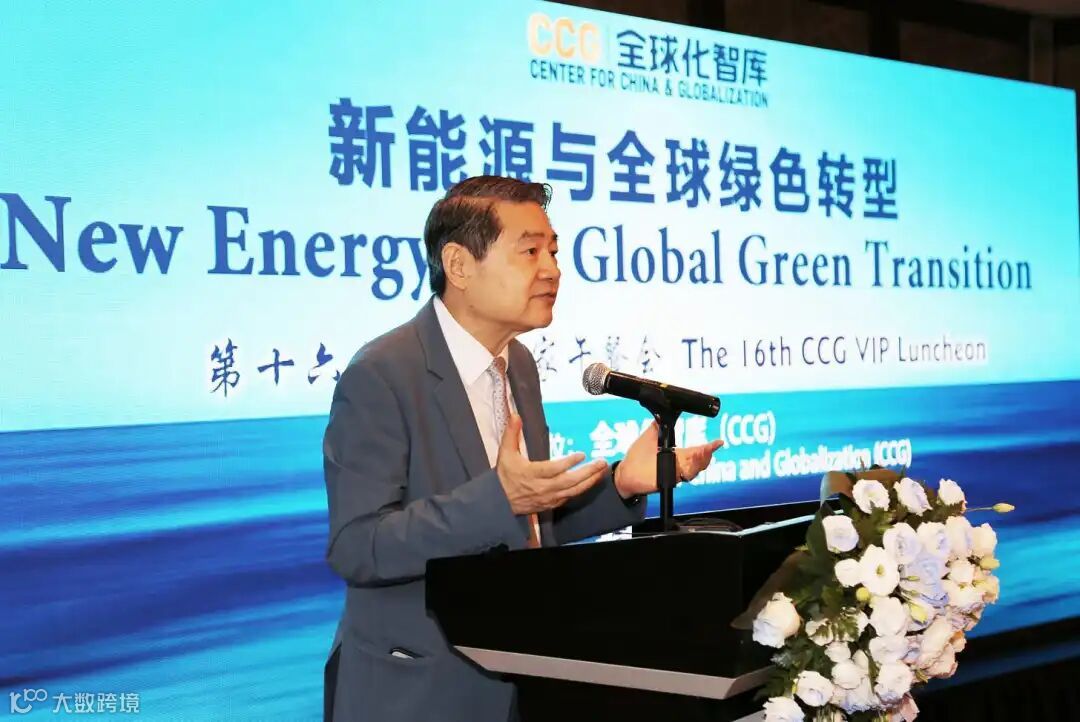
Your Excellencies, very distinguished guests, representatives of international organisations, multinational representatives, and media representatives,
It’s really a great honour. Also, welcome our three top experts to the 16th CCG VIP Luncheon. The CCG VIP Luncheon started last year, and we had 12 luncheons last year. This year, we are having another six. It’s a very important platform for presenting the latest developments, information exchange, and discussions on major China-related issues and policies, as well as collaboration with different countries. So, this is a unique platform that CCG is dedicated to building.
We are very pleased to report that since its launch last year, we have held 16 sessions, and this time we are moving to a better venue, which is a positive development. We are also hosting very open discussions, and later on, we will publish the videos and news coverage through our media outlets. This is really an open platform, promoting dialogue, exchanges, and discussions.
Today’s theme, new energy and global green transition, is a very hot topic. We all know that we are facing unprecedented climate changes everywhere, such as record-breaking heat this summer, fires in Spain, and floods in Beijing, which tragically caused 60 deaths. We’ve also seen disasters in Pakistan and many other countries. These are real, and we must work together to maintain the Paris Climate Change Agreement and strengthen international cooperation.
China has explored and collaborated with many international companies, governments, and programmes, achieving significant success. One area where China did well is in electric vehicles (EVs). I remember 15 years ago, the Beijing Mayor told me that heavy smog in Beijing was traced to 60% of emissions coming from combustion engine cars. So, they decided to tackle this for the sake of Beijing and China. At that time, the U.S. Embassy was announcing PM 2.5 levels every day from their roof monitor, but now we have seen great progress. Over half of the vehicles in Beijing are now green vehicles, mostly EVs. That shows how we can work together.
I know that European countries, North American countries, Canada, Australia, and New Zealand are also strong proponents of green development. We’d love to hear from our experts. The UN, IMF, and other international organisations are also pushing for these efforts. Companies like BASF are very active as well. It’s a great honour to welcome all of you.
I’ll stop here, and please enjoy your meal during the luncheon. We hope that you will continue to participate and help us build a unique platform in the heart of Beijing, facilitating great exchanges between China and the world. Thank you very much.
Mabel Lu Miao
Thank you, Henry, for the welcome remarks. Actually, we have two parts today. The first part will feature our three distinguished speakers, who will deliver their speeches. After that, we’ll move to the Q&A session, which is usually the most popular part of our luncheon. We welcome all of you to join us.
First of all, I would like to invite Professor Zhao Yongqiang, Director of the Renewable Energy Centre at the Energy Research Institute, NDRC. Allow me to briefly introduce Professor Zhao. He holds a Master’s Degree in Public Management from Tsinghua University and a Bachelor’s Degree in Thermal Energy and Power Engineering from Xi’an Jiaotong University. Since joining the Energy Research Institute in 2004, he has focused on renewable energy and energy transition strategies, including carbon peak and neutrality policies, energy planning, technology roadmaps, and international cooperation. He has led consulting projects for key Chinese government bodies, such as NDRC and the National Energy Administration, and has participated in major international collaborations, including the U.S.-China Renewable Energy Partnership and the G20 Energy Sustainability Working Group.
Welcome, Professor Zhao. The stage is yours.
ZHAO Yongqiang, Director of the Renewable Energy Centre, Energy Research Institute, National Development and Reform Commission (NDRC)
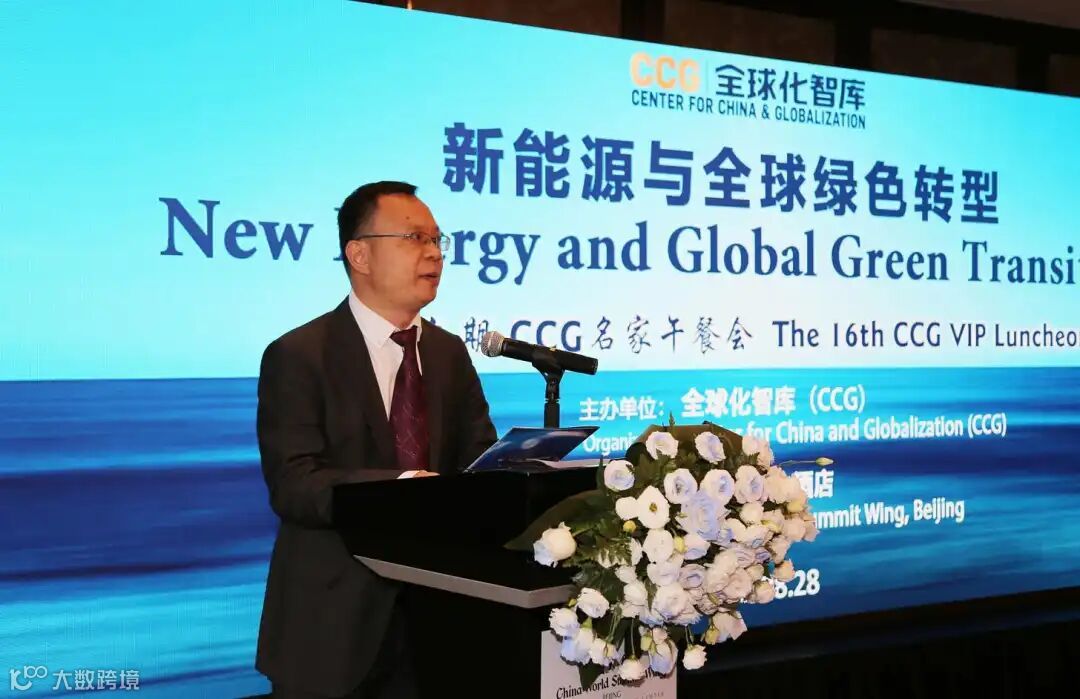
Thank you very much. Your Excellencies, ladies and gentlemen,
It’s my honour to speak at the CCG VIP Luncheon and have the opportunity to exchange ideas with other ministers, diplomats, enterprises, and media representatives from so many countries. It’s my honour.
We know international cooperation is important for clean energy, for climate change. In fact, myself and my colleagues at the Energy Research Institute have visited many countries, from Germany, Japan, the U.S., Norway, Finland, and we benefit from international cooperation. I think we agree that clean energy and green energy transition are essential to human survival and development, and we would like to share three ideas.
First, China is advancing its own energy transition and contributing to the global energy transition. China became the largest energy producer and consumer in 2010. Before that, China had already started to develop renewable energy. Now China accounts for 1/3 of global power generation—I think the generation sector is most important for the energy transition. And energy demand, especially electricity demand, continues to grow, not only in China, but also the world. China continues to face resource and environmental constraints in the long run. Energy transition is the fundamental solution to these challenges.
China’s energy transition aims to build a clean, low-carbon, safe, and efficient energy system. This will create synergies for cutting carbon emissions, reducing pollution, expanding green development, and stimulating economic growth, with the ultimate goal of building harmony between human and humanitarian nature. China need to seize the opportunity and build a sound momentum to promote high-quality development of China’s energy systems. With greater efforts to provide secure and reliable energy support for China’s modernisation, we can significantly contribute to building a clean and beautiful world.
We think China’s energy transition has three pillars: high-share renewable energy development, identification with sector coupling, and strong smart grid network infrastructure. China has taken vigorous measures to develop renewable energies, including hydro, wind, solar, biomass, and geothermal energy, and aims to create energy supply systems dominated by non-fossil fuel energy. In addition to a large new energy space in West China, China has also developed distributed energy systems, especially solar, mostly in Eastern and Central China. China is also the largest offshore wind-developing country in the world.
By June this year, the total installed capacity of power generation reached 3650 gigawatt, of which renewable energy generation capacity accounted for 60%. Wind and solar—we call it variable renewable generation—accounted for 45%. I think it is a great achievement, but also a great challenge for the future to integrate so much wind and solar. We’ll talk about that later. In fact, all the renewable energy generation accounted for 40% of the generation. And within [renewable energy generation], solar generation accounted for 43%. In some regions. In [inaudible] and Qinghai, the share is much higher, nearly 90% in some regions.
China is advancing identification in industries, building [sustainable] transport sectors and low-carbon transition of consumption patterns. In the infrastructure, there has been a shift from traditional fuels to electricity for process, heating, drying, and steam supplies. In residential sectors, there has been widespread adoption of solar water heaters, electrical cooking, and heating based on heat pumps. In the transport sector, there has been a strong push for new energy vehicles. By the end of June of this year, China will have over 37 million new vehicles, including 25 million electric vehicles.
China has accelerated the construction of a cross-country energy network. It built three west-to-east power transmission corridors across the provinces and the regions in the North Central and South China with a capacity of about 300 gigawatt and completed 20 ultra-high voltage direct current transmission channels. China is very big, and most wind, solar, and hydro is in western China. We have to build nearly 2000 transmission lines to support eastern China. The country is also working on hydrogen transportation by pipelines and building integrated energy service stations, supplying oil, gas, electricity, and hydrogen.
China has accelerated the application of digitalisation and intelligent technologies to upgrade the energy infrastructure. Smart microgrid has been built in industry, transport, construction, and other sectors, allowing consumers to use local new energies.
Further opening up will create new opportunities for deeper international cooperation. In fact, a lot of China’s. A lot of international companies come to China and develop their business. We have Vestas from Denmark, GE from the U.S., Siemens from Germany, and Gamesa from Spain. I think we all benefit from international cooperation now. I think we need more advanced technologies, products, and deeper cooperation, including smart energy systems. This is my first point.
Secondly, energy transition is going to a new era of reshaping the energy system. China and many countries share a similar vision and challenges. According to the China Energy Transition Outlook, released by the Energy Research Institute of NDRC, in order to reach carbon neutrality by 2060. China’s total installed power generation capacity needs to reach 11,000 gigawatt, about four times that of 2003. The renewable generation share should reach more than 90%. We believe China and many countries have three common visions and challenges to reach the common challenges: technological innovation and low-cost, stable supply chain, reliable and resilient electric power system and energy systems, integrated high-share variable renewable generation, such as wind and solar, energy governance, and market rules that are suitable for a new energy system dominated by renewable energy. I think we all want to have this vision, but it’s also a challenge.
Thirdly, the pace of energy transition depends on international cooperation. Maintaining energy security and promoting a clean, low-carbon transition are common challenges for the world. China is working with other countries to promote sustainable global energy development and build a global energy governance system based on equity, justice, balance and inclusiveness. It is committed to improving bilateral and multilateral cooperation mechanisms in the energy sector, strengthening the exchange of policy ideas and best practices in energy transition, and advancing cooperation and capacity building in green and low-carbon technologies.
Thus, we will be able to achieve the goal of the Paris Agreement, carbon neutrality, and ensure access to affordable, reliable, sustainable, and modern energy for all. I think the clean energy future is up to all of us, all the countries. In fact, China has set up forums to strengthen international exchange. During the Taiyuan Energy Low Carbon Development Forum, which will be held in Taiyuan, Shanxi Province, various research institutes will host sessions. We have also prepared invitation letters for our international friends. We welcome you to Taiyuan. In October, China will cooperate with the International Renewable Energy Agency (IRENA) to host the Suzhou International Forum on Energy Transition. I think they’re all very good exchange platforms for you, for China, for enterprises to find new solutions. I think in the future, collaboration is really essential to our energy transition. Thank you all.
Mabel Lu Miao
Thank you, Professor Zhao from NDRC. Thank you for your very comprehensive and very inspiring introduction about the policies in China, especially on the low-carbon and clean energy transition.
Next, we would like to invite Dr. Zhang Jian, the Vice Dean of the Institute of Climate Change and Sustainable Development at Tsinghua University. I would also like to introduce a little about Dr. Zhang. Dr. Zhang is also Deputy Secretary General of the Global Alliance of Universities on Climate. His research covers global climate governance, climate adaptation, sustainable development, and climate innovation. He leads several significant projects, including China’s healthcare decarbonization pathway program and Tsinghua Global Adaptation Joint Action Initiative. Dr. Zhang has authored key climate reports and serves on multiple academic and UN committees related to sustainability and the climate action. The floor is yours. Thank you.
ZHANG Jian, Vice Dean, Institute of Climate Change and Sustainable Development (ICCSD), Tsinghua University; Deputy Secretary-General, Global Alliance of Universities on Climate (GAUC)
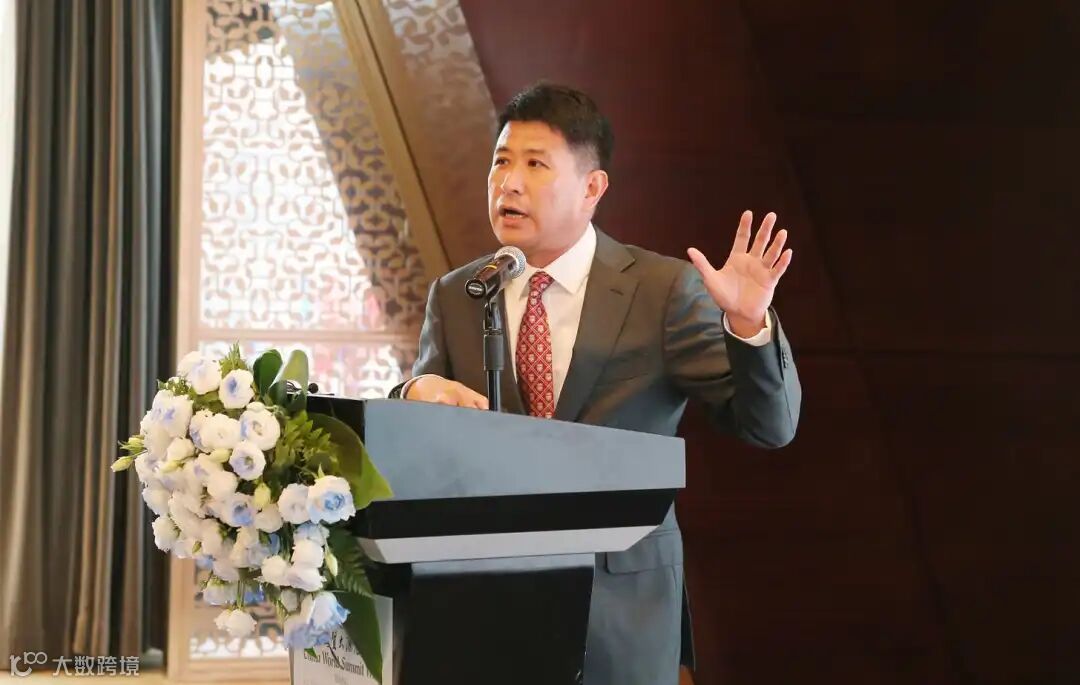
Thank you very much, Chair. I also want to thank CCG for the invitation. It’s really a privilege to speak in front of so many excellencies and friends from multi-stakeholders as we all work together to tackle this big challenge.
My topic today might seem a little bit marginal to new energy, but I think artificial intelligence and the [inaudible] will move into the centre of this green transition. It might come in a very friendly way, if we manage well, but it could also be very disruptive - in a powerful, disruptive way. So I think it’s very relevant to look at the relationship between artificial intelligence and climate and sustainable development. I think I will use the next 15 minutes to brief all of you on this joint research that we have been working on with the UNDP on the relationship between AI and climate. I think it will not only bring solutions, but also new challenges that will require a lot of attention from us.
This report focuses on the Asia-Pacific region. At this moment, we hope to expand our work into Eurasia and African countries, but this part of the research is on the Asia-Pacific. There are a couple of reasons for this.
First, this region is home to half of the world’s population and contributes to nearly half of the global CO2 emissions. It is also home to some of the most rapidly growing economies. And if we don’t pay enough attention to the emissions here, under this high-emission scenario, all of these rapidly developing economies could see a GDP loss of up to 17% by 2070.
So, this is all about reducing emissions, but also in terms of adaptation. If we look at the Global Adaptation Initiative map over there, the Asia-Pacific is also home to most of the vulnerable countries which are already hit the hardest by this crisis. We see the green parts—New Zealand, very resilient, comparatively. But we also have very low preparedness and high vulnerability in some Asian countries.
We are faced with this urgency, but I don’t think we have enough digital solutions to handle that. For both policymakers and practitioners, we need granular climate data, enough data, and also powerful, dynamic models to analyse that data and put forward policy pathways and directions so that we can take proper and functional action. This is where AI can come in to support us, to help us, to fill all the gaps in our capacity for digital solutions.
From an academic point of view, if we look at how AI has already contributed to sustainable development, including climate, we see this figure here, which includes data from last year and part of this year. So, over 300 empirical studies show AI has already been taken into function in mitigation for the clean energy industry, but also into many important aspects of adaptation, like setup in the Global Goal on Adaptation, including water resources, food and agriculture, healthcare, and also education, which means increasing climate literacy during the process and awareness for sustainable development.
When we talk about artificial intelligence, we’re not talking about only one or two tools. It’s a set of tools ranging from machine learning, language processing, to generative AI. So there are 20 of them, very frequently used across the whole topic. The potential, the good things about AI that can help us with climate change, lies in mitigation and adaptation. There are many ways it can help, but the top three I’ve listed here are smart grids. As Director Zhao mentioned, we need very smart grids to help with the transmission of renewable electricity. Energy efficiency is another key area. Under the negotiated targets to triple renewable energy and double energy efficiency, set by the COP meetings two years ago, we need to bring energy efficiency to the centre.
And also real-time emissions monitoring. It’s very important both for the carbon market and for trade and tax issues. Adaptation also needs artificial intelligence because we need to build a better early warning system for extreme weather events, and also improve decision-making in agriculture, food production, and food security.
So here are some of AI’s roles in climate action, like renewable energy integration into the power grids. AI-driven smart grids minimise energy wastage, with studies indicating up to a 15% reduction in energy consumption in optimised systems with AI. And of course, there’s carbon capture and emissions monitoring with AI. Enhanced monitoring systems can detect methane leakage with up to 95% accuracy. We know methane is the second most important greenhouse gas, so we need to consider that as well.
And this is a summary of all these techniques, applications and also benefits. I’ll leave this slide here so I don’t have to get into all these details here, but we can see if we deploy all these technologies—of course, differentiated technologies in various domains will have multiple and big benefits out of their applications. Also, as I mentioned regarding smart grids, AI can make contributions and bring positive impacts in both reducing greenhouse gas emissions and enhancing power grid reliability, which is a very big challenge for us as we develop renewable capacity. In building efficiency, it adjusts resource allocation and optimises environmental control systems for all these buildings.
So, here are some examples. For example, the smart grid system in Singapore increased the renewable energy in the national energy supply from 4% to over 8% by using AI to make the grid smarter, so that it’s taking more electricity generated from renewables. Also, in Hong Kong, they have an AI-driven smart building system that reduces energy consumption by 15% in terms of heating, lighting, and air conditioning. This also inspired a number of projects across the region. For example, in Tokyo and Shanghai, we see very good outcomes from where we use AI to help with energy efficiency. And for increasing climate resilience, we also have very good practices here. For example, in India, the AI-for-food forecasting management system by the meteorological department [has led to] very good yields in food production and water consumption savings. There is also the disaster warning system in the Philippines, where we’ve been able to collect data and summarise best practices. In Vietnam, AI-driven agriculture supports sustainable food production. These are all very good examples.
But as we enjoy all of these positive benefits, we also face risks, right? In terms of three aspects, one is energy consumption: we know that data centres consume 10 to 50 times more energy per square foot than ordinary commercial spaces. In the Asia-Pacific region, data centre energy use reaches over 100 terawatt-hours, led by China, Japan, and Australia. It has continued to grow. And also, over 5 billion litres per year of water consumption, and this could double by 2030. With all this development of artificial intelligence, we have this mining issue—mining rare earth elements. It is very hard to avoid causing environmental damage. The production and disposal of AI hardware devices, along with the tailings, will also create very big problems.
For example, in this region, data centres consumed an estimated 55 terawatt-hour in 2023—that’s already 27% of the global total—and are projected to represent roughly 8% of regional electricity demand by 2028. The driving forces behind these large-scale facilities are mainly from China, India, Japan, and South Korea. So that’s also the case in the U.S. If we look at the data: in 2018 it was only 1.9% of total electricity use, but in ten years’ time — by 2028 — it will rise to 12%, almost ten times in ten years. And water consumption, as I mentioned just now, will rise to an equivalent of six times as much the annual water usage of a mid-sized country.
Mineral consumption is also rising significantly. By 2030, all these AI centres could represent 2 to 3% of global demand for key minerals. This graph shows some of the changes in six or seven years’ time. Also, it will create inequality problems, both within and between countries. It could further widen the gender gap, because without access to mobile phones or the internet, it will worsen the gap in people’s ability to receive information and respond to climate-induced disasters. The gap between rural and urban areas as well. So, without deliberate efforts to bridge these gaps, emerging climate technology could deepen existing social divides. This is a very serious socio-economic problem that we need to look at.
So, I think what we can do now is to start as early as possible to embed sustainability into AI infrastructure. There are a few things we can do for energy. I think we should put up a mandate for renewable energy consumption for new data centres, through measures like tax credits and regulations. And the same applies to water use, by incentivising efficient cooling, for example, direct-to-chip immersion cooling, to slash the usage of water. For example, as with OECD due diligence standards, we can give penalties of up to 5% of revenue for violations in mining or data centres. Extended producer responsibility laws can cover AI hardware, and we can require manufacturers to fund recycling. These are all very good practices.
Also in China, we have launched the Green Data Centre Evaluation Standard late last year. They will promote low-carbon and high-efficiency AI systems. Already, over 200 national green data centres have been established across major sectors.
So, with that, thank you for your attention.
Mabel Lu Miao
Thank you, Dr. Zhang, from Tsinghua University. Earlier, I was wondering, actually, how we should mediate and handle the climate crisis and AI, and how to combine these two hot topics together. I truly appreciate your talk and your speech.
You know, I’ve been keenly aware that weather forecasting has become more accurate than before. I think this is also leveraging AI to forecast the weather, which can help reduce carbon emissions. Thank you very much. We have learned a lot from that.
Next, but not least, I would like to invite Mr. Ma Jun, the founding director of the Institute of Public and Environmental Affairs. I’d also like to introduce a little about Mr. Ma. He is a prominent environmental activist and the founder of China’s first environmental public database and the Blue Map app, which provides public access to environmental data and tracks corporate environmental performance. His initiatives have driven transparency and accountability for over 34,000 companies and influenced green finance practices among major banks. Mr. Ma has been recognised with numerous prestigious awards, including Time Magazine’s 100 most influential people, the Goldman Environmental Prize, and the Skoll Award for Social Entrepreneurship.
Welcome, Mr. Ma. The floor is yours.
MA Jun, Director, Institute of Public & Environmental Affairs (IPE)
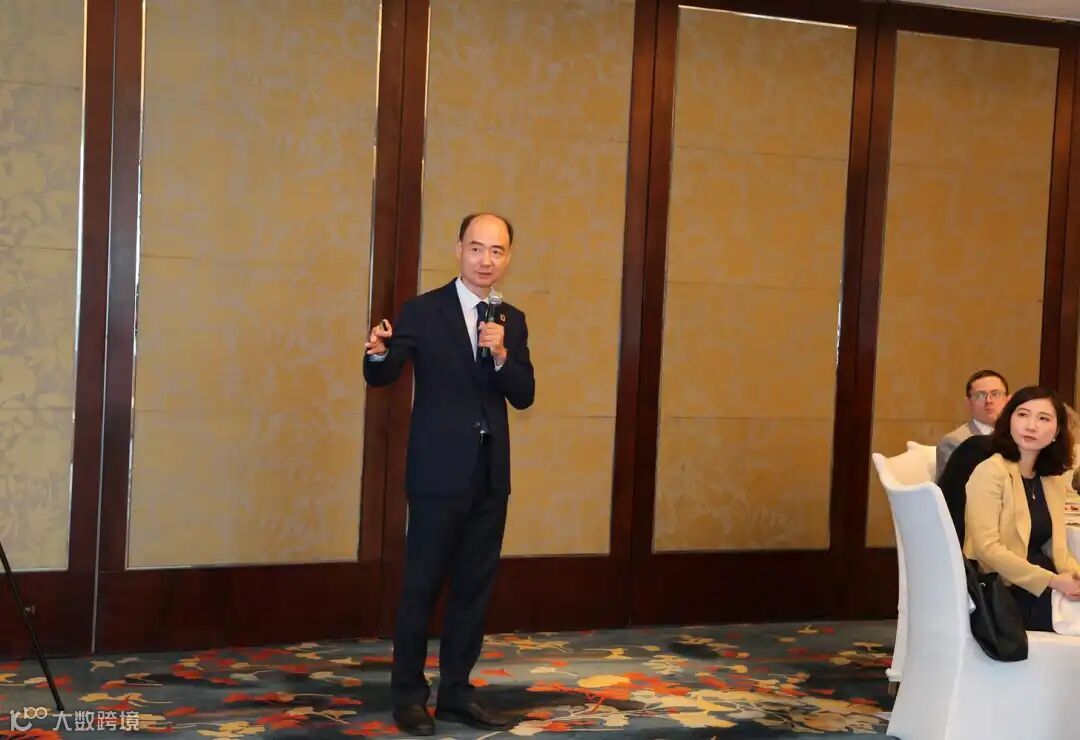
Your Excellencies, distinguished guests, ladies and gentlemen,
It is a great honour to be invited to the CCG VIP Luncheon. You have heard from the real authority, Director Zhao, speaking about renewable energy, and from the leading academia talking about AI and its impact. As the founder of an NGO, we have done our own research into the energy transition. I hope our presentation can help to visualise that a bit of this massive transition.
Of course, the backdrop of all of this is a pressing climate challenge. As Dr. Wang, in the opening remarks, talked about, all of these extreme weather events happen so much more frequently, and we have an enormous gap to close. Every time we conduct this stocktake, it’s like that. Of course, we mentioned the improved air quality in China. That’s what we have been trying to do over the past 20 years. Some progress has been made, but we have some key experiences and lessons to learn from.
One of those is that is it’s all based on massive monitoring and transparency, which can facilitate a multi-stakeholder collaboration. So, on the climate mitigation/adaptation side, we also hope to achieve that. We developed the “Blue Map for Zero Carbon” to try to compile regional, provincial, and city-level carbon disclosure, and also, based on that, conduct our index research into the carbon peak and neutrality performances of all these cities and provinces with the Chinese Academy of Environmental Science, and also with the Climate Centre under the MEE.
Through the research, we can see that some very positive trends have happened. Since last March, China’s carbon emissions have finally declined, and we can see the reason. The reason is this yellow box: a vast increase in China’s solar capacity. The black bar is the coal. So over the past several years, we’ve been working on the solar map, trying to locate all this on the digital map, and help the stakeholders visualise that. We are about to launch a new report titled “1000 Gigawatts of Solar,” in partnership with Green Jiangnan.
And on the map, we are trying to track the massive growth of solar power capacity in China. You can see that last year, China achieved the 2030 target set for renewable energy, 1200 giga, and this year, as mentioned, 1000 gigawatts on solar alone. This is the power generation from solar power. Contrary to some conventional wisdom, in some of the coastal regions, we can see a lot of solar power generation. That’s because the blue bar is for a distributed rooftop solar panel. And in the middle part, we can see it’s balanced. But in the West, far west, of course, lots of centralised, massive solar power capacity, and so that’s what’s going on. It’s not just in one part of China, it’s across the country. In the West, large-scale deployment of centralised PV and through all this research, our partners have driven 10s of 1000s of kilometres to try to document them. It’s just mind-boggling and unbelievable volume.
And in the eastern and central region, we can see they’re so densely located, and all this number of solar PV plants. A case study like Shandong, which has the largest industrial capacity and also the largest energy consumer base, can rank number six in the world if it were taken as a country. Much of that is a rooftop solar panel. Jiangsu, similar, but they have more factories, more kinds of small, medium-sized factories all put on the rooftop. Zhejiang, quite similar. Just from the map, you can see each one of them from the satellite mapping. All this solar is being deployed. This May, according to a calculation, every per second, 100 solar panel cells have been installed in China—per second in that month. Of course, that’s before a key document created by Director Zhao, I believe. So people rushed to build that ahead of that. But the challenges are very, very obvious. You know, the intermittency and instability and potential ecological and social impact, and also the waste disposal challenges, last but not least, the upstream mineral mining, all this impact, not just in China, but globally. So we need to manage that.
Of course, the curtailment of solar power, wind power all getting more severe because the as Director Zhao put it, how to integrate such a high penetration of renewable energy, that’s our challenge. One solution is to accelerate our electrification. China is electrifying its economy and society nine times faster than the global average. We have done our own part to try to help people visualise that, but now, today, with AI capacity, you take a picture of an automobile in the street, and it will unlock the carbon footprint of it. As we can see, the electric vehicle has got such a kind of much lower carbon footprint. Of course, many of our users have uploaded tens of thousands of these photos.
The other solution is, as Director Zhao mentioned, all this solar PV in combination with the storage capacity growing in a massive way. Also, hydrogen will be highlighted, particularly in the Western part. We can see that all these solar PV farms are being required to be constructed along with certification control. A new plan has been rolled out for that. Also, try to utilise a coal mining subsidence. Satellite mapping is also quite imperative to see all this so-called wasteland being utilised for that.
In the rocky regions in the southwestern part of China, also a lot of similar cases. Of course, how to do that, along with the SDGs, the so-called agri-voltaics and solar integration have been going on in many parts of China, and how to transform the public infrastructure to make it more self-reliant.
Globally, we’re all at the top 28 commitments that have been made to triple the renewable energy capacity, and we can see that China leads this renewable energy growth, and China’s share of global solar PV continues to grow. It’s really a big share; China equals the installation capacity of the next 31. Also, power generation is all the top 10 put together.
But there’s still a significant gap. We can’t just have one country moving forward, so we need a world to work together. On that, unfortunately, excluding China, global renewable growth was only 8.6%, so, lagged far behind. The gap in clean energy investment is quite obvious. China, the EU, and the U.S. are making headway, but many others lag behind. The global solar deployment outside China falls behind the climate targets. So, can we work together to ensure all countries can access, afford, and benefit from clean energy? I think that should be the target.
We can see that China managed to cut the solar PV cost by nearly 90%. And China started making this investment globally and helping with all the solar projects, and already achieved a carbon reduction totalling 280 million tons in different parts of the world, but the mass potential is there in many other parts of the world. So the UN Secretary General Guterres just made a remark on climate action, and he called it “a moment of opportunity.” He called on all the countries to supercharge clean energy in the clean energy age. And from this map, we can see the per capita solar capacity. We’re very happy to see the Ambassador of Germany, because Germany is number one, and the Netherlands is also very high. We also have the ambassador from New Zealand here. Only a few countries reach that one kilowatt per capita.
So we do have a joint project with Professor He Jijiang and [inaudible] Wu from Tsinghua University, called the “One kilowatt per capita solar installations,” and we’re trying to promote that in different parts of the country. We can see in Zhejiang, they have a very pro-solar-PV policy. And the case study of Liman, they truly want to accelerate the kilowatt per capita product. In Lankao, Henan province, you can see that’s a solar PV county. And this is the solar PV school in Sichuan. It’s an ESG project from the company. This is a solar PV village in Suzhou, Jiangsu Province. Just look at the new wave of power access. And this is a solar PV family in Huide in Yunnan Province. And this is the next step: a solar PV family in the cities. In Beijing, we still haven’t seen much of that. We know, in Germany, in the Netherlands, things are happening like that. But here in China, we have even better opportunities to do that. So, I think, it’s very positive.
And of course, a financing part, we’re finally seeing some cross-funding, the new kind of model for financing coming up. These new models can help break that big, centralised rooftop solar panel into hundreds or thousands or tens of thousands of tokens and have the investors, donors. So that’s what’s going on with China’s energy transition, particularly on the solar side. Really appreciate your attention. Thank you.
Mabel Lu Miao
Thank you, Mr. Ma, for your excellent speech. This was actually the first time I’ve learned so many significant and magnificent details about solar PV development in China. In the near future, as a think tank, CCG should become a “solar PV think tank” — we could even install solar panels on the roof of the CCG building. That would be fantastic!
Thank you to all three speakers for sharing from different perspectives: from the government as policymakers, from academia at Tsinghua University, and from Mr. Ma representing the NGO and think tank sector. It provided a very comprehensive overview of what is happening in China and China’s policies on green transition.
Now, I would like to invite Dr. Henry Wang to moderate the last — but very important — part of today’s event: the Q&A session. Our CCG VIP Luncheon is always popular precisely because this segment always features fluent and fascinating conversation. So, I would like to invite Dr. Wang to take the stage and lead this discussion.
Henry Huiyao WANG
Thank you, Dr. Mabel. We have about half an hour at least for Q&A — this is really interesting. I think this time we’re in a better place with a big screen, so the presentation effect is much better than in the past. But still, we have had Luncheons 16 times and over 100 ambassadors, embassies, multinationals, and media have attended our events. I think today is really great.
I can testify to what the three experts mentioned, because I just heard news about a building in China where the entire server infrastructure is powered by solar energy. They are significantly reducing energy consumption, and on the roof, they use repurposed electric vehicle batteries to store power for use during rainy weather. So I think this probably does represent a new mode of development. So personally, I think, in the 19th century, we had steam power. The UK led the revolution in the 19th and 20th centuries — for instance, when Edison invented electric power. Then, with computers and digital technology, the 20th century was profoundly shaped by American contributions as well. So I believe the 21st century will likely be the era of green power, led by China, together with all other countries.
I think one point Professor Zhang also mentioned is China’s expertise in high-voltage power transmission. Given Europe’s current energy challenges due to the Russia-Ukraine situation, why can’t we build large-scale solar farms in Africa using Chinese technology and investment, along with European funding, and transmit the electricity via high-voltage grids to support European energy security? This would also bring significant benefits to Africa. Such an approach would diversify Europe’s energy sources — combining solar with other renewables — and reduce risk, even if the solar farms are located in Africa. It’s a win-win solution.
The other point is that China has signed numerous third-country collaborations — for example, with Japan, France, and recently with Singapore — to work together on projects in other markets. I believe we can all collaborate on green transition initiatives, particularly in developing countries. I’ll stop here, but I find it truly fascinating how China has been rapidly advancing in this field. Just recently, I invited Professor Adam Tooze from Columbia University to my office, and he was talking about the ongoing solar revolution. He mentioned that China’s total solar installations in 2023 were already 1.6 times the installations of the rest of the world combined. He also highlighted how the cost per panel has dropped from 24 US cents to just 11 US cents. This is something we can really build on and work with other countries around the world.
So I’m open to the question.
Click↙【read more】for more Details