
Building a Green and Inclusive Future: Accelerating China’s Low-Carbon Development
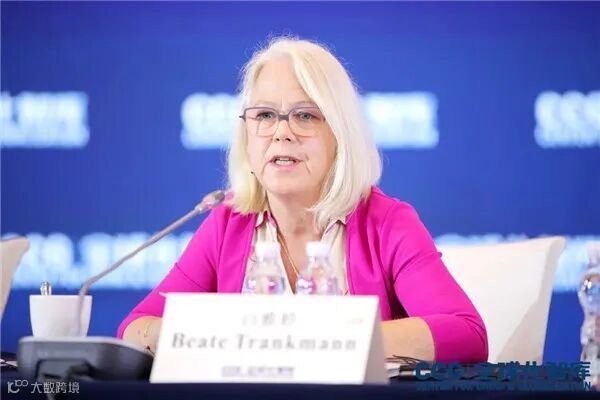
By Beate Trankmann
Resident Representative for UNDP China
Since 2015, the Sustainable Development Goals (SDGs) have guided governments, businesses, and civil society toward building a sustainable future, protecting the planet and its most vulnerable people, and promoting universal peace and freedom. Yet, those critical goals for our shared survival risk are sliding out of reach. Progress has been slow, and the climate emergency in addition to global crises and wars put them in jeopardy. China is a key actor in this process, not only because it is a major producer of greenhouse gases, but also because it is leading the way in renewable energy and many of the green technologies required for the transition to low-carbon development. The SDGs are our compass for long-term sustainable development that delivers prosperity while protecting the planet and rely on three key factors—policy, financing, and international cooperation.
With 2030 Fast Approaching, a Paradigm Shift Is Urgently Needed
Seven years have passed since the world came together and launched the 17 Sustainable Development Goals (SDGs)—global goals to end poverty, protect the planet, and ensure that all people enjoy peace and prosperity by 2030. Since 2015, the SDGs have been a compass guiding governments, businesses, and civil society toward building sustainable future, protecting the planet and its most vulnerable people, and strengthening universal peace and freedom.
Ongoing shocks—from the COVID-19 pandemic to global conficts and wars with snowballing effects on commodity prices, inflation coupled with monetary tightening—are squeezing public budgets and threatening lives and livelihoods of billions of people. This is further exacerbating the challenges posed by the climate emergency.
The last eight years have been the warmest on record, with average temperatures havingalreadyrisenby1.1°C above pre-industrial levels. And their effects are being felt globally. Estimates of costs from weather disasters in 2022 including extreme droughts and floods in different parts of the world were around USD 360 billion globally, making last year the second costliest year on record. In China alone, severe heatwaves and droughts last summer led to power shortages and impacted food production and other economic activities affecting 900 million people.
2022 also recorded another rise in global CO2 emissions, climbing by around 1% to 37.5 billion tons, despite a small dip in China’s emissions due to its economic slowdown under COVID-19 prevention and control measures. If the current rising trend in emissions were to continue at today’s pace, we would exceed the maximum amount of carbon we can emit to keep global warming within the 1.5 °C threshold in the next nine years.
The consequences of triggering these tipping points are highly uncertain but estimates and models give us a glimpse of what they might be: between 200 million and 1.2 billion people are expected to be displaced by the impact of climate change, mainly due to heatwaves and rising seas, by 2050. This could leave large swathes of major cities underwater—including Shanghai and London—unless adaptation measures are taken in time.
With just seven years left to achieve the vision of the SDGs and the 2030 Agenda, the world must urgently move to a sustainable development path to ensure a habitable future. Encouragingly, the recent COP28 Climate Summit reaffirmed the need “for urgent action and support to keep the 1.5 °C goal within reach in this critical decade.” It also marked the first time that more than 190 countries and territories formally agreed to transition away from fossil fuels in a just and equitable manner.
However, on finance, we continue to fall short and COP28 did not deliver any increase at the scale needed to tackle the climate emergency. With every year passing, the cost of inaction is increasing, dwarfing the investment needed to achieve a low- carbon transition. Estimates show that the cost of meeting the 1.5 °C Paris target has already risen considerably, from USD 1.3 trillion per year of inaction in 2010, to now around USD 5 trillion per year. Yet it is not too late to reap solid rewards by taking climate action within the next seven years. The Global Commission on Adaptation estimates that investing USD1.8 trillion from 2020 to 2030 could generate USD 7.1 trillion in total net benefits across five areas—including early warning systems, climate-resilient infrastructure, and more resilient water resources—saving countless lives and livelihoods.
The focus of policymakers and other stakeholders must shift to accelerating actions aimed at promoting human and economic development that respects and protects nature, while leaving no one behind. Long-term low-carbon solutions will only work if they also safeguard biodiversity and ecosystems.
China's Role in the Transition is Critical
China, with its size, influence, capacity, and interest, can play an important role in such efforts. As the second largest economy in the world, it saw its contribution to global GDP growth increase from 10.4% in 2000 to 24.6% in 2021. This rise has been fueled by unprecedented economic growth, particularly since 1979 (9.2% y-o-y on average), bringing socioeconomic transformations in China and beyond. Indeed, China is one of the few countries that has moved from low human development on the HDI index to high human development. As of 2021, China’s HDI stood at 0.768, ranking 79 out of the 191 countries and territories assessed worldwide.
The extraordinary improvements in human development were critical to both the Millennium Development Goals (MDG) and the 2030 Agenda for Sustainable Development globally. China’s contribution to progress on SDG 1: No poverty is an example of this. Since 1978, China has lifted more than 770 million people out of poverty, accounting for close to 75% of the global reduction of people living in extreme poverty.
China has also injected momentum into the environmental and climate discourse by announcing its dual carbon goals at the United Nations (UN) General Assembly in 2020. The goals involve peaking carbon emissions before 2030 and reaching carbon neutrality before 2060. Following that pledge, the Government and related government departments have issued more than 60 policy documents in the last two years, forming the bedrock of the low-carbon transition policy architecture under the “1+N” policy system.
Concrete actions have followed the dual carbon goals. According to provincial plans, wind and solar capacity additions are set to reach 874 GW between 2021 and 2025, implying that China will hit the target of 1.2TW in 2025, five years ahead of the original target announced in 2020. While still uncertain, if effectively implemented, the fast pace embedded in the wind and solar capacity’s provincial targets may mean that the power sector’s low-carbon transition will be boosted, theoretically enabling China’s CO2 emissions to peak as early as 2025, well within the range set by the “before 2030” pledge. This positive dynamic will be challenged by (i) the time and complexity needed to set up complementary grid infrastructures that reduce curtailment as well as (ii) the expansion of the domestic coal-fired power fleet that is expected to grow until at least 2025.
At the global level, in 2021 China announced it will stop financing coal-fired power plants abroad and promote green growth in developing countries. This is key, given China’s significant overseas financing capacities. Firmly sticking to such commitments is critical, as 63% of China’s overseas energy engagements are still linked to fossil fuels, and 1.5 GW of new coal-related projects outside China have also been announced last year. These risks overshadowing the significant increase in emphasis on green energy engagement, such as solar, wind, and hydro, which rose by 50% in 2022 from 2021.
China’s stewardship was also critical during the recent UN Biodiversity Conference (COP 15) in facilitating the adoption of the Kunming-Montreal Global Biodiversity Framework (GBF), which aims to stop biodiversity loss and restore global ecosystems. The GBF includes four goals and 23 targets to be achieved by 2030, including conserving 30% of the world’s land, oceans, coastal areas, and inland waters, as well as an annual reduction of USD 500 billion in harmful government subsidies.
Looking ahead, China’s contributions to advancing the SDGs remain pivotal for the world in addressing global development challenges, such as climate change and biodiversity loss. In advancing progress on international agreements like the Paris Agreement and the recently adopted Global Biodiversity Framework, China can share valuable lessons from its own development experience and be an important source of technology, capacity, and financing for other developing countries.
Concrete Policy Action Points
First, Accelerating a Just, Low-Carbon Transition Is Key
Specific solutions to support the low-carbon transition have already been identified. The IPCC, among others, points to actions in key areas to effectively move the needle toward a low-carbon future. Boosting wind and solar power—fields that China is leading in—while phasing-out coal, are among these.
Indeed, China’s shift to renewables domestically, while phasing-out fossil fuels, is key to realizing national priorities, climate commitments, and the SDGs—as well as achieving climate goals globally. China is the world’s largest emitter, accounting for 27% of global CO2 emissions and one third of GHG emissions. To avoid the worst effects of climate change by 2030, efforts that support the switch from fossil fuels to renewable energy must be accelerated today, in addition to actions for greening transportation, along with hard-to-abate manufacturing sectors and agriculture, while also expanding the circular economy.
In this regard, it is encouraging to see that China is at the cutting edge of renewable energy technology and power transmission sectors. According to the latest China Electricity Council statistics, around 125 GW of solar and wind were deployed domestically in 2022 (87 GW for solar and 38 GW for wind). For comparison, wind and solar additions amounted to 57 GW in the European Union and to 16 GW in the US in the same year. The 2023 target for new wind and solar capacity in China is even higher and set to increase by at least 160 GW. Chinese companies account for 70% of the global market share in 2022 for photovoltaic modules, wind turbines, gear boxes, and other key renewable energy components. Through successful international cooperation, China has also become the leading country in ultra-high voltage direct-current lines (UHVDC), enabling transfers of renewable energy supply from remote areas where it is often produced, to urban and industrial areas where most of the demand is concentrated.
UNDP has been working for decades to support China’s Government to shift away from fossil fuels and promote innovative technologies, efficiency as well as nature- based solutions. Among our flagship initiatives, UNDP played a pivotal role in the initiation and development of the hydrogen and fuel cell industry in China, through a successful partnership with the Ministry of Science and Technology (MoST) and other key stakeholders. Development of green hydrogen and fuel cell vehicles has great potential to be part of the solution mix for the energy transition reducing the long-term GHG emissions from the transport sector. UNDP is also helping to support the use of innovative technology to enhance energy efficiency, in particular in public buildings and infrastructure, as well as leveraging nature-based solutions to reduce emissions, such as through our biodiversity conservation work which helps to protect and expand carbon sinks.
At the same time, it is critical for China to continue to build on its progress. In 2022, coal still represented 56.2% of China’s energy mix and 2022 saw an increase in coal capacity by 26.8 GW. Temporary shocks, like the recent rise in commodities and energy prices, as well as a difficult geopolitical context, highlight the difficulties in balancing short-term priorities—such as residential cooling during the summer and heating in the winter, as well as maintaining economic activity—with long-term environmental goals.
Policies have a pivotal role to play in addressing China’s fossil fuel dependency and promoting a faster move away from coal and other fossil fuels toward renewables. To align with the Paris target of 1.5 °C warming, the proportion of coal in primary energy consumption needs to fall to around 5% of the total by 2050, from 56.2%. Research has shown that transmission infrastructures, market integration, and diversification, as well as technology upgrades are key to reducing fossil fuels in the energy mix. By providing access to new energy sources that were previously untapped, and with improved storage, forecasting and scheduling capacities, such measures can help decrease bottlenecks linked to solar and wind’s intermittence and inherent unpredictability due to weather, while preserving energy security. Furthermore, effective pricing signals and market mechanisms would also be critical to strengthen incentives toward lower carbon-intensive solutions, through pricing the negative externality of fossil fuel and coal use. China’s national Emissions Trading System (ETS) is a welcome first step.
Finally, policy actions are also critical to ensuring that such transitions are just and inclusive. The coal industry, for example, employs 3.4 million people. In the short term, dismantling it will have a significant impact on people, disrupting livelihoods in fossil fuel-dependent regions and across sectors and groups, such as workers in heavy industry and fossil fuels, who will bear the brunt of the change.
To realize the 2030 Agenda’s promise of leaving no one behind, UNDP is actively working toward enhancing understanding of the social impact of the green transition. Through evidence-based analysis with Chinese counterparts, we aim to inform policymakers and support them in striking a careful balance between short- and long-term priorities, ensuring vulnerable people and areas are compensated for the negative consequences of phasing-out entire sectors, including through retraining and social welfare. As new career opportunities in renewables emerge, as well as in low-carbon and green industries, skills retraining and capacity-building programs are especially useful for unemployed workers from coal mining and heavy industries to gain new jobs in these emerging sectors. For those who are heavily affected and unable to continue working, unemployment insurance and compensation can support them through the transition.
Addressing labor market bottlenecks due to the energy transition also offers an opportunity for broader reforms to enhance inclusivity and ensure that vulnerable groups including women enjoy equal access to opportunities in the economy of the future. For example, UNDP is working with partners to increase women’s engagement in science and technology. This is being done through advocacy campaigns and youth initiatives, such as boot camps for girls to increase digital tech skills, as well as by convening key stakeholders from policymakers to the private sector to examine key challenges and provide policy recommendations on the structural changes needed to advance gender equality in STEM (science, technology, engineering, mathematics).
Second: Boosting Financing Is Essential for Just, Low-Carbon Transition
Finance—in its multifaceted forms—is critical to the acceleration of actions toward a green and inclusive future. The World Bank estimates about USD 4 trillion of incremental investment cumulatively in China’s power sector alone is needed between 2020 and 2060 to achieve the Nationally Determined Contributions (NDCs), for a total of between USD 8 to USD 12 trillion for investment in generation, transmission, distribution, and energy storage.
Finding the finance for a low-carbon transition and the SDGs is entirely possible: simply reallocating 1% of global assets would suffice. The financial and business case for sustainable development is stronger than ever. Achieving the SDGs by 2030 would open USD12trillion of global business opportunities. By prioritizing nature, businesses can unlock USD 10 trillion dollars in opportunities around the world, creating more than 395 million jobs by 2030. Shifting to a green economy could yield a direct economic gain of USD 26 trillion through 2030, compared to business- as-usual.
Since 2016, Chinese authorities have emphasized guidelines and regulations to support the shift of private and corporate financial flows toward green sectors, planting the seeds for a booming green bond market. From barely any issuance seven years ago, today China’s green bond market ranks second among global leading markets with the highest rate in green bond issuance globally. Efforts to harmonize standards, such as the Common Ground Taxonomy-Climate Change Mitigation (CGT), a joint initiative by the People’s Bank of China (PBoC) and the European Commission, mark the first comprehensive step toward mutual approaches to green finance taxonomies. China and the European Union (EU) are so far the most advanced in green finance, representing 64% of the global market. Standards fixed by them will have a worldwide impact, likely becoming international points of reference.
Efforts have also expanded to go beyond green, promoting broader SDG-aligned investments. In 2021, the major bond market regulator, the National Association of Financial Market Institutional Investors (NAFMII), introduced a pilot program on social and sustainability bonds in China’s inter-bank bond market with significant contributions from UNDP China. Three bonds were issued under the pilot, for a total of about USD 260 million to date. Furthermore, the PBo Chas been actively working on a range of guidelines around transition finance, including the Transition Bond Management Statement in 2021. At the global level, the PBoC is the co-chair of the G20 Sustainable Finance Working Group, while UNDP serves as the Secretariat. In this capacity, China’s central bank led the development of the G20 Framework for Transition Finance as one of the key deliverables of the 2022 G20 Sustainable Finance Report approved during the 2022 G20 Summit in Indonesia.
Through our flagship Biodiversity Finance Initiative (BIOFIN), UNDP has also been able to demonstrate new approaches for mobilizing public and private investment to scale up development impact, promote nature-based solutions, and develop biodiversity finance plans. Fueled also by the newly adopted Kunming-Montreal Biodiversity Global Biodiversity Framework, this has had tangible policy impact. For example, in China, green finance regulations in Shanghai have been incorporating important biodiversity considerations, a first in China’s regulatory framework.
To further build on these successes and redirect finance flows to where they are most needed, strengthening SDG impact measurement, disclosure, and reporting is critical. UNDP’s SDG Impact Standards—a set of voluntary internal management standards—is designed to help businesses and investors embed sustainability and the SDGs into their management systems and decision-making practices. In 2020, these standards, together with the SDG Finance Taxonomy (China) developed by UNDP, were tested by the successful piloting of China’s first SDG bond issuance by the New Development Bank, raising RMB 5 billion.
UNDP also supports efforts to close the information gap between demand and supply of investment opportunities. Through the SDG Investor Maps, we identified multiple potential investment opportunity areas generating both business returns and development impact, in four sectors: health and agriculture released in 2021, followed by just released maps in circular economy and renewable energy.
While mobilizing private finance and regulations are critical, increasingly and effectively enhancing the greenness of public finance is too. Unsustainable expenditures must end,including fossil fuel and other harmful subsidies, to improve fiscal space for pro-nature and climate finance. In the latest Finance for Nature report, UNEP estimates USD 500 billion to 1 trillion of harmful subsidies were disbursed as of 2022, versus a paltry USD 154 billion public investment in nature.
Third: International Development Cooperation Is Vital for Just, Low-Carbon Transition—Climate Change Does Not Stop at Borders
Finally, a key enabler to firmly set countries on development paradigms that promote inclusive low-carbon transition pathways is international cooperation. Considering the scale and scope of the whole-of-society transformation required, no country can do this alone. The opportunities and challenges China is facing in this area are not unique to its local context. Indeed, being an important provider in South-South Cooperation, China’s domestic experience and lessons learned in its own journey toward a net-zero target can be of value to partner countries pursuing sustainable development.
At UNDP, we see an opportunity for China to focus increasingly on green sectors and scale its partnerships with multilateral institutions and the UN for greater SDG impact. As one of the first agencies to partner with China on South-South Cooperation, UNDP has been actively engaging national counterparts at both policy and project levels to effectively incorporate international best practices and standards in advancing the SDGs in partner countries.
Our engagement comes in two main ways. On the one hand, we aim to inform Chinese development cooperation institutions and providers on demand-driven approaches to supporting a low-carbon transition and SDG attainment in their international cooperation and business engagements in partner countries. These approaches include boosting innovation, development, and transfer of clean energy; channeling investment and funding toward low-carbon projects; and strengthening human resource and institutional capacities.48 On the other hand, UNDP also supports partner countries to access China’s resources, expertise, and experiences—responding to local demands for clean and green solutions on the ground.
In addition, by leveraging its global platform, UNDP creates space for two-way dialogues and exchanges at the country level, sharing lessons learned and best practices from different stakeholders in China and abroad to advance the 2030 Agenda.
The SDGs are humanity’s only path to ensuring a sustainable future for generations to come. But for them to become a reality, we need collective efforts and concrete, concerted steps by all nations over the coming seven years. The clock is ticking. For the sake of both people and planet, we must act now, and we must act together.

Beate Trankmann is the current Resident Representative for UNDP China, which she took up in October 2019. This is her second posting to China following a turn at the beginning of her professional journey with UNDP in the late 1990s. Since then, Ms. Trankmann has had a diverse career in the Asia-Pacific region, most recently serving as United Nations Resident Coordinator and UNDP Resident Representative for Mongolia, following other appointments in Sri Lanka and Cambodia. Prior to joining UNDP, Ms. Trankmann was Research Fellow at the European Institute for Asian Studies in Brussels, advising European Union institutions on EU-Asia relations. Educated in France, China (Taiwan), and Germany, Ms. Trankmann holds a master’s degree in political science and a bachelor’s degree in China Studies, both from University of Hamburg.
Editor's Note
This essay is selected from the bookGlobal Development and Cooperation with China: New Ideas, Policies and Initiatives for a Changing World, which is the ninth volume of the “China and Globalization Series” books. This book series seek to create a balanced global perspective by gathering the views of highly influential policy scholars, practitioners, and opinion leaders from China and around the world. The open access book Global Development and Cooperation with China combines the insights and wisdom of 26 representatives from a wide range of international organizations into a collection of 21 essays, focusing on the latest trends in four major areas—global governance, trade and economics, science and technology, and culture and exchange—providing the reader with information on the latest developments in these areas with a special focus on China and its relevant contributions.
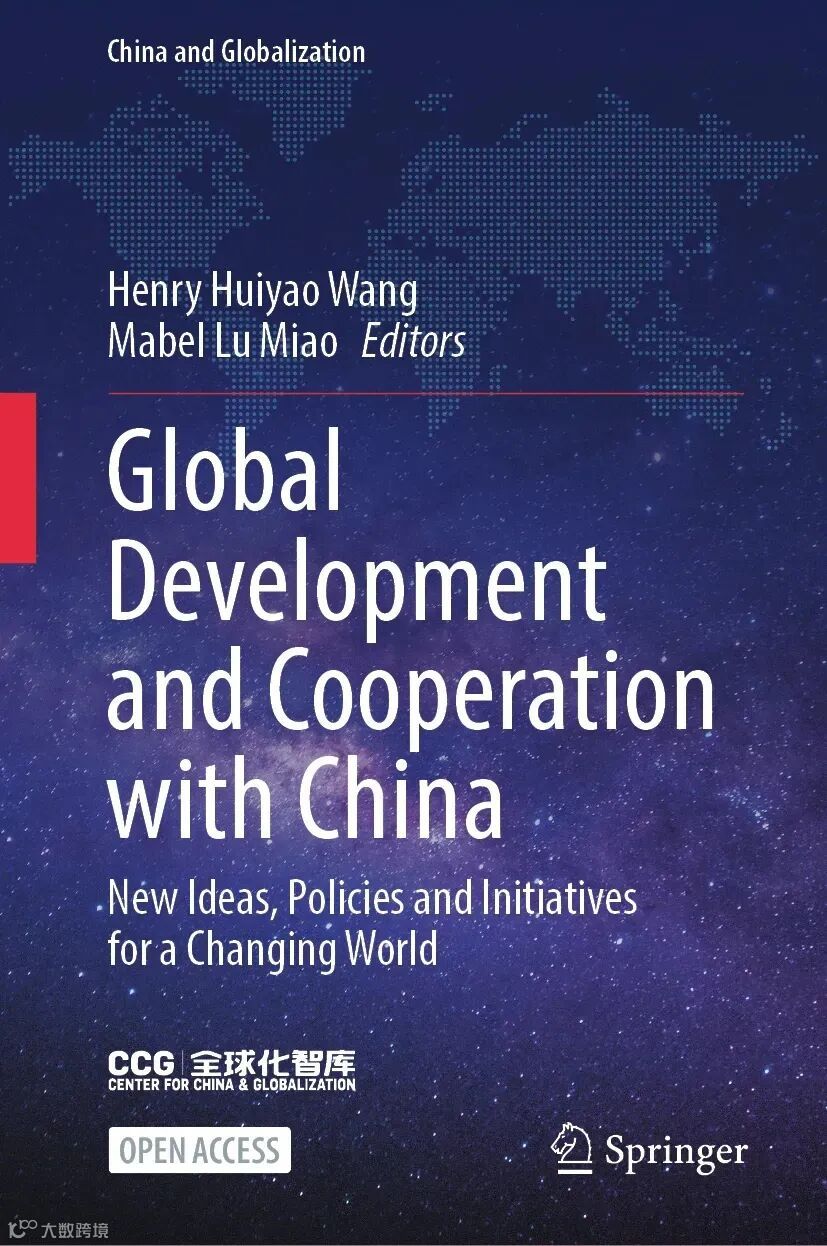
Editors: Henry Huiyao Wang, Mabel Lu Miao
ISBN: 978-981-96-2452-2
Published in April, 2025
Publisher: Springer Nature
Get access to the book

CCG Book Launch: Global Development and Cooperation with China
CCG Books
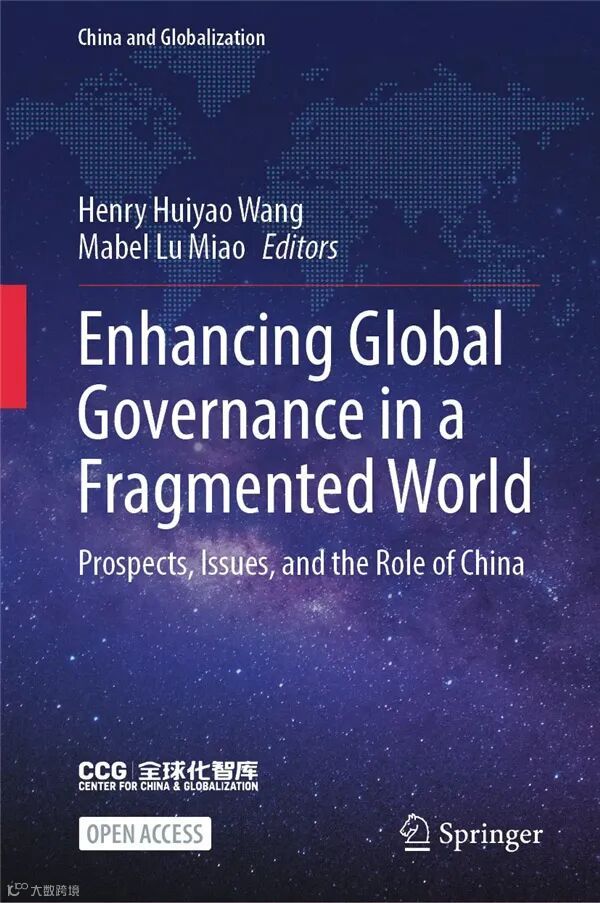
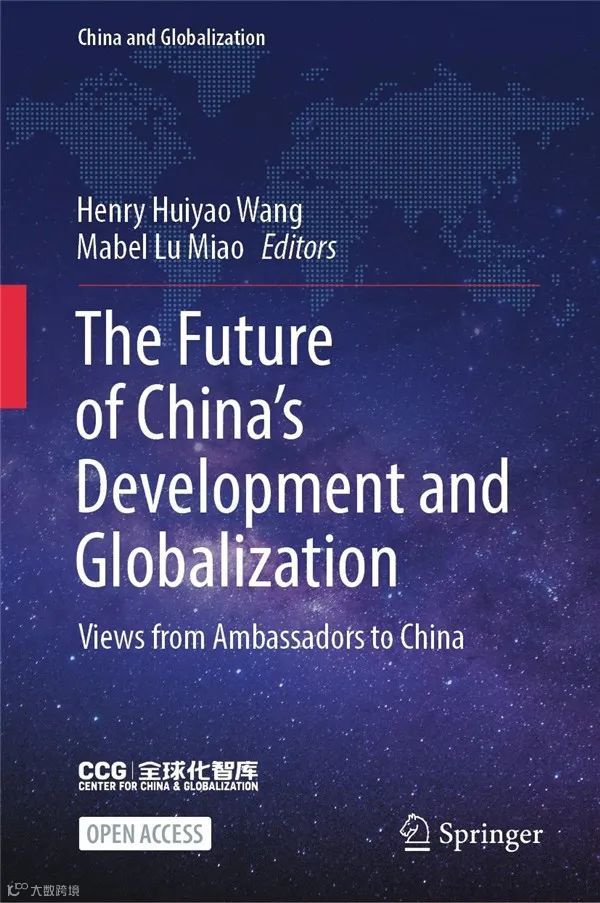

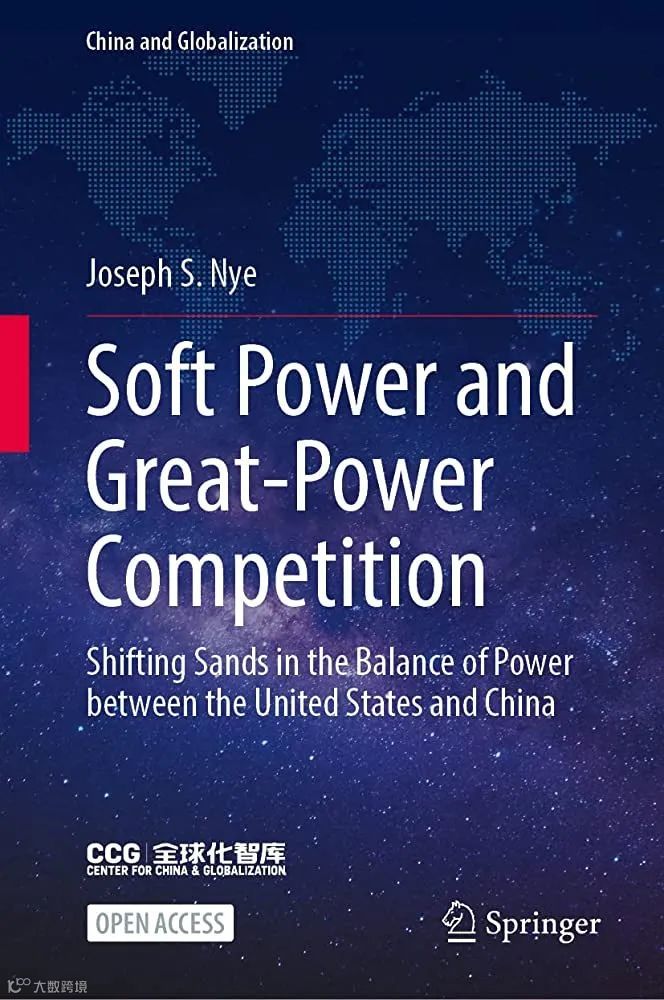
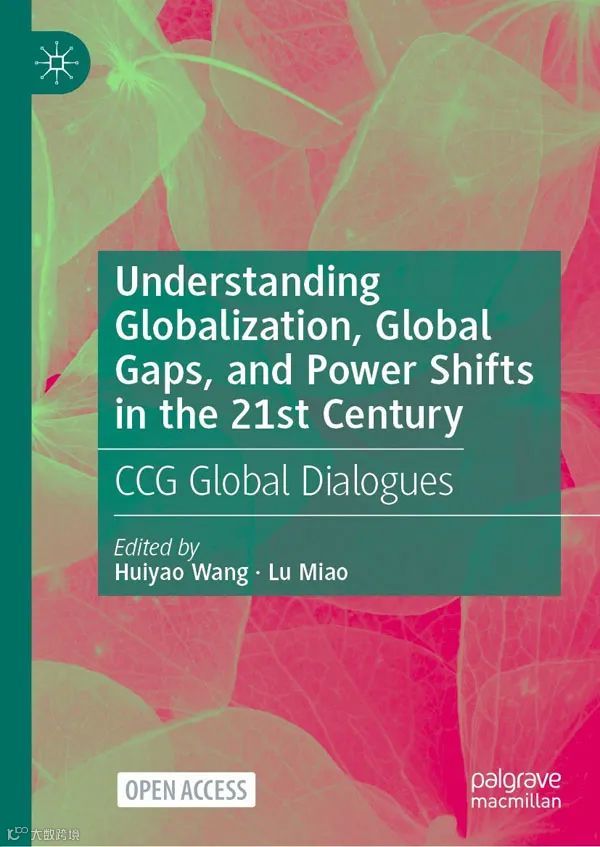
Other CCG News:
300 Participants from 60 Countries Attend CCG Annual Forum
CCG Conducts Track Two Visit to US
CCG hosted the 9th China Global Think Tank Innovation Forum
2024 GYLD Annual Forum successfully held in Beijing
11th China Inbound-Outbound Forum Successfully Held @2024 CIFTIS
60 Countries’ Participants Joined China and Globalization Forum
CCG seminar on global governance & future of China and Africa
Senior Diplomats from 20 countries discuss China's green transition
Text of Pascal Lamy and Chinese trade experts @ CCG VIP Luncheon
Book Launch: Enhancing Global Governance in a Fragmented World
Transcript of CCG session in WTO Public Forum
20 US media leaders attended special dinner held to welcome CCG
Transcript of EU-China think tank exchange
Turkish Foreign Minister Hakan Fidan speaks at CCG
Wang Huiyao in Dialogue with Stephen Roach
CCG Holds 8th China Global Think Tanks Innovation Forum
Joseph Nye | Understanding Global Power Shifts in 21st Century
New Book | The Global Power Shifts in the 21st Century
Josep Borrell’s scheduled speech at CCG on EU-China relations
Justin Vaïsse speaks at CCG on the eve of Macron's visit
Brazilian Ministerial Visiting Event Held at CCG
CCG Global Dialogue:Building a floor for China-US relations
CCG President in Dialogue with CFR President Richard Haass
Video | 7th Annual China Global Think Tank Innovation Forum
CCG 2nd International Visit in Pandemic 2022
Wang Huiyao in Dialogue with Fred Bergsten
9th China Inbound-Outbound Forum
First Chinese Think Tank to Visit Europe since Pandemic
First Chinese Think Tank Visits Washington DC since Pandemic
New York: CCG Delegation's First Stop in the US
CCG Delegation of Experts Visits Singapore
Selected Video of CCG Global Dialogue (Ⅰ)
Selected Video of CCG Global Dialogue (Ⅱ)
CCG Book Launch Welcomes 20 Ambassadors to China
CCG and UN Women hold symposium on International Women's Day
CCG event on MNCs opportunities and challenges in China
Video | The rise of Asia and its implications
Fireside Chat with The Hon. Sec. Henry Paulson and Mr. WANG Shi
Text and Video: Wang Huiyao in Dialogue with Wolfgang Ischinger
Wang Huiyao in dialogue with Lawrence Summers on Global Economy
Wang Huiyao in Dialogue with Yale Professor Stephen Roach
Climate change, inequality, and sustainable development
CCG holds seminar on “Twenty years of China’s WTO membership
CCG holds Sixth Annual China Global Think Tank Innovation Forum
Wang Huiyao in dialogue with CSIS President John Hamre
Wang Huiyao in dialogue with Lord Jim O'Neill & Leslie Maasdorp
CCG Dialogue with David Lampton on China Laos Railway and BRI
Wang Huiyao in dialogue with Kishore Mahbubani
CCG holds Francophonie Ambassadors Symposium
Dialogue between Wang Huiyao and Carter Center on Sino-US Relations
CCG Dialogue with Neil Bush and David Firestein
Dialogue on trade among Wendy Cutler, Pascal Lamy & Wang Huiyao
CCG Dialogue with John Thornton, Stapleton Roy and Adam Posen
Dialogue among Susan Thornton, Ronnie Chan and Wang Huiyao
World Bank and CCG launching the latest World Economic Prospects
Dialogue Between Yale Historian Valerie Hansen & Dr. Wang Huiyao
CCG Dialogue with Nobel Laureate Sir Angus Deaton
Conversation with Martin Wolf, Chief Economics Commentator at FT
CCG Roundtable Commenmorating China's Accession to the WTO
CCG Dialogue with Harvard Professor Anthony Saich
CCG Dialogue with Joseph S. Nye Jr.
A Dialogue Between Graham Allison and Wang Huiyao
A Dialogue Between Thomas L. Friedman and Wang Huiyao
40 Ambassadors and Diplomats Attend CCG Open Day
Dr. Miao Lu posted the first question at the MSC 2021
CCG releases new book on global talent studies