
By Zhou Xiaoming | Senior fellow at the Center for China and Globalization(CCG), Former Deputy Permanent Representative of China's Mission to the UN Office in Geneva.
As his new tariff regime came into force in early August, US President Donald Trump emerged as a clear victor. Largely due to the United States’ unrivalled market power, he was able to force major concessions from trading partners: zero tariff access and reduced non-tariff barriers from quite a number of countries, hundreds of billions of dollars in expected tariff revenue annually and around US$1 trillion in purchase commitments, not to mention pledged investments of at least US$1.5 trillion that are equal to 5 per cent of America’s economic output.
Some may argue that the sum of Trump’s latest terms and “reciprocal” tariffs at least provides a critical condition for making important business decisions – certainty. In truth, however, the dust will never settle on Trump’s tariffs, and more can be expected. One only needs to look at his tariff blitzes on Brazil and India to appreciate this.
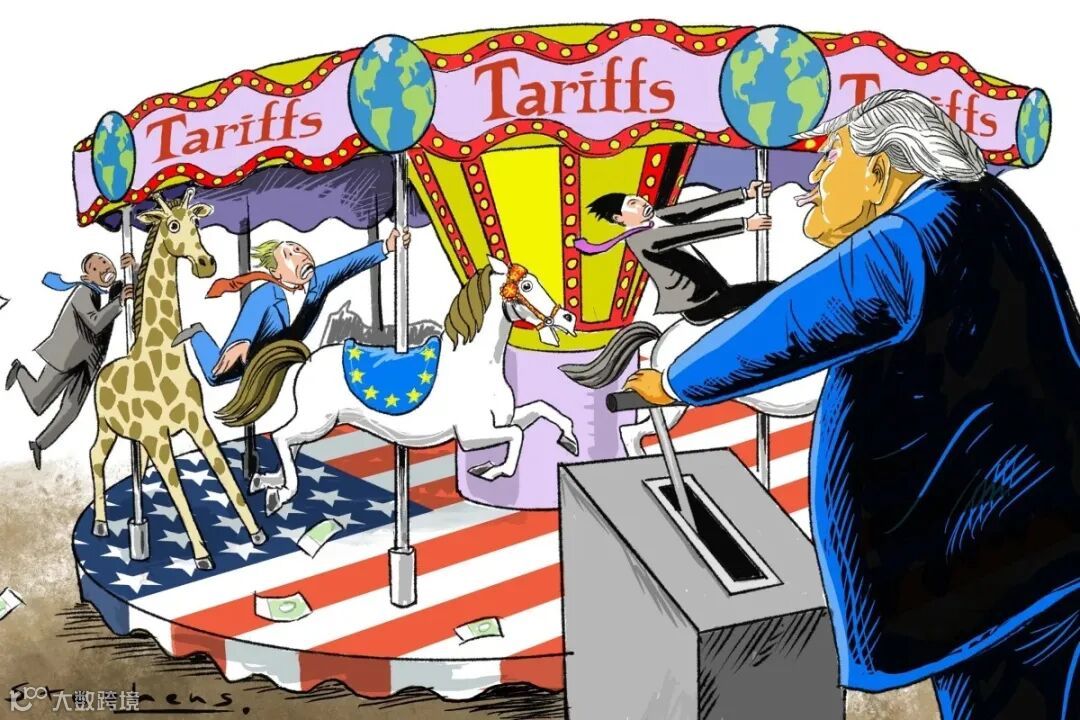
Robert Zoellick, former US trade representative and World Bank president, has described Trump’s tariffs as a merry-go-round that won’t stop. “He believes uncertainty adds to his power and wants the freedom to bully others depending on what has his attention,” Zoellick wrote in The Wall Street Journal. No one should be surprised if Trump abruptly raises tariffs again.
Even if Trump keeps his tariffs unchanged, this kind of certainty is as comforting as the plight of an innocent man who has been sentenced to life imprisonment. As Trump’s egregious tariff system takes hold, the world economy will slow down and the law of the jungle will return.
To start with, Trump’s tariff regime would inflict significant economic damage on the European Union, Japan and South Korea, which bear the lion’s share of the purchase commitments and investment pledges made to the US. Outflows of capital that is badly needed at home would further set back anaemic economic recoveries.
Moreover, industries such as cars, semiconductors, pharmaceuticals and shipbuilding could shift to the US, which would hollow out domestic industries and weaken these US allies’ ability to innovate and compete globally.
CCG Books
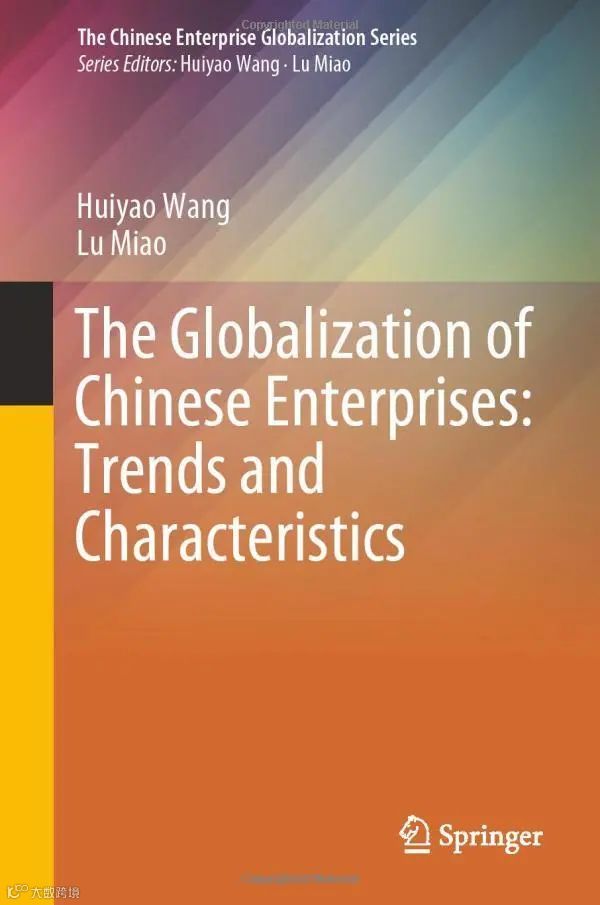
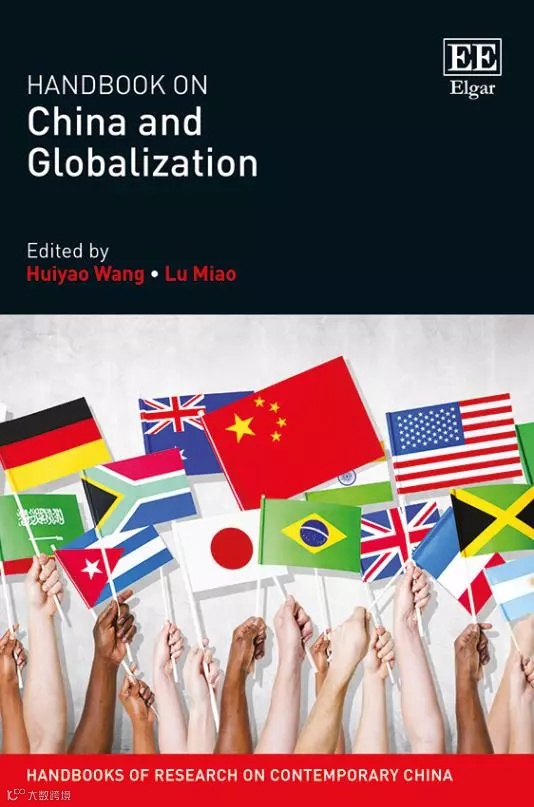
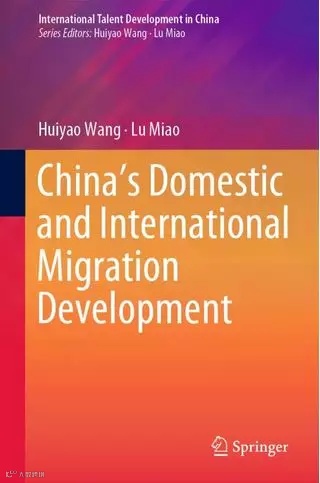
Other CCG News:
Global Talent Summit 2025 Holds in Beijing Sub-Center
300 Participants from 60 Countries Attend CCG Annual Forum
CCG hosted the 9th China Global Think Tank Innovation Forum
2024 GYLD Annual Forum successfully held in Beijing
11th China Inbound-Outbound Forum Successfully Held @2024 CIFTIS
60 Countries’ Participants Joined China and Globalization Forum
CCG seminar on global governance & future of China and Africa
Senior Diplomats from 20 countries discuss China's green transition
Text of Pascal Lamy and Chinese trade experts @ CCG VIP Luncheon
Book Launch: Enhancing Global Governance in a Fragmented World
Transcript of CCG session in WTO Public Forum
20 US media leaders attended special dinner held to welcome CCG
Transcript of EU-China think tank exchange
Turkish Foreign Minister Hakan Fidan speaks at CCG
Wang Huiyao in Dialogue with Stephen Roach
CCG Holds 8th China Global Think Tanks Innovation Forum
Joseph Nye | Understanding Global Power Shifts in 21st Century
New Book | The Global Power Shifts in the 21st Century
Josep Borrell’s scheduled speech at CCG on EU-China relations
Justin Vaïsse speaks at CCG on the eve of Macron's visit
Brazilian Ministerial Visiting Event Held at CCG
CCG Global Dialogue:Building a floor for China-US relations
CCG President in Dialogue with CFR President Richard Haass
Video | 7th Annual China Global Think Tank Innovation Forum
CCG 2nd International Visit in Pandemic 2022
Wang Huiyao in Dialogue with Fred Bergsten
9th China Inbound-Outbound Forum
First Chinese Think Tank to Visit Europe since Pandemic
First Chinese Think Tank Visits Washington DC since Pandemic
New York: CCG Delegation's First Stop in the US
CCG Delegation of Experts Visits Singapore
Selected Video of CCG Global Dialogue (Ⅰ)
Selected Video of CCG Global Dialogue (Ⅱ)
CCG Book Launch Welcomes 20 Ambassadors to China
CCG and UN Women hold symposium on International Women's Day
CCG event on MNCs opportunities and challenges in China
Video | The rise of Asia and its implications
Fireside Chat with The Hon. Sec. Henry Paulson and Mr. WANG Shi
Text and Video: Wang Huiyao in Dialogue with Wolfgang Ischinger
Wang Huiyao in dialogue with Lawrence Summers on Global Economy
Wang Huiyao in Dialogue with Yale Professor Stephen Roach
Climate change, inequality, and sustainable development
CCG holds seminar on “Twenty years of China’s WTO membership
CCG holds Sixth Annual China Global Think Tank Innovation Forum
Wang Huiyao in dialogue with CSIS President John Hamre
Wang Huiyao in dialogue with Lord Jim O'Neill & Leslie Maasdorp
CCG Dialogue with David Lampton on China Laos Railway and BRI
Wang Huiyao in dialogue with Kishore Mahbubani
CCG holds Francophonie Ambassadors Symposium
Dialogue between Wang Huiyao and Carter Center on Sino-US Relations
CCG Dialogue with Neil Bush and David Firestein
Dialogue on trade among Wendy Cutler, Pascal Lamy & Wang Huiyao
CCG Dialogue with John Thornton, Stapleton Roy and Adam Posen
Dialogue among Susan Thornton, Ronnie Chan and Wang Huiyao
World Bank and CCG launching the latest World Economic Prospects
Dialogue Between Yale Historian Valerie Hansen & Dr. Wang Huiyao
CCG Dialogue with Nobel Laureate Sir Angus Deaton
Conversation with Martin Wolf, Chief Economics Commentator at FT
CCG Roundtable Commenmorating China's Accession to the WTO
CCG Dialogue with Harvard Professor Anthony Saich
CCG Dialogue with Joseph S. Nye Jr.
A Dialogue Between Graham Allison and Wang Huiyao
A Dialogue Between Thomas L. Friedman and Wang Huiyao
40 Ambassadors and Diplomats Attend CCG Open Day
Dr. Miao Lu posted the first question at the MSC 2021
CCG releases new book on global talent studies