

The BYD battery factory in Manaus, capital of Amazonas state, Brazil. March 12, 2024. /Xinhua
By Wang Huiyao | Founder of
the Center for China and Globalization(CCG)
Across the Global South, nations are finding common causes in openness, sustainability and reform, from deepening trade relationships with Brazil and Argentina, to a new and confident phase where the region as a whole is deepening its engagement with China through green industries, digital transformation and South-South connectivity. A prime example of this shift is the eighth China International Import Expo, where Latin American countries have emerged as key participants, highlighting their growing role in this evolving partnership.
Only months ago, foreign ministers and heads of state from across the hemisphere gathered in Beijing for the Fourth Ministerial Meeting of the China-CELAC Forum, to mark its 10th anniversary. the presence of leaders, including Brazilian President Luiz Inacio Lula da Silva, Colombian President Gustavo Petro and Chilean President Gabriel Boric, signaled a shared conviction: The China-Latin America relationship has matured from pragmatic cooperation into a long-term partnership.
The meeting produced the Beijing Declaration and China-CELAC Joint Action Plan for Cooperation in Key Areas (2025-2027) encompassing more than 100 cooperation projects in clean energy, digital economy, agriculture, trade, infrastructure and education. It saw the unveiling of a 66 billion yuan ($9.23 billion) credit line for regional development and visa-free travel for citizens of five nations – Brazil, Argentina, Peru, Chile and Uruguay – which started in June 2025: Initiatives that highlight a multidimensional partnership built on technology, sustainability and people-to-people exchange.
I witnessed this new energy firsthand in Sao Paulo, where I joined Brazil's business community for the Brazil-China Business Council Conference last week. There the conversation revolved around investment in green mobility, digital infrastructure and re-industrialization. From Bahia's BYD electric vehicle (EV) complex, where the first locally assembled Dolphin Mini EV rolled off the line this year, to Iracemapolis's Great Wall Motors hybrid hub, examples of renewal abound.
Just months earlier In May, I sat with the Peruvian Foreign Minister Elmer Schialer Salcedo over lunch as he passionately presented the Chancay Megaport – a gateway to Latin America and a project expected to shave 10 to 12 days off shipment times, positioning Latin America closer to Asia's supply chains. His enthusiasm captured a wider regional mood: a determination to connect, to trade and to modernize on their own terms.
This is all part of a continental pattern of cooperation extending from the lithium triangle of Argentina, Bolivia and Chile to Peru's ports and Mexico's high-tech corridors. Across Latin America, Chinese and local partners are investing in wind and solar energy, smart-farming technology and artificial intelligence (AI)-driven logistics. Huawei, Alibaba Cloud and other digital firms are helping build the region's next-generation connectivity, while financial cooperation, including local-currency settlement and renminbi (RMB) clearing, is strengthening macro-stability.
Taken together, these developments demonstrate how China-Latin American relations are evolving beyond the traditional "trade + infrastructure" paradigm into a comprehensive partnership for sustainable modernization. Both sides understand that in today's volatile world, growth must rest on openness, resilience and shared responsibility.
The latest joint plan's reference to a "partnership of civilizations" captures the deeper purpose: to build connectivity not only of goods and capital but also of ideas, culture and governance. It embodies a spirit and promotes a cooperation that is inclusive rather than exclusive, regional rather than bilateral and strategic rather than transactional.
Through more than 3,500 scholarships, 10,000 training opportunities and 300 political-party exchanges promised under the plan, a new generation of leaders and professionals will gain firsthand understanding on both sides of the Pacific.
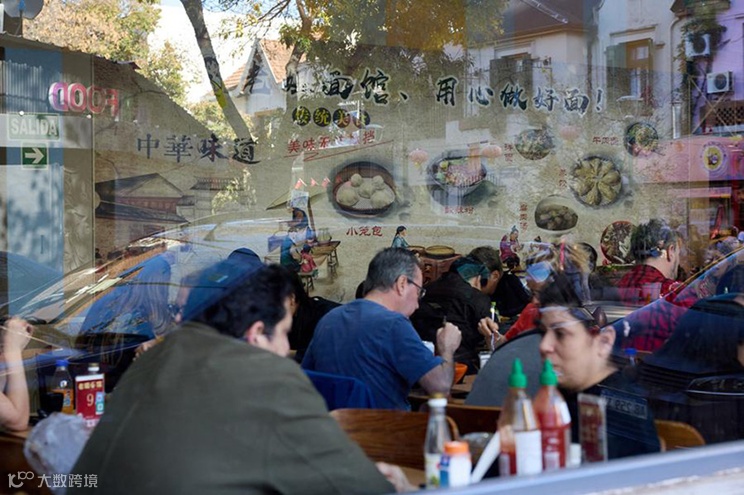
People have meals at a Chinese restaurant in Chinatown in Buenos Aires, Argentina, May 10, 2025. /Xinhua
Latin America's growing partnership with China also reflects a maturing confidence within the Global South. China itself has announced that it will no longer seek new special and differential treatment in future WTO negotiations, a decision meant to stand on principle in a way that demonstrates both economic strength and a commitment to fairer global rules while maintaining its developing-country status and solidarity with other emerging economies. And it's a sentiment shared with Latin America, where nations seek a voice commensurate with their potential in shaping international institutions.
By aligning green growth with digital innovation and open markets with social inclusion, our cooperation can become a template for inclusive modernization. At a time when fragmentation and protectionism threaten global progress, the China-Latin America partnership offers a different story: one of connectivity, mutual respect and shared prosperity.
To turn this shared vision into practical outcomes, I believe six areas deserve immediate focus: First, infrastructure and connectivity: By continuing to expand collaboration through ports or the flagship modern rail corridor linking Sao Paulo and Rio de Janeiro as well as more highways and power grids, Latin American economies will not only benefit but shorten supply chains to Asia.
In addition, financial innovation: By broadening the use of local-currency settlements, transaction costs and dependency on any single currency can be reduced. RMB-clearing banks in Sao Paulo, Buenos Aires and Santiago should strengthen financial stability.
Moreover, the green transition: Joint ventures in renewable energy, electric mobility and green hydrogen are already on the rise. With deeper integration, Latin America would become a world leader in sustainable industrialization.
Furthermore, digital economy and AI: Partnerships in 5G, cloud computing and robotics – from agritech to fintech – can ensure the benefits of innovation reach all sectors.
Finally, think-tank and academic dialogue: Institutions such as the Center for China and Globalization, Brazilian Center for International Relations and the Brazil-China Business Council can build a permanent China-Latin America forum on sustainable development, producing policy ideas grounded in research and mutual understanding.
Fifty years ago, the relationship between China and Latin America began with simple trade – soybeans, copper and friendship delegations. Today, it encompasses electric vehicles, AI research and joint development finance. As Argentine President Javier Milei's visit approaches and the new China-CELAC projects begin to take shape, both sides can look ahead to an era defined not by distance or ideology but by a shared commitment to innovation, sustainability and mutual benefit.
The Pacific, once a divide, is becoming a bridge. If we can build upon the momentum of Brazil's green industry, Argentina's agricultural innovation, Peru's new connectivity and Chile's energy transition, then the partnership between China and Latin America will stand as a model for the world – a partnership not of convenience, but of conviction.
From CGTN, 2025-11-5
CCG Books
Other CCG News:
Global Talent Summit 2025 Holds in Beijing Sub-Center
300 Participants from 60 Countries Attend CCG Annual Forum
CCG hosted the 9th China Global Think Tank Innovation Forum
2024 GYLD Annual Forum successfully held in Beijing
11th China Inbound-Outbound Forum Successfully Held @2024 CIFTIS
60 Countries’ Participants Joined China and Globalization Forum
CCG seminar on global governance & future of China and Africa
Senior Diplomats from 20 countries discuss China's green transition
Text of Pascal Lamy and Chinese trade experts @ CCG VIP Luncheon
Book Launch: Enhancing Global Governance in a Fragmented World
Transcript of CCG session in WTO Public Forum
20 US media leaders attended special dinner held to welcome CCG
Transcript of EU-China think tank exchange
Turkish Foreign Minister Hakan Fidan speaks at CCG
Wang Huiyao in Dialogue with Stephen Roach
CCG Holds 8th China Global Think Tanks Innovation Forum
Joseph Nye | Understanding Global Power Shifts in 21st Century
New Book | The Global Power Shifts in the 21st Century
Josep Borrell’s scheduled speech at CCG on EU-China relations
Justin Vaïsse speaks at CCG on the eve of Macron's visit
Brazilian Ministerial Visiting Event Held at CCG
CCG Global Dialogue:Building a floor for China-US relations
CCG President in Dialogue with CFR President Richard Haass
Video | 7th Annual China Global Think Tank Innovation Forum
CCG 2nd International Visit in Pandemic 2022
Wang Huiyao in Dialogue with Fred Bergsten
9th China Inbound-Outbound Forum
First Chinese Think Tank to Visit Europe since Pandemic
First Chinese Think Tank Visits Washington DC since Pandemic
New York: CCG Delegation's First Stop in the US
CCG Delegation of Experts Visits Singapore
Selected Video of CCG Global Dialogue (Ⅰ)
Selected Video of CCG Global Dialogue (Ⅱ)
CCG Book Launch Welcomes 20 Ambassadors to China
CCG and UN Women hold symposium on International Women's Day
CCG event on MNCs opportunities and challenges in China
Video | The rise of Asia and its implications
Fireside Chat with The Hon. Sec. Henry Paulson and Mr. WANG Shi
Text and Video: Wang Huiyao in Dialogue with Wolfgang Ischinger
Wang Huiyao in dialogue with Lawrence Summers on Global Economy
Wang Huiyao in Dialogue with Yale Professor Stephen Roach
Climate change, inequality, and sustainable development
CCG holds seminar on “Twenty years of China’s WTO membership
CCG holds Sixth Annual China Global Think Tank Innovation Forum
Wang Huiyao in dialogue with CSIS President John Hamre
Wang Huiyao in dialogue with Lord Jim O'Neill & Leslie Maasdorp
CCG Dialogue with David Lampton on China Laos Railway and BRI
Wang Huiyao in dialogue with Kishore Mahbubani
CCG holds Francophonie Ambassadors Symposium
Dialogue between Wang Huiyao and Carter Center on Sino-US Relations
CCG Dialogue with Neil Bush and David Firestein
Dialogue on trade among Wendy Cutler, Pascal Lamy & Wang Huiyao
CCG Dialogue with John Thornton, Stapleton Roy and Adam Posen
Dialogue among Susan Thornton, Ronnie Chan and Wang Huiyao
World Bank and CCG launching the latest World Economic Prospects
Dialogue Between Yale Historian Valerie Hansen & Dr. Wang Huiyao
CCG Dialogue with Nobel Laureate Sir Angus Deaton
Conversation with Martin Wolf, Chief Economics Commentator at FT
CCG Roundtable Commenmorating China's Accession to the WTO
CCG Dialogue with Harvard Professor Anthony Saich
CCG Dialogue with Joseph S. Nye Jr.
A Dialogue Between Graham Allison and Wang Huiyao
A Dialogue Between Thomas L. Friedman and Wang Huiyao
40 Ambassadors and Diplomats Attend CCG Open Day
Dr. Miao Lu posted the first question at the MSC 2021
CCG releases new book on global talent studies