
专利现在越来越受到科技企业的重视,企业在发展过程中,或是为了适应市场需求,或是为了改善已有工艺,或是为了革新老旧技术,或是为了超越利润之外的追求,很多企业每年都会有一些新的技术和工艺或者产品问世,针对这些创新,企业往往会申请专利,而那些希望在国外市场施展拳脚的企业则会考虑通过PCT或者巴黎公约途径在国外申请专利。
在国外申请的专利将会涉及到申请文件正文的翻译,关于专利文本的翻译,其中最重要的是将专利文件中描述的文字准确地从本国语言翻译到他国语言,但是在翻译过程中,除了做到对原文语言的准确理解之外,专利翻译还有一个值得注意的地方,那就是专利文件相比于常规文件有着特定的格式要求。
如果翻译的时候不能严谨地遵照这些要求,可能会直接影响到专利的申请和授权。而各个国家专利局对专利文件形式的要求也有一定的区别。所以专利翻译人员,不仅要了解语言,还要了解专利文件的格式要求或者说撰写规则。
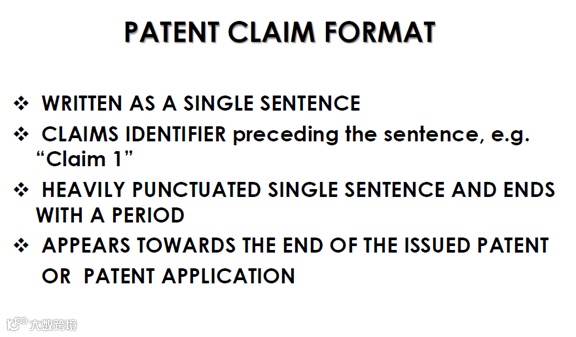
而在一份完整的专利申请正文中,权利要求(CLAIM)的撰写格式要求尤甚,权利要求也是一份专利要求保护的核心权利所在。世界知识产权组织(WIPO)对于权利要求的撰写格式和形式要求,也有着专门的英文介绍。
一、通用权利要求格式(Patent Claim Format)
下面我们看看其中值得注意的几点。在这份介绍的首页,它说到常规的权利要求格式中,这也是最基本的权利要求格式,权利要求主要包括三个部分:1. THE PREAMBLE(前序部分);2. TRANSITIONAL PHRASE(过渡短语);3. THE BODY(主体部分)。
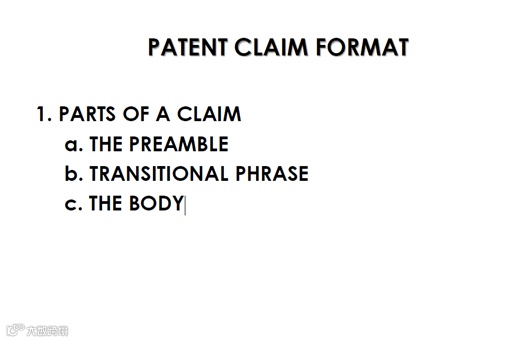
下面我们主要看看有关这三个部分中需要注意的地方;
首先是前序部分:
前序部分主要是用来确认一项发明的类别(category)或者物体(object),例如:设备、装置、物品组合物、方法或工艺等(e.g., an apparatus, device, article,composition, a method or process)。
例如:
ØObject of the invention: to cook rice
AN APPARATUS FOR COOKING
Object of the invention: Cooking all kinds of
grains
AN APPARATUS FOR COOKING GRAINS
Object of the invention: making tea
A METHOD FOR MAKING TEA
Object of the invention: treating malaria
A COMPOSITION FOR TREATING MALARIA
Object of the invention: mounting telephones
A DEVICE FOR MOUNTING A TELEPHONE
其次是过渡短语:
顾名思义,过渡短语是介于前序部分和主体部分的过渡词,过渡短语一般分为开放式和封闭式。
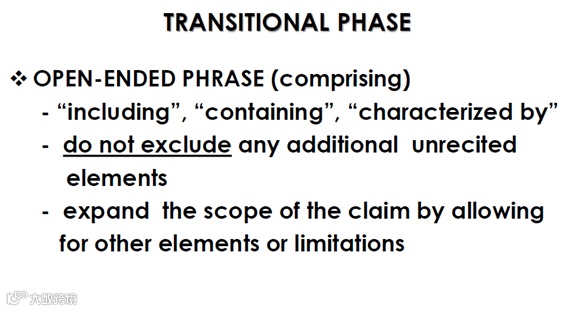
开放式的过渡短语用词一般包括:comprising、including, containing, characterized by等。这种开放式的短语扩大了该条权利要求的范围。
例如:
An apparatus, comprising:
a plurality of printed pages;
a binding configured to hold the printed pages
together; and
a cover attached to the binding.
封闭式短语主要是——consisting of
例如:
1. A chemical compound consisting of:
50% A component;
25% B component; and
25% C component.
与开放式短语的“comprising、including, containing…”相比,在封闭式短语中,任何其他成分是被排除在外的,即“consisting of”之后的成分就已经是前序部分的100%组成成分,不再有其他。
再者是主体部分:
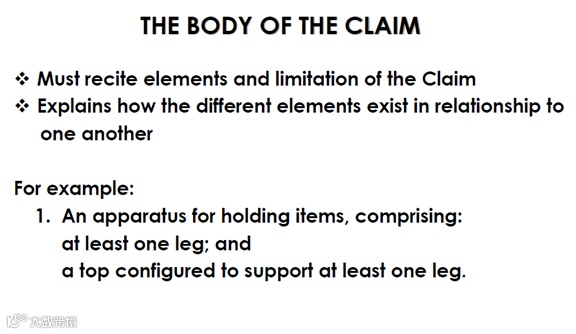
权利要求的主体句不仅是零件或者成分的列表,还要解释这些不同要素之间存在的联系。
例如:
1.An apparatus for holding items, comprising:
four legs;
16 screws; and
a top.
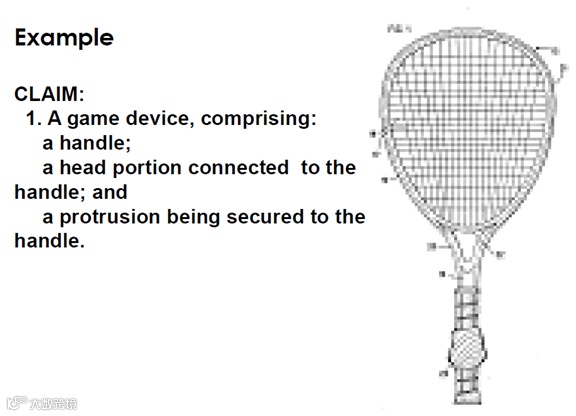
1. A game device, comprising:
a handle;
a head portion connected to the handle; and
a protrusion being secured to the handle.
二、改进型权利要求格式(Improvement Claims)
上面提到的只是第一种最基础的权利要求格式,下面说到的是第二种改进型权利要求(Improvement Claims)或者说是美国特有的杰普森权利要求格式(Jepson Claim format)。
改进型权利要求也是分为三个部分:前序部分、过渡短语、主体部分。
只是改进型的撰写格式更具体,前序部分是最相关的现有技术的说明,过渡短语由wherein这样的法律用词引导,主体部分撰写的是本发明的新颖技术特征。
例如:
CLAIM:
1. A game device having a handle, a throat portion and a head portion connected to the throat portion, wherein the improvement comprises a protrusion being secured to the handle.
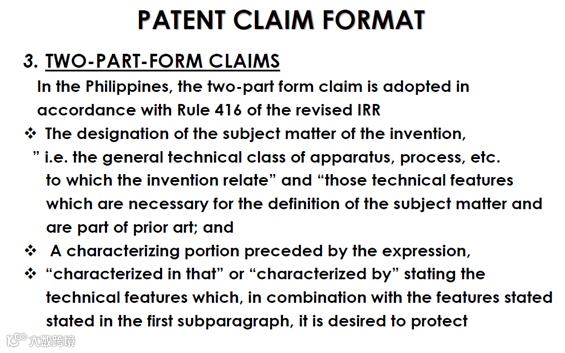
三、两部格式权利要求(TWO-PART-FORM CLAIMS)
第三种格式,英文名为:TWO-PART-FORM CLAIMS,即两部格式权利要求:
这种格式的权利要求主要包括:
1、发明主题的指定,即与本发明相关的设备或者工艺的常规技术,这些常规技术是定义发明主题所需要的现有技术的一部分;前序部分描述的常规技术的技术特征;
2、由“characterized in that” or “characterized by” 引导的本发明希望保护的新颖技术特征。
例如:
CLAIM:
1. A game device, comprising a handle and a head portion connected to the handle, characterized in that, a protrusion is secured to the handle.
四、单元加功能型权利要求(MEANS-PLUS-FUNCTION CLAIMS)
这一种格式的权利要求的特点是,引用说明书中所描述的各个结构所呈现出的功能,而不是特别定义的功能;必须通过具有所引用功能的结构进行充分描述。
例如:
1.An apparatus for cooking rice, comprising:
a means for holding rice; and
a heater configured to heat the rice-holding means.
1. A game device, comprising a handle and a head portion connected to the handle, characterized in that, an anti-slippage means is secured to the handle.
五、关于标点符号的规定
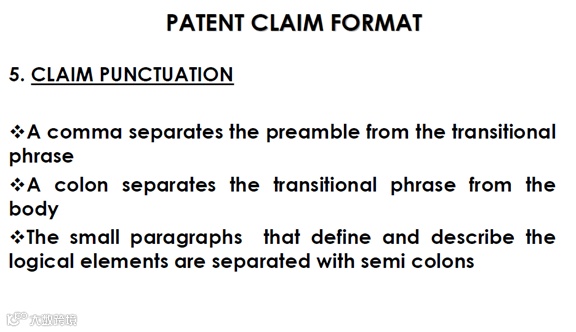
权利要求的撰写规则对标点符号也有规定。前序部分和过渡短语之间用逗号隔开,过渡短语和主体部分之间用冒号隔开,定义和描述各个逻辑要素的小句段之间用分号隔开。
例如:
Preamble, transitional phrase:
Element (#1);
Element (#2); and
Element (#3).
1. An apparatus, comprising:
a plurality of printed pages;
a binding configured to hold the printed pages together; and
a cover attached to the binding.
六、逻辑要素之冠词使用
当某一个要素首次在权利要求中出现时,用不定冠词“a”或者“an”;当再次提到这一要素时,用定冠词“the”或者“said”。
例如:
1. A game device, comprising a handle and a head portion connected to said handle, characterized in that, an anti-slippage means is secured to said handle.
七、权利要求特殊用词
权利要求中有着诸如“wherein”、“whereby”、“such that”等词用来进一步描述或者定义结构或者提供与已有结构相关的功能描述。
例如:
An apparatus, comprising:
a plurality of printed pages;
a binding configured to hold the printed pages together; and
a cover attached to the binding, wherein the cover is detachable from the binding.
八、多重要素
许多专利局都规定权利要求至少要包含两个要素:
例如:
A computer, comprising:
a processor.
九、权利要求的设定
权利要求主要包括独立权利要求和从属权利要求。
1、独立权利要求(INDEPENDENT CLAIM)
独立权利要求的特点是:要求保护的权利范围广;独立权利要求可以独立存在,不需要借助其他权利要求才能存在;专利申请可以有超过一条独立权利要求。
2、从属权利要求(DEPENDENT CLAIM)
从属权利要求的特点是:其权利需要依据某一条独立权利或者从属权利要求而存在;从属权利要求务必不能扩大其引用的独立权利要求中定义的发明保护范围;
例如:
1. A game device having a handle, a throat portion and a head portion connected to the throat portion, wherein the improvement comprises a protrusion secured to the handle.
2. A game device according to claim 1, wherein the protrusion is configured to receive the palm of the user.
例如:
1. A game device, comprising a handle and a head portion connected to the handle, characterized in that, an anti-slippage means is secured to the handle.
2. A gamed device according to claim 1, characterized in that, the anti-slippage means is a protrusion disposed at the central portion of the handle.
至此,WIPO上关于权利要求的撰写规则的介绍基本过了一半,后面还有9种根据发明类别不同而单独介绍的9种特殊的权利要求撰写规则,下回继续。总之,专利文件的翻译,尤其是正式的申请文件的翻译,不仅要精通语言,还要熟知常规的专利撰写规则,这样能减少可能存在的来回修改的次数,以及沟通的成本,提高审核的效率。
To be continued
晨辉翻译助力知识产权翻译

晨辉专利翻译服务:
百余名全职译者团队,深厚的理工科兼专利 相关背景;
机械、电信、生物、化学、材料、医药、生命科学等领域;
英、日、韩、德、法、意、泰、印尼等百余种语言;
专利申请文件、审查意见通知书、诉讼文件、法律文件等;
扫描二维码
联系我们
晨辉翻译


点个在看你最好看