



Driven by the rapid iteration of cutting-edge technologies such as Artificial Intelligence, Metaverse, Cloud Computing, and Autonomous Driving, the market demand for computing power of core processors like CPUs, GPUs, DPUs, and ASICs is growing exponentially. This trend poses severe challenges to the power supply system design of these key chips in terms of power density, energy efficiency, and stability.


To address the continuously growing demand for computing power, BPS officially launches its second-generation Smart DrMOS and Vcore power solution. Through comprehensive upgrades in process and packaging, this product achieves significant improvements in quality, efficiency, and power density. It not only enhances system operational stability but also achieves substantial optimization of the overall cost. BPS Smart DrMOS can be widely used in consumer applications such as laptops, graphics cards, and motherboards, helping customers create end products with high performance, high efficiency, and stronger cost competitiveness.

Self-Developed BCD Process BPS-G2
Building on the foundation of the first-generation self-developed BCD process (BPS-G1), BPS has successfully developed and mass-produced the second-generation BCD process (BPS-G2), whose key performance indicators have reached international first-class levels. Simultaneously, the company is actively developing the third-generation process (BPS-G3), aiming to provide more outstanding performance support for the next generation of products.
New Co-pack Packaging, Balancing Performance and Cost
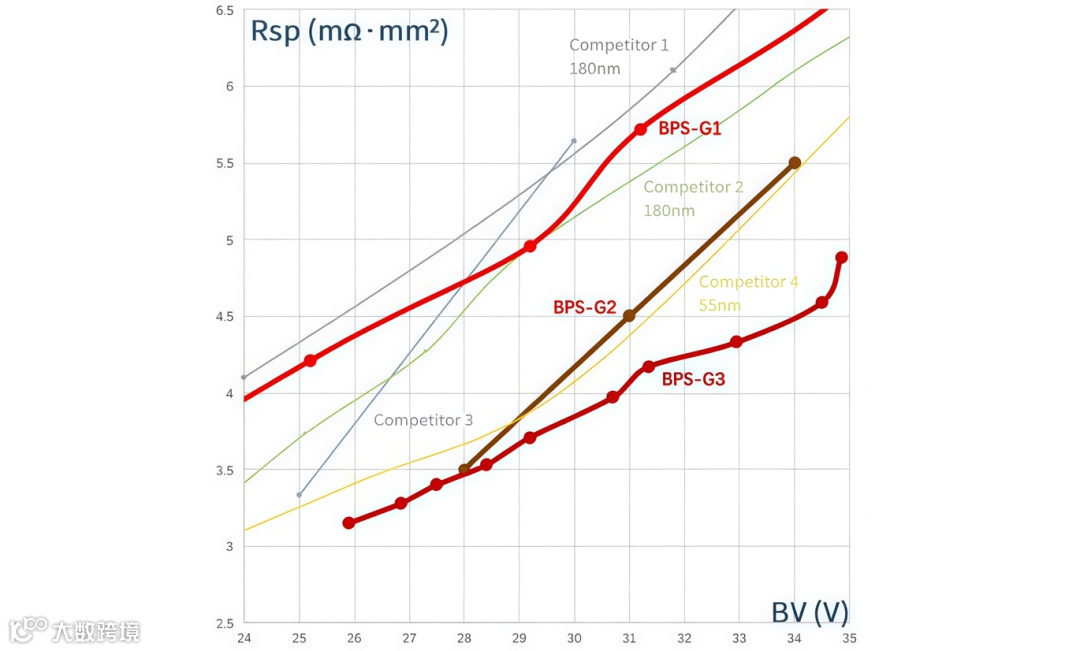
BPS's first-generation DrMOS adopted a single-die + substrate packaging design. While it offered advantages of low packaging cost and design flexibility, it was limited by high wafer manufacturing costs, and the integration of the power and control/driver circuit on the same die restricted overall performance.
The industry commonly uses traditional multi-die + Leadframe packaging, which optimizes wafer cost and performance through separate design of the power section, but its complex copper wire bonding process increases packaging costs.
BPS's second-generation DrMOS adopts a new Co-pack packaging, utilizing a multi-die + substrate design that combines the advantages of the previous two designs, achieving superior performance while delivering better cost-effectiveness.
Core Advantages
Quality Improvement: Simplified manufacturing process flow effectively reduces defect rates and enhances product quality.
Efficiency Improvement: Separately optimized power section enables breakthroughs in efficiency.
Cost Reduction: Reduced number of masking layers for the power section significantly lowers wafer manufacturing costs.
Power Density Increase: Higher frequency, smaller size, greater power density.
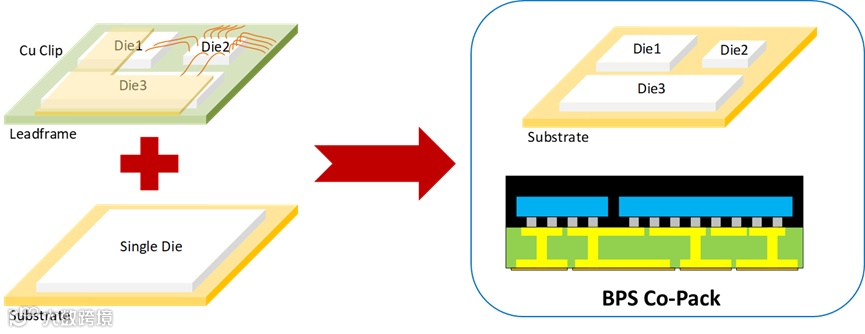
Combined with the optimization of Rsp from BPS-G2, this ultimately achieves an outstanding result of over 30% reduction in overall cost compared to BPS-G1.
Comprehensive Efficiency Improvement
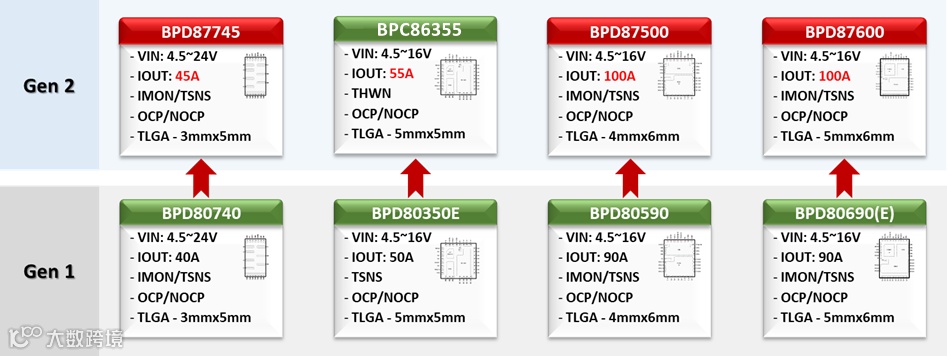
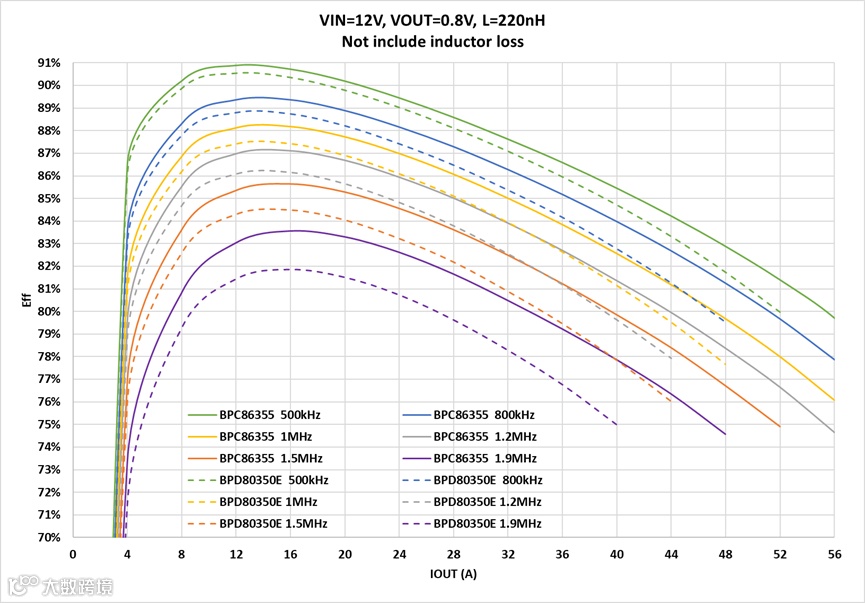
Under the same packaging and voltage withstand conditions, the second-generation DrMOS achieves a 5~10A increase in current capability, bringing the dual advantages of improved efficiency and reduced temperature rise.
Comparing efficiency under different switching frequencies, the second-generation 5x5 DrMOS BPC86355 demonstrates higher efficiency over the first-generation BPD80350E. The improvement in efficiency is particularly significant under high-frequency and heavy-load conditions.
Lower Temperature Rise, Reducing Thermal Pressure
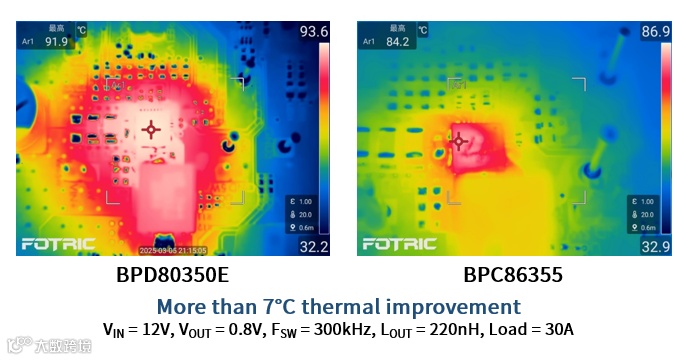
Under the same conditions, the temperature rise of the second-generation 5x5 DrMOS BPC86355 is 7°C lower than that of the first-generation 5x5 DrMOS BPD80350E, effectively alleviating thermal pressure and enhancing system lifespan and reliability.
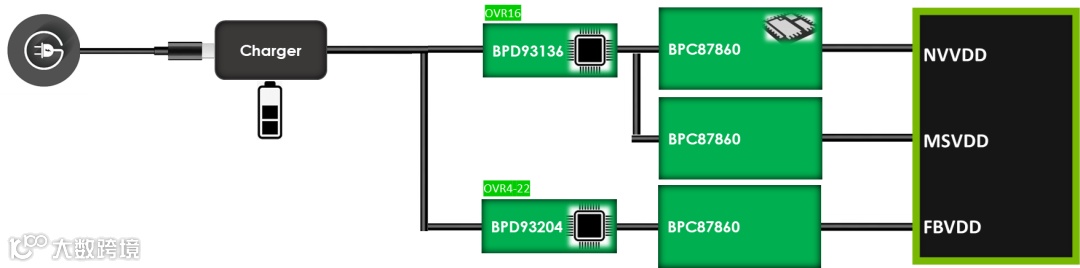
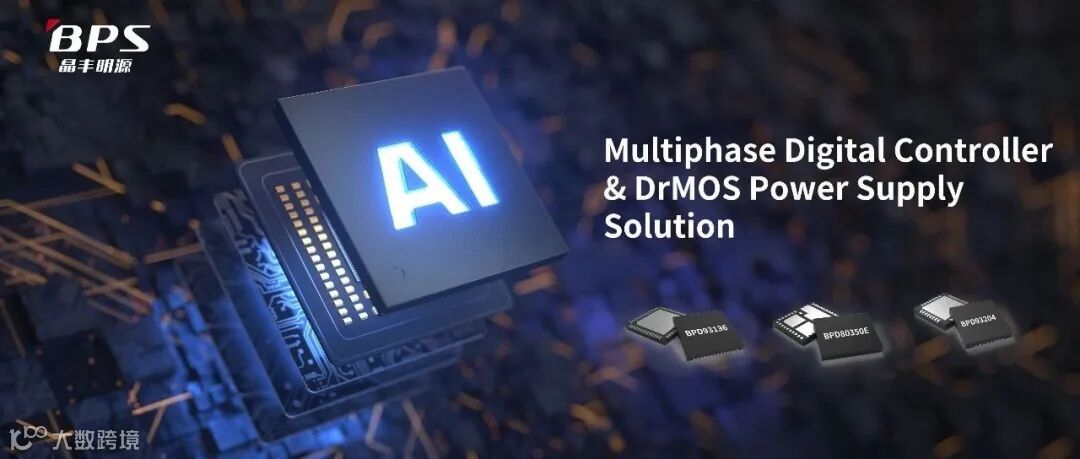
BPS provides a complete GPU Vcore power solution. The high-end graphics card Vcore power solution utilizes BPS's 16-phase dual-output controller BPD93136 + 4-phase single-output controller BPD93204, paired with the second-generation 4x6 Smart DrMOS BPC87860. This meets the performance requirements of the graphics card's three power rails while achieving a miniaturized design and high current output to cope with the compact layout of gaming laptops.
16-Phase Digital Controller BPD93136
Dual output, flexible 16+0/15+1 phase configuration
PWMVID/PMBUS voltage regulation
200kHz~2MHz adjustable switching frequency
Supports three current sensing methods: DrMOS IMON / DCR / LS Ron
Fast dynamic response
Supports SSC (Spread Spectrum Clocking) function to reduce EMI
Supports 10 different register configurations
TQFN 7x7 package
4-Phase Digital Controller BPD93204
Single output, 4 phases
PWMVID voltage regulation
300kHz~1MHz adjustable switching frequency
Supports three current sensing methods: DrMOS IMON / DCR / LS Ron
Fast dynamic response
Supports SSC (Spread Spectrum Clocking) function to reduce EMI
Supports 8 different register configurations
TQFN 4x4 package
NEW DrMOS BPC87806
Wide input range: 3V~24V
60A output current capability
Low quiescent current IQ=100uA
Compatible with 3.3V/5V PWM logic levels
Supports switching frequencies up to 2MHz
Accurate current/temperature reporting and alarm indication
Protection features: OCP / OTP / BOOT UV / PWM High-Level Timeout
TLGA 4x6 package
The BPC87860 is a Smart DrMOS developed based on BPS's second-generation self-developed BCD process and Co-Pack packaging. Under common laptop Vcore application conditions, its peak efficiency reaches up to 87%, providing a high-efficiency, low-heat power system for heavy-load applications in gaming laptops, which is conducive to system performance and a better gaming experience. It can also achieve 75% efficiency under light load (10mA), enabling longer battery life for laptops during mild usage.
The BPC87860 exhibits excellent suppression of switching spike voltage. Under conditions of 20V input and 60A load, the maximum SW spike voltage is only 23.2V, whereas competing products reach 33V under the same conditions. Lower spike voltage results in higher reliability and lower EMI.


Scan
the code for
more Info




Related Articles
About BPS

*The test results mentioned in the article are obtained under real test of laboratory. The actual products may be different depending on the application environment. BPS reserves the right of final interpretation.