


ELASTOMERS
高分子弹性体(橡胶)
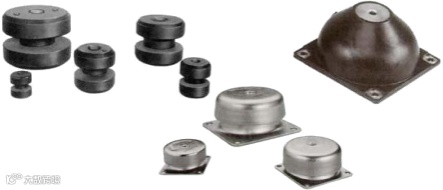
ü Advantages(优点):
• Provide effective control of dynamic forces.有效控制动态力下的变形。
• Able to undergo rapid cyclic deformations over a range of frequencies. 阻尼小,响应迅速。
• Infinite shapes are possible可设计成任意形状.
• Inherent properties are flexibility, high elongation and a combination of resilience and damping.具有弹性和阻尼特性。
ü Disadvantages(缺点):
• Attacked by certain environments.对环境(温度、化学物质)比较敏感
Properties(特点)
• Elastomeric isolators are always stiffer under dynamic conditions (shock and vibration) than for static conditions.动刚度>静刚度
• Typical dynamic-to-static stiffness ratios are 1.3 - 1.7 : 1.动静刚度比
• As dynamic modulus is a function of frequency and strain, the dynamic- to-static stiffness ratio is also a function of these parameters.动刚度与频 率、预载、振幅有关。
Properties(特点)
• Hardness(硬度):
The resistance to indentation. Measured in Shore A durometer, scaled from 20 to
95. Practical duro range for isolators is 35 to 75.
硬度是橡胶材料抗压痕或抵抗硬物入侵表面的能力,通常用邵氏硬度计测量,材料
硬度范围SHA20~SHA95。通常隔振器的硬度范围SHA35~SHA75.
• Modulus of Elasticity(弹性模量):
Ratio of unit stress to corresponding unit strain in tension, compression or shear.
Poisson’s ratio ~ 0.5, so elastomers are considered practically incompressible.
弹性模量是单位应力与应变的比值。泊松比≈0.5,橡胶一般认为是不可压缩的材料。
Properties(特点)
• Hysteresis(迟滞性):
The difference between the amount of energy required for deformation and the
amount of energy recovered upon unloading. 加载与卸载所需能量的差异
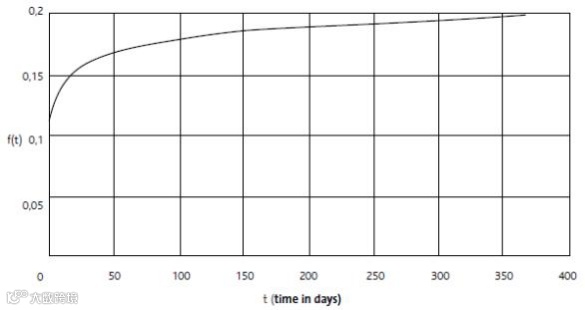
• Creep(蠕变):
Increasing deformation without accompanying increasing load that occurs over time. 在一定时间、 一定载荷下橡胶材料所发生的塑性变形。任何材料都有一定的蠕变特性。
蠕变系数
• Dielectric strength(绝缘性)
Elastomers have anelectrical resistance which varies according to their composition, hardness.
橡胶材料具有一定的绝缘性,绝缘强度与成分、硬度有关。
NR(天然橡胶)
Hardness 45 1013 Ohm×cm²/cm(体积绝缘电阻)
Hardness 75 104 Ohm×cm²/cm(体积绝缘电阻)
We have also developed special elastomers which can have a dielectric strength greater than 2000 Volts for 1 minute.
• Temperature Sensitivity(温度敏感性) :
Effects of high and low temperature compared to ‘room’ temperature on
modulus and damping characteristics.橡胶材料对高低温较敏感。
• Fluid Exposure(液体腐蚀):
Effects of fluids (fuels, chemicals, etc.) on the performance of elastomer
compounds燃料、化学溶剂对橡胶材料性能有影响。
Natural rubber NR(天然橡胶NR)
• Advantages(优点):
Low cost, excellent bond, high tensile and tear strength, high fatigue life.
成本低,粘接性好,弹性好,伸长率高,撕裂强度高,疲劳性好。
• Disadvantages(缺点) :
Moderate low temperature performance, poor fuel/oil/solvent resistance. Poor heat
resistance. Low damping.
不耐燃料、石油、化学溶剂,耐热性差,阻尼小。
Neoprene CR(氯丁橡胶CR)
• Advantages(优点):
Oil and moderate chemical resistant, excellent bond, good physical properties.
耐油,耐燃,耐氧化,耐臭氧,粘接性好,综合物理性能好。
• Disadvantages(缺点) :
Poor low temperature performance. Low damping.
耐寒性差,阻尼小。
Silicone Si(硅橡胶Si)
• Advantages(优点):
High damping, excellent temperature performance -73℃~ 232℃ . Excellent
resistance to weather and ozone.
阻尼大,耐温性好,耐候性好,耐臭氧,绝缘性好。
• Disadvantages(缺点):
Can be difficult to bond, low physical properties, low fuel resistance, high cost.
粘接性差,综合物理性能差,耐燃性差,成本高。
Properties of common rubber(常见橡胶特性)
NR
天然橡胶
|
CR
氯丁橡胶
|
IIR
丁基橡胶
|
Si
硅橡胶
|
Metal
金属丝
|
|
粘接性
|
优秀
|
优秀
|
很好
|
好
|
-
|
抗拉强度
|
优秀
|
优秀
|
很好
|
好
|
优秀
|
撕裂强度
|
好
|
好
|
好
|
一般
|
优秀
|
抗蠕变性
|
好
|
一般
|
一般
|
一般
|
优秀
|
最大传递率(共振时)
|
10
|
10
|
6
|
4
|
3
|
使用温度范围 ℃
|
-30~70
|
-30~70
|
-50~120
|
-50~150
|
-150~400
|
耐水能力
|
优秀
|
优秀
|
优秀
|
优秀
|
优秀
|
耐化学油脂能力
|
差
|
好
|
差
|
一般
|
优秀
|
耐臭氧能力
|
差
|
好
|
优秀
|
优秀
|
优秀
|
耐紫外线UV能力
|
差
|
很好
|
很好
|
优秀
|
优秀
|
耐热老化能力
|
一般
|
好
|
优秀
|
优秀
|
优秀
|
成本
|
低
|
低
|
较高
|
高
|
很高
|