HK Bio-Med Innotech Association
Recommendation to the Chief Executive’s 2025 Policy Address
(the recommendation was submitted on 22 AUGUST 2025)
We were honoured to witness, together with industry stakeholders, the Government’s plan to establish a “Third Medical School” as set out in The Chief Executive’s 2024 Policy Address. We firmly believe this initiative will, to a significant extent, strengthen Hong Kong’s talent pipeline for the bioeconomy industry and support the development of local industry. Building on our “Recommendations for The Chief Executive’s 2024 Policy Address”, this 2025 recommendation aims to further align with current policies for developing Hong Kong’s bioeconomy and healthcare sectors, and to invigorate industrial momentum.
Recommendations:
I. Increase R&D Expenditure and Its Share of GDP, and Proactively Mobilise Market Forces to Build a Virtuous Cycle of “Market-Driven Innovation”
The intensity of R&D investment is a core indicator of an economy’s innovation capacity as well as the quality and sustainability of its growth [1]. Cross-country estimates by the IMF (2024) indicate that raising public support for R&D by 0.5 percentage points of GDP can, in the medium term, increase GDP by up to 2% and slightly lower debt ratios, showing the evidence of a positive correlation between R&D intensity and high-quality, sustainable growth. Hong Kong is at a critical juncture of economic transformation and industrial upgrading; increasing total R&D spending would greatly support its goals of becoming an International Innovation and Technology Hub and an International Health and Medical Innovation Hub. However, comparative data show Hong Kong’s R&D-to-GDP ratio has long been relatively low, lagging behind major economies and the global average.
Economy
|
R&D/GDP
|
Global Average
|
1.7%
|
Hong Kong
|
1.11%(2023)
|
Mainland |
2.68%(2024)
|
Taiwan
|
3.98%(2023)
|
United States
|
3.4%(2024)
|
Japan
|
3.7%(2024)
|
Singapore
|
1.9%(2023)
|
R&D Expenditure (GERD) as a Percentage of GDP (selected economies)
Moreover, according to the Census and Statistics Department (2023), Hong Kong’s R&D funding structure is imbalanced: government accounts for 55.3% while business/industry contributes only 38.7%. In major innovation economies such as the U.S., Japan, Korea, and Mainland, business typically contributes ≥60–75%. Excess reliance on fiscal funding is constrained by annual budgets and consolidation cycles, and it does not sufficiently “crowd in” private capital to drive translation and commercialisation, ultimately weakening the sustainability of the innovation system. By contrast, Shenzhen derives around 90% of its R&D funds from enterprises, which strongly supports a virtuous cycle of market-driven innovation and lays a solid foundation for high-quality, sustainable growth.
Strategic value of increasing R&D investment (threefold):
1. Catalyse start-ups and research translation, generating multiplier effects;
2. Foster high-value-added industrial chains and advance new-type industrialisation;
3. Recast Hong Kong’s role, deepen complementarity within the Guangdong-Hong Kong-Macao Greater Bay Area (GBA), and integrate into national development.
Our Recommendation:The Government should raise total R&D expenditure to at least the global average and actively rebalance the public–private funding mix. Through tax incentives and instruments such as the Innovation and Technology Fund, encourage businesses to direct their funding towards R&D rather than traditional sectors (e.g., real estate), thereby establishing a virtuous cycle of market-driven innovation.
II. Roll Out Population-Wide Screening for Selected Diseases in Phases to Build a Prevention-First Healthcare System
Hong Kong’s healthcare has long suffered from a structural imbalance— “treatment-heavy, prevention-light”—with the key bottleneck being the lack of population-wide screening mechanisms. While the Government has launched programmes such as the Colorectal Cancer Screening Programme (2018) and the Chronic Disease Co-Care Pilot Scheme (2024), two major gaps remain:
1. Insufficient coverage of high-burden diseases, for example:
Alzheimer’s disease (AD) accounts for 65% of dementia cases; prevalence reaches 10% among those aged 70+, and the number of patients is projected to exceed 300,000 by 2039. Yet 95% of local patients are diagnosed at middle to late stages, missing the golden window for early intervention (which can delay progression by 5–7 years). An HKUST-led research team has developed blood-based biomarker testing capable of accurately distinguishing AD patients (accuracy >96%) and those with mild cognitive impairment (accuracy >87%), outperforming current blood-based biomarker tests and demonstrating feasibility for population-wide screening.
Lung cancer remains the leading cancer killer in Hong Kong and worldwide. Because early-stage disease is often asymptomatic, many patients are diagnosed late and miss optimal treatment timing. To curb lung cancer at the source, we must “detect early, diagnose early, treat early” through early screening to reduce population risk.
-
Nasopharyngeal carcinoma (NPC) has the highest incidence among head-and-neck cancers in men; early-stage cure rates exceed 90%, yet current screening largely depends on symptom-driven visits. From 2013 to 2016, a CUHK team enrolled 20,000 asymptomatic men for plasma EBV DNA screening with longitudinal follow-up. Among them, 34 early-stage patients identified through screening achieved a 5-year survival rate of 95%, robustly demonstrating the feasibility of applying this technology in population screening.
Phased, disease-specific population screening brings dual benefits, both economic and systemic. It enables early prevention and reduces expensive late-stage treatment costs, while also alleviating pressure on public hospitals and specialty services by reducing the influx of late-stage cases.
Our Recommendation: Implement disease-specific, population-wide screening programmes in phases to build a prevention-first healthcare system for Hong Kong.
Conclusion:
We sincerely hope these recommendations will be given careful consideration by the Chief Executive, to support and complement current Government initiatives in biotech and healthcare, enhance Hong Kong’s innovation ecosystem, and help build the city into an International Innovation and Technology Hub and an International Health and Medical Innovation Hub.
End.
Sources:
1.The State Council, The People’s Republic of China
2. Census and Statistics Department of the Government of HKSAR
3. China Times
4.Institutes of Science and Development, Chinese Academy of Sciences
5. World Bank Group
6. HKET
7.Press Release of the Government of HKSAR
8.Elderly Health Service, Department of Health, the Government of HKSAR
9.The Hong Kong Alzheimer’s Disease Association
10.Cancerinformation.com.hk
11.Hong Kong Integrated Oncology Centre
12.Communications and Public Relations Office of the Chinese University of Hong Kong
13.News & Stories of the Hong Kong University of Science and Technology
14.International Monetary Fund (April, 2024), Chapter 2, Expanding Frontiers: Fisical Policies for Innovation and Technology Diffusion
15.OCED Science, Technology and Innovation Outlook 2023
16.Science, Technology and Innovation Scoreboard (STI.Scoreboard). OECD
17.GERD as a percentage of GDP. UNESCO Institute for Statistics (UIS)
18.Gross domestic spending on R&D. Organisation for Economic Co-operation and Development (OECD)
19.The State of U.S. Science and Engineering 2022 — U.S. and Global Research and Development. National Science Board(NSF/NCSES)
Author: HK Bio-Med Innotech Association
Chief Operating Officer: Ruby LIAO
Project Manager: Stephen CHEN
Project Manager: Wenjun YAN
Guidance: HK Bio-Med Innotech Association
Board of Directors & Scientific Advisors
[1] According to UNESCO’s definition of Sustainable Development Goal (SDG) indicator 9.5.1 and OECD statistics, R&D intensity (GERD/GDP), the ratio of gross domestic expenditure on R&D to GDP, is a core indicator for assessing an economy’s innovation capacity and the level of its knowledge economy.
---- HKBMIA 香港生物醫藥創新協會 ----
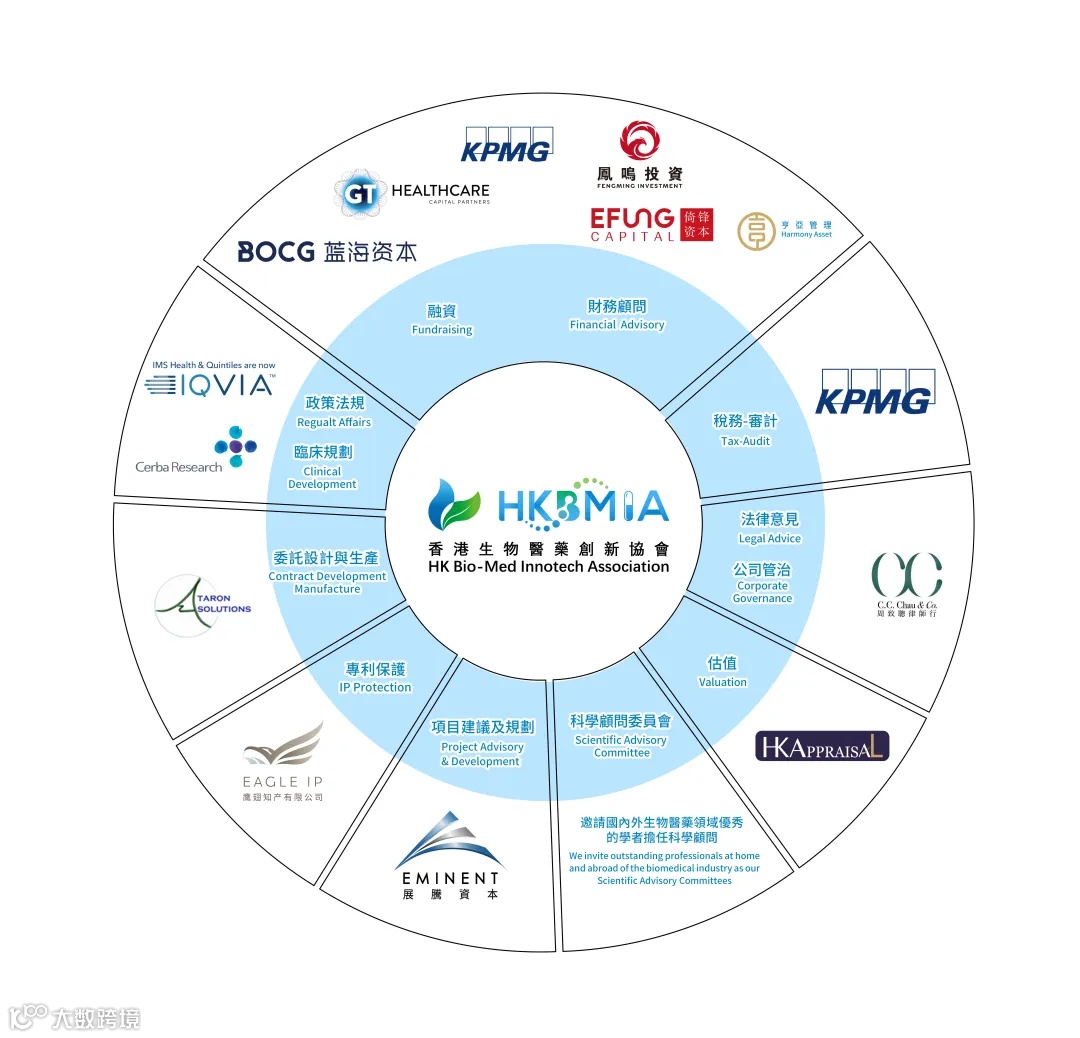
香港生物醫藥創新協會 HKBMIA 致力為香港建立一個創新及國際性的生物醫藥科技產業平台。
積極引入海外卓越的生物醫藥創新科技項目與產業,並提供各方面的協助,包括制定產業化及商業發展計畫、融資上市、公司管治及審計、研發技術、專利保護、估值、政策法規、臨床實驗設計及規劃等方面, 以進入國內市場。