

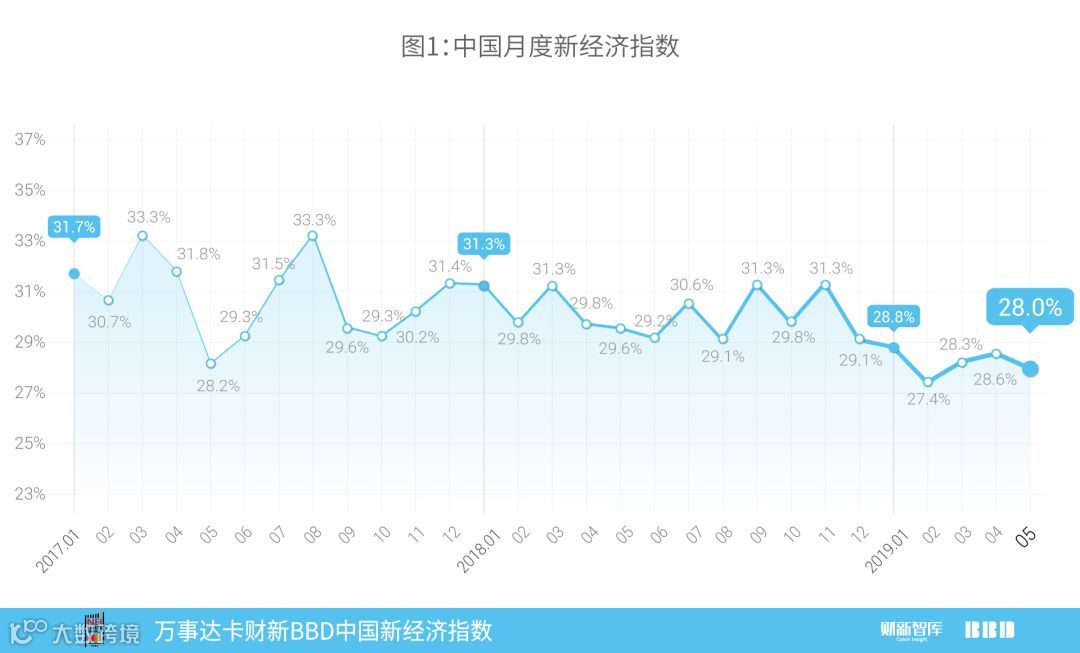
【财新网】(记者 张娱)受科技投入下降的拖累,5月万事达卡财新BBD中国新经济指数(NEI)出现回落。财新智库和BBD 6月2日联合发布数据显示,5月NEI录得28,即新经济投入占整个经济投入的比重为28%,低于4月0.6个百分点。
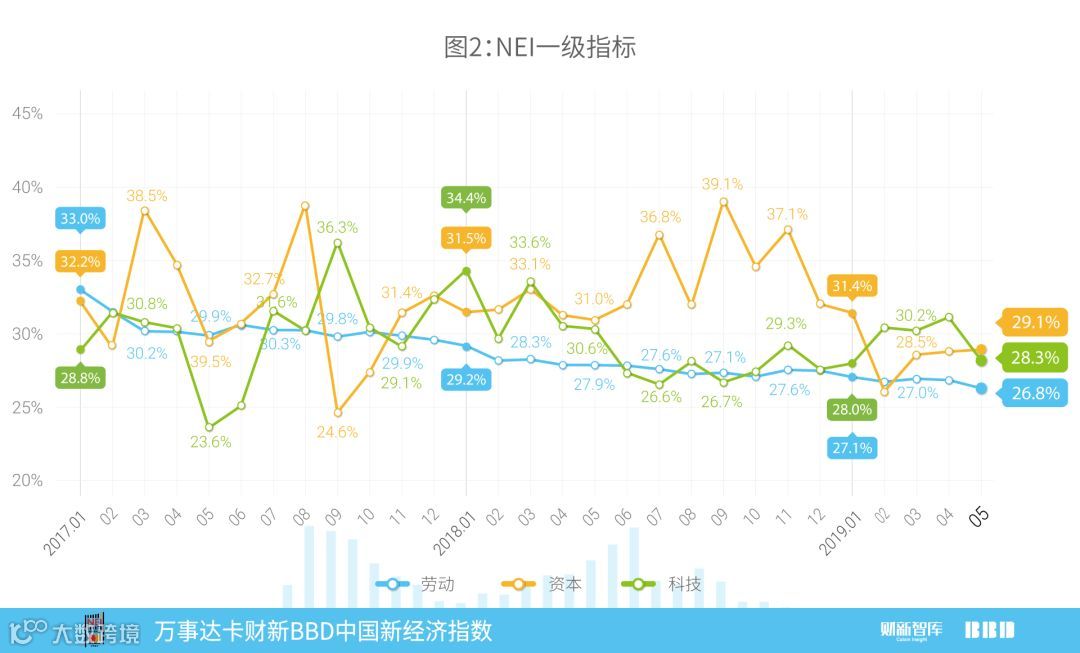
NEI包括劳动力、资本和科技三项一级指标,在NEI中的权重分别是40%、35%和25%。
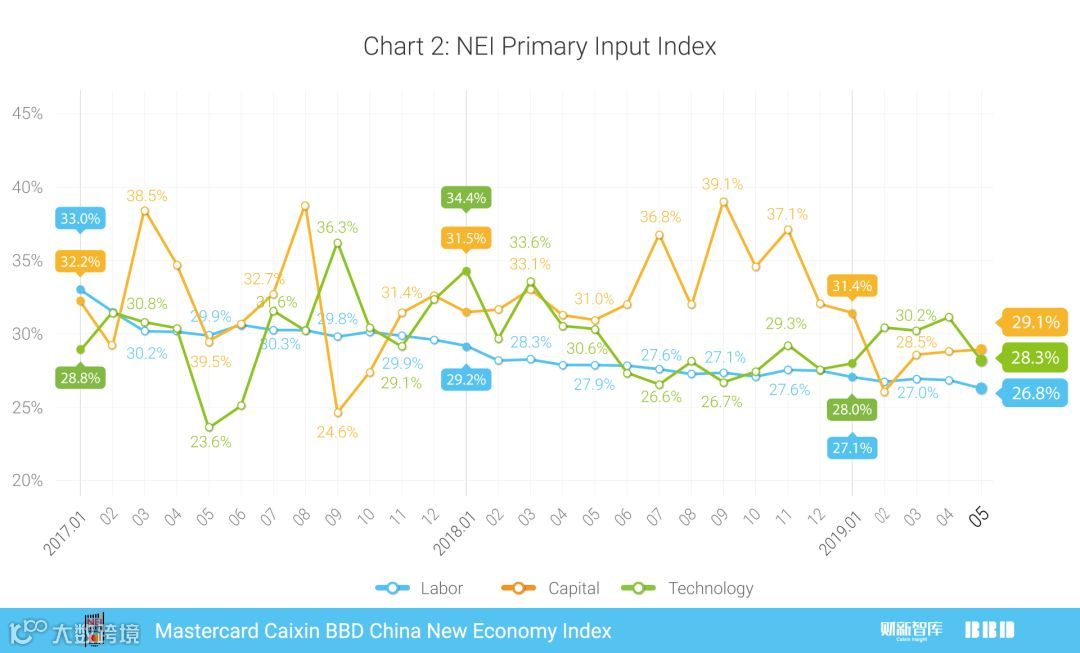
从分项指标来看,科技投入下降是5月NEI下降的主因。科技投入指数自从2018年7月起波动回升,5月录得28.3,环比下降2.8个百分点;资本投入指数近一年来波动较大,5月录得29.1,环比上升0.4个百分点;劳动力投入指数近半年来波动下降,5月录得26.8,环比持平。
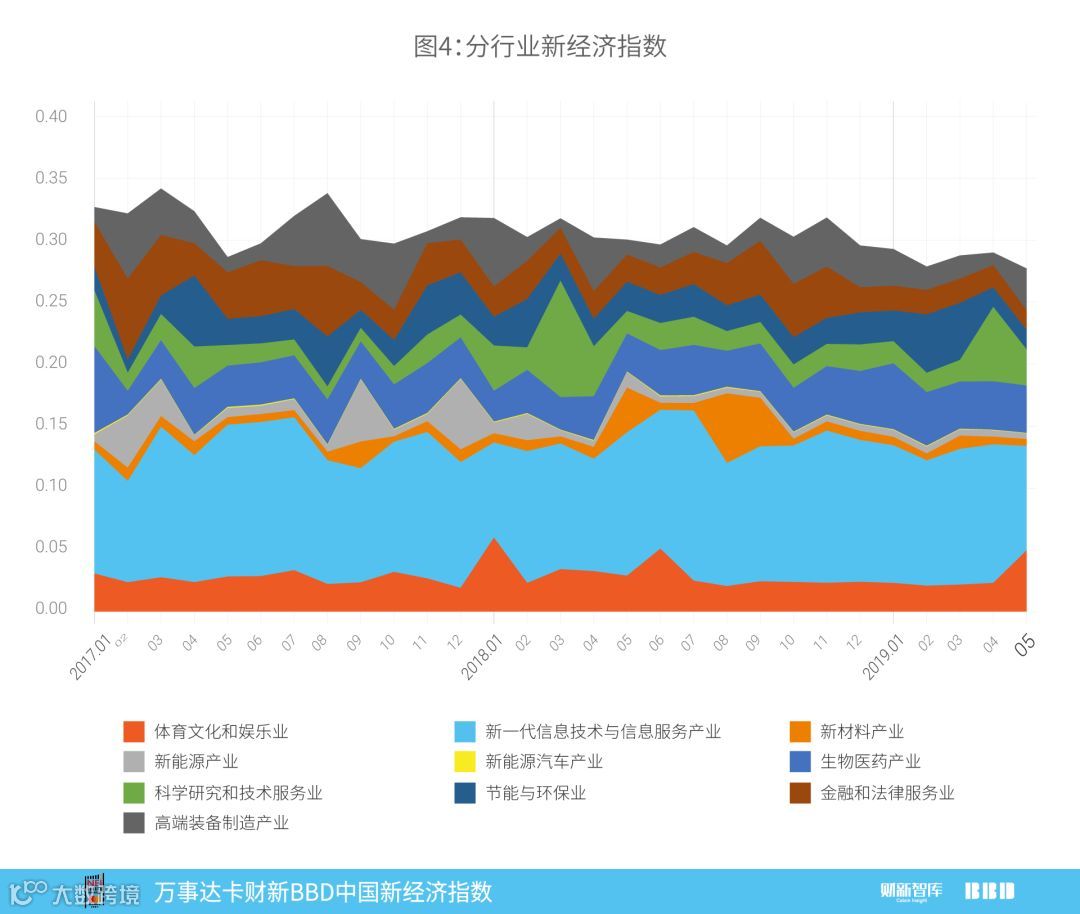
从行业贡献度来看,新一代信息技术与信息服务产业在NEI中占比最大,5月贡献了8.3个百分点;名次上升最快的是高端装备制造业,从4月的第七名上升到第四名,贡献了3.3个百分点;名次下降最快的是科学研究和技术服务业,从4月的第二名下降到第五名,仅贡献了2.9个百分点。
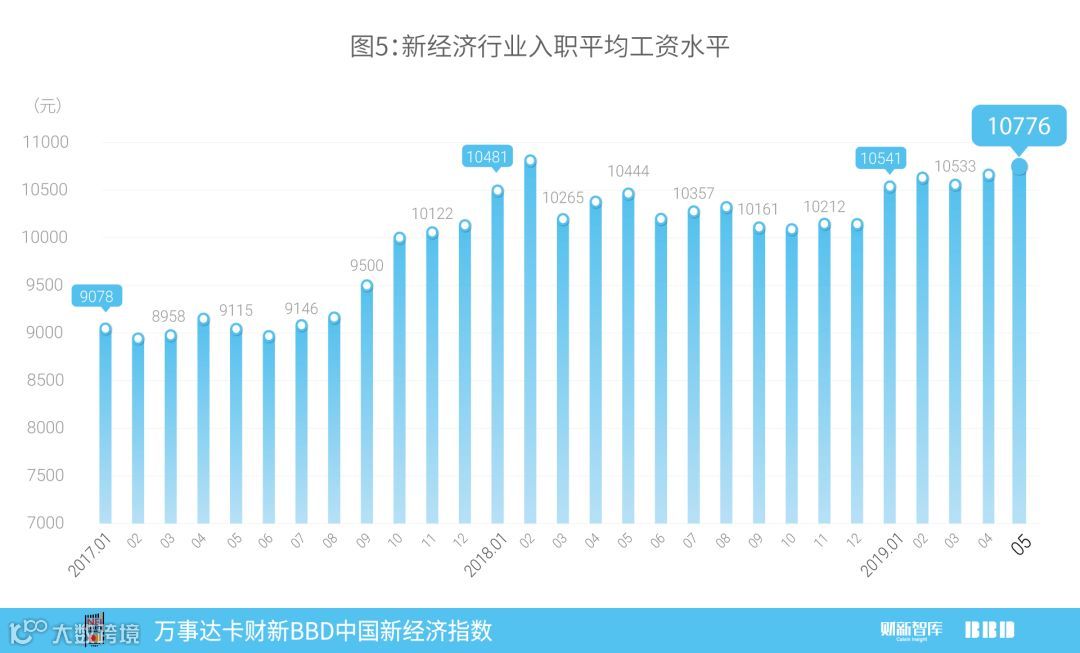
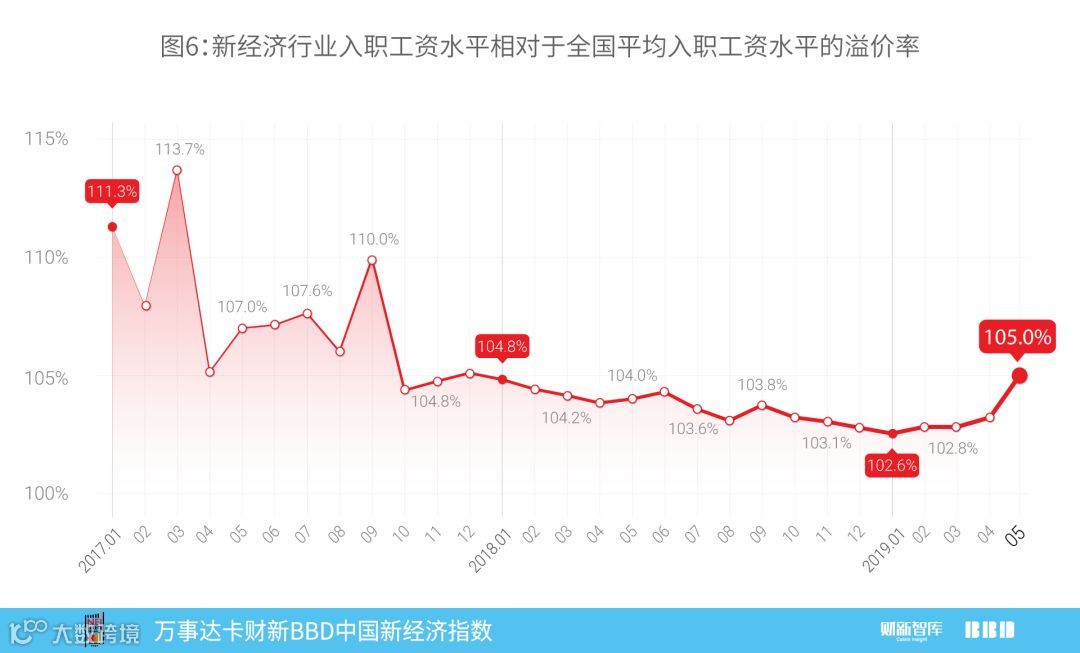
5月新经济行业入职平均月工资为10776元,较上月上升104元;新经济行业招聘人数占全国总招聘人数比例较上月下降0.3个百分点,而招聘薪酬占比上升0.2个百分点,意味着新经济行业的平均入职工资水平相对于全国平均入职工资水平有所上升。5月新经济入职工资“溢价”录得5%,高于上月1.8个百分点。
报告从芯片、算法和前端工程师三个职业类别,观察新一代信息技术产业的产业链需求情况。结果显示,与2017年下半年相比,市场对算法工程师和芯片工程师的需求有所上升,而前端工程师的需求出现了较大幅度的下降。从平均工资水平来看,算法工程师与芯片工程师相对前端工程师的工资溢价也越来越高。
报告认为,中国新一代信息技术产业结构已经出现转变,开始逐渐获得上游增加值,从供给侧推动行业发展,而非仅仅为扩大消费者覆盖面推动行业发展。
此外,出口企业招聘近期出现显著回升。从招聘数量同比增速来看,最近三个月,除了高征税企业受到影响较大,其他出口制造业企业的招聘增速接近甚至超过不对美出口企业的水平。报告认为,从制造业和出口行业的招聘情况看,贸易摩擦和经济衰退的影响暂未显现。
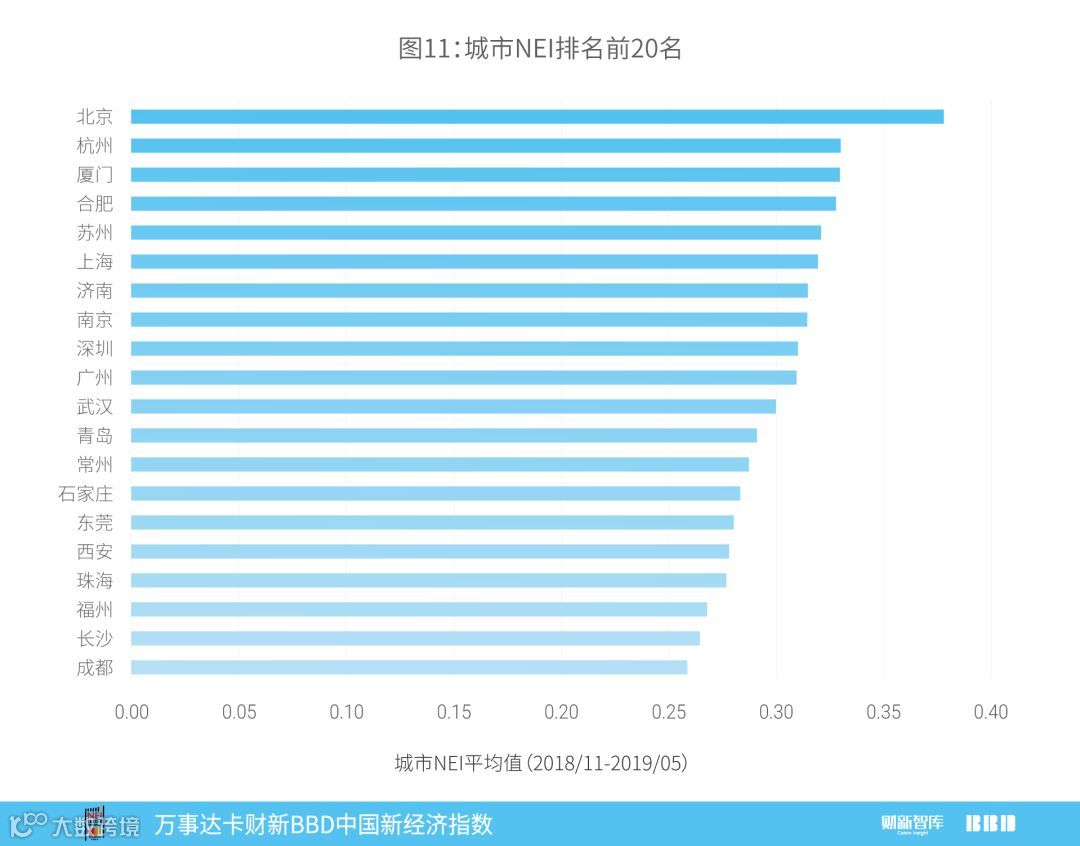
地区来看,2018年11月至2019年5月,北京、杭州、厦门、合肥和苏州在城市NEI排名中排行前五。
万事达卡财新BBD中国新经济指数,是由财新智库、成都数联铭品科技公司与北京大学国家发展研究院合作研发,每月2日上午10:00发布上月数据。
新经济指数旨在度量中国经济转型中新经济相对于传统经济或旧经济的活跃程度。新经济指数覆盖了节能与环保业、新一代信息技术与信息服务产业、生物医药产业、高端装备制造产业、新能源产业、新材料产业、新能源汽车产业、高新技术服务与研发业、金融服务与法律服务、体育文化和娱乐等10个类别,超过140个行业。

一、指数概览
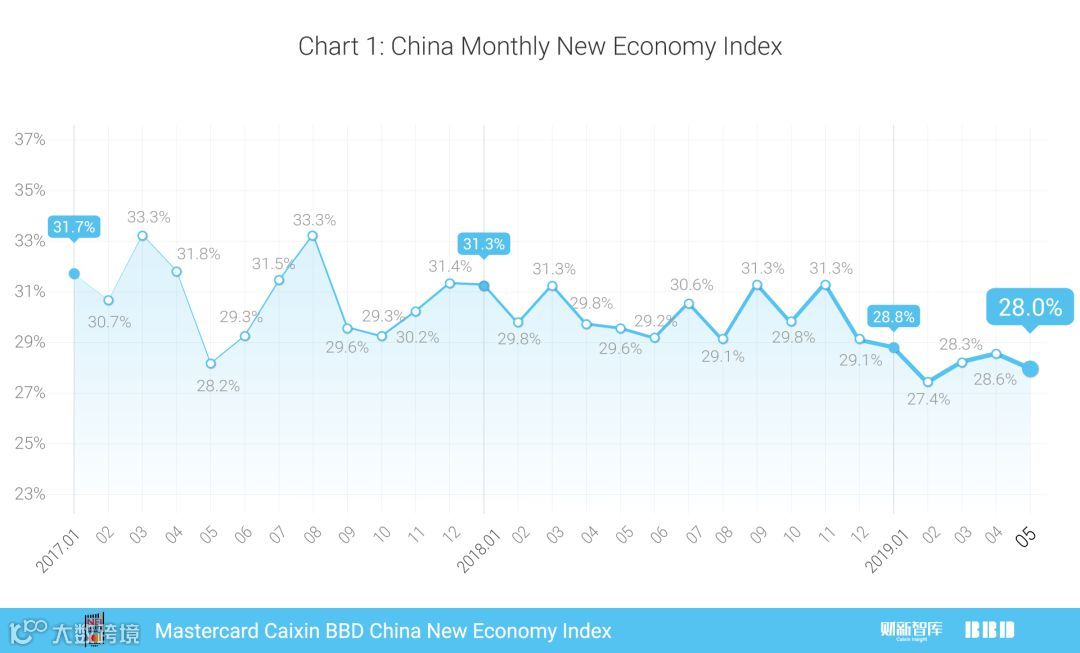
2019年5月,万事达卡财新BBD中国新经济指数(NEI)录得28.0,即新经济投入占整个经济投入的比重为28.0%。2017年以来,NEI指数波动较大,按可比口径计算,本月NEI比上月下降0.6个百分点(图1)。本月NEI的下降主要来自科技投入的下降。
NEI新经济据于以下定义:首先,高人力资本投入、高科技投入、轻资产;其次,可持续的较快增长;第三,符合产业发展方向。NEI所含行业详见《万事达卡财新BBD中国新经济指数技术报告》与《万事达卡财新BBD中国新经济指数报告(2017年3月)》。
二、主要分项指标
NEI包括劳动力、资本和科技三项一级指标,它们在NEI中的权重分别是40%、35%和25%。2019年5月NEI的下降主要来自科技投入的下降。科技投入指数从2018年7月开始波动回升,本月指数录得28.3,环比下降2.8。资本投入指数近一年来波动较大,本月指数录得29.1,环比上升0.4。劳动力投入指数近半年来波动下降,本月指数录得26.8,环比持平(图2)。
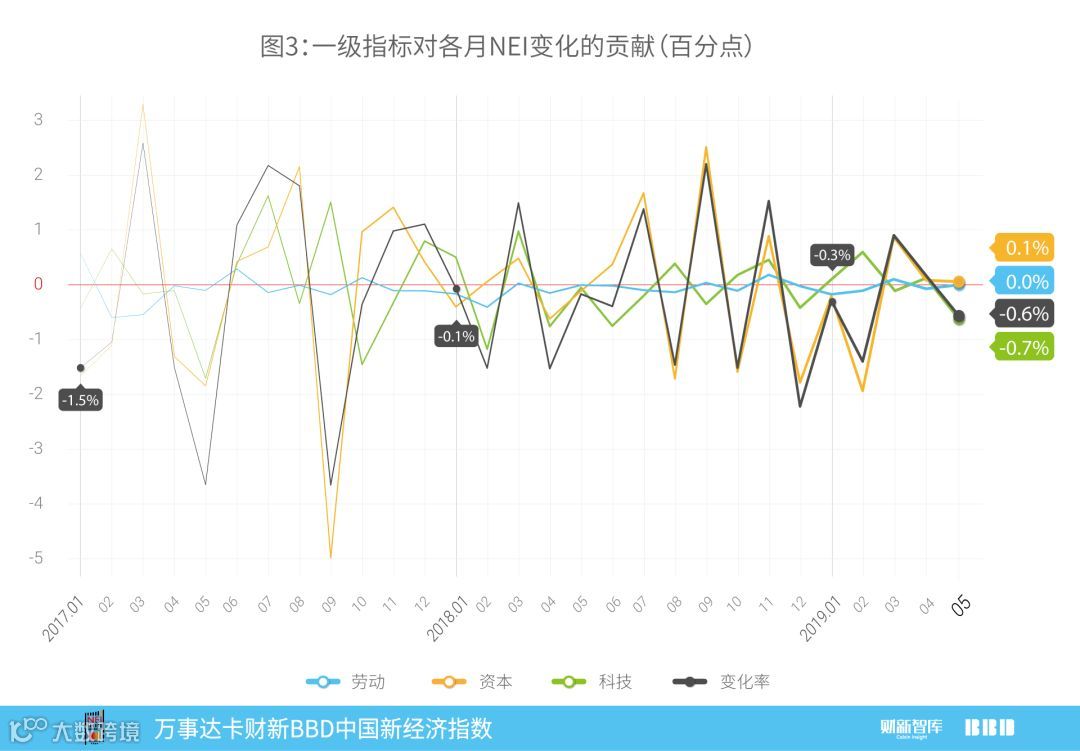
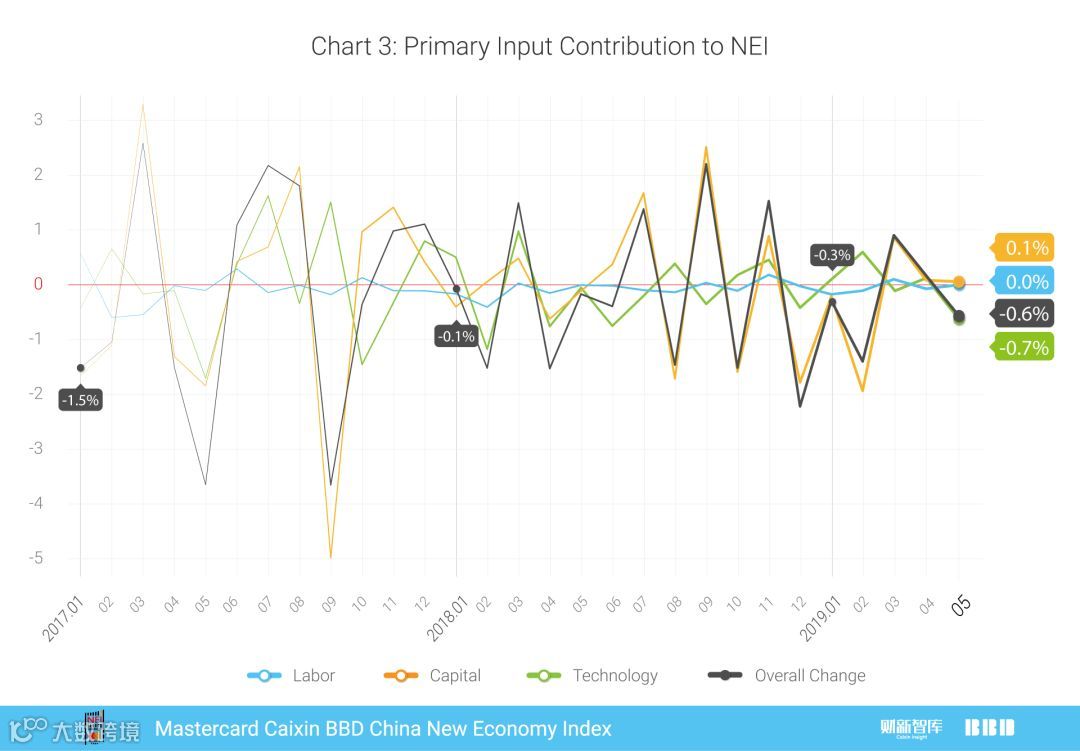
劳动力、资本和科技投入的变化百分比分别为0.0,0.1,和-0.7个百分点,与权重相乘求和后,对2019年5月NEI变化的贡献值为-0.6%(图3)。
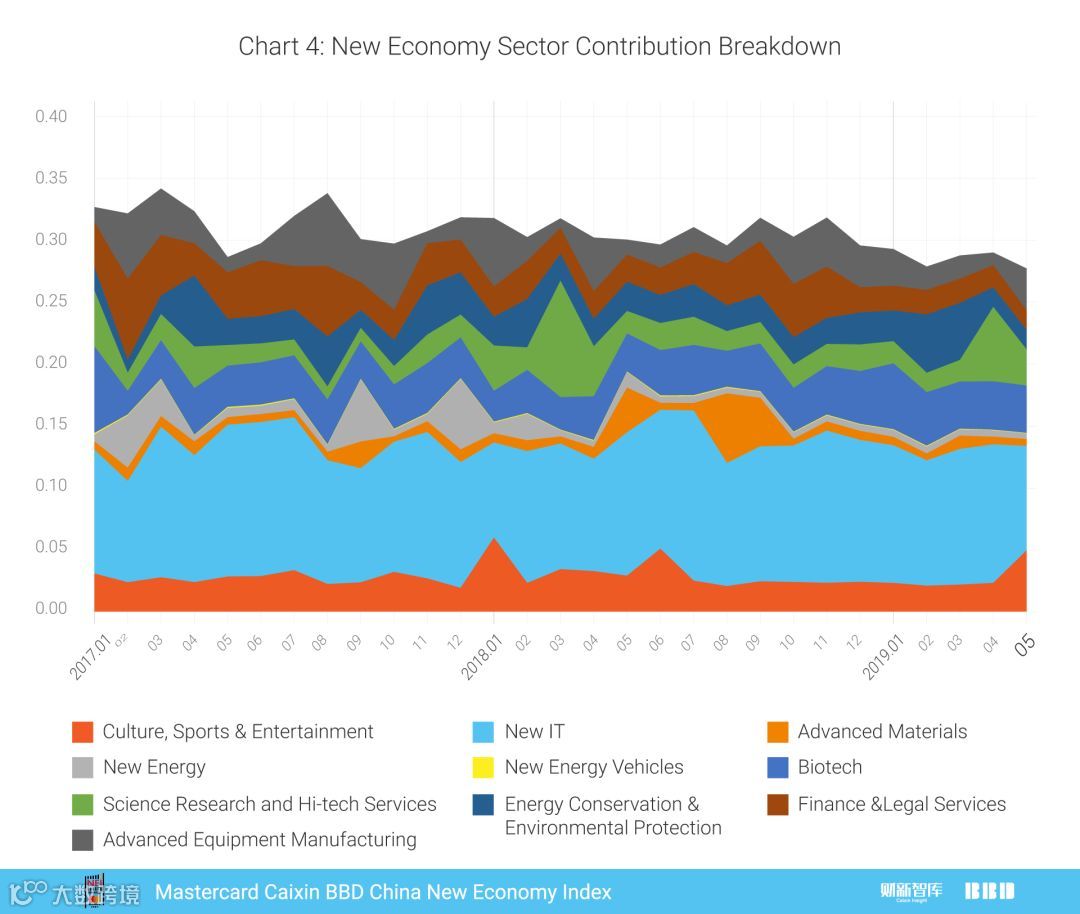
分行业看,NEI中占比最大的行业为新一代信息技术与信息服务产业,2019年5月为总指数贡献了8.3个百分点;本月名次上升最快的是高端装备制造业,从上月的第七名上升到本月的第四名,为总指数贡献了3.3个百分点;本月名次下降最快的是科学研究和技术服务业,从上月的第二名下降到本月的第五名,为总指数贡献了2.9个百分点(图4)。
三、新经济就业
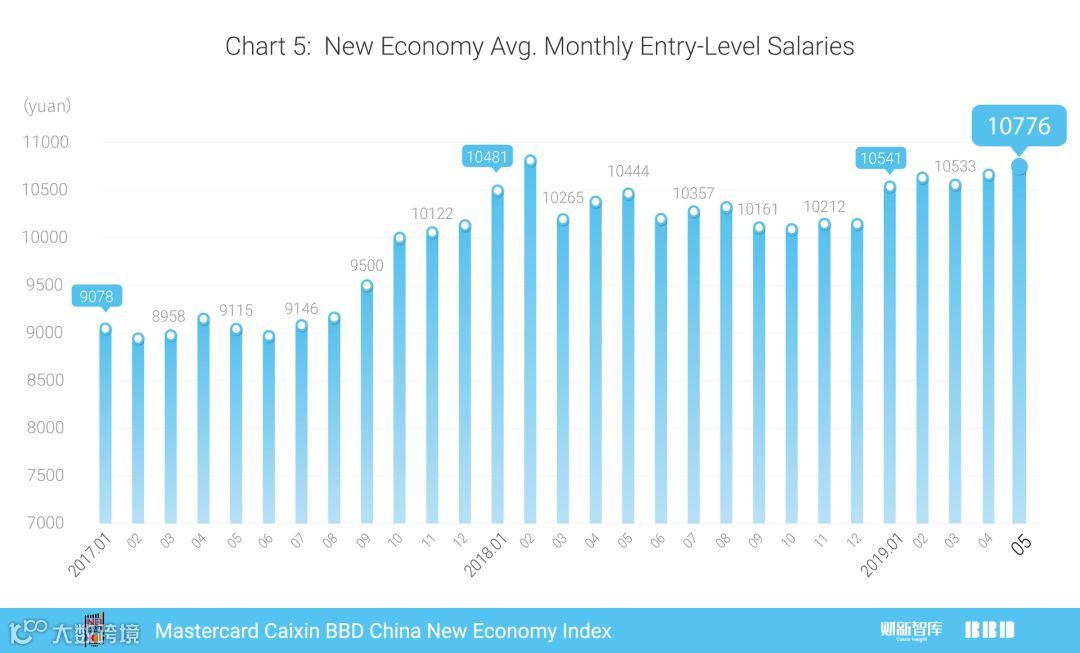
2019年5月,新经济行业入职平均工资水平为每月10776元,较上月上升104元(图5)。新经济工资主要来自51job、智联招聘、拉钩、赶集网等数个招聘网站的招聘信息,即对劳动力的需求工资。
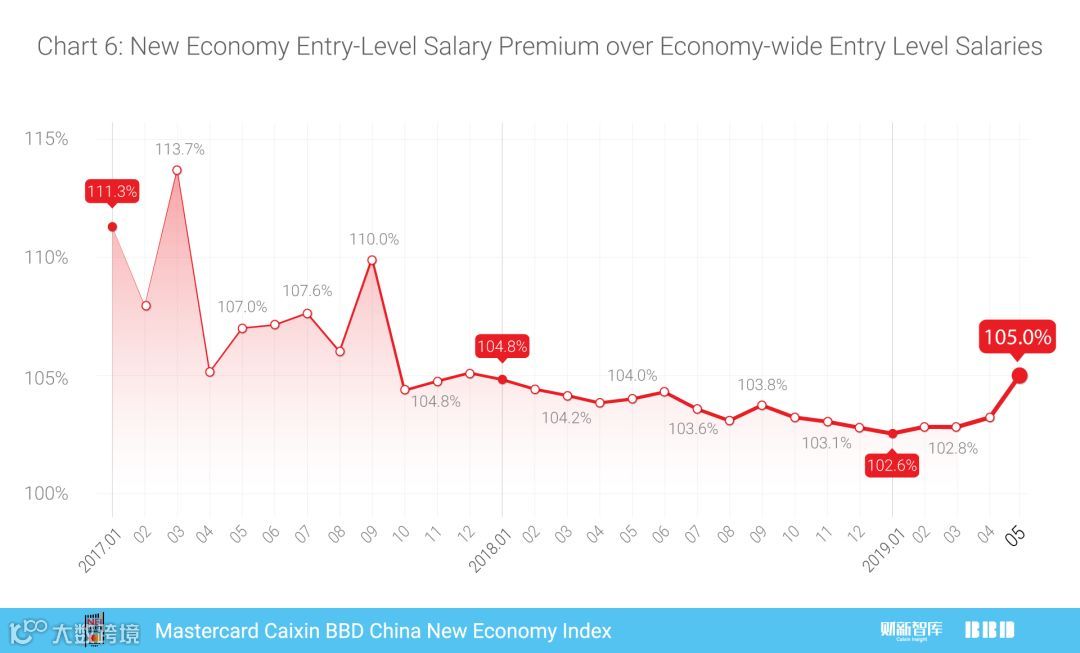
2019年5月,新经济行业招聘人数占全国总招聘人数比例较上月下降0.3%,同时新经济行业招聘总薪酬占全国总薪酬比重上升0.2%,这意味着新经济行业的平均入职工资水平相对于全国平均入职工资水平有所上升。2019年5月新经济入职工资“溢价”为5.0%,高于上月3.2%(图6)。本月新经济行业平均工资溢价继续回升。
四、从劳动力数据看经济走势
本月,我们再次从芯片、算法和前端工程师三个职业类别观察新一代信息技术产业的产业链需求情况。可以看到,对算法工程师和芯片工程师的需求较2017年下半年有所上升,而前端工程师的需求出现了较大幅度的下降(图7-1)。在2017年年底,芯片工程师曾经出现一次较大幅度的需求暴涨,在暴涨过后需求回落,但仍高于2016年的水平。算法工程师的上升更为稳定且增幅更大。从平均工资水平看(图7-2),算法工程师与芯片工程师对前端工程师的工资溢价越来越高。其中,算法工程师工资在2016年不及全国平均工资的2倍,现在已经接近2.5倍;芯片工程师工资也上涨至接近全国平均工资的2倍水平;而前端工程师的工资增长已经出现停滞,工资水平停留在1.5倍以下。这说明中国新一代信息技术产业的产业结构已经出现转变,开始逐渐获得上游增加值,从供给侧推动行业发展,而非仅仅为扩大消费者覆盖面推动行业发展。
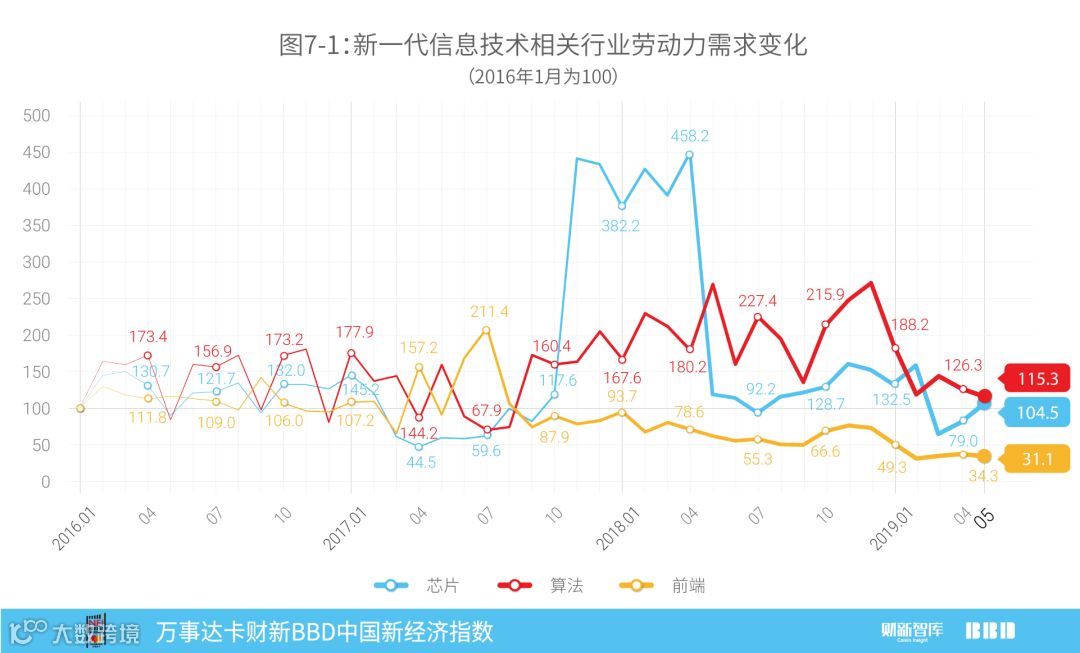
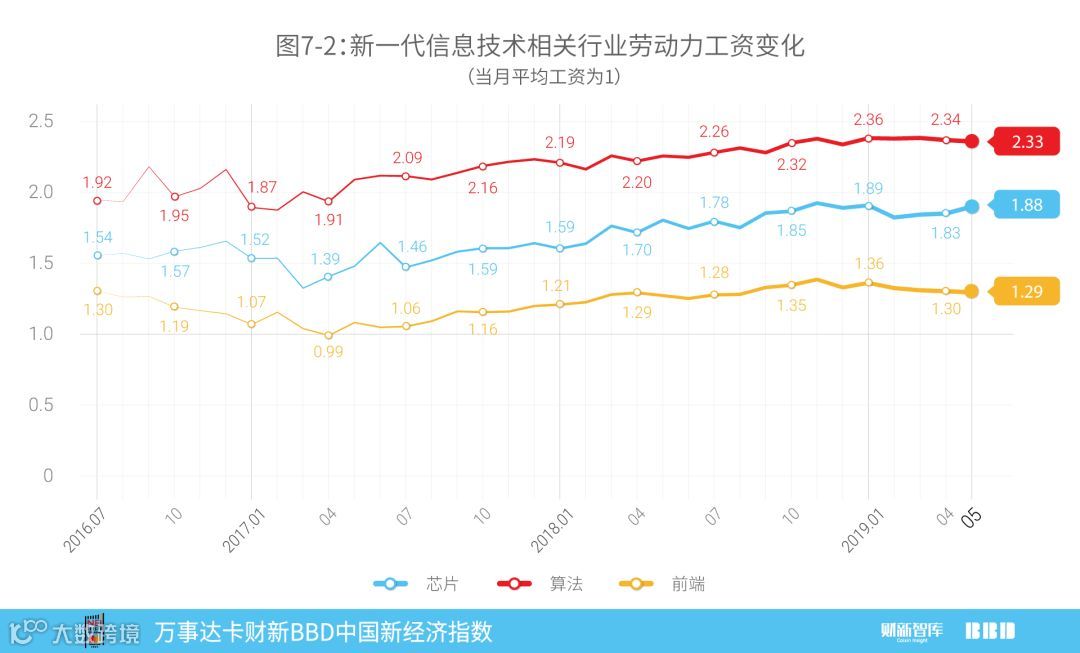
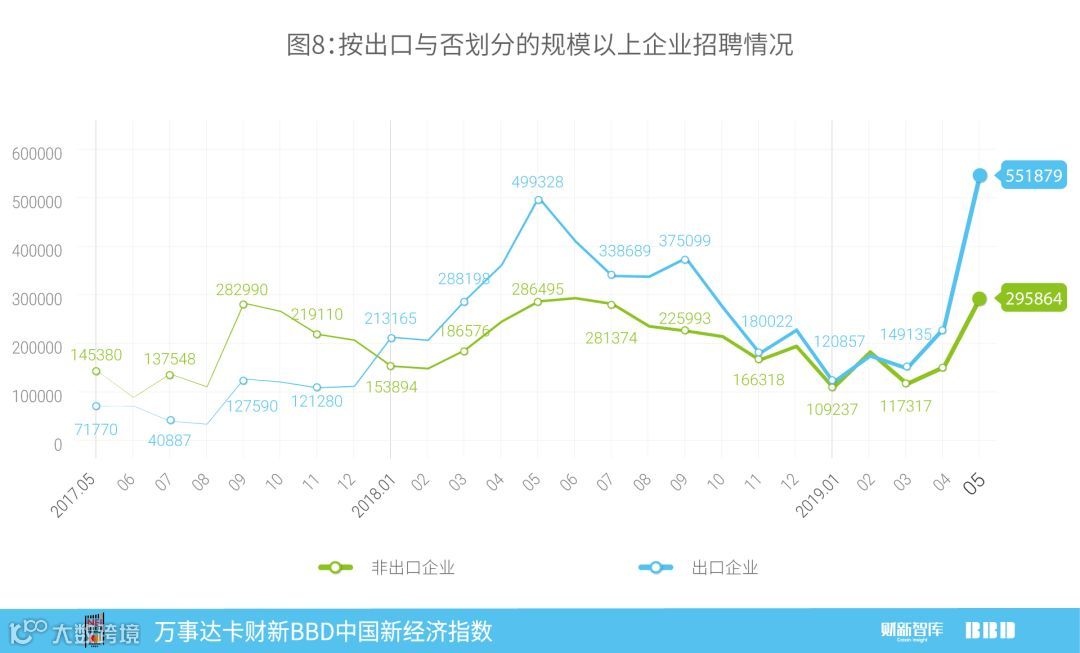
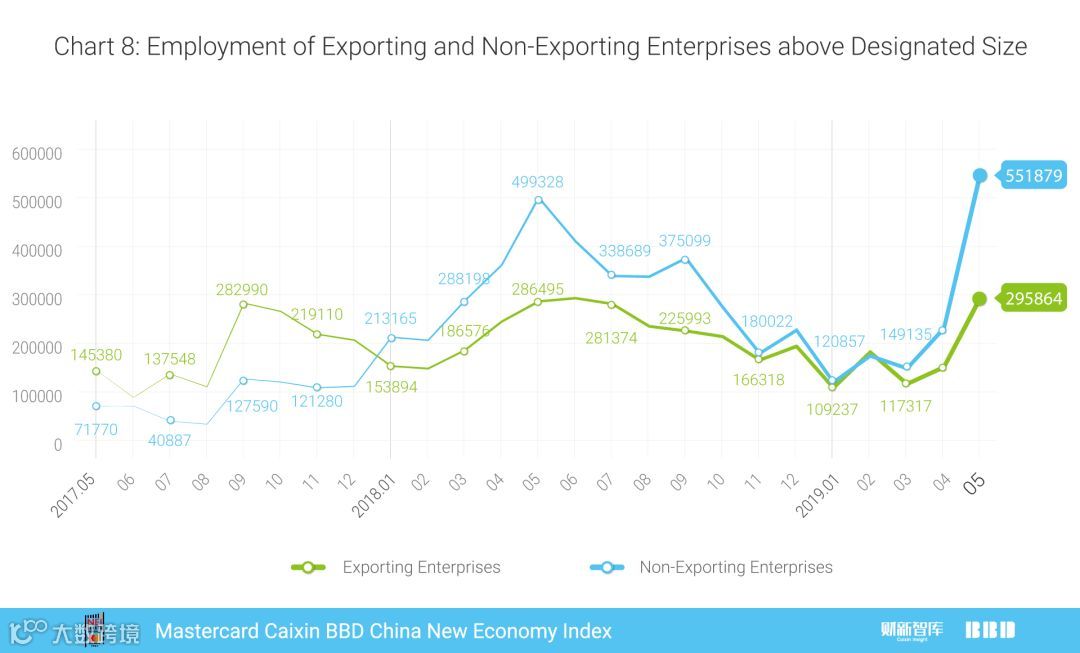
图8列出了规模以上制造业行业的招聘岗位数量变化。可以看到,出口企业和非出口企业的招聘在近几个月出现了显著回升,其中出口企业增速尤为突出。这可能与贸易摩擦的效应还没有传导到制造业有关,因此我们深入分析了不同类型出口企业的招聘总量变化。
我们延续2018年8月对出口企业类型的划分,参考2016年海关出口数据和“2018年美国对中国商品加征关税清单”,按照“制造业企业出口美国产值占比”(0-50%、50%-100%)和“平均关税税率”(0-10%、10%-20%、20%以上),将全部出口制造业企业分为6类(图9-1)。
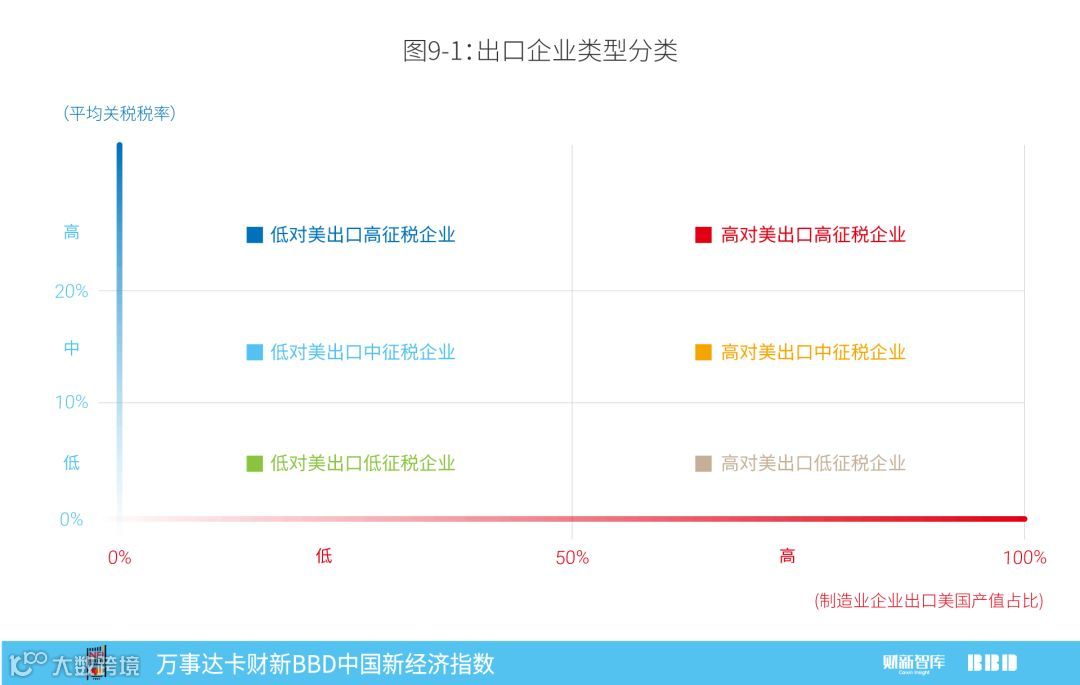
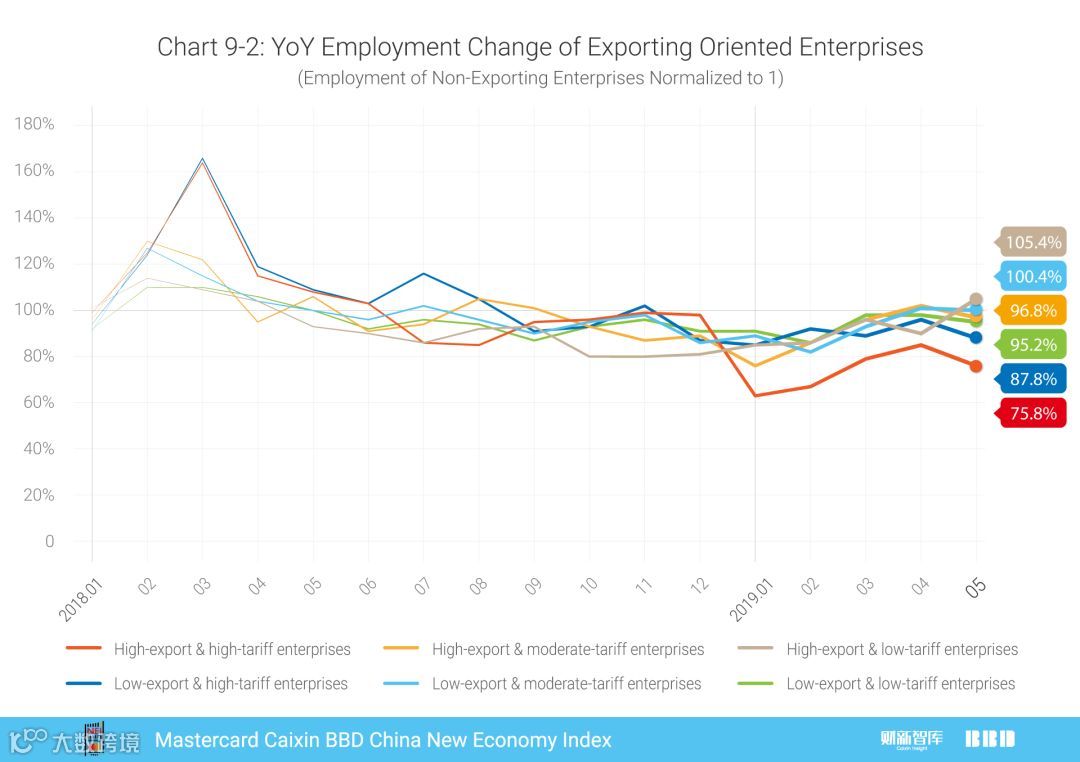
图9-2中,我们观察这六类企业的招聘数量同比增速相对不对美出口企业的变化。在最近三个月中,除了高征税企业受到影响较大,同比增速低于不对美出口企业,其他四类企业的招聘增速已经接近甚至超过不对美出口企业的水平。
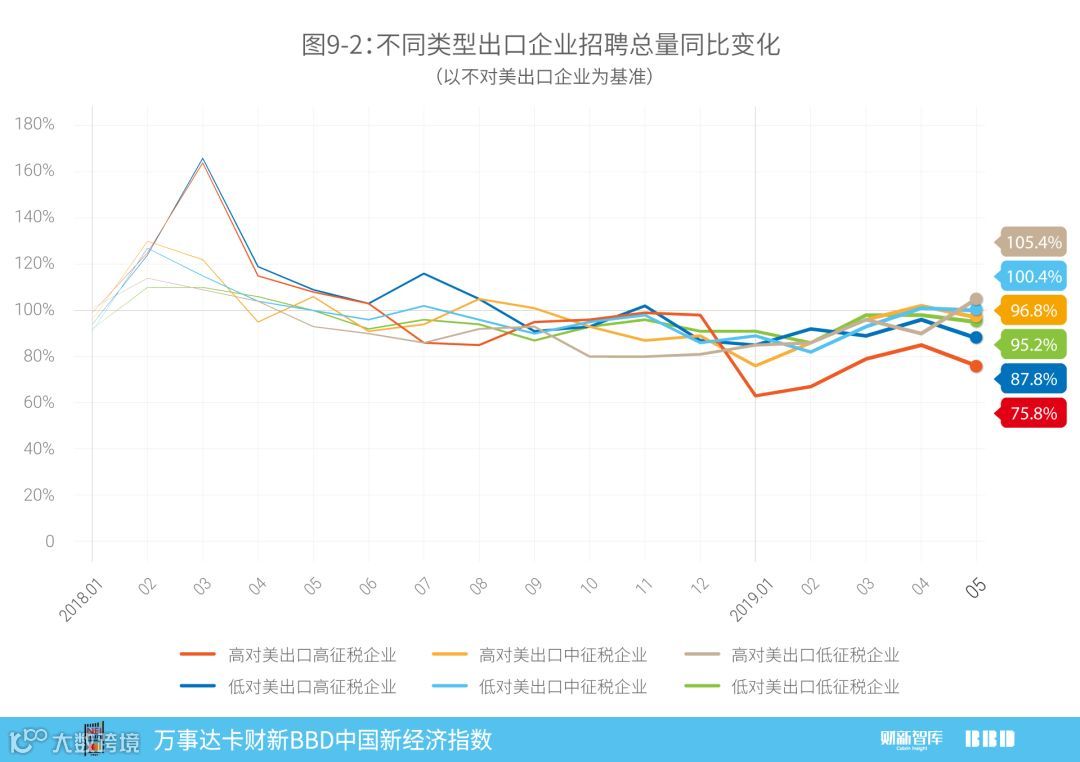
因此,从制造业和出口行业的招聘情况看,贸易摩擦和经济衰退的影响暂未显现,本月新经济指数的下滑是否长期确立,还需要进行更长时间的观察。
五、城市新经济排名
2019年5月新经济总量城市排名前20名如图10所示,北京、上海、深圳、广州和杭州排名前五。该排序计算每个投入指标在所有城市中的排序百分位,再将百分位加权平均,体现的是近半年城市间新经济总量排名。
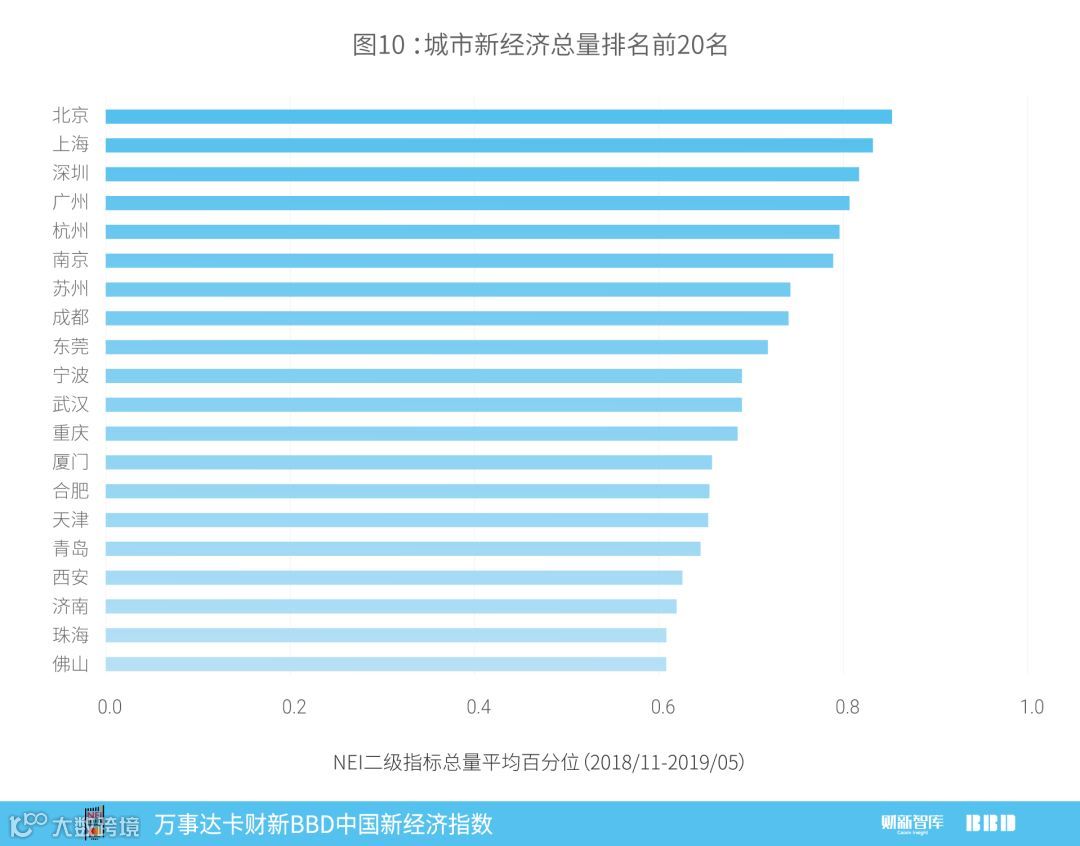
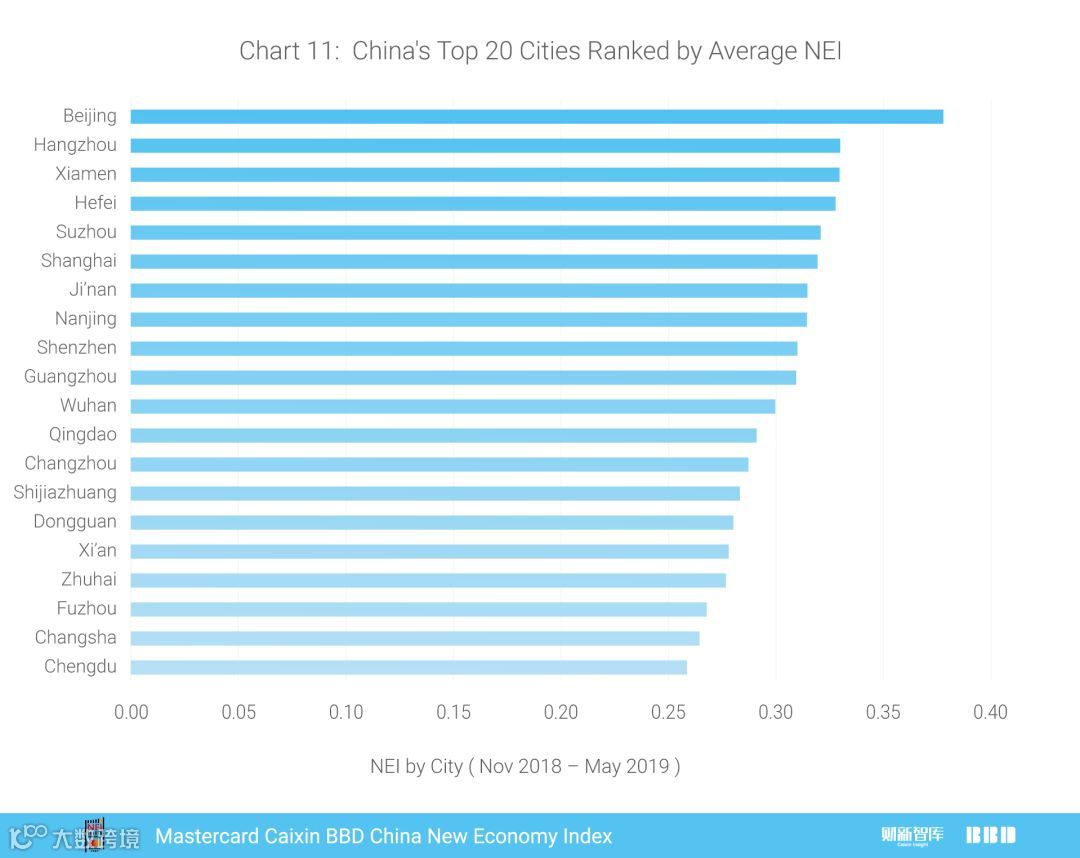
图11计算了2018年11月到2019年5月城市NEI平均排名,前五名为北京、杭州、厦门、合肥和苏州。
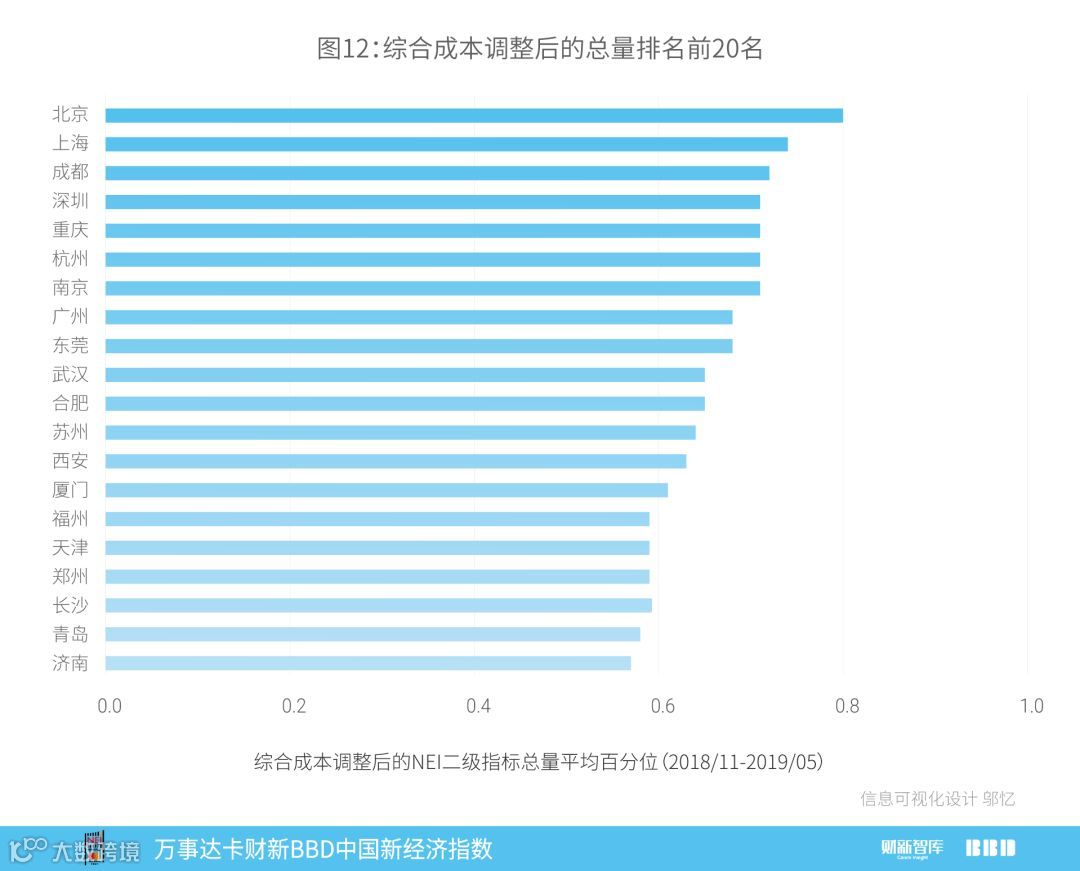
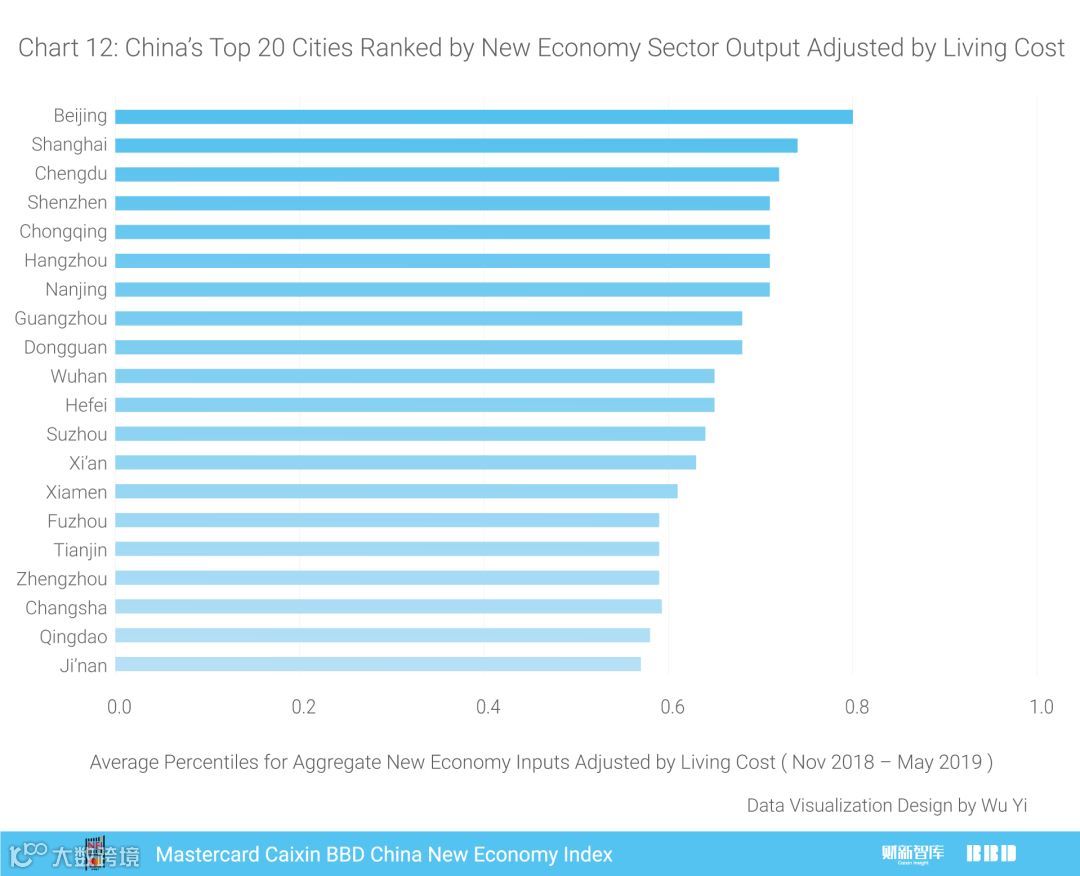
本月我们继续利用城市的房价、最低工资水平和人均可支配收入构建城市综合成本指数,并利用该指数调整新经济指数中的劳动力占比,进而更新城市新经济排名(图12)。经调整后的新经济排名前五位的城市为北京、上海、成都、深圳和重庆,杭州、南京和广州紧随其后。
更多咨询敬请联络:
万事达卡
大中华区公共关系副总裁 吴焕宇
电话:+86-10-8519-9304
电邮:Huanyu_wu@mastercard.com
财新智库
财新智库高级经济学家 王喆
电话:+86-10-85905019
电邮:zhewang@caixin.com
公关总监 马玲
电话:+86-10-8590-5204
电邮:lingma@caixin.com
BBD(数联铭品)
BBD(数联铭品)首席经济学家 陈沁
电话:+86-28-65290823
电邮:chenqin@bbdservice.com
版权声明
万事达卡财新BBD中国新经济指数,是由财新智库(深圳)投资发展有限公司和成都数联铭品科技公司共同研发,与北京大学国家发展研究院合作,经过近一年努力,于2016年3月2日在北京首发的指数产品,此后每月2日上午10:00发布上月数据。
关于万事达卡:
万事达卡(纽交所股票交易代码:MA),www.mastercard.cn,是全球性的支付与科技公司。通过运营全球最快的支付处理网络,万事达卡将超过210个国家和地区的消费者、金融机构、商户、政府和企业连接在一起。万事达卡的产品和解决方案使得每个人在购物、旅行、企业经营、财务管理等日常商业活动都变得更容易、更安全和更高效。敬请关注我们的“万事达卡”官方微信以及在新浪的官方微博@万事达人,以获悉动态并参与互动。也可访问万事达卡新闻中心或万事达卡互动中心获取更多资讯。
关于财新:
财新传媒是提供财经新闻的全媒体集团,依托专业的团队和强大的原创新闻优势,以网站、移动端、期刊、视频、图书、会议等 多层次的业务平台,为中国最具影响力的受众群,提供准确、全面、深入的财经新闻产品。财新智库是财新传媒通过孵化另行建立的高端金融资讯服务平台,旨在通过发展金融数据业务,壮大宏观经济研究队伍,服务于智库业务客户。详细信息,敬请浏览 www.caixin.com。
关于BBD:
BBD(数联铭品)是行业领先的大数据解决方案提供商,紧密围绕新经济,通过动态尽调、信用评级、风险定价和经济指数四个步骤,BBD提供从微观到宏观的大数据服务。详细信息,敬请浏览:http://www.bbdservice.com。

May 2019 Mastercard Caixin BBD China New Economy Index
Overview
In May 2019, the Mastercard Caixin BBD New Economy Index (NEI) reading came in at 28.0, indicating that the New Economy accounted for 28.0% of overall economic input activities that month, down 0.6 ppts from April (Chart 1). The declining NEI was due to the decrease of technology input. New economy is defined as following: 1) human capital intensive, technology intensive and capital light, 2) sustainable rapid growth, and 3) in line with the strategic new industries defined by the government. Please refer to our previous reports (March 2016 and March 2017) for the list of NEI sectors.
Primary Inputs
The NEI includes labor, capital and technology inputs that account for 40%, 35% and 25% of the total weights of the index, respectively. The declining in the May NEI reading came from the decrease of technology input (Chart 2). Technology input index was on an uptrend since July 2018, coming in at 28.3 this month, with 2.8 MoM decrease. Capital input fluctuated widely in the recent year, rebounding to 29.1 this month, with 0.4 MoM increase. Labor input index showed a stable trend in recent half year, remaining to 26.8 this month.
Taking the weights into account, percentage changes in labor, capital and technology inputs were 0.0, 0.1, and -0.7 ppts, respectively. The net NEI change was -0.6 ppts in total (Chart 3).
As for sectors, the New IT industry formed the largest proportion of the New Economy Index, contributing 8.3 ppts to NEI. Advanced Equipment Manufacturing was the industry with fastest growth in May, contributing 3.3 ppts and ranking the forth. Science Research and Hi-tech Services came fifth from second, the biggest drop in ranking, contributing 2.9 ppts in May (Chart 4).
New Economy Employment
In May 2019, the average monthly entry-level salary of the New Economy was RMB 10,776, increasing from last month’s level of RMB 10,672 (Chart 5). New Economy wage information is compiled from online websites of career platforms and recruitment services including 51job and Zhaopin, as well as other sites that list job openings.
The ratio of hiring in the New Economy sectors to that in total dropped by 0.3%. At the same time, the compensation share of New Economy increased by 0.2%. Accordingly, the average entry salary level of New Economy increased compared to the whole economy. The entry-level salary premium of the New Economy increased to 5.0% as compared to economy-wide counterparts (Chart 6).
Economic Recovery Based on Employment Data
In May, we focused on labor demand in New IT sectors by exploring the employment and average salary of chip engineer, algorithm engineer and front-end engineer. It can be seen that the demand for chip engineer and algorithm engineer increased compared to the second half of 2017, while the demand for front-end engineer dropped significantly (Chart 7-1). After soaring at the end of 2017, the demand for chip engineer slumped but it was still higher than 2016. The rise of algorithm engineer was more stable and higher. In terms of average salary (Chart 7-2), the premium of chip engineer and algorithm engineer over front-end engineer increased as well. The salary of algorithmic engineer was no more than double the national average salary in 2016, and now it was nearly 2.5 times. The salary of chip engineer was almost twice that of the whole economy. The front-end engineer faced wage stagnation for their salary stayed at less than 1.5 times of the national average salary since 2016. These observations indicated the structural change of New IT industry: New IT industry started to move up the value chain by shifting from sales and service expansion.

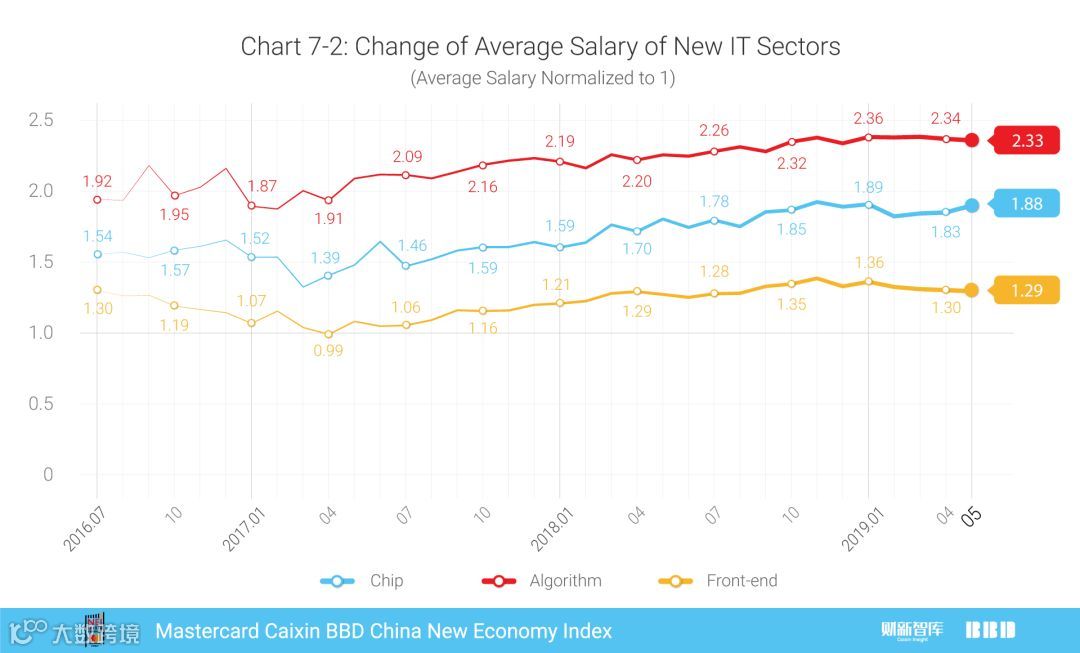
Chart 8 showed the employment of exporting and non-exporting enterprises above designated size. In recent months, both enterprises’ employment increased significantly, and exporting enterprise experienced faster rises. It seems that manufacturing industry hadn’t been affected by U.S.-China trade frictions but it’s to be further explored.
Using detailed exporting data and U.S. tariff list in 2018, we categorized all manufacturing enterprises into six groups by the percentage of products exported to United States (0-50%,50%-100%) and the average tariff rates (0-10%,10%-20%, above 20%) as below (Chart 9-1).
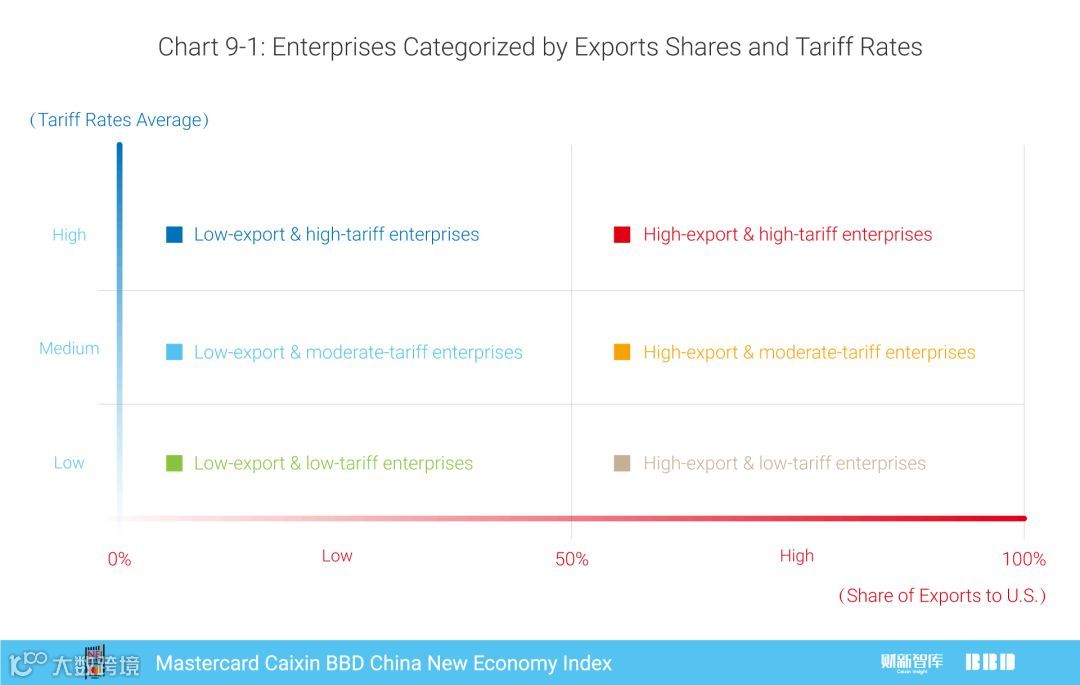
Chart 9-2 showed YoY employment changes of each group compared to that of their non-exporting counterparts. In recent three months, the employment of high-tariff enterprises grew slower than the non-exporting counterparts, partly due to trade friction. The employment growth rates of other four groups were above or close to that of non-exporting ones. The significantly negative effect of trade friction is yet to be found in employment of manufacturing and export oriented industries but we will keep close eyes on it.
City Rankings of the New Economy
Based on overall New Economy rankings, the top twenty cities were shown in Chart 10. The top five cities were Beijing, Shanghai, Shenzhen, Guangzhou and Hangzhou. Rankings are based on a weighted average of the percentile ranks of indicators for the city in the past six months.
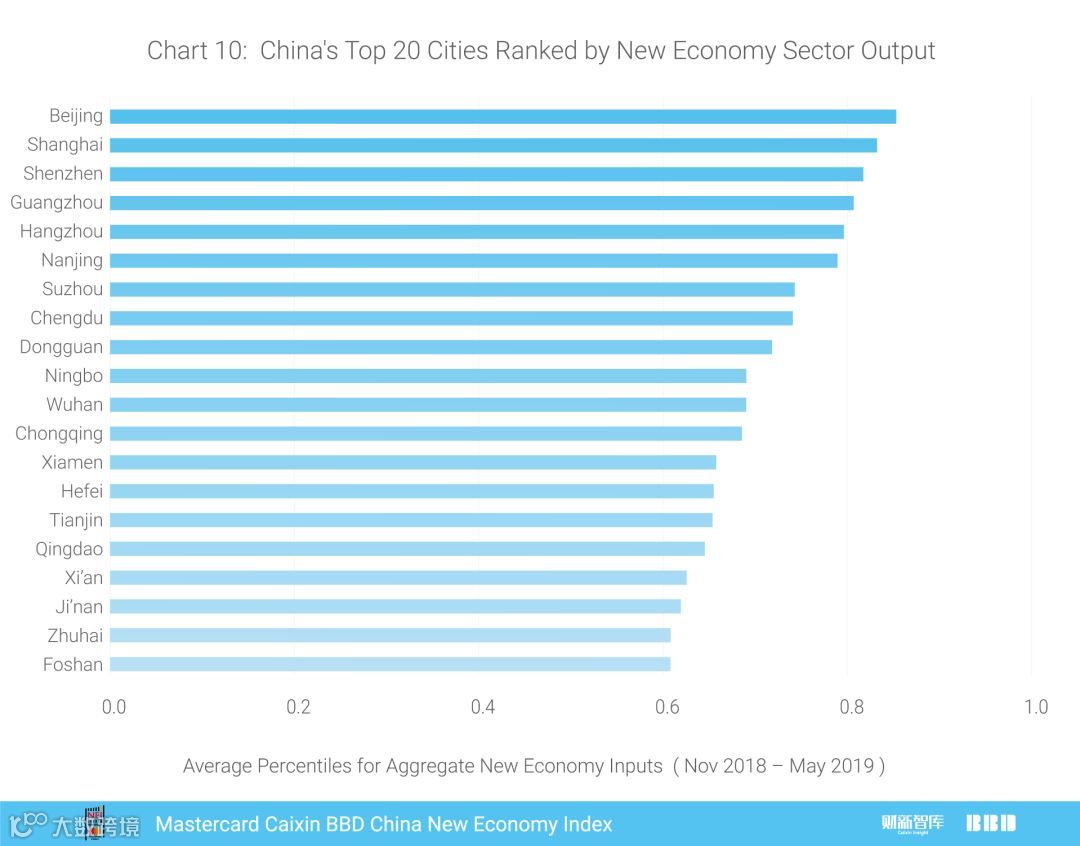
Chart 11 showed the average NEI city rankings between November 2018 and May 2019. The top five cities were Beijing, Hangzhou, Xiamen, Hefei and Suzhou.
In addition, we showed the city rankings adjusted by living cost by taking housing price, minimum wage and disposable income per capita into account (Chart 12). After the adjustment, the top five cities were Beijing, Shanghai, Chengdu, Shenzhen and Chongqing, following by Hangzhou, Nanjing and Guangzhou.
For further information please contact:
Mastercard
Mr. Wu Huanyu, Director, Communications
Tel:+86-10-8519-9304
Email:Huanyu_wu@mastercard.com
Caixin Insight Group
Dr. Wang Zhe, Senior Economist
Tel:+86-10-85905019
Emails:zhewang@caixin.com
Ma Ling, Public Relations
Tel:+86-10-8590-5204
Email:lingma@caixin.com
BBD
Dr. Chen Qin, Chief Economist
Tel:+86-28-65290823
Emails:chenqin@bbdservice.com
The Mastercard Caixin BBD China New Economy Index is the fruit of a research partnership between Caixin Insight Group and BBD, in collaboration with the National Development School, Peking University. The subject of a year of research, the NEI was first publically released on March 2, 2016 and will be issued the 2nd of every month at 10:00am China Standard Time.
About Caixin
Caixin Media is China's leading media group dedicated to providing financial and business news through periodicals, online content, mobile applications, conferences, books and TV/video programs. Caixin Media aims to blaze a trail that helps traditional media prosper in the new media age through integrated multimedia platforms. Caixin Insight Group is a high-end financial data and analysis platform. For more information, please visit:
www.caixin.com.
About Mastercard
Mastercard (NYSE: MA), www.mastercard.com, is a technology company in the global payments industry. We operate the world’s fastest payments processing network, connecting consumers, financial institutions, merchants, governments and businesses in more than 210 countries and territories. Mastercard’s products and solutions make everyday commerce activities – such as shopping, traveling, running a business and managing finances – easier, more secure and more efficient for everyone. Follow us on Twitter @MastercardAP and @MastercardNews, join the discussion on the Beyond the Transaction Blog and subscribe for the latest news on the Engagement Bureau.
About BBD (Business Big Data)
BBD is a leading Big Data and quantitative business analytics firm specializing in the analysis of the high-growth industries emerging in Mainland China. Through dynamic data tracking, credit analysis, risk pricing and economic index construction, BBD provides its clients with a wide range of services at both the macro and micro level. For more information, please visit:
http://www.bbdservice.com/.