Peking Tan
Dean, Miaozhen Academy of Marketing Science
China Digital Marketing Trends
Economic Recovery Drives Marketing Investment Growth
Following the initial shock of COVID-19 in the first half of 2020, daily life in China has largely returned to pre-pandemic levels, with economic activities rebounding strongly. Government data indicates that China’s GDP grew by 2.3% in 2020, and the World Bank forecasts a further rise of 7.9% for this year.
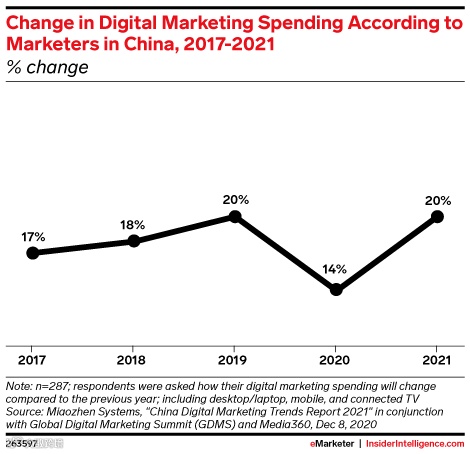
With an effective vaccine rollout and better pandemic control, marketers are growing more optimistic. A survey conducted in September and October 2020 by Miaozhen Systems revealed that marketers planned to increase digital marketing spending by 20% in 2021, up from 14% in 2020.
Digital Transformation Accelerates Post-Pandemic
The pandemic has greatly expedited the digitization of marketing. According to Peking Tan, dean of the Miaozhen Academy of Marketing Science, digital channels now account for approximately 70% of marketing budgets in China.
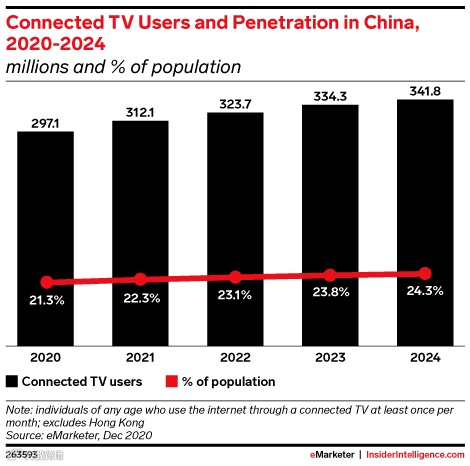
One prominent trend is the growing attention toward connected TV (CTV). The penetration rate of CTV among the Chinese population reached 21.3% in 2020, particularly high in urban areas and among middle- and upper-class households. Ad formats such as interactive and shoppable ads have emerged, but marketers face challenges in creating compatible creative content across various devices.
Creative Advertising Becomes Central
Creative advertising plays a critical role in the highly competitive market. Brands often produce up to 100 different ad creatives for a single campaign on e-commerce or short-form video platforms to precisely target their audience. Some platforms even require brands to refresh their ad creatives weekly.
Short-form video, social media, e-commerce, and livestreaming platforms continue to dominate marketers’ strategies. Douyin and Kuaishou lead the short-form video sector with massive user bases. Both platforms have witnessed significant growth in their digital commerce operations, with gross merchandise volume increasing elevenfold for Douyin and fivefold for Kuaishou between January and November 2020.
These two platforms are also investing heavily in new commerce services, including financial products and payments. Competition is intensifying over content quality, especially with longer-form productions like Kuaishou’s "Heartwarming Cinema" channel.
In social media, alongside WeChat and Weibo, beauty-focused Xiaohongshu and Gen Z-popular Bilibili are gaining prominence. These platforms increasingly incorporate short video, livestreaming, and commerce features.
Emerging Technologies and Challenges
5G adoption in China has grown significantly, with 8.5% of smartphones being 5G-enabled by the end of 2020. While its impact on marketing remains unclear, potential use cases include high-definition multi-angle livestreams, live event streaming, and virtual reality (VR).
Marketers face challenges such as rising ad prices and securing high-quality traffic. GroupM China forecasts a 38% increase in social ad pricing and a 25% rise in digital video ad pricing. Exclusive partnerships between platforms and commerce/data service providers further complicate matters. Marketers advocate for greater openness in the digital ecosystem to enhance transparency and flexibility.