



【新译 X 世界】THE HIGH PRICE OF HEAT
高温的高昂价格
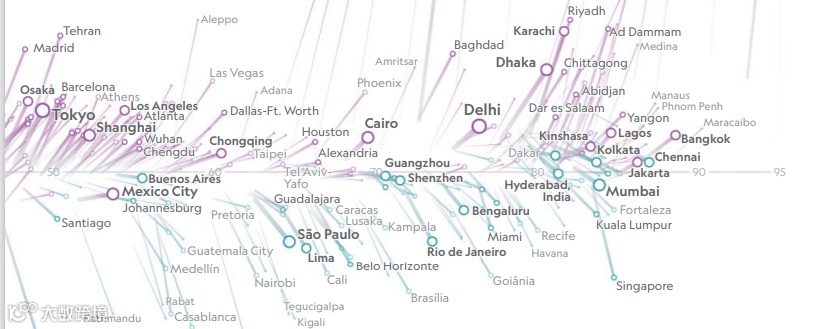
Rising heat will kill more people by 2050, but people will also adapt. Researchers at the Climate Impact Lab projected future “mortality costs,” reflecting both the economic value of lives lost and the expense of adaptations such as air conditioning.
到2050年,不断上升的高温将导致更多人死亡,但人们也会适应。气候影响实验室的研究人员预测了未来的“死亡成本”,既反映了生命损失的经济价值,也反映了空调等适应措施的费用。
THE HIGH PRICE OF HEAT

MECCA, SAUDI ARABIA
沙特阿拉伯,麦加
COVID-19 restrictions thinned the crowds circling in the Great Mosque in July 2020. Normally the annual hajj draws millions of pilgrims, many of them elderly, for five days of outdoor rituals. When the hajj falls in summer, they’ll be at increasing risk of heat stroke, climate scientists project.
2020年7月,新冠疫情的限制使在大清真寺里围观的人群变少。通常每年的朝圣都会吸引数百万朝圣者,其中许多是老人,他们会参加为期五天的户外仪式。气候科学家预测,当夏季朝圣降临时,他们中暑的风险会增加。
THE HIGH PRICE OF HEAT
GRAPH
HOT BUT ALREADY ADAPTED
热,但已经适应
Cities that are wealthy and very hot, such as Singapore,will see a decline in mortality cost. Already well adapted to a hot climate, with wide-spread air-conditioning,they’re projected to grow even richer by 2050.
像新加坡这样富裕和炎热的城市,死亡成本将会下降。他们已经很好地适应了炎热的气候,有了空调的广泛使用,预计他们会在2025年变得更加富有。

本文使用新译翻译工具翻译,智能+人工校对
要翻译 用新译


更多精彩内容请扫码关注新译科技官网和订阅号
配图丨源自网络、National Geographic
原文作者:
ELIZABETH ROYTE
译者:新译科技
编辑:刘钊炜