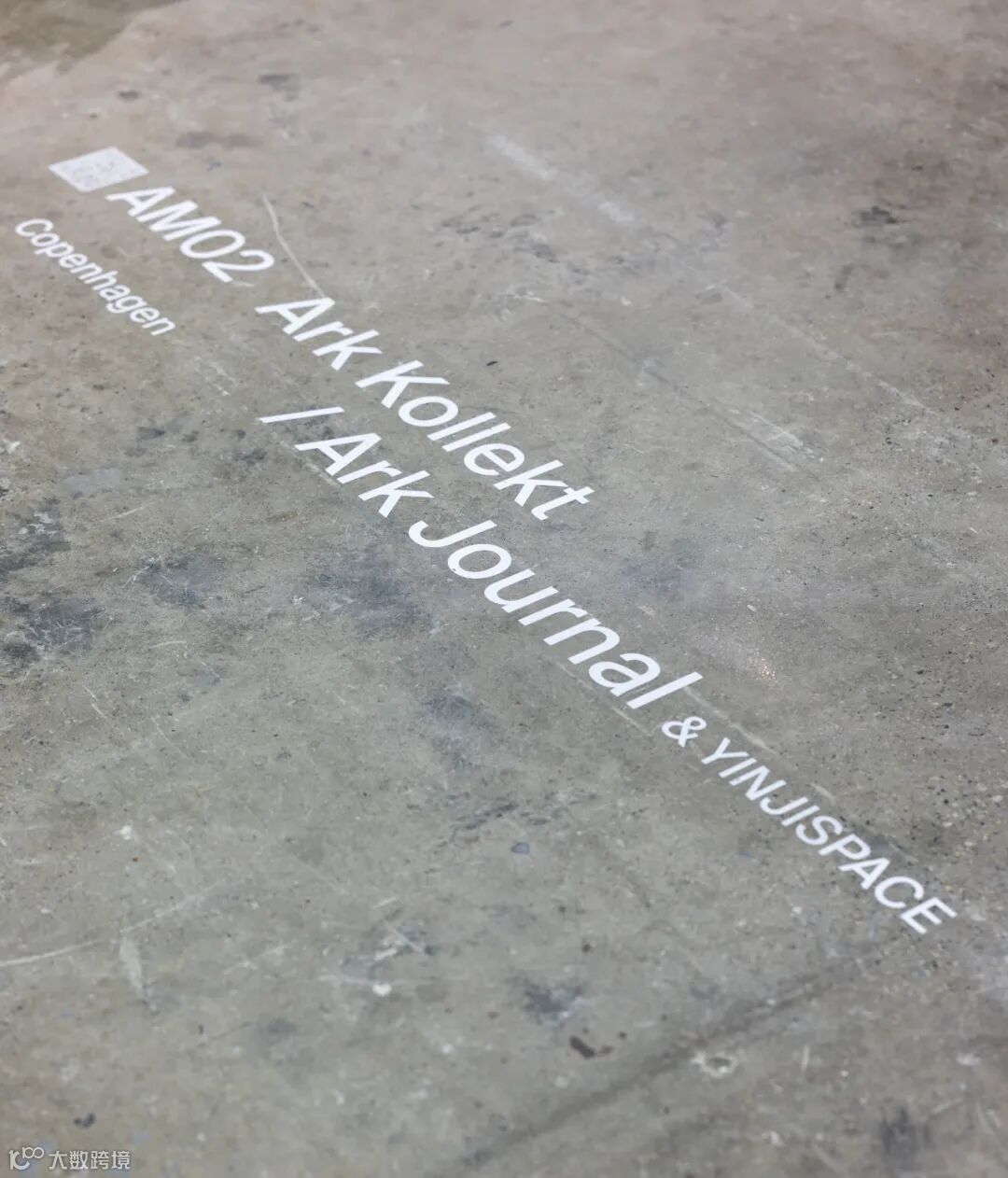
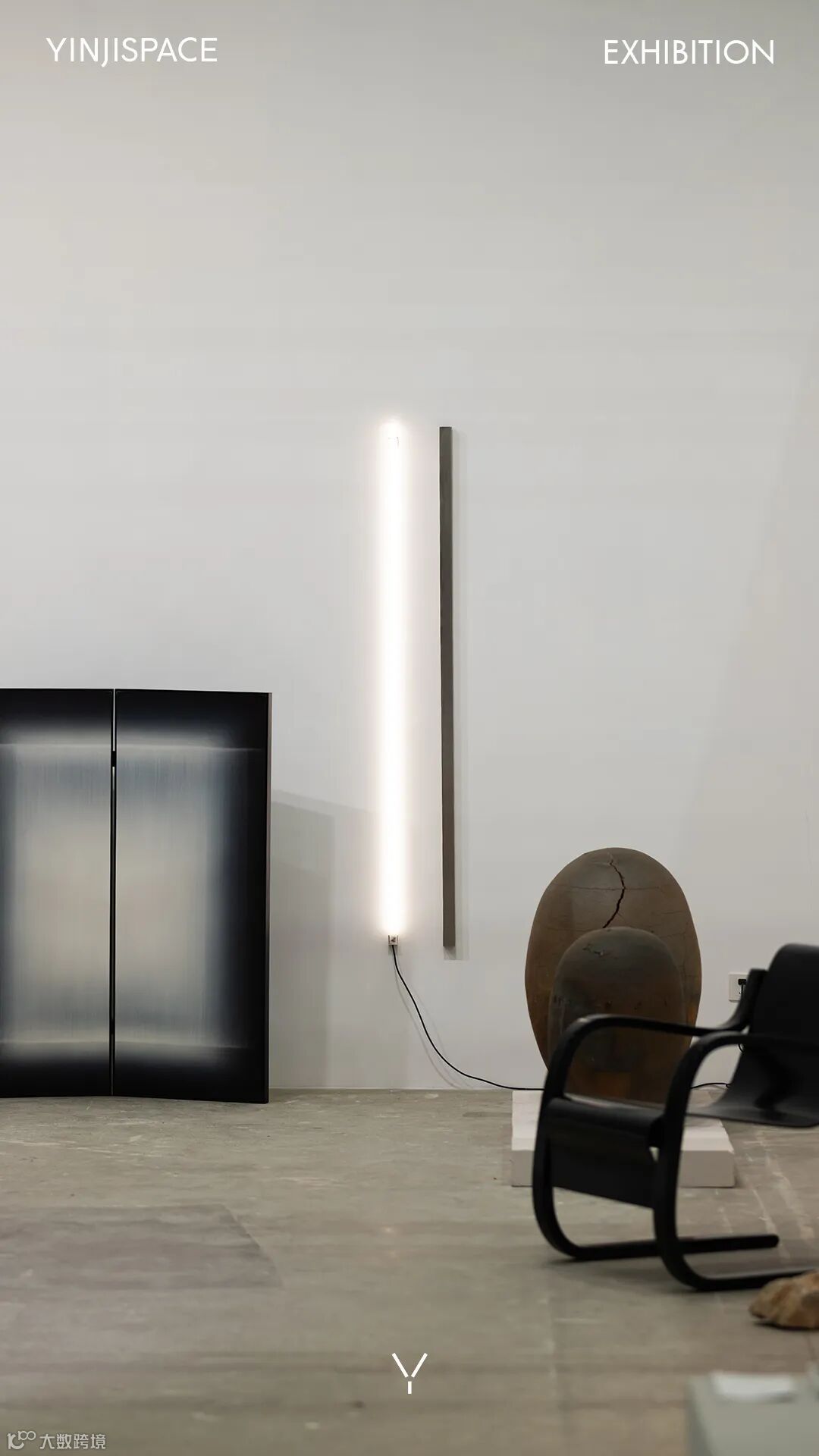
今年,西岸艺术与设计博览会于11月在五大场馆同步展开,近两百家来自22个国家与地区的画廊、机构与设计力量齐聚上海,使这座城市在短短数日内成为全球创作与交流的汇集点。作为合作参展方,印际 YINJISPACE 有幸与 Ark Journal 一同进入 design/delight 设计平台的 Main 主单元,共同呈现了十四位来自不同地域、跨越材料与媒介的艺术家的精选作品,也从媒体与参展者的双重的视角,在更大的展会框架中观察当代设计与艺术在此时此地的多元呈现。
This November, the West Bund Art & Design Fair unfolded across five venues, bringing together nearly two hundred galleries, institutions, and design practices from twenty-two countries and regions, turning Shanghai into a global point of convergence for creation and dialogue. As a collaborating exhibitor, YINJISPACE had the privilege of joining Ark Journal in the design/delight Main sector, presenting a curated selection of works by fourteen artists from diverse regions and across materials and media. From our dual position as both media and exhibitor, we observed how contemporary design and art are expressed in this moment and in this place, within the broader framework of the fair.
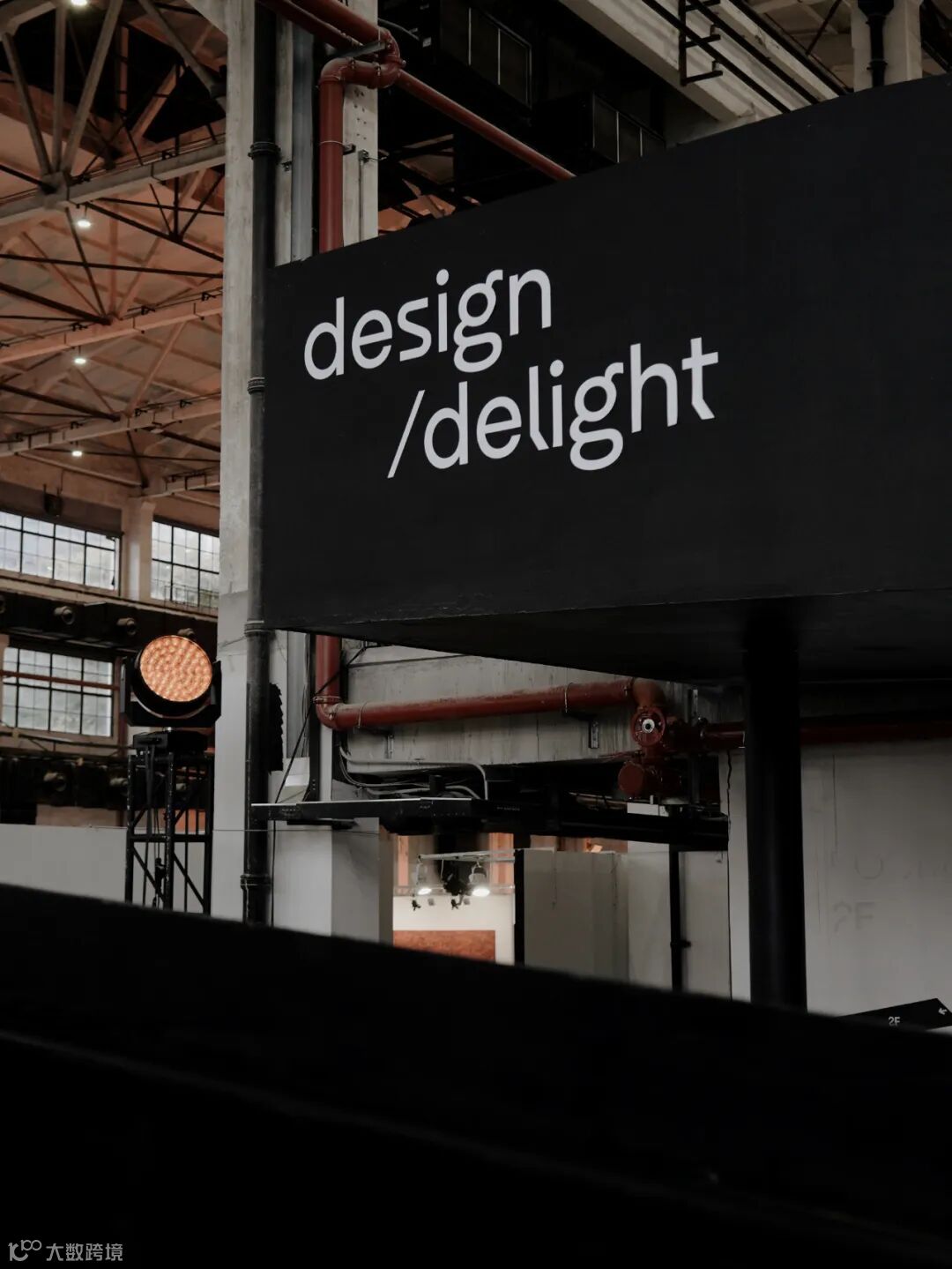
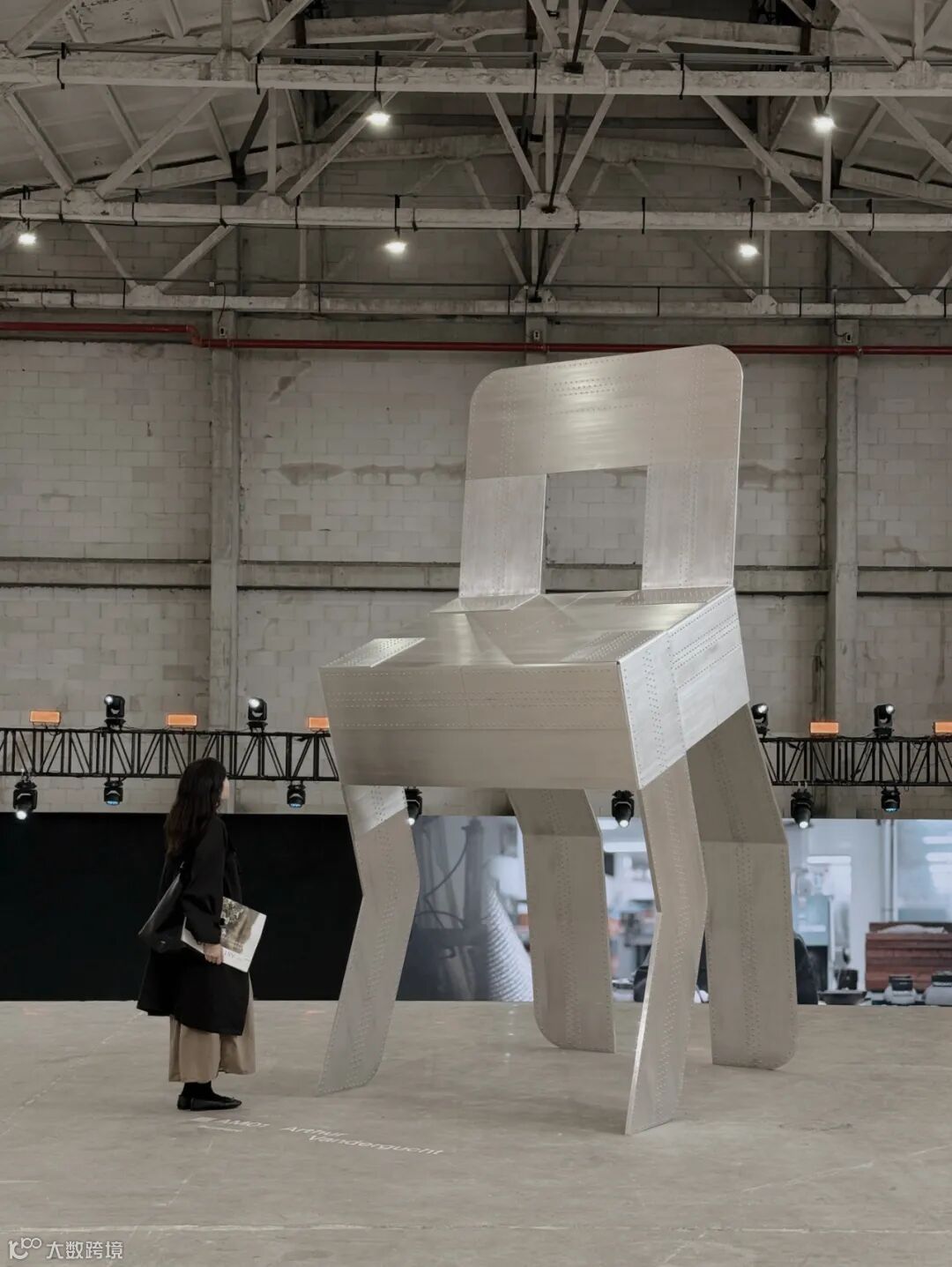
作为西岸艺博会中新兴的当代设计收藏平台,design/delight 自 2024 年亮相以来,专注于当代可收藏设计与功能性艺术精品,展现出独特的美学与创意灵感。今年,来自全球的近四十家设计画廊、工作室及品牌在同一单元并置——限量作品、艺术装置与特定场域创作在空间交错展开,使多重文化背景、材料语言与制作逻辑得以并行展开,以策展式叙事与高度感官化的场景体验点亮展会空间,重塑想象的边界。
As an emerging platform for collectible contemporary design within the West Bund Art & Design Fair, design/delight has focused on limited-edition design and functional art since its debut in 2024, presenting a distinct aesthetic and creative sensibility. This year, nearly forty design galleries, studios and brands from around the world were brought together within the same section—where limited-edition pieces, installations and site-specific works intertwined across the space. Multiple cultural contexts, material languages and making logics unfolded in parallel, shaping a curatorial narrative and a highly sensorial spatial experience that illuminated the fair and expanded the boundaries of imagination.
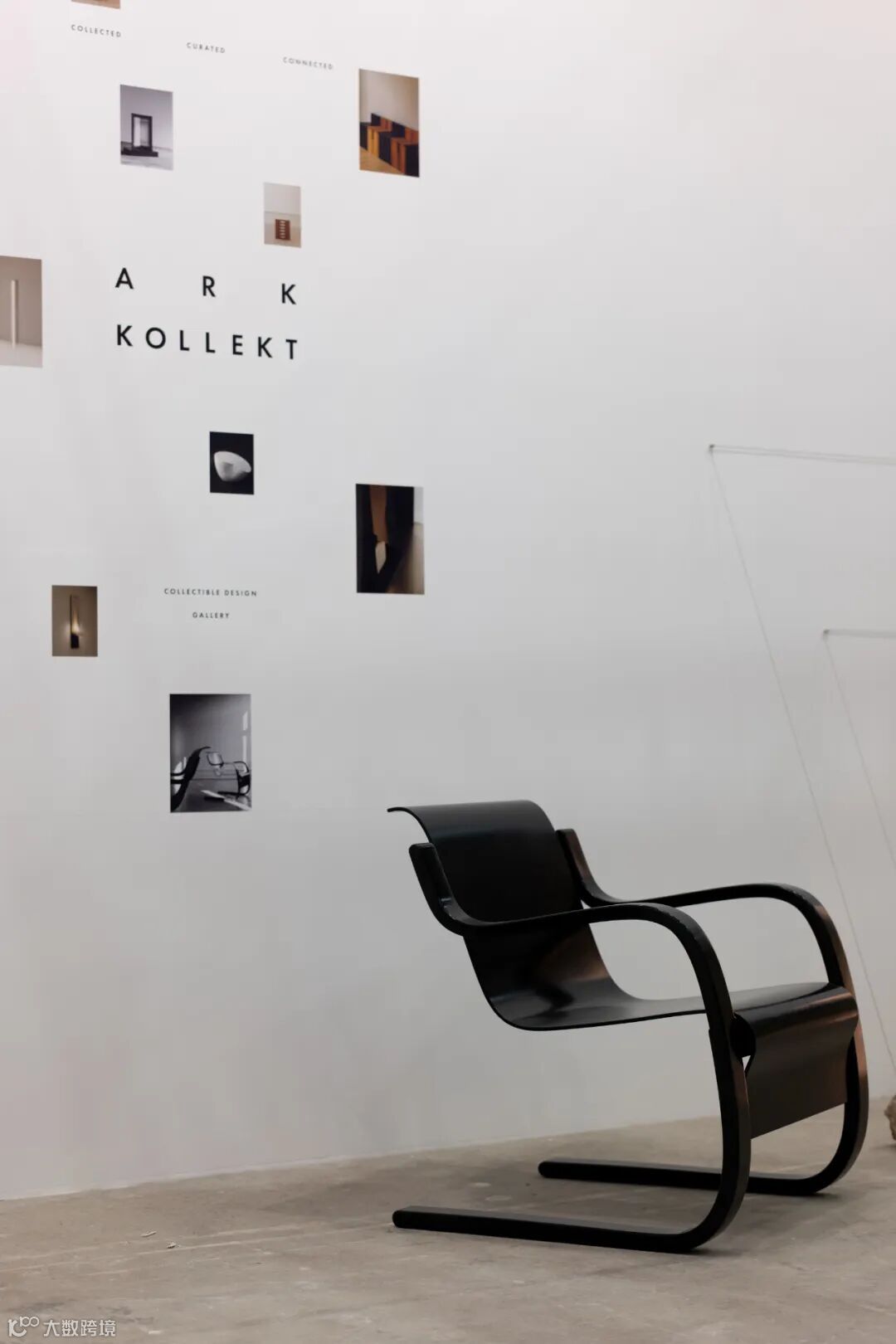
其中 Ark Journal x YINJISPACE 展位所在的 design/delight:Main 主单元,既是推动创意交流的平台,也是探索当代设计、功能与艺术之间的交汇地带的前瞻阵地。此次契合主题,在策展理念上,我们以“对话”为方法切入,尝试以一种非线性的方式回应这一单元的开放性,让展位成为一个可自由进入的场域:材料、文化、工艺传统与当代语境在其中并置,让作品之间的关系——东西方的美学思考、古今的工艺精神、手工与工业语言的差异,在观看过程中自然生成。
Within the design/delight: Main section, where the Ark Journal × YINJISPACE booth is located, the platform serves not only as a site for creative exchange but also as a forward-looking space for exploring the intersections between contemporary design, function, and art. In response to this year’s theme, our curatorial approach takes “dialogue” as its method, adopting a non-linear structure to reflect the openness of the section. The booth is conceived as a field that can be entered from any point, where materials, cultures, craft traditions, and contemporary contexts are placed in parallel, allowing relationships between works—between Eastern and Western aesthetics, historical and modern craft, hand-made and industrial languages—to emerge naturally through the act of viewing.
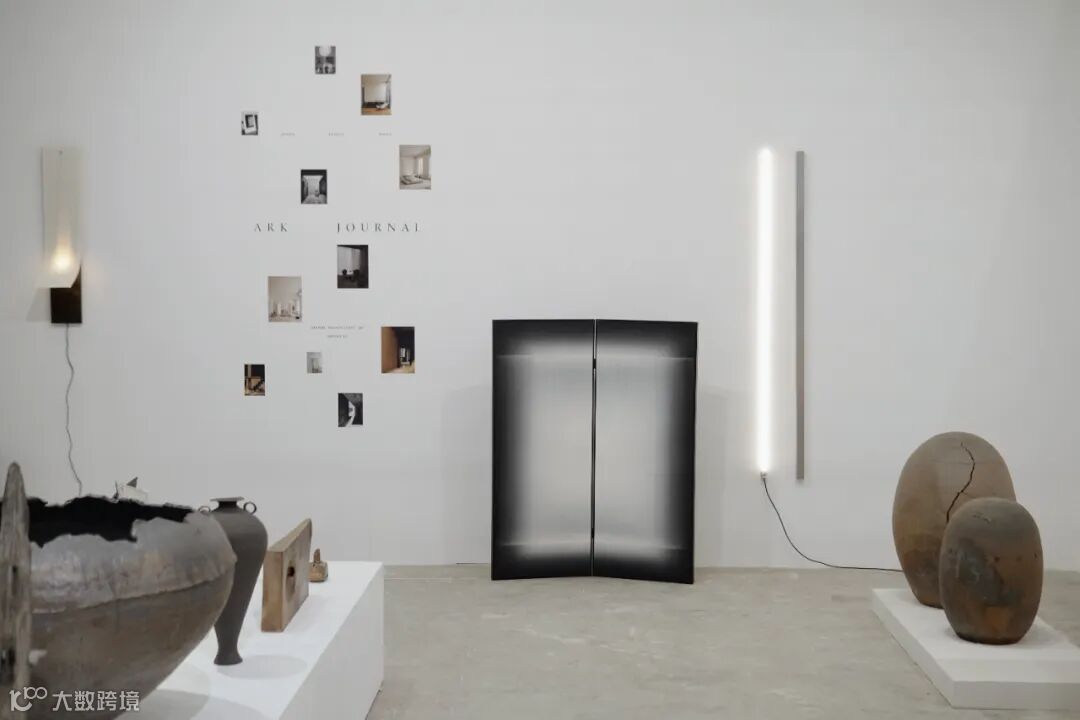
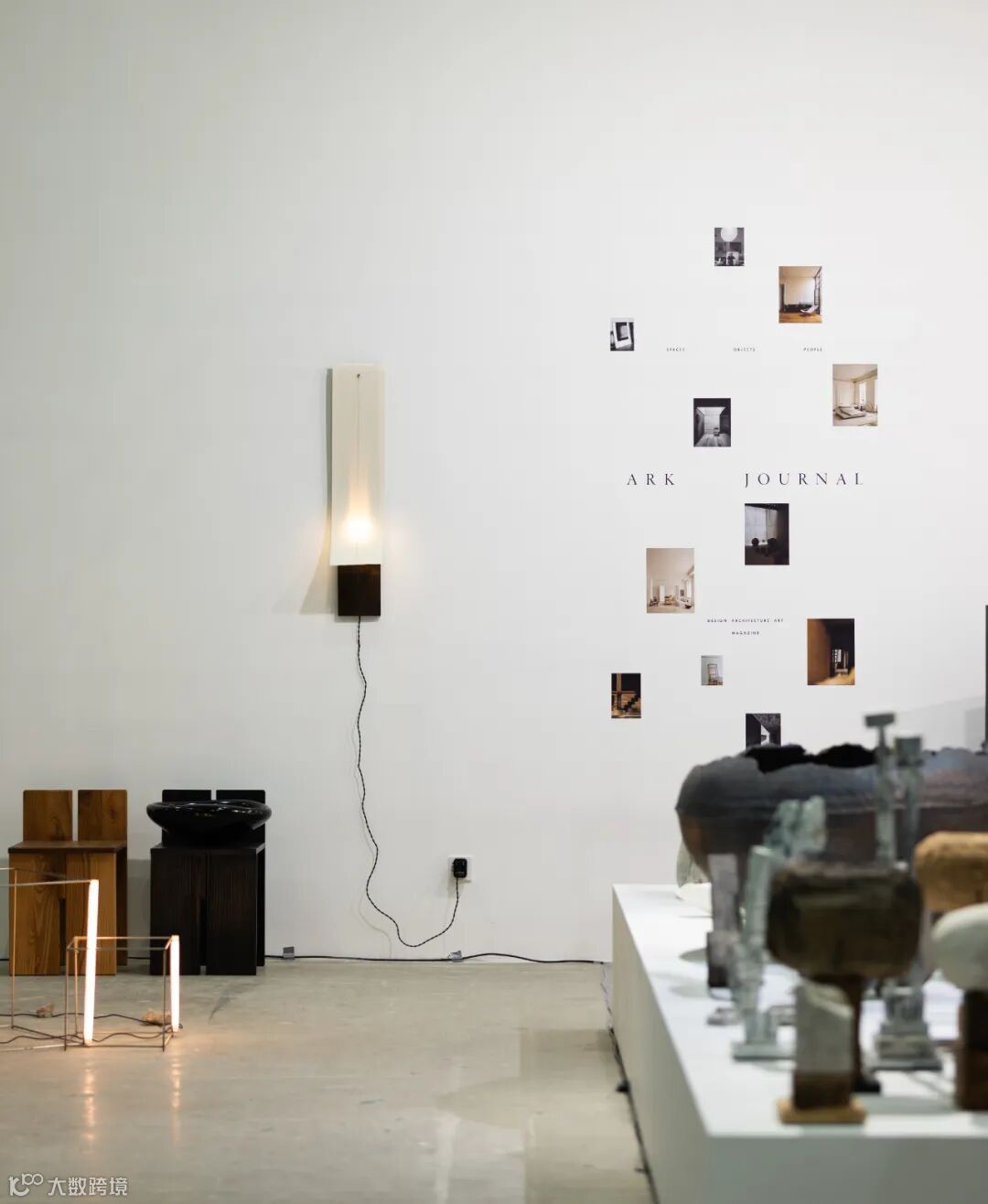
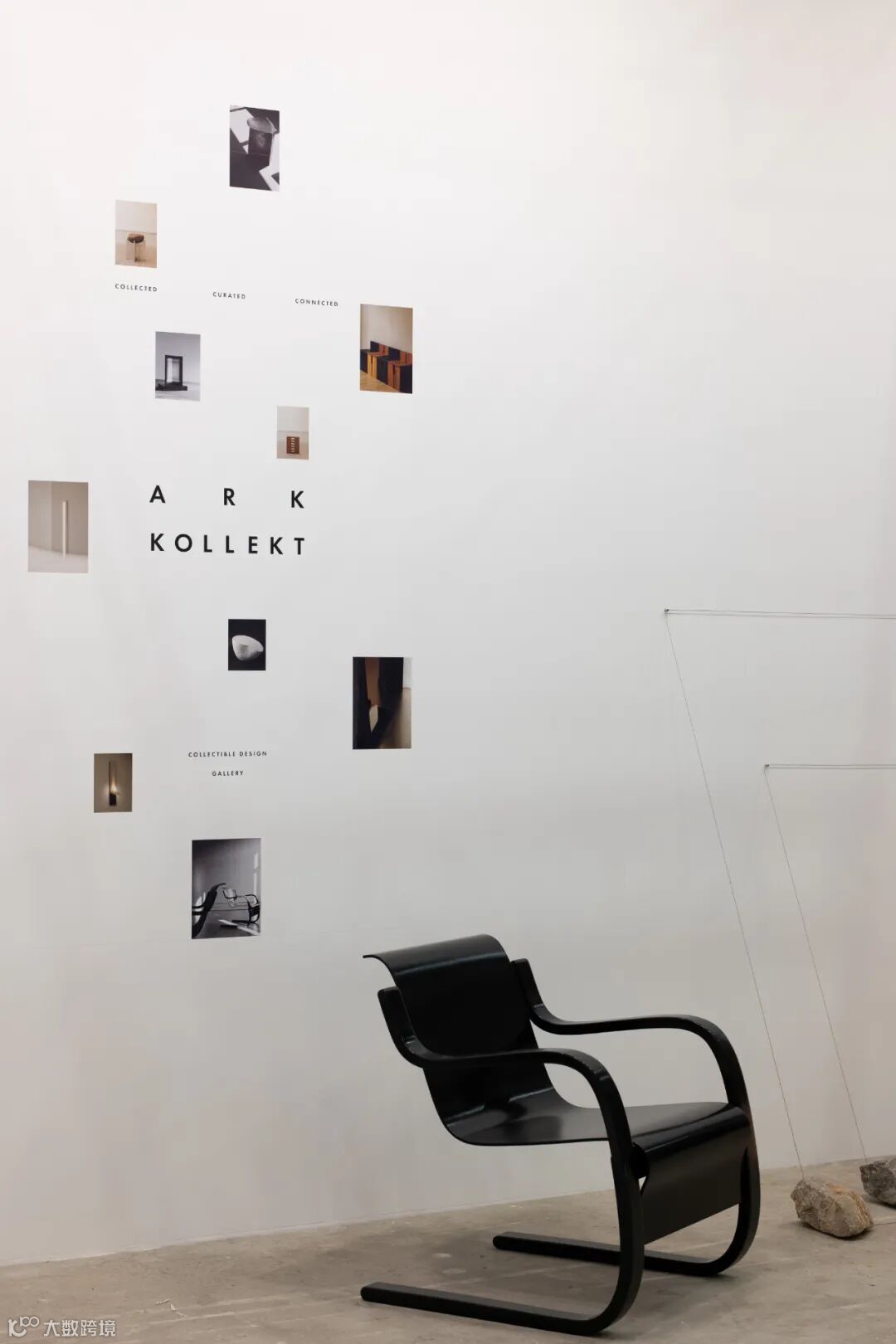
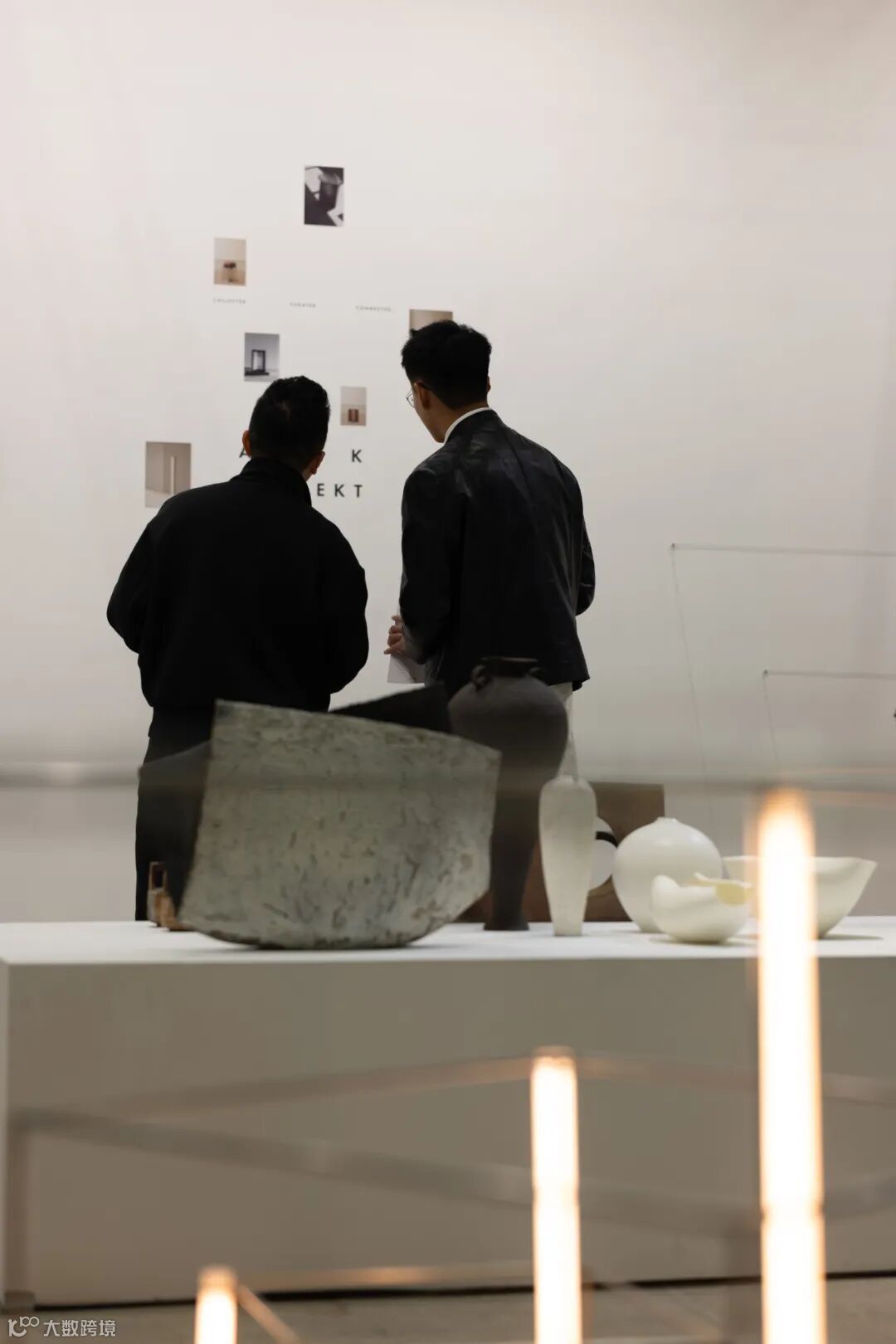

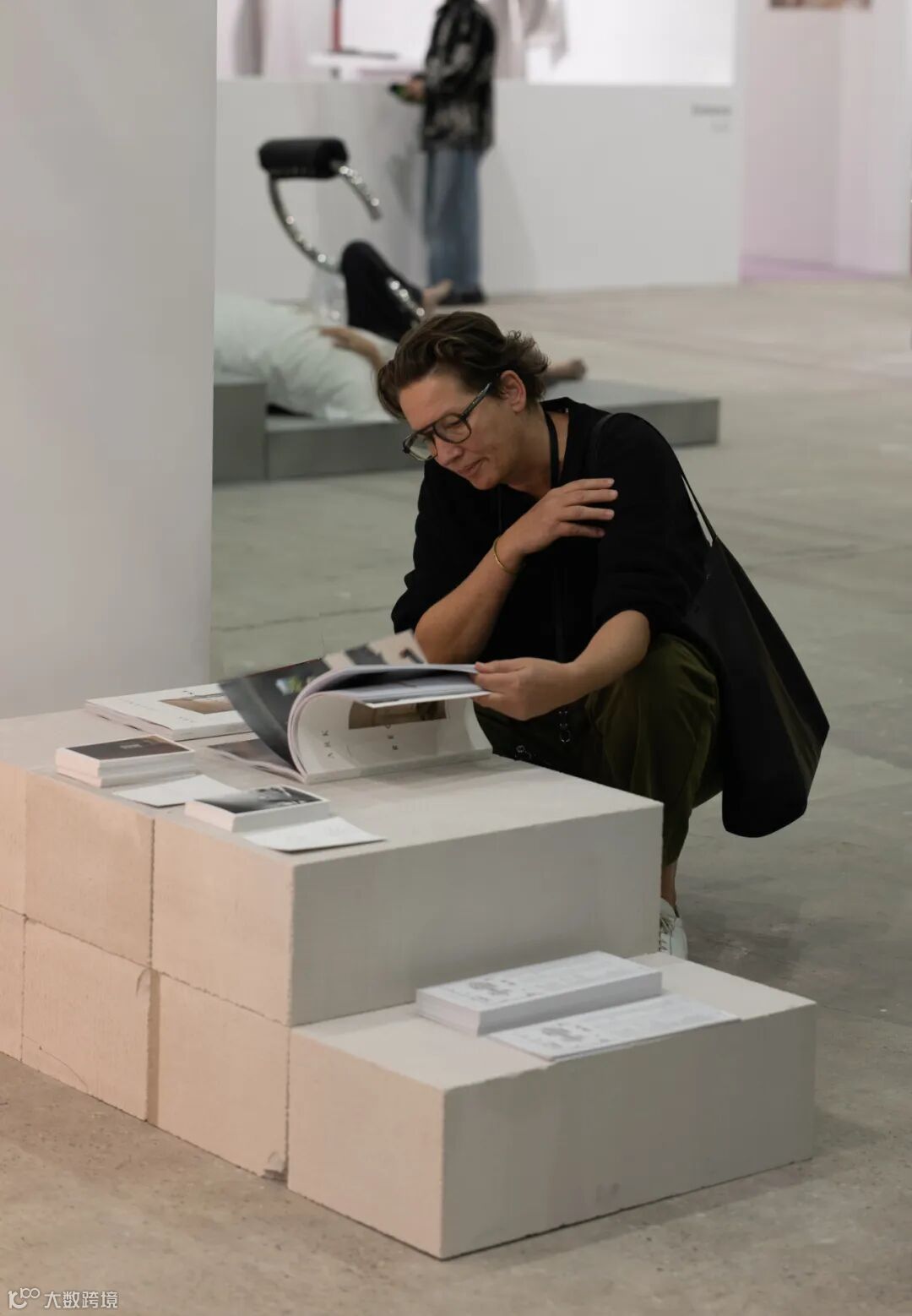
非线性的布展逻辑,是为了更贴近我们所选择的艺术家们共同的创作精神:他们无一不在跨越文化与学科的边界,在“材料的真实”与“使用的逻辑”“手工的时间”与“当代的技术”之间寻找新的表达。因此,流动的观展方式本身,就是对他们实践的一种镜像。
The exhibition’s non-linear layout is designed to echo the shared spirit of the artists we selected: each of them moves fluidly across cultures and disciplines, seeking new expressions between material truth and functional logic, between the time of handcraft and the tools of the contemporary. In this sense, a free-flowing viewing experience becomes a mirror of their practice itself.
观众可以从任何一个节点开始进入这场对话——从 Alvar Aalto 的有机现代主义,到 Christian + Jade 以缓慢工艺延展出的材料节奏;从 Dori Deng 光影中的自然与现代工艺,到黄妍白瓷边缘对“完美”的思考;从冯哲元两件罐形作品呼应着的尺度关系,到蒋马祥柴烧创作中“失控的控制”;从李婳器物表面因湿度与温度而生成的细微肌理,到刘江从牛皮材质创作里记录下的时间褶皱;从马弋川在结构中捕捉的力量与平衡,到曲晶以土壤实验不断生成的自然纹理;从 SPACON 前卫的极简表达,到唐可雕刻出的冬瓜中潜藏的静默生命;从项达在随机釉色中呈现的东方克制,到 Ylva Carlgren 水彩里虚与实之间的晕染。所有的作品不依赖线性叙事,而是在材料的真实、时间的作用与创作者的感知方式之间自然形成关联。
Visitors may enter this dialogue from any point—from Alvar Aalto’s organic modernism, Christian + Jade’s measured craft, and Dori Deng’s light-based structures, to Huang Yan’s reflections on white porcelain; from Feng Zheyuan’s paired vessels and Jiang Maxiang’s wood-fired “controlled unpredictability,” to the subtle surface shifts in Li Hua’s work and the time-worn patina in Liu Jiang’s leather pieces; from Ma Yichuan’s structural balance and Qu Jing’s soil-driven textures, to SPACON’s minimal forms and Tang Ke’s quiet carvings; from Xiang Da’s restrained glazes to Ylva Carlgren’s watercolor atmospheres. These works do not follow a linear storyline—they connect naturally through material truth, the passage of time, and each creator’s way of sensing the world.
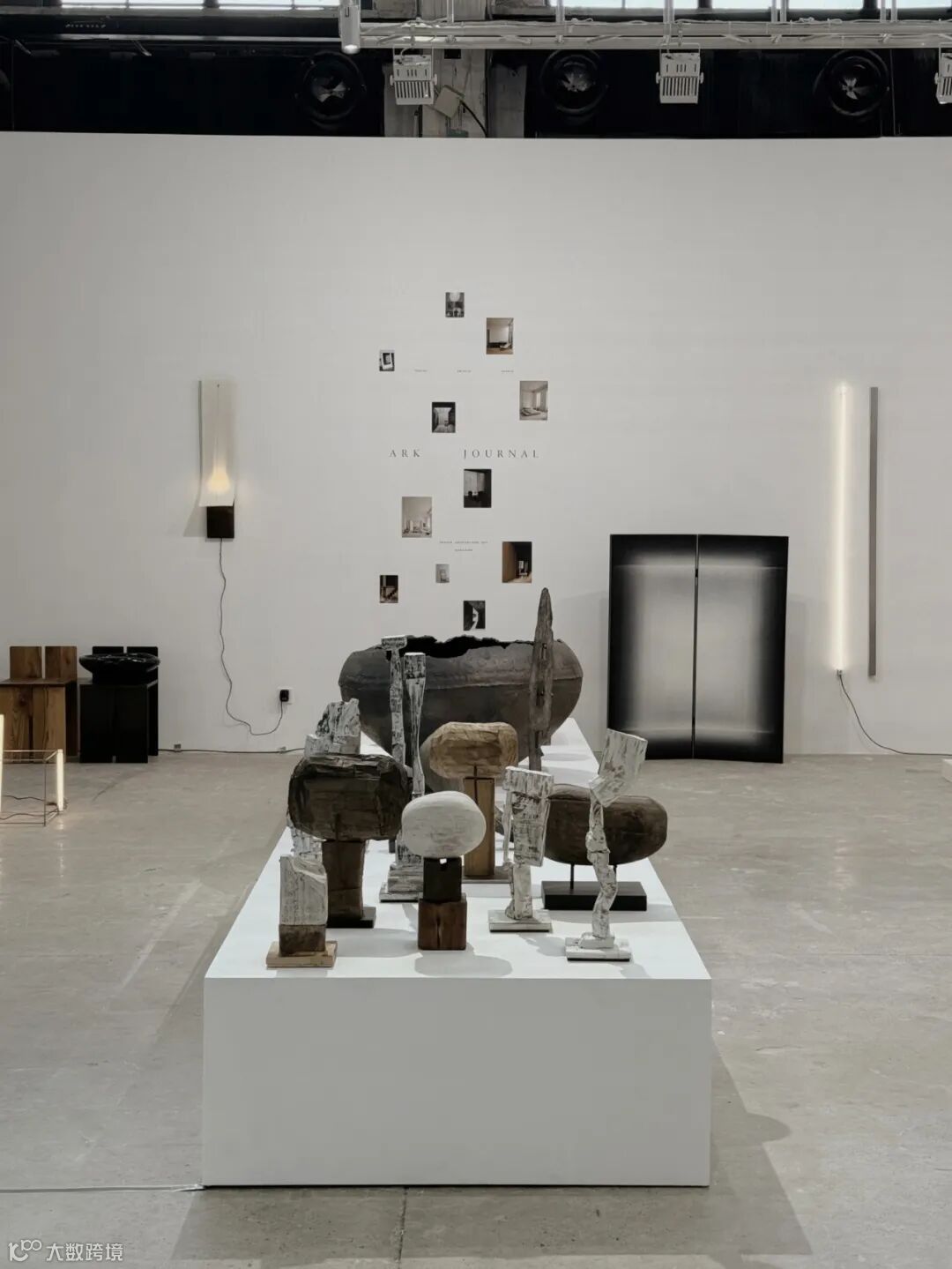
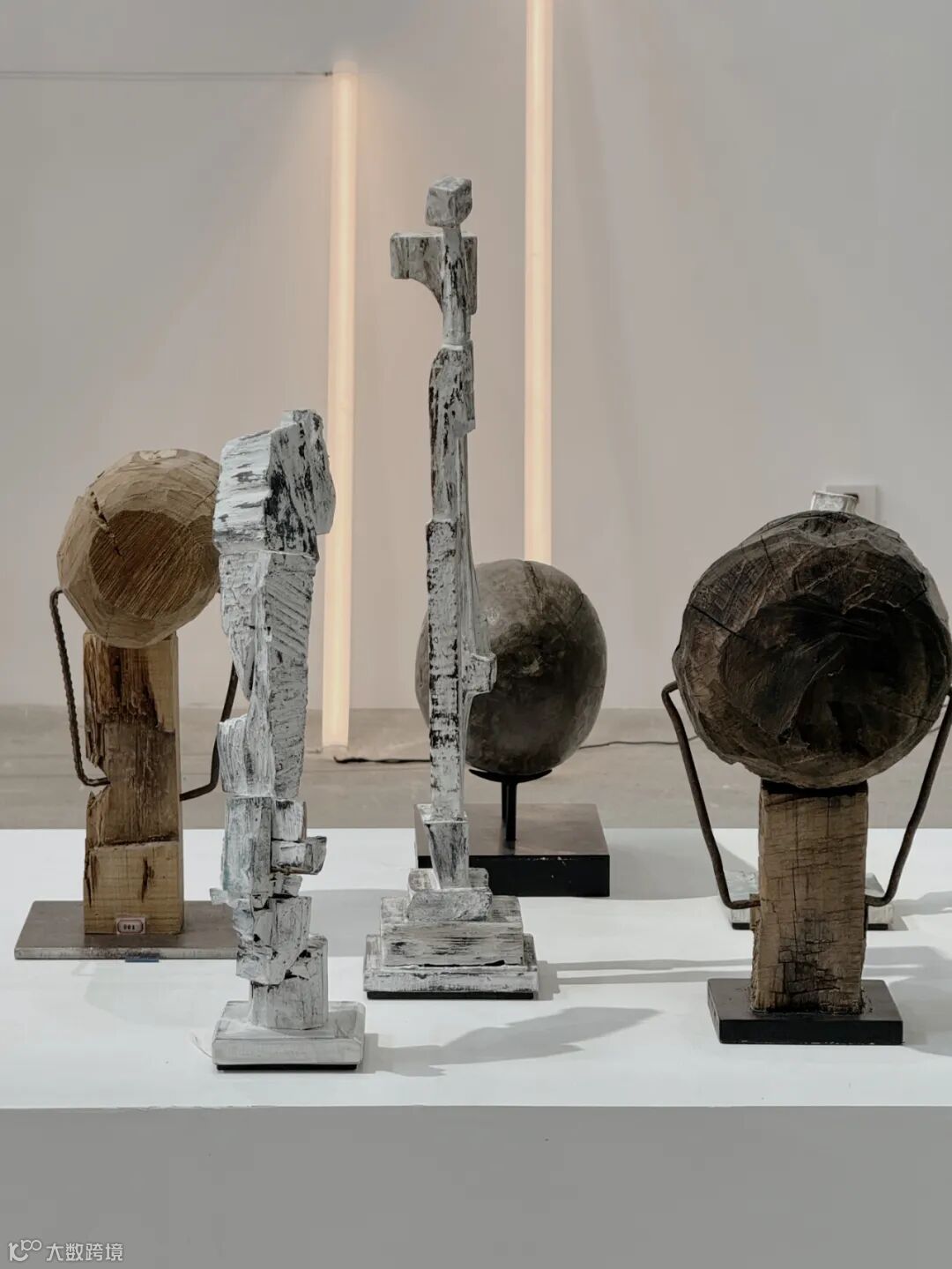
唐可,系列作品《月白》《巴塞》《木雕》《积木雕塑系列》
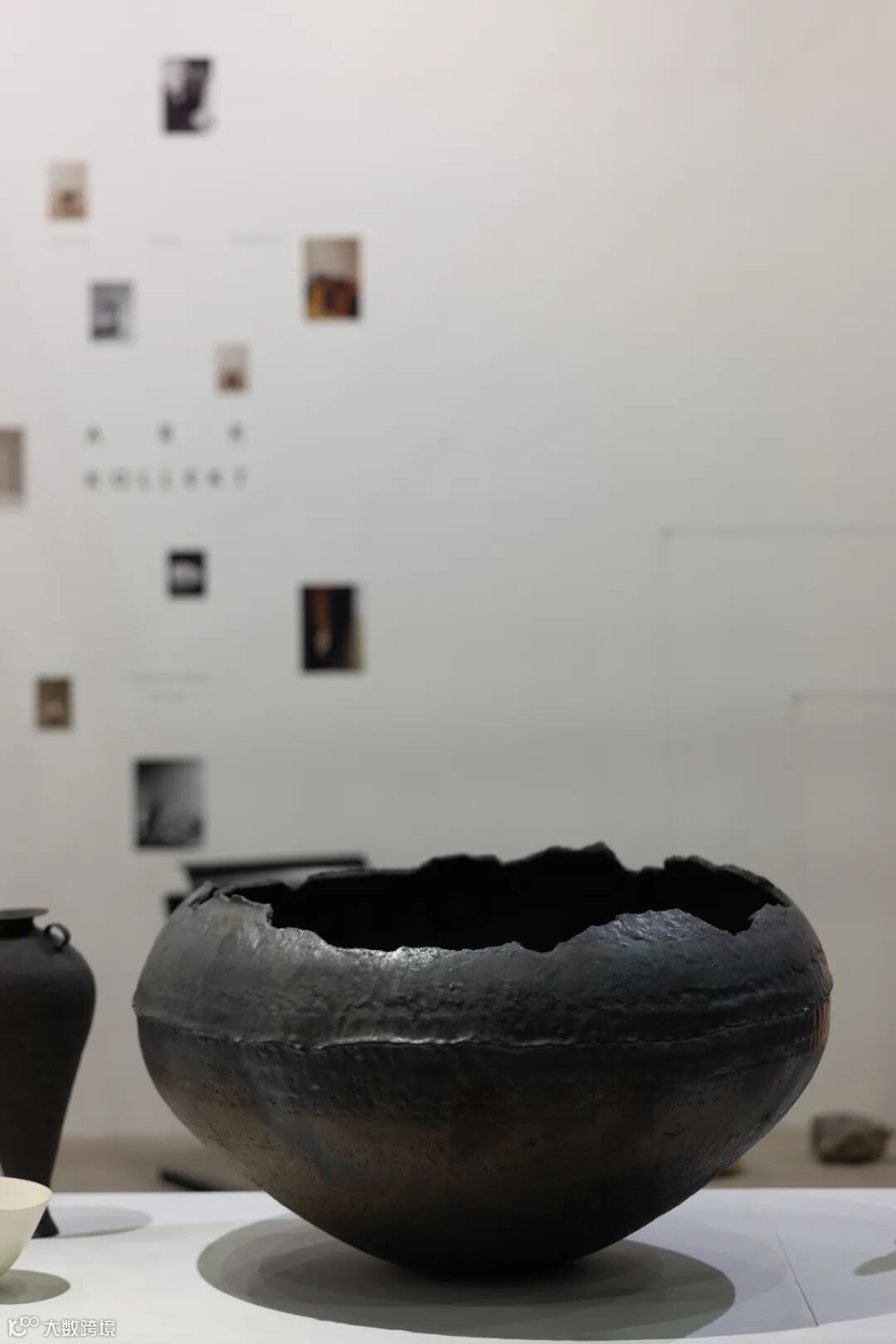
冯哲元,《玄钵》,2025,99x53cm
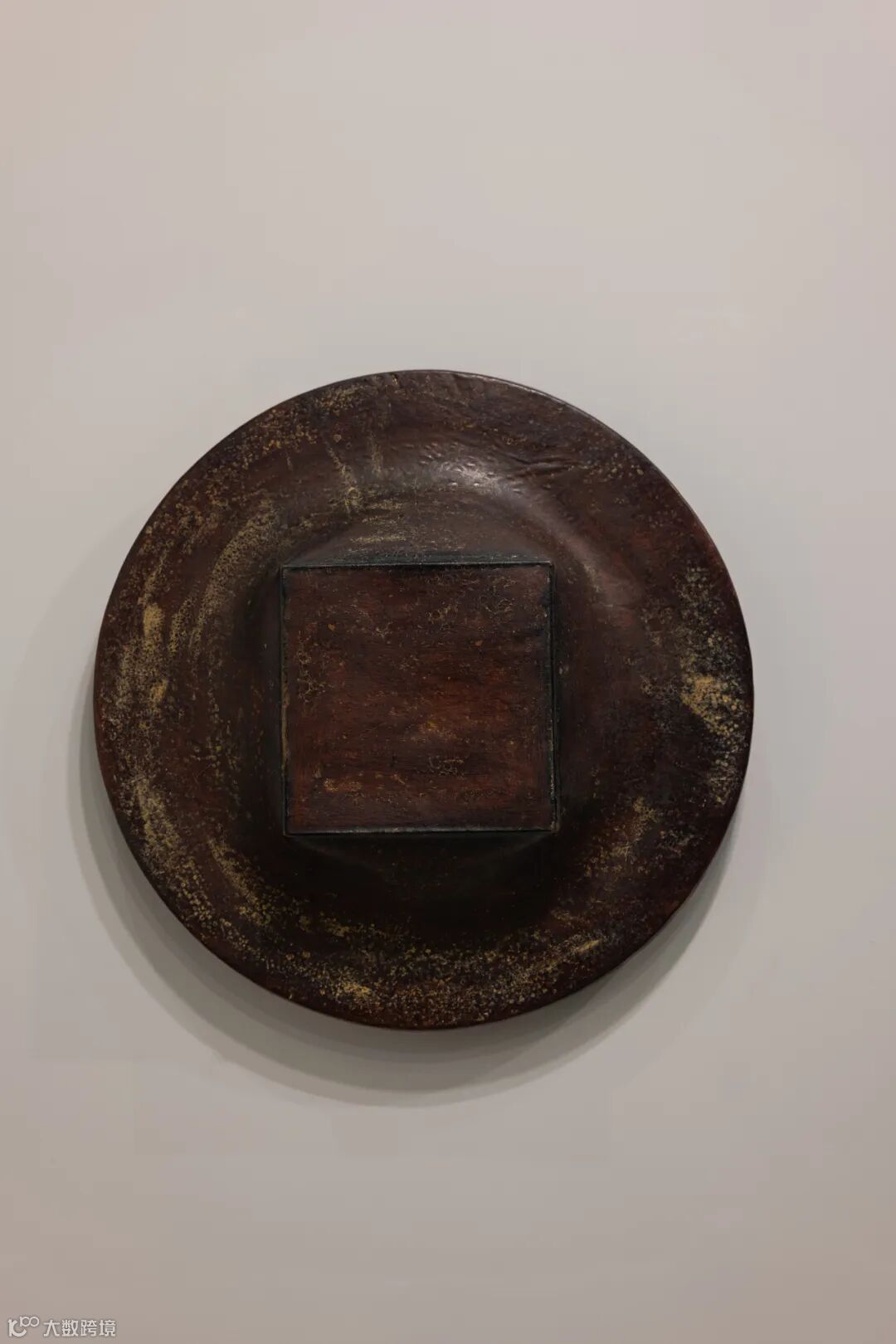
刘江,《牛皮大漆画作》,2022,直径50cm
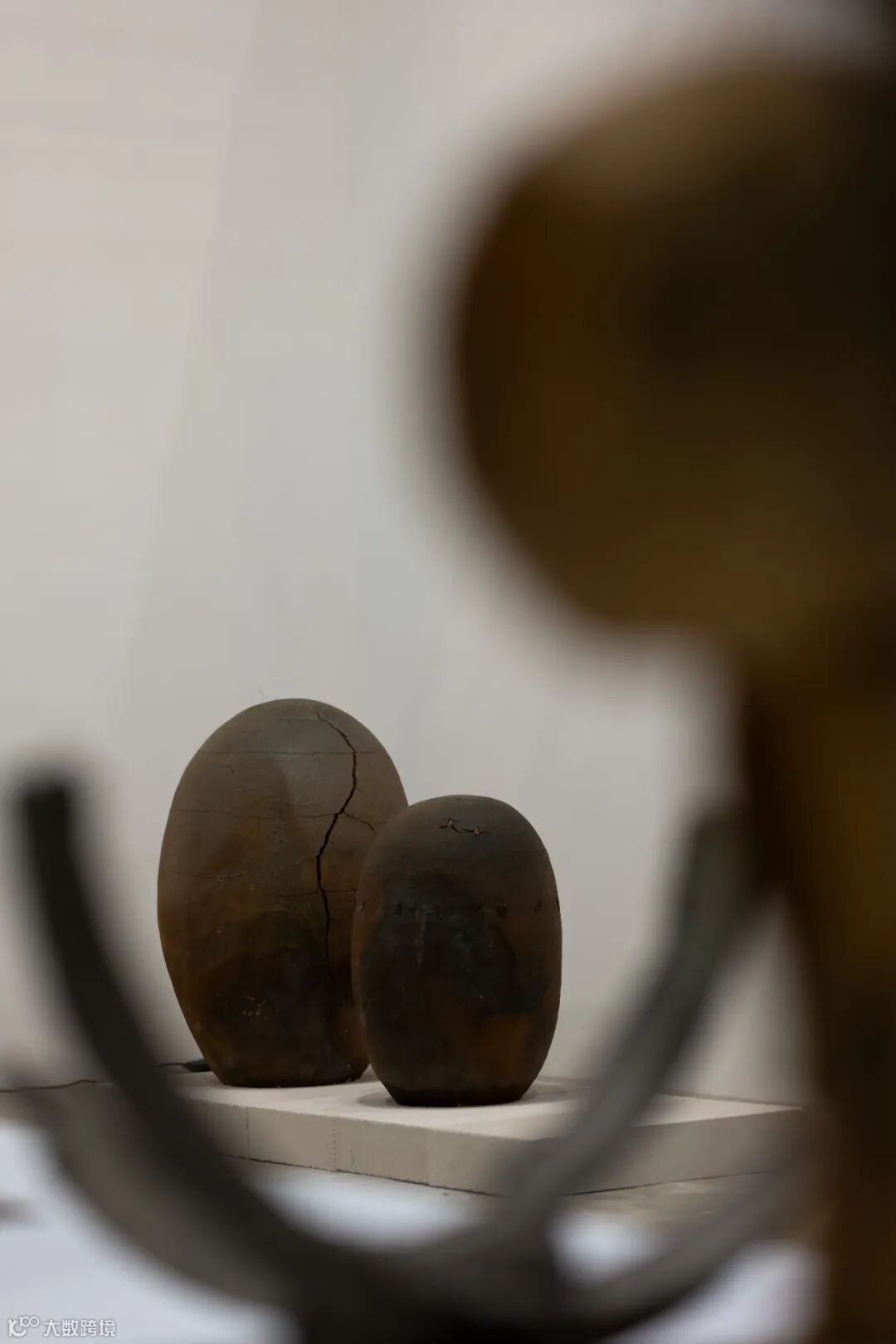
蒋马祥,《球(一)/(二)》,2022
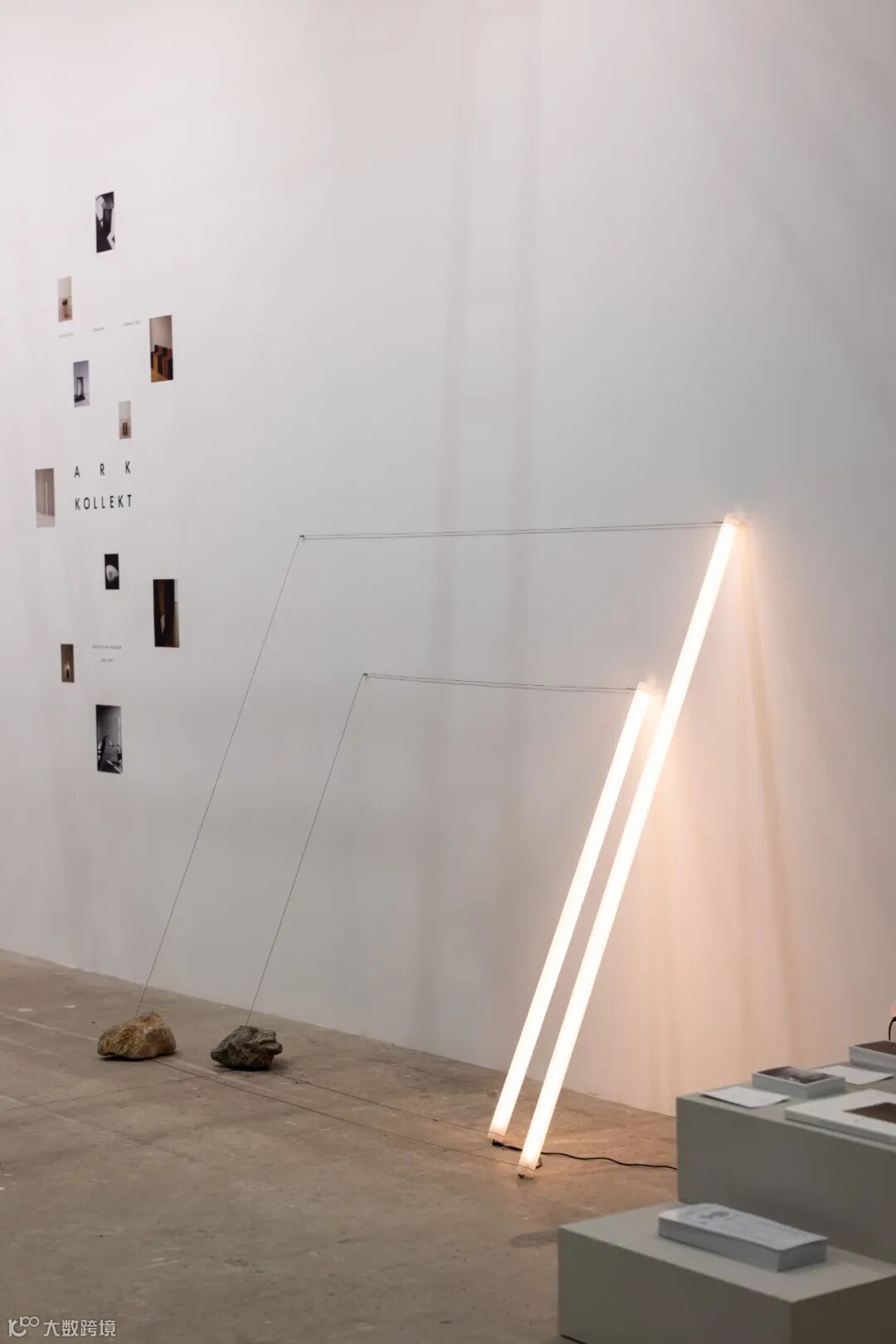
Dori Deng,《扩展系列31号》,2024,145x190x80cm
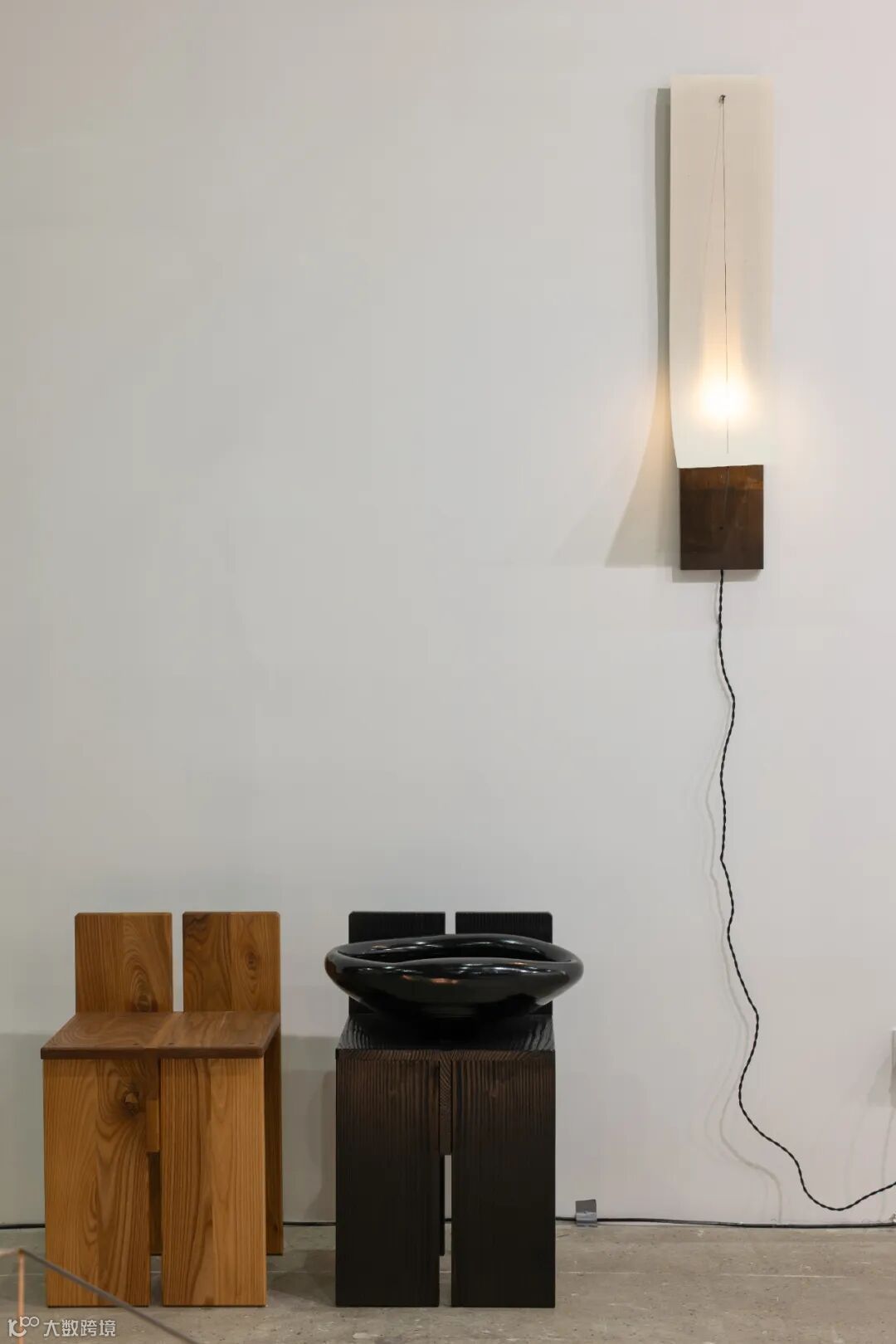
SPACON,《惊叹之凳》,2025(左);Christian + Jade,《光之容器》,2025(右)
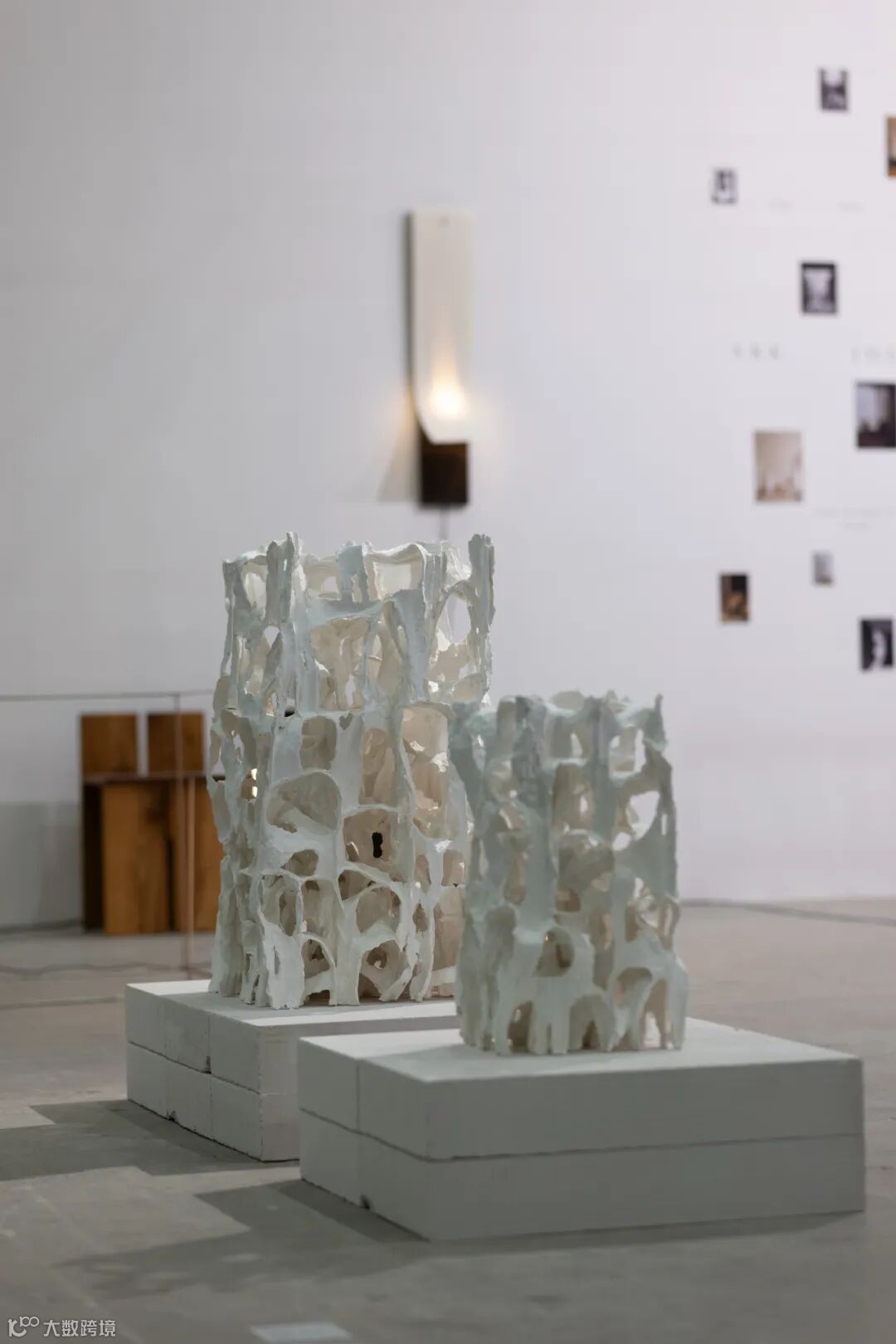
李婳,《生命序系列》、《脉》,2025,陶
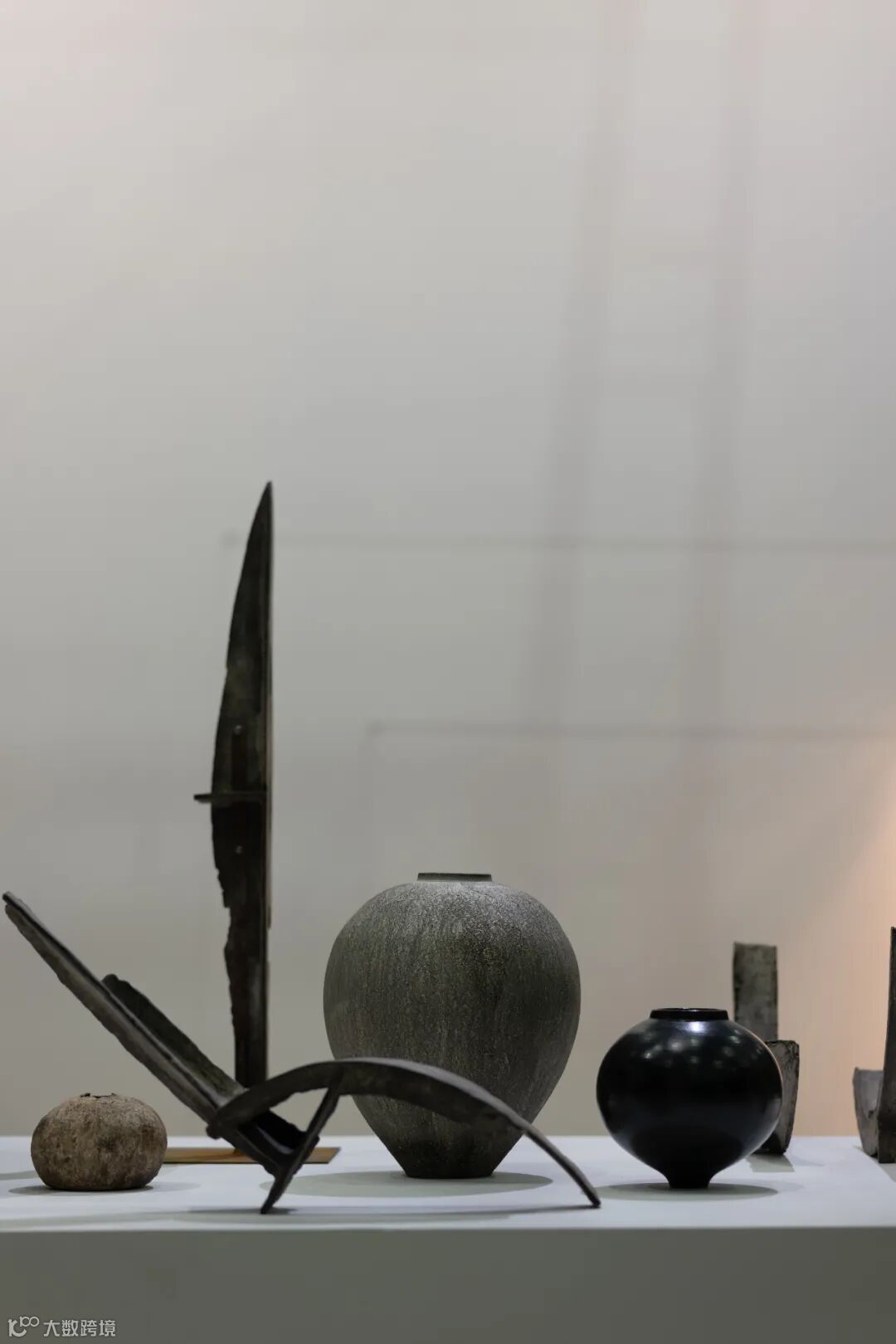
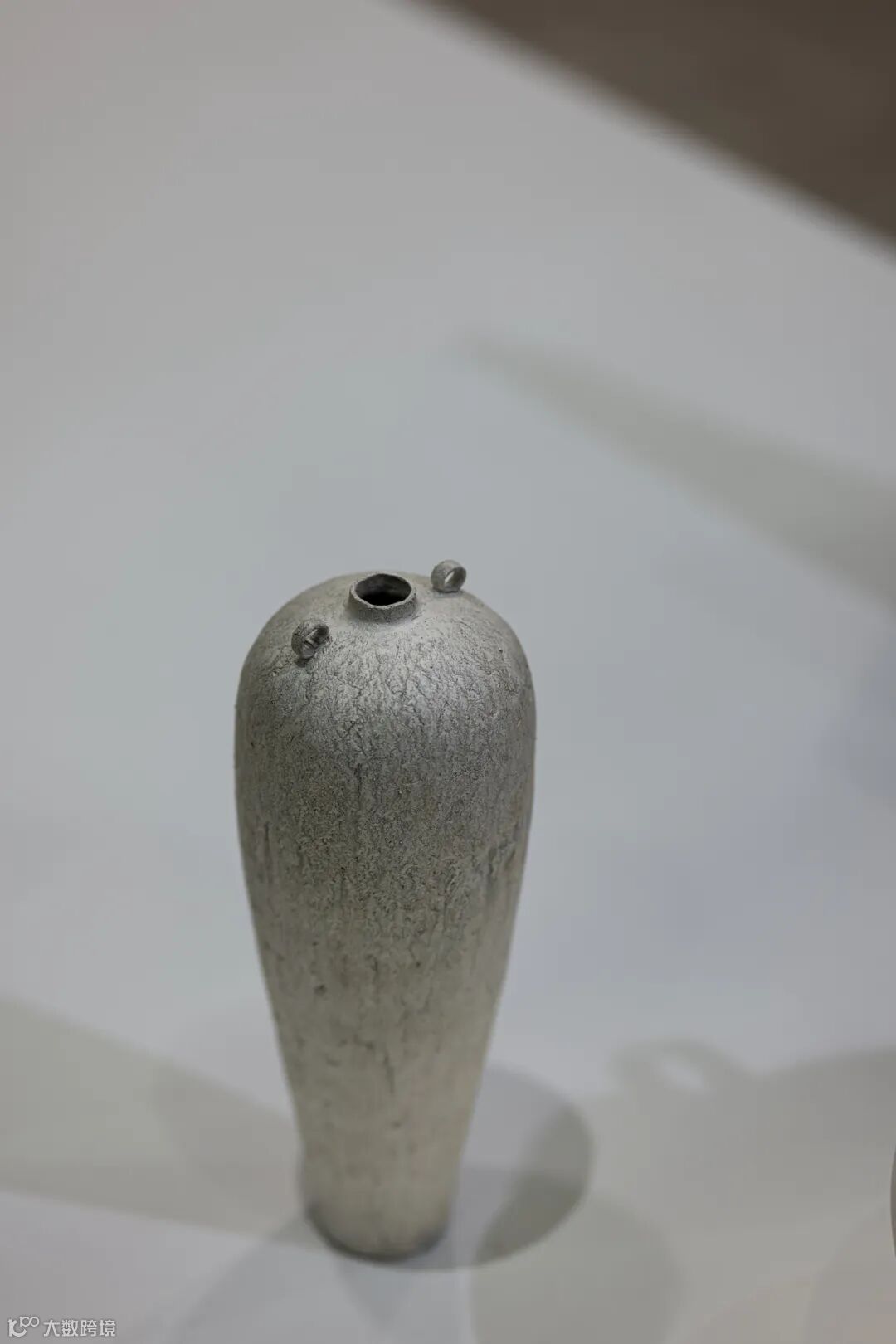
项达,《雾 YC #0301》,2025,8x24cm,银彩花器
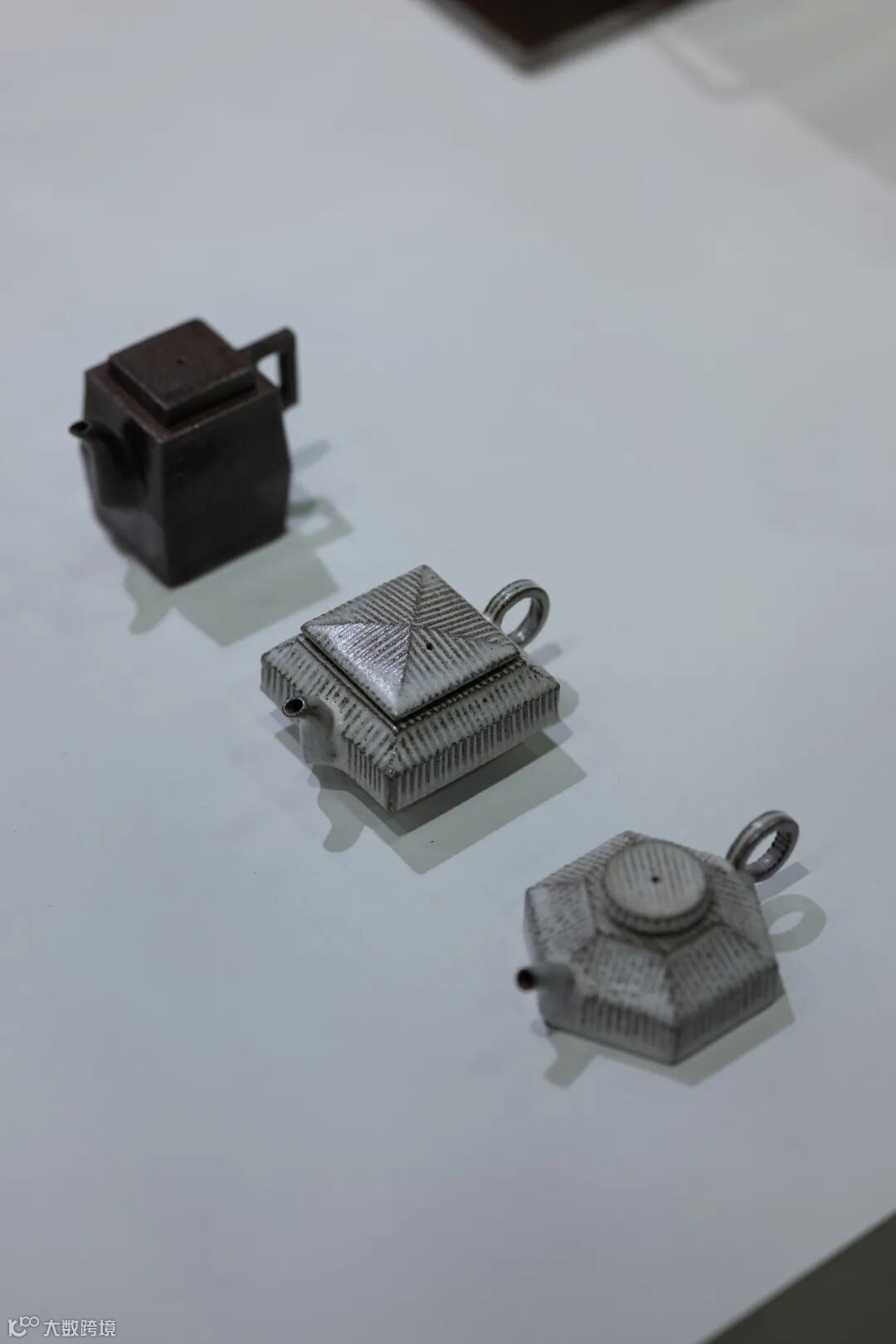
曲晶,《茶壶1/2/3》,2023,炻器
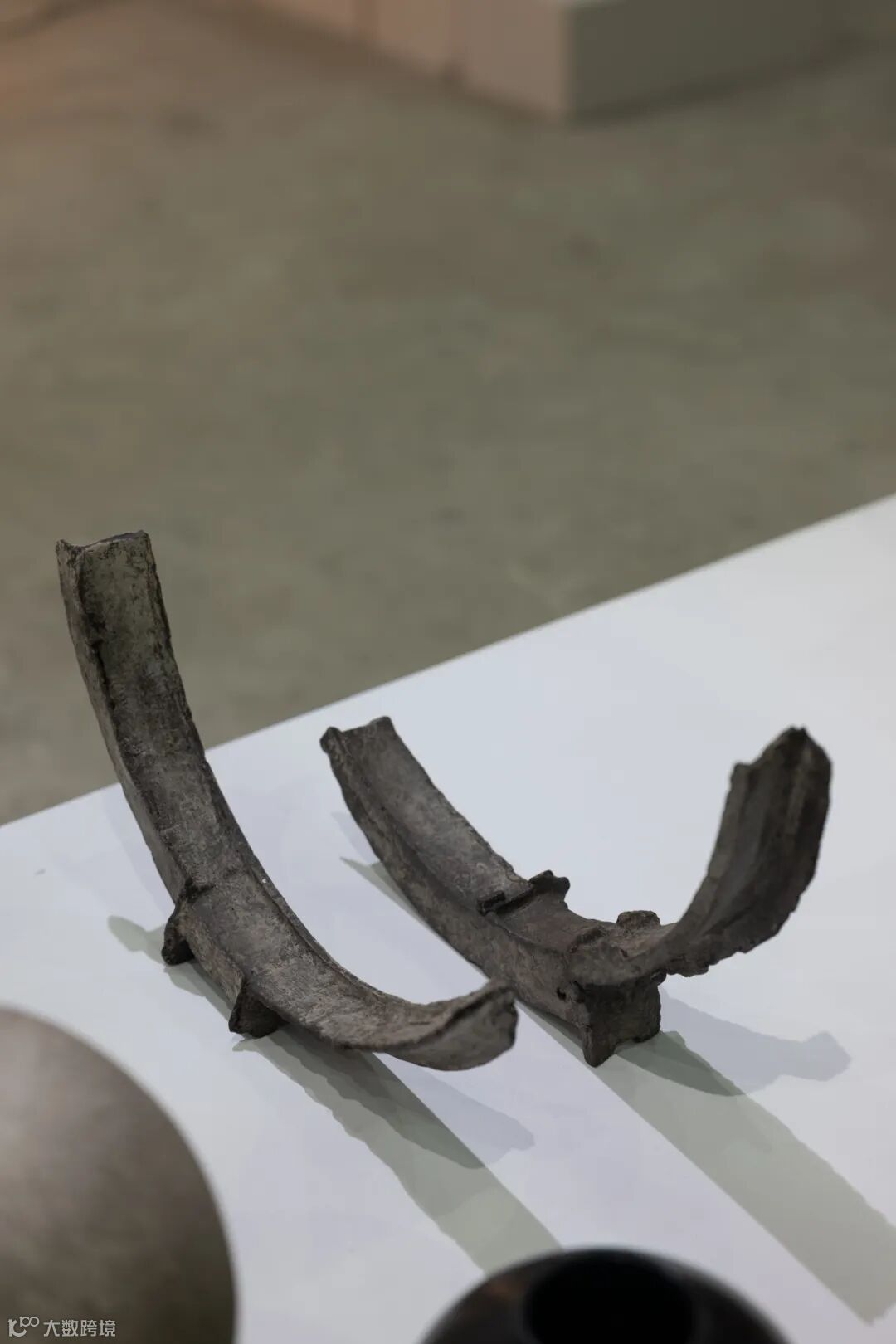
马弋川,《雕塑2》,2025 , 43x6x28cm
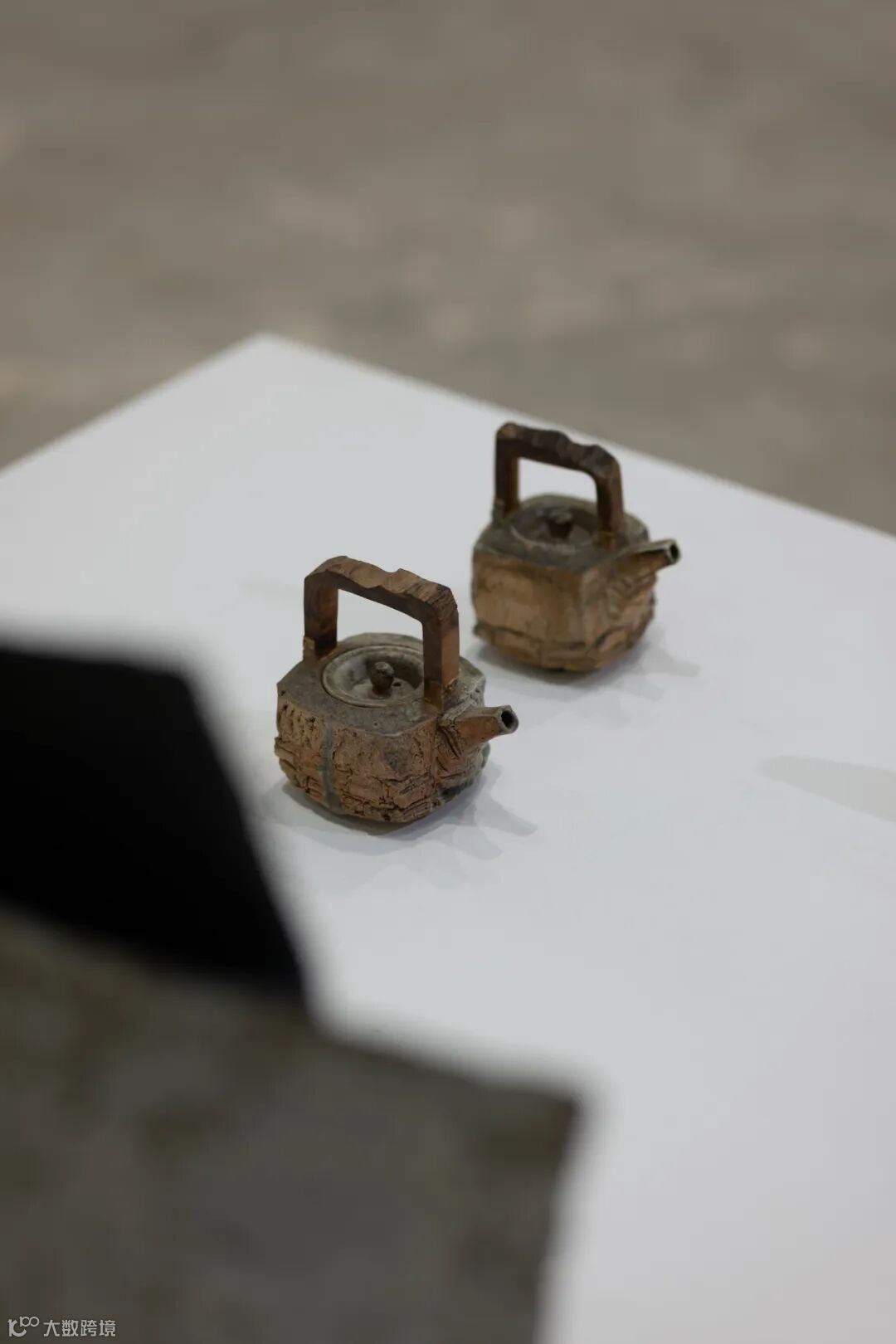
蒋马祥,《观岩(一/二)》 2022,陶、崖柏
design/delight 今年特别推出策展计划 form:a(“form: Asia”的缩写),聚焦亚洲设计师在全球语境中的实践方式。由特邀策展人 Yoko Choy(蔡惠贞)主导,14位来自中国、日本、新加坡与韩国的设计师与创意团队共同回应当代手工艺、材料创新与城市语境之间的关系。在这一单元中,蔡烈超与“有关设计部门”不仅作为参展设计师参与创作,同时共同承担了 “Tactile Futures” 的空间与视觉系统设计,让整体呈现拥有连贯的气质与识别度。
design / delight introduced a new curatorial program this year, form:a (short for “form: Asia”), focusing on the practices of Asian designers within a global context. Led by guest curator Yoko Choy, fourteen designers and creative teams from China, Japan, Singapore, and Korea respond to the relationships between contemporary craft, material innovation, and the urban environment. Within this section, Cai Liechao and About Design Department participate not only as exhibiting designers but also as co-creators of the spatial and visual design for “Tactile Futures,” giving the exhibition a coherent atmosphere and a clear visual identity.
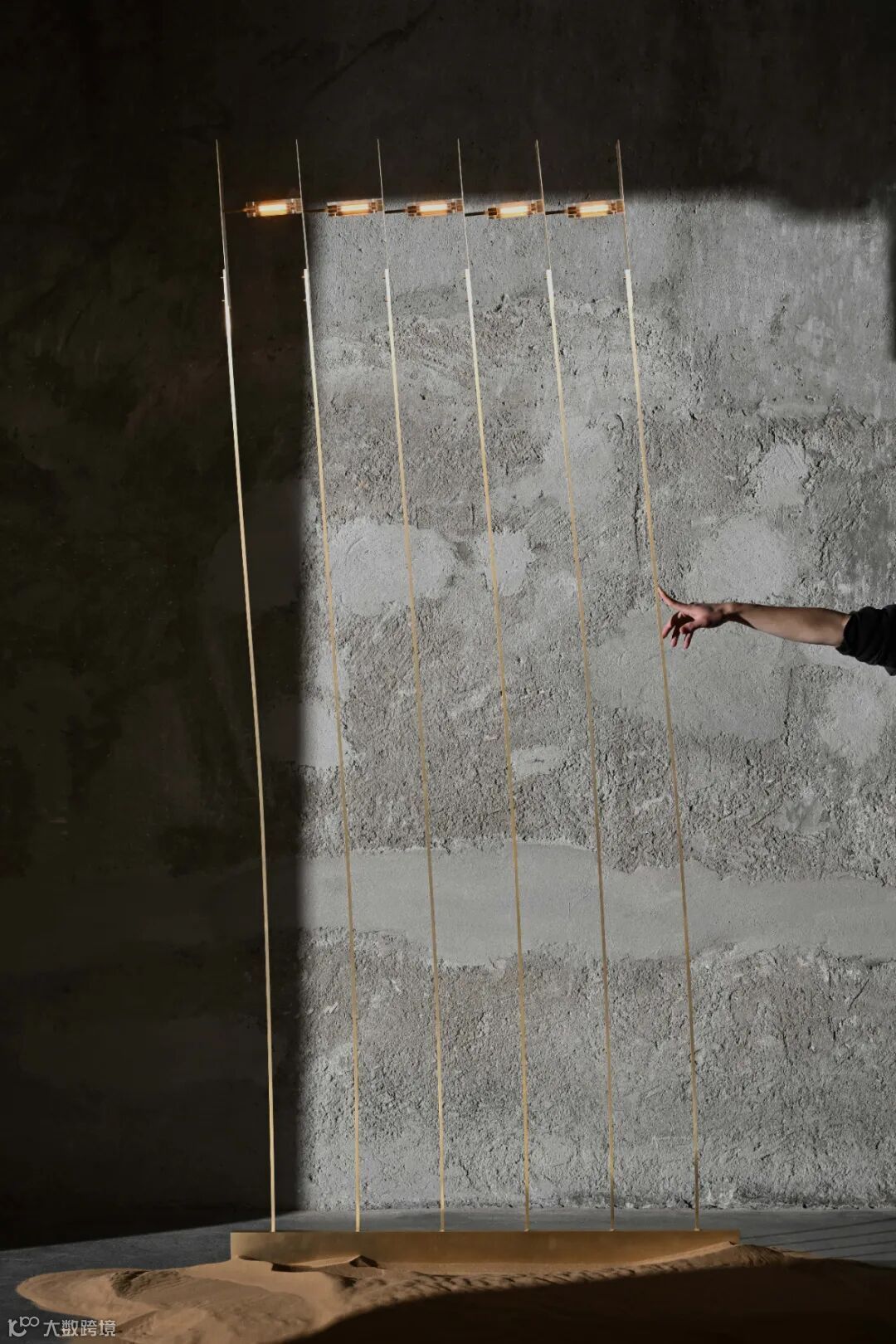
蔡烈超 Mario Tsai《火花(落地灯版本)》, 250cmx110cmx7.5cm
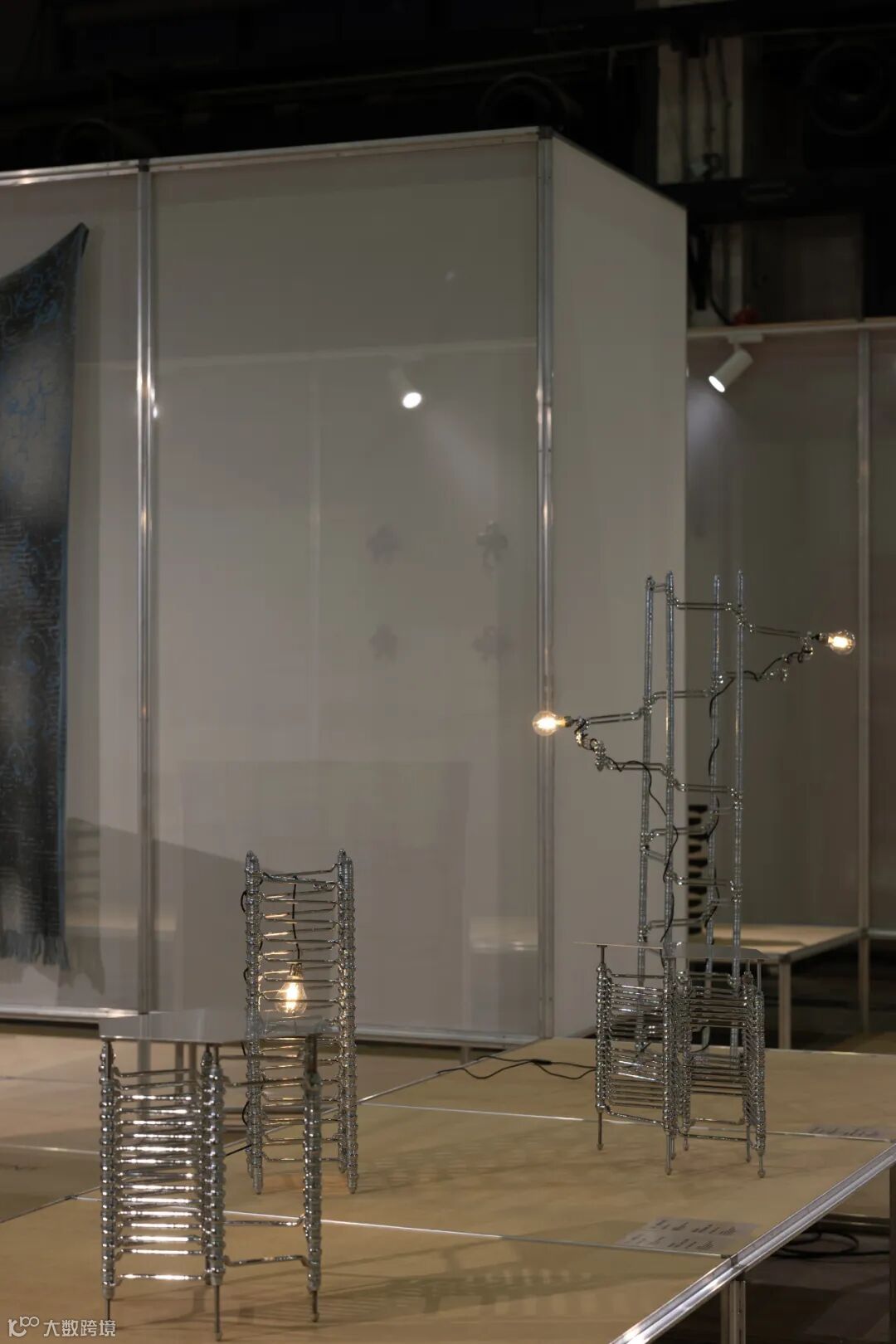
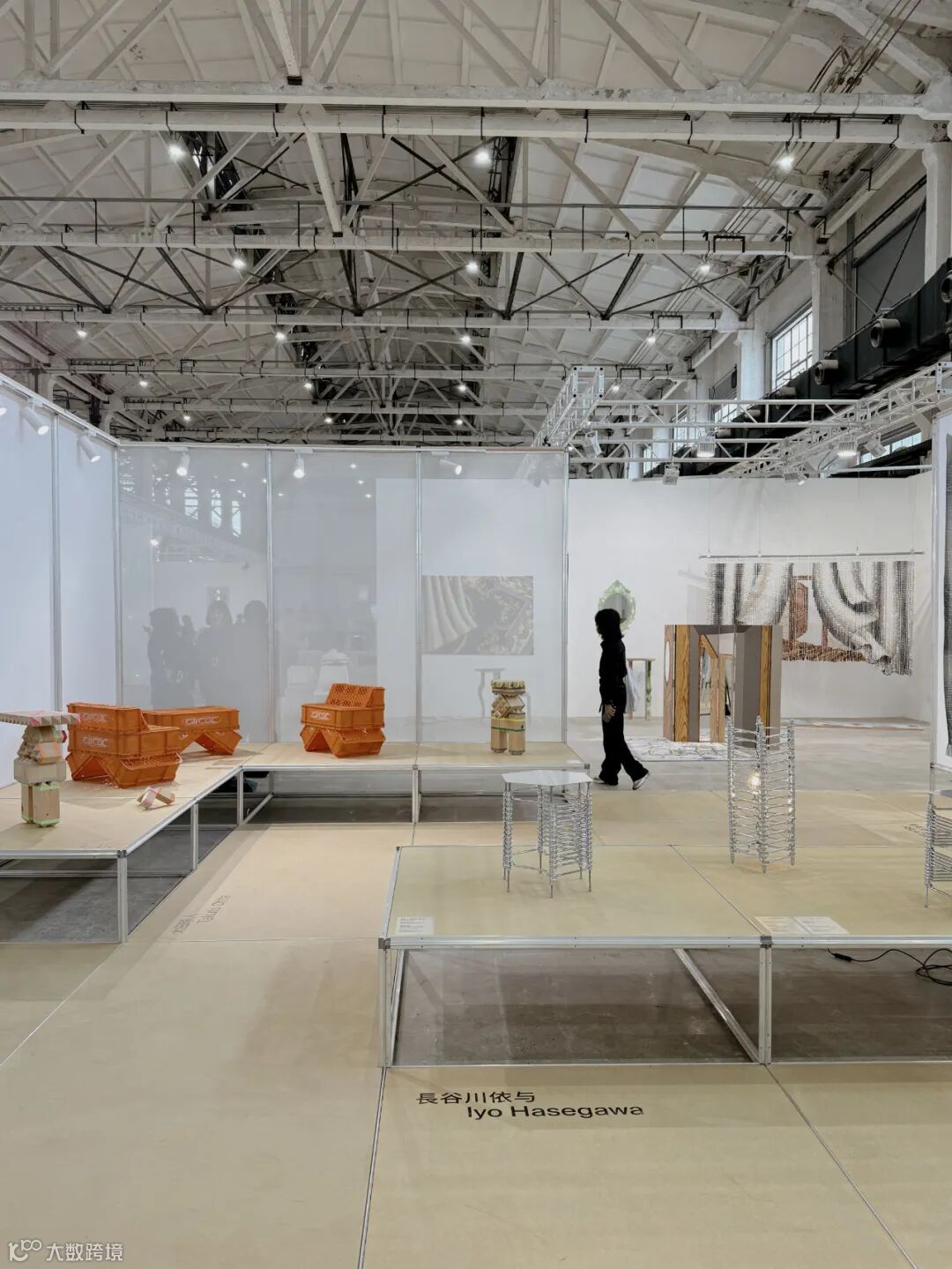
長谷川依与 Iyo Hasegawa,《扳手—立灯》 2024
在 form:a 的单元结构之中,艺术家张忠宇的作品为展览带来了另一种具象而含蓄的“材料叙事”。她的设计实践始终围绕“材料的文化性”展开,她将产品设计视为一种研究方法,通过类型学式的拆解与重组,让物件在功能之外获得另一层情感与文化的重量。此次参展作品《胡卢 Ipū》以“次等品葫芦”为切入点——那些在工业化体系中被快速淘汰、被视为无用之物的普通葫芦。张忠宇以跨文化的视角追踪其在不同文明中的命运:从中国传统中象征“吉祥”的容器,到非洲的乐器、夏威夷的仪式用具,再到今日在医疗机构作为器皿的功能性存在。在作品中,她刻意让葫芦脱离以往的人类中心叙事,将其视为一种自带生命力的天然材料,而非被重新塑形的“素材”。
Within the structure of the form:a section, Zhang Zhongyu’s work introduces a concrete yet understated “material narrative” to the exhibition. Her design practice consistently centers on the cultural dimensions of materials, approaching product design as a form of research. Through typological deconstruction and reconstruction, she allows objects to acquire emotional and cultural weight beyond their practical function. Her exhibited work “Ipū” takes the “second-grade gourd” as its point of departure—ordinary gourds that are rapidly discarded within industrial systems and deemed useless. Zhang traces their shifting roles across different cultures: from auspicious vessels in Chinese tradition, to musical instruments in parts of Africa, to ritual objects in Hawaii, and to their contemporary use as containers in medical settings. In this work, she intentionally removes the gourd from an anthropocentric narrative, treating it as a natural material with its own vitality rather than a passive “resource” to be reshaped.
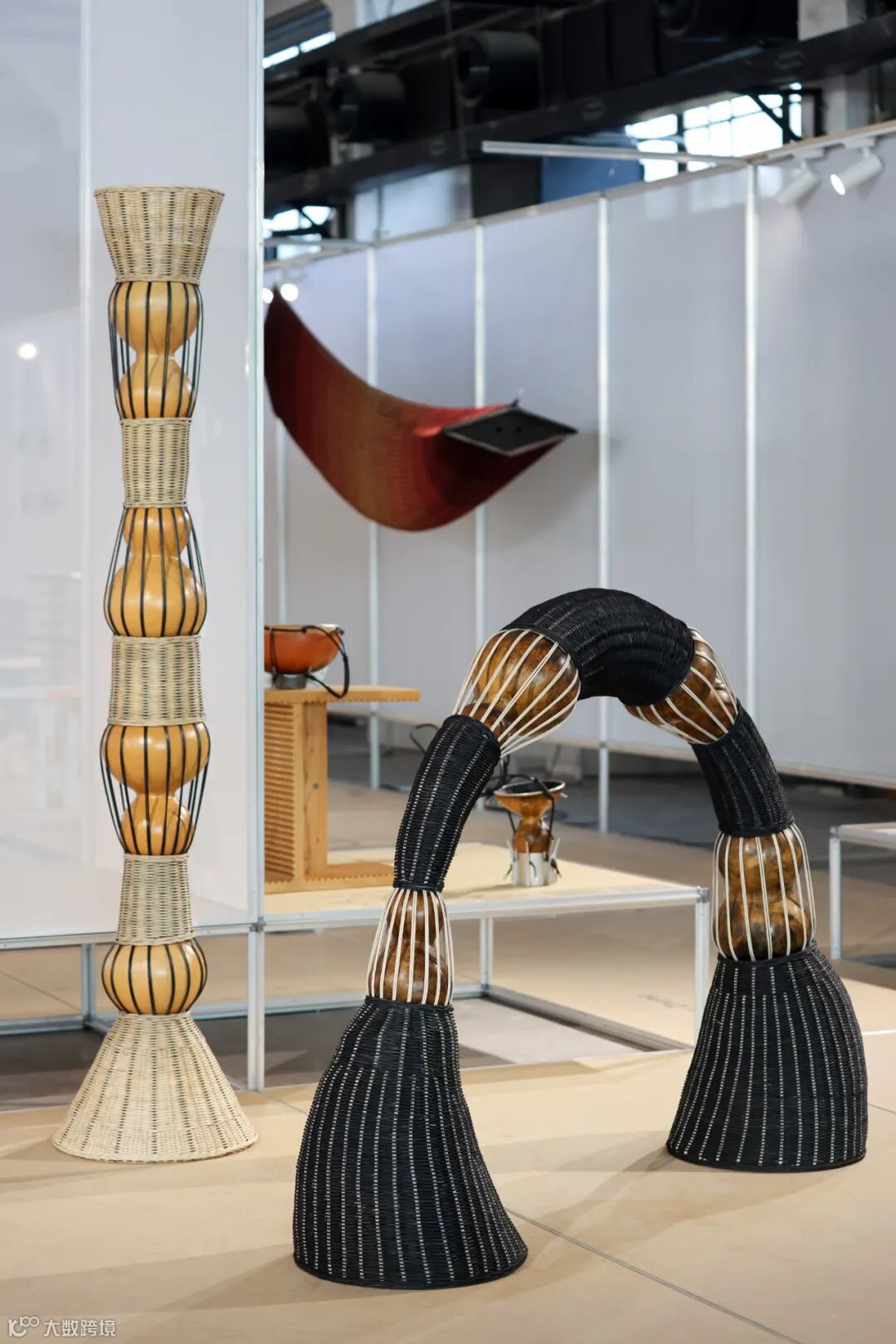
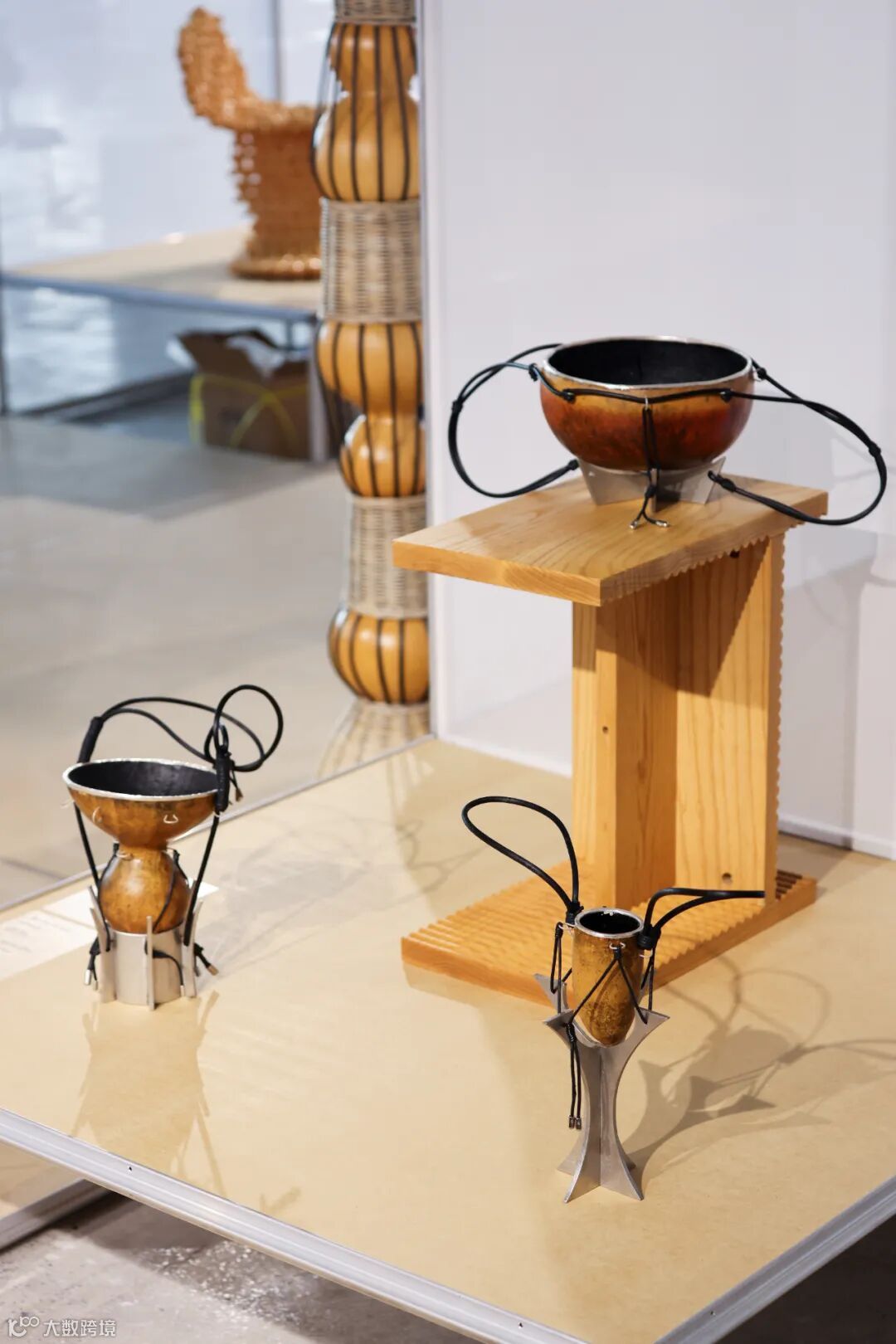
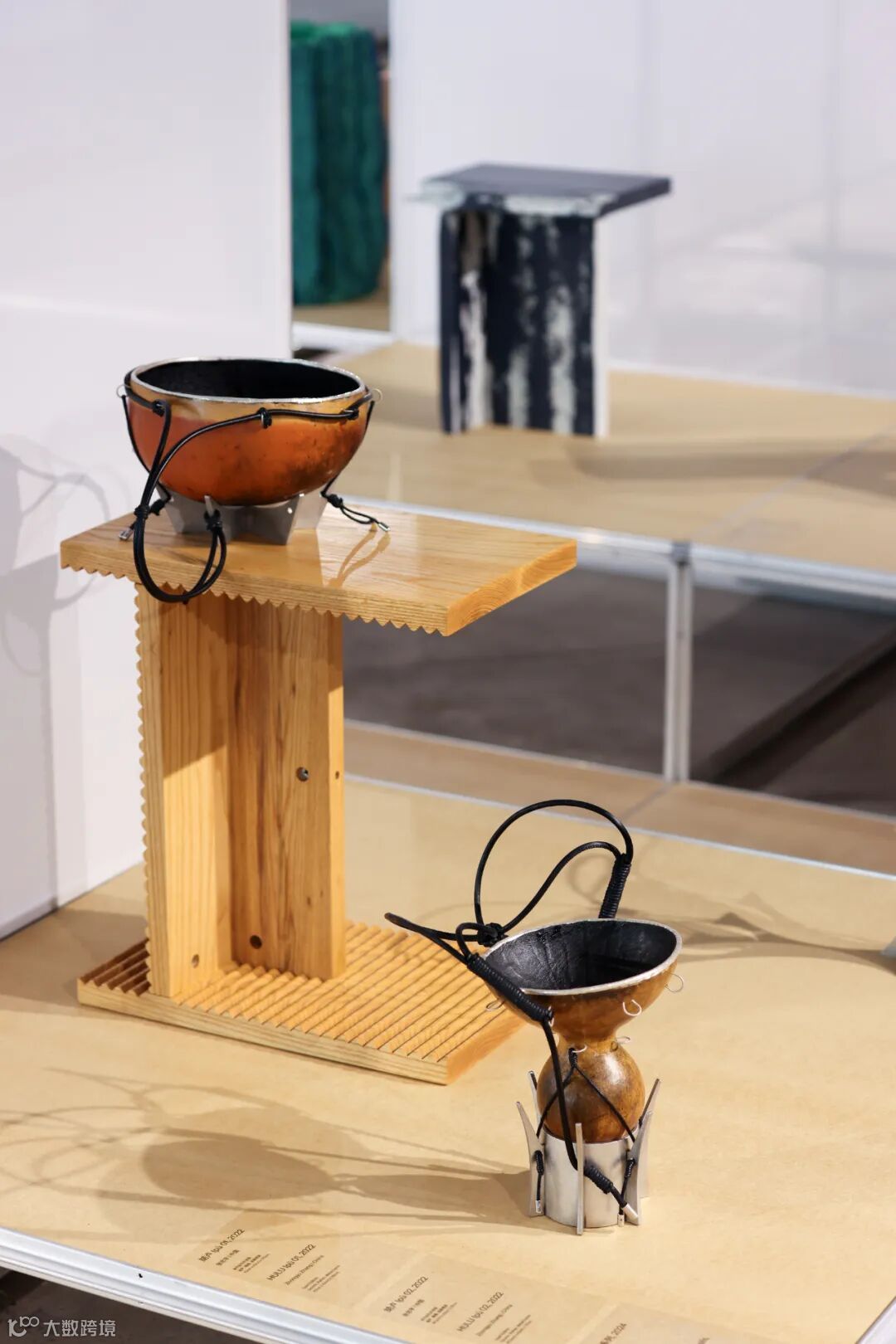
张忠宇作品《胡卢桌面系列》以及《胡卢 Ipū》
此次展出除了 Main 与 form:a 单元之外,design/delight 的 DEBUT 新声单元,主要面向成立五年内的年轻工作室,聚焦首次发布的实验性作品。在这样一个更强调“原点”与“可能性”的场域中,C2次方画廊(刘畅)的作品呈现尤为醒目。刘畅以不锈钢为核心材料,将家具从日常功能推向更具雕塑性的形体语言。《断面》《基座》《序块》等作品以结构作为叙事切入点,通过切割、折叠与构成,让材料的重量、张力与反射共同构成作品的核心。它们并不依赖装饰,而以最直接的物质关系回应空间。
Outside the Main and form:a sector, the DEBUT section of design / delight focuses on studios founded within the past five years, highlighting experimental works presented for the first time. In this space, which emphasizes “origins” and “possibilities,” the works by C2 Gallery (Liu Chang) stand out prominently. Working primarily with stainless steel, Liu Chang pushes furniture beyond everyday function toward a sculptural formal language. Pieces such as “Section,” “Pedestal,” and “Block Sequence” take structure as their point of departure; through cutting, folding, and composition, the weight, tension, and reflection of the material become the core of each work. Rather than relying on ornamentation, these pieces respond to space through the most direct relationships of matter.
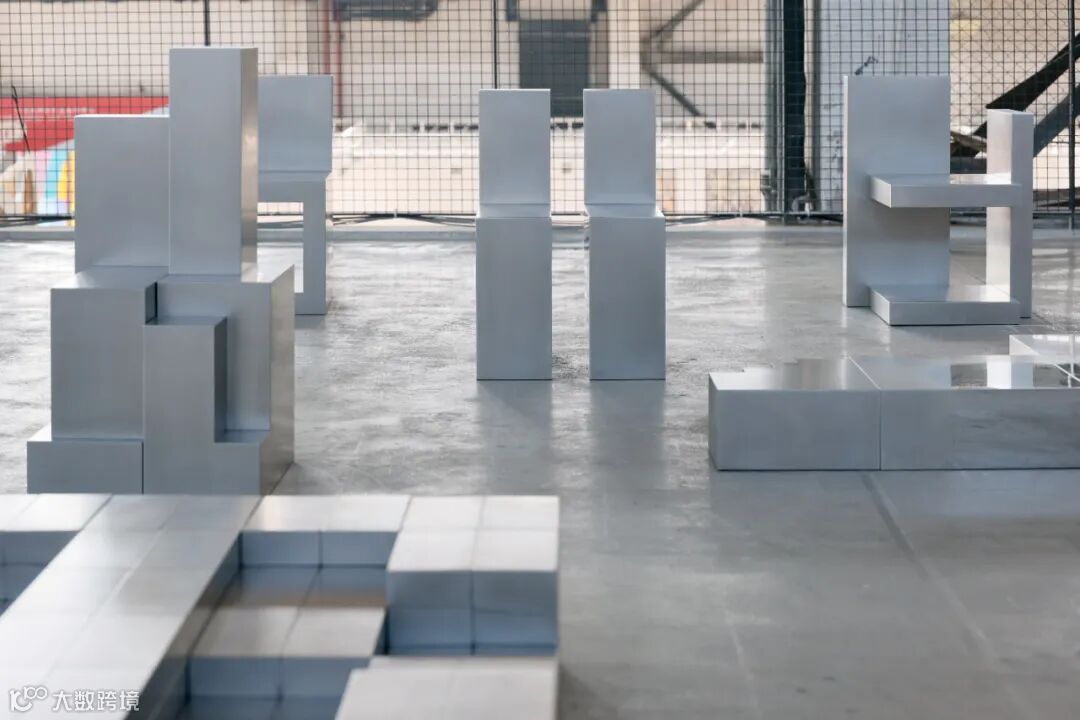
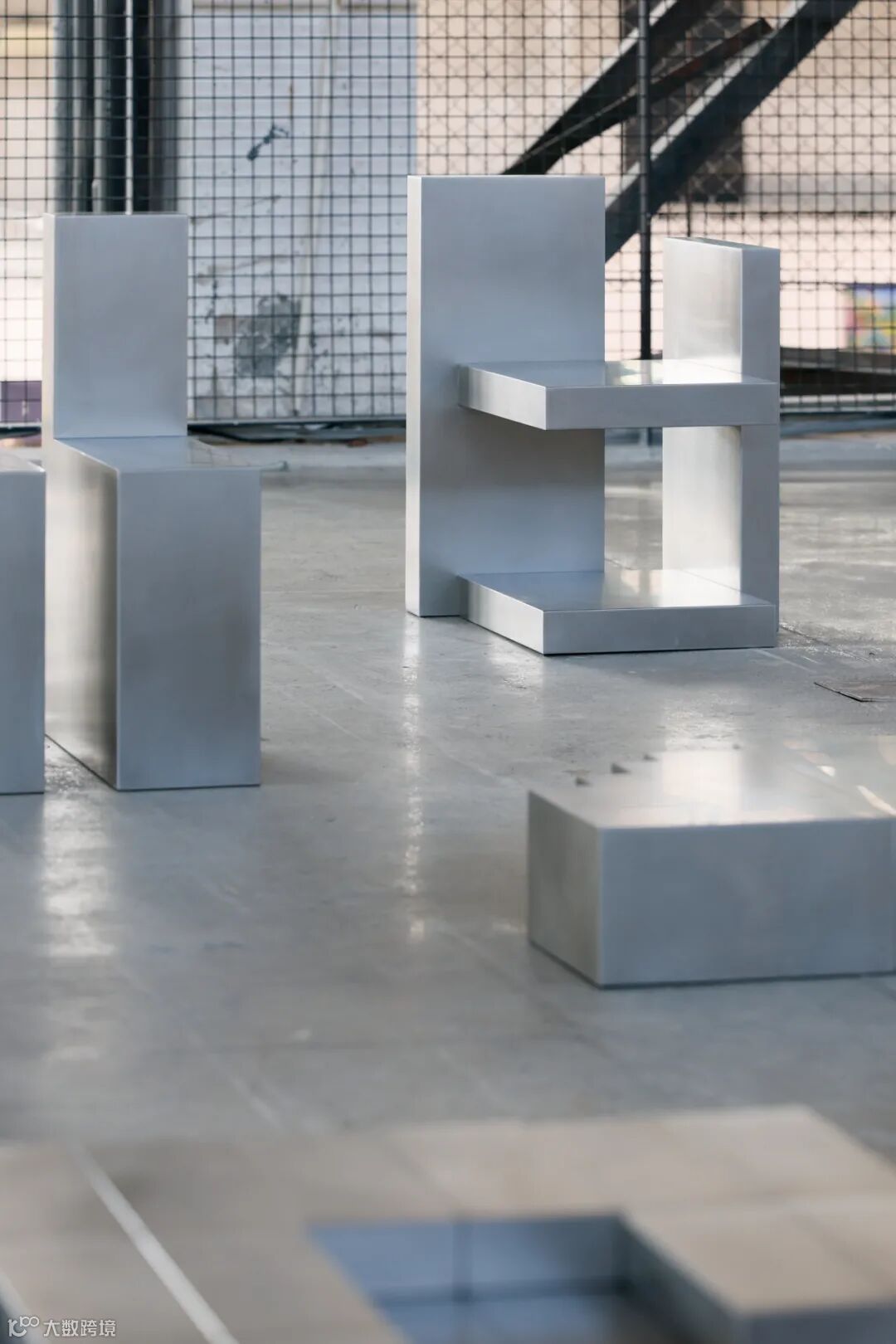
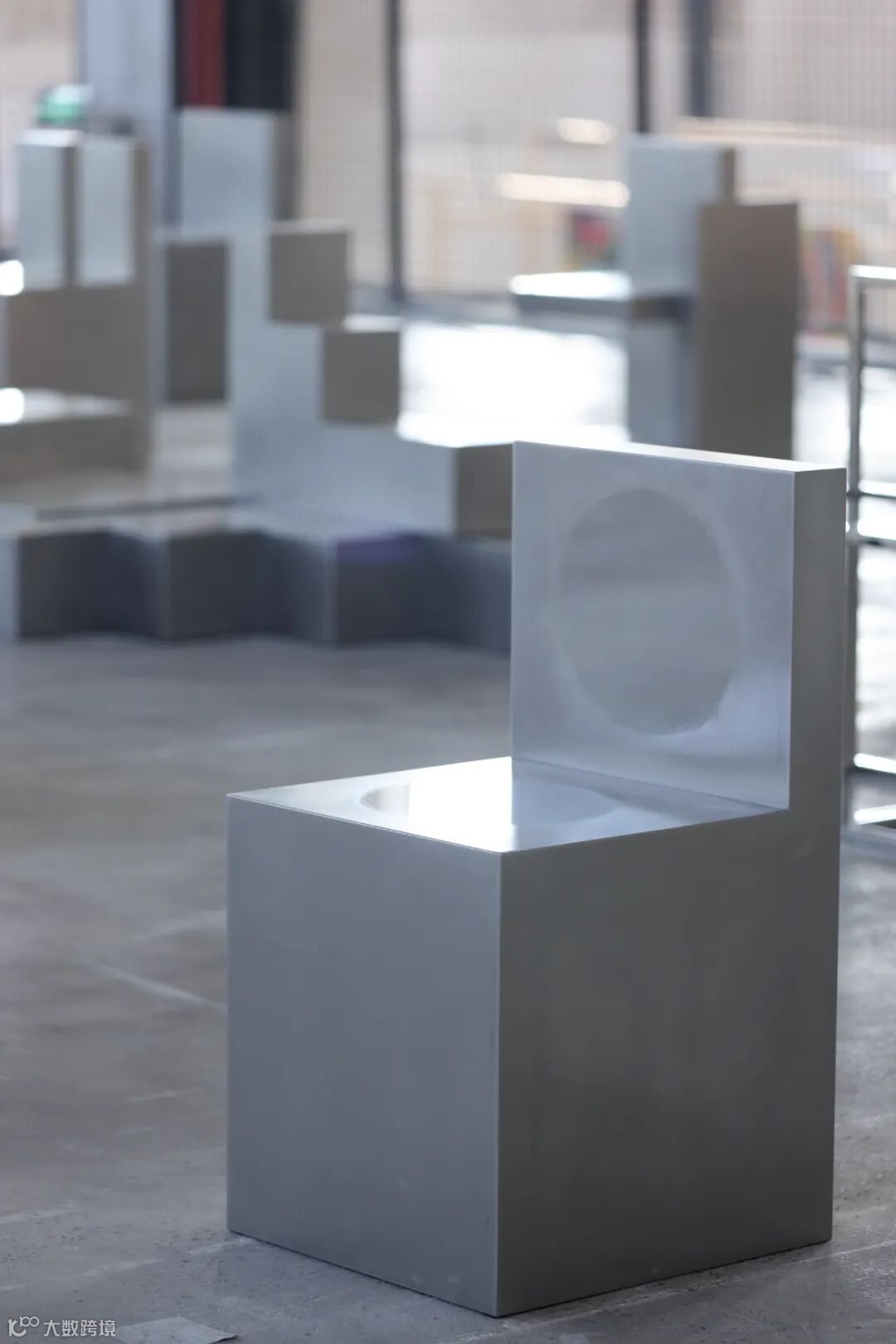
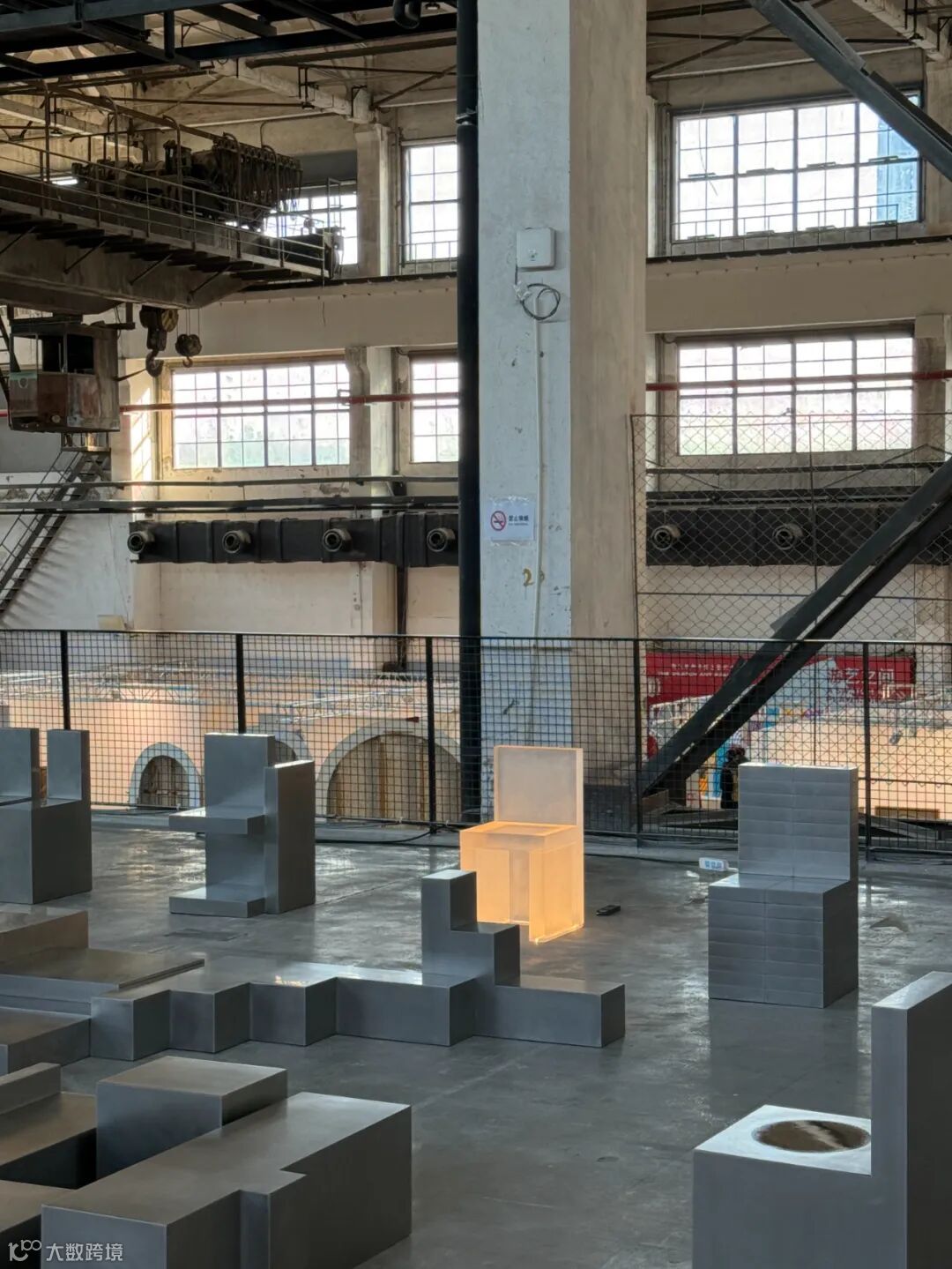
C2次方画廊,刘畅,《序块》、《断面》、《基座》, 2025
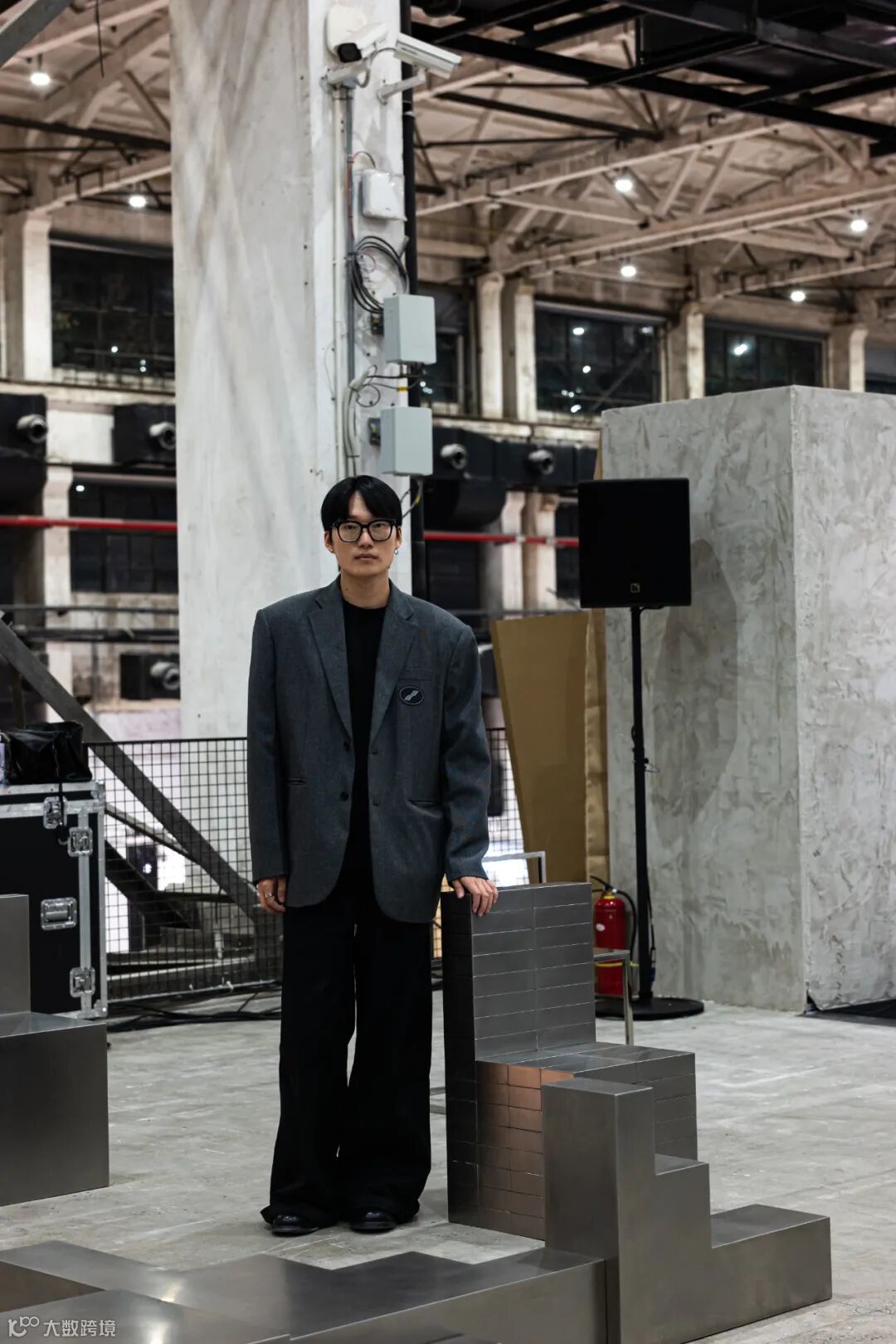
C2次方画廊主理人刘畅
从 design/delight 的当代设计场域走入 Galleries 画廊单元,观展体验的节奏随之发生变化。今年的 Galleries 画廊单元再度汇集来自22个国家、48个城市与地区的代表性画廊,构成西岸艺博会中规模最为宏观的当代艺术版图。它以全球艺术生态的聚合视角,让作品在跨地域、跨年代的语境中被重新理解。
From the contemporary design landscape of design/delight into the Galleries section, the rhythm of the viewing experience shifts noticeably. This year, the Galleries unit once again brings together leading galleries from 22 countries and 48 cities and regions, forming the most expansive contemporary art panorama within the West Bund Art & Design fair. It offers a global, aggregated perspective—allowing works to be re-read across geographies, generations, and artistic contexts.
在这一单元中,我们特别停留于数个展位——其中最具代表性的,是延续其“物性—精神性”关注的维伍德画廊 Axel Vervoordt Gallery。他们带来的12位画廊代理艺术家的精彩作品,旨在与他们的近期重要展览项目相呼应,并以材料、静默与精神性的持久张力构成一种“可停留的观看方式”,在整个 Galleries 单元中形成了独特的气质。其中近期加入画廊代理阵容的艺术家遗产林金(Kim Lim)正于UCCA沙丘举办个展《枕水漱石》;以及香港艺术家林岚将以全新陶瓷系列参展上海双年展。
In this section, we found ourselves lingering at several booths—most notably at Axel Vervoordt Gallery, which continues its long-standing focus on the dialogue between materiality and spirituality. Presenting works by twelve represented artists, the gallery’s selection echoes their recent major exhibitions worldwide, and cultivates a mode of viewing shaped by material presence, stillness, and a persistent spiritual tension—qualities that give the booth a distinct sensibility within the entire Galleries section. Among them, the estate of Kim Lim, newly represented by the gallery, is currently featured in the solo exhibition “Touching the River Stone” at UCCA Dune; while Hong Kong artist Jaffa Lam is presenting a new ceramic series at the Shanghai Biennale.
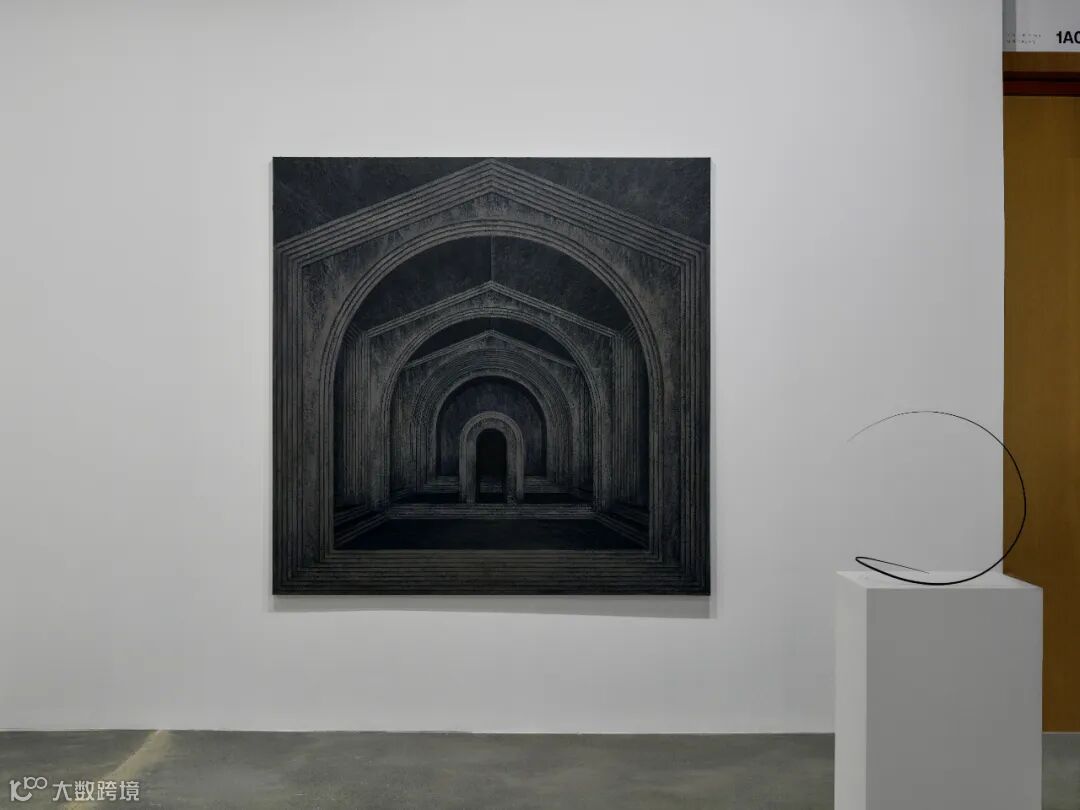
Renato Nicolodi,《暗府邸 I》,2025,布面丙烯,203x203厘米
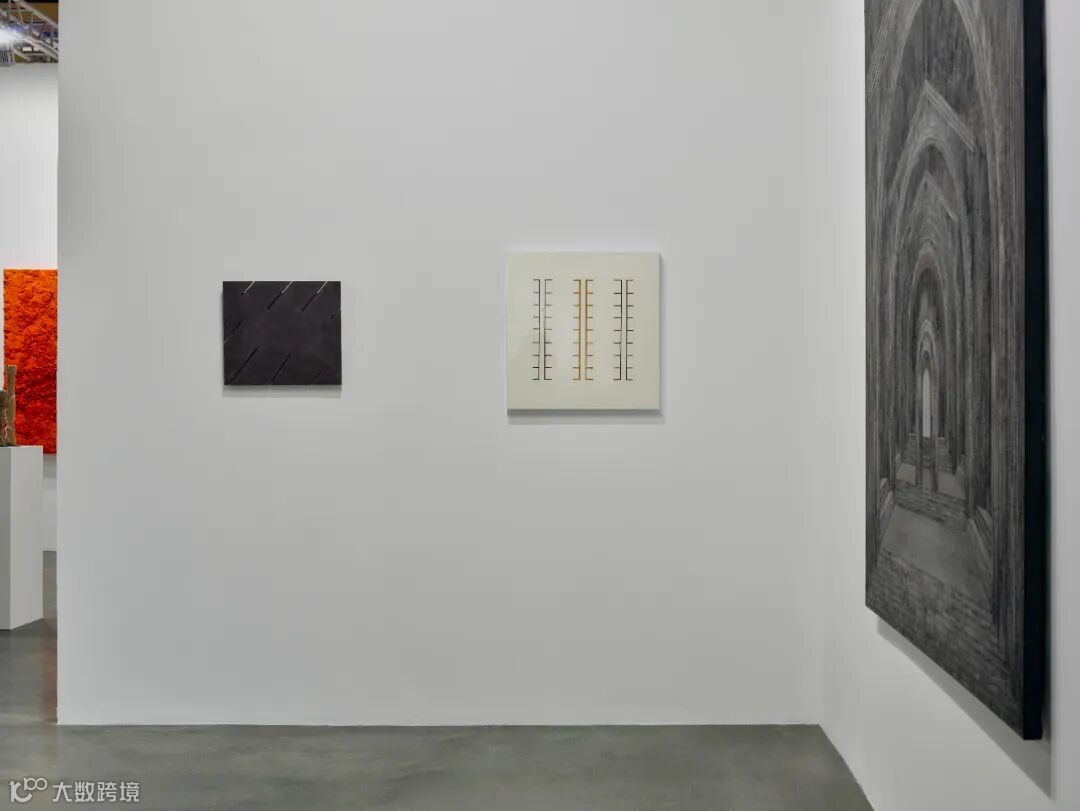 Kim Lim,《切分节奏2》,1995,板岩,40.5x44.5x1.5厘米 (左);《梯子系列1》,1972,蚀刻版画,59x 61.5厘米(右)

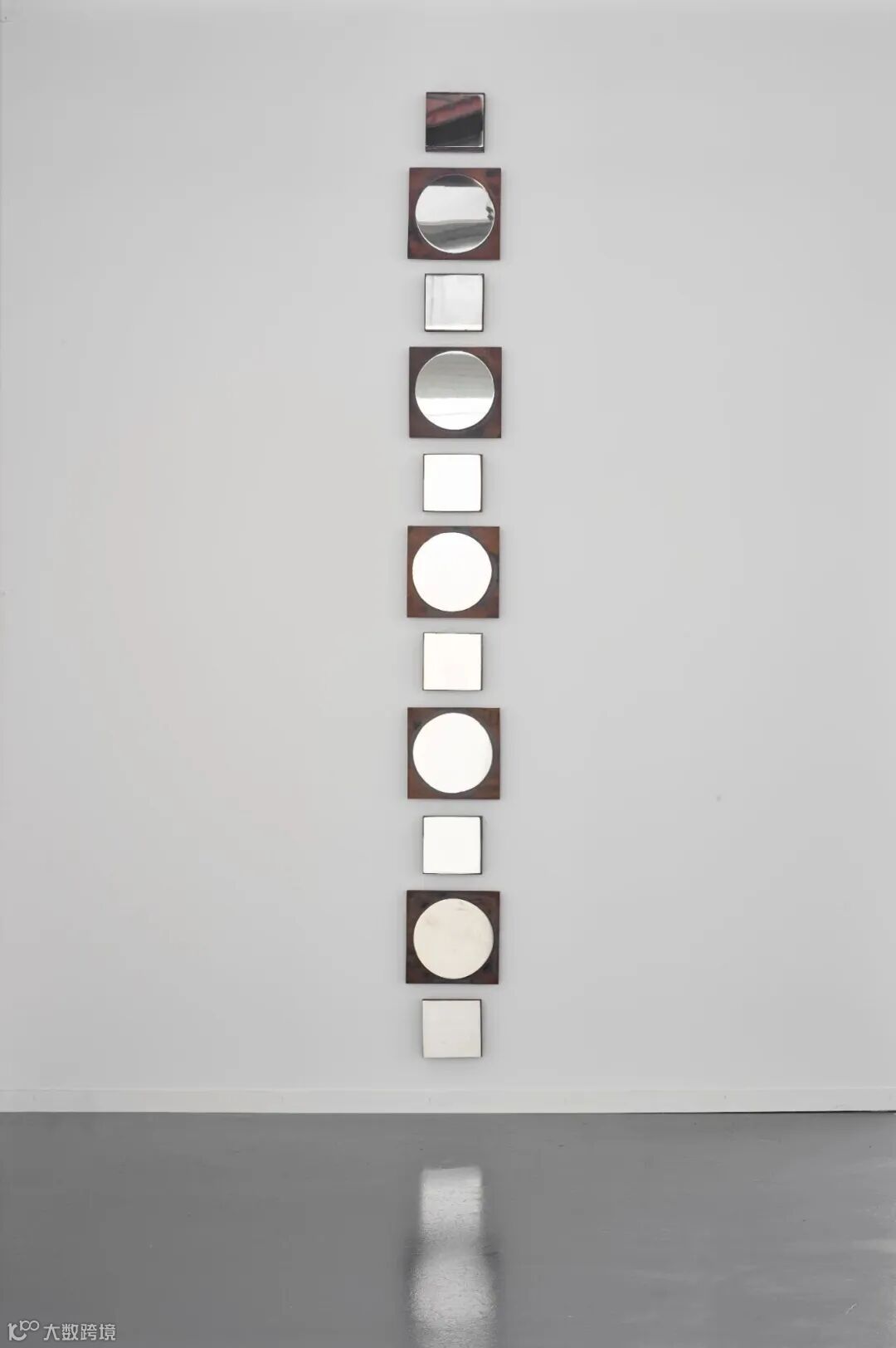
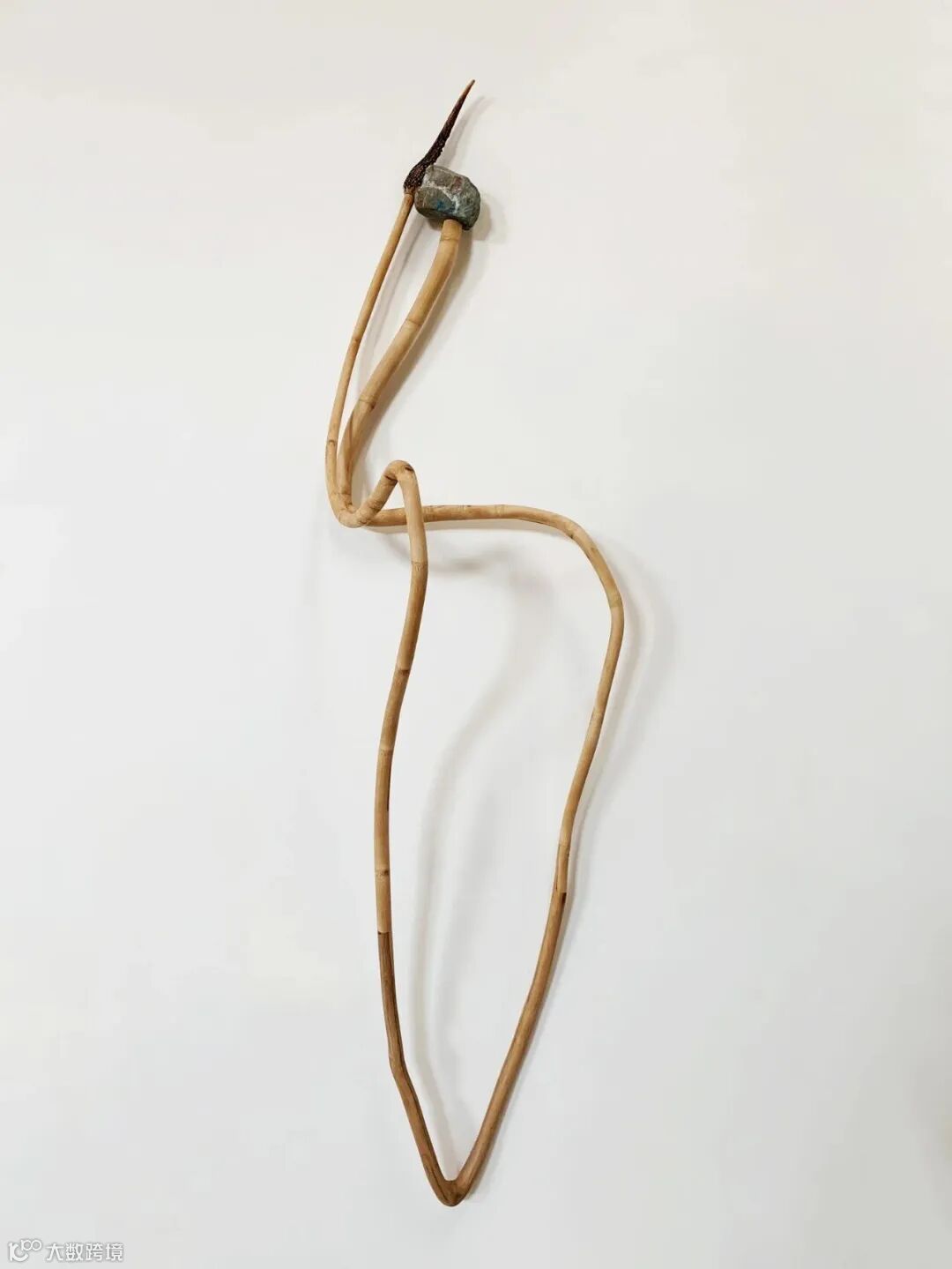
对于印际而言,今年参与西岸艺术与设计博览会 design/delight:Main 单元,不单是做了一场展览。更重要的是,我们得以在同一个现场中,近距离观察艺术与设计如何在当代语境下不断靠近——材料被重新定义,工艺拥有了叙事能力,设计转向情感与文化,而艺术也愈发关注使用、结构与日常的尺度。
For Yinjispace, participating in the design/delight: Main unit of this year’s West Bund Art & Design Fair was not merely about presenting an exhibition. More importantly, it allowed us to observe, within the same space and at close range, how art and design are continually converging in the contemporary context—materials are being reinterpreted, craft is acquiring narrative value, design is shifting toward emotion and culture, and art is increasingly engaging with use, structure, and the scales of everyday life.
无论是我们与 Ark Journal 共同呈现的十四位艺术家,还是来自各单元我们特别停留的展位,都透露出一种正在发生的趋势:艺术与设计不再以学科划分为边界,而是在同一语境中彼此渗透、共享语言、共同回应当下的生活方式。我们也会继续把这次的在场体验,化为更长期的叙述与观察——关注那些介于艺术与设计之间、材料背后的文化线索、技艺与时间的深度,以及创作者在不同文化语境中提出的新的表达方式。展览已经落幕,但问题与思考仍在延伸。
Whether in the fourteen artists we presented together with Ark Journal, or in the booths we lingered at across other units, we sensed a shared direction taking shape: art and design are no longer separated by disciplinary boundaries. Instead, they are permeating one another, sharing languages, and jointly responding to the ways we live today.We will continue to turn this experience of being on site into a longer-term line of inquiry—paying attention to the in-between spaces where art and design meet, to the cultural traces embedded in materials, to the depth of craft and time, and to the new forms of expression emerging from different cultural contexts. The fair has ended, but the questions and reflections continue to unfold.