从北京的喧闹,回归固安的宁静,一个三口之家完成了一次向往已久的“逆向迁徙”。在北京都市的奔忙节奏中奔走多年,快节奏高压力的城市生活让他们更加向往自由和远方,他们决定为自己寻找一处能够“慢下来”的生活锚点。
After years of bustling in the hustle and bustle of Beijing, a family of three returned to the tranquility of Gu'an, Hebei Province, completing a long-awaited "reverse migration". The fast-paced and high-pressure urban life in Beijing made them yearn for freedom and the distant. They decided to find a place where they could "slow down" and anchor their lives.
最终将目光投向了河北廊坊的固安,既紧邻北京,享有“京南一小时通勤圈”的便利,又保留着乡野自然的静谧。这里是女主人从小生活居住的地方,他们希望在这片宅基地上,打造一个真正“可呼吸、有记忆、能生长”的家。这个家,不仅是偶尔逃离都市的疗愈空间,也是孩子可以亲近自然、未来老人能够安享晚年的长久居所。
Eventually, they set their sights on Gu'an, which is close to Beijing and enjoys the convenience of the "one-hour commuting circle in southern Beijing", while still retaining the serenity of the countryside. This is where the female owner grew up, and they hope to build a home on this homestead that is truly "breathable, memorable, and capable of growth". This home is not only a place to escape the city for occasional healing but also a long-term residence where children can get close to nature and the elderly can enjoy their twilight years in the future.
原始房屋现状
Current Condition of the Original House
老宅位于固安县的彭村乡,原有的房屋因岁月的侵蚀,年久失修设施陈旧不堪,无法满足现代生活的基本需求;老房子的结构和布局十分不合理,存在着安全隐患;房屋内缺乏水电、暖气等现代设施,生活极为不便,需要通过极大规模的改造去提升在此生活的居住条件。对于习惯了现代化城市生活的家庭来说,目前的房屋状况距离梦想中的“诗和远方”有着相当大的落差,热爱美食烹饪的妈妈需要超大厨房施展厨艺,热爱运动的爸爸能够在户外健身锻炼,喜欢小动物的孩子可以拥有与小动物玩耍的地方......
The old house is located in Pengcun Township, Gua'an County. The original buildings, eroded by time and long neglected, are in a dilapidated state with outdated facilities, unable to meet the basic needs of modern life. The structure and layout of the old house are highly unreasonable, posing safety hazards. The house lacks modern facilities such as water, electricity, and heating, making life extremely inconvenient. A large-scale renovation is needed to improve the living conditions here. For families accustomed to modern urban life, the current state of the house is far from their dream of "poetry and distant places". The mother who loves cooking needs a super-large kitchen to display her culinary skills. The father who loves sports needs a place to exercise outdoors. The child who likes small animals needs a place to play with them...
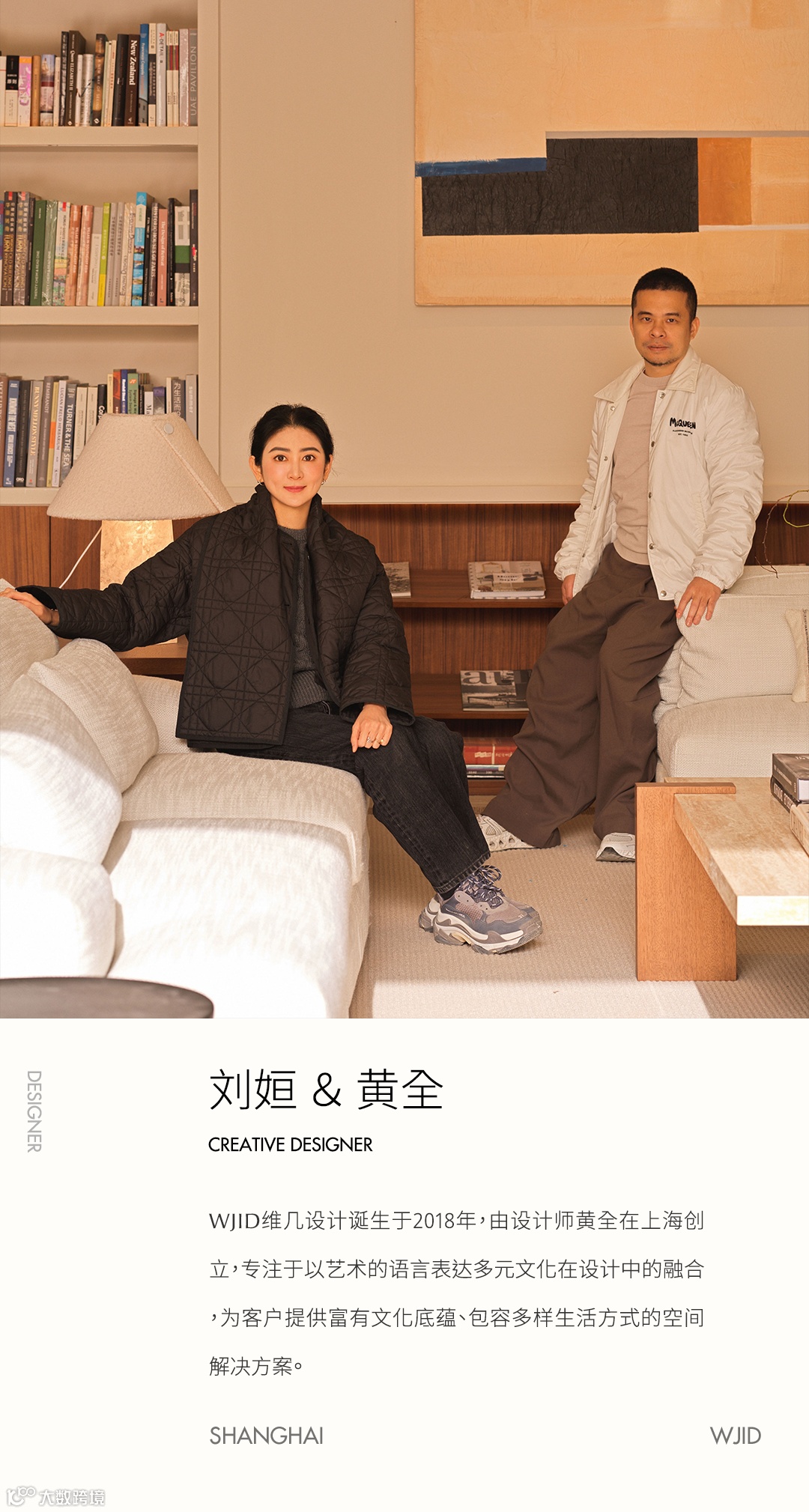
受到节目组和业主的委托,设计师黄全和刘姮,从整栋房屋的建筑开始着手,以“在地性 + 轻自然 ” 融合的设计理念,重新规划布局。设计围绕“在地共生”展开,既要满足三口之家的日常,也要为未来老人同住预留可能。空间里既有全家共享、相聚的客厅与庭院,也为父母预留工作阅读的书房、孩子玩耍的动物角等 “独立领地”,空间预留可生长的弹性,让每个家庭成员都能在空间中找到归属感。
Entrusted by the program team and the owner, designers Huang Quan and Liu Heng started from the entire building and re-planned the layout with the design concept of "locality + light nature". The design is centered around "local symbiosis", aiming to meet the daily needs of a family of three while also reserving the possibility of accommodating the elderly in the future. The space includes shared areas such as the living room and courtyard for the whole family to gather, as well as "independent domains" reserved for the parents, such as a study for work and reading, and an animal corner for the children to play. The space is designed with flexibility for growth, allowing each family member to find a sense of belonging within it.
在乡土与城市间生长的家
A Home Growing Between the Countryside and the City
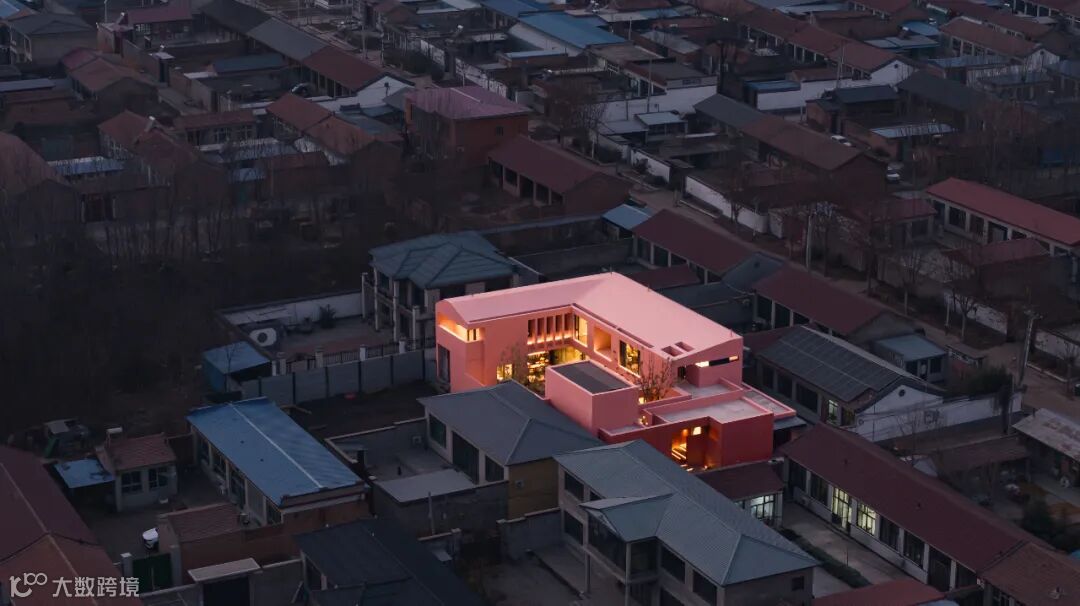
改造后的房屋分为上下两层,设计摒弃了城市别墅的复制模式,以简洁硬朗的手法重塑建筑形态,使其扎根于固安的地域文化之中。为适应北方冬季多风雪的气候,保留传统坡屋顶的实用功能,采用不对称坡屋顶结合中心水平构造带的设计。倾斜的屋顶高效排水排雪,不对等的坡面打破视觉平衡,形成动态而富有张力的建筑体量,凸显个性与现代感。整座建筑以水平舒展的姿态融入乡野,如同从土地自然生长,消弭了现代建筑与自然的隔阂。
The renovated house is divided into two floors. The design abandons the replication model of urban villas and reshapes the architectural form with a simple and bold approach, making it rooted in the local culture of Gu'an. To adapt to the climate of heavy snow and wind in northern winters, the practical function of the traditional pitched roof is retained. The design features an asymmetrical pitched roof combined with a central horizontal construction band. The inclined roof efficiently drains water and snow, and the unequal slopes break the visual balance, forming a dynamic and tension-filled architectural volume that highlights individuality and modernity. The entire building integrates into the countryside with a horizontal and expansive posture, as if naturally growing from the land, eliminating the gap between modern architecture and nature.
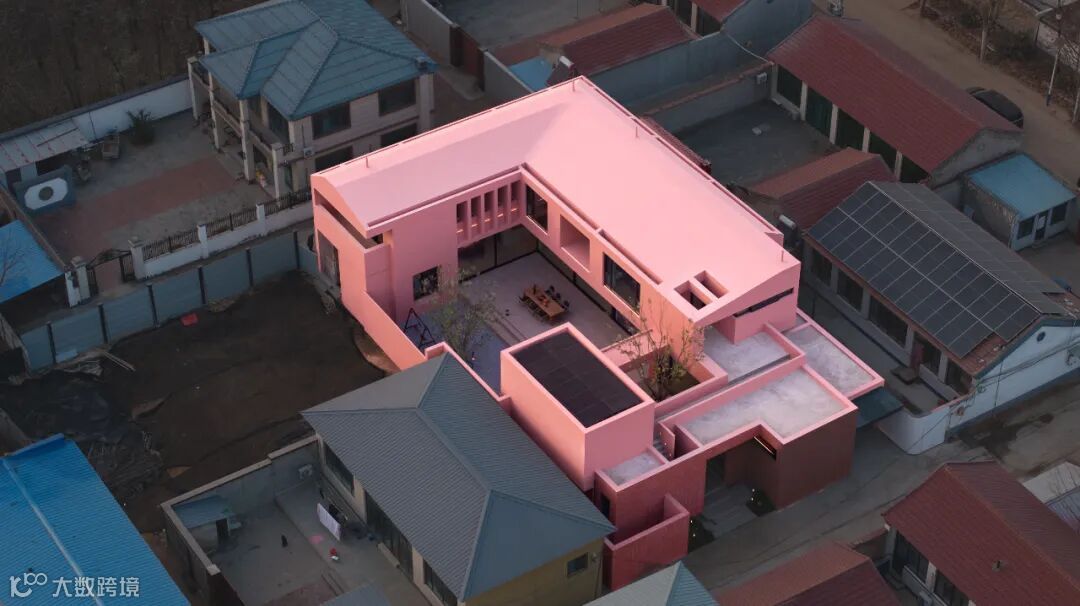
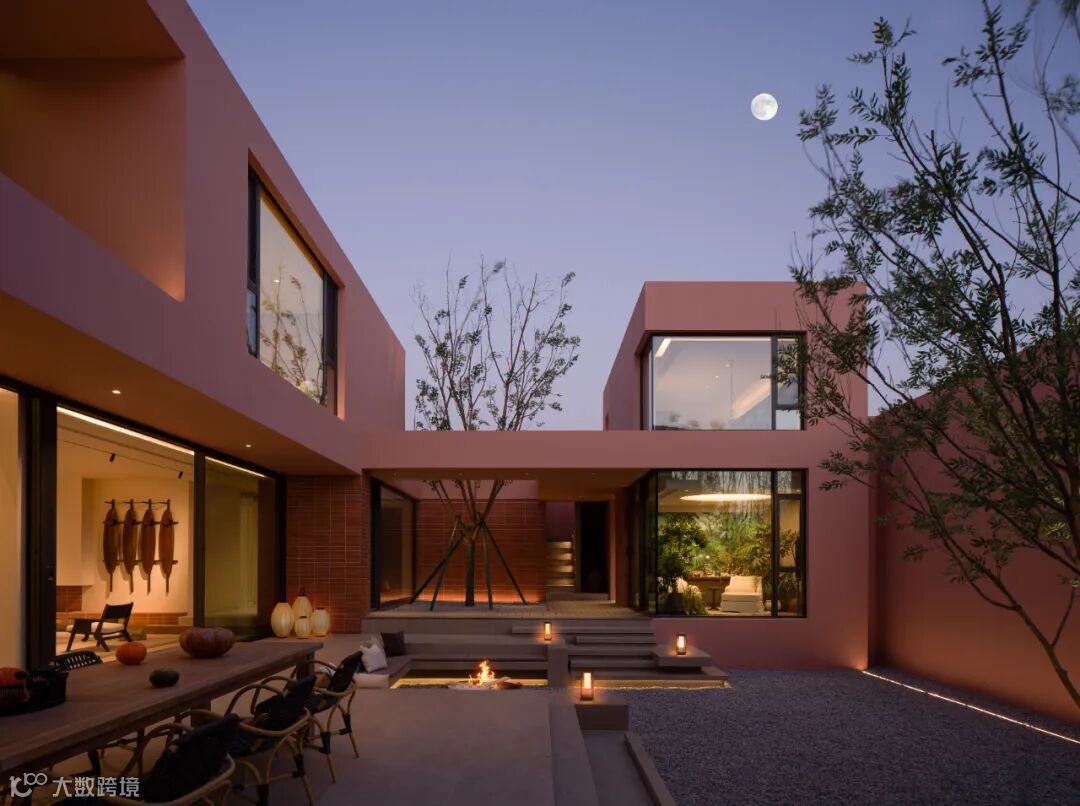
空间布局上,将建筑拆解为三个紧密关联的模块:承载卧室与餐客厅的主居住模块、作为枢纽的庭院模块,以及容纳车库与储藏的辅助模块。三模块围绕庭院形成环绕格局,实现功能分区的同时,强化家庭互动——孩子在庭院玩耍的身影可被客厅内的家人轻易捕捉,家人围坐闲谈时,风与草木香气自然渗入。
In terms of spatial layout, the building is decomposed into three closely related modules: the main living module that houses bedrooms and the living and dining room, the courtyard module that serves as a hub, and the auxiliary module that accommodates the garage and storage. The three modules form a surrounding layout around the courtyard, achieving functional zoning while enhancing family interaction - the figures of children playing in the courtyard can be easily captured by family members in the living room, and when family members sit around chatting, the wind and the fragrance of grass and trees naturally seep in.
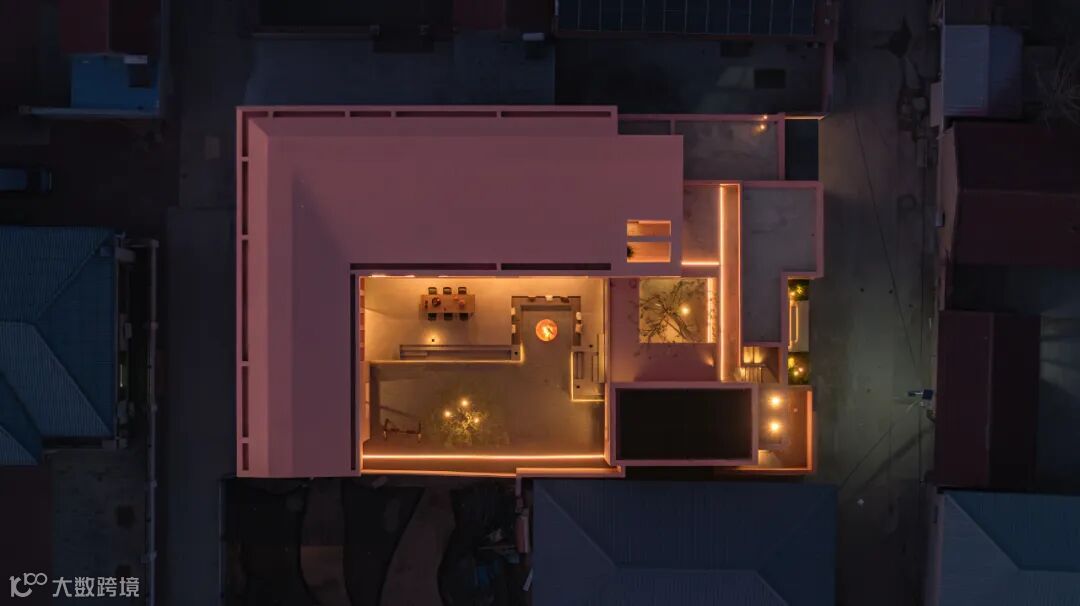
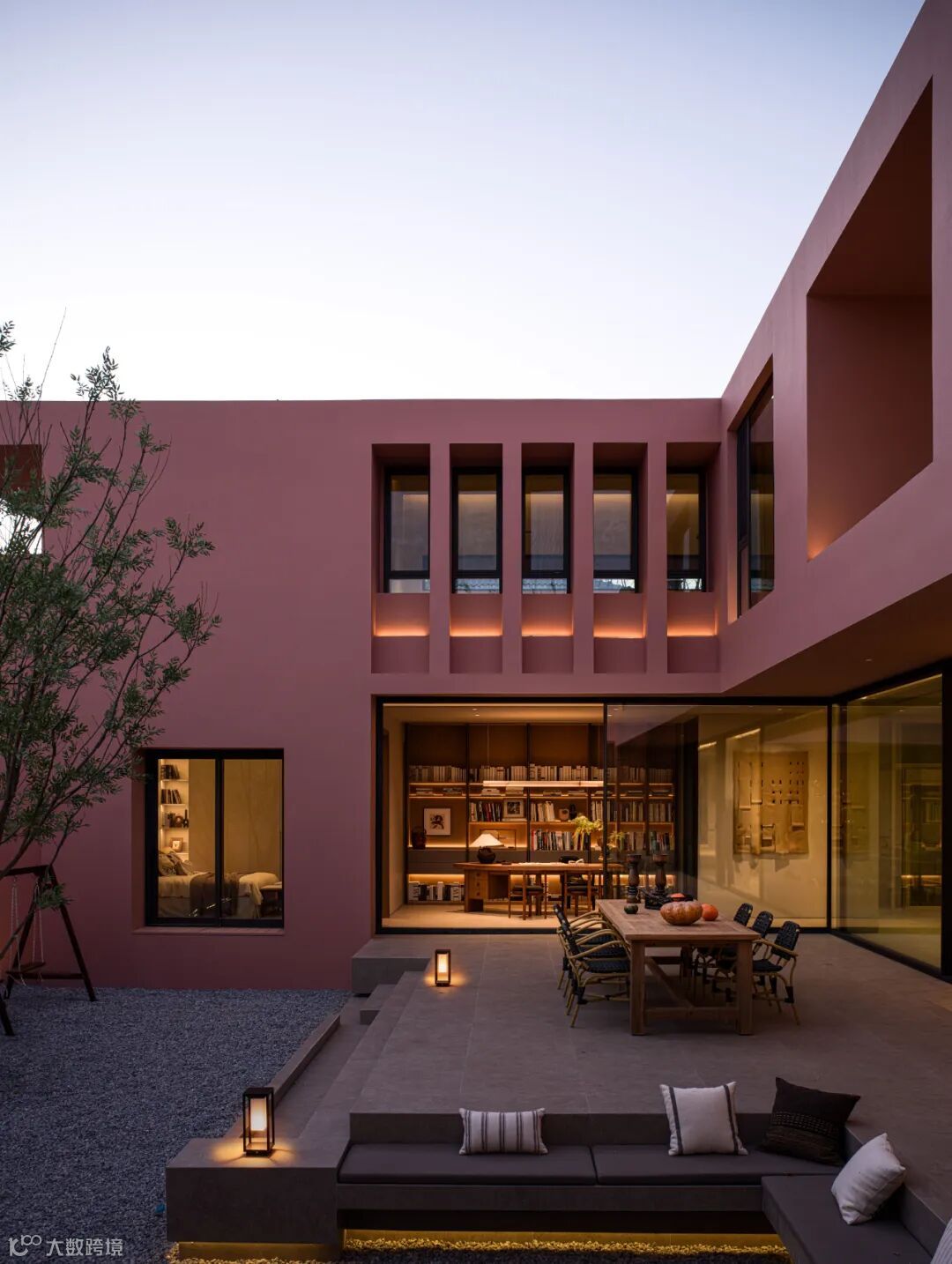
这一布局是对传统“合院”的当代演绎:以半开放格局替代封闭院落,既保留围合带来的安全感,又适应北方干燥多风的气候,促进室内外通风采光。一层以实墙围合保障私密,墙上的窗洞如取景框,将庭院绿意与光影筛入室内,实现风景的自然渗透。
This layout is a contemporary interpretation of the traditional "courtyard house": replacing the closed courtyard with a semi-open design, it retains the sense of security brought by enclosure while adapting to the dry and windy climate of the north, promoting ventilation and lighting between the interior and exterior. The first floor is enclosed by solid walls to ensure privacy, with window openings on the walls functioning like picture frames, filtering the greenery and light of the courtyard into the interior, allowing the natural penetration of the scenery.
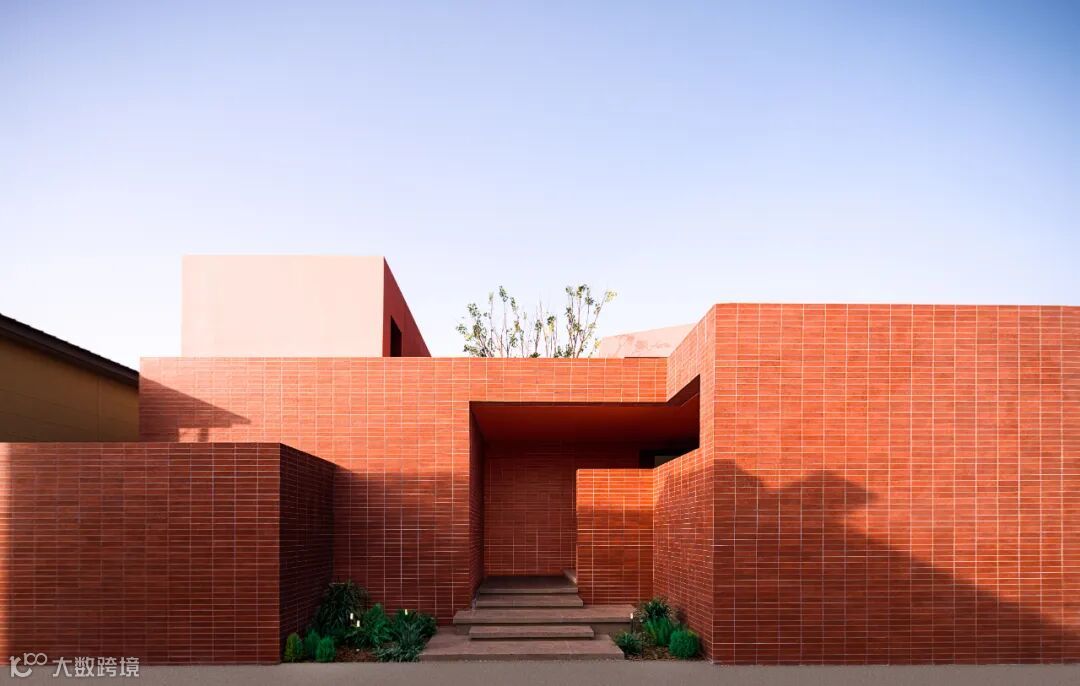
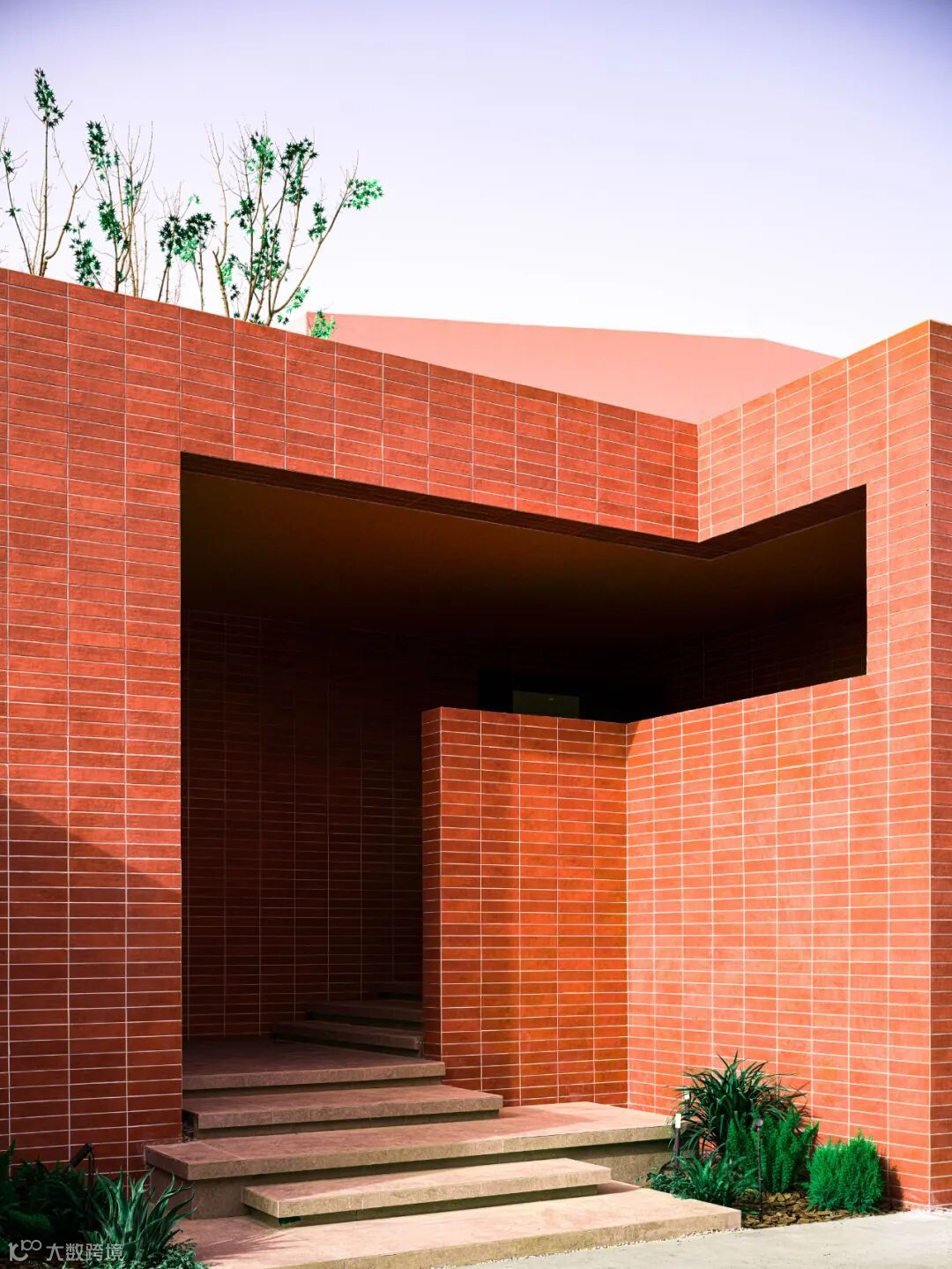
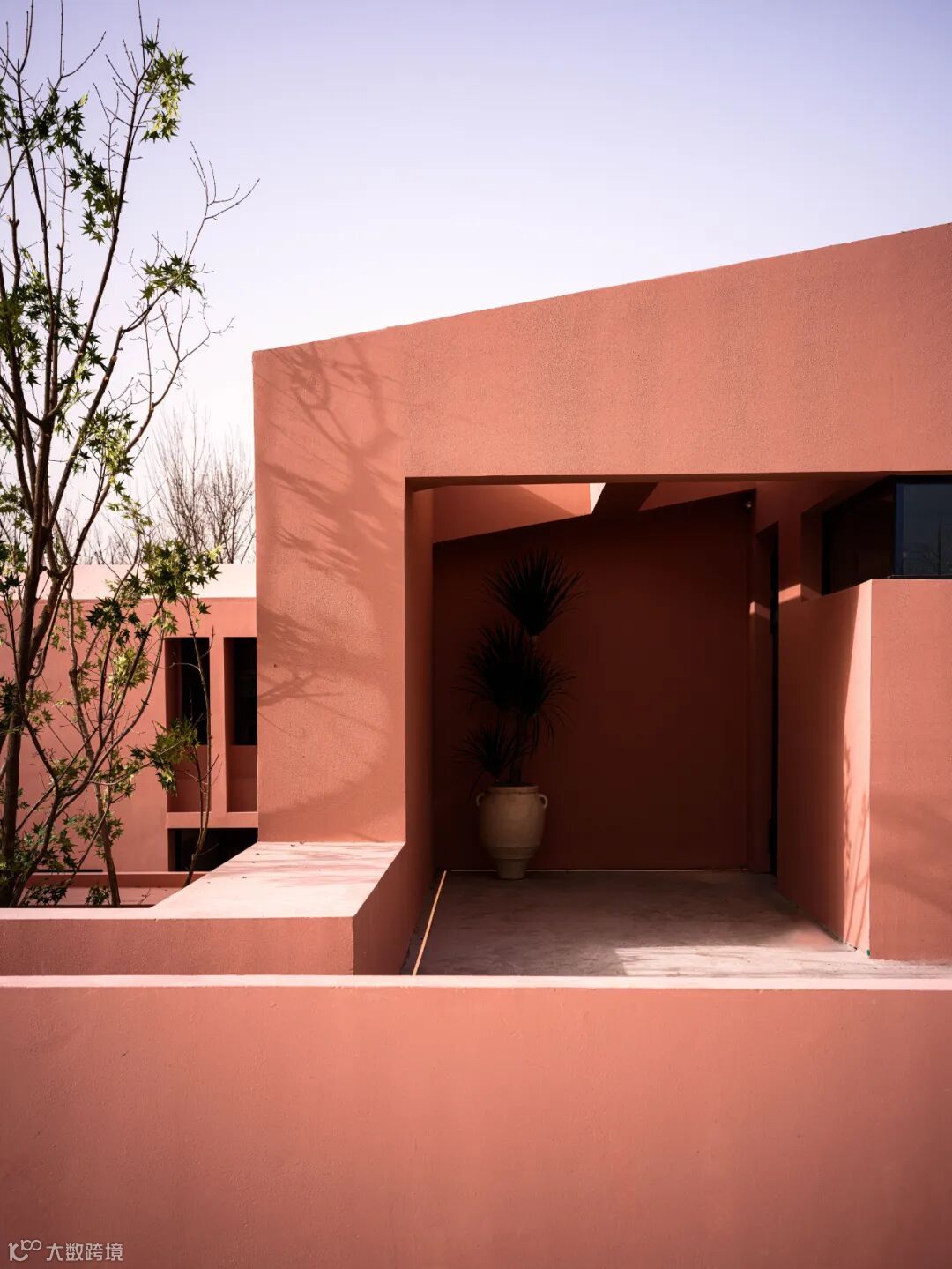
入口处的内退设计更是暗藏巧思,形成专属过渡空间。这一设计如同家递出的第一份温暖问候,消解了入户的仓促感,让归家的仪式感在踏进门之前便已悄然酝酿。从形态到布局,建筑完成了在地性与现代性的共生,实现了功能需求与美学表达的统一。
The recessed design at the entrance is ingeniously conceived, creating a dedicated transitional space. This design is like the first warm greeting from home, eliminating the sense of haste when entering and allowing the sense of ceremony to quietly build up even before stepping through the door. From form to layout, the building achieves a symbiosis of local characteristics and modernity, unifying functional requirements with aesthetic expression.
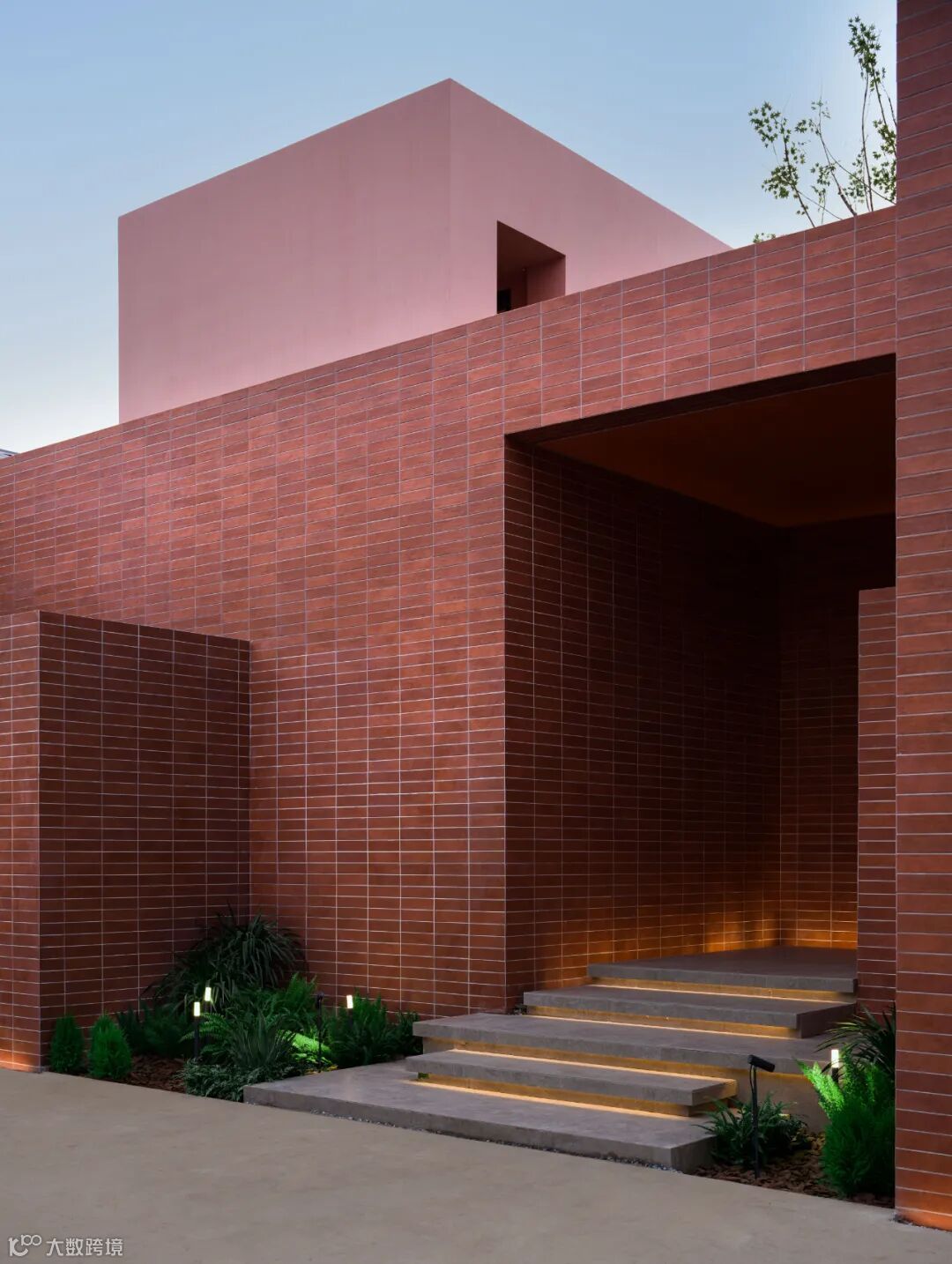
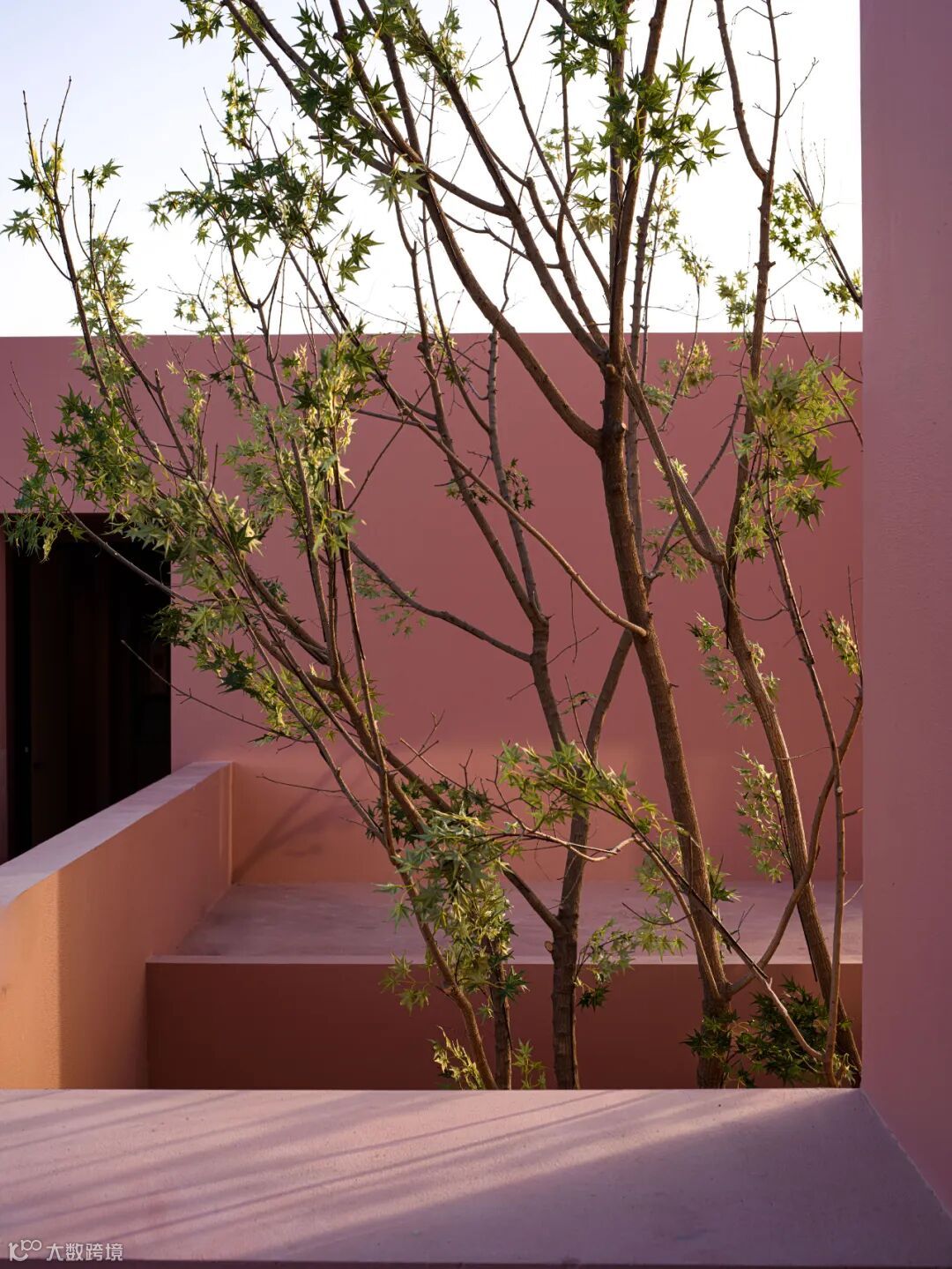
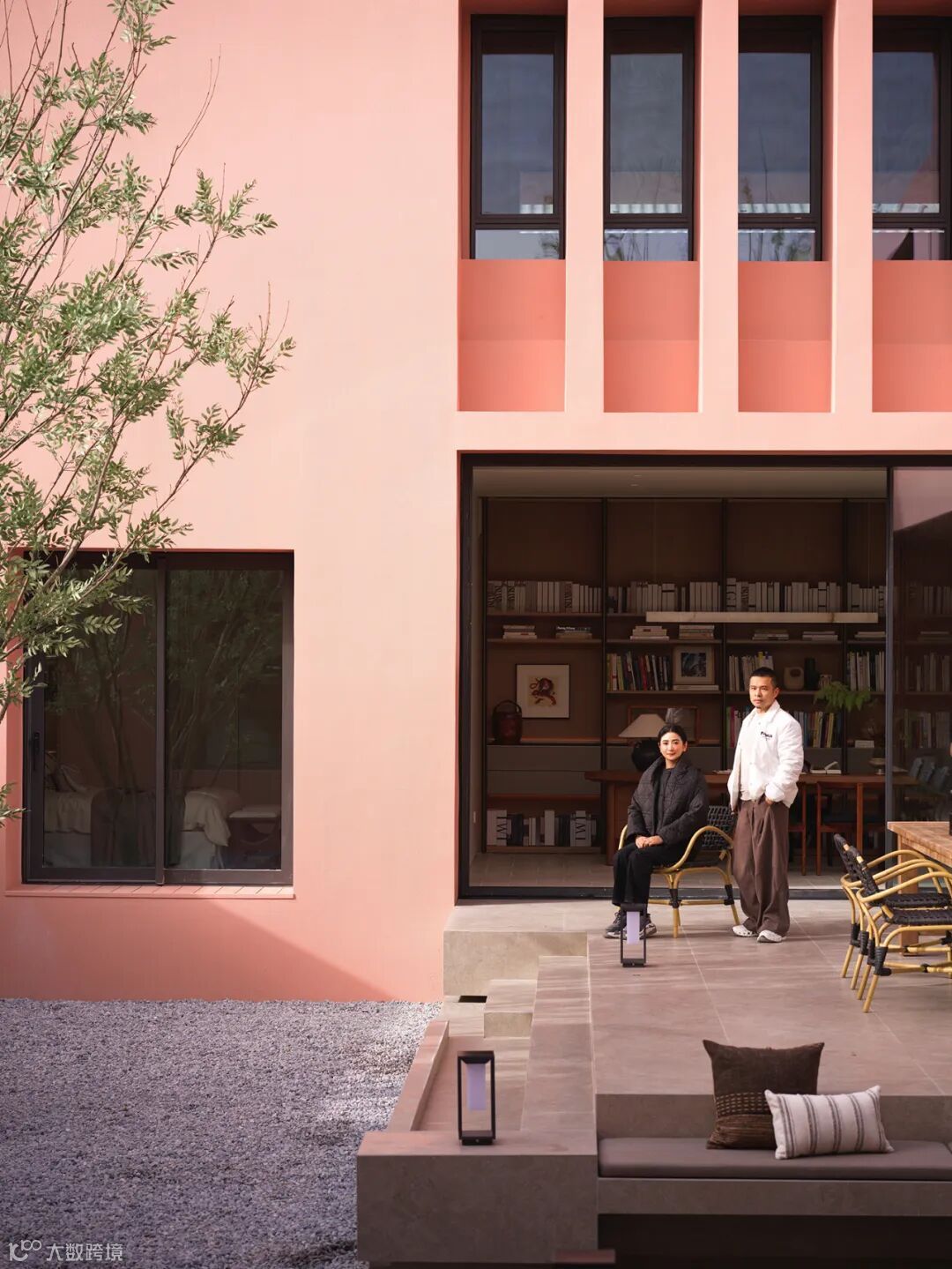
建筑立面以“一层面砖筑基,二层涂料筑梦”为核心逻辑,让材质与色彩成为对话土地与情感的媒介。设计师之所以选用红砖外立面与粉灰色的外墙色彩来进行搭配,灵感源于他们对当地环境色彩的一种观察,红色的砖墙,红色的屋顶,粉色的晚霞。他们希望能将这种环境色彩进行抽象提纯。不是复制,而是对地域色彩基因的一种 “记忆性表达”。
The facade of the building is based on the core logic of "one layer of bricks as the foundation and two layers of paint as the dream", making materials and colors the medium for dialogue with the land and emotions. The reason why the designers chose red brick facades and powder gray exterior colors for the combination is inspired by their observation of the local environmental colors: red brick walls, red roofs, and pink sunsets. They hope to abstract and purify these environmental colors. It is not a copy but a "memorized expression" of the regional color genes.
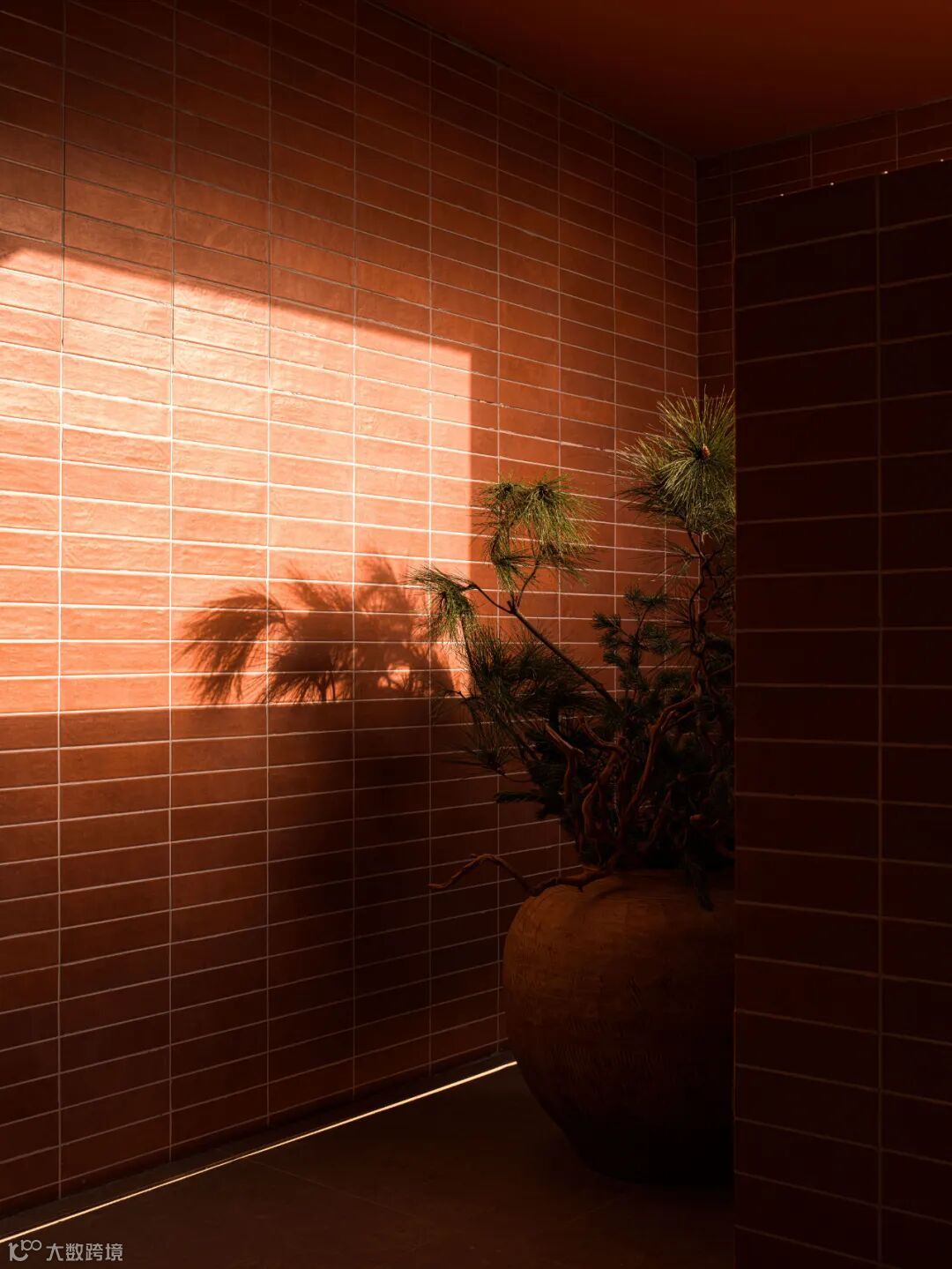
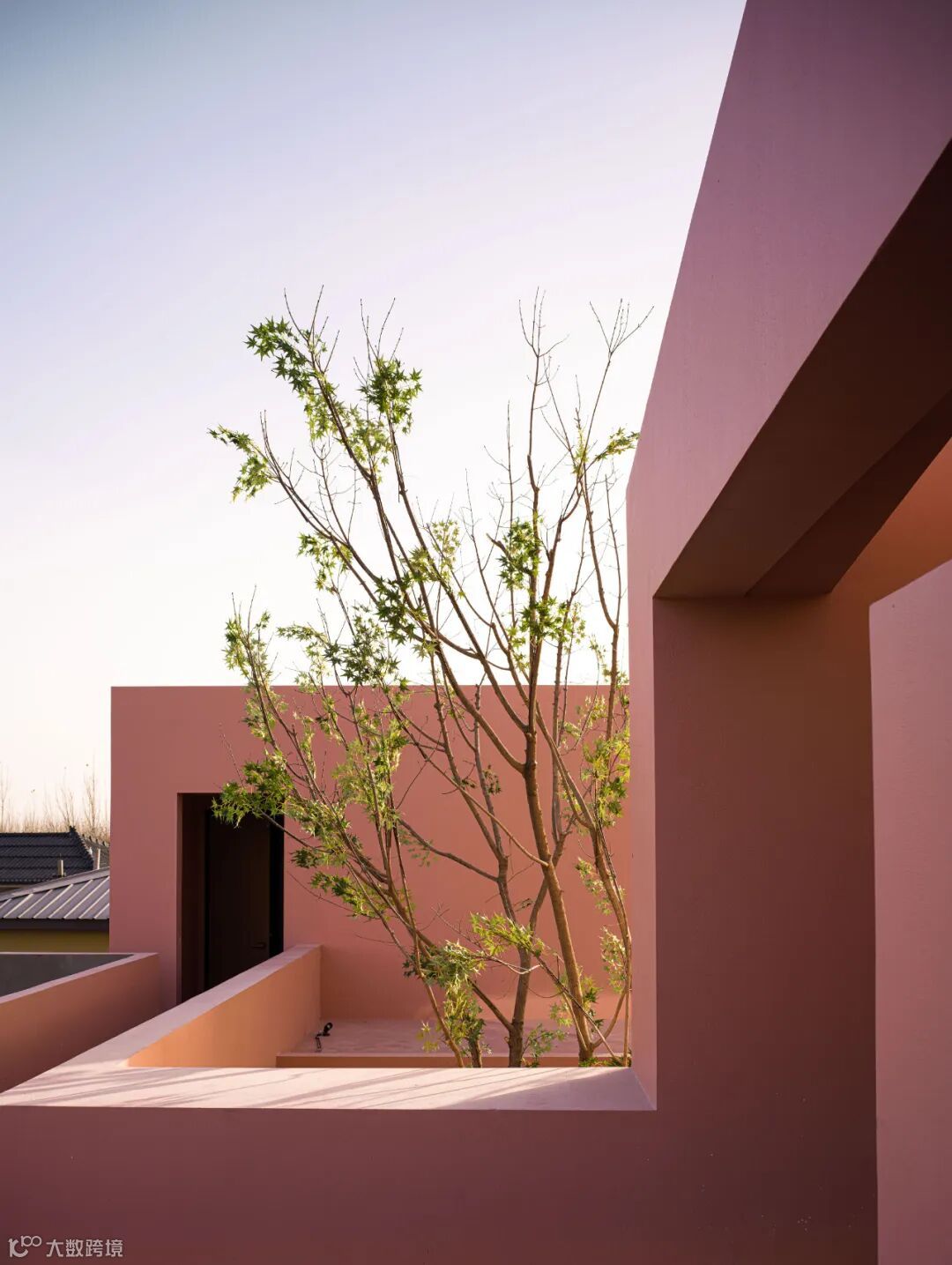
建筑立面选材兼顾气候适应与情感表达。一层采用坚固面砖抵御北方风沙雨雪,局部缀以取自土地底色的红砖,既唤醒地域记忆,又减轻了体量厚重感。二层运用低饱和粉色涂料,褪去甜腻,营造复古柔和氛围,呼应业主对温暖居所的向往。其浅色调夏季反射强光,与下层硬朗质感对比,令建筑更显轻盈。
The selection of materials for the building facade takes into account both climate adaptation and emotional expression. The first floor uses solid facing bricks to resist the wind, sand, rain and snow in the north, with local red bricks taken from the earth's base color interspersed in some areas, which not only evokes regional memories but also reduces the sense of heaviness of the volume. The second floor uses low-saturation pink paint, which is not overly sweet and creates a retro and soft atmosphere, echoing the owner's yearning for a warm home. Its light color reflects strong light in summer, contrasting with the hard texture of the lower floor, making the building appear more light and airy.
这一色彩组合突破了乡村建筑的常见色调,以温暖视觉张力融入乡野,成为兼具识别度与情感温度的家之标志。材质对话亦隐喻家庭轨迹:粗粝面砖唤起乡村记忆,温润涂料对接都市审美,恰似“从乡野走出,又向生活归巢”的生活缩影。
This color combination breaks away from the common tones of rural architecture, integrating into the countryside with a warm visual tension and becoming a recognizable and emotionally resonant symbol of home. The dialogue between materials also metaphorically represents the family's journey: the rough brick evokes rural memories, while the smooth paint connects with urban aesthetics, much like a microcosm of "emerging from the countryside and returning to life's nest".
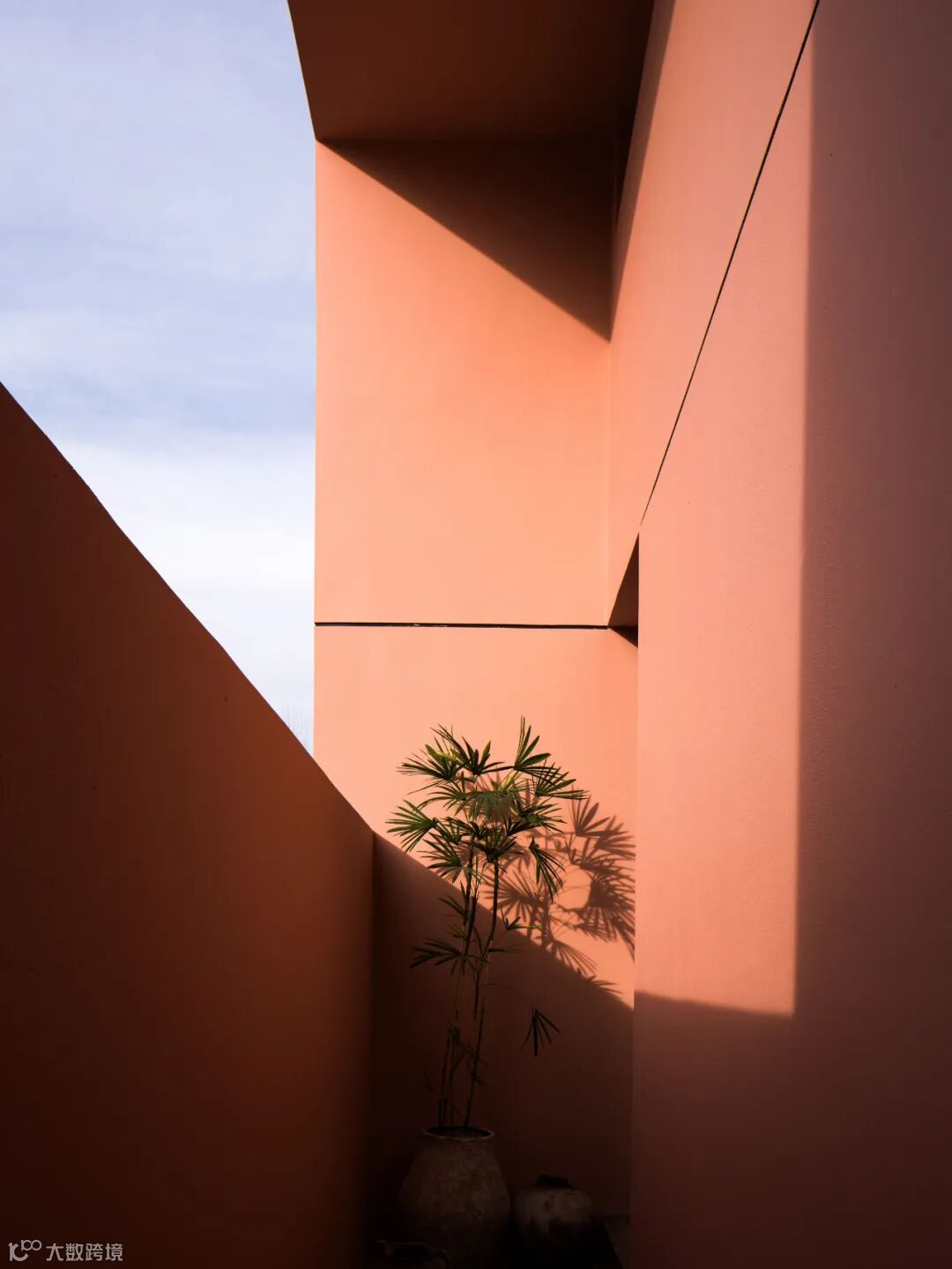
轻自然:低干预设计,让自然成为“空间主角”
Light and natural: Low-intervention design, making nature the "main character" of the space.
设计师以“尊重自然、低干预”为核心原则,摒弃对宅基地原有地形的生硬改造,设计师遵循了北方传统的合院式设计,同时进一步丰富了空间的层次,将院落和室内相互融合,设计了6处庭院,每处庭院的呈现方式也不尽相同,而业主的生活、居住区域,就围绕着这6个庭院铺陈开来。
The designer adhered to the core principles of "respecting nature and low intervention", refraining from making rigid alterations to the original topography of the homestead. Following the traditional courtyard design of the north, the designer further enriched the spatial hierarchy, integrating the courtyards and the interior. Six courtyards were designed, each presenting in a unique way. The owner's living and residential areas are laid out around these six courtyards.
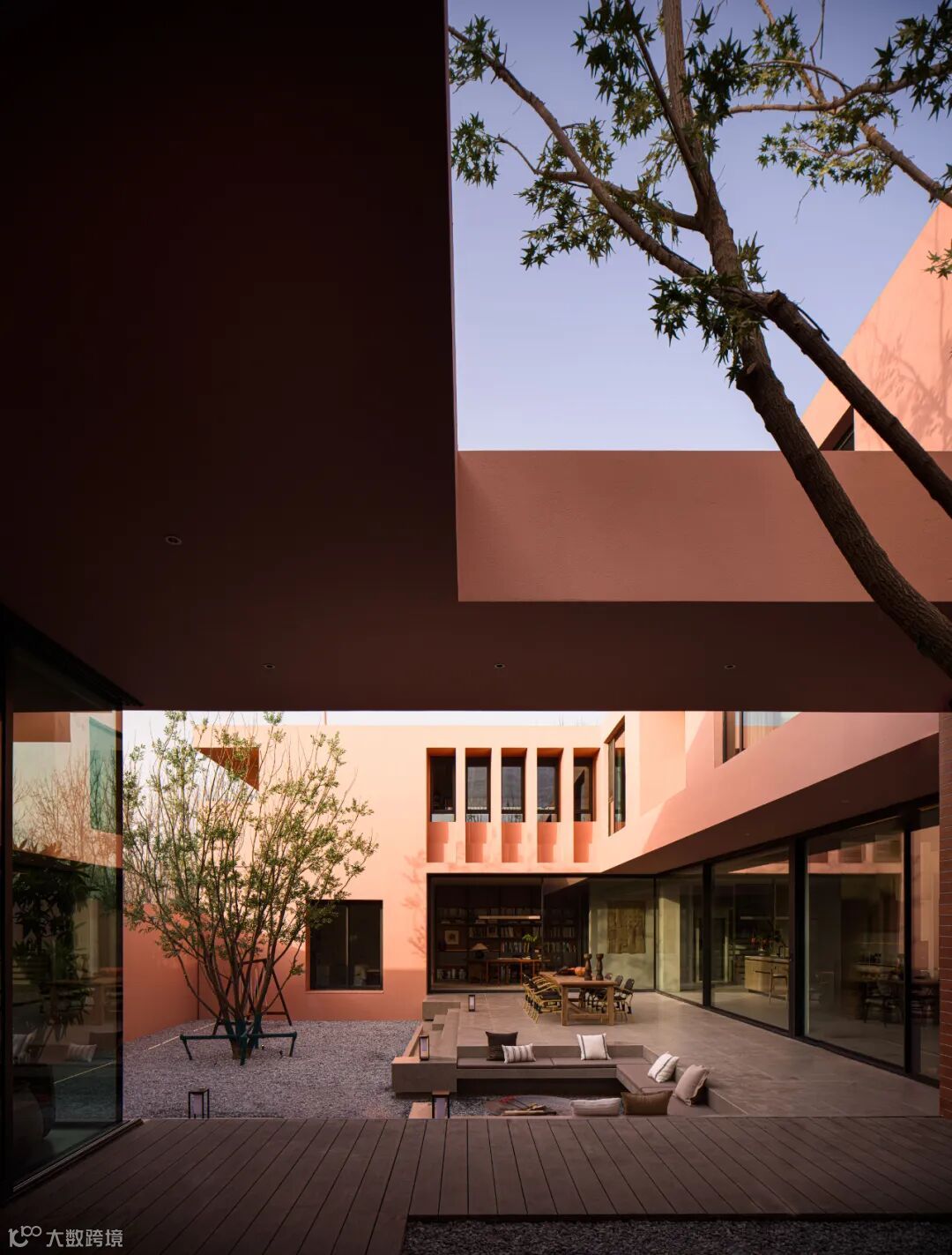
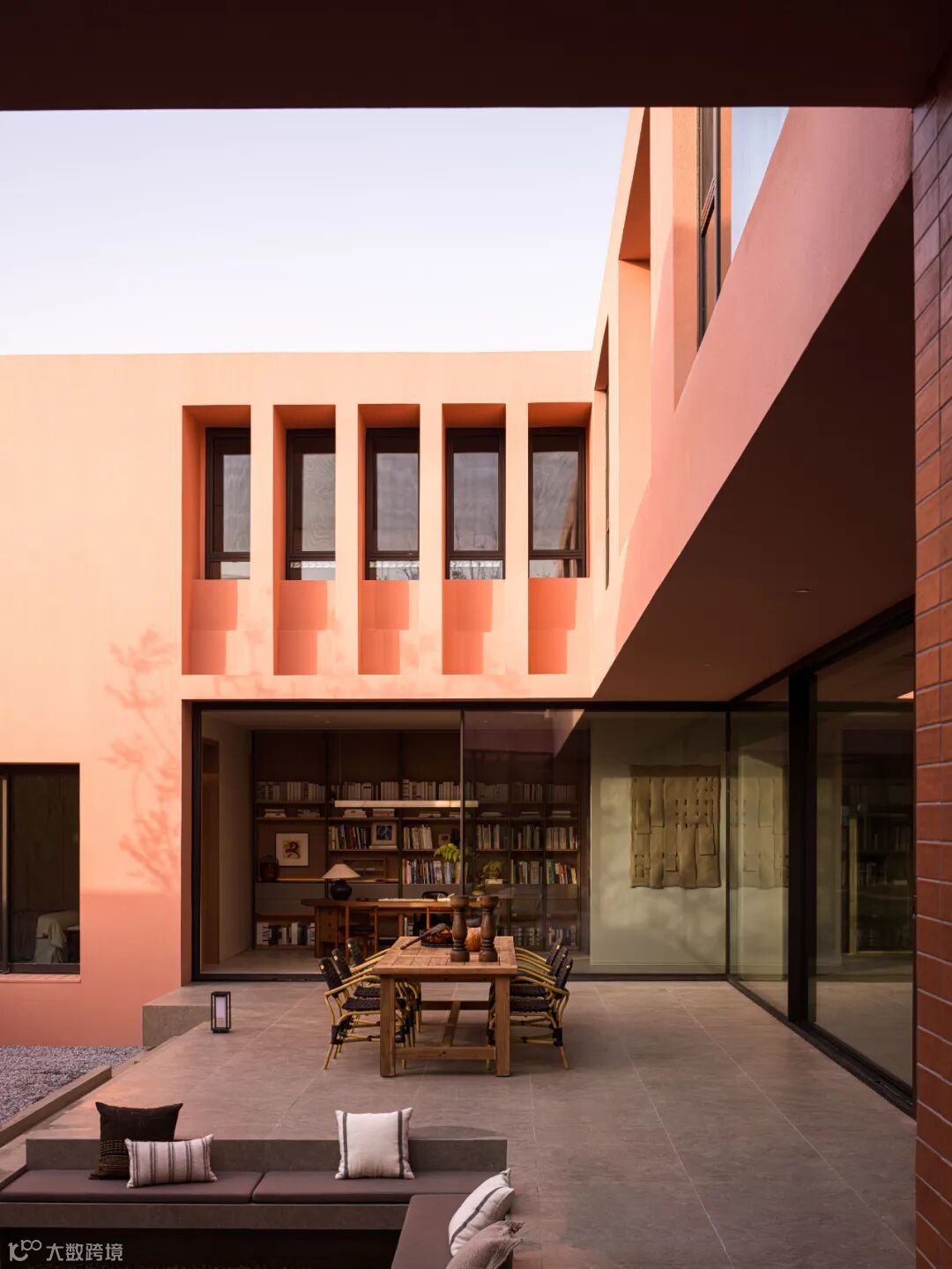
前院作为入户的第一道空间,承担着“氛围转换”的关键作用。从乡野道路步入这片专属区域,喧嚣被自然隔绝,归家的仪式感油然而生,自然衔接外部环境与家庭生活。
The front yard, as the first space upon entering the house, plays a crucial role in "atmosphere transformation". Stepping from the rural road into this private area, the hustle and bustle is naturally blocked out, and a sense of homecoming arises spontaneously, naturally connecting the external environment with family life.
中院采用半开放设计,巧妙串联起客餐厅与西厨两大核心生活空间,设计时特意将场地内的原生老树完整保留,打造出独一无二的“树下客厅”。这棵老树不仅是庭院的视觉焦点,更将随着家庭生活的沉淀,成为承载美好回忆的情感符号。
The middle courtyard adopts a semi-open design, ingeniously connecting the living room and dining room with the Western kitchen, the two core living spaces. During the design process, the original old tree on the site was deliberately preserved intact, creating a unique "living room under the tree". This old tree is not only the visual focus of the courtyard but will also, as family life progresses, become an emotional symbol carrying precious memories.
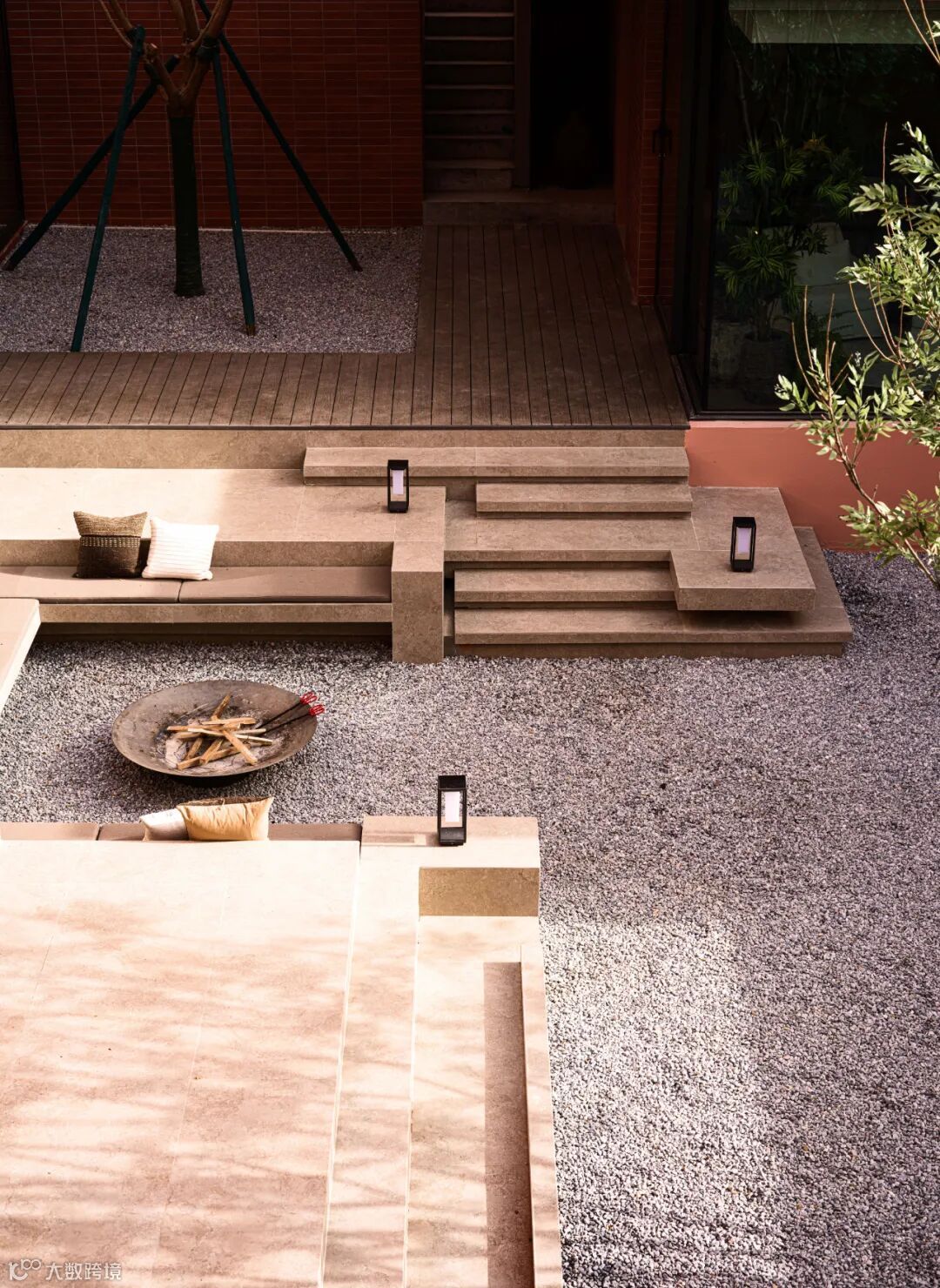
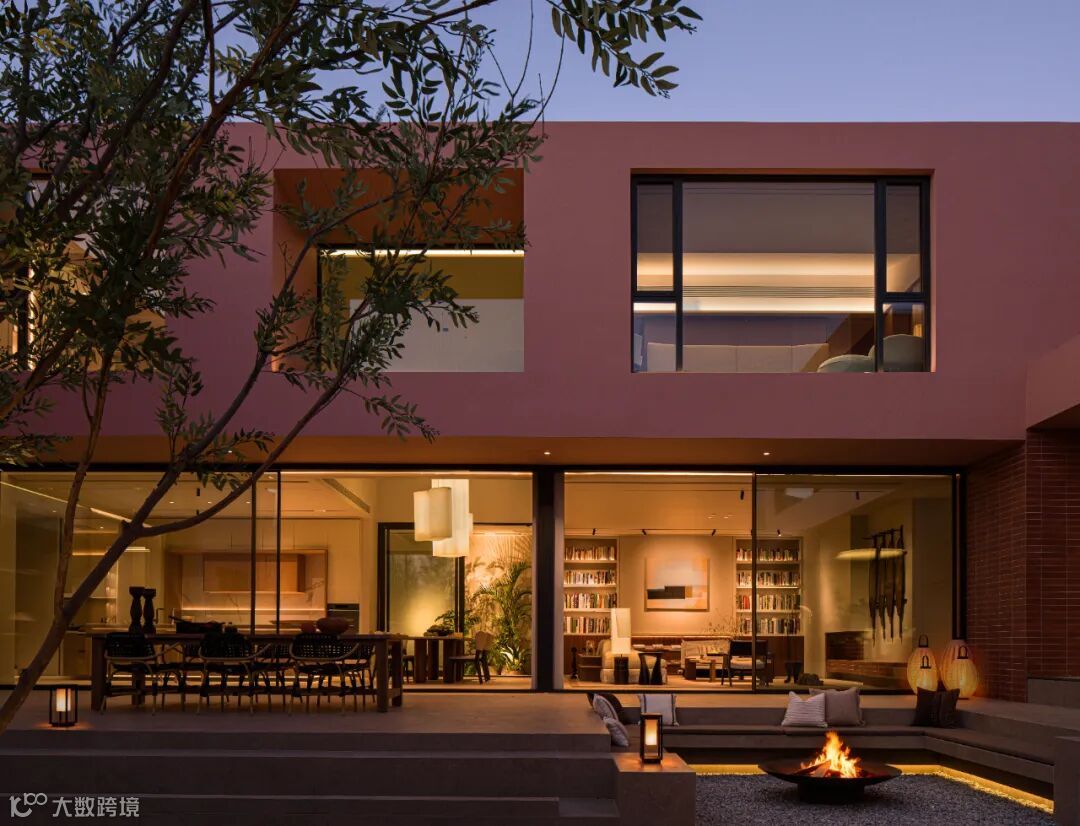
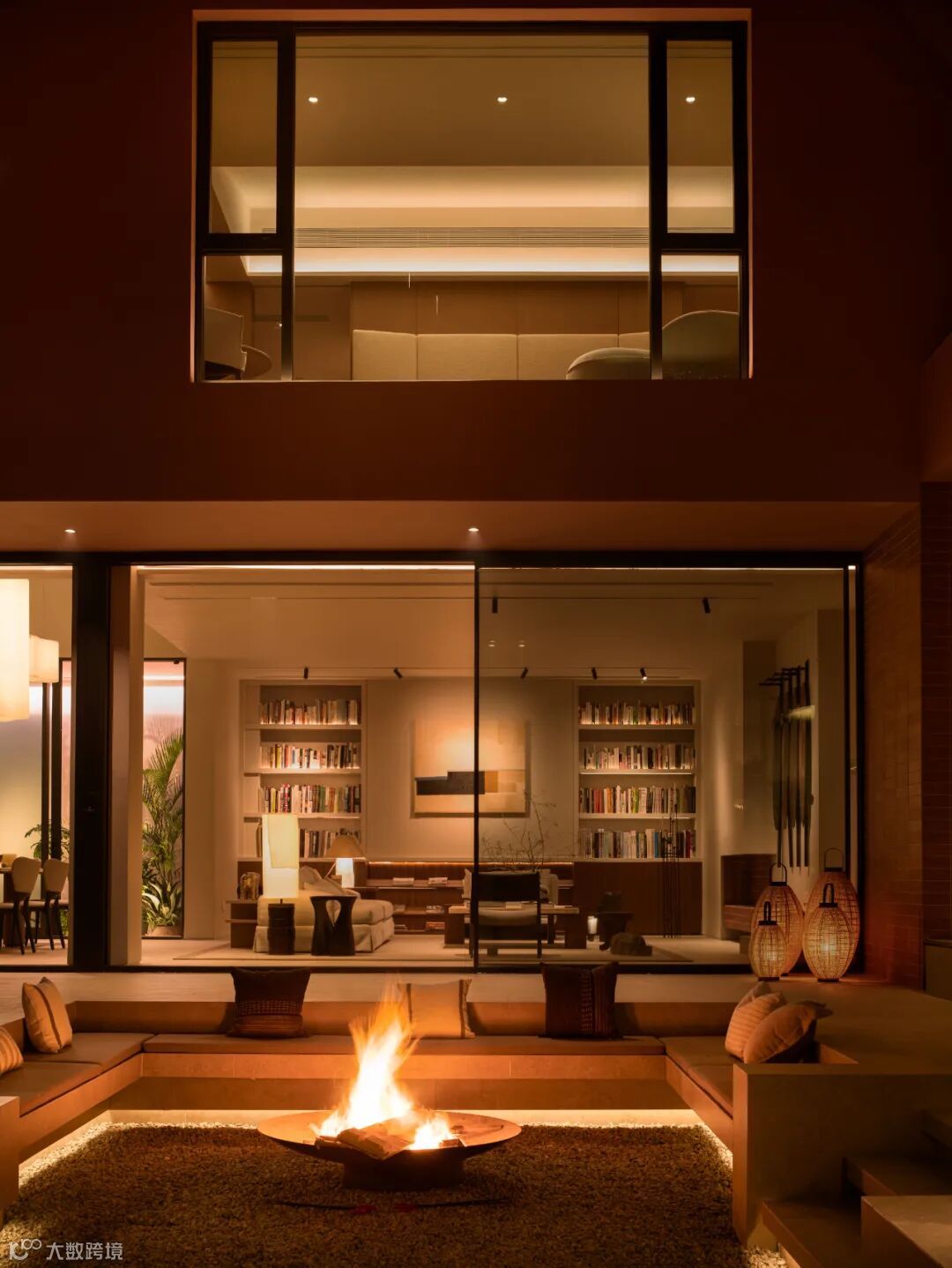
中院的户外平台配备了桌椅与火炉,周末家人围坐在此聚餐烧烤,孩子在院中肆意嬉戏,家长在室内透过玻璃便能清晰捕捉室外动态,完美兼顾了亲子互动与安全看护的双重需求。
The outdoor platform of the middle courtyard is equipped with tables, chairs and a stove. On weekends, the family gathers here for barbecues. Children play freely in the courtyard while parents can clearly observe the outdoor activities through the glass from inside the house. This perfectly meets the dual needs of parent-child interaction and safety supervision.
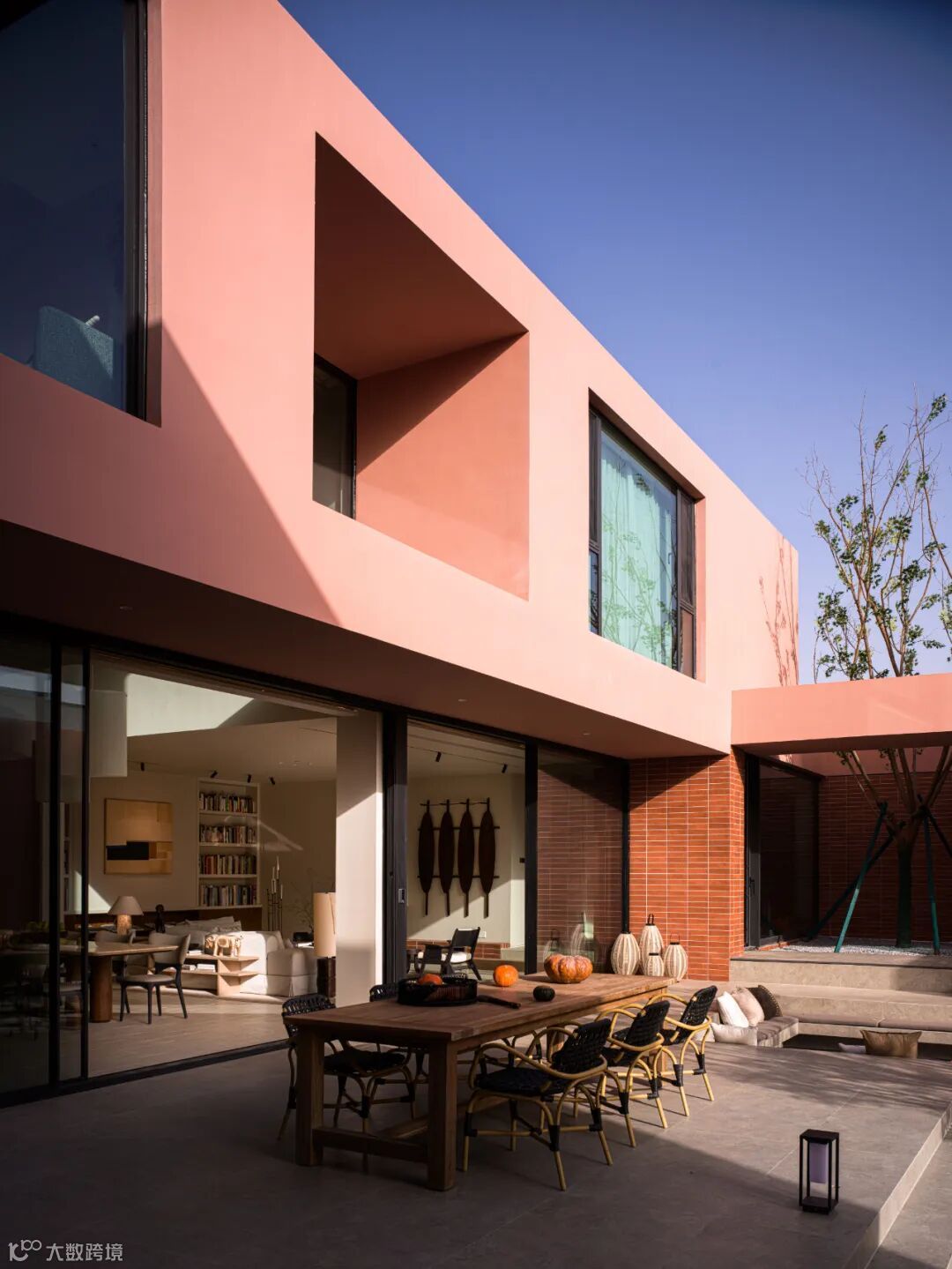
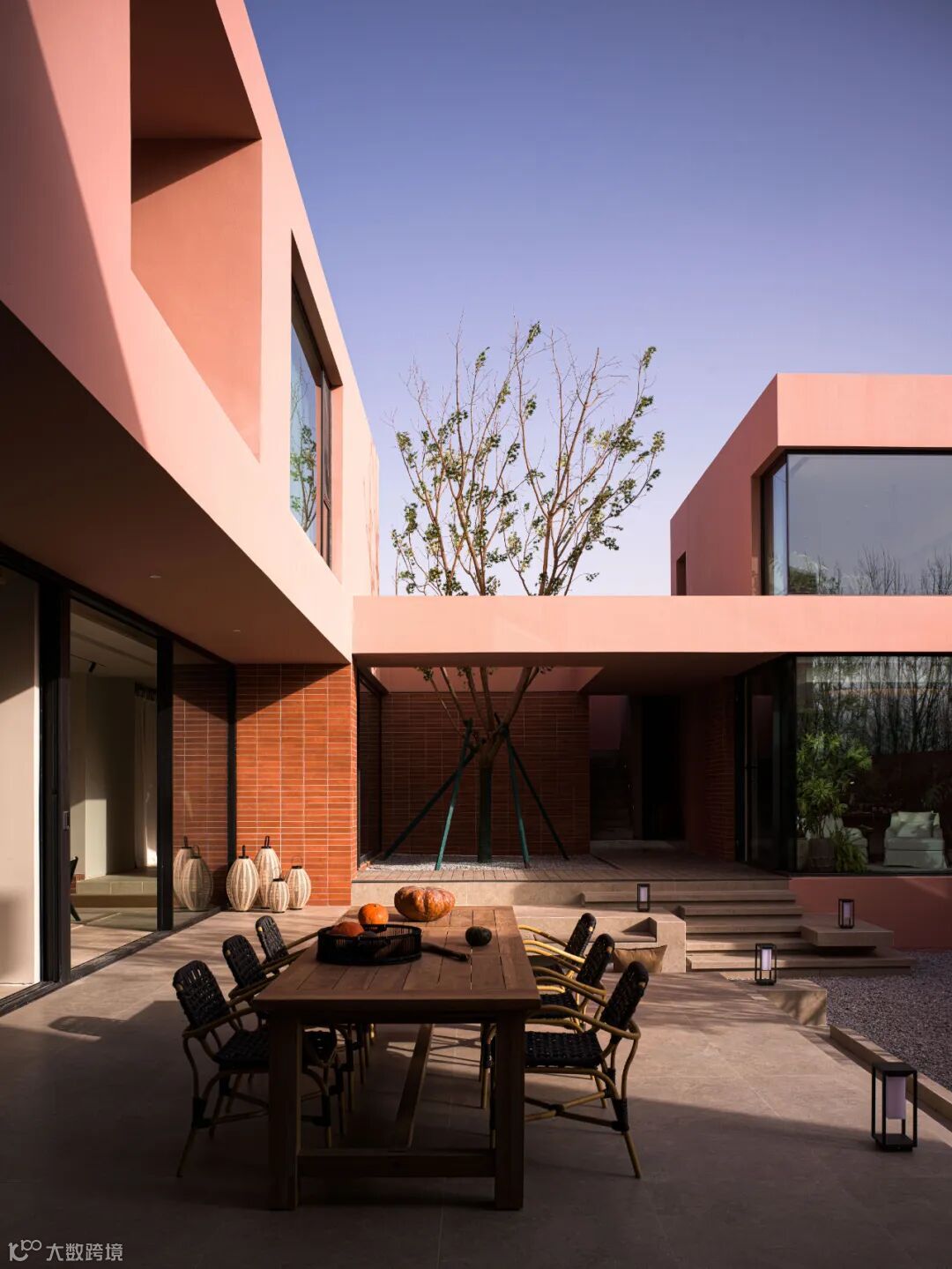
针对华北地区冬季严寒、夏季酷暑的气候特征,建筑融入了被动式节能设计,实现生态与实用的平衡。南向采用大面积玻璃窗,最大化引入自然光以实现采光蓄热,为冬季室内增添暖意;北向则减少窗洞口开启,有效阻隔寒风入侵,降低热量流失。
In response to the severe cold in winter and scorching heat in summer in North China, the building incorporates passive energy-saving design to achieve a balance between ecology and practicality. Large glass windows are used on the south side to maximize the introduction of natural light for lighting and heat storage, adding warmth to the interior in winter; while on the north side, the number of window openings is reduced to effectively block the invasion of cold winds and reduce heat loss.
屋顶铺设的太阳能板为建筑提供稳定电力支持,大幅减少了对空调、暖气等设备的依赖,不仅让室内在冬夏两季都能维持舒适温度,更显著降低了长期使用成本,践行绿色居住理念。
The solar panels installed on the roof provide stable power support for the building, significantly reducing the reliance on air conditioners, heaters and other equipment. This not only keeps the indoor temperature comfortable in both winter and summer, but also significantly lowers the long-term usage cost, embodying the concept of green living.
设计师充分考量三口之家的“成长型需求”,打破传统住宅空间的固化局限,通过预留可变性设计,让建筑能够随家庭生命周期的推进同步“生长”,始终贴合家庭的实际使用需求。
The designer fully considered the "growth-oriented needs" of a family of three, breaking the rigid limitations of traditional residential spaces. By incorporating flexible and adaptable designs, the building can "grow" in tandem with the family's life cycle, always meeting their actual usage requirements.
动静分区:一层烟火,一层静谧
Dynamic and quiet zones: One floor for lively activities, the other for tranquility.
室内的部分设计师希望打破传统空间的边界,以 “通透联动、分区明确”来规划平面布局,让每个区域既独立成章,又相互呼应。房屋以功能区分为上下两层空间,一层为入户玄关、内庭院、客餐厅、中西厨、花房、书房和老人房,适合聚会、共享,二层主要为休息区域,包含:主卧、衣帽间、主卫、茶室、健身房,是更为私密的区域。
Some of the interior designers hope to break the boundaries of traditional spaces and plan the floor layout with the concept of "open and connected, clearly divided". This makes each area independent yet interrelated. The house is divided into two floors based on functions. The first floor includes the entrance hall, inner courtyard, living and dining room, Chinese and Western kitchens, flower room, study and the elderly's room, which are suitable for gatherings and sharing. The second floor mainly consists of rest areas, including the master bedroom, dressing room, master bathroom, tea room and gym, which are more private.
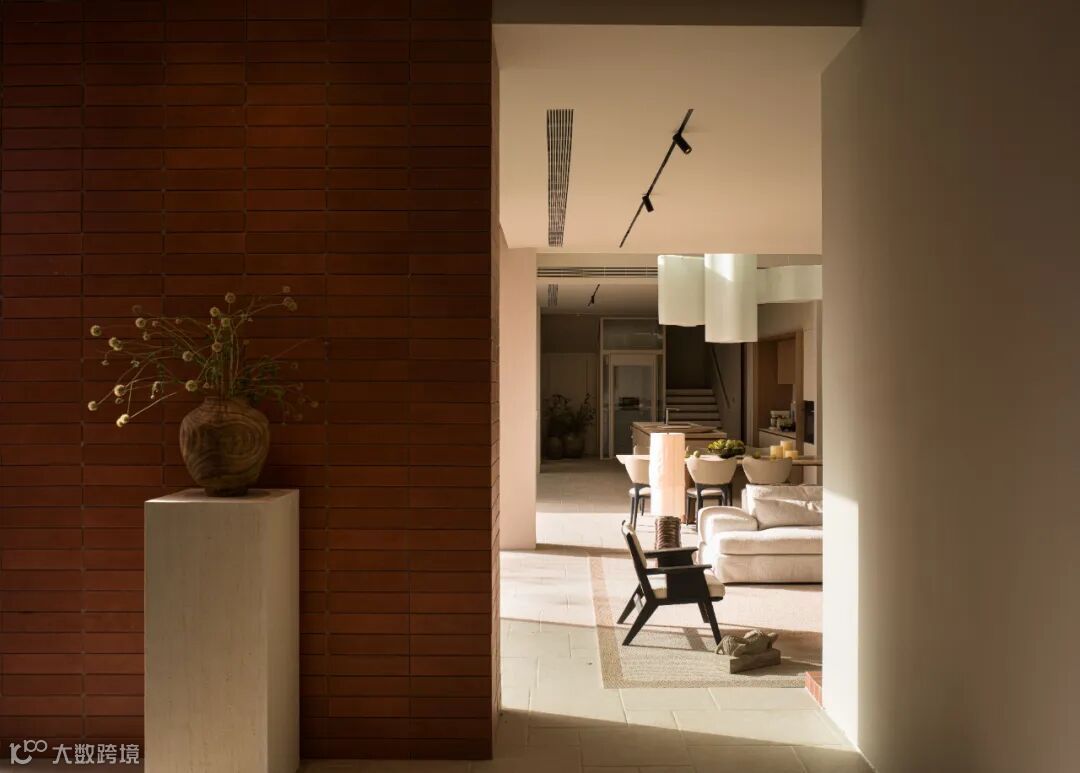
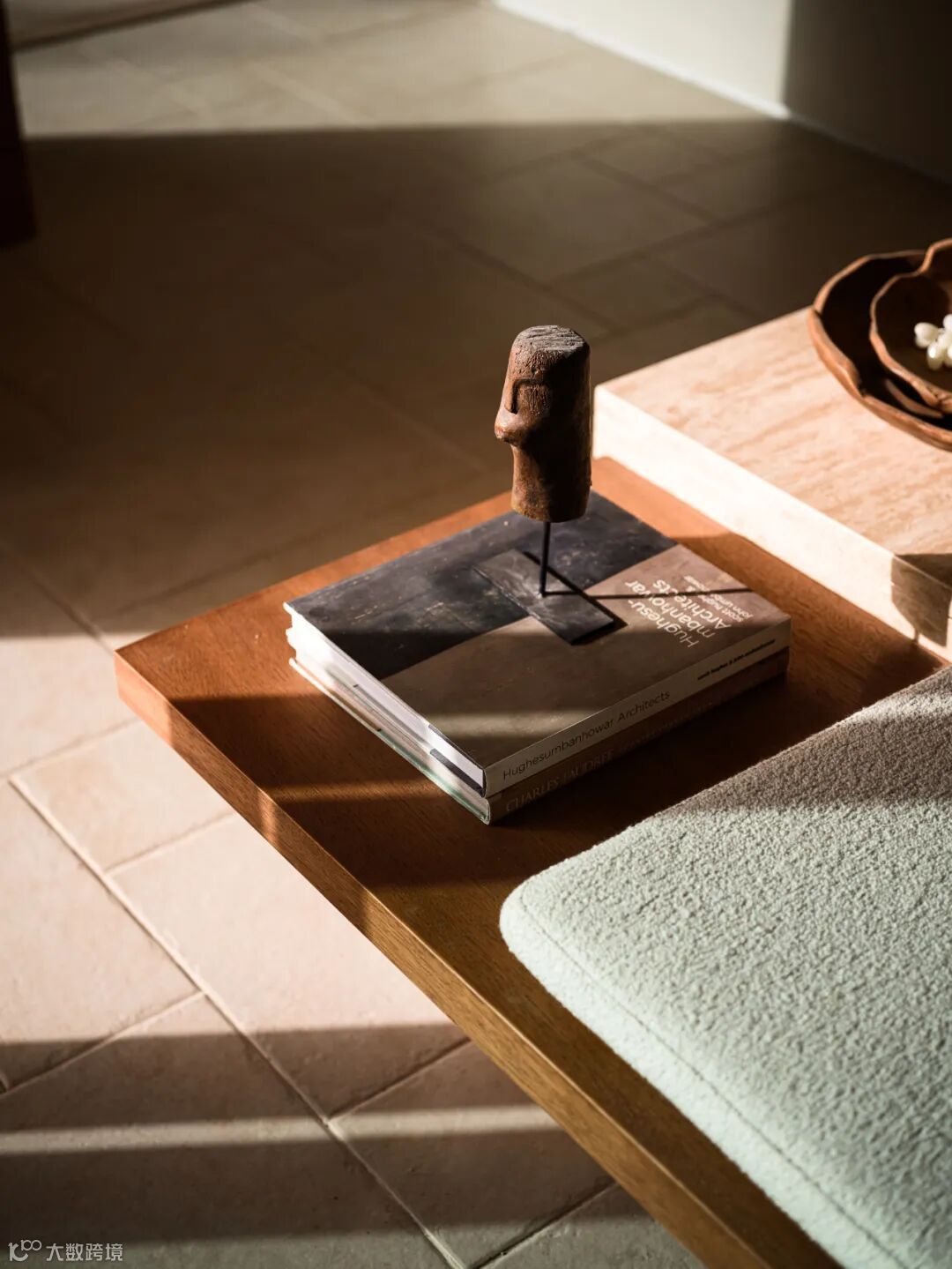
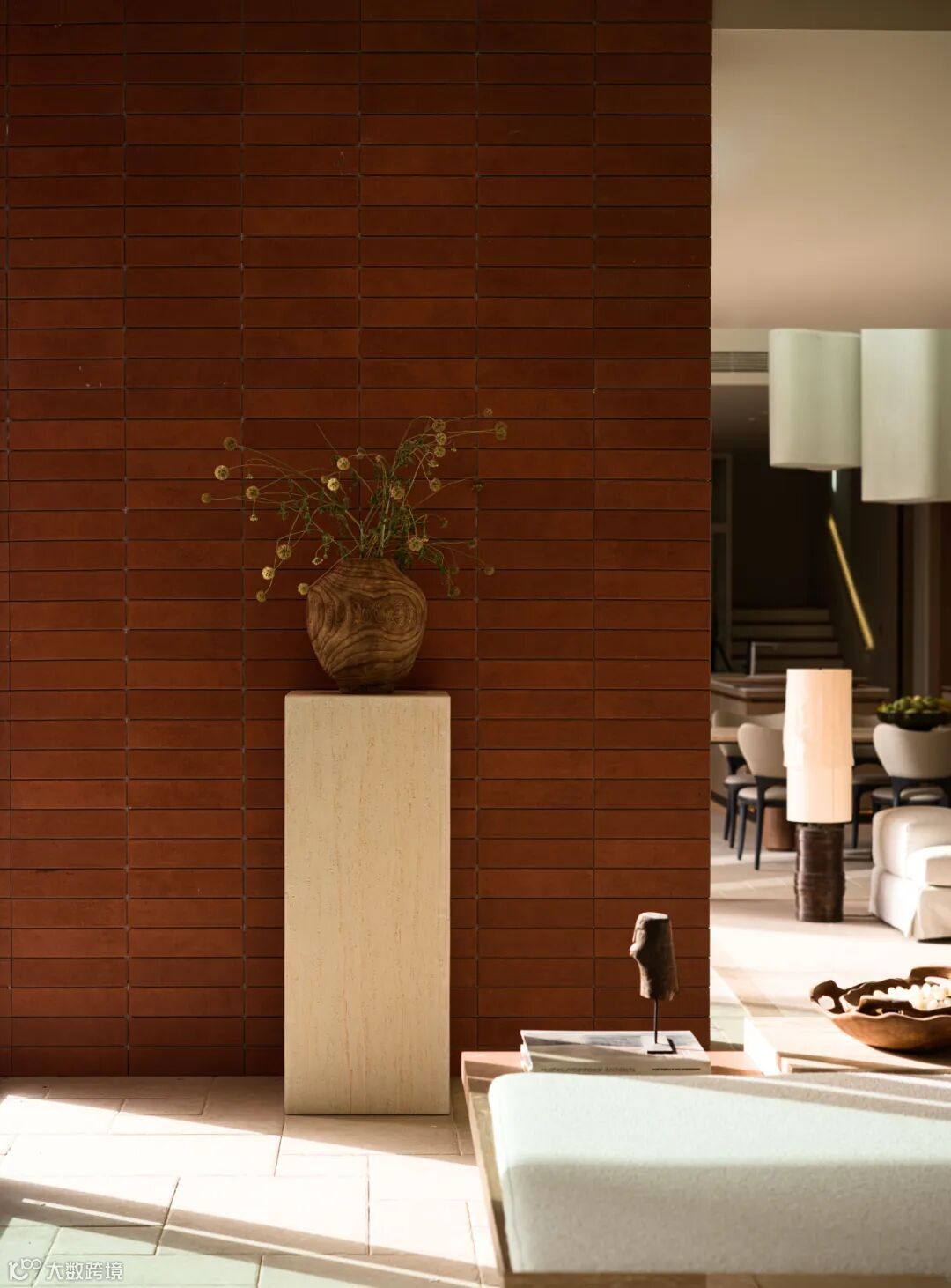
入口玄关、衣帽间作为空间的第一序章,承担着过渡与收纳的双重使命。
The entrance foyer and cloakroom, as the first chapter of the space, undertake the dual missions of transition and storage.
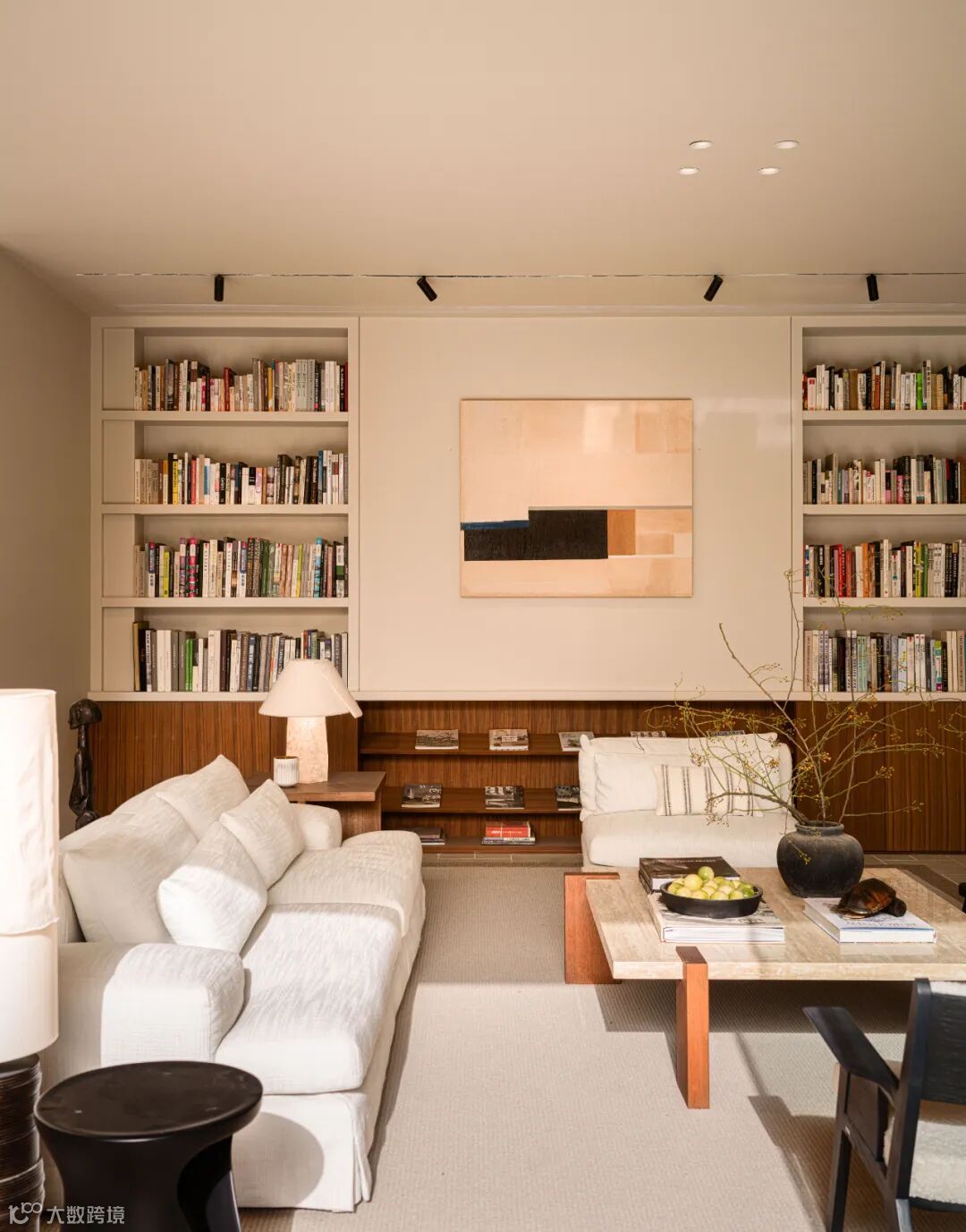
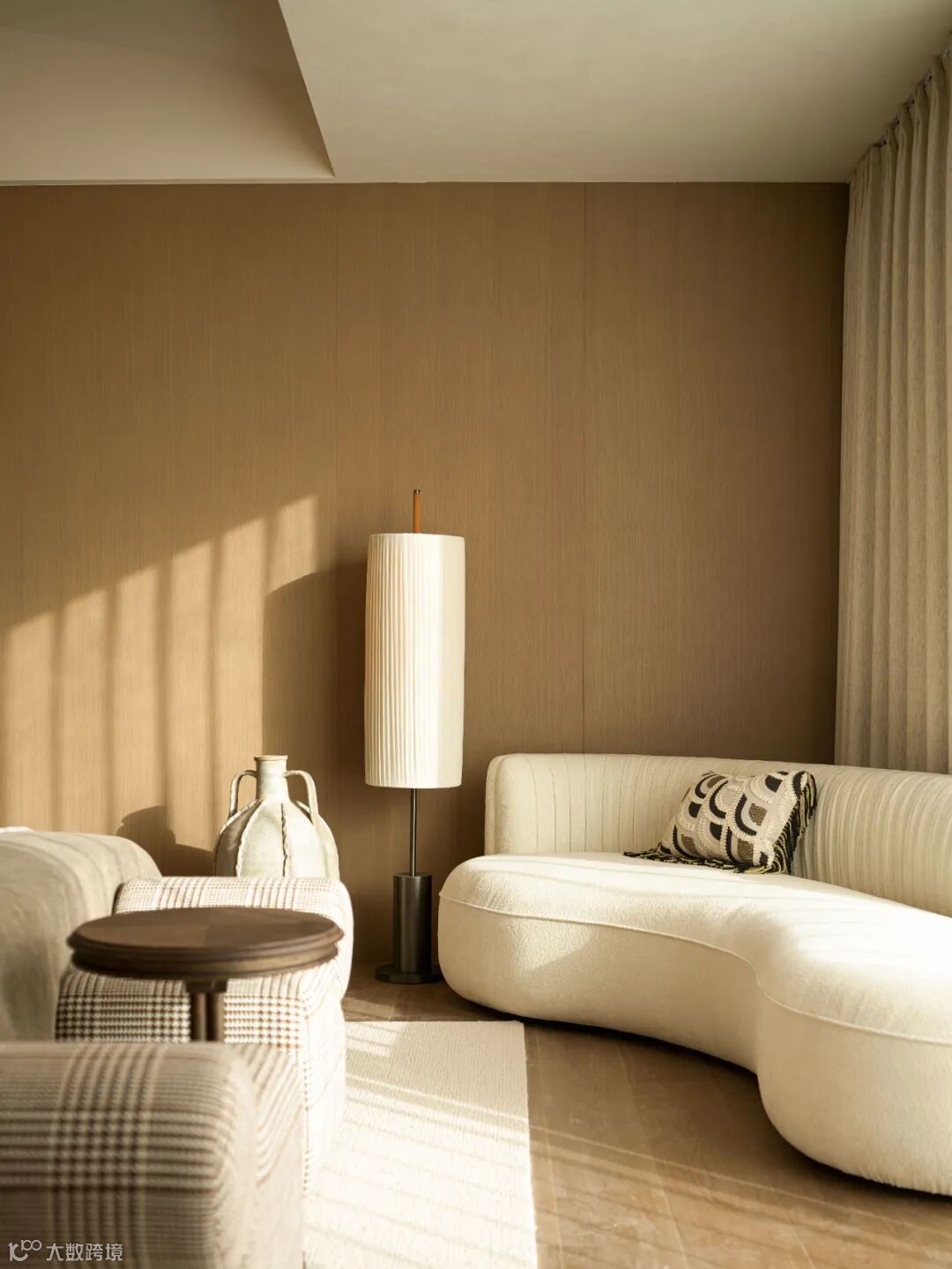
核心生活区客餐厅以开放式的布局消弭了空间的界限,使得风可以自由穿梭,也让家人间的互动毫无阻碍。室内的色调与建筑的外立面区分开,以中性色系的米白、浅灰、原木棕表达舒适柔和的氛围。
The open layout of the living and dining area in the core living zone eliminates the boundaries of space, allowing the wind to flow freely and facilitating unobstructed interaction among family members. The interior color scheme is distinct from the building's facade, with neutral tones of off-white, light gray, and natural wood brown creating a comfortable and soft atmosphere.
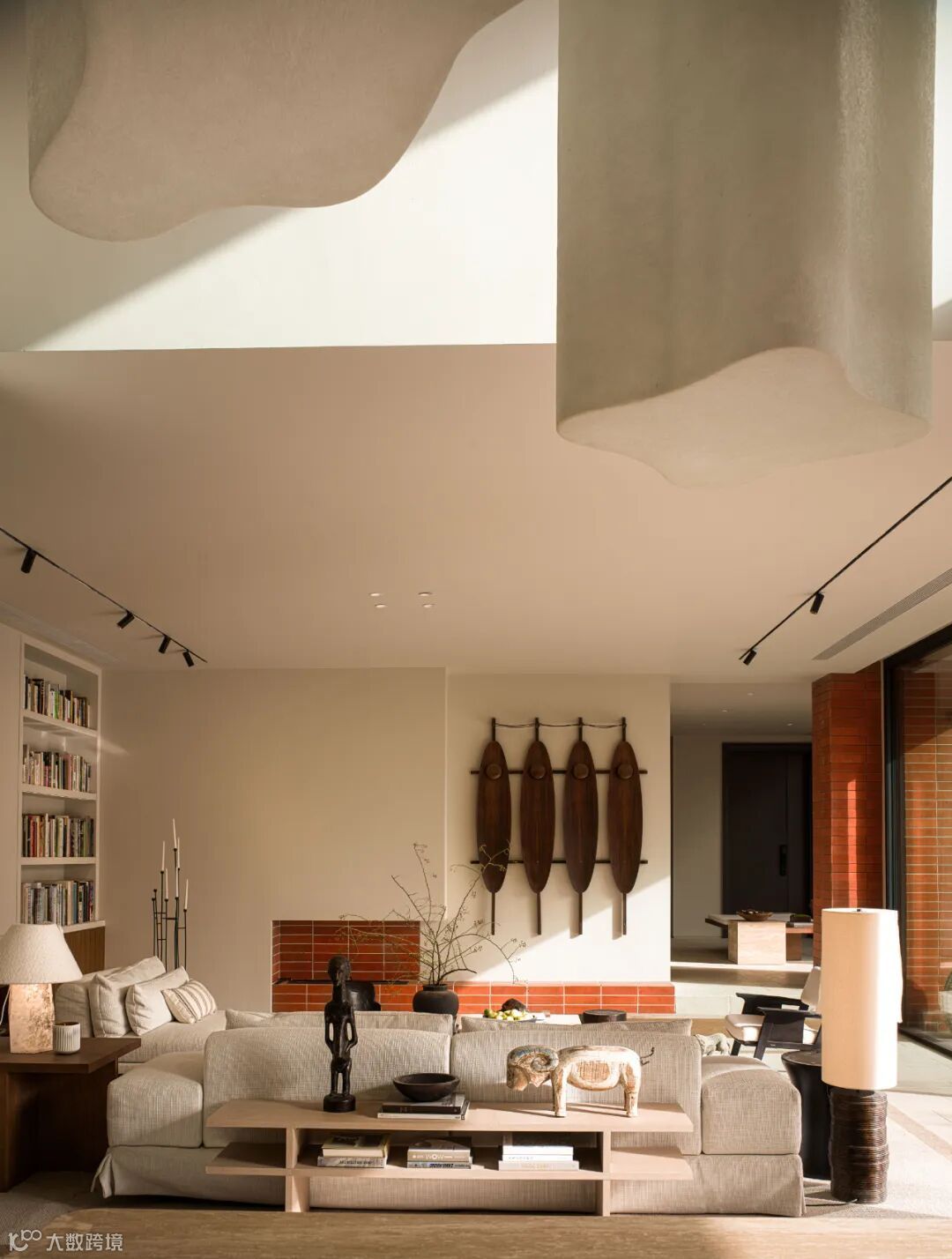
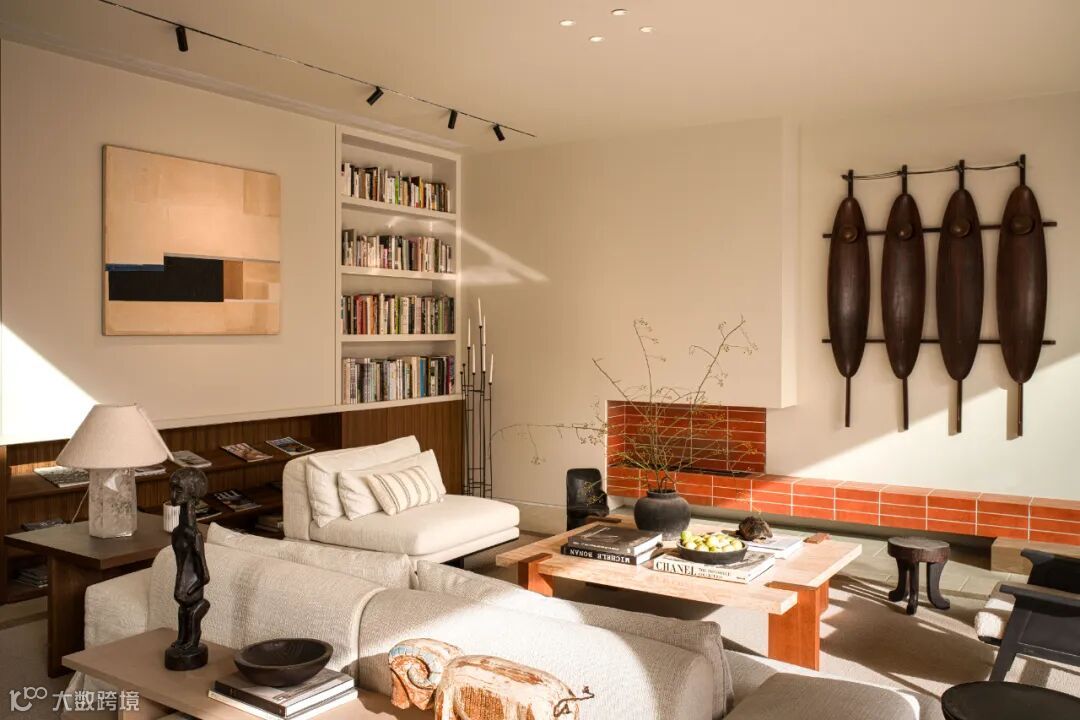
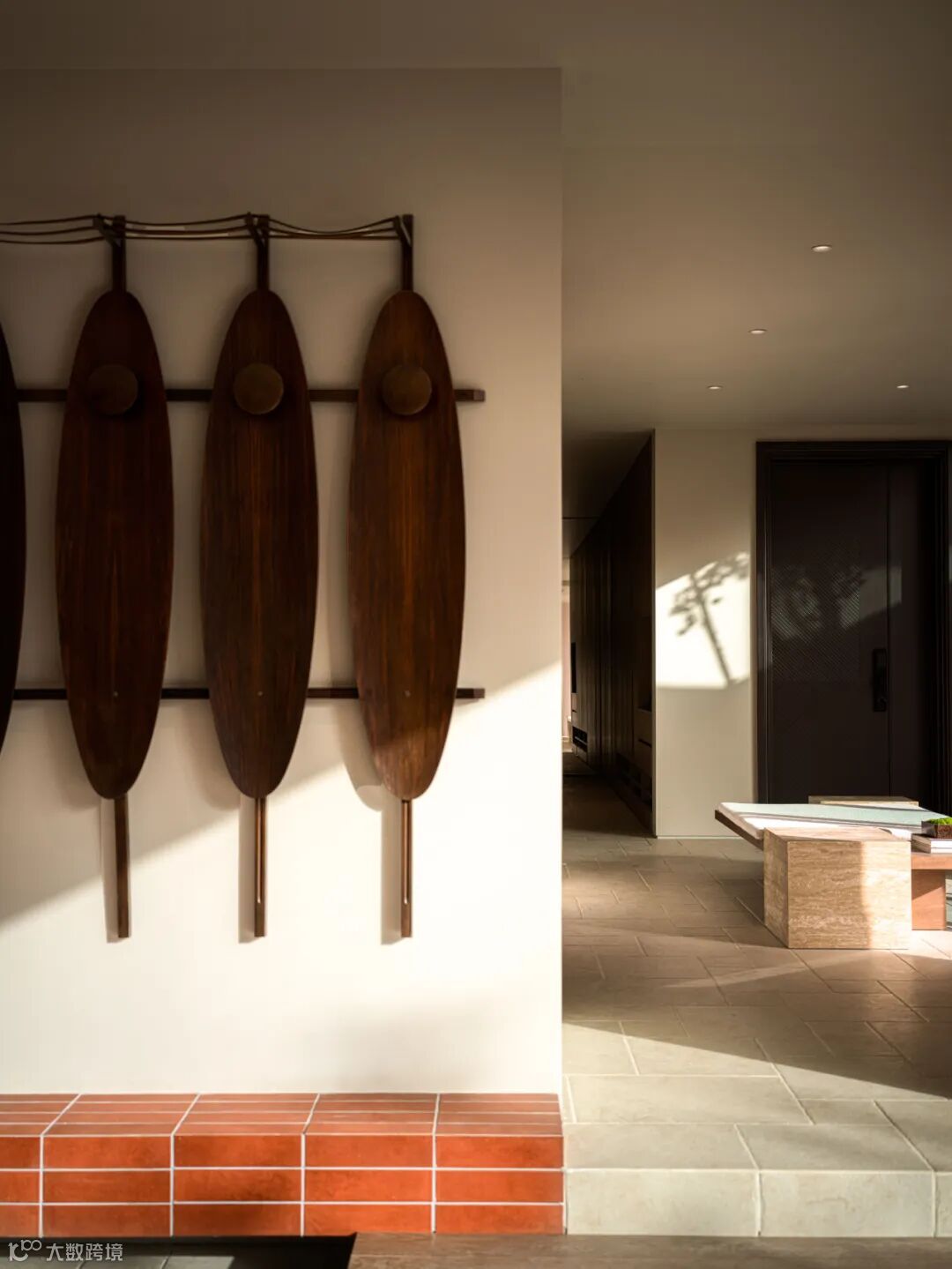
光滑的大理石茶几冷冽精致,棉麻质感的沙发柔软亲和,木质柜体温润自然,不同材质的碰撞与融合,在触觉与视觉上形成丰富的层次。地面的编织地毯则为空间增添了一份细腻的温度,弱化了硬质地面的冰冷感。
The sleek marble coffee table is cold and exquisite, the cotton and linen sofa is soft and inviting, and the wooden cabinets are warm and natural. The collision and integration of different materials create rich layers in both touch and vision. The woven carpet on the floor adds a touch of delicate warmth to the space, softening the coldness of the hard floor.
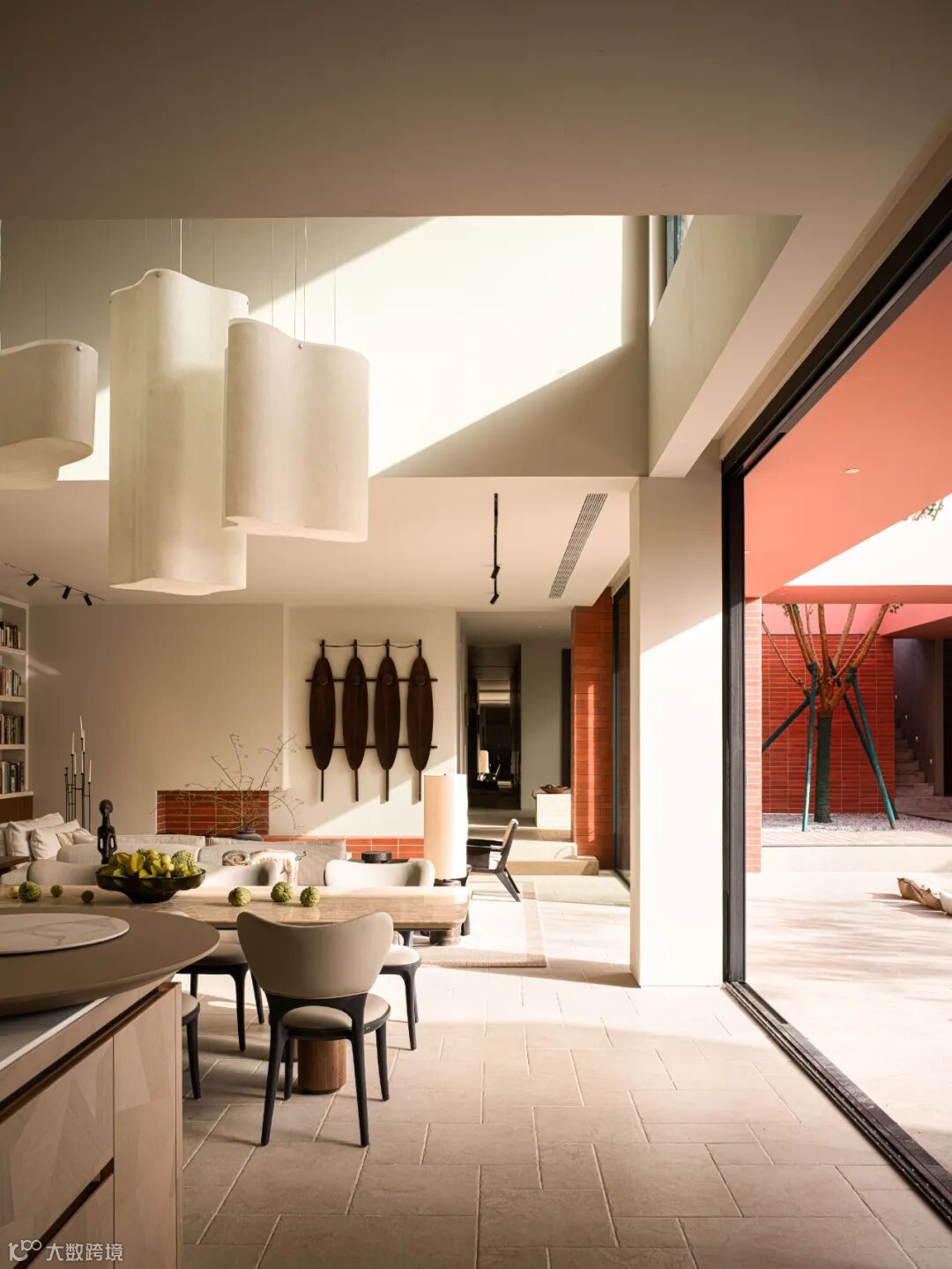
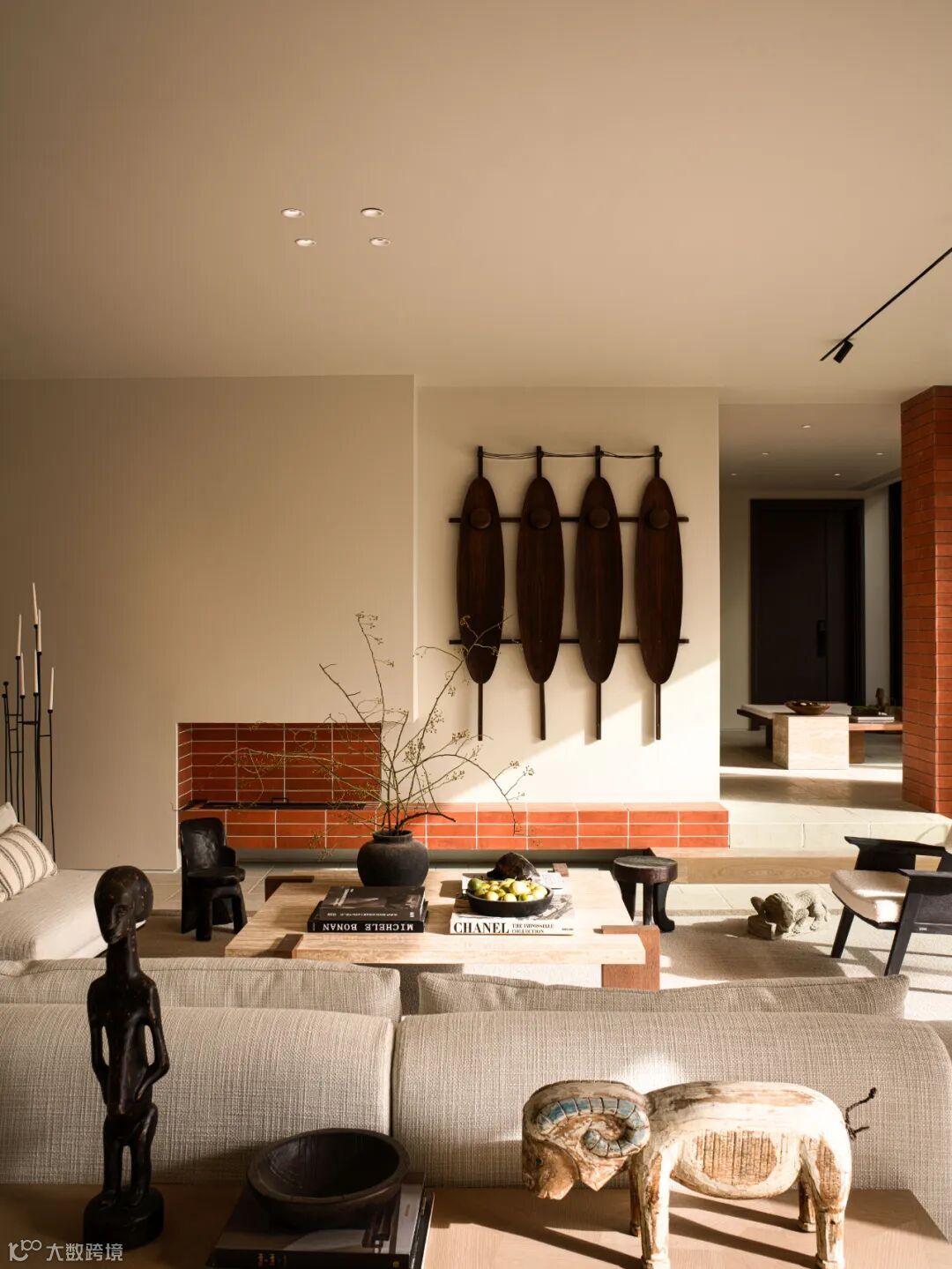
米色的沙发围合出日常休憩的场景,闲暇时在此静享阅读时光,或是与家人分享彼此的日常,都十分惬意。木质收纳柜兼具实用与美观,里面陈列着主人的藏品与书籍,每一件物品背后都有着独特的故事。墙上的艺术挂画为空间增添了艺术氛围,让客厅不止是生活的场所,更成了艺术的小小展厅。壁炉在秋冬季节散发着温暖的火光,为客厅镀上一层温馨的滤镜,让这里成为家人团聚、朋友小聚的暖心角落。
The beige sofa encloses a scene for daily relaxation. During leisure time, one can enjoy reading here or share daily life with family members, both of which are very pleasant. The wooden storage cabinet is both practical and aesthetically pleasing, with the owner's collections and books displayed inside. Each item has a unique story behind it. The art paintings on the wall add an artistic atmosphere to the space, making the living room not only a place for life but also a small exhibition hall of art. The fireplace emits warm flames in autumn and winter, casting a layer of warm filter over the living room and turning it into a cozy corner for family gatherings and friends' get-togethers.
客餐厅与分布在各个区域的内庭院形成开放式联动格局,庭院的自然景致穿透玻璃界面,让室内外空间相互渗透。餐厅以跨层的挑高形成通透的视觉感,自然垂落的吊灯为空间赋予一丝艺术和温暖的氛围。
The living and dining room, along with the inner courtyards distributed in various areas, form an open and interconnected layout. The natural scenery of the courtyards penetrates through the glass interface, allowing the indoor and outdoor spaces to blend with each other. The restaurant creates a sense of visual openness with its multi-storey high ceiling, and the naturally hanging chandeliers endow the space with a touch of artistic and warm atmosphere.
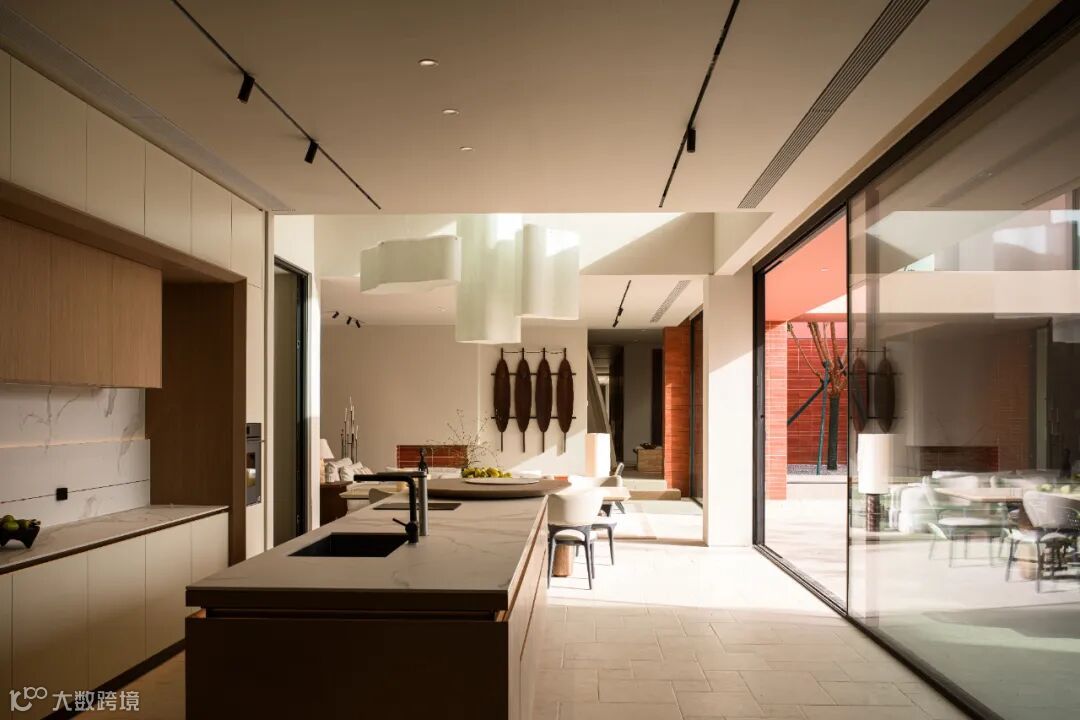
设计师为热爱烹饪美食的女主人打造了一处开敞式的西式厨房,超大面宽的岛台便于准备菜品,木纹拼花的饰面设计极具设计感,台面上的圆形转盘可自由旋转,满足不同的摆放需求。岛台下方集合了蒸烤箱、洗碗机及收纳空间,也为女主人在准备美食时提供便利。
The designer created an open Western-style kitchen for the female homeowner who loves cooking. The island counter with an extra-wide surface is convenient for preparing dishes. The wood grain mosaic finish design is highly artistic. The circular turntable on the countertop can rotate freely to meet different placement needs. Under the island counter, there are a steamer oven, a dishwasher and storage space, which also provide convenience for the homeowner when preparing meals.
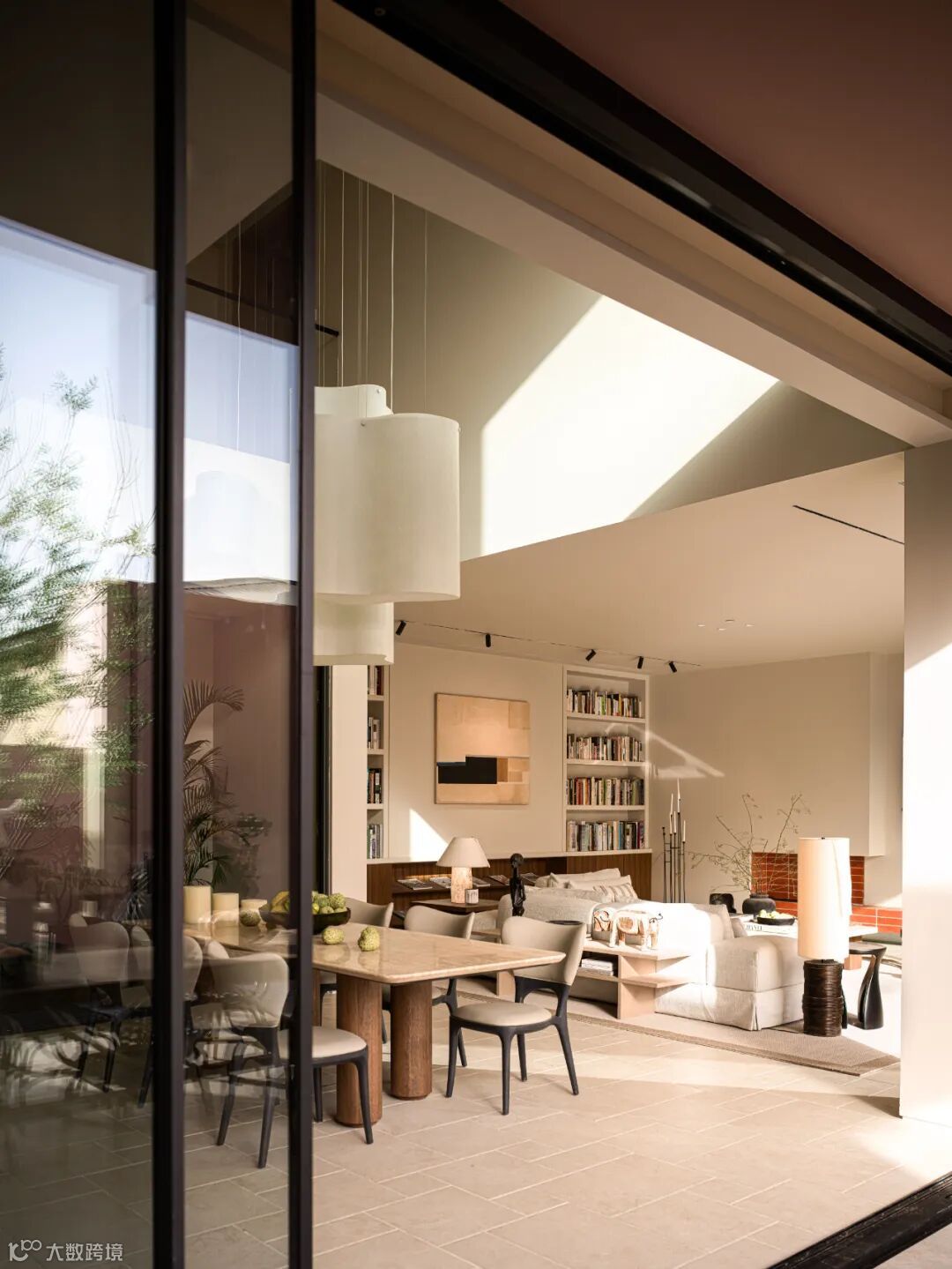
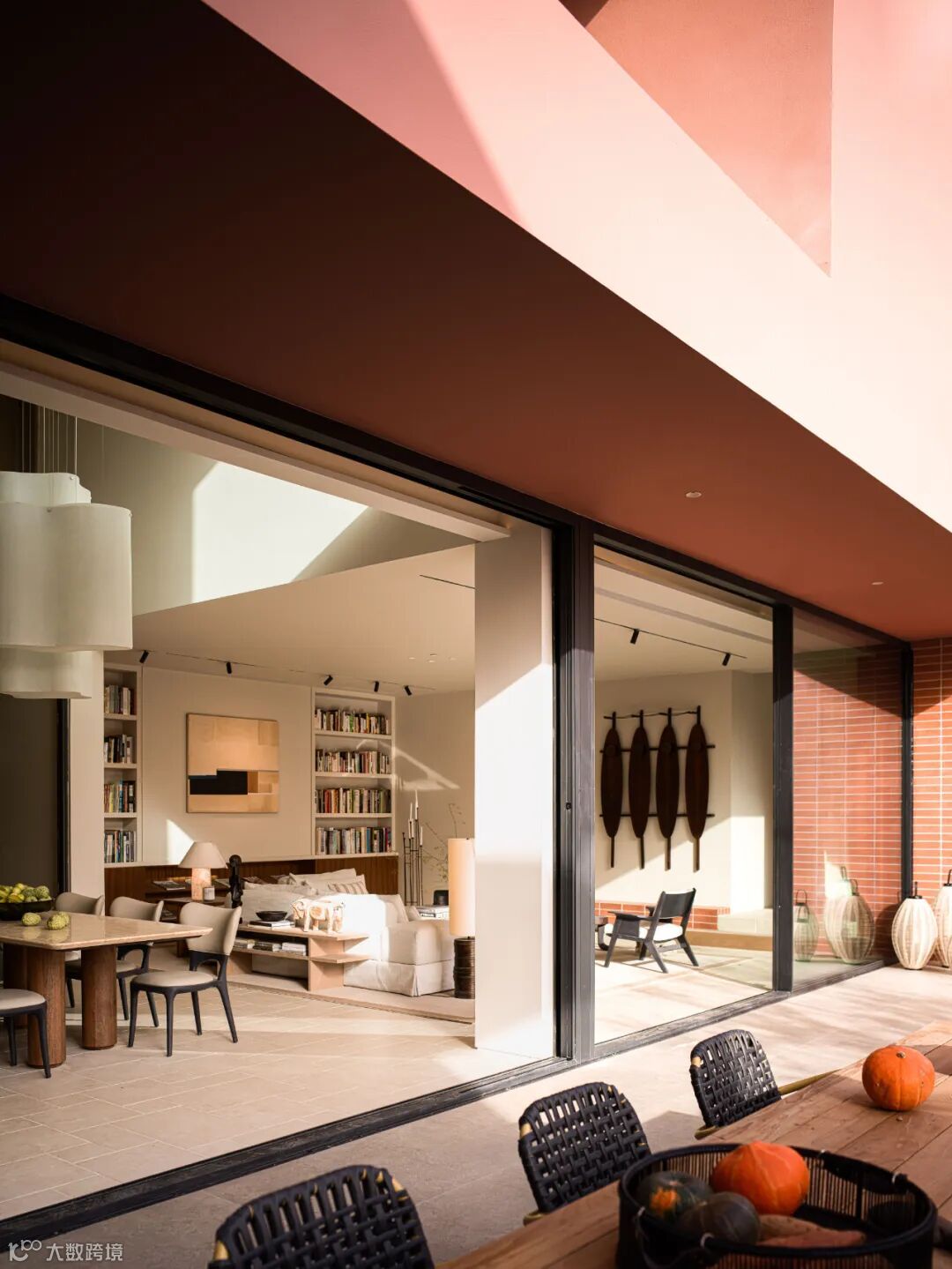
客餐厅通过大面积落地玻璃移门打通室内外空间,让自然光与户外景致自然渗透,模糊了客餐厅与露台的边界。
The living and dining room is connected to the outdoor space through large floor-to-ceiling sliding glass doors, allowing natural light and outdoor views to seep in naturally and blurring the boundary between the living and dining room and the terrace.
设计师考虑到后续有老人同住,在此设置了电梯和楼梯,为往返上下楼提供便利。
The designer took into account that there would be elderly people living here in the future, and thus installed both an elevator and stairs to facilitate going up and down the floors.
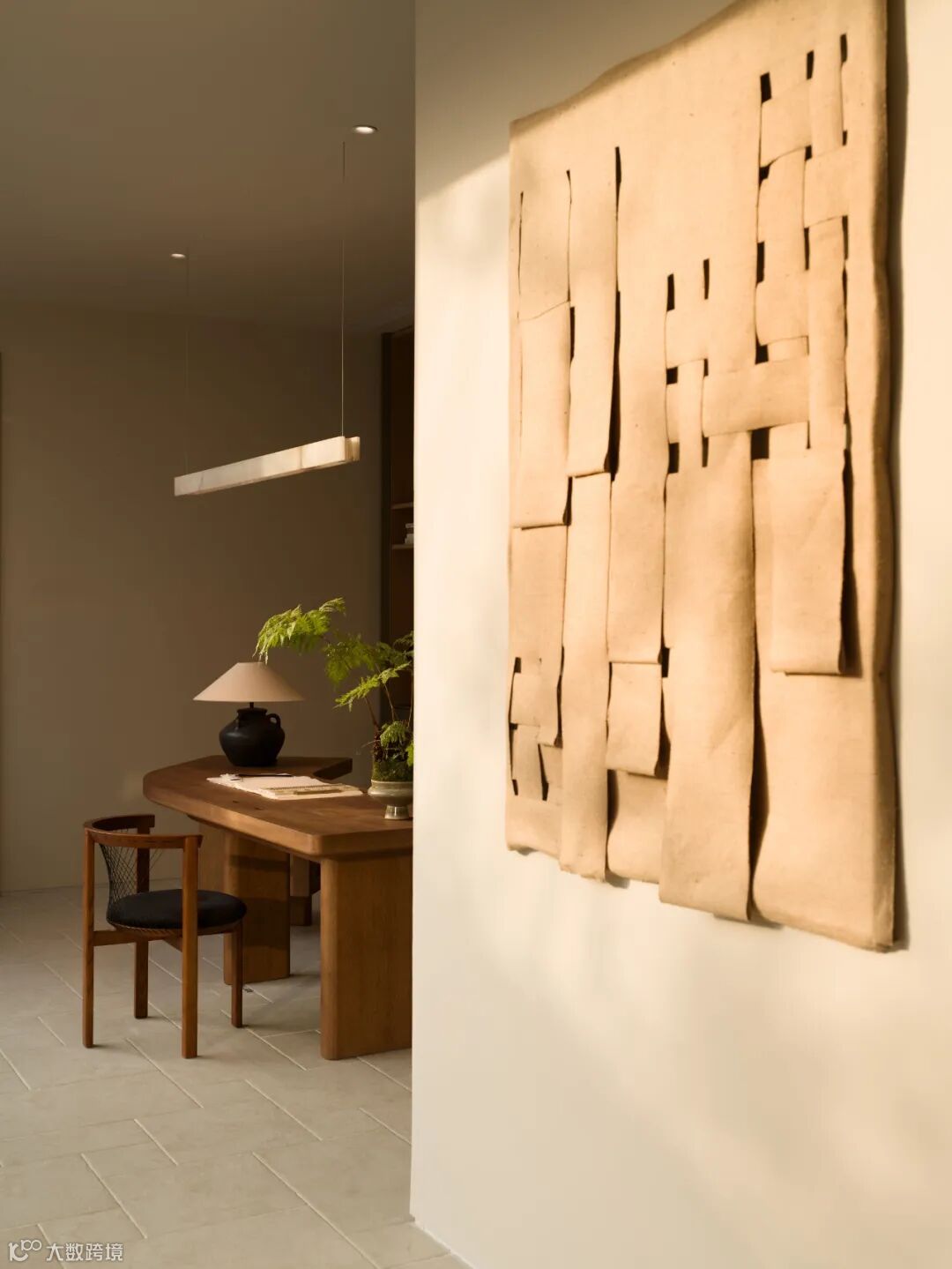
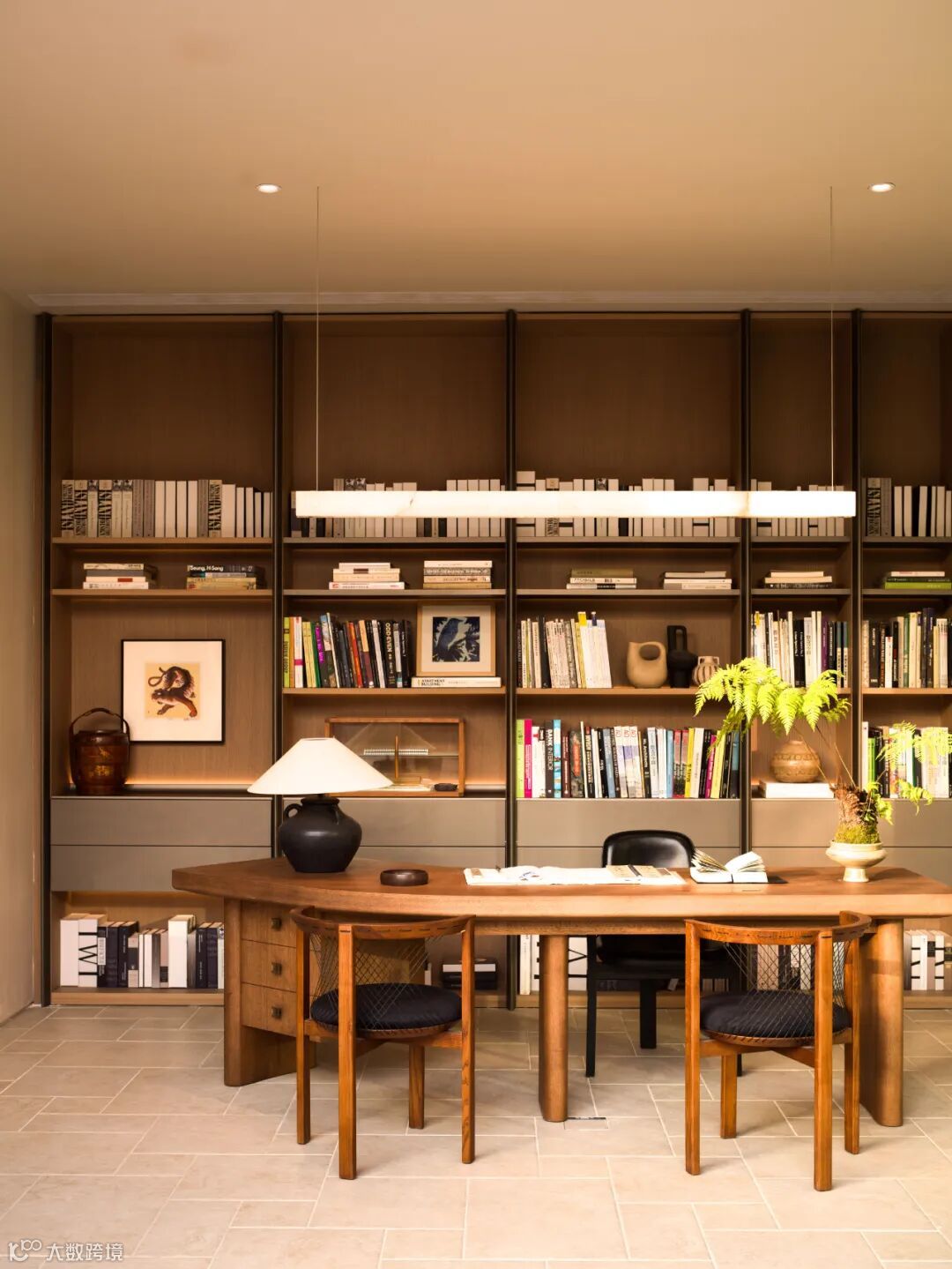
书房中浅木色的定制收纳墙占据了视觉中心,规整地收纳着书籍与艺术摆件,每一格都藏着主人的兴趣与故事。原木色的长桌简约大气,闲暇时,可在此阅读,感受内心的宁静;或是伏案处理工作,让休闲度假与日常工作两不误。桌上的绿植是空间的活力点缀,让木质的沉静中多了一丝自然的鲜活。
The custom-made storage wall in light wood color in the study occupies the visual center, neatly storing books and art pieces. Each compartment hides the owner's interests and stories. The long table in natural wood color is simple and elegant. During leisure time, one can read here to feel inner peace or work at the desk to balance relaxation and work. The green plants on the table are lively accents in the space, adding a touch of natural vitality to the calmness of the wood.
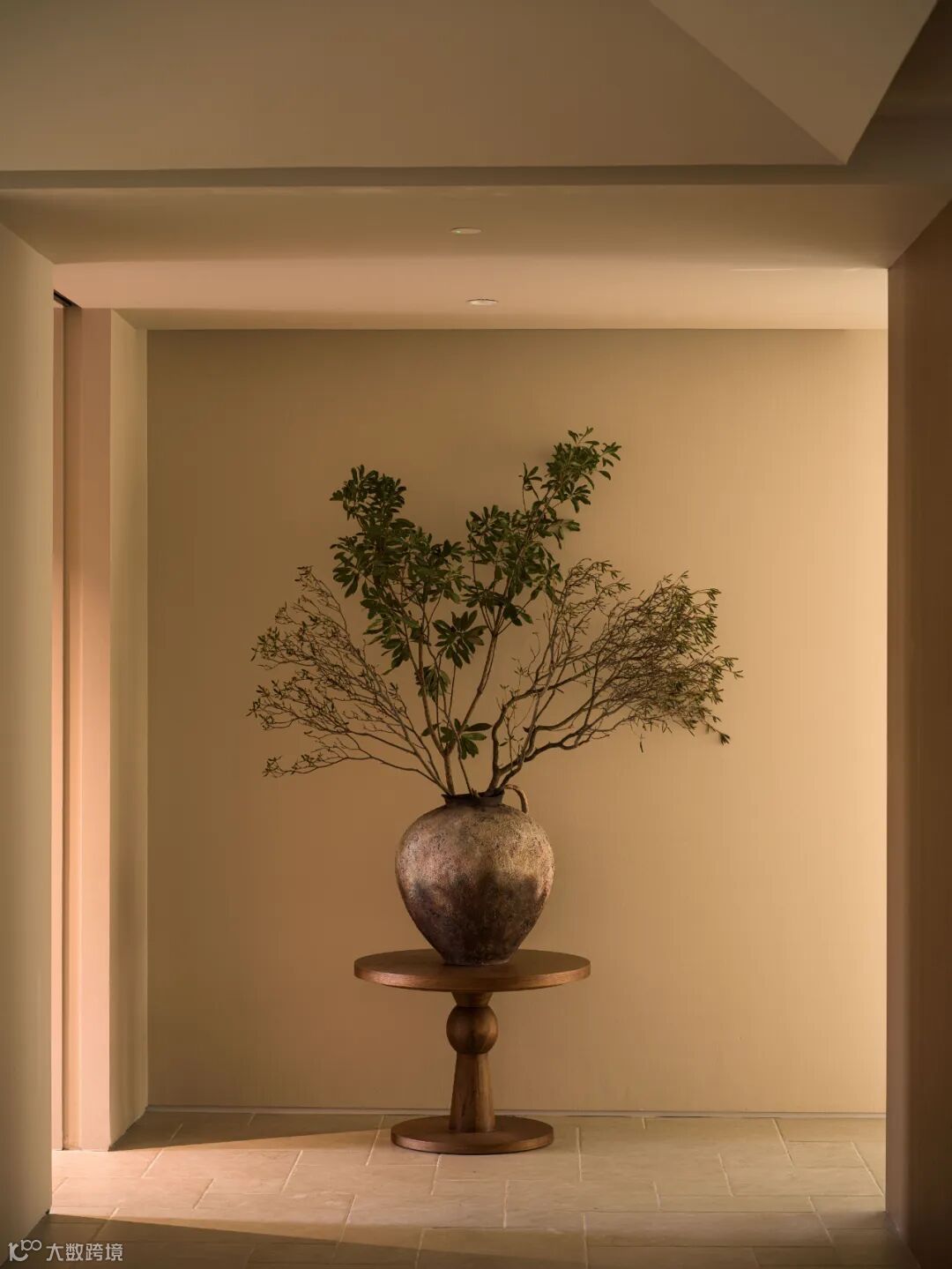
二楼走廊以极简留白营造松弛的过渡氛围,借助自然元素柔化空间的冷硬感,让功能性走廊兼具自然生机。二楼主要为私密居住空间,希望每个家庭成员都能找到自己的个性化、舒适性、安全性领域。
The corridor on the second floor creates a relaxed transitional atmosphere with minimalist blank space. It softens the cold and hard feeling of the space with natural elements, making the functional corridor also full of natural vitality. The second floor is mainly for private living spaces, hoping that each family member can find their own personalized, comfortable and safe domain.
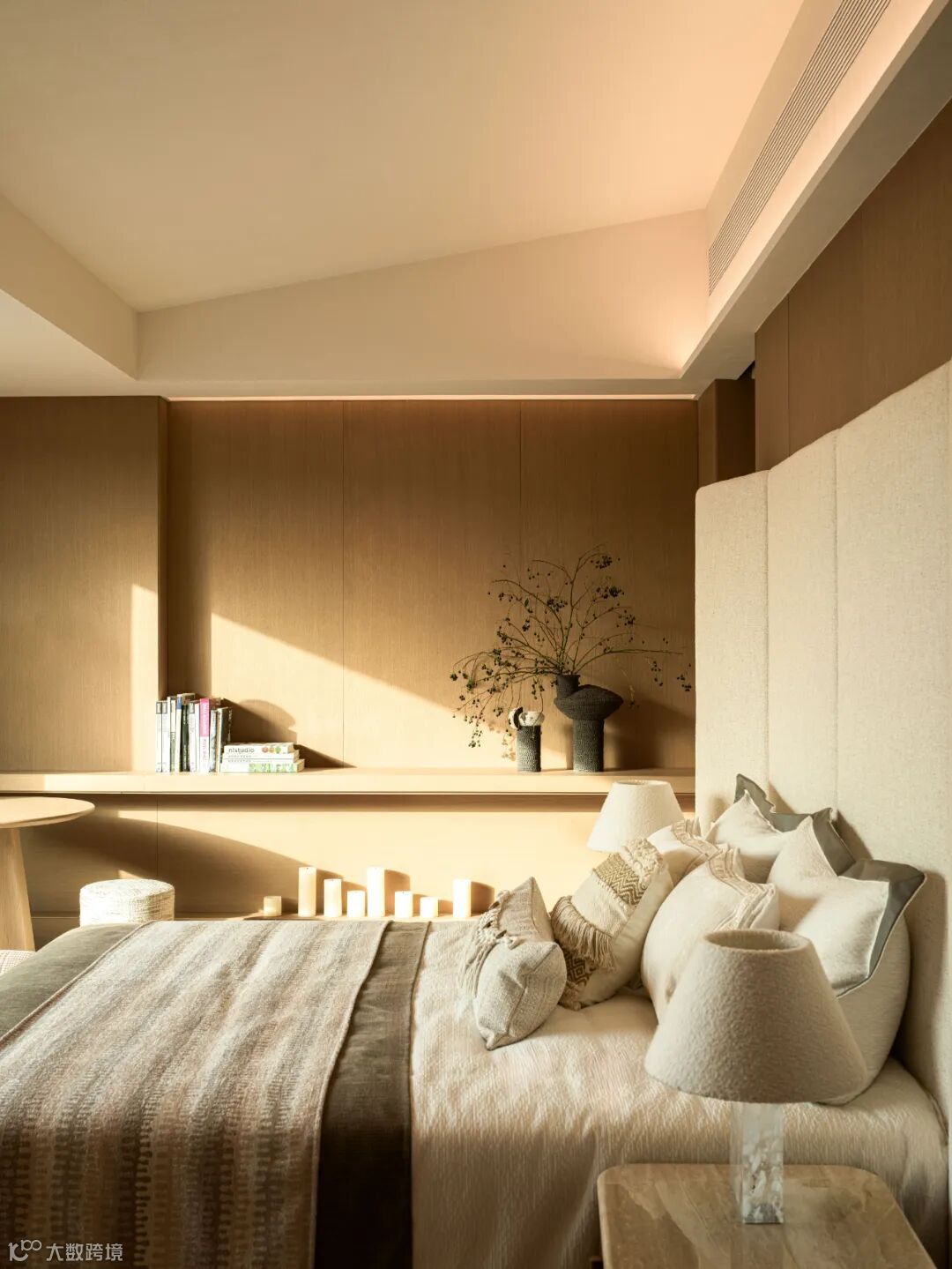
主卧如同将度假酒店搬回了家,环绕式的设计让动线功能更为清晰。以自然温润的木质元素贯穿始终,细腻的木质肌理为空间呈现出宁静平和的基调,带来一种包裹身心的疗愈氛围。卧床居于房间中央,搭配浅米色柔软床品,两侧摆放着简约台灯,入夜后灯光亮起,便成为睡前阅读或静思的温馨角落。
The master bedroom is like bringing a resort hotel back home. The wraparound design makes the movement and function lines clearer. The natural and warm wooden elements run through the entire space. The delicate wooden texture presents a peaceful and calm tone for the space, creating a soothing atmosphere that wraps around the body and mind. The bed is placed in the center of the room, paired with soft, light beige bedding. On both sides, there are simple table lamps. When the lights are turned on at night, it becomes a warm corner for reading or quiet reflection before sleep.
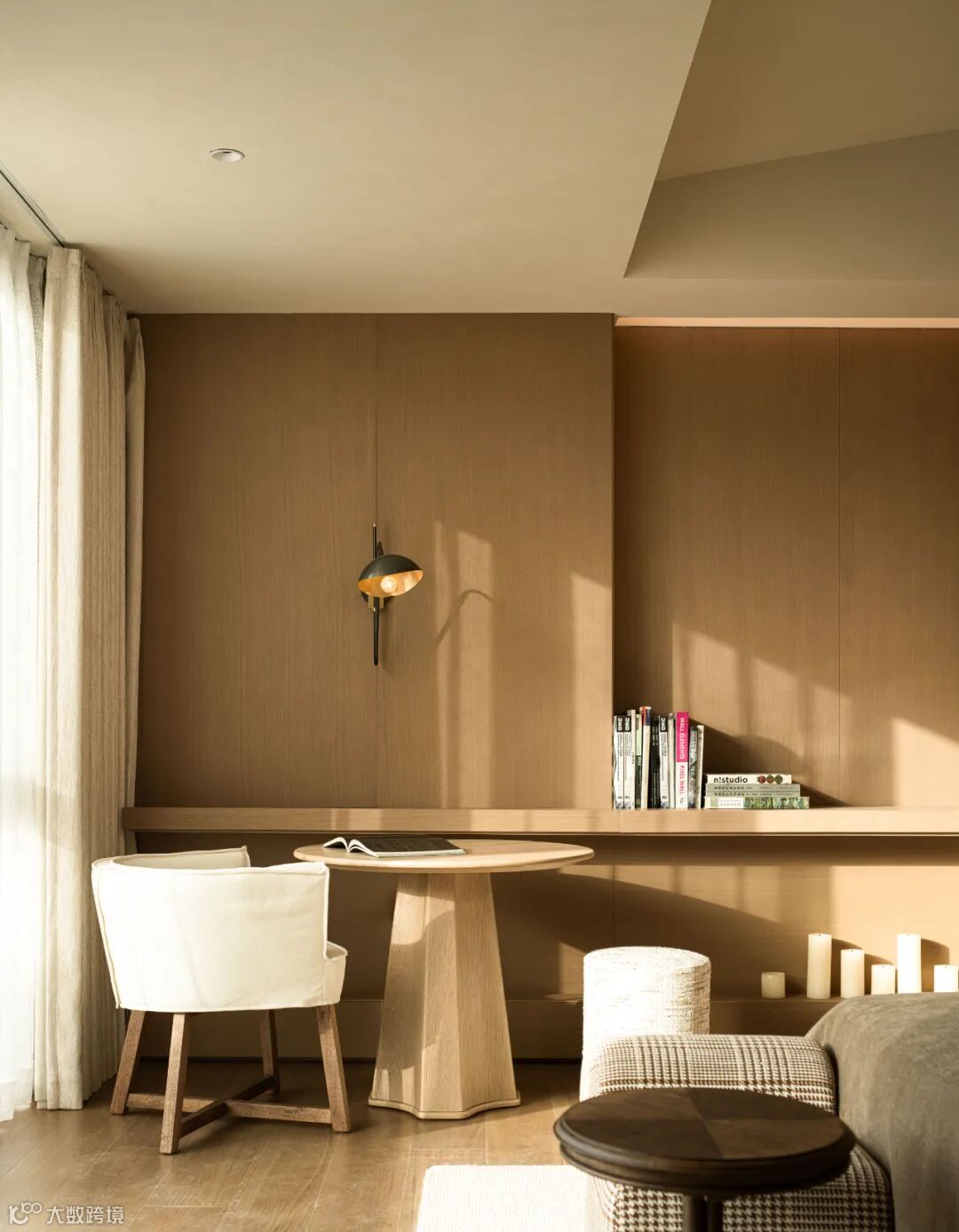
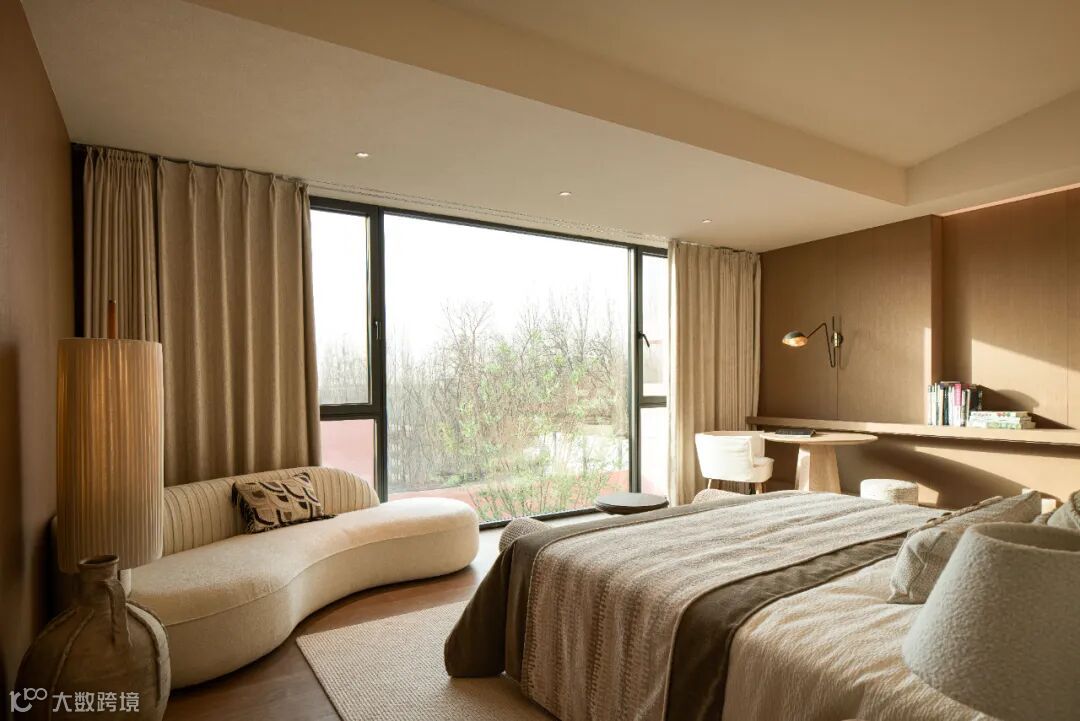
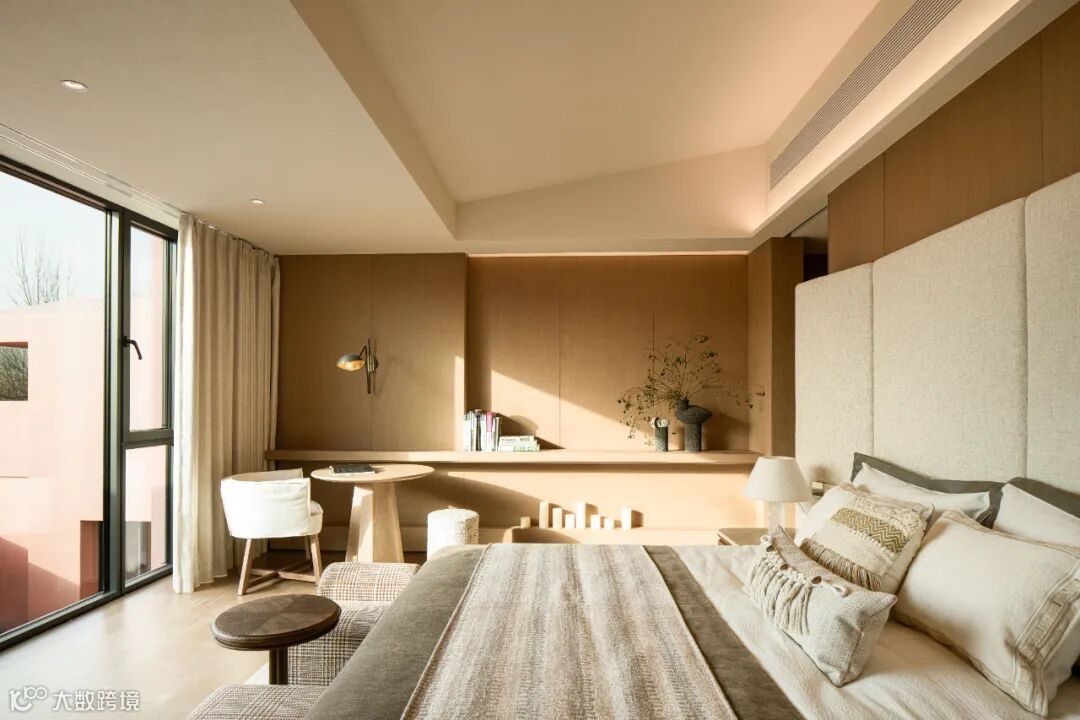
空间布局兼顾功能与美感:一侧设置了木质书桌与简约座椅,构成一个舒适的工作区。另一侧的休闲区则倚靠大幅玻璃窗,将室外景致引入室内,让人在休憩时能远眺自然、放松身心。墙面上的艺术灯具造型别致,赋予空间独特的艺术气息,使主卧不仅是安眠之所,更成为滋养精神的美学场域。
The spatial layout takes into account both functionality and aesthetics: on one side, a wooden desk and a simple chair are set up to form a comfortable work area. On the other side, the leisure area leans against a large glass window, bringing the outdoor scenery into the room, allowing people to gaze at nature and relax their minds during breaks. The artistic lamps on the wall have unique shapes, endowing the space with a distinctive artistic atmosphere, making the master bedroom not only a place for sleep but also an aesthetic domain that nourishes the spirit.
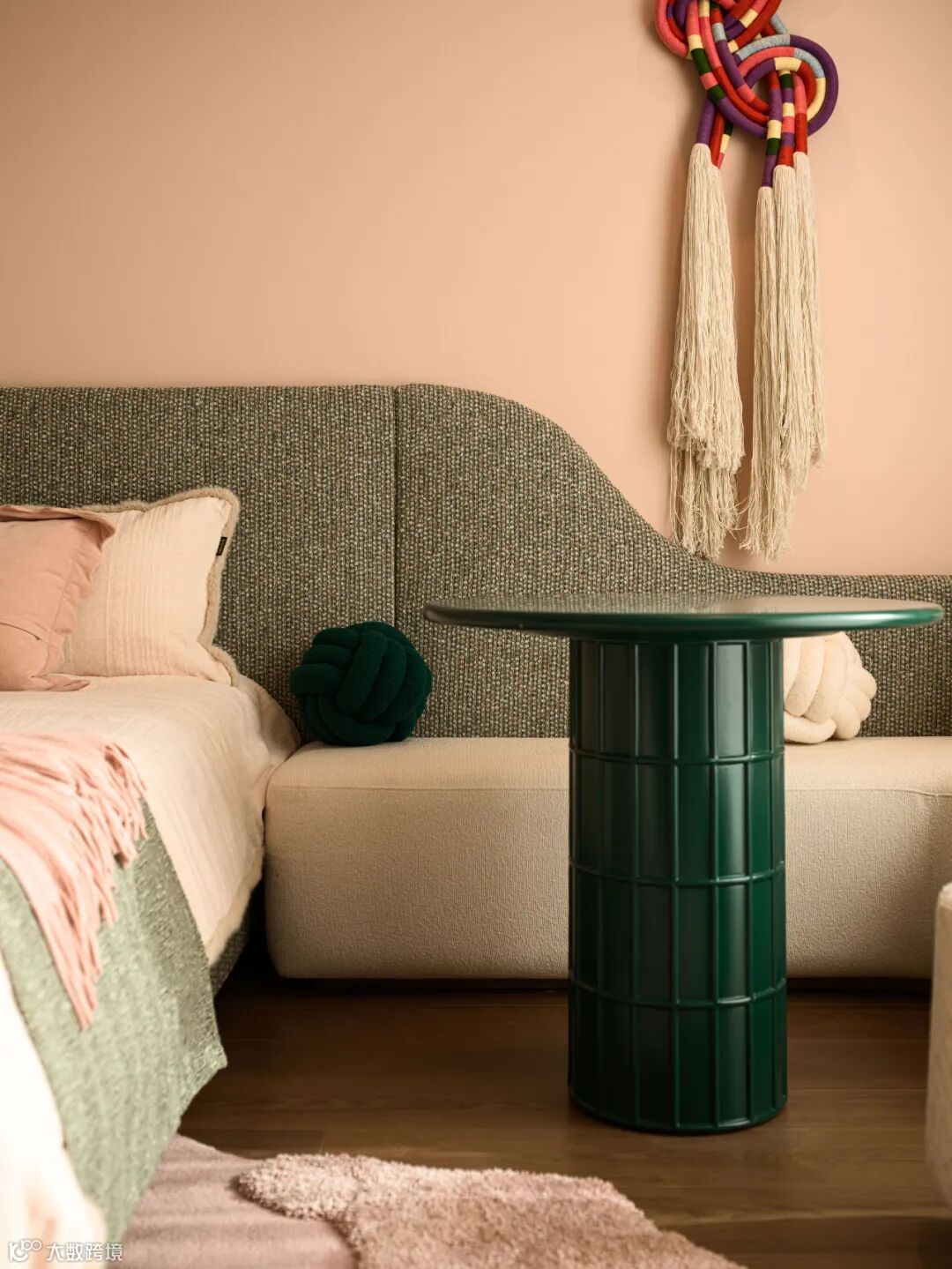
女孩房以开放式的一体化设计,很好地延展了空间的界面与采光,也给孩子营造了一个粉色浪漫的的童年。连通的卫浴间以透明玻璃隔断,干湿分离,另设了推拉移门,可以将卫生间完全隐藏。房间里的每一处装饰,从艺术挂件到地毯,都透着精致与用心,既满足了女孩对童话感的向往,又兼顾了成长过程中的实用需求,打造出一个可以肆意做梦、安心成长的温柔角落。
The girl's room adopts an open and integrated design, which effectively extends the spatial interface and lighting, and creates a pink and romantic childhood for the child. The connected bathroom is separated by transparent glass and equipped with sliding doors that can completely hide the bathroom. Every decoration in the room, from the artistic hanging pieces to the carpet, exudes refinement and care. It not only fulfills the girl's yearning for a fairy-tale atmosphere but also takes into account the practical needs during her growth process, creating a gentle corner where she can dream freely and grow up safely.
墙面是柔和的浅粉色,像给空间裹上了一层甜蜜的糖衣。独特造型的床头软包温馨又别致,上方悬挂的编织吊灯如童话里的魔法装饰,轻轻摇曳间仿佛能点亮少女的绮梦。一侧的休闲区,圆润的沙发与小桌色彩清新,是女儿和朋友分享秘密、摆弄玩偶的小天地。
The walls are a soft light pink, as if enveloping the space in a layer of sweet sugar coating. The uniquely shaped headboard is warm and distinctive. The woven pendant lamp hanging above it is like a magical decoration from a fairy tale, gently swaying as if it could light up the girl's beautiful dreams. On one side, the cozy lounge area features a round sofa and a small table in fresh colors, creating a little world for the daughter and her friends to share secrets and play with dolls.
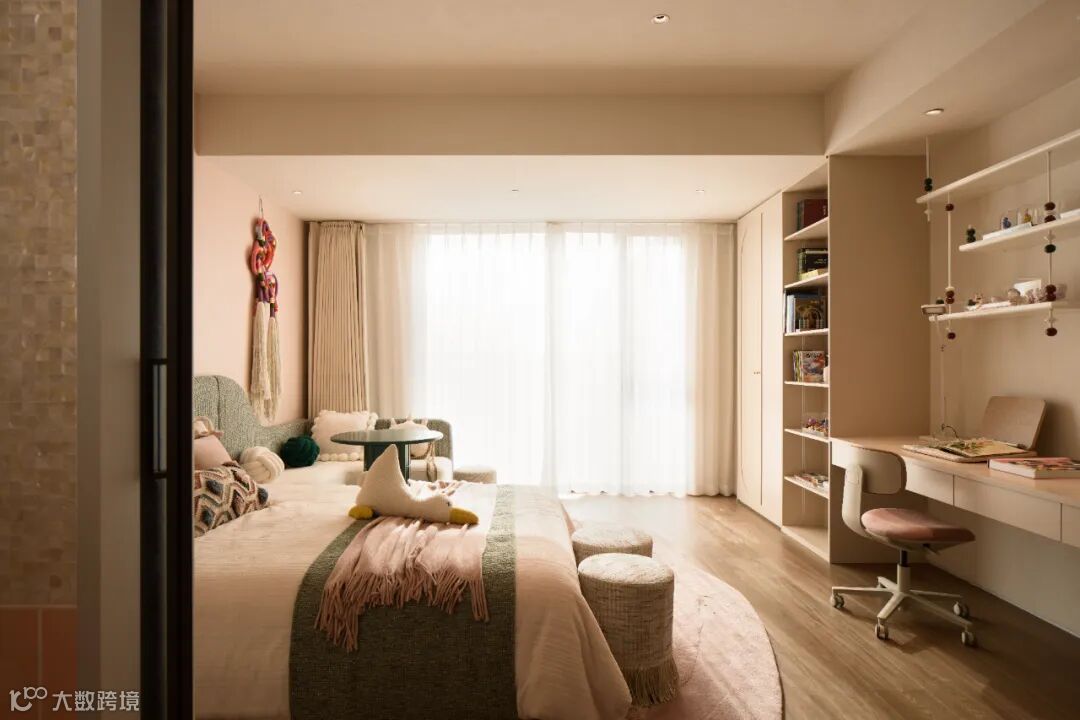
落地大窗户将室外的阳光与绿意引入,让整个空间明亮又充满生机。另一侧的学习区配备整洁书桌与舒适座椅,墙面的置物架可陈列书籍与心爱之物,陪伴她在知识海洋中探索成长。
The floor-to-ceiling windows bring in the sunlight and greenery from outside, making the entire space bright and full of vitality. On the other side, the study area is equipped with a neat desk and a comfortable chair. The wall-mounted shelves can display books and cherished items, accompanying her as she explores and grows in the ocean of knowledge.
设计师黄全与刘姮以“在地共生、轻自然、全生命周期”为核心理念,为这户从北京回归固安的三口之家重塑了理想居所。他们从建筑本体着手,通过模块化布局、嵌套式庭院和弹性空间设计,既回应了北方乡村的气候特征,又满足了家庭成长需求。建筑以红砖与低饱和粉墙对话土地记忆,以现代手法重构坡屋顶与合院格局,将自然光、老树与四季景致融入日常生活。以精细的空间规划、考究的材质美学,让乡村私宅既呈现出自然肌理,又具有当代好房子的舒适与格调,重新定义了乡村人居标准,满足家庭多元需求和精神需求,这个家庭打造出兼具都市舒适与乡村诗意的栖居之地。
Designers Huang Quan and Liu Heng, with the core concepts of "local symbiosis, light nature, and full life cycle", have reshaped an ideal home for a family of three returning from Beijing to Gubao. Starting from the building itself, they adopted modular layouts, nested courtyards, and flexible space designs, which not only responded to the climatic characteristics of the northern countryside but also met the family's growth needs. The building, with red bricks and low-saturation pink walls, converses with the land's memory, and with modern techniques, reconstructs the pitched roof and courtyard layout, integrating natural light, old trees, and seasonal views into daily life. Through meticulous spatial planning and meticulous material aesthetics, the rural private residence not only presents a natural texture but also possesses the comfort and style of a contemporary good home, redefining the standards of rural living and meeting the family's diverse and spiritual needs. This family has created a dwelling place that combines the comfort of the city with the poetry of the countryside.
项目信息
项目名称:梦改第12期河北廊坊项目
项目地址:河北省廊坊市固安县
设计机构:WJID 维几设计
主创设计:黄全、刘姮
项目面积:500.67㎡
完工时间:2025.11
项目施工:北京中盛国业建设有限公司
涂料:立邦
门窗:米兰之窗、SLEEK
智能:易来智能
地板:圣象地板
墙地砖:白兔瓷砖
木作:TATA
中西厨:FotileStyle方诗得
洁具龙头:玫瑰岛
给排水:吉博力
机电:约克
太阳能:海尔新能源
家具:JIJIAN几间家居
电器:COLMO
特别鸣谢:JIJIAN几间家居、TATA、方太、易来智能、圣象地板、海尔新能源、米兰之窗、SLEEK、白兔瓷砖、企一照明、玫瑰岛、COLMO、吉博力、约克、立邦、弗朗茨电梯、瀚振家具、摩根花灯、沃潇灯饰、富立地毯、帛言窗帘、十八几花木研究所(排名不分先后)
项目摄影: BIJISPACE边界人
项目视频:HUUUASTUDIO花生工作室