

Improving the energy efficiency of ships
Energy Efficiency Design Index (EEDI)
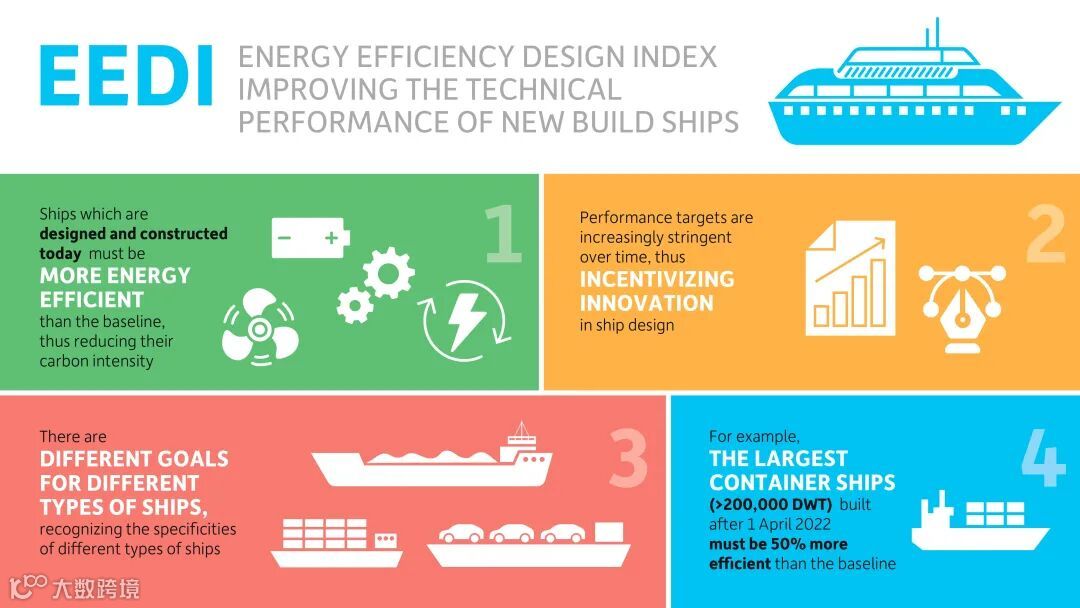
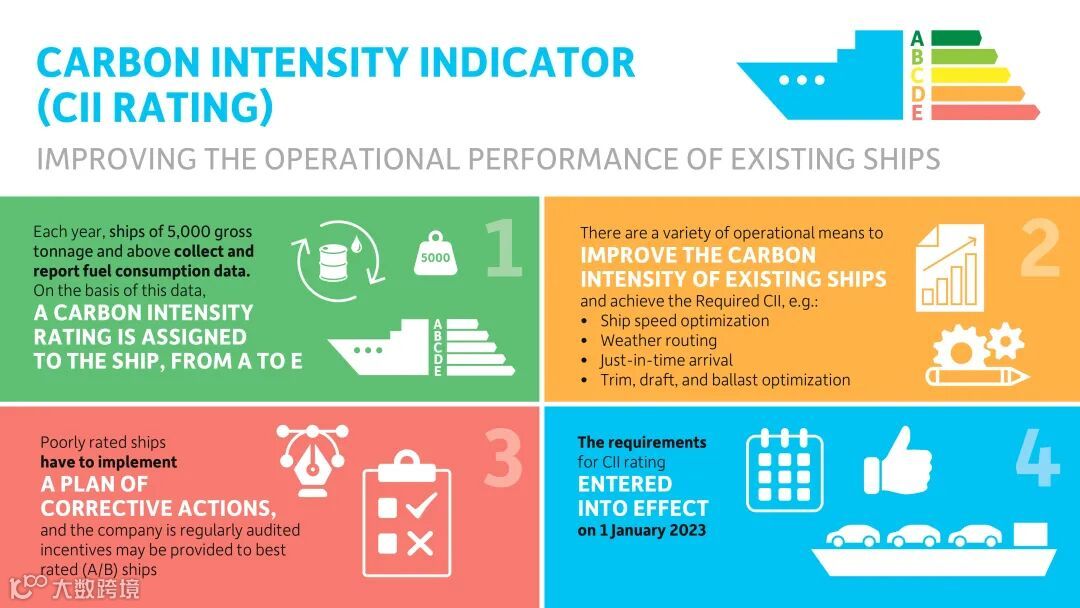
The EEDI is an important technical measure aiming at promoting the use of more energy efficient equipment and engines for the design of new ships in order to make them less polluting. The EEDI requires a minimum energy efficiency level per capacity mile (e.g. tonne mile) for different ship type and size segments.
Since 1 January 2013, following a two-year transitional phase, new ship design needs to meet the reference level for their ship type. The level is to be tightened incrementally every five years, and so the EEDI is expected to stimulate continued innovation and technical development of all the components influencing the fuel efficiency of a ship from its design phase. The EEDI is a non-prescriptive, performance-based mechanism that leaves the choice of technologies to use in a specific ship design to the industry. As long as the required energy efficiency level is attained, ship designers and builders are free to use the most cost-efficient solutions for the ship to comply with the regulations. The EEDI provides a specific figure for an individual ship design, expressed in grams of carbon dioxide (CO2) per ship's capacity-mile (the smaller the EEDI, the more energy efficient the ship design) and is calculated by a formula based on the technical design parameters for a given ship.
The CO2 reduction level (grams of CO2 per tonne mile) for the first phase is set to 10% compared to a reference line calculated from the average efficiency for ships built between 2000 and 2010. It is tightened every five years to keep pace with technological developments of new efficiency and reduction measures until 2025 and onwards when a 30% reduction is mandated for applicable ship types.
The EEDI was originally developed for the largest and most energy intensive segments of the world merchant fleet and embraces emissions from new ships covering the following ship types: tankers, bulk carriers, gas carriers, general cargo ships, container ships, refrigerated cargo carriers and combination carriers. In 2014, MEPC adopted amendments to the EEDI regulations to extend the scope of EEDI to: LNG carriers, ro-ro cargo ships (vehicle carriers), ro-ro cargo ships; ro-ro passenger ships and cruise passenger ships having non-conventional propulsion. These amendments mean that ship types responsible for approximately 85% of the CO2 emissions from international shipping are incorporated under the international regulatory regime.
For a uniform and effective implementation of the regulations, guidelines related to the EEDI (regulation 22 of MARPOL Annex VI) and survey and certification (regulation 5) were developed by MEPC. They are available in the Index of MEPC Resolutions and Guidelines and Circulars related to MARPOL Annex VI under the "Guidelines and Circulars related to MARPOL Annex VI" part.
Ship Energy Efficiency Management Plan (SEEMP)
The Ship Energy Efficiency Management Plan (SEEMP) is an operational mechanism to improve the energy efficiency of a ship in a cost-effective manner. The SEEMP urges the ship owner and operator at each stage of the plan to consider new technologies and practices when seeking to optimise the operational performance of a ship. The SEEMP also provides an approach for shipping companies to manage ship and fleet efficiency performance over time using recognized monitoring tools.
The 2022 guidelines for the development of the SEEMP incorporates best practices for fuel efficient ship operation as well as templates for the development of SEEMPs, which should comprise of three parts:
Part I: Ship management plan to improve energy efficiency
Part II: Ship fuel oil consumption data collection plan
Part III: Ship operational carbon intensity plan
Data collection system (DCS) for fuel oil consumption of ships
In October 2016, MEPC 70 adopted, by resolution MEPC.278(70), mandatory MARPOL Annex VI requirements for ships to record and report their fuel oil consumption in order to have the necessary data to make decisions on further measures to improve the energy efficiency of ships.
IMO short-term GHG reduction measures (EEXI, CII rating and enhanced SEEMP)
In 2021, IMO adopted a new set of technical and operational measures (resolution MEPC.328(76)), namely the Energy Efficiency Existing Ship Index (EEXI) and the Carbon Intensity Indicator (CII) which enter into force on 1 January 2023.Picture3.png

Energy Efficiency Existing ship Index (EEXI) and Carbon Intensity Indicator (CII) rating
These technical (EEXI) and operational (CII) requirements were adopted in June 2021 as a short-term measure under the Initial IMO GHG Strategy framework for implementation before 1 January 2023.
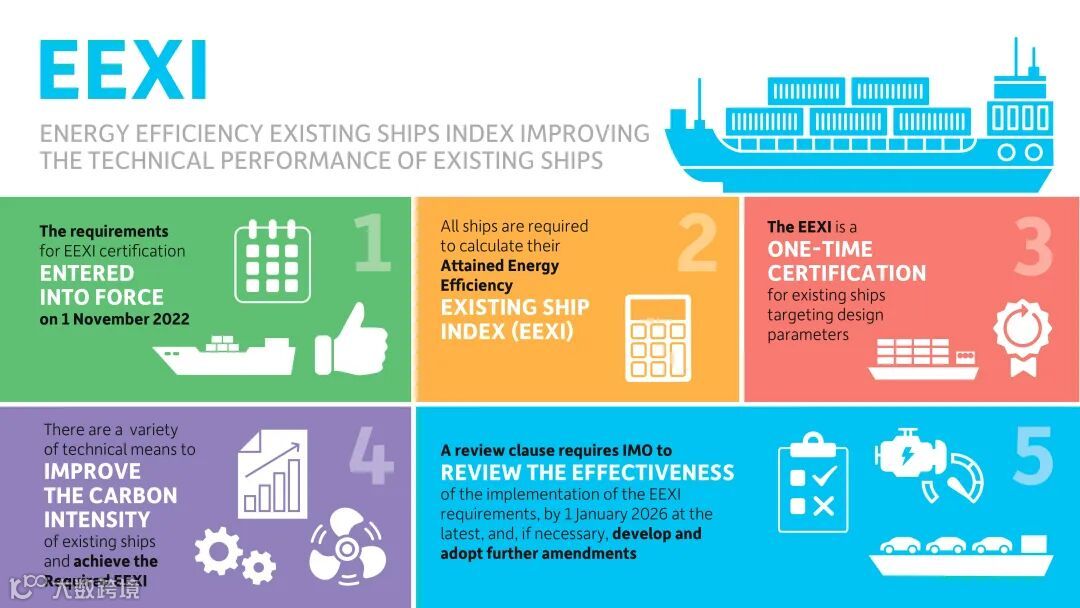
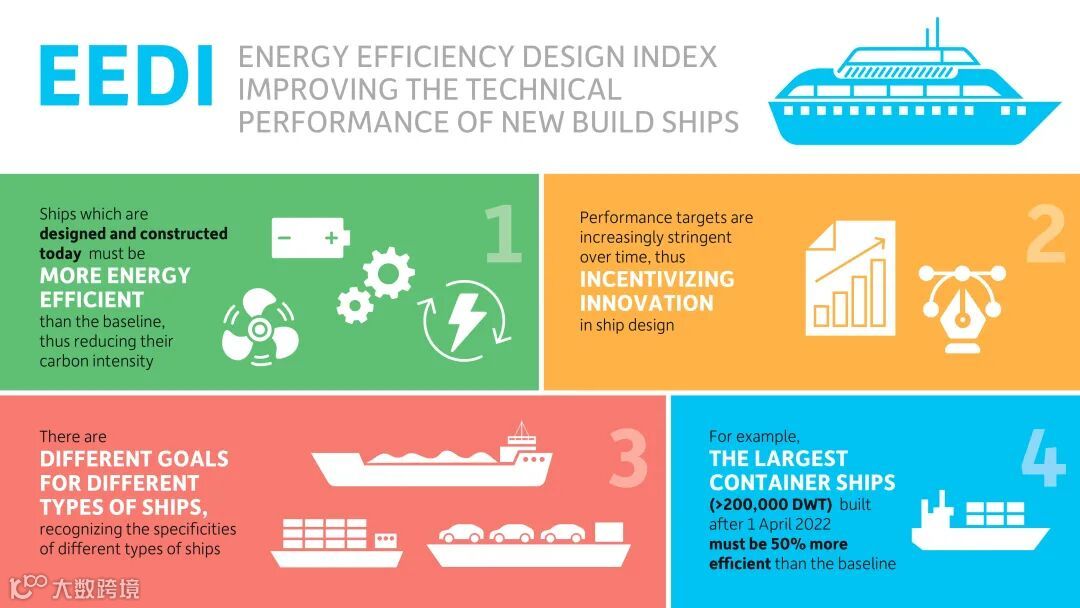
Under the EEXI framework, all existing ships of 400 GT and above are required to calculate their attained Energy Efficiency Existing Ship Index (EEXI), which reflects the "technical" or "design" efficiency of the ship. Ships then have to reach a "required EEXI", equivalent to Required EEDI levels for 2022, thus creating a level-playing field among the fleet.
The EEXI framework is technology neutral, and the shipowner or charterer can choose the most appropriate means to achieve the goals set by IMO regulations. Existing technologies available to comply with the Required EEXI are engine/shaft power limitation, waste heat recovery, wind assisted propulsion, etc.
The Carbon Intensity Indicator (CII) rating reflects the operational energy efficiency of ships, building upon fuel oil consumption from the IMO DCS and the SEEMP as a management tool. CII is mandatory for ships of 5,000 gross tonnage and above. The attained annual operational CII has to be documented and verified against the required annual operational CII. The annual carbon intensity reduction factor is equivalent to business-as-usual until entry into force; then 2% from 2023 to 2026; and to be further strengthened for the period 2027 to 2030.
Based on this, the ship's Administration determines the operational carbon intensity rating of the ship. The rating is given on a scale - operational carbon intensity rating A, B, C, D or E - indicating a major superior, minor superior, moderate, minor inferior, or inferior performance level. A ship rated D for 3 consecutive years or rated as E, shall develop a "Plan of corrective actions".
The CII framework provides tools for Administrations, ports and other stakeholders, including the financial sector, to provide incentives to most energy efficient ships.
提升船舶能效
能效设计指数(EEDI)
EEDI是一项重要的技术性措施,旨在促进在新船设计中使用更节能的设备和发动机,从而减少污染。EEDI要求针对不同类型和尺度的船舶,设定单位运载能力海里(例如吨海里)的最低能效水平。
自2013年1月1日起,经过两年的过渡期后,新船设计必须满足其船型的参考水平。该水平将每五年逐步收紧,因此EEDI预计将刺激从设计阶段开始影响船舶燃油效率的所有部件的持续创新和技术发展。EEDI是一个非规定性、基于性能的机制,将由行业自行选择用于特定船舶设计的技术。只要达到要求的能效水平,船舶设计者和建造者可以自由选择最具成本效益的解决方案以使船舶符合法规要求。EEDI为单艘船舶设计提供一个具体数值,以每单位运载能力海里的二氧化碳(CO2)克数表示(EEDI值越小,船舶设计能效越高),该数值基于给定船舶的技术设计参数通过公式计算得出。
第一阶段的CO2减排水平(每吨海里CO2克数)设定为比根据2000年至2010年间建造船舶的平均效率计算的参考线降低10%。该水平每五年收紧一次,以跟上新的效率和减排措施的技术发展步伐,直至2025年及以后,届时适用船型将强制要求减排30%。
EEDI最初是为世界商船船队中最大、能耗最高的船型开发的,涵盖了新船的排放,包括以下船型:油船、散货船、气体运输船、杂货船、集装箱船、冷藏货船和兼用船。2014年,海上环境保护委员会(MEPC)通过了EEDI法规的修正案,将EEDI的适用范围扩大到:液化天然气运输船、滚装货船(汽车运输船)、滚装货船、具有非常规推进方式的滚装客船和邮轮。这些修正案意味着,占国际航运约85%二氧化碳排放的船型都被纳入了国际监管制度。
为了统一有效地实施法规,MEPC制定了与EEDI(MARPOL附则VI第22条)以及检验和发证(第5条)相关的导则。这些导则可在“与MARPOL附则VI相关的导则和通函”部分的《MEPC决议、导则及通函索引》中查阅。
船舶能效管理计划(SEEMP)
船舶能效管理计划(SEEMP)是一种以成本效益方式提高船舶能效的营运性机制。SEEMP敦促船东和经营者在计划的每个阶段,在寻求优化船舶营运性能时考虑新技术和实践。SEEMP还为航运公司提供了一种方法,使其能够使用公认的监测工具,随着时间推移管理单船和船队的能效性能。
《2022年SEEMP编制导则》(译者注:已更新为2024版,并被修正)纳入了燃料高效船舶营运的最佳实践以及编制SEEMP的模板,该计划应包含三个部分:
第一部分: 提升能效的船舶管理计划
第二部分: 船舶燃油消耗数据收集计划
第三部分: 船舶营运碳强度计划
船舶燃油消耗数据收集机制(DCS)
2016年10月,MEPC第70届会议通过了第MEPC.278(70)号决议,即MARPOL附则VI对船舶记录和报告其燃油消耗量的强制性要求,以便获得必要的数据来就进一步提高船舶能效的进一步措施作出决策。
IMO短期温室气体减排措施(EEXI、CII评级和加强版SEEMP)
2021年,IMO通过了一套新的技术和营运性措施(第MEPC.328(76)号决议),即现有船舶能效指数(EEXI)和碳强度指标(CII),这些措施于2023年1月1日生效。

现有船舶能效指数(EEXI)和碳强度指标(CII)评级
这些技术性(EEXI)和营运性(CII)要求于2021年6月通过,作为IMO温室气体初步战略框架下的短期措施,要求在2023年1月1日前实施。
在EEXI框架下,所有400总吨及以上的现有船舶都需要计算其“现有船舶能效指数达到值(Attained EEXI)”,该指数反映了船舶的“技术”或“设计”效率。船舶还必须达到一个 “EEXI要求值(Required EEXI)”,该要求等同于2022年要求的EEDI水平,从而在船队中创造公平的竞争环境。
EEXI框架是技术中立的,船东或租船人可以选择最合适的手段来实现IMO法规设定的目标。可用于满足Required EEXI要求的现有技术包括主机/轴功率限制、废热回收、风力辅助推进等。
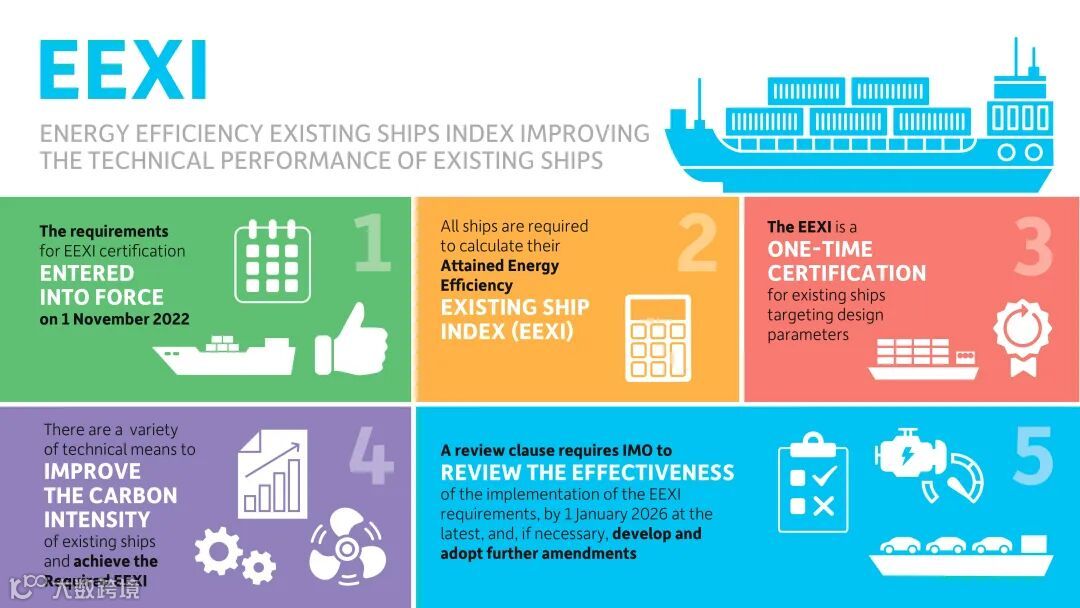
碳强度指标(CII)评级反映了船舶的营运能效,其基础是IMO DCS提供的燃油消耗数据,并以SEEMP作为管理工具。CII对5000总吨及以上的船舶是强制性的。船舶必须记录其年度营运CII达到值,并根据年度营运CII要求值进行验证。年度碳强度折减系数在生效前等同于“照常运营”;然后从2023年到2026年为2%;并在2027年至2030年期间进一步加强(译者注:MEPC 83已修订)。
基于此,船舶的主管机关确定该船的营运碳强度评级。评级分为A、B、C、D或E级,分别表示极佳、较佳、中等、较差或极差的性能水平。连续三年被评为D级或被评为E级的船舶,必须制定一份“整改行动计划”。
CII框架为主管机关、港口和其他利益相关方(包括金融部门)提供了工具,以激励能效最高的船舶。
***