




Revitalizing the city center’s north side. In the new urban development plan, Rode Weeshuisstraat is no longer the back of Grote Markt but the front of the city center’s north side. In addition, cars will give way to pedestrians, and Mercado – replacing a former V&D department store warehouse – creates space for a new city square with a more compact footprint. The redesign of the street is combined with a generous 6-metre-high transparent plinth, which, together with the new square, creates a meeting place.
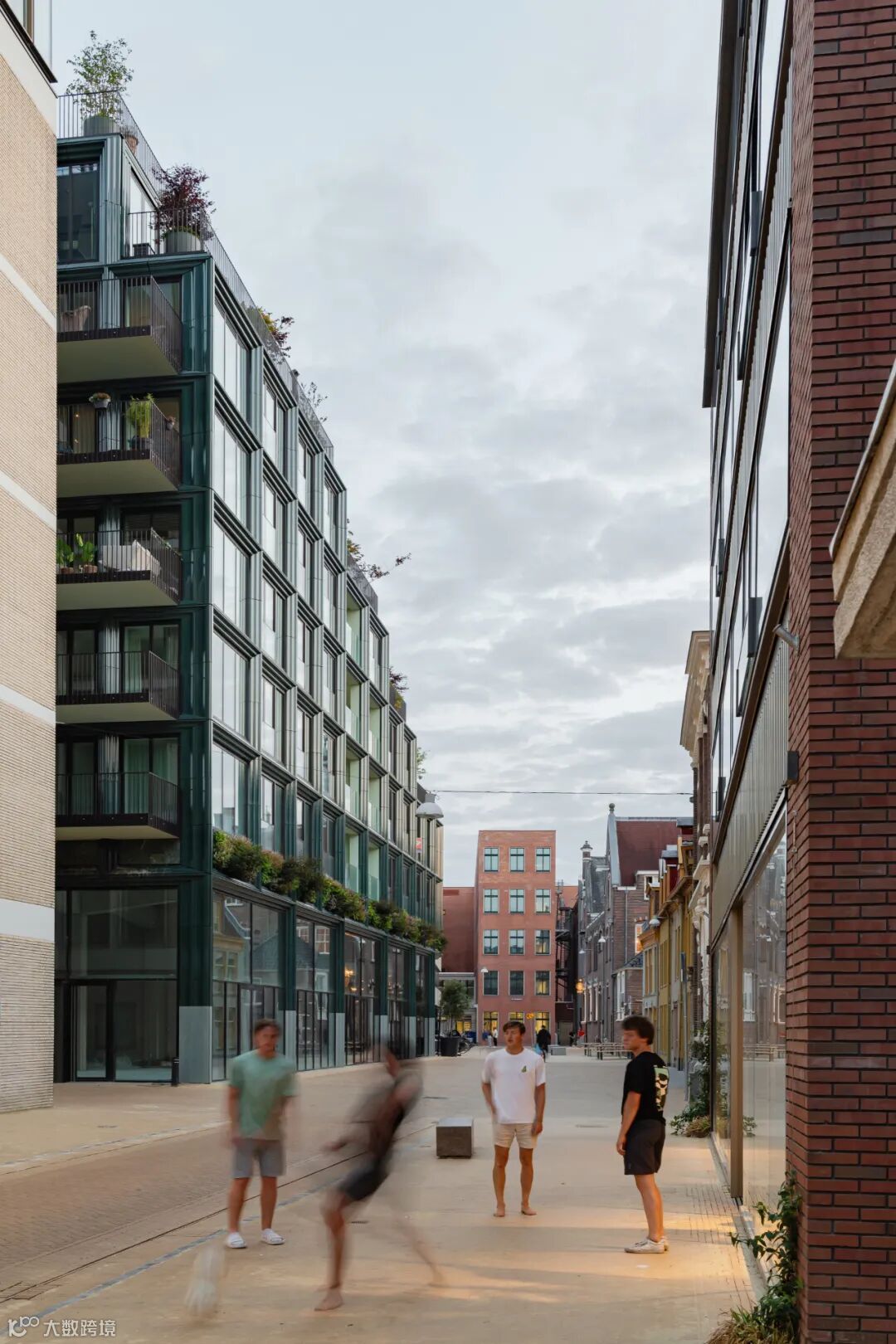
In terms of scale, Mercado forms the link between Grote Markt and Rode Weeshuisstraat. The buildings on Grote Markt are of a larger scale than those on the north side of Rode Weeshuisstraat, including the Weeshuis (orphanage) itself. Mercado combines these scales in its stepped volume, which is high where possible and lower where necessary. The result is a building that fits perfectly into the city center in terms of scale yet has its own identity.
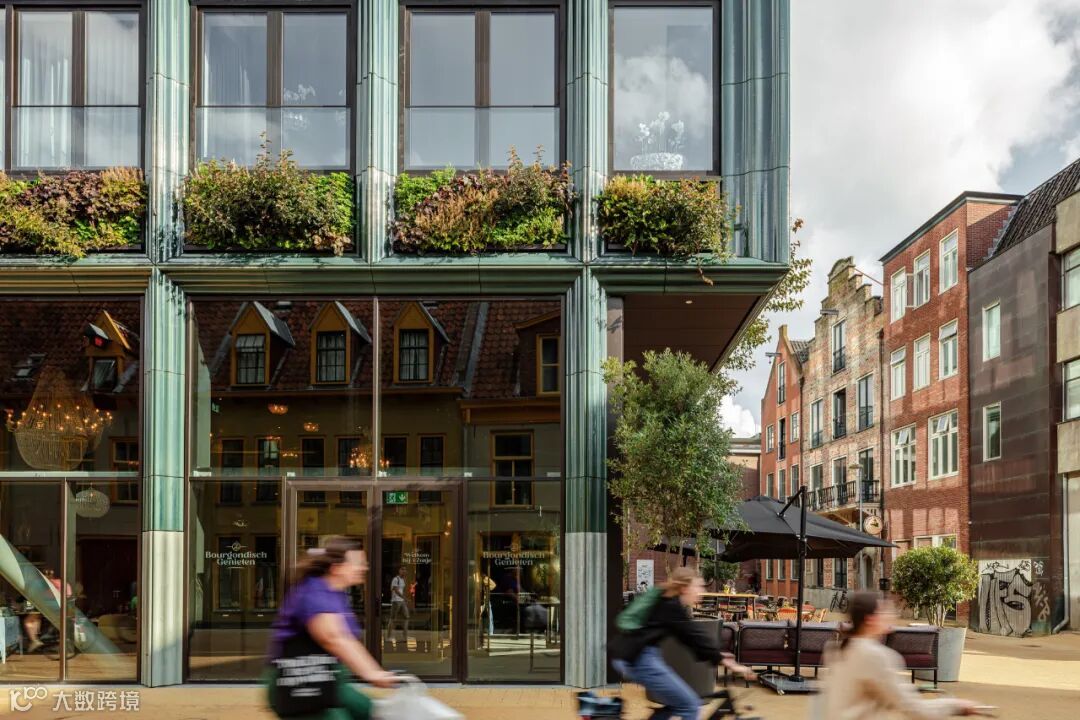
Craft and character. Mercado’s facade is made from ceramic elements. In close collaboration with ceramic manufacturer NBK and facade builder Bijlbouw, samples and mock-ups were used to find the perfect blue-green glaze for the facade with its custom-made details. Thanks to this glaze, the building appears a different color in every type of weather, and a layering of color and form can be discerned adding a touch of artistry that refers to the richness of Groningen’s historical buildings and the optimistic rawness of post-war architecture. The reconstruction architecture on Grote Markt is characterized by glass, precast concrete, and natural stone, while the orphanage stands out with its ornaments and stucco facades in pastel shades. Mercado, with its beige clay and semi-transparent glaze, blends in well with both the pastel Weeshuis and the post-war block’s stone-like materials.

Flexible, sustainable, and nature-inclusive. The ground floor has been future-proofed by placing stairs and elevators to the side of the building. This creates an open, monumental space that can be flexibly configured for public events. Beneath the building, there are wells for a thermal energy system (TES). In combination with heat pumps, the entire building is natural gas-free.
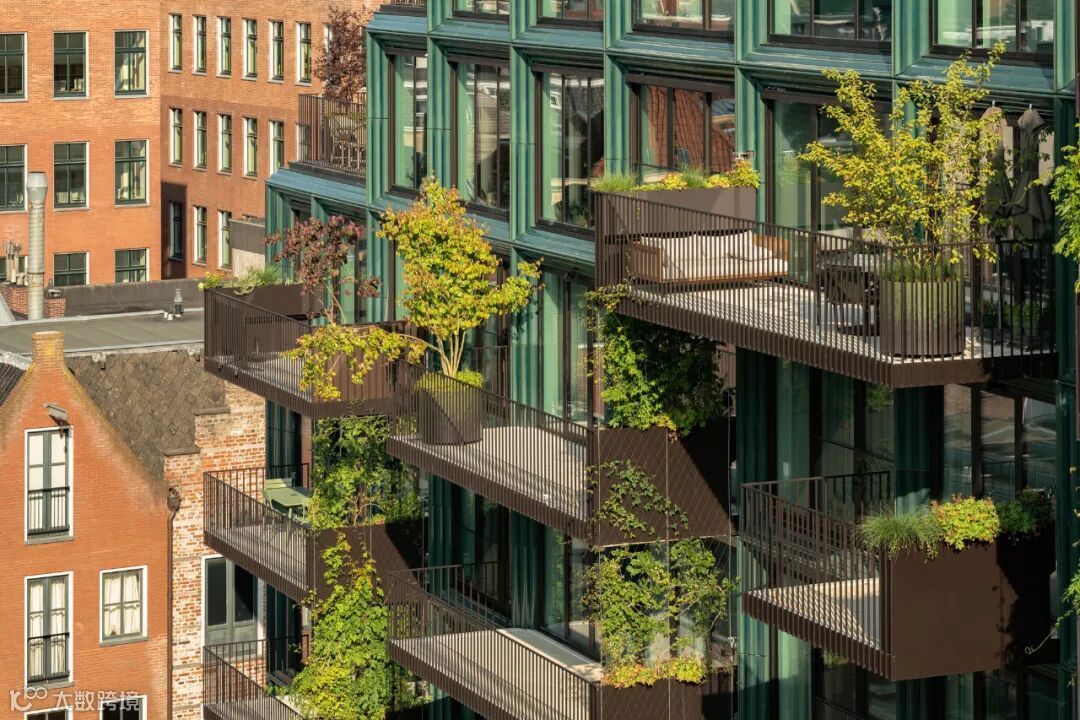
The vertical garden along the facade provides the building with 3.800 plants and contributes to biodiversity. On the south facade, climbing plants cover the balconies like green privacy screens. The building’s stepped volume provides space for roof terraces where colorful plants and trees are part of the design. Special planters were designed for Mercado with a unique color scheme to match the building. Both the rooftop terraces and facade gardens are watered by a computerized system and regularly maintained by a gardener.

Successful transformation. In five years, Rode Weeshuisstraat has transformed from a dark side street into a unique meeting place. Frank Loer (Loer Architecten) and Henk Stadens (De Zwarte Hond) state: “The urban plan gives the city center’s north side the sophistication it deserves. Mercado and the redesigned Rode Weeshuisstraat give the city center a boost. The monumental plinth, greenery, and ceramic facade add an exceptional quality to the center of Groningen.”


剖面图
建筑师:De Zwarte Hond + Loer Architecten
地点:荷兰
年份:2023


本资料声明:
1.本文为建筑设计技术分析,仅供欣赏学习。
2.本资料为要约邀请,不视为要约,所有政府、政策信息均来源于官方披露信息,具体以实物、政府主管部门批准文件及买卖双方签订的商品房买卖合同约定为准。如有变化恕不另行通知。
3.因编辑需要,文字和图片无必然联系,仅供读者参考;

微信公众号“搜建筑”(ID:sjz9999)
合作、宣传、投稿
联系微信:soujianzhu006