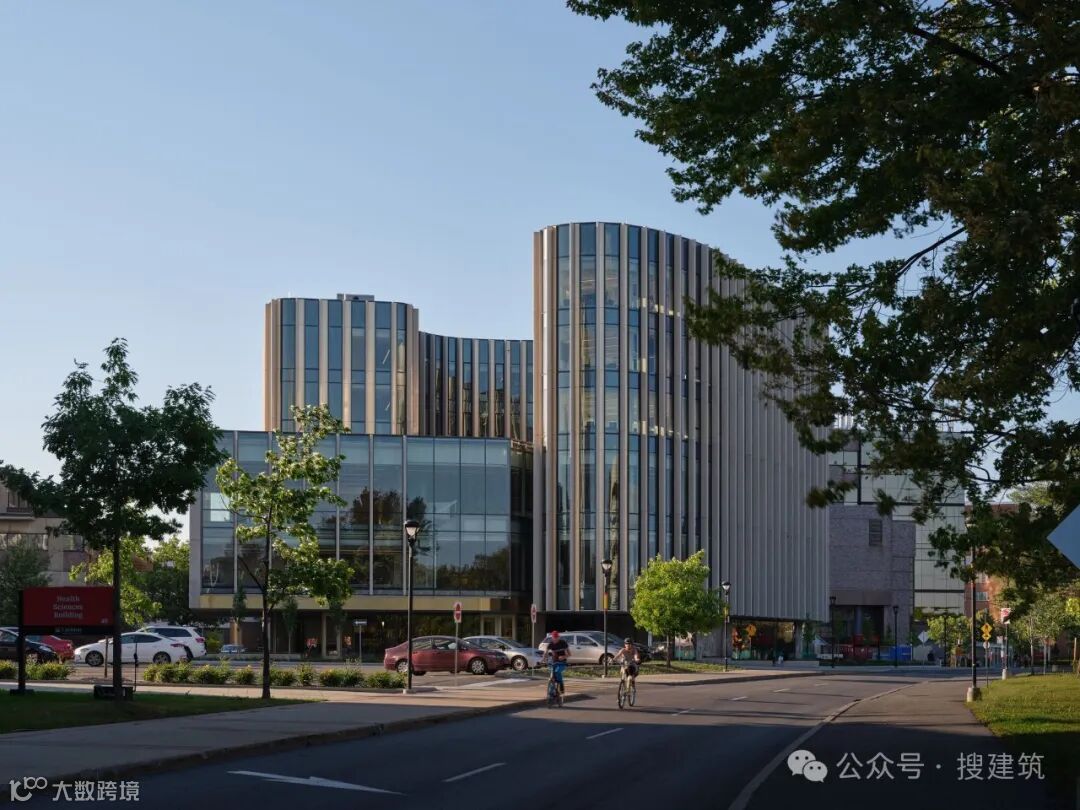
卡尔顿大学斯普罗特商学院的设计竞赛要求在校园的十字路口建造一座地标性建筑。学校希望通过建筑形式表达其创造、联系和创新的核心价值观,并创造一个欢迎和激励学生和教职员工的场所。该设计的回应是一个具有视觉趣味的灯塔,从里多河一直延伸到卡尔顿的入口广场和交通枢纽,绿树成荫。
The design competition for Carleton University’s Sprott School of Business called for a landmark building at a high-profile campus crossroads. The school sought to express its core values of creativity, connection, and innovation in built form and to create a place that welcomes and inspires students and staff. The design response is a beacon of visual interest that holds a tree-lined view that extends from the Rideau River to Carleton’s entry plaza and transit hub.

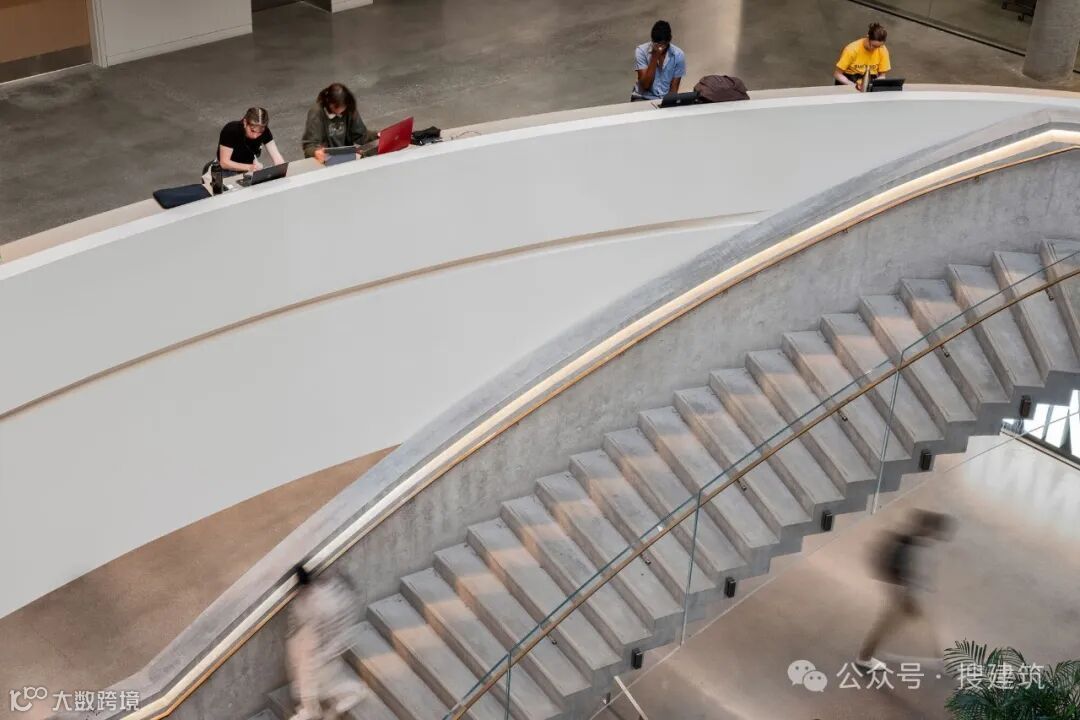
主要的设计理念是一种诱人的弧线造型,这种柔和的弧线内外兼修,让人一进门就能感受到整个学校的活力。从中庭的天窗向外辐射,中心的聚会空间清晰可辨,一览无余。底层设有一个咖啡厅,并通过一个蜿蜒的特色楼梯通向上层,在这里,玻璃帷幕的教室和休息空间为学生提供了教室以外的技术学习和合作机会。
The principal design concept is an inviting curving form, a gentle arc expressed both externally and internally to convey an embrace as one enters and feels the energy of the entire school wrapped around you. Radiating from the skylit atrium, the central space of gathering is legible and on display. The ground floor houses a café and opens dramatically with a winding feature stair to upper levels where glass-lined classrooms and break-out spaces provide technology-enabled learning and collaboration opportunities beyond the classroom.

外部采用了大胆的垂直预制鳍片,将六层楼高的建筑包裹起来,以减少太阳辐射热,并突出其曲线形状。裸露的混凝土地板可以承受高流量的使用,是一种与设计美学相融合的节约之举,与各种天然材料(如当地采购的石材和橡木)形成鲜明对比。在冬季漫长的气候条件下,该建筑营造了一个舒适、光线充足的空间,并位于校园人行隧道系统的中心位置。
The exterior is unified with bold, vertical precast fins that wrap the six-story structure to reduce solar heat gain and accentuate its curved form. Exposed concrete floors withstand high-traffic use and are an economizing move that blends with the design aesthetic to contrast a variety of natural materials such as locally sourced stone and oak. In a climate of long winters, the structure conveys a comfortable, light-filled space and sits above the nexus of the campus pedestrian tunnel system.

可持续设计贯穿于这座混合型建筑的方方面面。裙楼采用现浇混凝土结构,以解决隧道系统以及地面和二楼之间的转移问题。大教室所需的长跨度通过在楼板中使用 BubbleDeck 来解决。这种创新方法实现了长度超过 12 米(40 英尺)的双向楼板。在浇筑混凝土的模板中总共铺设了 11,300 个气泡,每个气泡都是 25 厘米(10 英寸)的回收塑料空心球。这样就消耗了近 223 吨混凝土,相当于每公斤回收塑料消耗 100 公斤混凝土。然后,在高层将混凝土结构改为钢结构,使其更加轻盈。这样一来,办公楼层的柱网就大大缩小,从而腾出了重要的项目空间。为了将地基固定在基岩上,所需的深度为将机械系统安装在地下室而不是顶楼提供了机会。由于大部分人口和项目区域都位于较低楼层,因此减少了所需的管道系统,预计可节约 13% 的能源。
Sustainable design is embedded in every facet of this hybrid building. The podium is constructed with in-situ concrete to resolve the transfers required over the tunnel system and between the ground and the second floor. The long spans required in the large classrooms were resolved by using BubbleDeck in the slabs. This innovative method achieved a two-way slab that spans over 12 meters (40ft) in length. A total of 11,300 bubbles, each a 25cm (10-inch) hollow ball of recycled plastic, was laid in the form around which concrete was poured. This displaced nearly 223 tonnes of concrete or equivalent to 100 kg of concrete per every kilogram of recycled plastic. The structure then switches from concrete to structural steel in the upper floors to make it lighter still. This allows the column grid for the office floor plates to be significantly narrower, freeing up critical program space. In order to secure the foundation to bedrock, the depth required presented an opportunity to locate the mechanical systems in the basement rather than the penthouse. With the majority of the population and program area located on the lower floors, this reduced the ductwork required with a predicted energy savings of 13 percent.

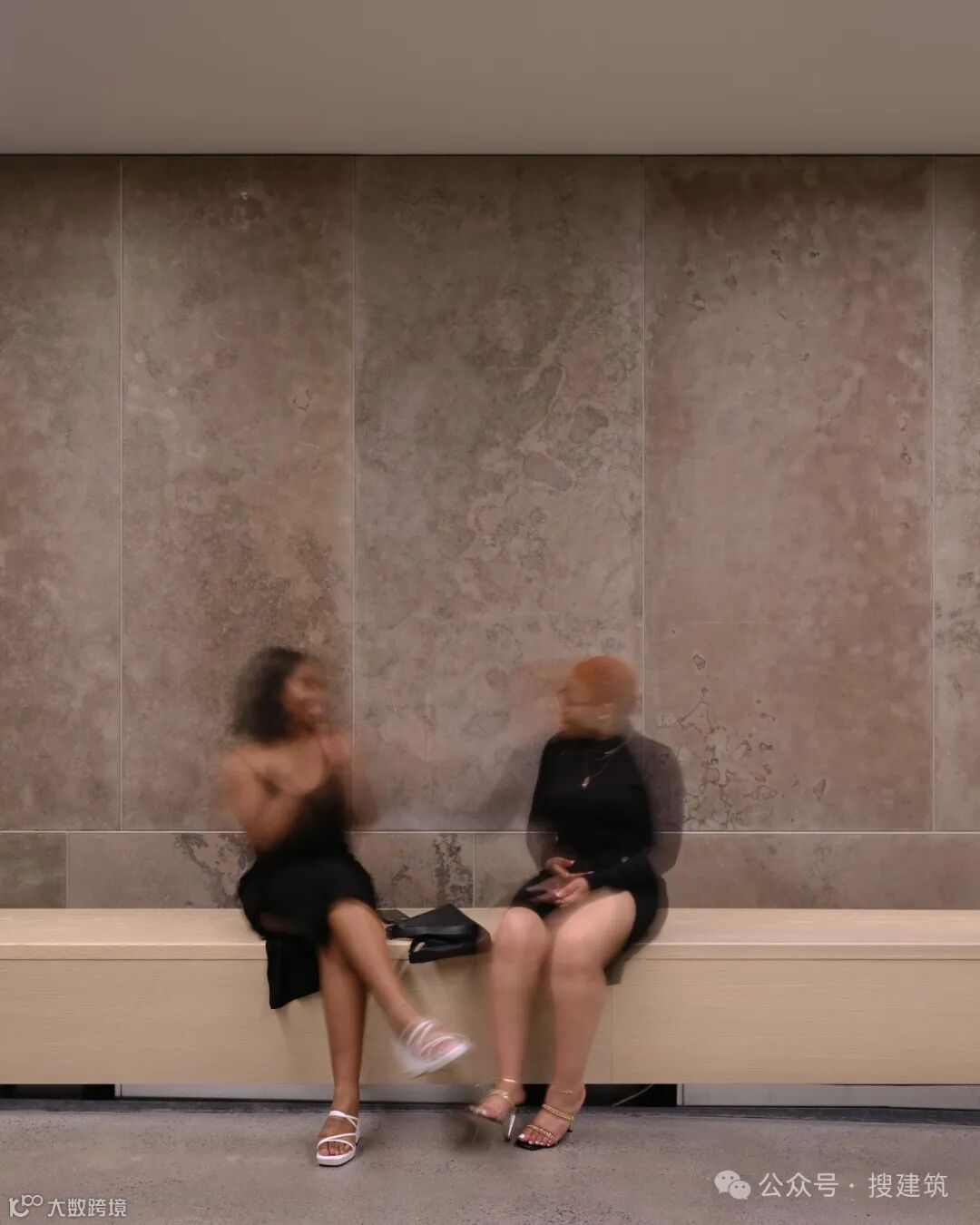
尼科尔大楼希望营造一种存在感、亲切感和归属感。一楼的 “蜂巢 ”通过灵活的配置鼓励合作。毗邻的创新中心--黑客马拉松和创投节的初创企业孵化器、黑人创业知识中心和学生资源中心旨在打破各自为政的局面,促进跨学科互动,加强行业合作关系。
The Nicol Building aspires to create both presence, intimacy, and a sense of belonging. The ground floor hive encourages collaboration through flexible configuration. The adjacent Innovation Hub - a startup incubator for hackathons and pitchfests, the Black Entrepreneurship Knowledge Hub, and Student Resource Centre are designed to break down silos, foster cross-disciplinary interaction, and strengthen industry partnerships, all of which are reinforced by the building’s embracing form.
 模型图
模型图
 设计草图
建筑师:Hariri Pontarini Architects
摄影:doublespace photography, Scott Norsworthy Photography, Hariri Pontarini Architects
设计草图
建筑师:Hariri Pontarini Architects
摄影:doublespace photography, Scott Norsworthy Photography, Hariri Pontarini Architects

本资料声明:
1.本文为建筑设计技术分析,仅供欣赏学习。
2.本资料为要约邀请,不视为要约,所有政府、政策信息均来源于官方披露信息,具体以实物、政府主管部门批准文件及买卖双方签订的商品房买卖合同约定为准。如有变化恕不另行通知。
3.因编辑需要,文字和图片无必然联系,仅供读者参考;

微信公众号“搜建筑”(ID:sjz9999)
合作、宣传、投稿
联系微信:soujianzhu006