



01
引言
大家好,我是AI算法之道!
Python是我最喜欢的编程语言之一,它向来以其简单性、多功能性和可读性而闻名。

然而,在编写Python代码过程中,我们经常会遇到需要调用函数的情形。由于Python代码的灵活性,可以有多种多样的方式来实现函数调用。
在本文中,我们将深入探讨Python中九个不同方式实现函数调用的调试技巧,希望可以帮助到大家!
02
直接使用call
最简单的函数调用情形如下:
def func():print('Hello, world!')func() # Hello, world!func.__call__() # Same as above
观察上述代码,我们可以直接使用__call__()来调用函数。
03
函数partial
from functools import partialdef func(domain, user):echo = f"Hello, {user}@{domain}!"print(echo)func_userA = partial(func, user="userA")func_userB = partial(func, user="userB")func_userA("example.com") # Hello, userA@example.com!func_userB("example.com") # Hello, userB@example.com!
观察上述代码,我们使用函数partial对我们的调用函数func中的user参数覆了默认值,之后在后续调用中,只需对domain参数进行参数传递即可。
04
函数eval
我们可以使用eval来动态执行函数,示例代码如下:
def pre_task():print("running pre_task")def task():print("running task")def post_task():print("running post_task")cmdList = ["pre_task()", "task()", "post_task()"]for cmd in cmdList:eval(cmd) # Executes the function# running pre_task# running task# running post_task
05
函数getattr
该函数可以执行函数中的静态方法,示例代码如下:
class Task:def pre_task():print("running pre_task")def task():print("running task")def post_task():print("running post_task")cmdList = ["pre_task", "task", "post_task"]task = Task()for cmd in cmdList:func = getattr(task, cmd)func()
06
__dict__方法
每个 Python 对象都有一个内置的 __dict__方法,主要用于返回一个包含所有属性的字典。
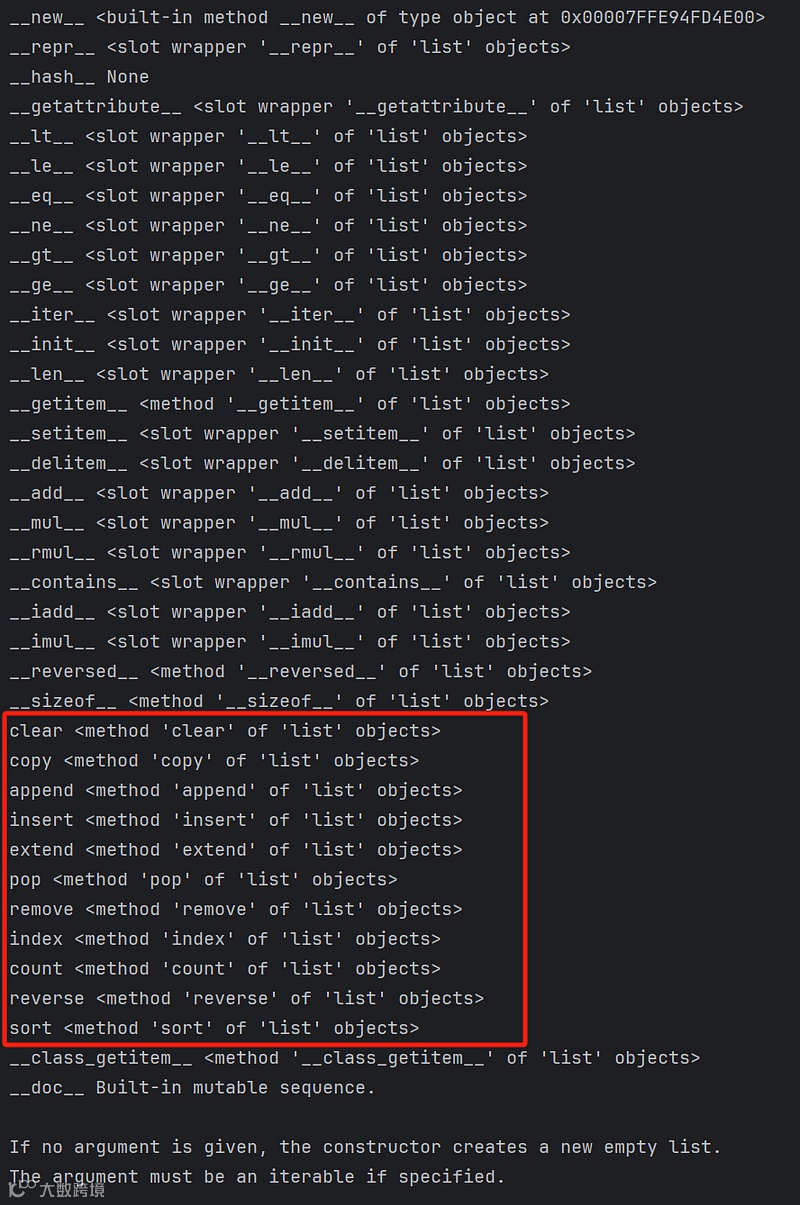
通过该方式实现函数调用的代码示例如下:
class Task:def pre_task():print("running pre_task")def task():print("running task")def post_task():print("running post_task")func = Task.__dict__.get("pre_task")func.__func__() # running pre_task
07
globals函数
我们也可以通过globals实现函数调用的样例代码如下:
def pre_task():print("running pre_task")def task():print("running task")def post_task():print("running post_task")cmdList = ["pre_task", "task", "post_task"]for cmd in cmdList:func = globals().get(cmd)func()# running pre_task# running task# running post_task
exec函数
该函数可以根据字符串来定义并执行函数,样例如下:
# Method 1pre_task = """print("running pre_task")"""exec(compile(pre_task, '', 'exec'))# running pre_task# Method 2with open('./source.txt') as f:source = f.read()exec(compile(source, 'source.txt', 'exec'))
09
attrgetter函数
通过模块operator中的attrgetter函数可以获取一个要执行的属性。
from operator import attrgetterclass People:def speak(self, dest):print(f"Hello, {dest}")p = People()caller = attrgetter("speak")caller(p)("Tony") # Hello, Tony
10
attrgetter函数
通过模块operator中的attrgetter函数可以获取一个要执行的属性。示例代码如下:
from operator import methodcallerclass People:def speak(self, dest):print(f"Hello, {dest}")caller = methodcaller("speak", "Tony")p = People()caller(p)
11
总结
本文介绍了python中的九个不同方式实现函数调用的技巧,希望这些小技巧可以帮助到大家,提升大家的工作效率!
您学废了吗?
点击上方小卡片关注我
添加个人微信,进专属粉丝群!
