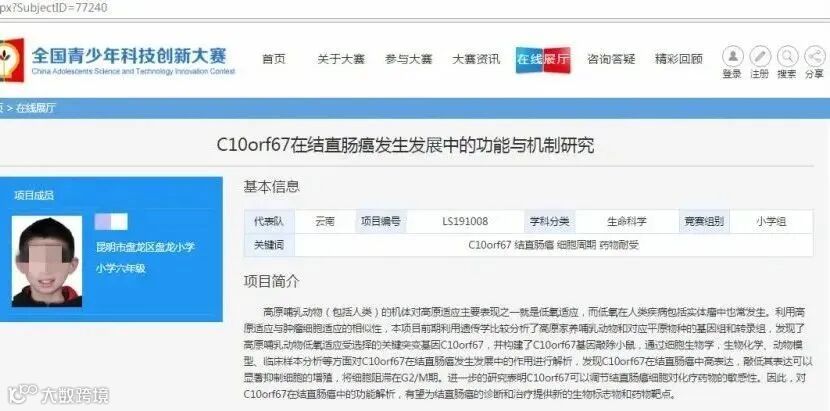
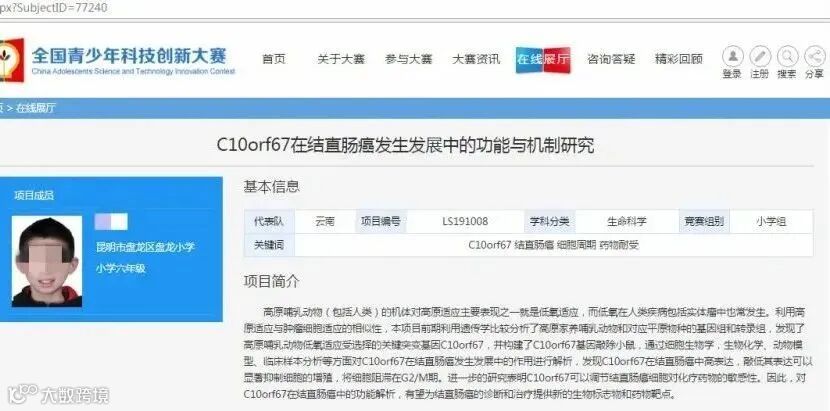
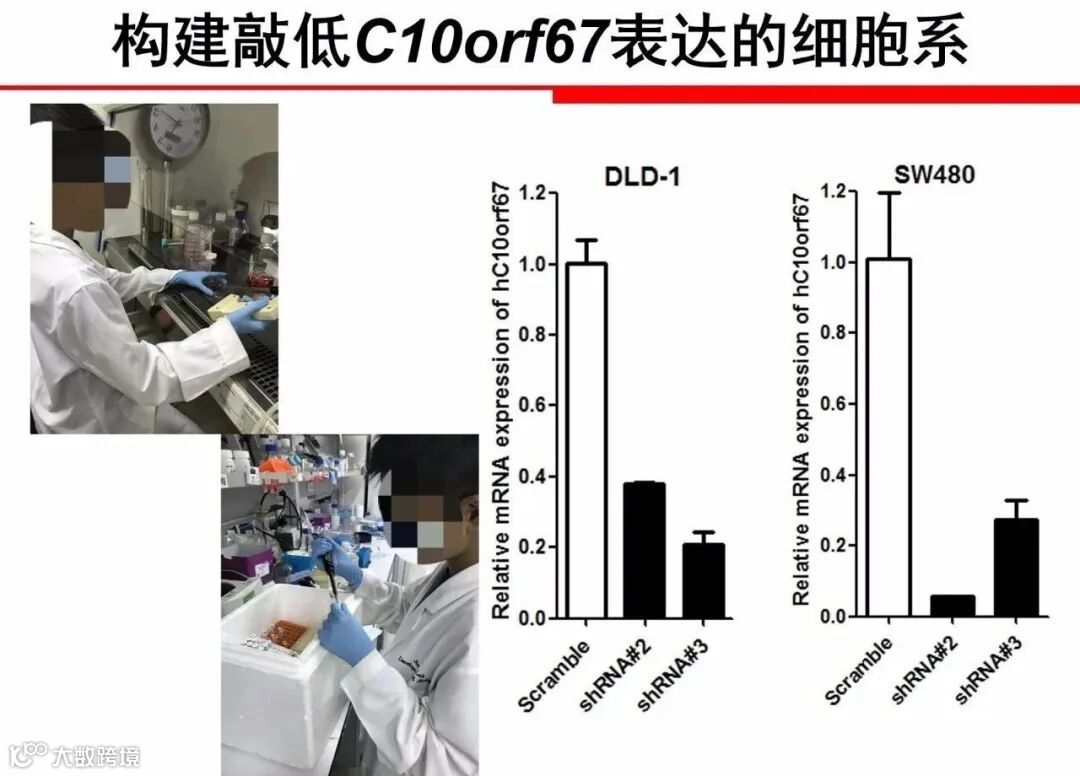
近日,云南省昆明市一名六年级小学生以“C10orf67在结直肠癌发生发展中的功能与机制研究”项目,获得第34届云南省青少年科技创新大赛一等奖、第34届全国青少年科技创新大赛三等奖,引发社会关注。
16日,全国青少年科技创新大赛发布最新通报,决定撤销该项目第34届全国青少年科技创新大赛三等奖,收回奖牌和证书。

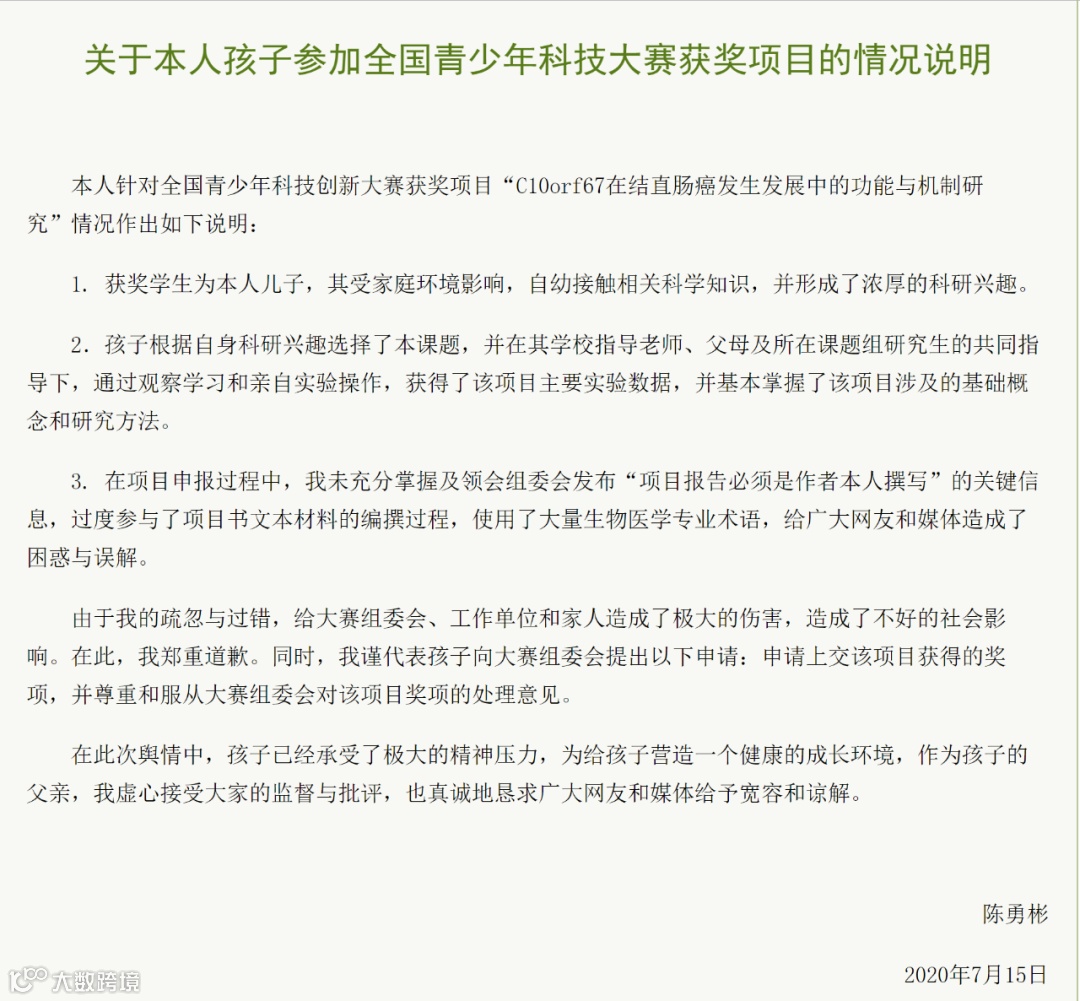
The father of a primary school student who won third prize at a national science contest last year for work on colorectal cancer has acknowledged and apologized for his “over-involvement” in his child’s project, he said in a statement on ScienceNet.cn on Wednesday.
The winning project focuses on the function of the C10orf67 gene in the development of colorectal cancer. It received third prize at the 34th China Adolescents Science and Technology Innovation Contest (CASTIC) and first prize at the 34th Yunnan Province Adolescents Science and Technology Innovative Project Contest.
On the same day, an official announcement from the office of CASTIC's organizing committee declared the prize canceled, recalling the medal and certificate awarded to the sixth-grader.
According to professionals on CASTIC’s investigative team, the project violated its independent work requirement. A comprehensive review of the project found it of a professionalism outside of the cognitive level and writing ability of a sixth-grader, making it impossible that the winning research paper was produced independently.

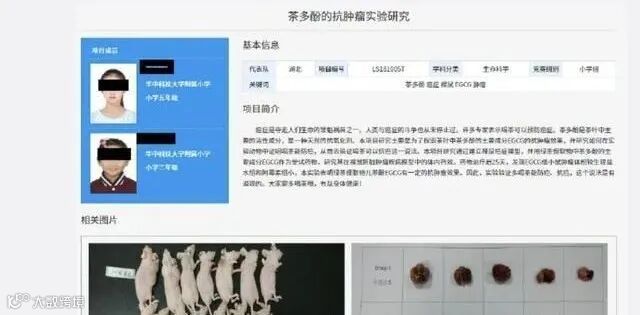
项目简介附有两张图片,一张为整齐排列的20多只小鼠实验体,另一张为不同状态下的不同体积的小鼠肿瘤。
A third-grade student and a fifth-grade student in Wuhan, Central China's Hubei province won third prize in a national level contest with their co-research work on an anti-tumor experimental study involving polyphenol from tea.
One photo featuring more than 20 mice in neat rows and another featuring mice tumors of different sizes were shown on the website.
According to the contest website, the experimental results showed that "green tea extract EGCG has a certain anti-tumor effect."

来源:新华社 环球时报 南方都市报 Shine


推 荐 阅 读