




说到柯马凯的母亲,中华人民共和国“友谊勋章”的获得者伊莎白,很多人并不陌生,她对中国的深情跨越了一个世纪。

1915年,柯马凯的母亲伊莎白出生于中国四川成都的一个加拿大传教士家庭,在中国度过了自己的童年和少女时代。成年后,伊莎白前往加拿大多伦多大学专攻心理学,23岁在加拿大获得硕士学位后回到中国,并开始在四川省阿坝藏族羌族自治州东南部的理县进行实地考察。
When he read Edgar Snow's account in Red Star Over China about the heroic feats of the Communist Party of China and the Long March and so on, he became fascinated by China. “他(我的父亲)读了埃德加·斯诺《红星照耀中国》一书中关于中国共产党的英雄壮举以及长征等故事后,就迷上了中国。”
So in 1938, he came to China. He immediately fell in love with China.
Well, not just with China, but he met my mother. He fell in love with my mother.


But after the war, they came back to China to study Land Reform under the communists. 战后他们回到中国,研究共产党领导下的土地改革。
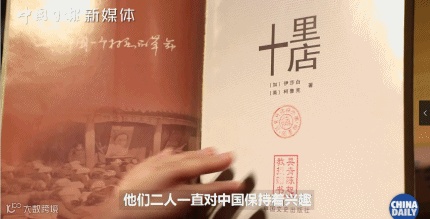


They were invited to stay in China to teach English in preparation for the founding of the People's Republic of China. So, I think they felt proud that they were able to contribute to this great development. 他们受邀留在中国教英语,为新中国的成立做准备。我觉得他们为自己能够为这一伟大发展作出贡献而感到自豪。


From what my mom tells me, is that China was beset with nonstop wars from the warlord-led Beiyang government (1912-28) to the Agrarian Revolutionary War (1927-37) to the War of Resistance Against Japanese Aggression (1931-45) to the War of Liberation (1946-49).

“新中国成立后,中国的领土上不再有战争。”
And then, when the People's Republic of China was set up, no more wars in China.
对于柯马凯这一代而言,中国共产党带来了发展:
I was born in Beijing. And now, I turned 70 this year, but I've done a quick reckoning. I've spent about 50 years in Beijing, but it's not continuous. I find that I have left China many times, but I keep coming back to Beijing. 我在北京出生。现在已经70岁了。我快速算了一下,我在北京待了大约50年,但并不是连续的。我发现我离开过中国很多次,但我总是回到北京。
Well, there's a wonderful draw. I think maybe one of the reasons I keep coming to Beijing is that it is changing constantly. And I always wanna know what's gonna happen next. 北京有一种奇妙的吸引力。我想也许我一直来北京的原因之一是北京在不断变化,而我总是想知道接下来会发生什么。
Yes, well, obviously, the way I see it is that China has changed from "a sick man of the East," to a powerhouse and world economy, and also into a power for creating, I think, a more peaceful, harmonious world.

And for the last couple of 100 years, the Western powers, especially, have been the dominant powers. They have a military presence all over the entire globe with hundreds of military bases. And, I think that the rise of China is perceived as a threat to their world dominance. 近百年来,西方大国一直是主导势力。他们的军事活动遍布全球各地,建了数百个军事基地。中国的崛起被视为对他们世界主导地位的威胁。
I think that the perceived threat to Western dominance is the reason why where there's Western media that gives these reports which distort what China is doing. 我认为,(中国)被当成对西方主导地位的威胁,就是西方媒体给出这些歪曲中国所作所为报道的原因。
China has not sent any militaries to Africa, to Europe, to South America, and so on; China has had a lot of involvement in, for example, Africa, but it's not conflict. It's building bridges and roads and sending medical teams to help with and so on.
如果说,这样的中国是一种威胁,柯马凯完全无法苟同。

And I think that anyone who reviews what the Chinese communists have accomplished in leading China to build a better society that I think that they should just say, "Well done! Go China! Keep it up! And not only make China a better place, help to make the world a better place."
遭遇封锁与遏制,经历洪水与疫情,中国共产党到底为什么能行?劈波斩浪,党又是靠什么走过了一百年?中国日报新媒体《别叫我老外》栏目推出了系列视频——长在红旗下的“洋面孔”:他们从另一个维度,用自己的故事讲述了一家几代在中国跨越百年的深情。
制片:高启辉 王瑜

推 荐 阅 读


