


人类的脑容量和智力水平密切相关。最近的一项研究表明中更新世古人类脑容量可达1700毫升!
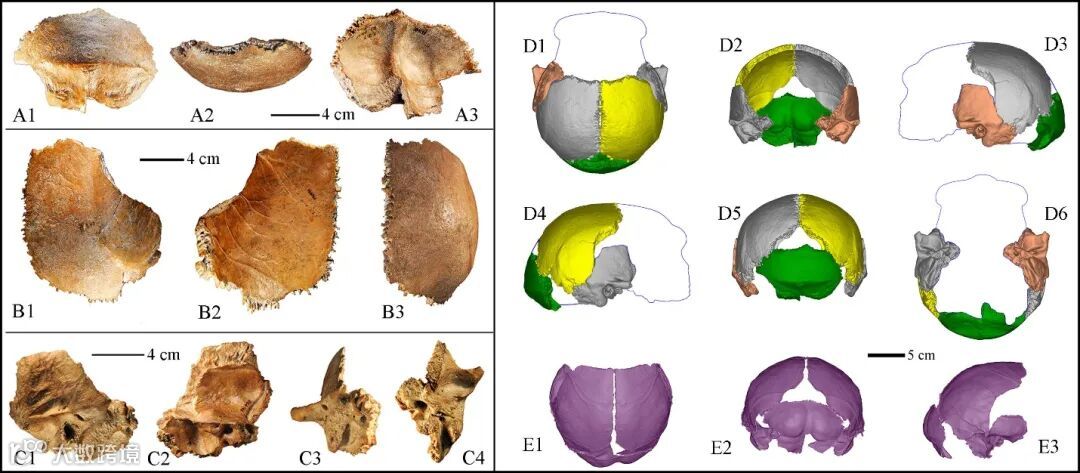
来自中国科学院古脊椎动物与古人类研究所等单位的研究人员首次复原出中更新世晚期许家窑人较为完整的头盖骨,并成功推算出许家窑人的脑容量。相关研究成果在线发表于国际专业期刊《人类进化杂志》。
An international team led by Chinese paleoanthropologists recently discovered a species of early hominin with the largest cranial capacity in the late Middle Pleistocene, dating back 160,000 to 200,000 years ago.
paleoanthropologists /,pelio,ænθrə'pɔlədʒɪst/:古人类学者
hominin /ˈhɒmənɪn/:(生物学)人及其直系原始祖先;人族
cranial /ˈkreɪniəl/:颅的,与颅骨有关的
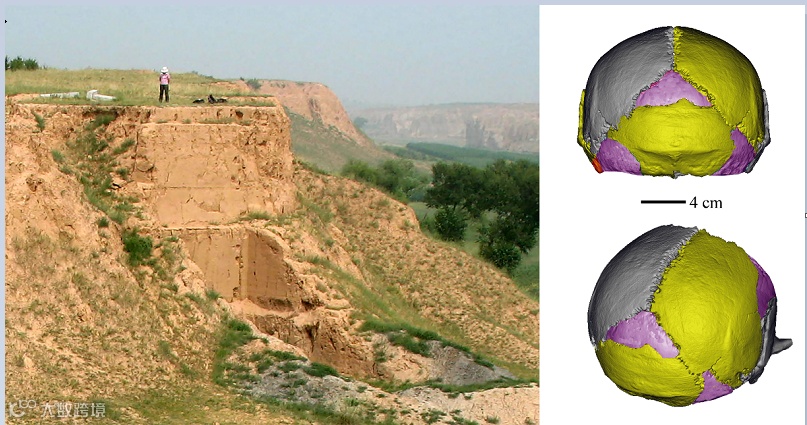
Their study was based on skull fossils excavated in the 1970s at the Xujiayao site on the border of Shanxi and Hebei provinces.
fossil/ˈfɒsl/:化石
据中科院古脊椎所研究员吴秀杰,“结合颅内模和公式法,我们推算出许家窑人的脑容量约为1700毫升。这是迄今为止发现的中更新世脑容量最大的‘大头人’。”
Researchers reconstructed a complete skull of Xujiayao Man for the first time and estimated that the cranial capacity of the ancient relative of modern humans reached 1,700 cubic centimeters.
"This is the largest 'big-headed man' ever discovered in the Middle Pleistocene," said Wu Xiujie, a researcher at the Institute of Vertebrate Paleontology and Paleoanthropology, a subsidiary of the Chinese Academy of Sciences.
Pleistocene /ˈplaɪstəˌsiːn/ 更新世,地质年代第四纪的早期,距今约180万年至1万年
图源:科技日报
利用CT技术和镜像原理,研究人员首次复原出许家窑人较为完整的头盖骨,为观测许家窑人整体的形态特征提供了重要标本材料。结合颅内模和公式法,研究人员推算出许家窑人的脑容量约为1700毫升,接近之前报道的许昌人1800毫升的脑容量,但比许昌人的年代早了近6万年。“毫无疑问,这是迄目前发现的中更新世,包括早更新世,脑容量最大的古人类。”吴秀杰强调。
Xujiayao hominid's brain was slightly smaller than that of its close relative "Xuchang Man," estimated at about 1,800 cubic centimeters, but the former lived approximately 60,000 years earlier than the latter, according to the study published in the latest volume of Journal of Human Evolution.
许家窑人类化石于1976年至1979年在山西省和河北省交界处的许家窑遗址(又名侯家窑遗址)发现,化石比较破碎,包括18块头骨碎片和3颗游离的牙齿。这些化石代表大约10个以上的个体。“根据伴生出土的哺乳动物种类、地层埋藏情况及各种年代测定,研究人员判断许家窑人生存的年代为中更新世晚期,距今约20万年至16万年。”吴秀杰介绍。
图源:科技日报
以往研究显示,许家窑人是一类非常特殊的群体,其体质特征呈现出东亚直立人、欧洲尼安德特人和晚更新世早期现代人的混合特征,其演化位置相继被归入早期智人、尼安德特人、晚期古老型人类、丹尼索瓦人以及未知人群,其牙齿的生长发育模式已经进入现代人行列。
Previous studies suggested that the Xujiayao hominin's evolution falls in the range of early Homo sapiens and Neanderthals and its dental growth and development patterns showed similarities to modern humans. Modern-day hominins are humans, chimpanzees and bonobos.
Homo sapiens :智人 Neanderthals :尼安德特人
古人类的脑容量并非
随着时间推移逐渐增大
通常认为,更新世古人类的脑容量随着地质年代增大。比如,南方古猿的脑容量为404-530毫升,能人的脑容量为510-752毫升,直立人的脑容量为600-1251毫升,中更新世古老型智人的脑容量为1100-1450毫升,到了晚更新世早期的早期现代人以及尼安德特人的脑容量则增大到大于1500毫升。
Wu said it is commonly believed that the brain size increases with geological age. For example, the cranial capacity of Australopithecus species that lived from 4.2 million to 1.9 million years ago was 404 cc to 530 cc, while that of Homo erectus, another relative of modern humans that lived from 2 million to around 117,000 years ago was 600 cc to 1,251 cc.
然而,“近年来新化石的发现,改变了人们的传统认知。”中科院古脊椎所研究员刘武说,2013年非洲发现的距今30万年左右的纳莱迪人,其脑容量只有560毫升;2003年印度尼西亚发现的距今10万年至5万年的弗洛里斯人的脑容量只有400毫升;2017年报道的距今12.5万年至10.5万年的许昌人颅容量达到了1800毫升。
But recent studies have put paid to this hypothesis since the "Flores Man" in Indonesia living 100,000 to 50,000 years ago was found to have only a brain about 400 cubic centimeters while the head of "Xuchang Man" was over four times big.
中科院古脊椎所研究团队表示,许家窑人、许昌人二者头骨的形态非常相似,都是大头、低颅,并且都具有尼安德特人特有的内耳迷路模式,二者可能是同一人群。考虑到许家窑人的年代早于许昌人,有可能许家窑人是许昌人的直接祖先,在距今30万至10万年左右,中国境内可能生存着这一类体质特征特殊的“大头人”。
The recent finding suggests that around 300,000 to 100,000 years ago, a group of "big-headed people "with special physical features may have existed, and further research on this hominin is required, Wu said.
吴秀杰介绍,脑容量大小与智慧并不是简单的正比关系,但拥有“大头”的许家窑人确实是很聪明的群体,他们会制作石器、石球,还会集体捕猎。在许家窑人头骨多个碎片中发现了创伤愈合痕迹,也提示许家窑人发生过暴力冲突,同时也有互助行为。
记者:张洋菲
编辑:左卓
实习生:陈诺
来源:中国日报 科技日报 新华网 新华视点

推 荐 阅 读


