



Imagine biting into a juicy peach only to discover a bundle of fresh leaf fragments instead of sweet flesh. While it might look alarming, it's not a disease or a sprouting seed — it's the hidden home of a leafcutter bee. Closely related to honeybees, these solitary insects belong to the Megachilidae family and share a similar appearance. They are slightly smaller than common honeybees, with smooth dorsal abdomens and distinctive golden hairs on their undersides, which they use to carry pollen back to their nests.

Leafcutter bees live alone rather than in hives. After mating, a female searches for natural cavities such as tree hollows, rock crevices, or gaps in buildings — even abandoned snail shells — to build her nest. While most pollinators are welcome visitors to gardens, leafcutter bees have a more mischievous reputation among flower enthusiasts. Perfectly round holes in rose or other rose-family leaves are their calling card, crafted with precision that requires no compass.
切叶蜂布置巢房,其实是在为产卵做准备。雌蜂在找到合适的植物叶片后,会用强有力的上颚咬下圆形的一片,卷成卷儿抱回家。


The intricate nest-building process is all about preparing for the next generation. A female cuts a neat circle from a leaf, rolls it, and carries it home. She shapes it into a "leaf cup" to line the nest, fills it with a pollen-and-nectar ball, and lays an egg on top. The nest grows layer by layer, with over a dozen leaf cups stacked inside, each holding a single egg. If a potted plant becomes a chosen site, its leaves will likely end up riddled with these precision-cut holes.
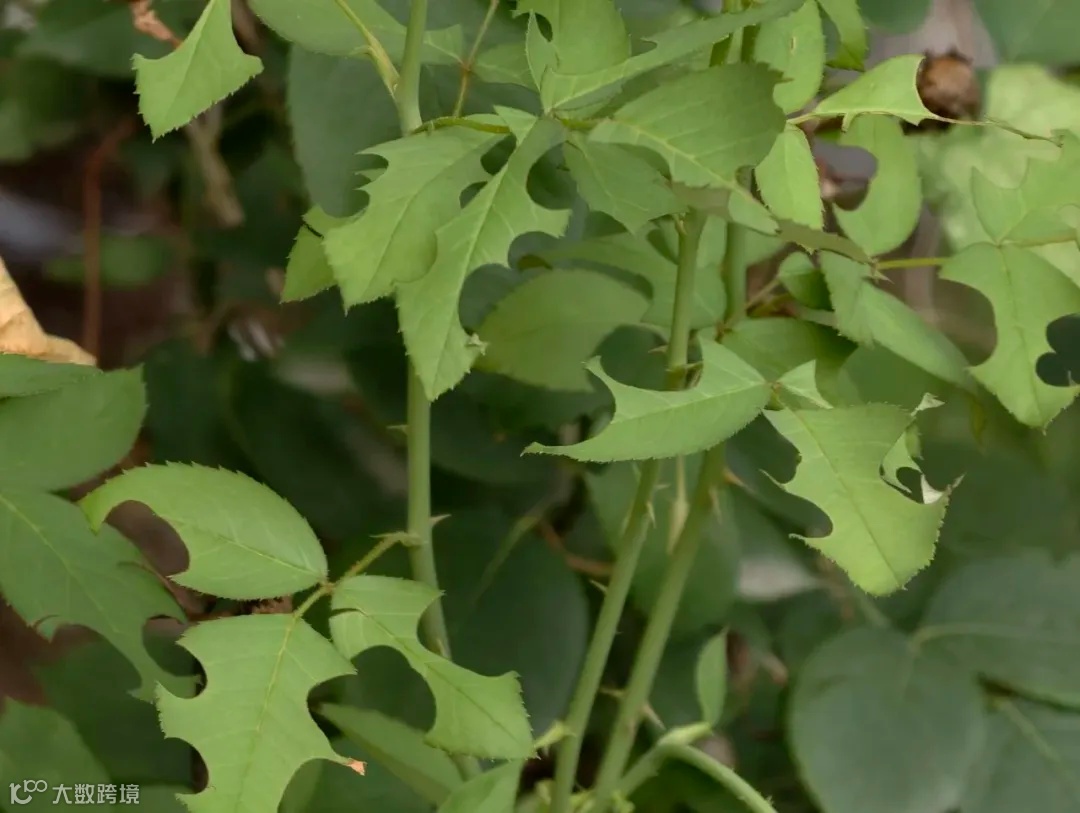

Not all leafcutter bees stick to leaves — some prefer petals. One species, a type of mason bee, bites off petals from blooming flowers and layers them like shingles to create a petal-lined nest. Despite their habit of cutting foliage, these bees cause minimal damage to plants. As vital pollinators, they play an essential role in maintaining healthy ecosystems.

推 荐 阅 读
