


Recent online discussions claiming that China will face a "super cold winter" this year have drawn wide public attention. In response, Zhang Daquan, an official with the National Climate Center, offered clarification in a recent interview.

10月17日至21日全国平均气温分布图 图源:国家气候中心
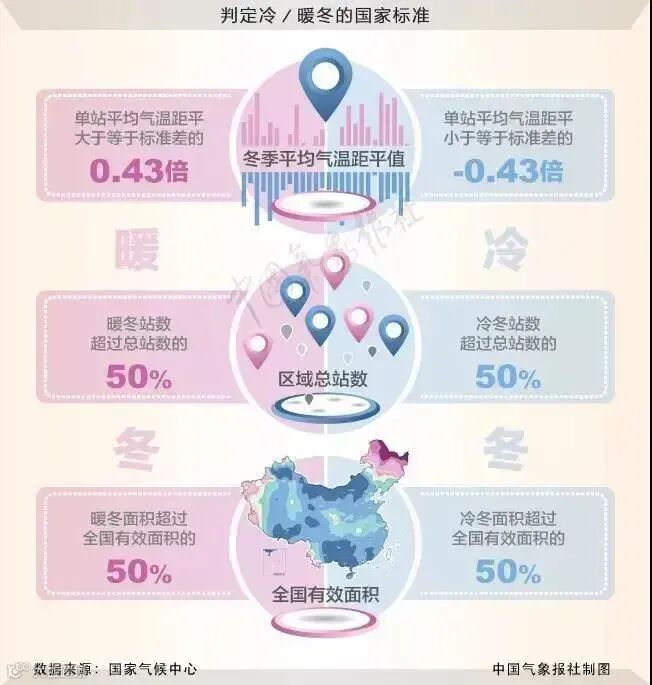
章大全表示,国家标准《冷冬等级》(GB/T33675-2017)和《暖冬等级》(GB/T21983-2020),对冷冬和暖冬给出了明确定义。根据定义,在全国范围内,超过一半的气象观测台站冬季平均气温满足冷冬/暖冬标准,这一年冬季才会被判定为冷冬或是暖冬。简单来说,在气象界,冷暖冬不是一个“预测概念”,而是对冬季气温状况的一个事后“认定概念”。
Zhang explained that under China's national standards, a winter is classified as cold or warm only when more than half of the country's weather stations record average temperatures that meet the defined criteria. He noted that cold and warm winters are not forecasts, but post-season assessments based on actual temperature data.
Regarding this year's outlook, Zhang said climate models suggest that temperatures across China are likely to be near or slightly above the seasonal average, with noticeable fluctuations between cold and warm periods throughout the winter.
Zhang said on Wednesday that in recent monitoring of ocean atmosphere, much of the equatorial central and eastern Pacific has registered sea surface temperatures below normal, indicating a neutral-to-cool state.
"On that basis," Zhang said, "the climate prediction office forecasts a transition to La Nina conditions in the upcoming season."
China is likely to experience the onset of a La Nina climate pattern in the late autumn, which could bring freezing rain and snow in the north, southwest, and central regions this winter, while southern areas may face periods of drought, according to meteorologists.
什么是拉尼娜?戳视频了解 ↓
统计显示,发生拉尼娜事件的冬季,我国气温偏低的概率相对更大,特别是20世纪90年代之前。主要特征体现为:
全国大部地区气温较常年同期偏低,尤其是华北北部、东北南部、华南大部、西南地区东部和北部、西北地区大部等地。
冬季北方雪灾和南方低温雨雪冰冻灾害的发生风险相对较高。
Historically, winters during La Nina years in China, December through February have seen a higher probability of below-average temperatures. "Snow disasters in the north and freezing or icy weather in the south were relatively more common in the earlier decades," Zhang said.
但是受全球变暖等因素影响,本世纪以来,拉尼娜背景下我国冬季气温偏暖的情况也频繁发生,如2020年、2022年和2023年,甚至暖冬现象也有出现。
However, experts stressed that a La Nina event does not guarantee an "extreme cold winter" and may even result in a warm winter under global warming, Zhang said, using the winter of 2020-2021 as an example.
章大全说,拉尼娜事件发生后,我国冬季降水主要表现为降水总体偏少,特别是在长江以南地区。更具体的情况,国家气候中心将于10月底组织会商研判,形成2025/2026年冬季气候预测意见。
跟着China Daily
精读英语新闻
“无痛”学英语,每天20分钟就够!
↓↓↓

推 荐 阅 读
