
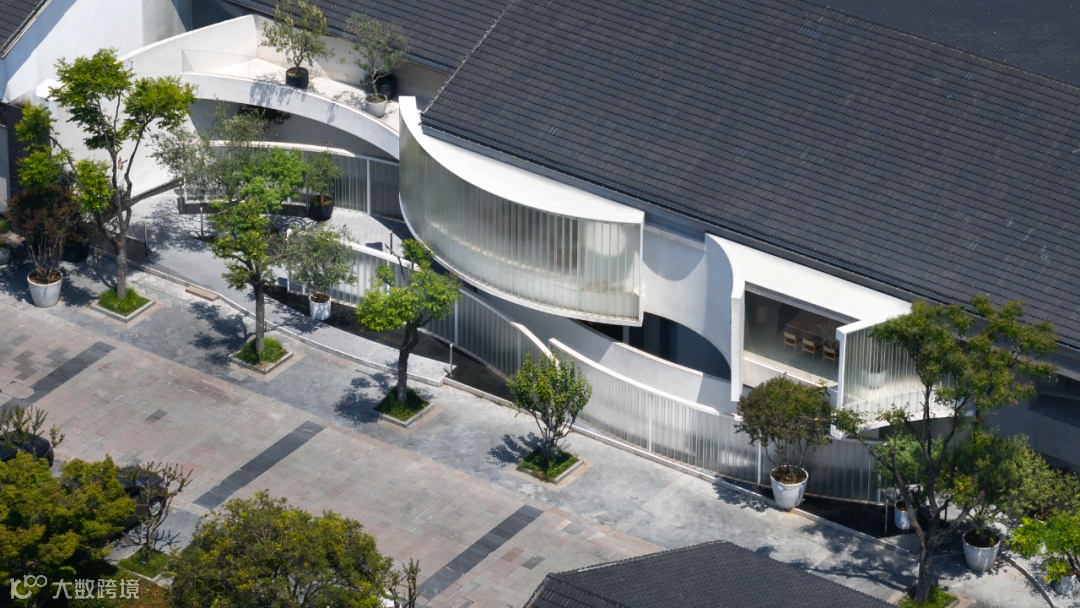
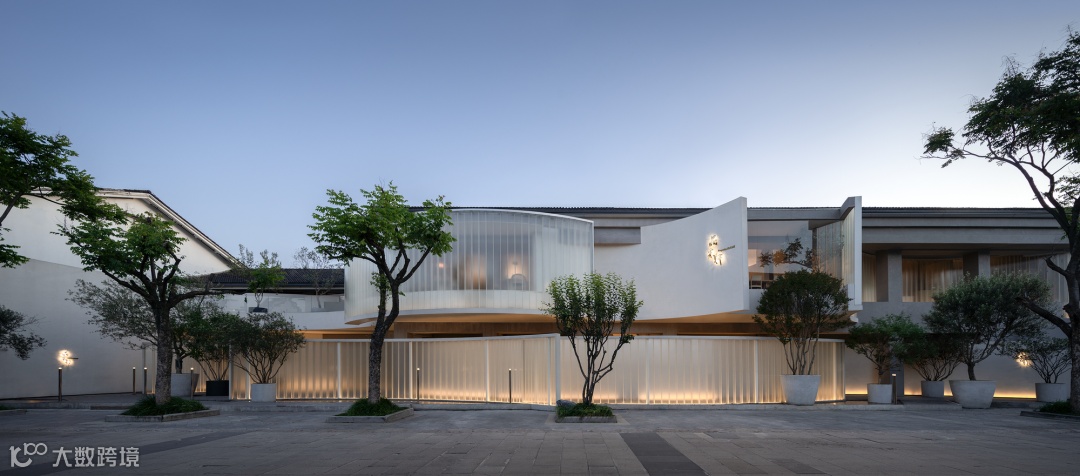
Exquisite BOCUSE SUZHOU reconstructs the fantasy of a Chinese garden. The project embraces the spirit of the garden as the foundational concept that underpins the architectural and interior design logic. It highlights the spiritual quality and sense of movement inherent in traditional Chinese gardens through curvilinear design elements and the interplay of light and shadow, resulting in a poetic space that evokes a feeling of perpetual existence.
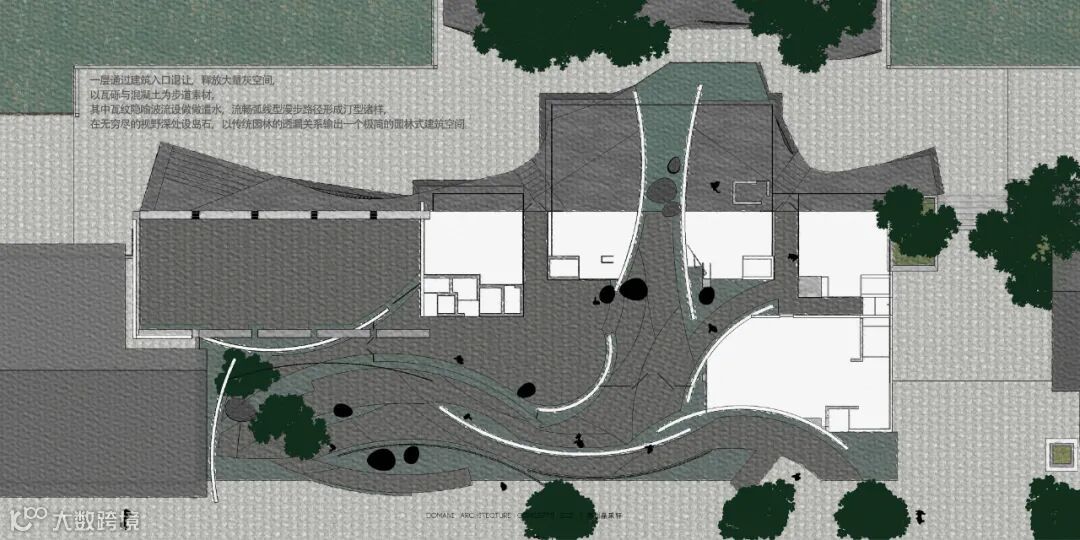
Key landscape techniques in traditional gardening—such as emptiness, openness, slenderness, concealment, and appropriation—are reinterpreted through contemporary spatial language, showcasing the revival of classical garden aesthetics in modern interior architecture. The experience of the space is enhanced by customized lighting installations that permeate the entire garden experience while also serving as guiding elements for movement.
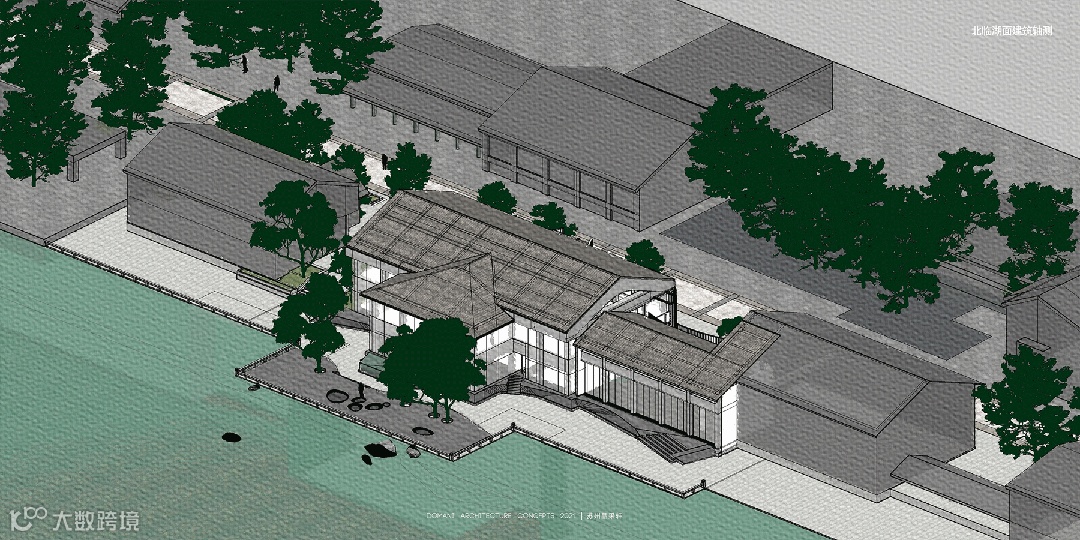
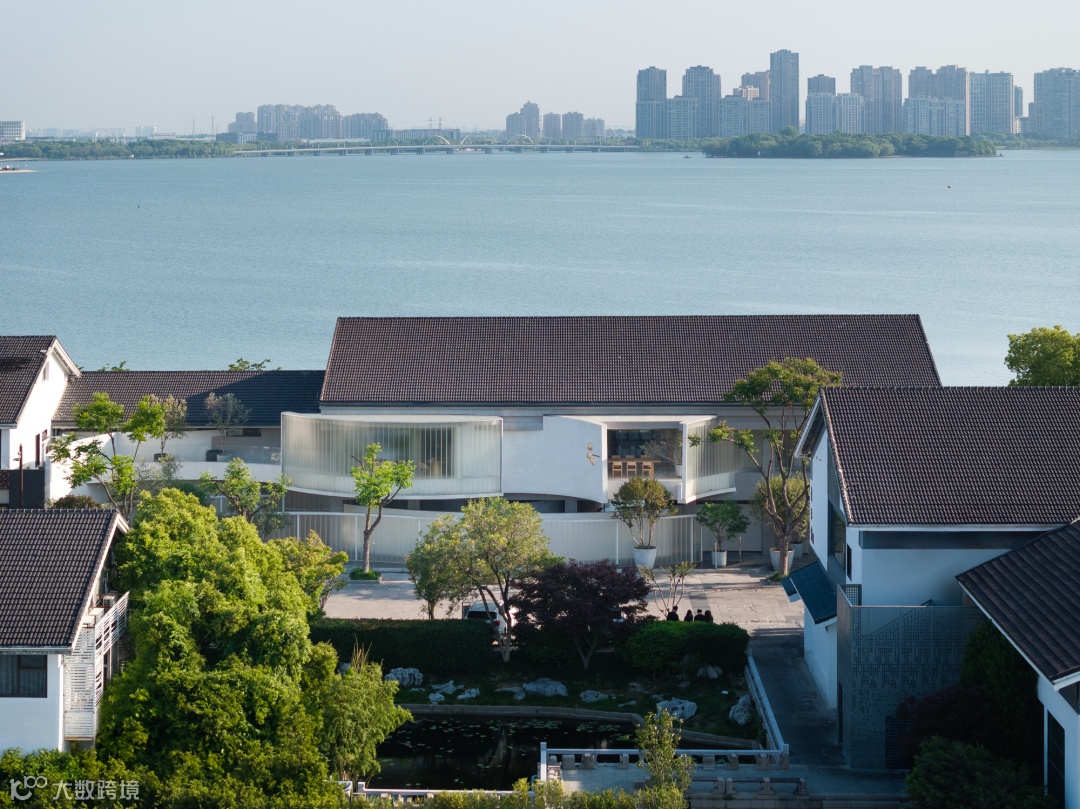
Located in the Li Gong Di commercial area of Suzhou, the original site faces Jinji Lake to the north, offering an exquisite view of Suzhou’s natural attractions. To the south lies the main street of the neighborhood, which serves as the restaurant’s façade, while the west side connects to a pedestrian pathway. The project aims to revitalize the commercial activity of the local community through the adaptive reuse of an old building, simultaneously establishing a regional impact for Exquisite BOCUSE by reinterpreting elements of Suzhou's cultural and historical heritage.
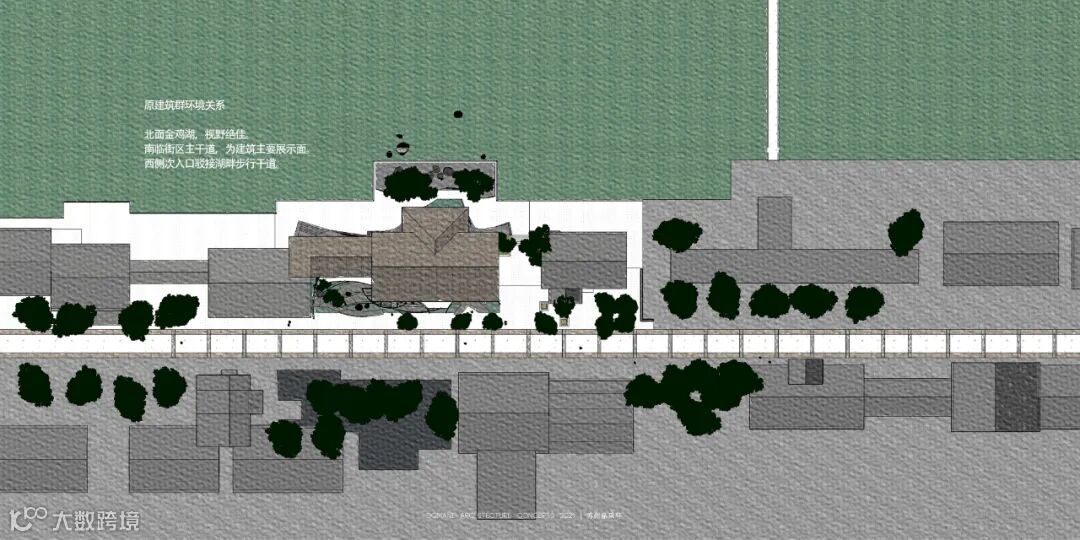
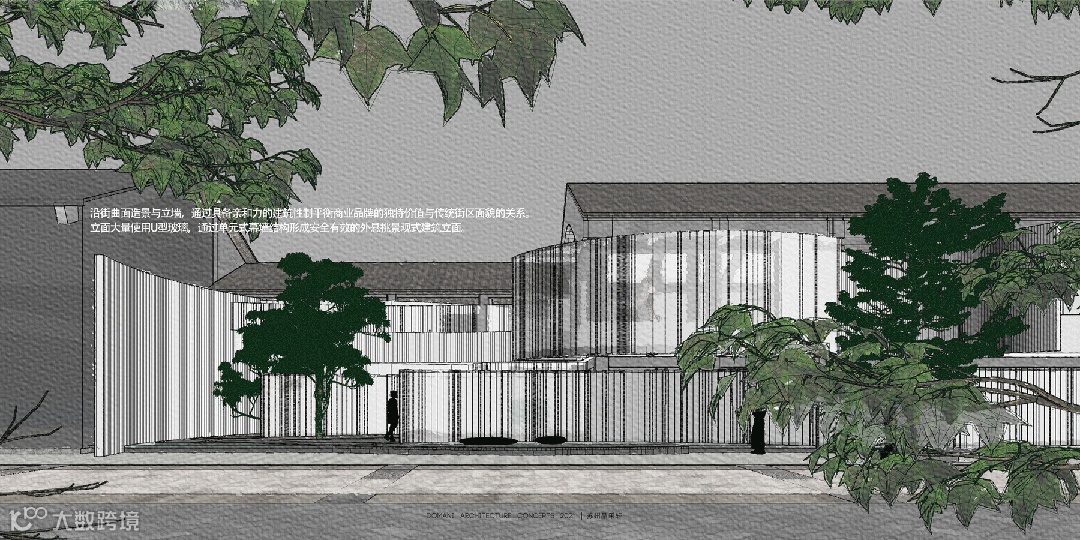
Adaptive reuse requires an in-depth exploration of the surrounding environment while considering business goals to formulate optimized strategies. The final design preserves the original architectural structures while aligning with local renovation policies.
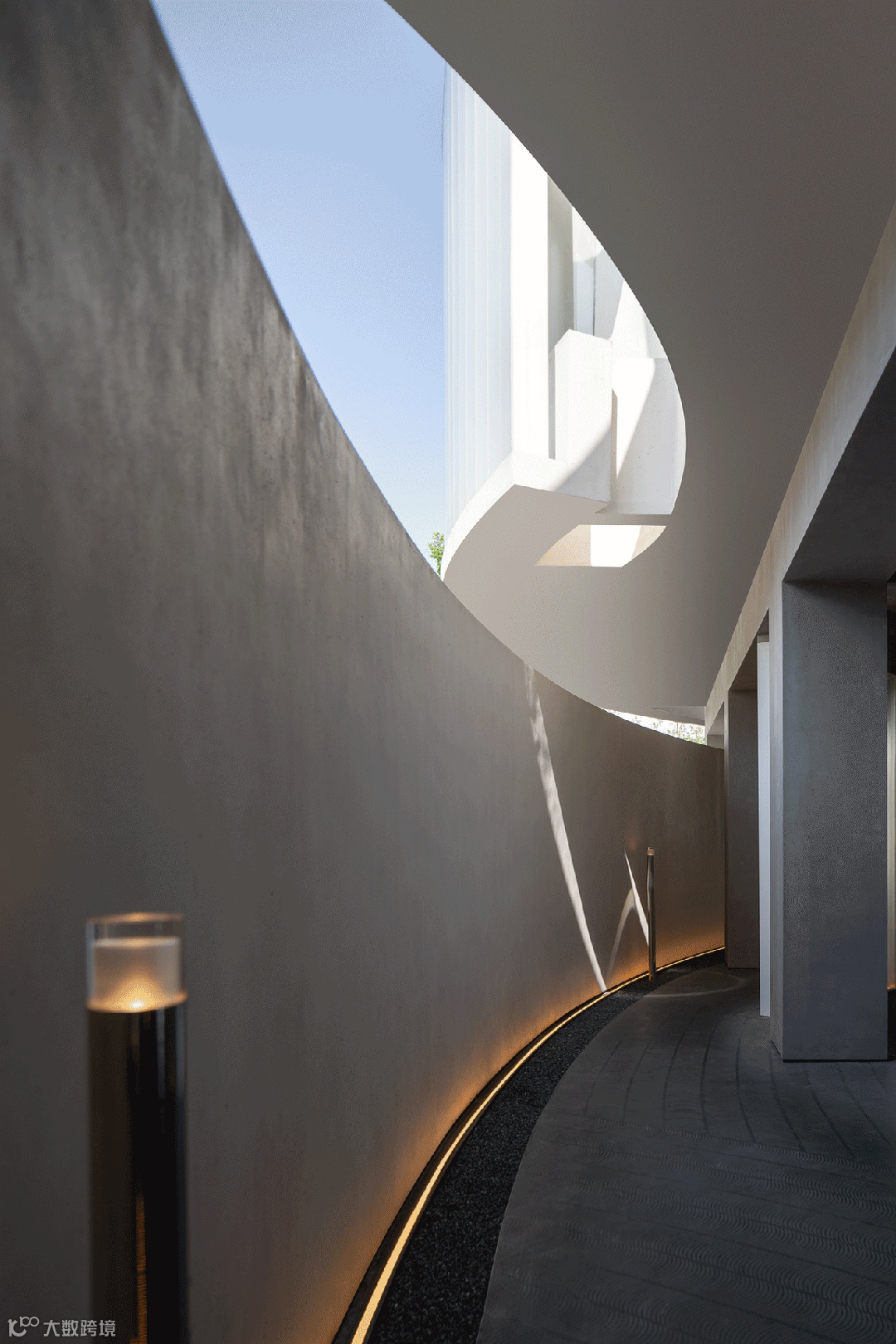
Wandering is the most important design language of the project. Designer considers wandering as a more nuanced method than mere circulation. This is not only because wandering encompasses pathways, but also due to the sensory experience it provides, connecting individuals with the space.
People often believe that the essence of garden design lies in landscapes that appear effortlessly natural. However, it is the carefully curated paths that embody the core principles of traditional gardening. From visual perspectives to the rhythms of movement, the path serves as a fundamental element linking space with the individuals who inhabit it.
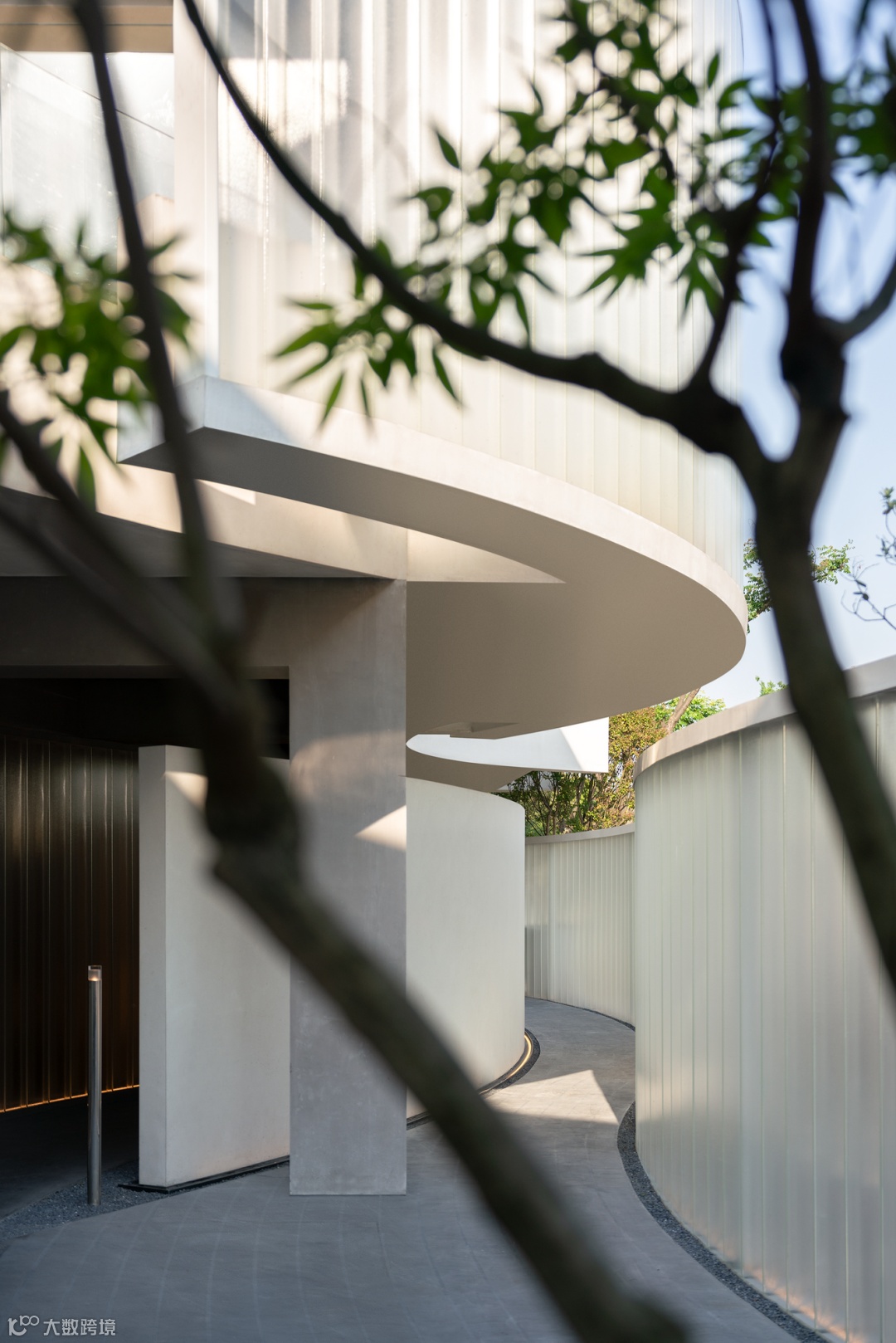
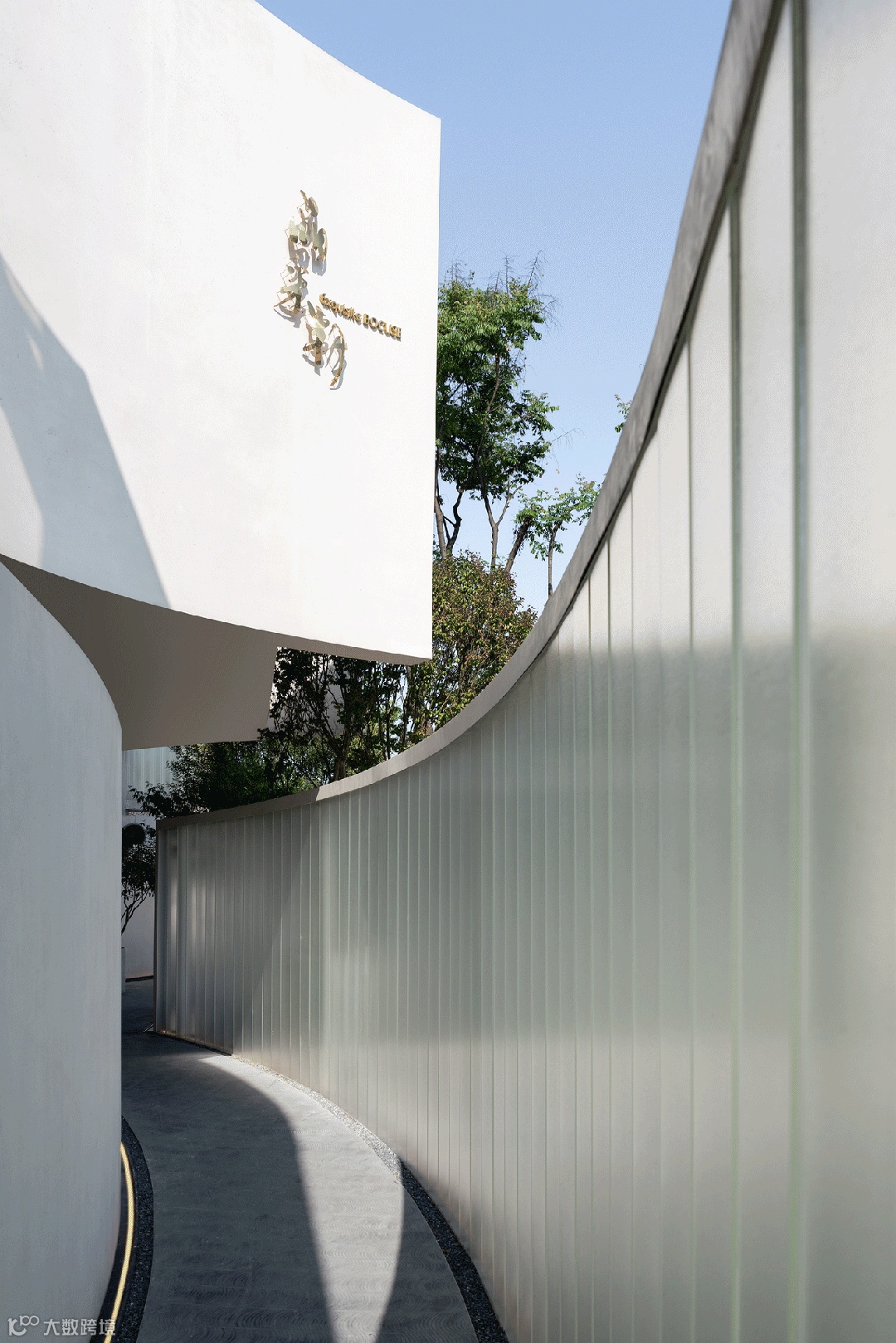
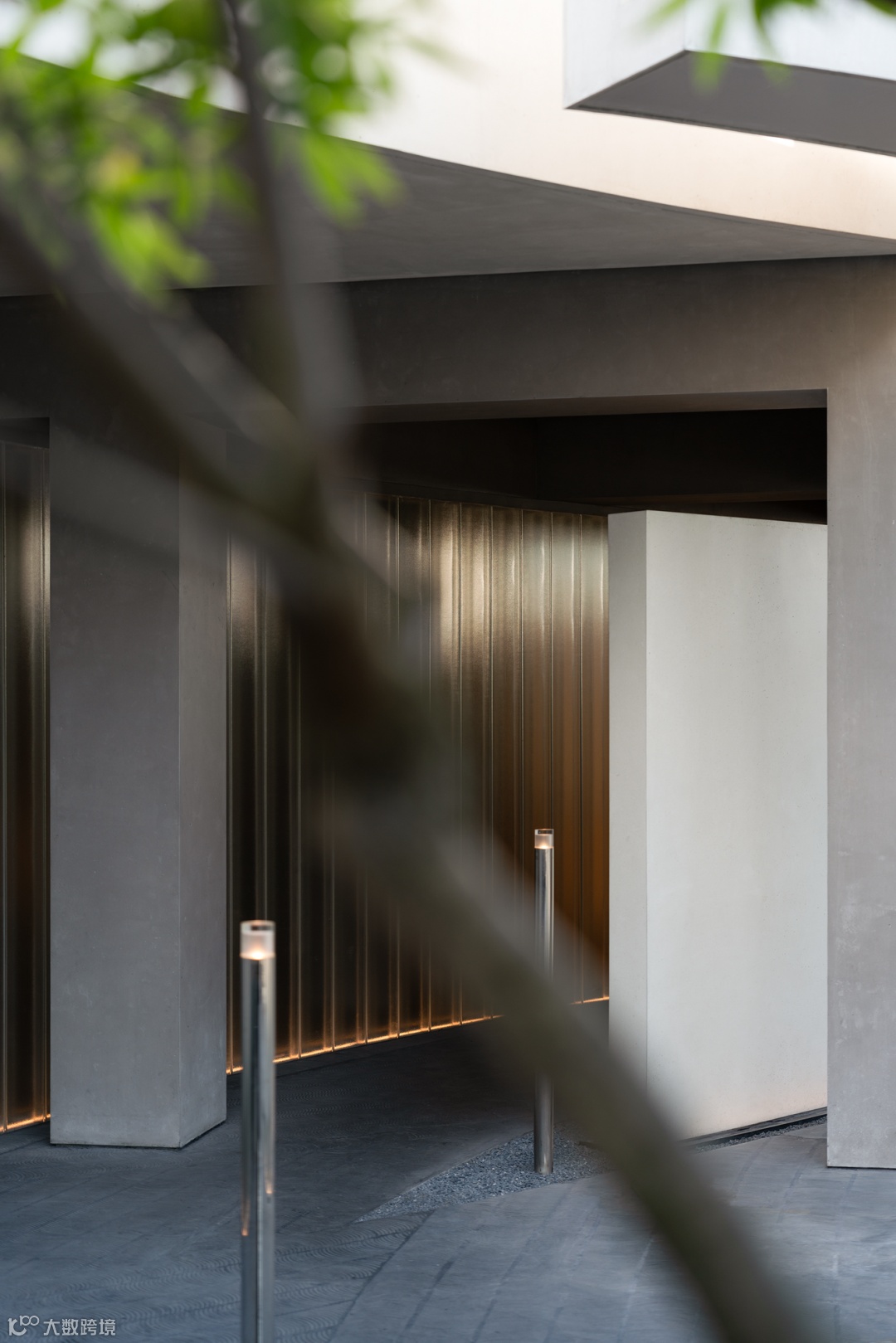
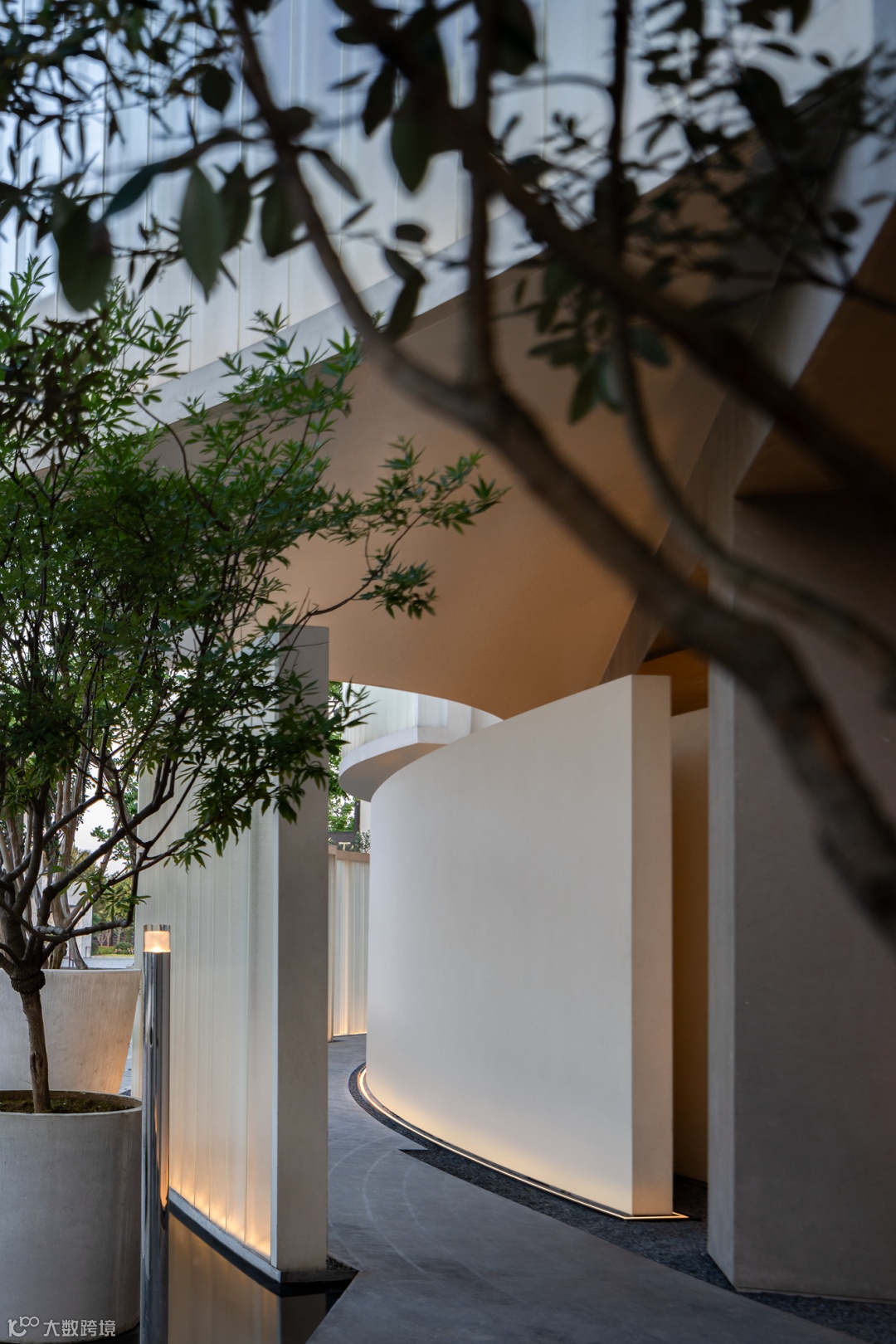
【瘦】是古典园林中“拙朴简逸”的审美倾向,覆盖了用材与形式。在一个当代的抽象园林中,DOMANI同样以崭新的形式与材料语言演绎这种古典之【瘦】,赋予空间可读性。
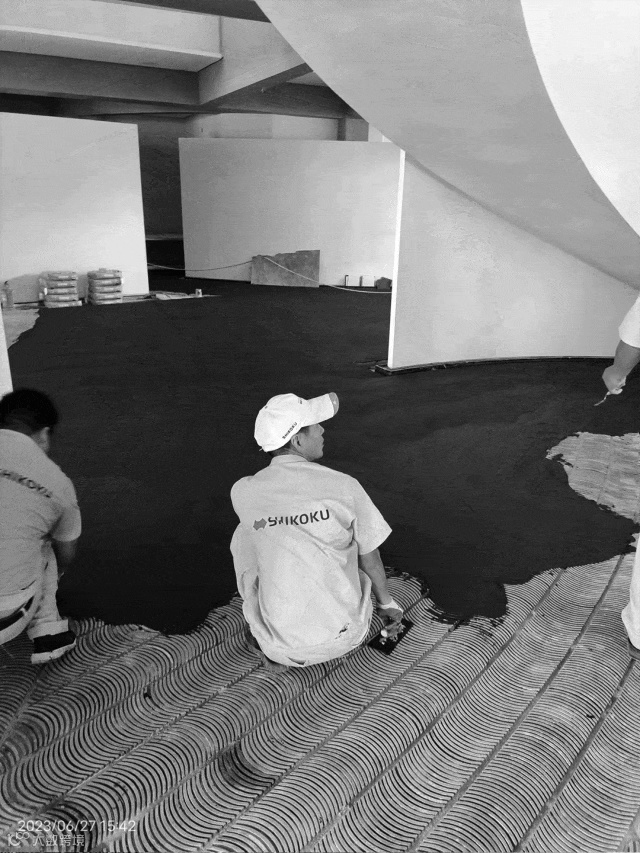
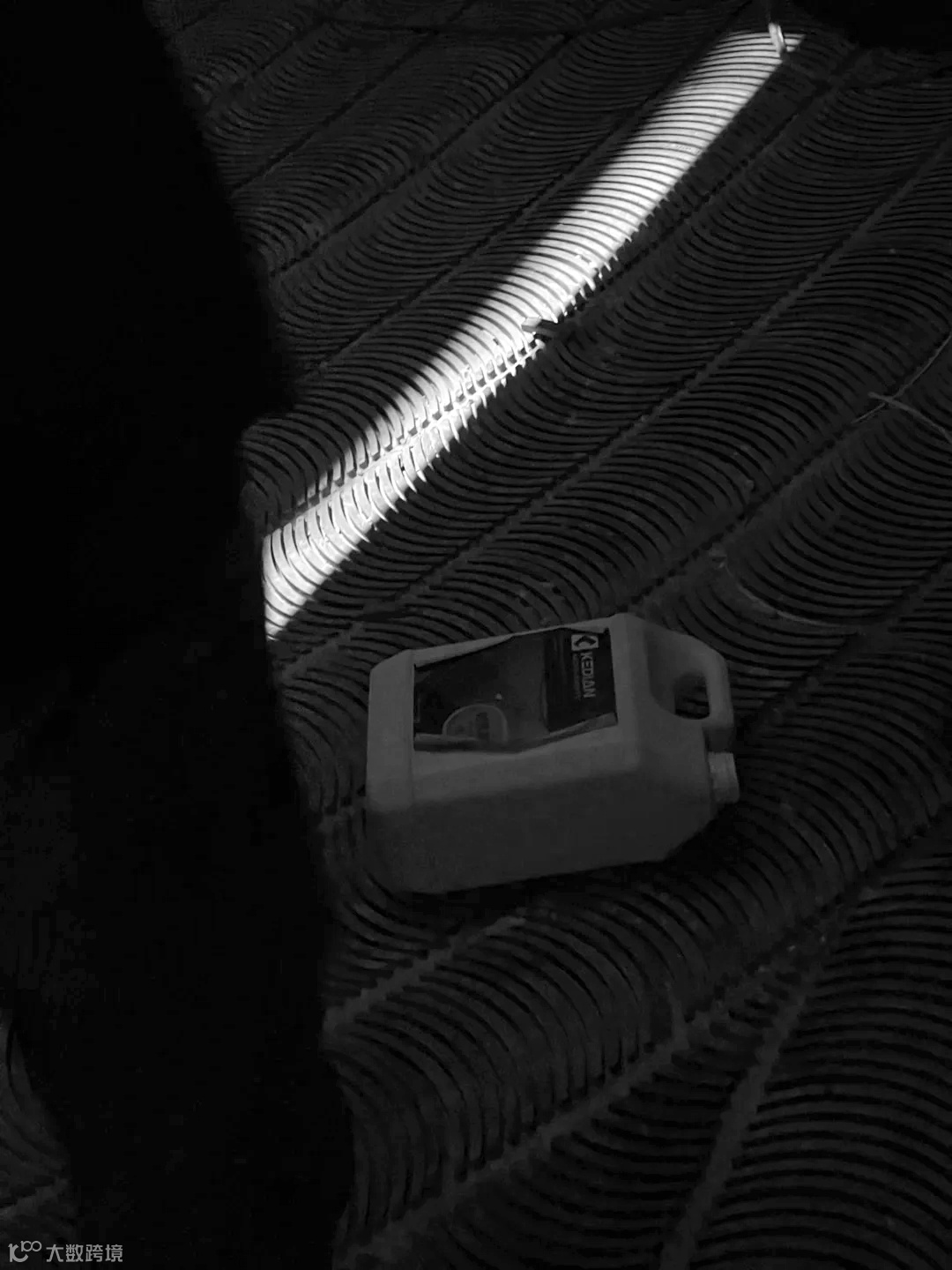
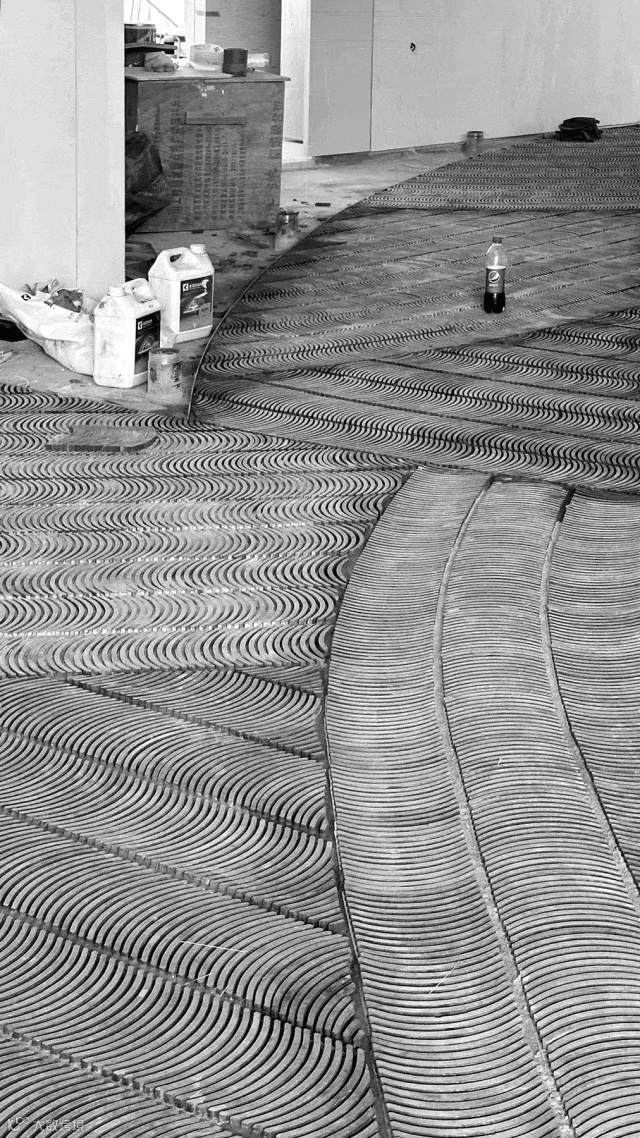
“以水为脉,以石为骨”。瓦纹地砖作为地面主材,通过水磨石工艺,巧妙地强化S型路径的形式延展里同时呈现出水域的隐喻。中国古典园林善以水舒志,后日本的枯山水则将这种想象抽离的更为极端。回到现代商业空间,毕竟无法提供理想的大面积的水域空间,那么将流动的凝固于脚下则不失为一种既生动有趣又保留其神姿的方法。
“Slenderness” represents an aesthetic of simplicity and unpretentiousness in Chinese art and culture. In this project, slenderness encompasses a deep exploration of materiality. In this contemporary spiritual garden, DOMANI develops installations and materials that interpret this aesthetic.
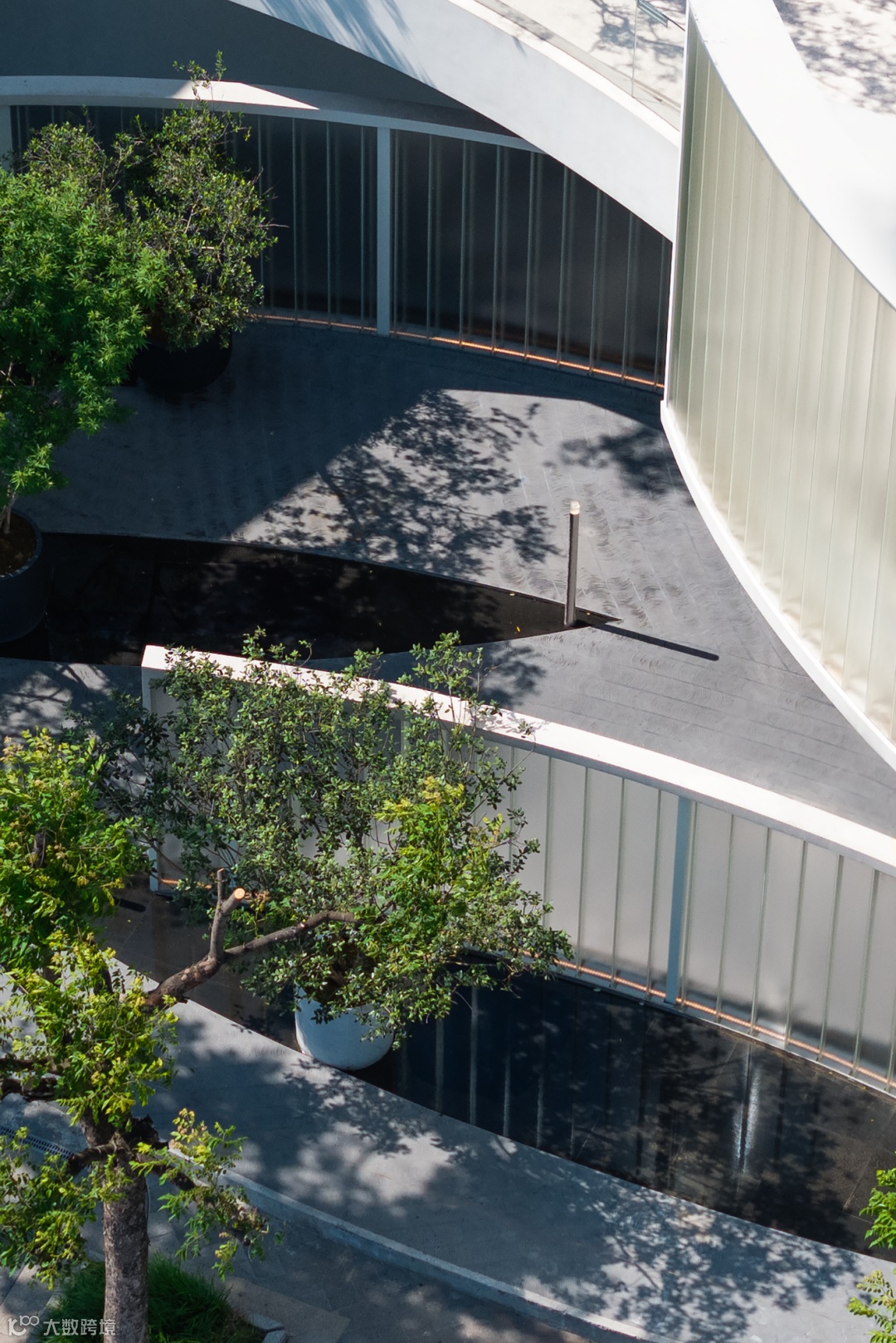
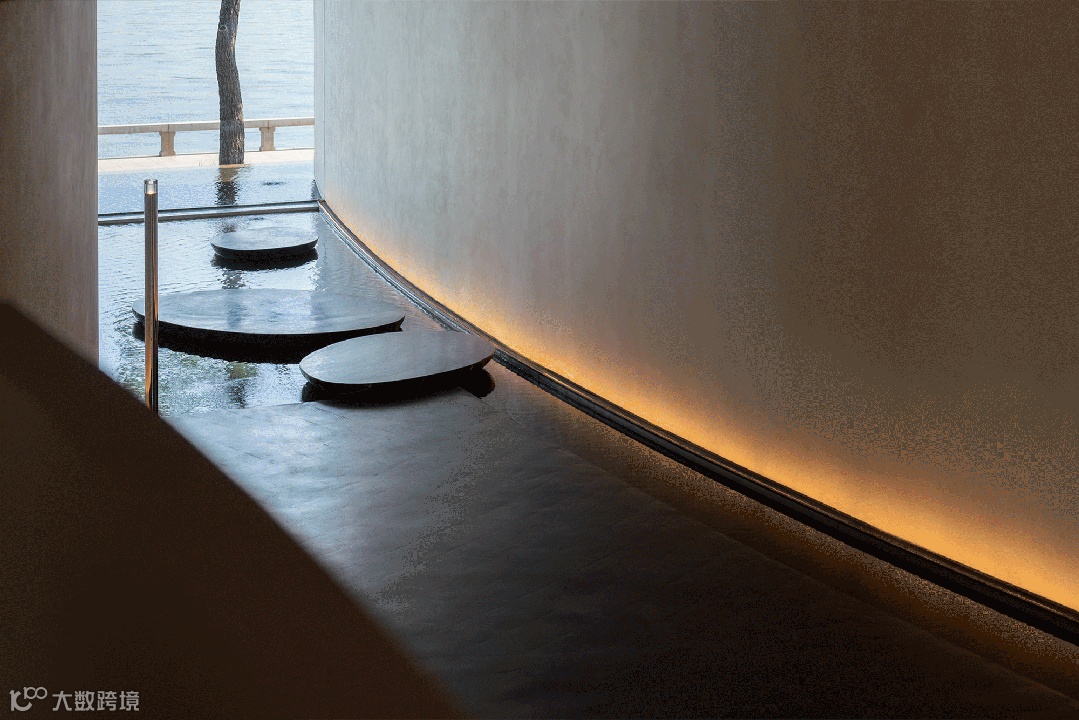
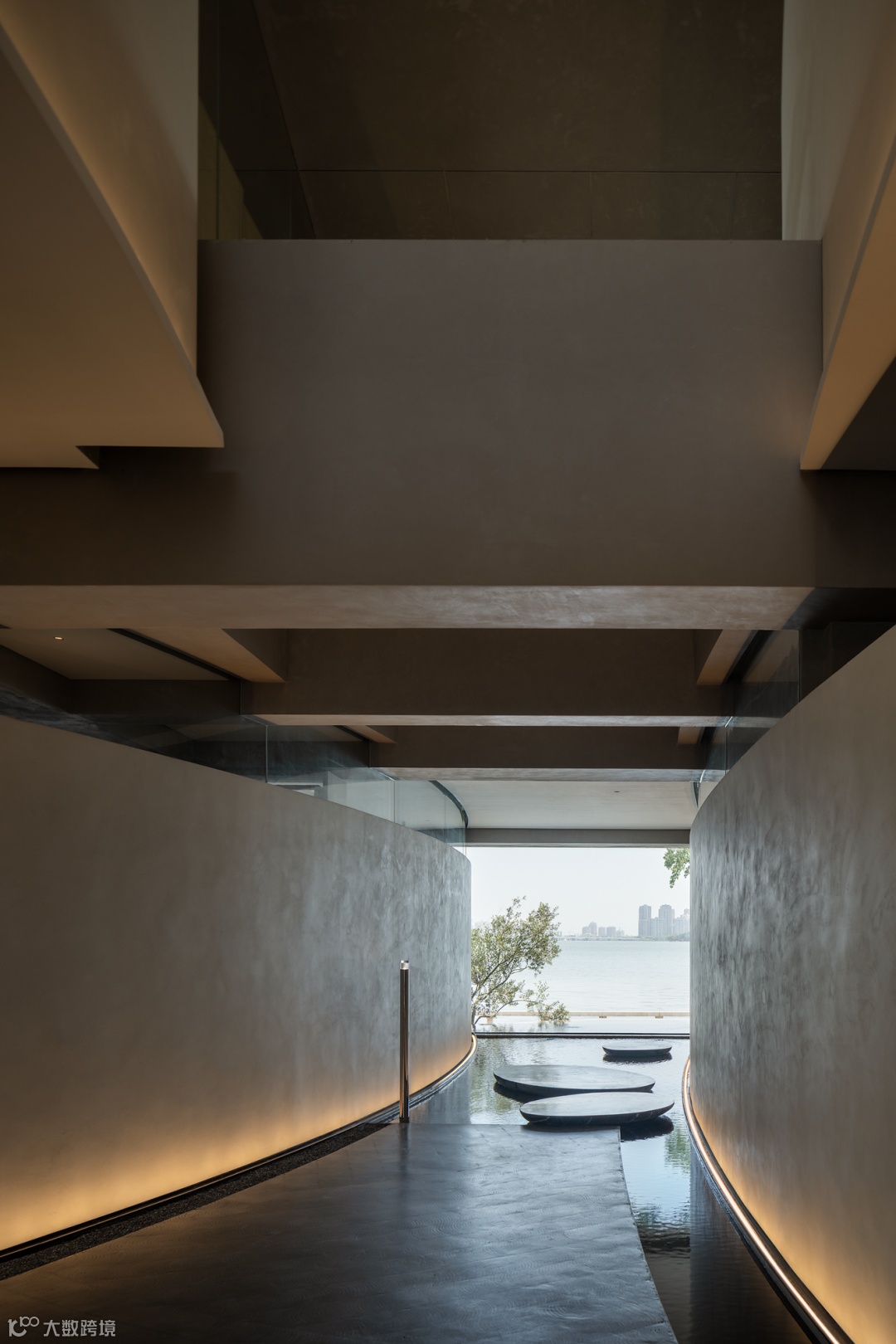
Inspired by the natural landscapes of rivers and mountains, the wave-pattern tile combines recycled roof tiles and terrazzo to serve as the primary flooring material. This wave-pattern tile enhances the formal language of the zigzag path while also serving as a metaphor for river. Traditional Chinese gardens express aspirations through water, a concept taken to an extreme in Japanese dry gardens. In contemporary commercial spaces, implementing water features can be challenging. Therefore, the wave tile emerges as a vivid form that captures the essence of the water element in the garden.
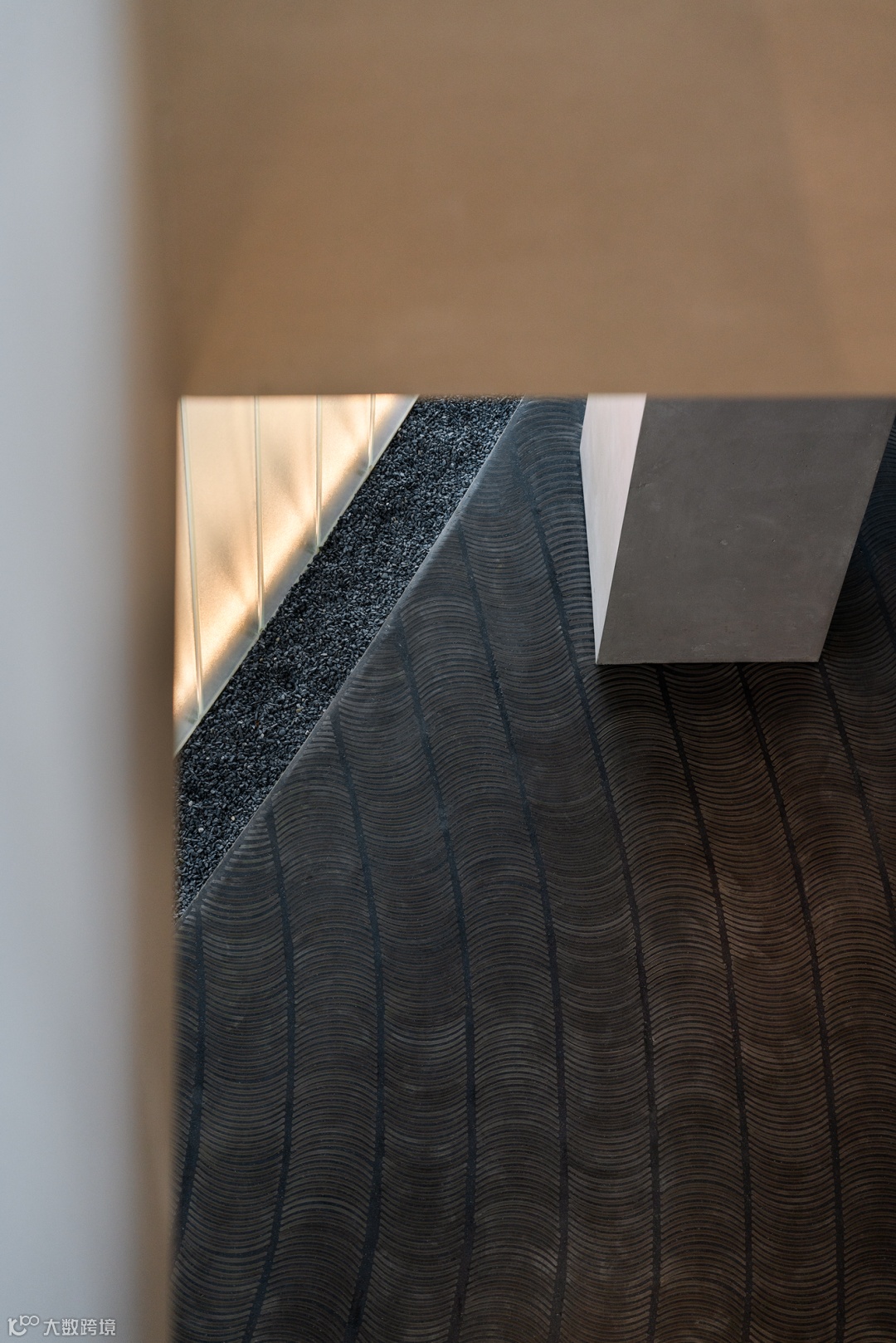
大量虚实相隔的S型墙体强化路径的延展感,行径其中的视线在安全感的围合中抛向虚构的端景。极简的几何曲线在空间中重复延展,材料虚实交织重构转译‘透漏通灵’的古典园林审美。视线透过现代而暧昧的界面,自然延伸至远处的未尽处。路径引导感知的设计方式,恰与现代建筑中的“建筑漫步”理念形成对议。
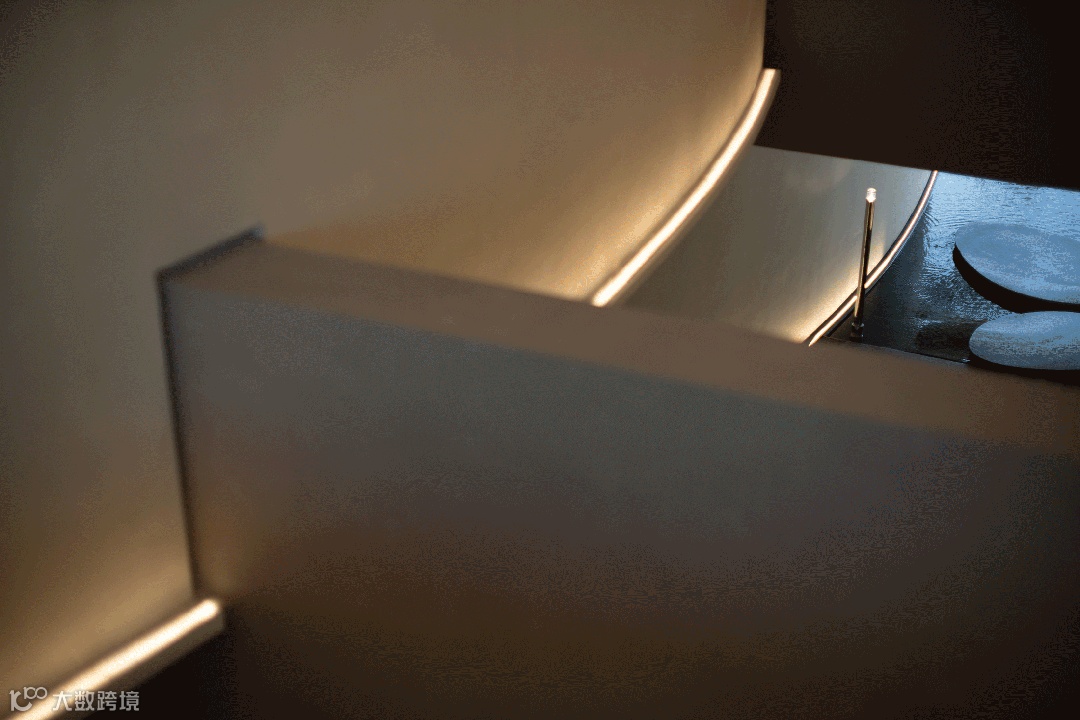
Curvilinear partitions that alternate between void and solidity enhance the sense of extension, both visually and conceptually. As one walks through the space, sightlines are drawn towards views beyond the partitions. The minimalist curves repeat throughout the area, intertwining various materials to convey the aesthetics of transparency. This design approach, which utilizes multi-sensory experiences to guide people through the space, resonates with Le Corbusier’s concept of the Architectural Promenade.
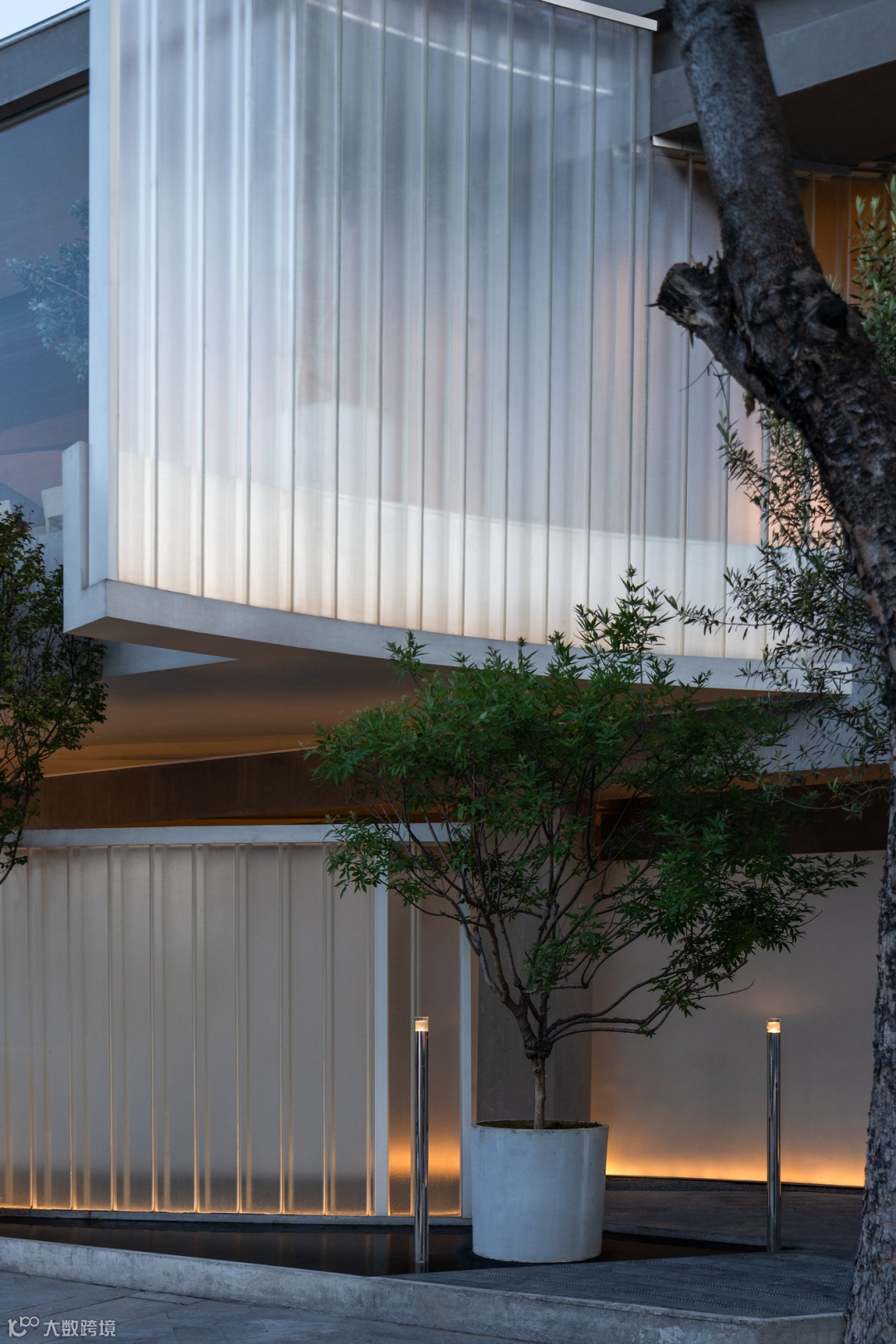
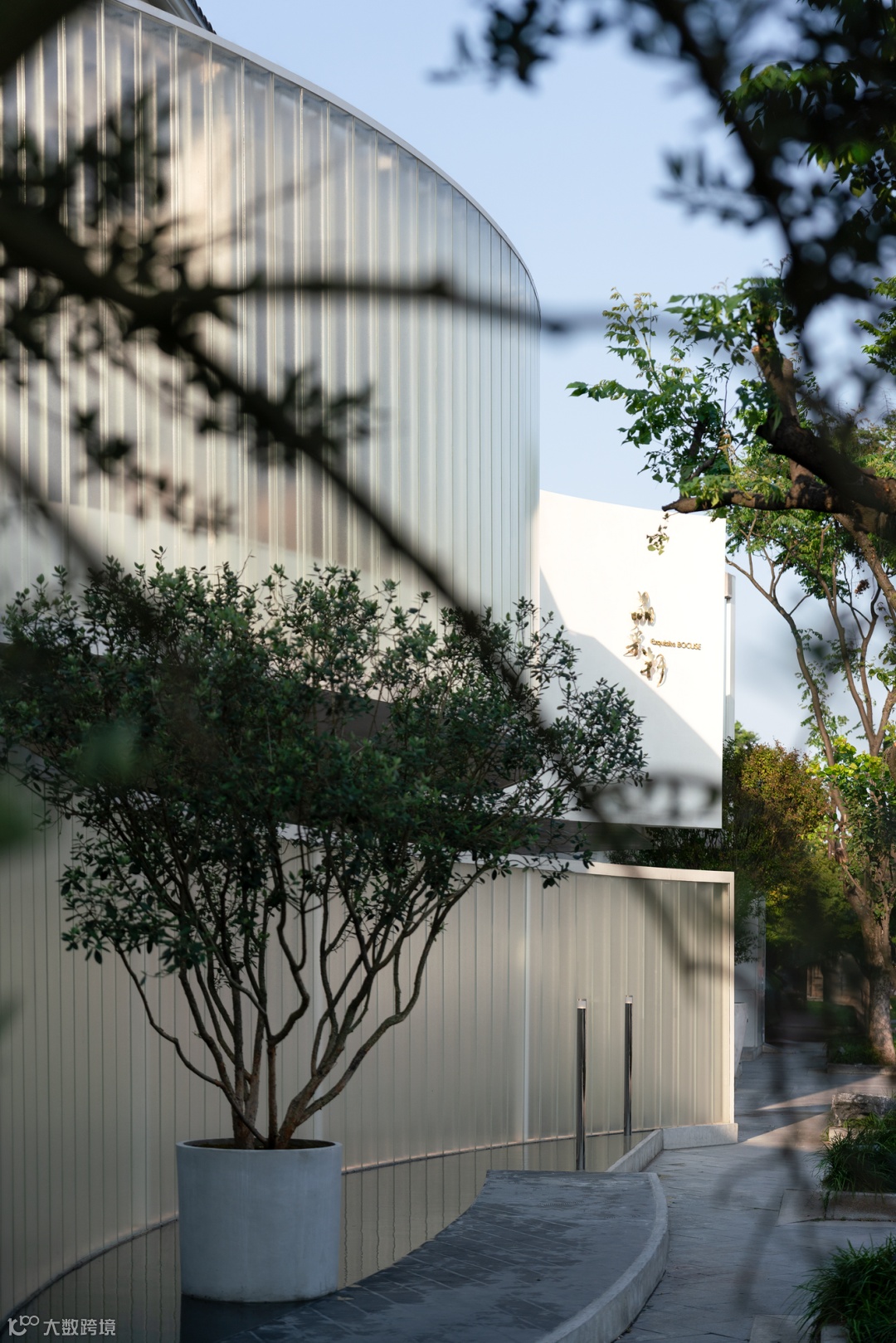
虚实,无论在古典园林还是当代建筑语言中贯穿始终。古典的委婉之虚通过大量植栽与山石构筑,而当代之虚则直接明了的用材料之虚。时间两端似乎以此建立一种有趣的讨论。
其实虚实关系的建构还是一种“灰空间”的类似建构。现代建筑语境中灰空间代表过渡与缓冲之处,但在该项目中,灰空间似乎蔓延至公共空间的全部。
以退为进的建筑入口,退让释放出大片的灰色空间,并将这种灰度流畅无痕的过渡进传统意义上的室内中庭又穿透其间后直抵湖景。
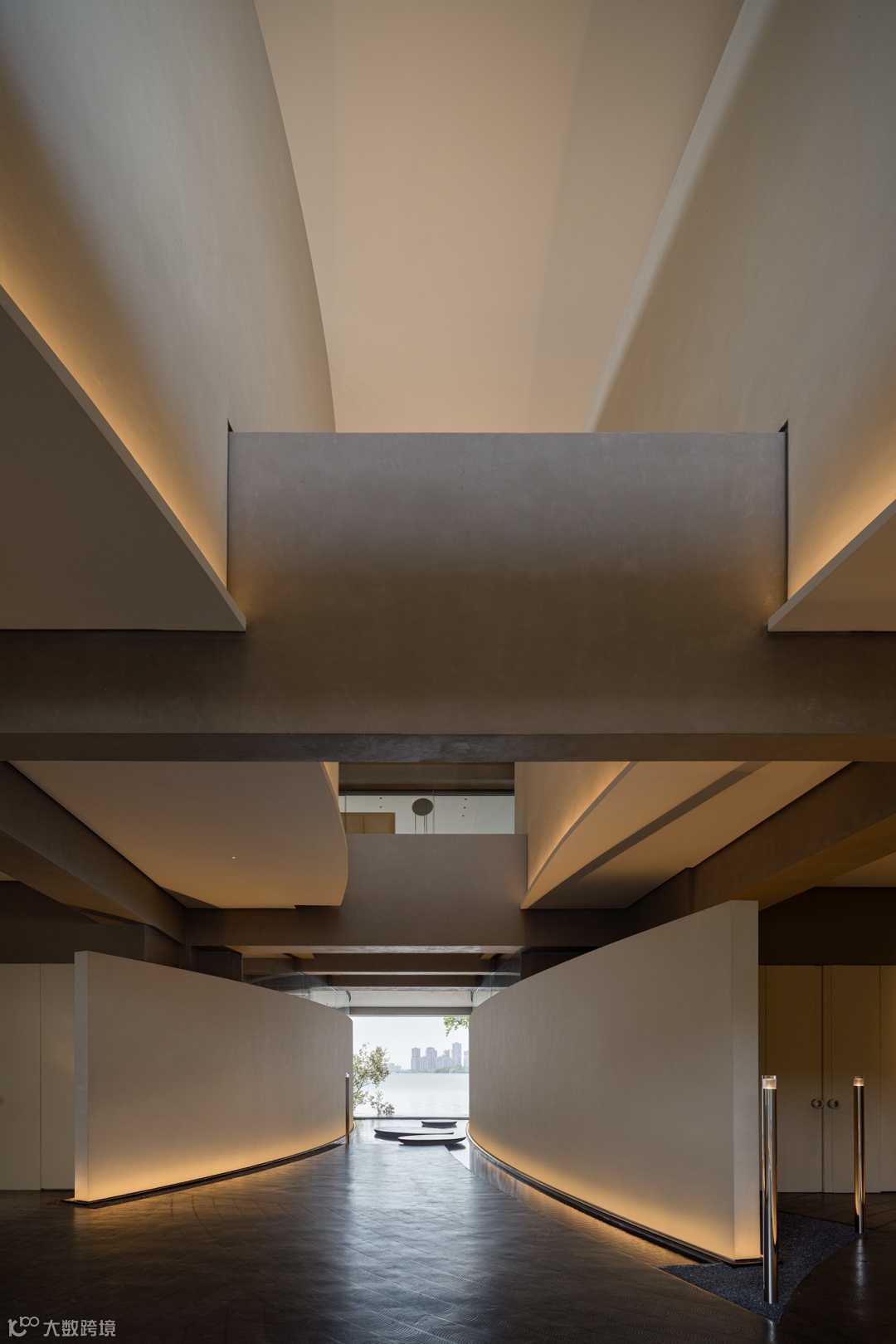
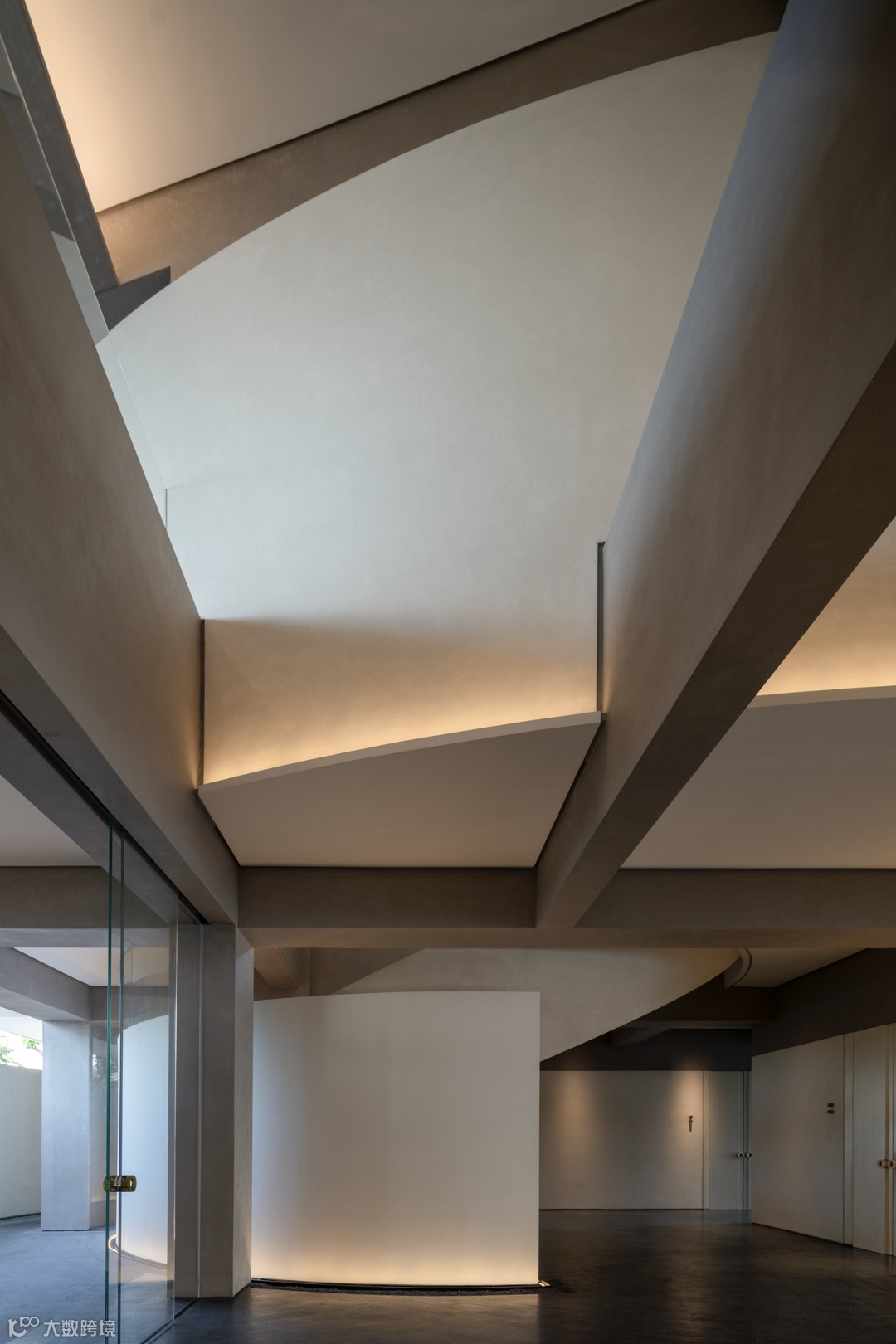
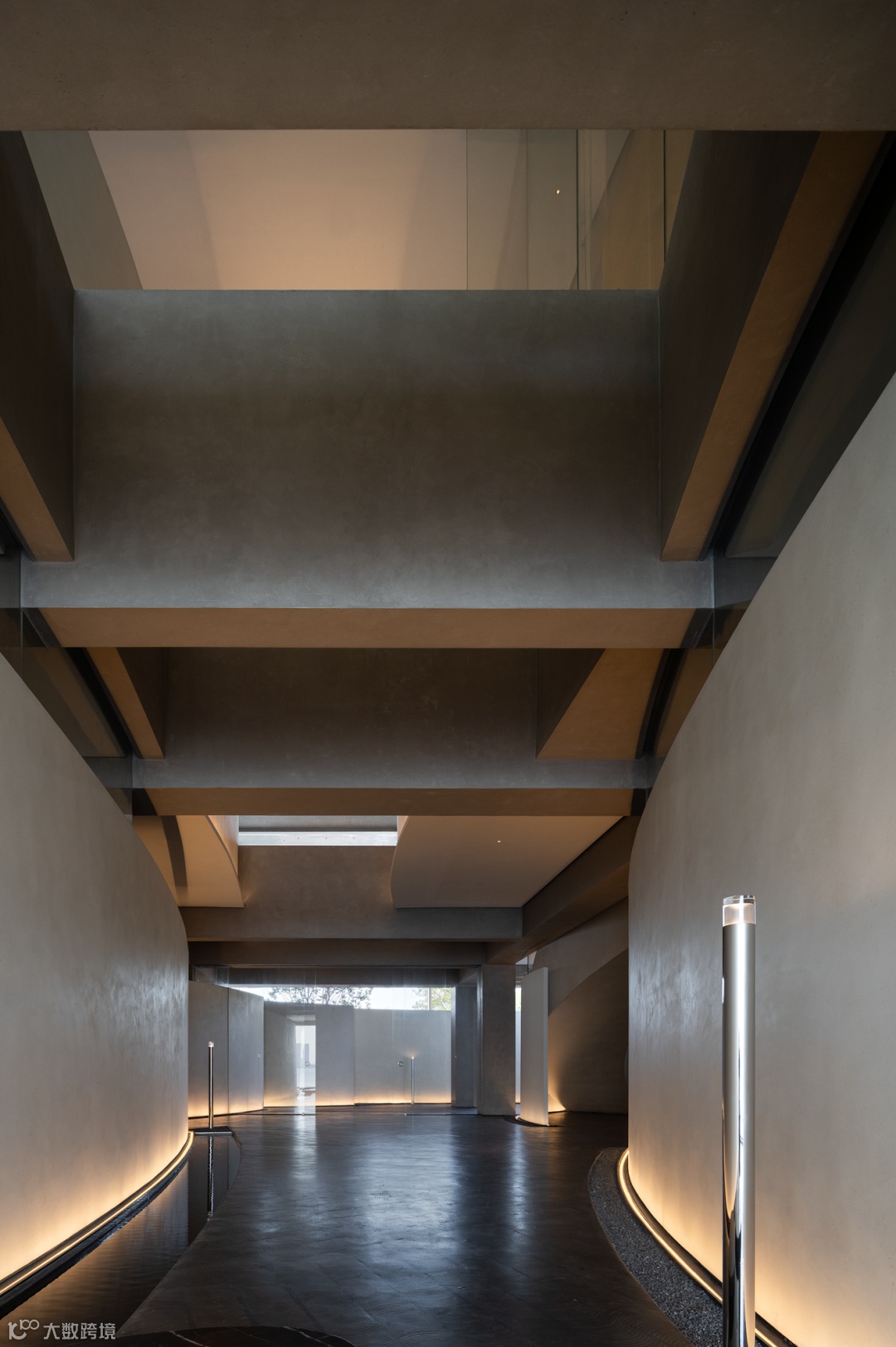
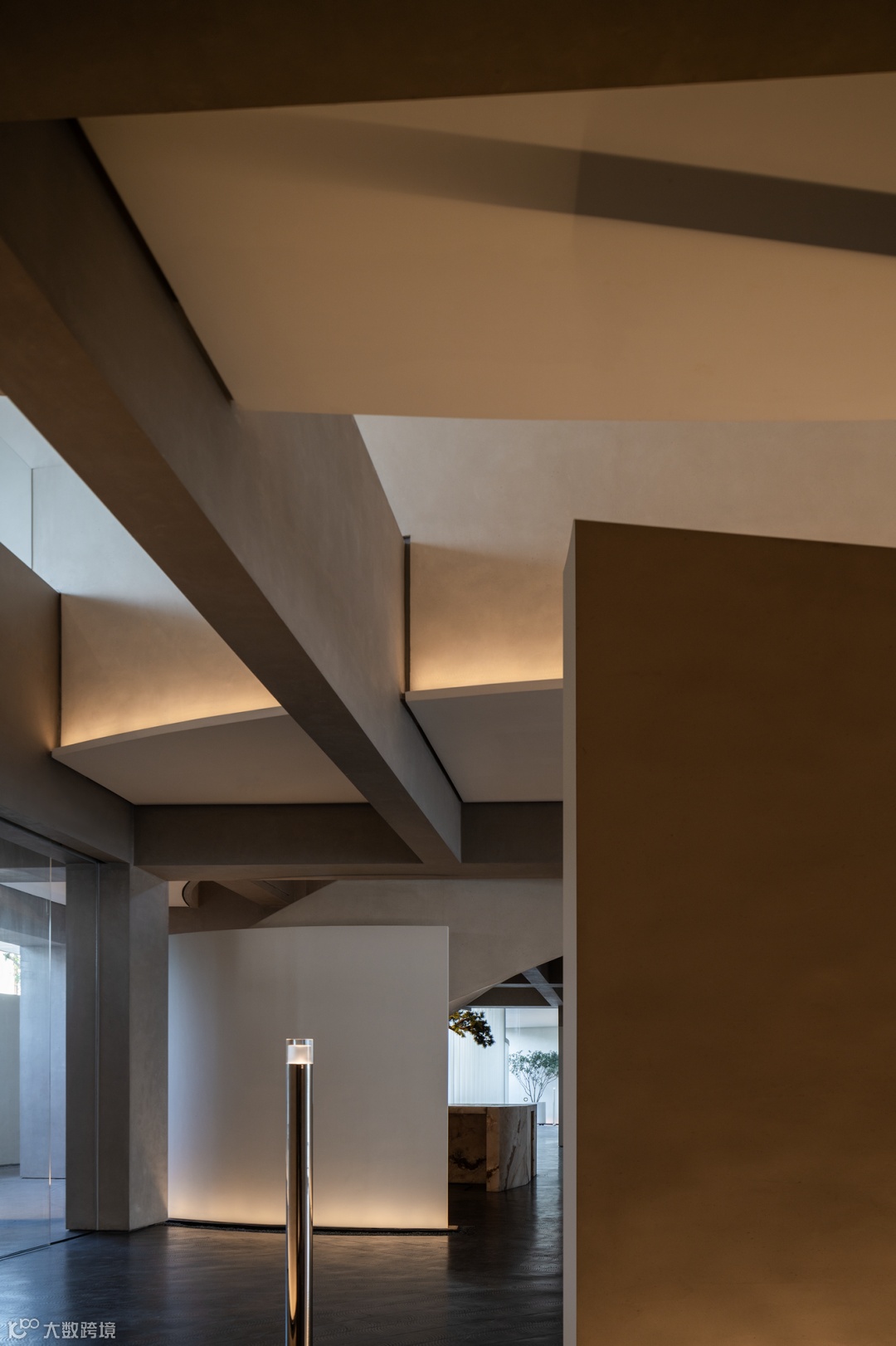
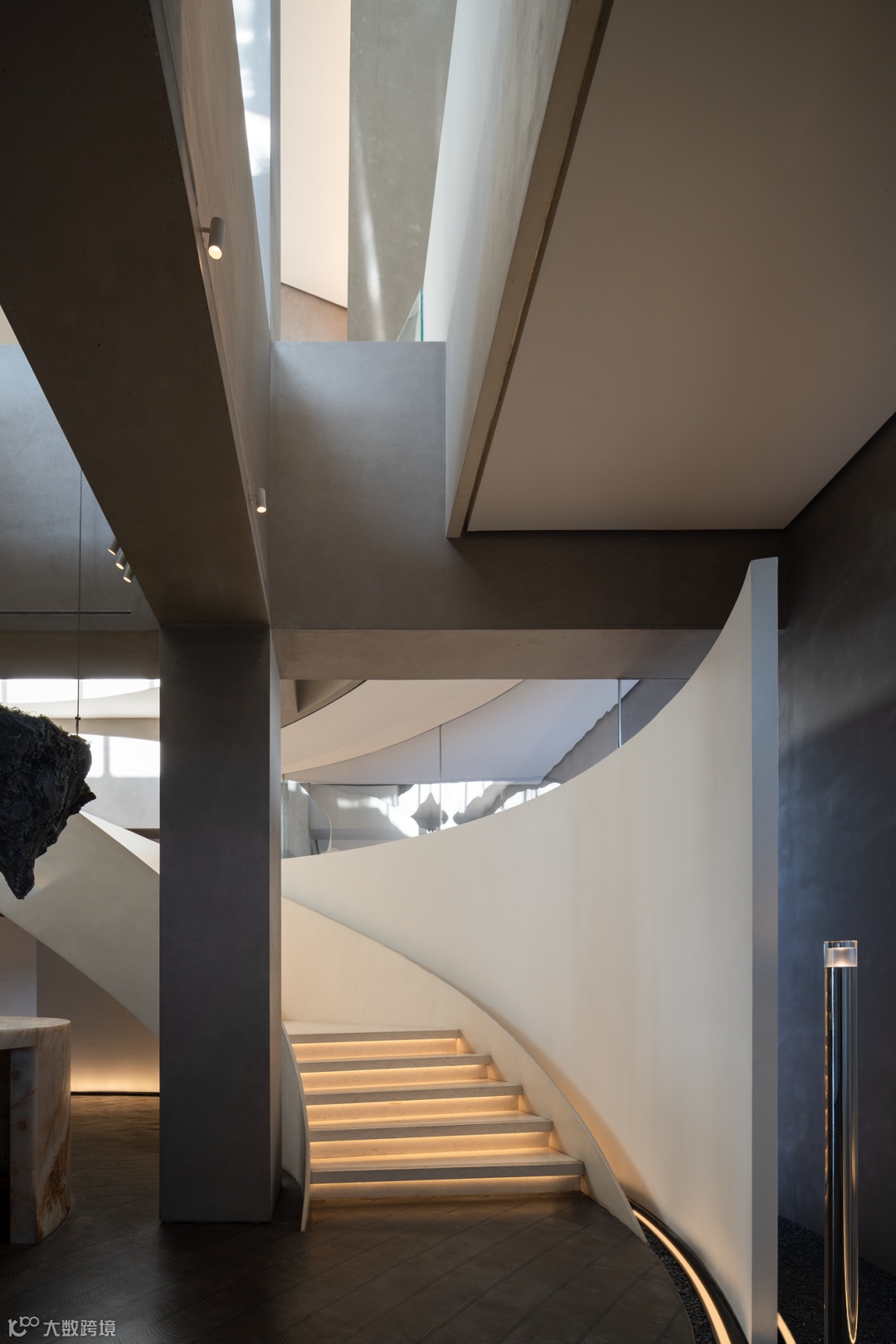
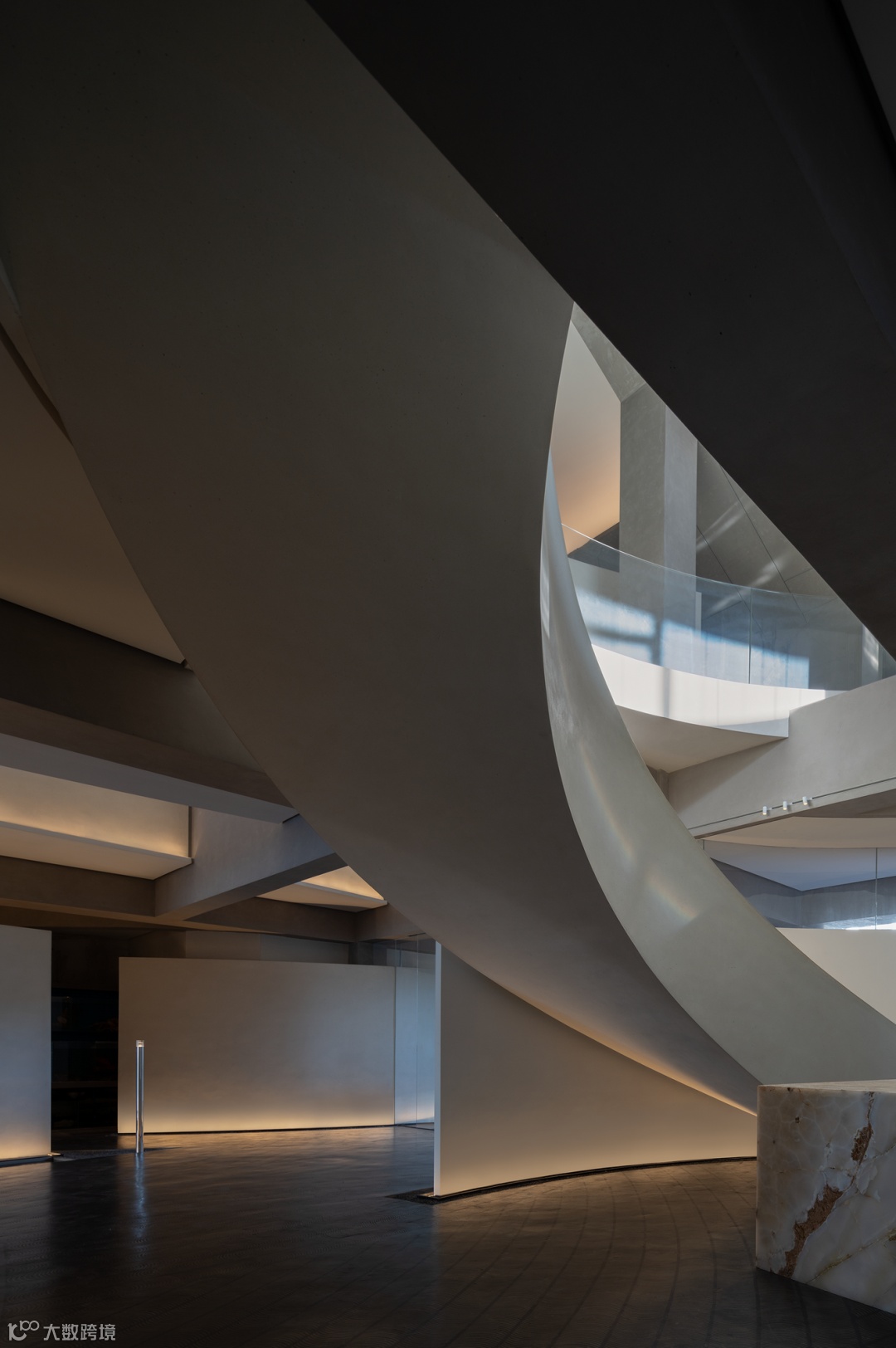
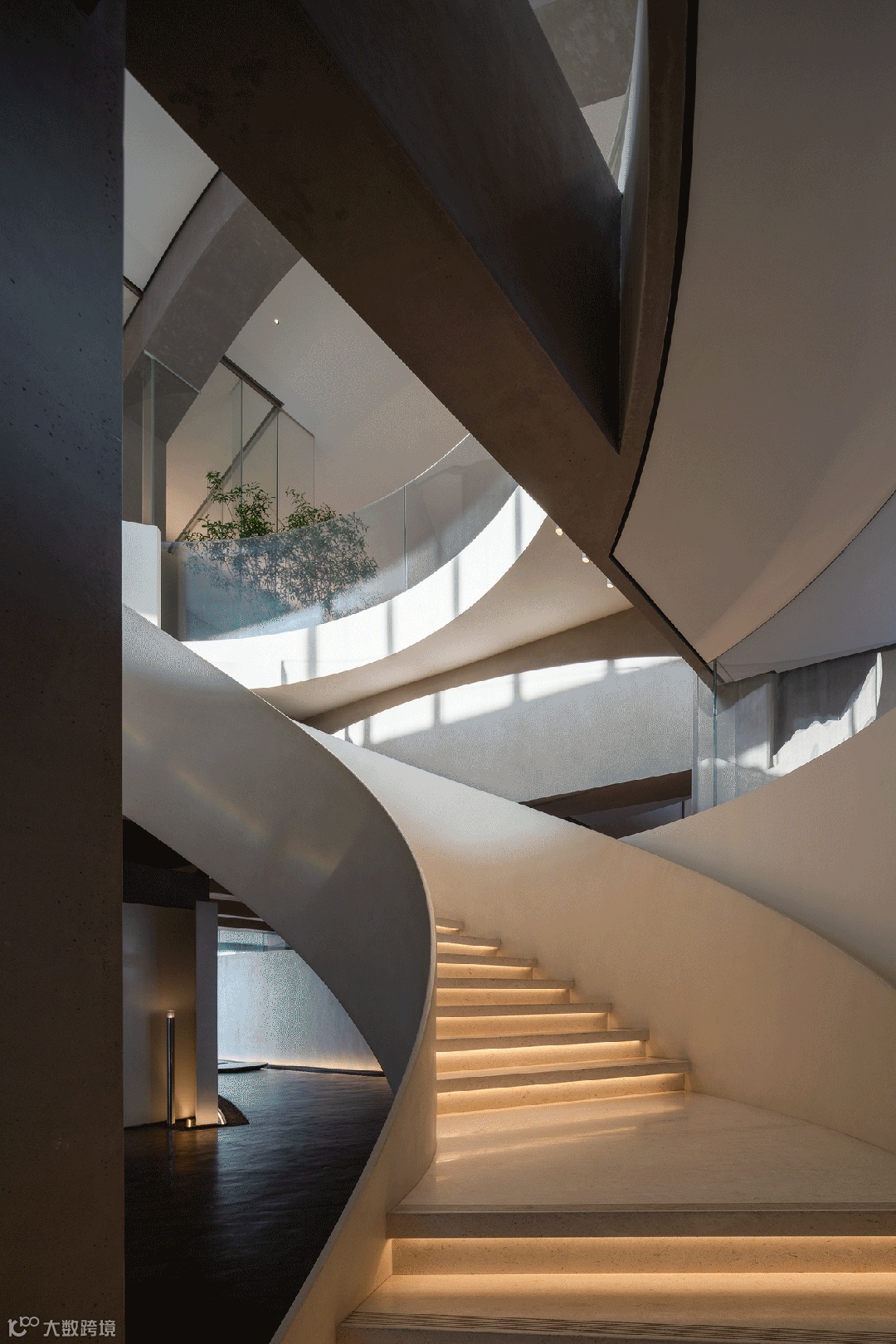
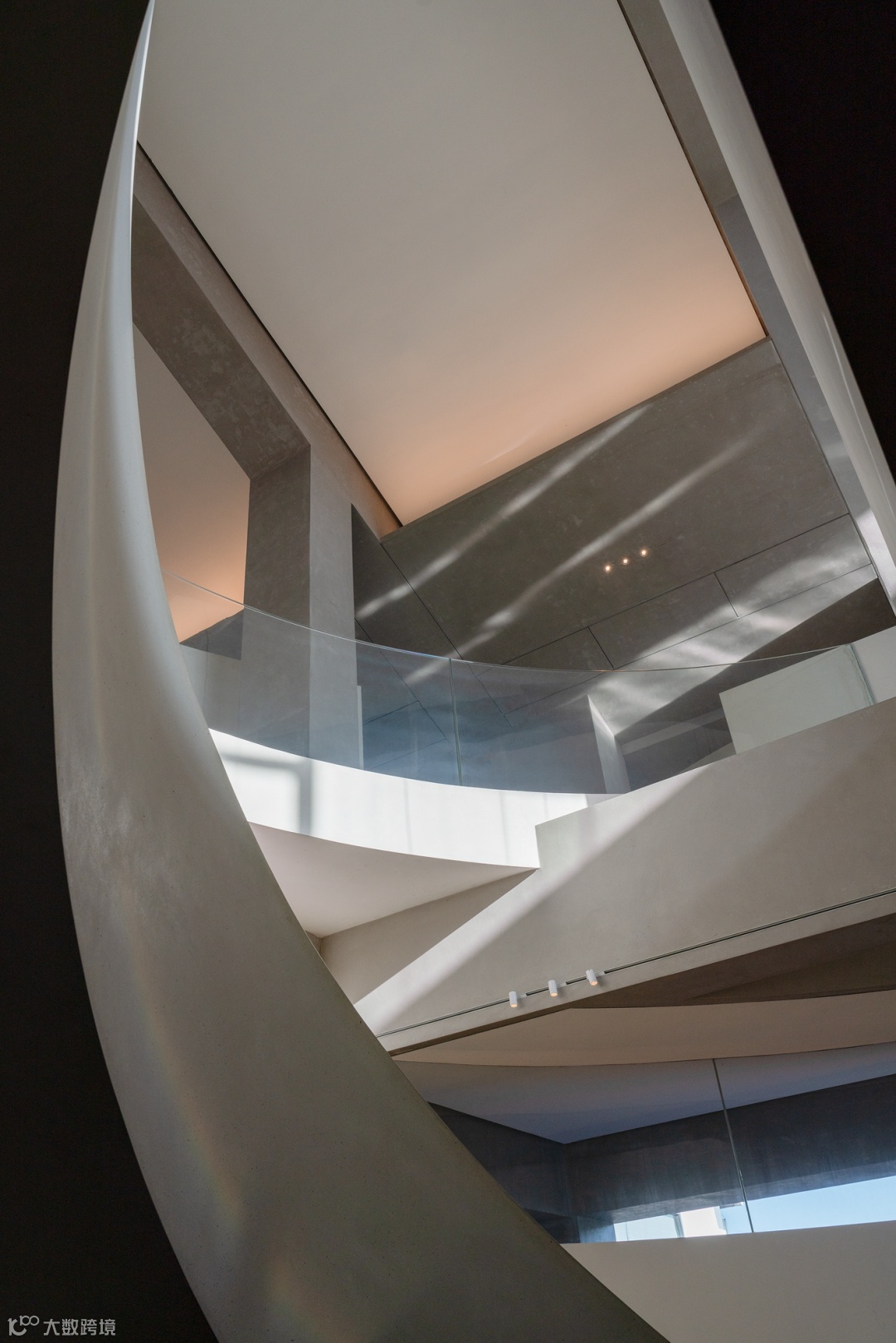
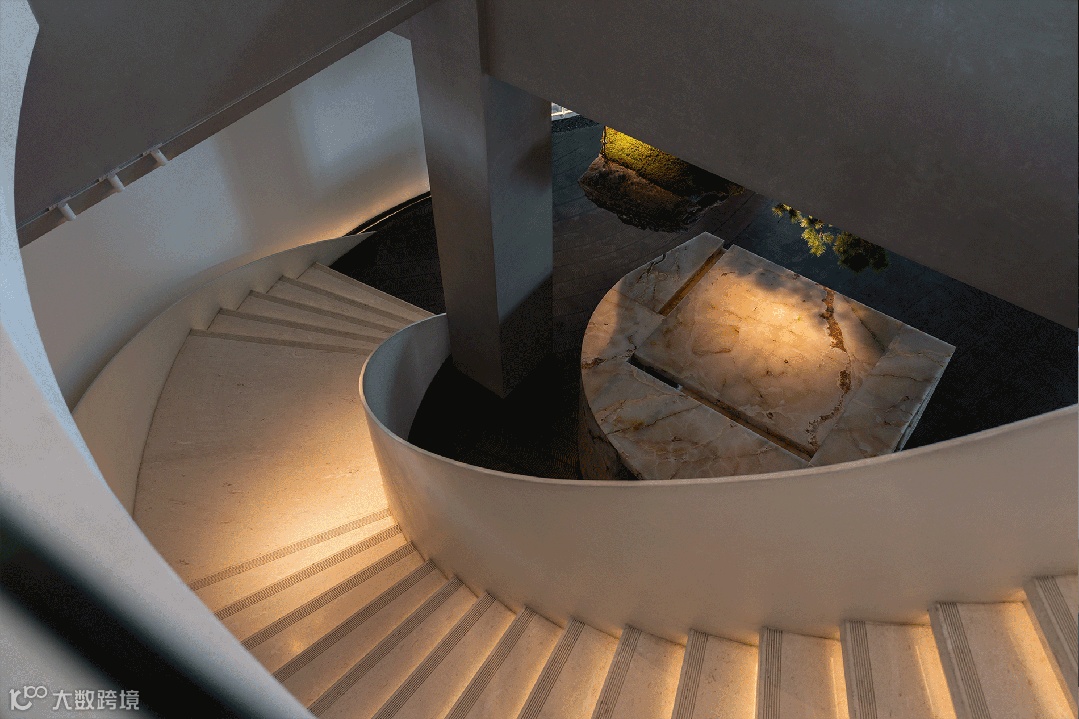
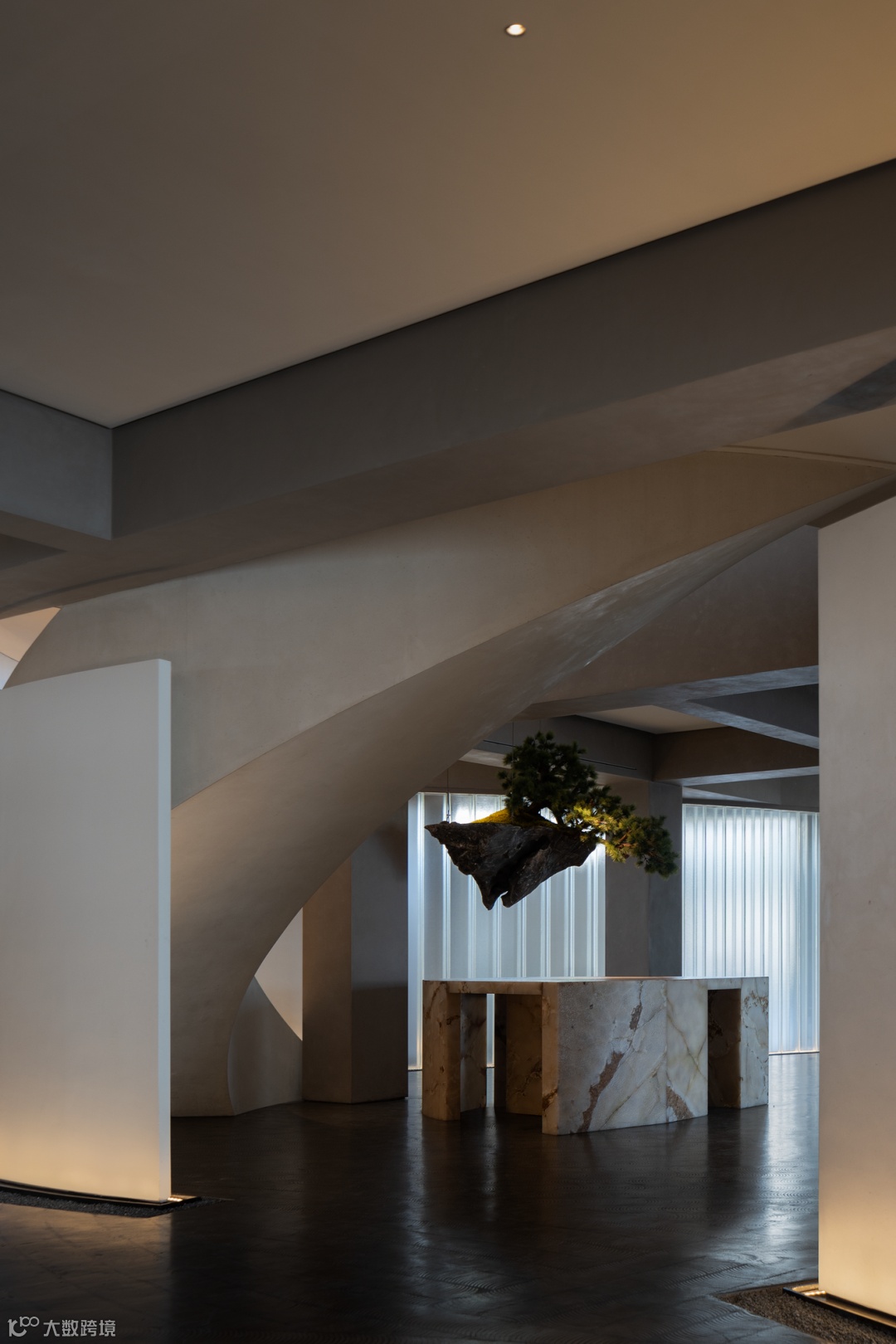
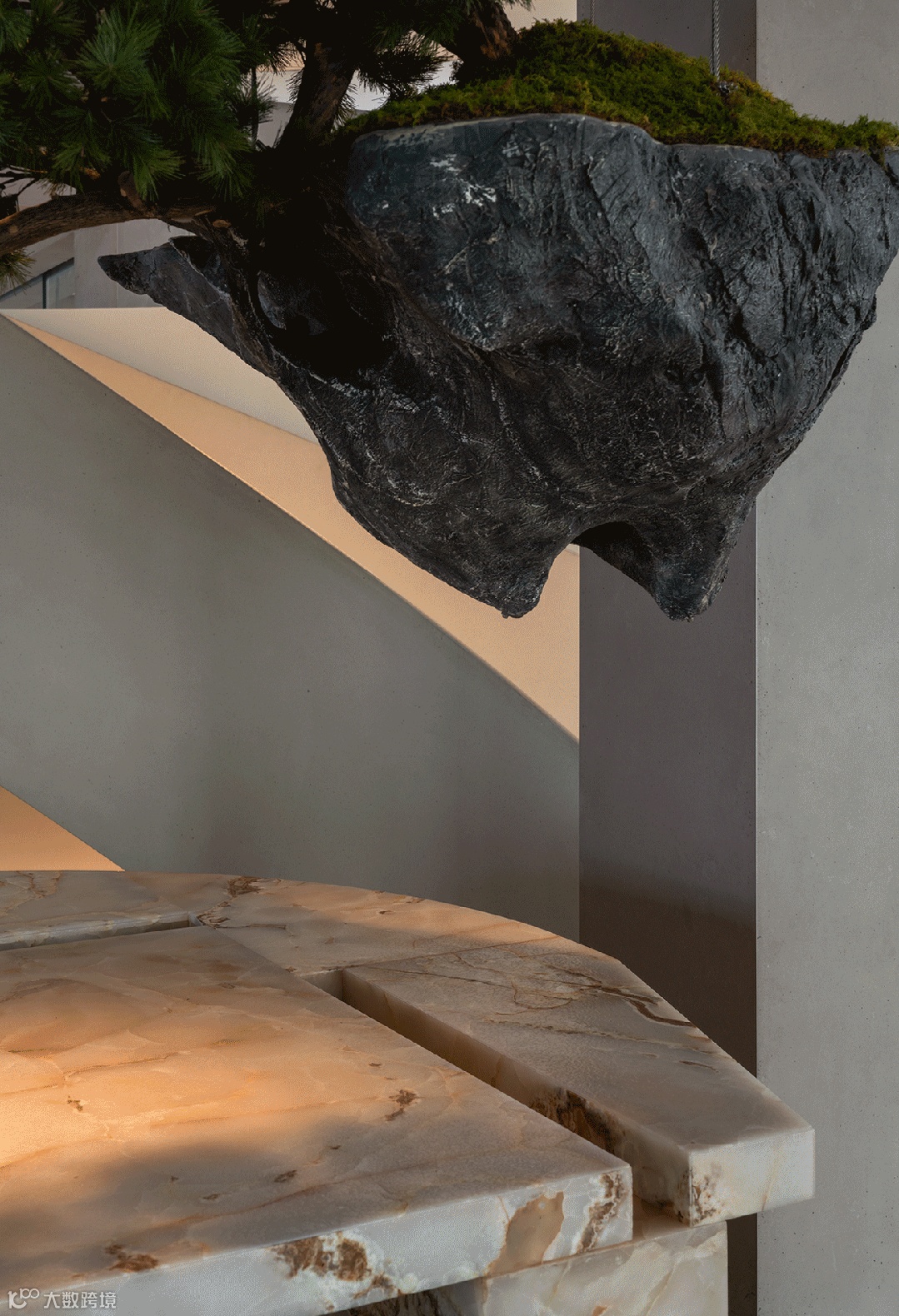
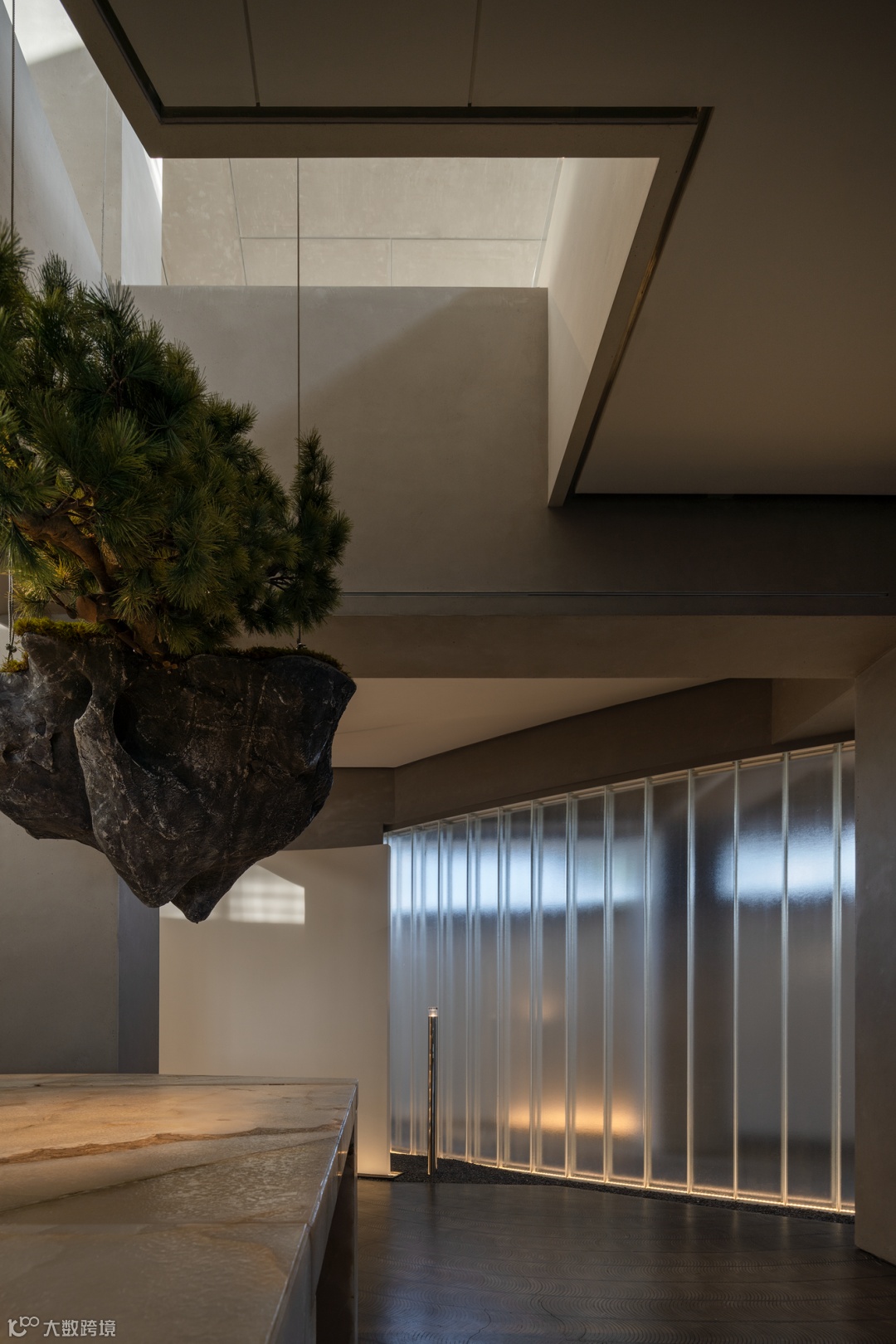
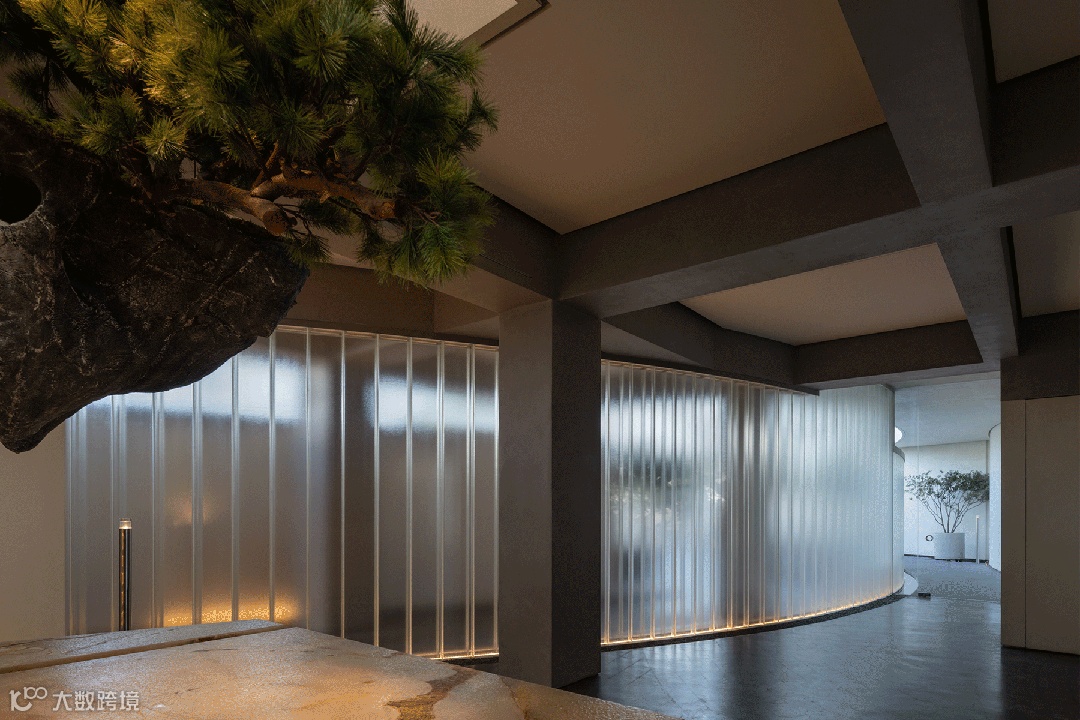
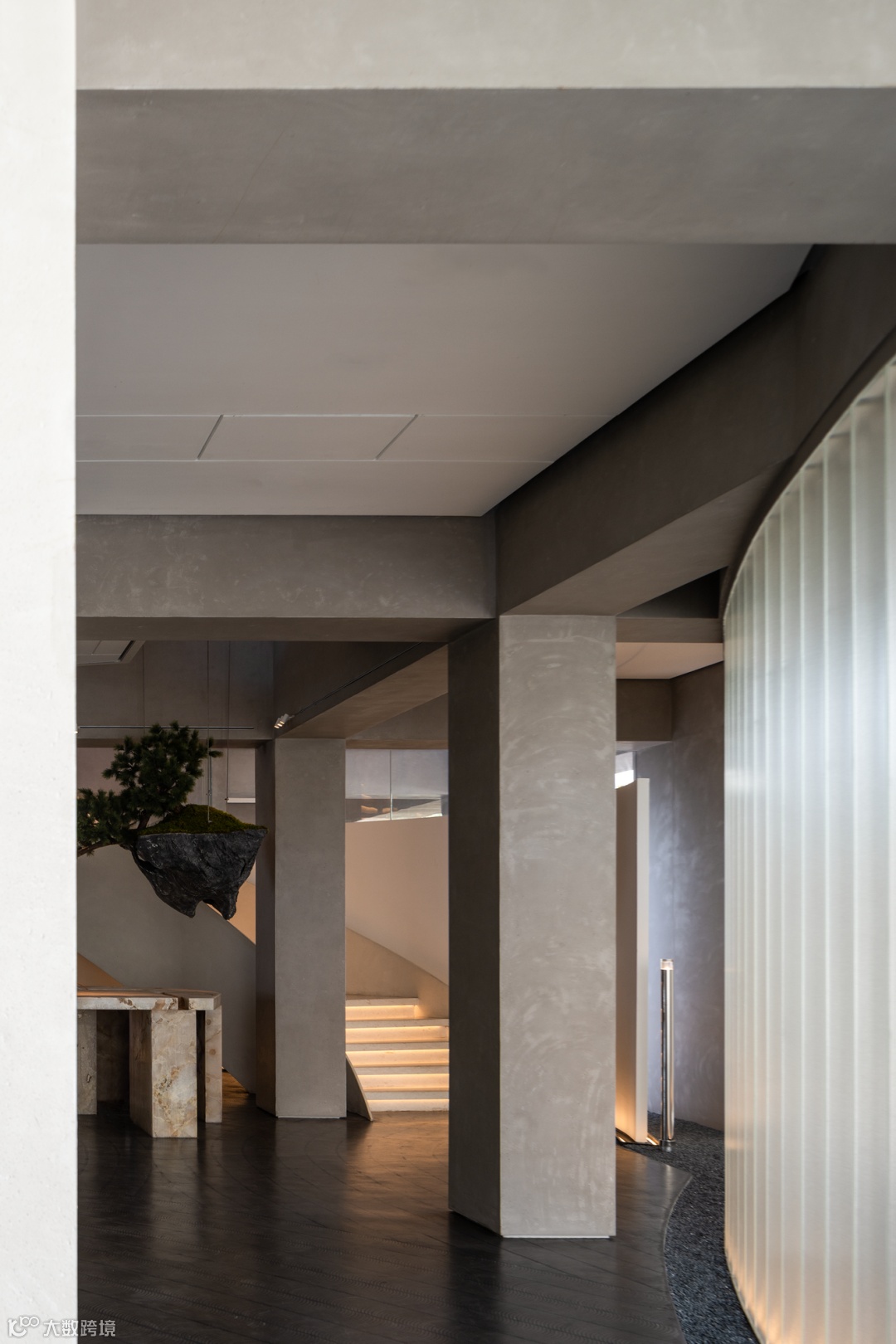
由动态感极强的步行梯至二层序厅,场面感再度变化。顺应原建筑顶部形态软化的户型大厅顶部强调了空间高度的特性,并提供一组抽象山体艺术装置。打散客流动线分流至不同包房同时,再次提供了一个有视觉特征的焦点。
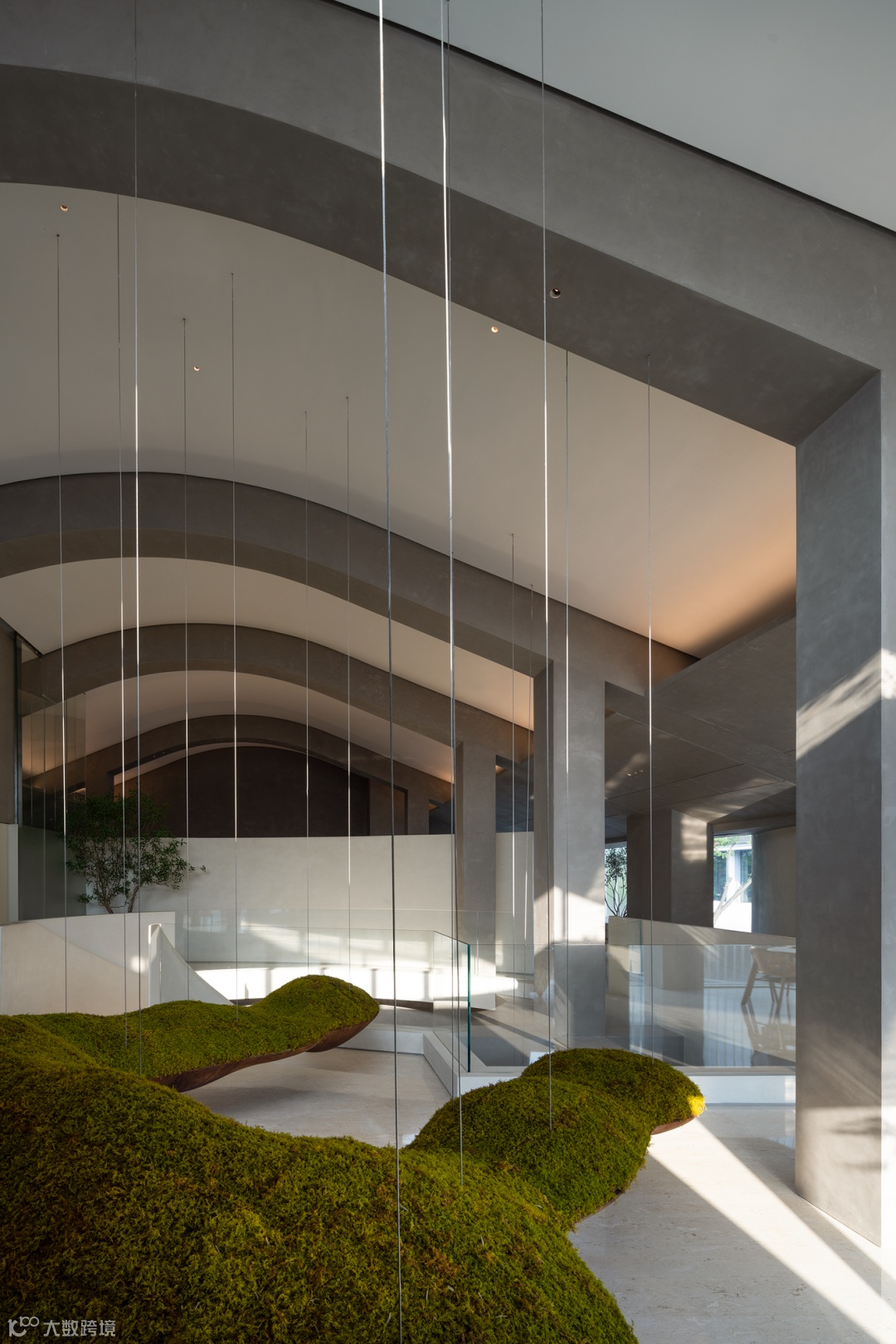
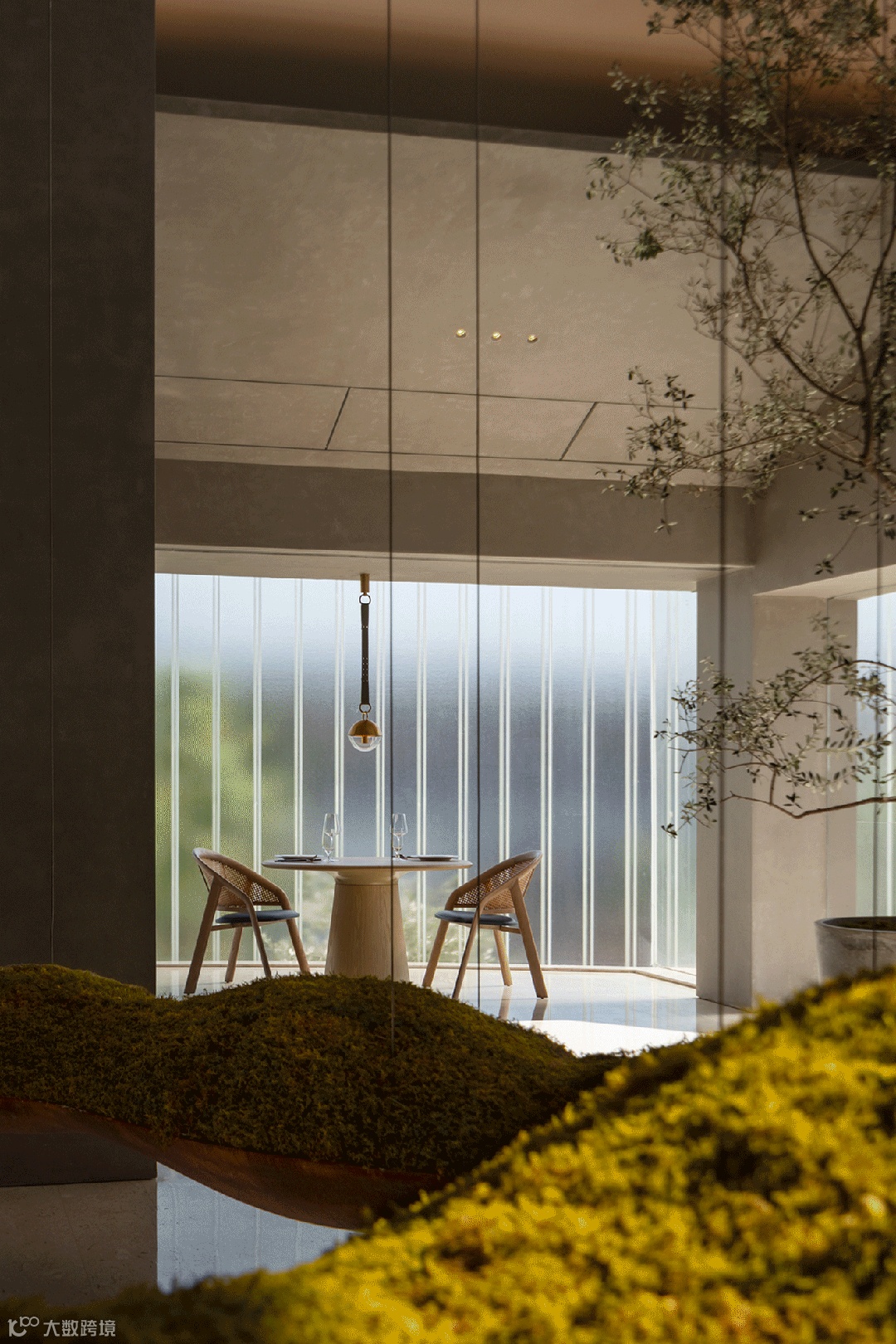
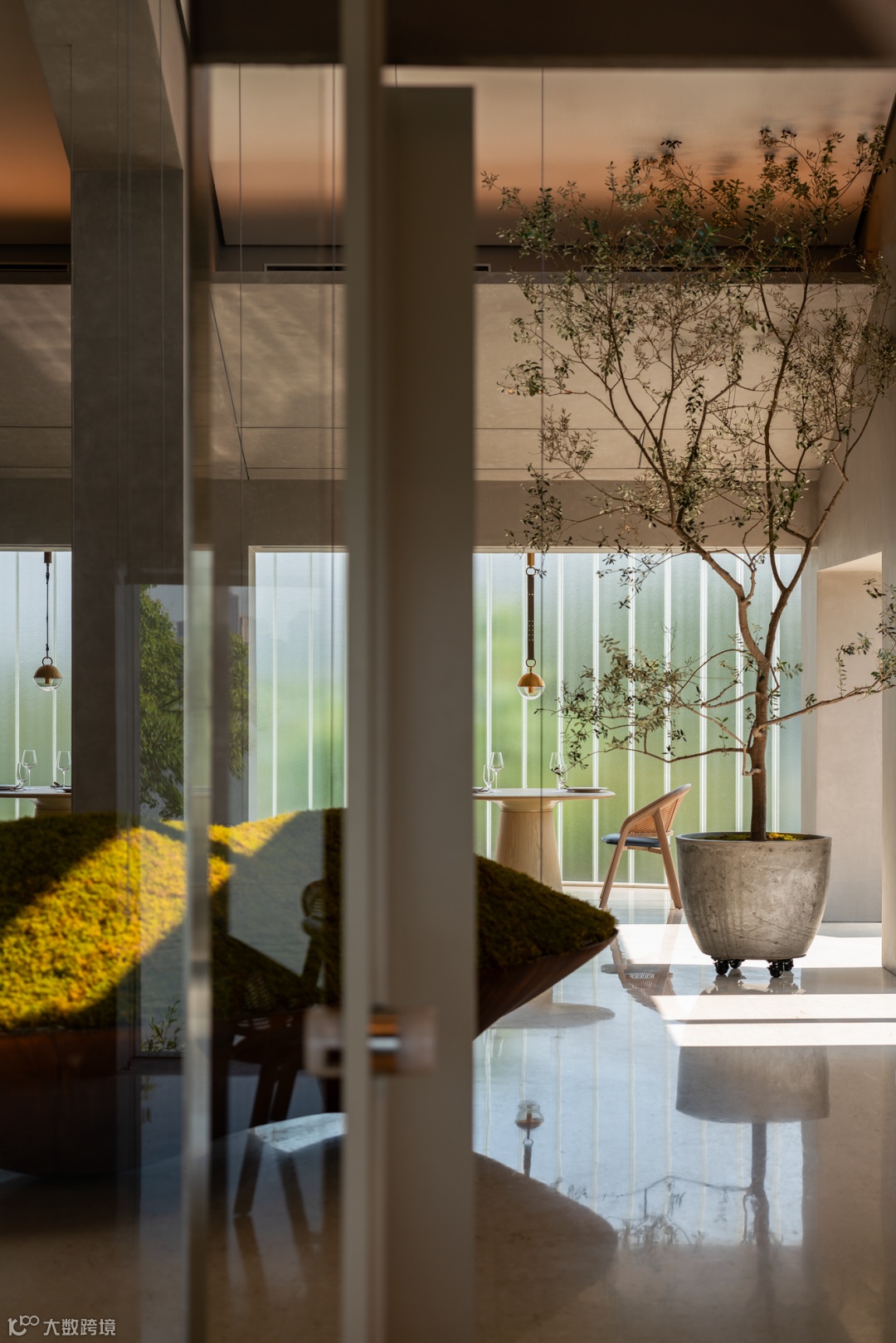
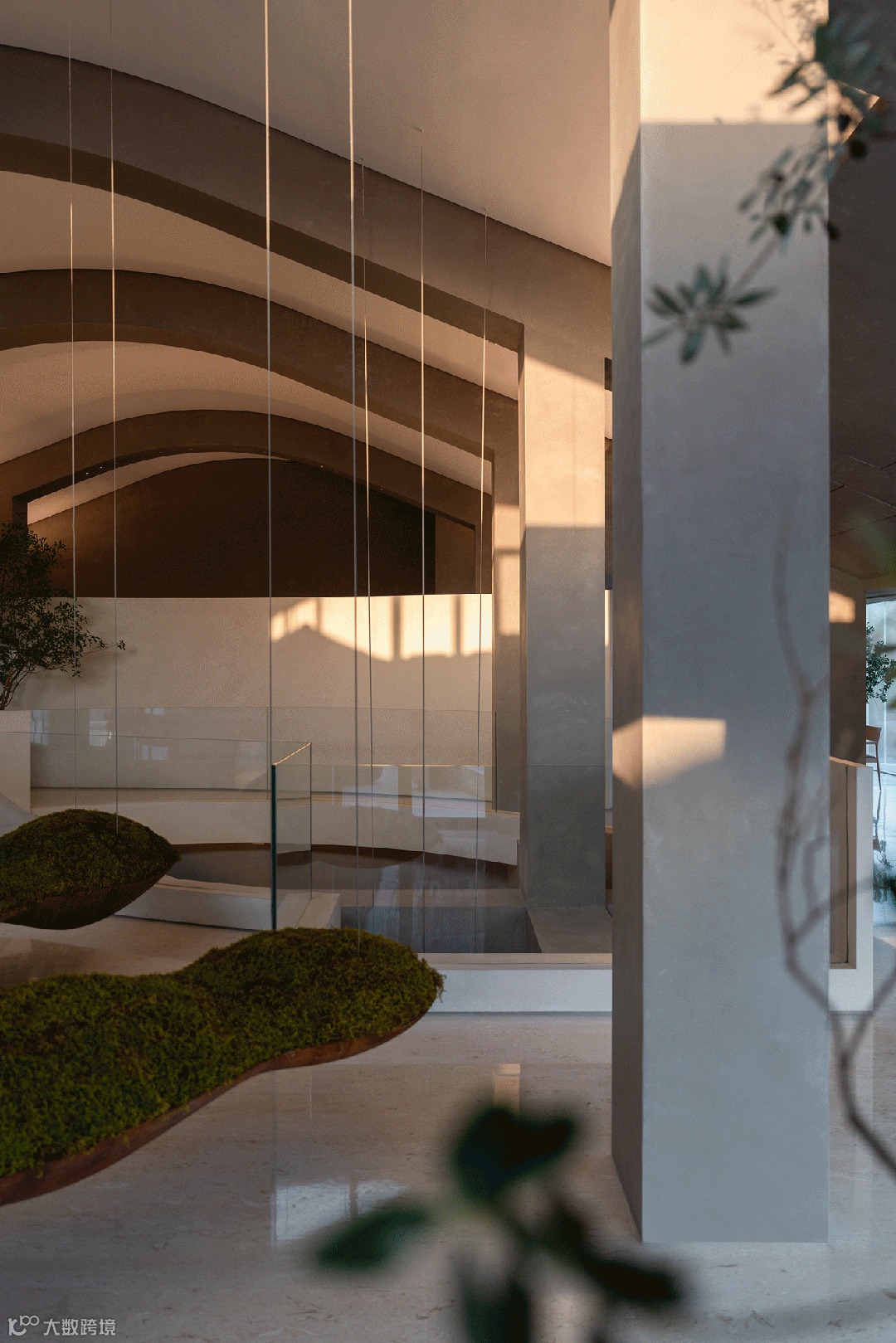
【藏露相生】大型绿植装置沿动线自然转折,巧妙分隔通道空间与用餐区,既保持餐区必要的私密性,又通过绿植间隙透出隐约的山石轮廓与光影变化,引导客人循着自然线索渐次深入用餐区域。装置中的植物与山石肌理形成质感对比,使原本线性的通道空间呈现出如园林游廊般的节奏美感,让现代餐饮空间同样承载传统园林"渐入佳境"的探索意趣。
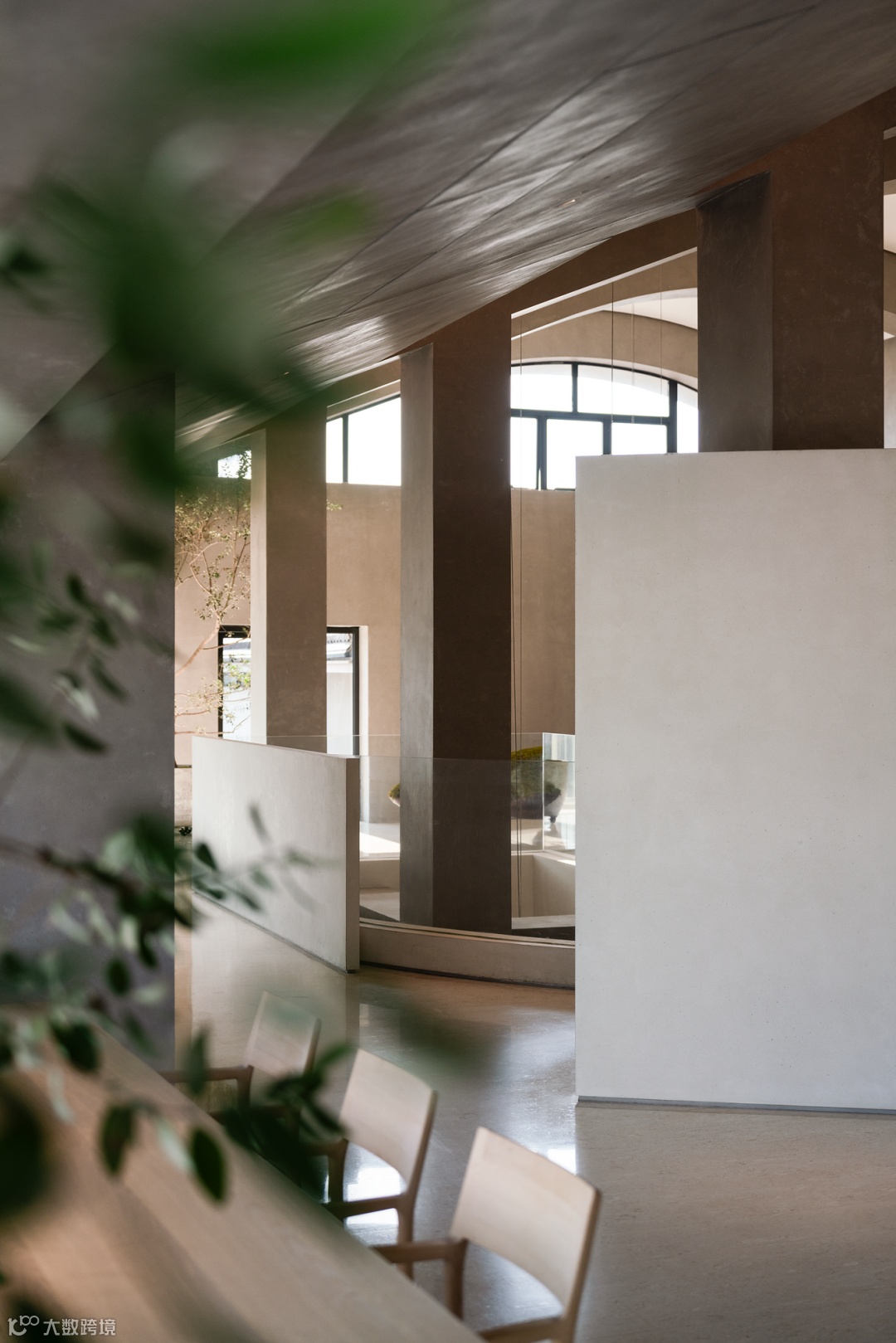
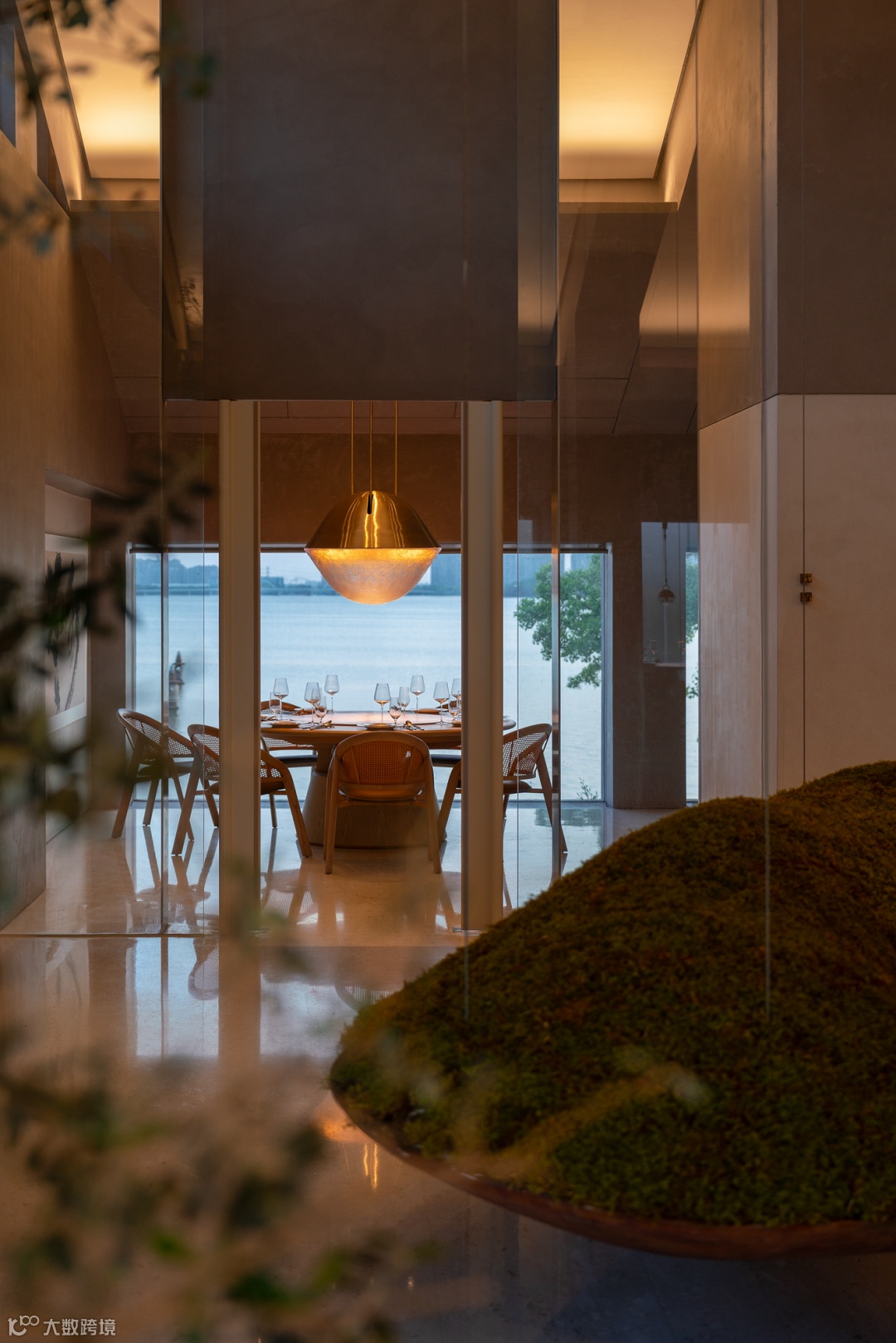
As guests casually move toward the private dining room, they may catch a glimpse of the lake view through a large window opening.
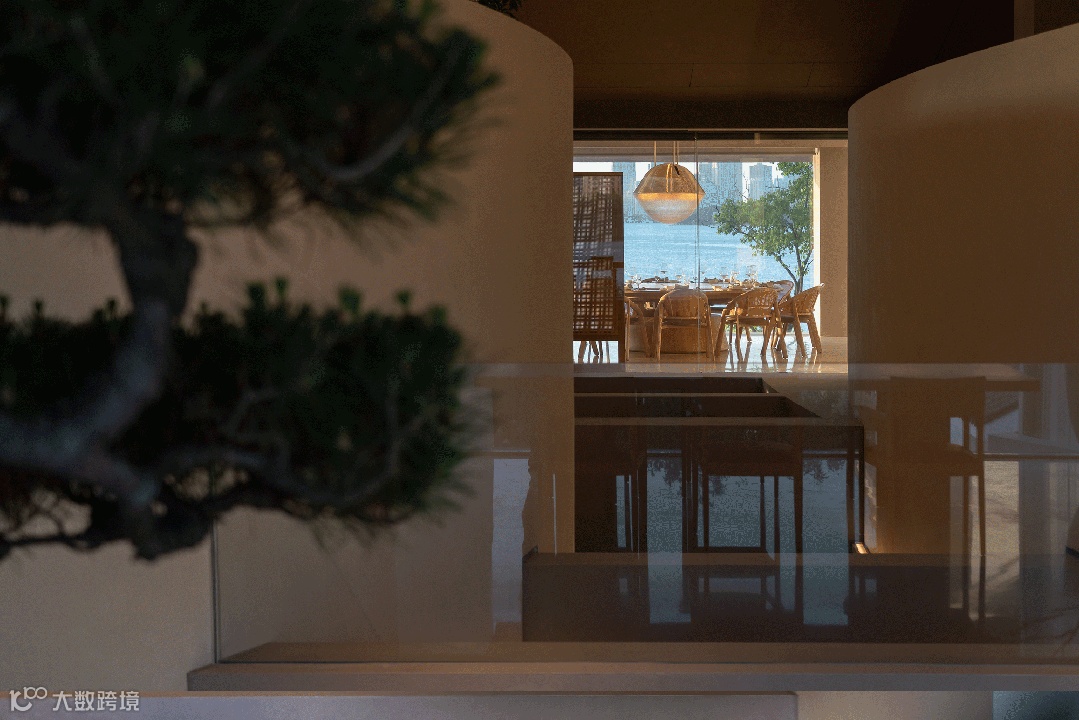
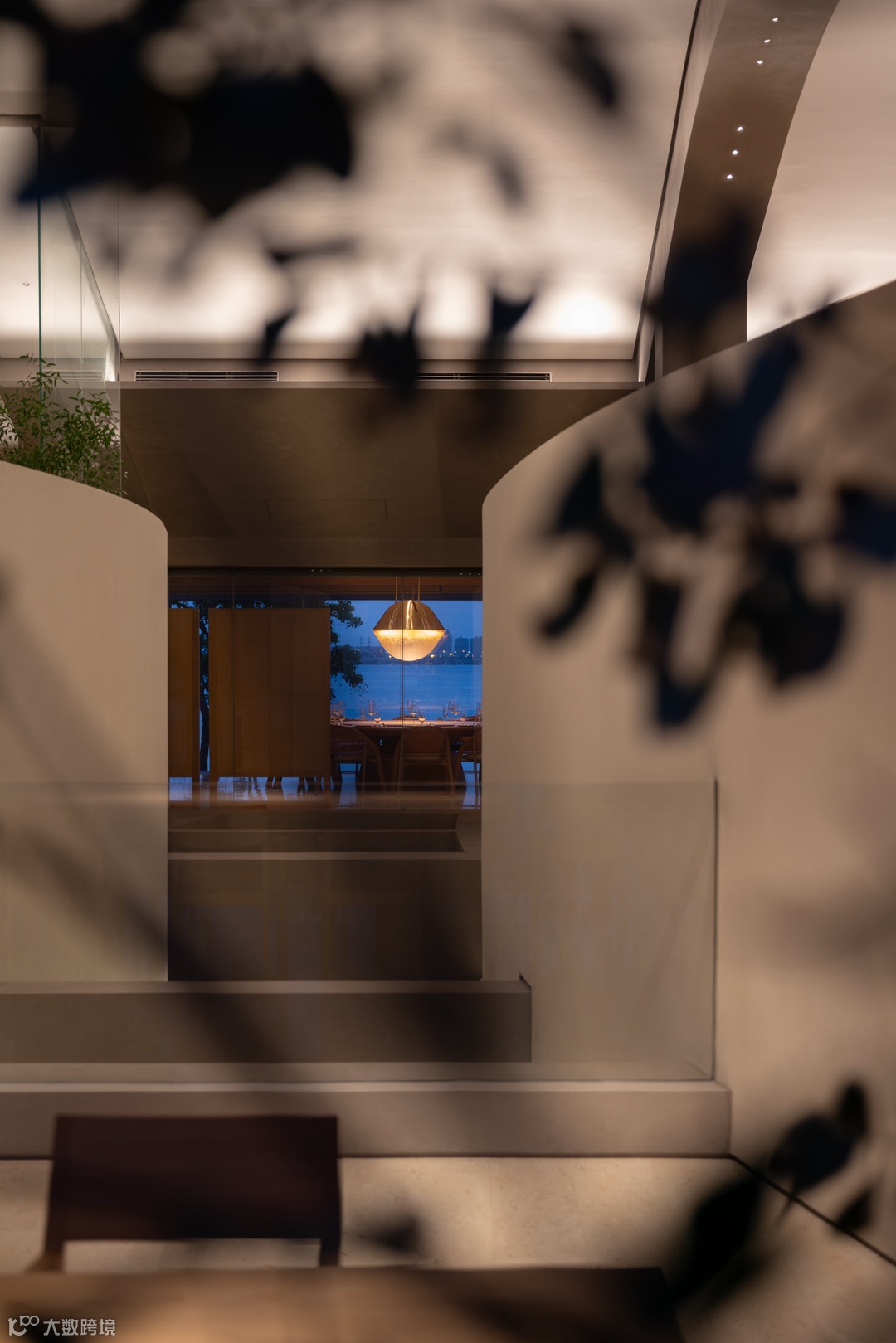
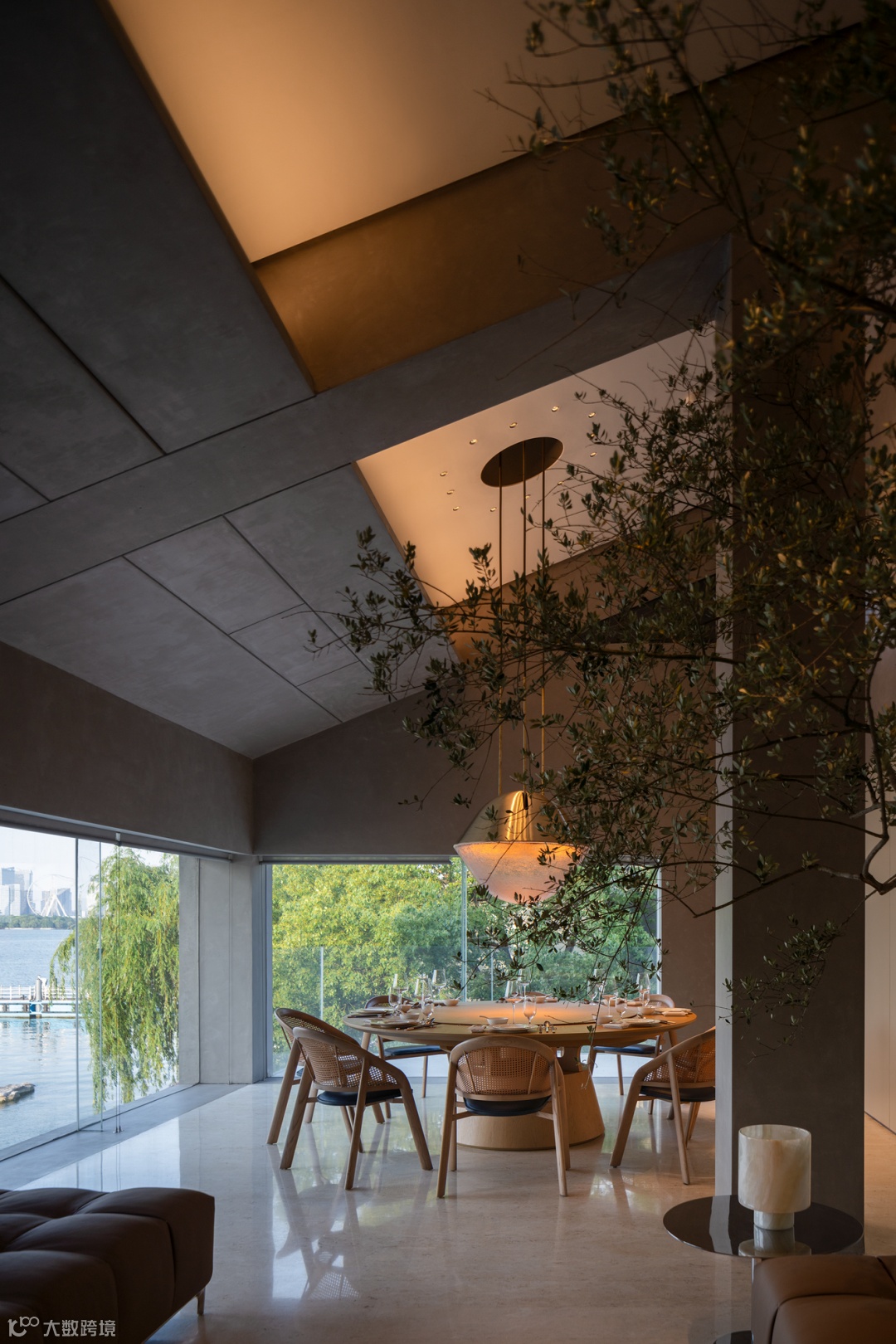
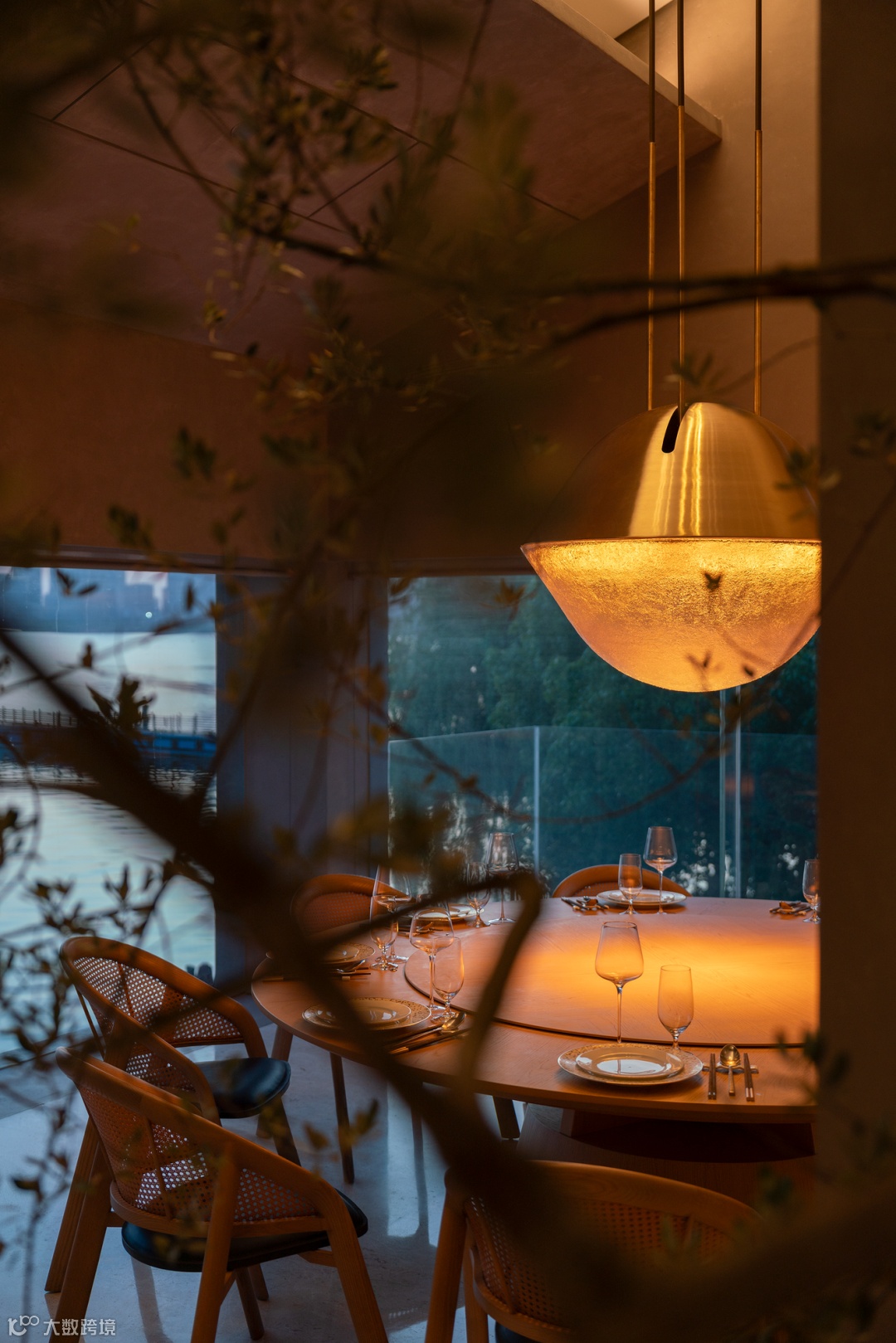
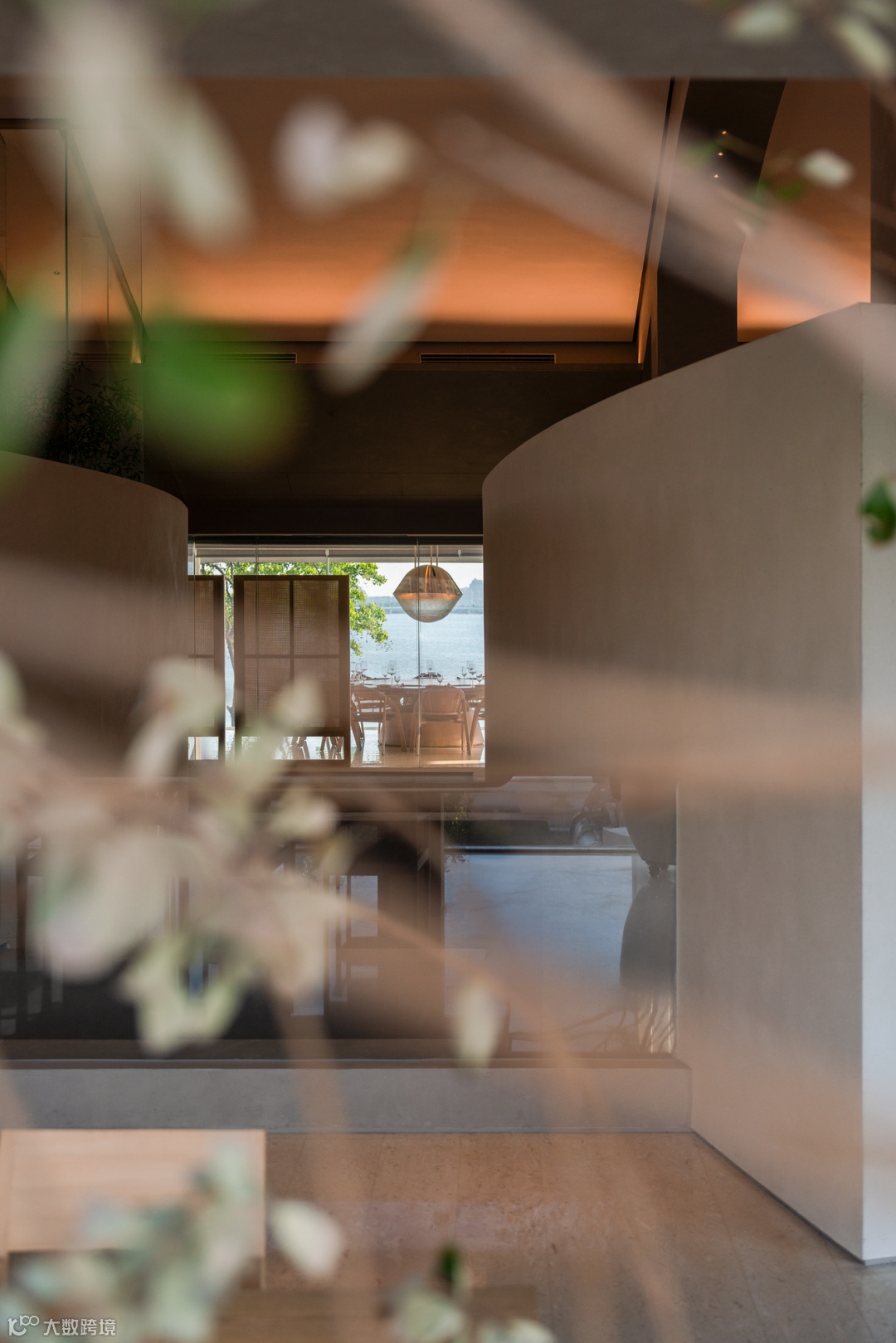
包房内大面积玻璃窗的运用则巧妙地将金鸡湖的远景引入室内,形成一幅天然的框景。食客的视线被自然引导,穿过透明的屏障,与远山、湖水、树影相遇,仿佛置身于一幅流动的山水画卷中。正如《园冶》所言:“林皋延伫,相缘竹树萧森;城市喧卑,必择居邻闲逸。”
The extensive use of large windows frames the scenic lake view, drawing guests' attention to the surrounding landscape and creating the feeling of dining amidst nature, thus providing a moment of retreat from city life.
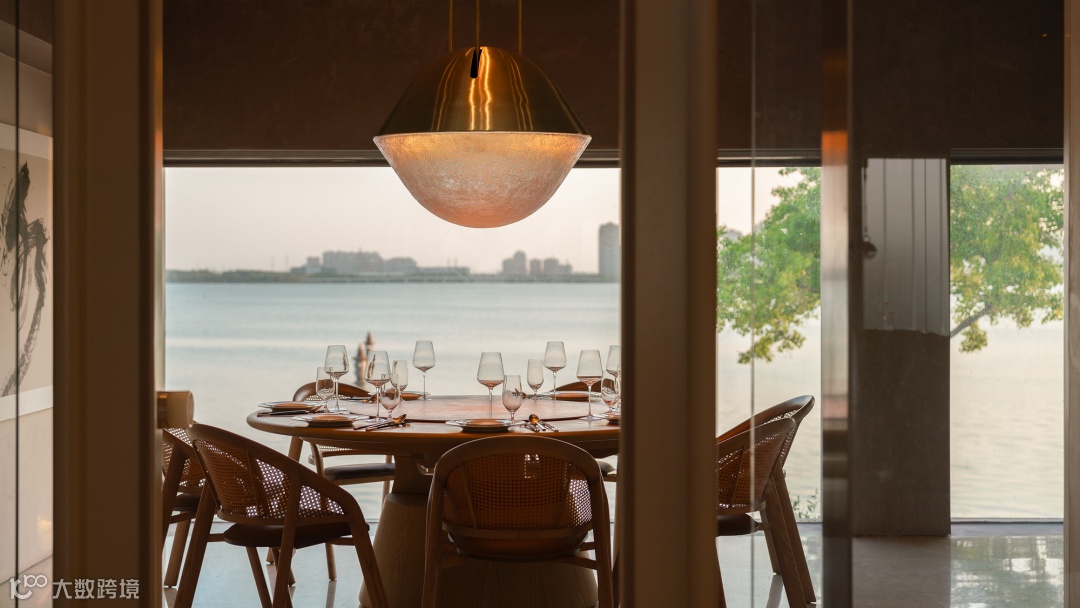
或回行至沿湖偏厅散客区用下午茶,空间则需放低仪式感热闹起来。要有烟火人间得促狭拥挤,琳琅满目得丰满感,又要保持座间恰当得隔离,减少噪音。
Guests can return to the lakeside lounge for afternoon tea, where the dining experience is more casual. The designer fosters a sense of warmth and welcome while managing noise levels through appropriate seating separation.
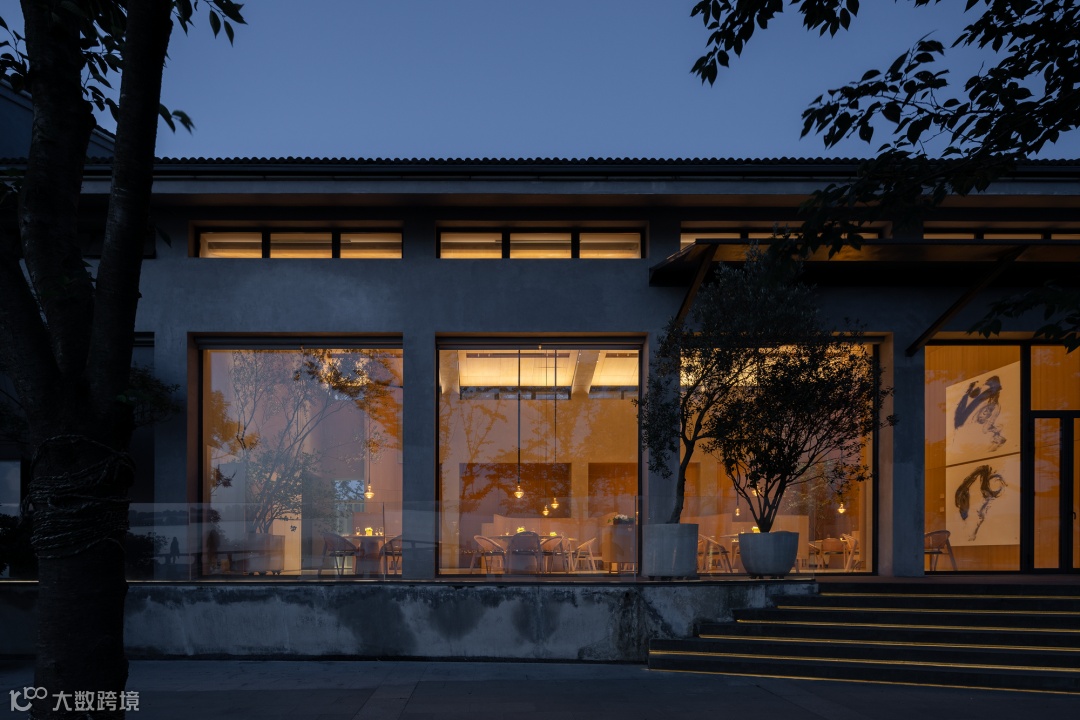
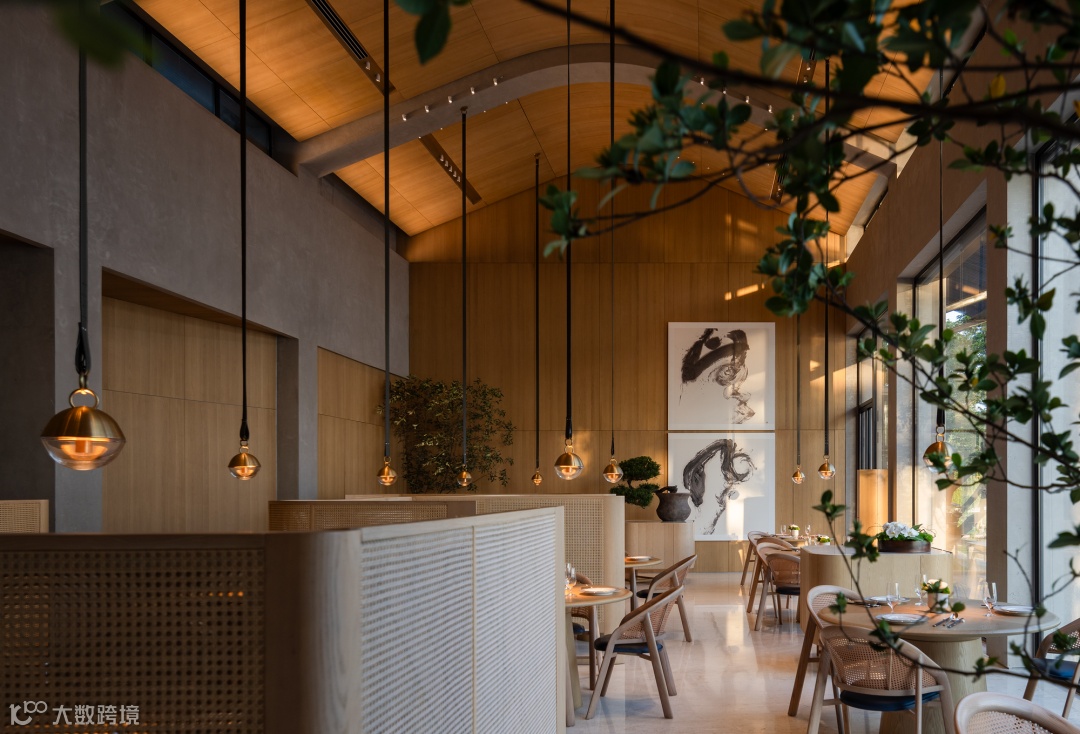
竹编屏风与小水滴灯具则成为重要道具。
Bamboo screens and the Water Drop chandeliers are essential elements in realizing this design.
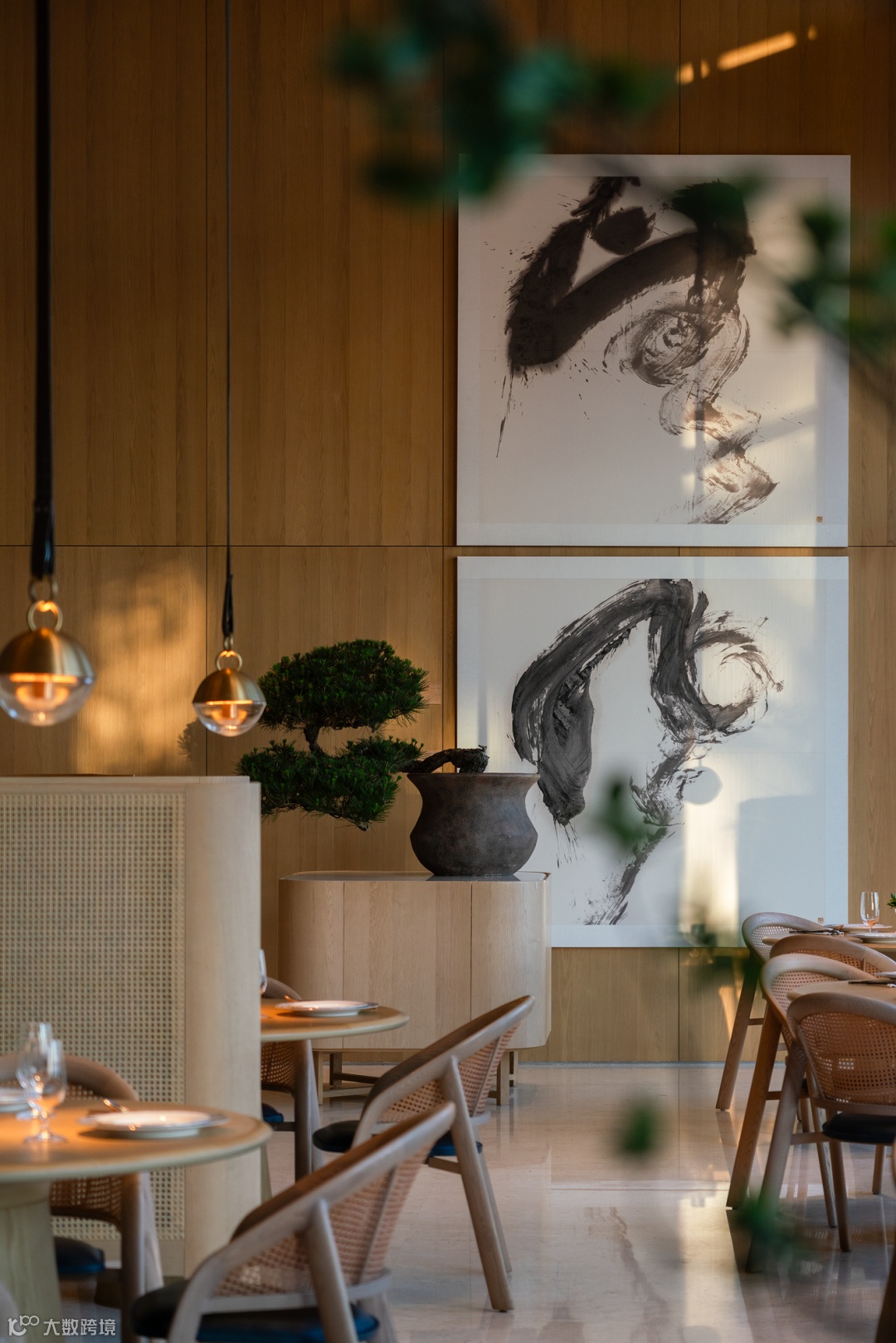
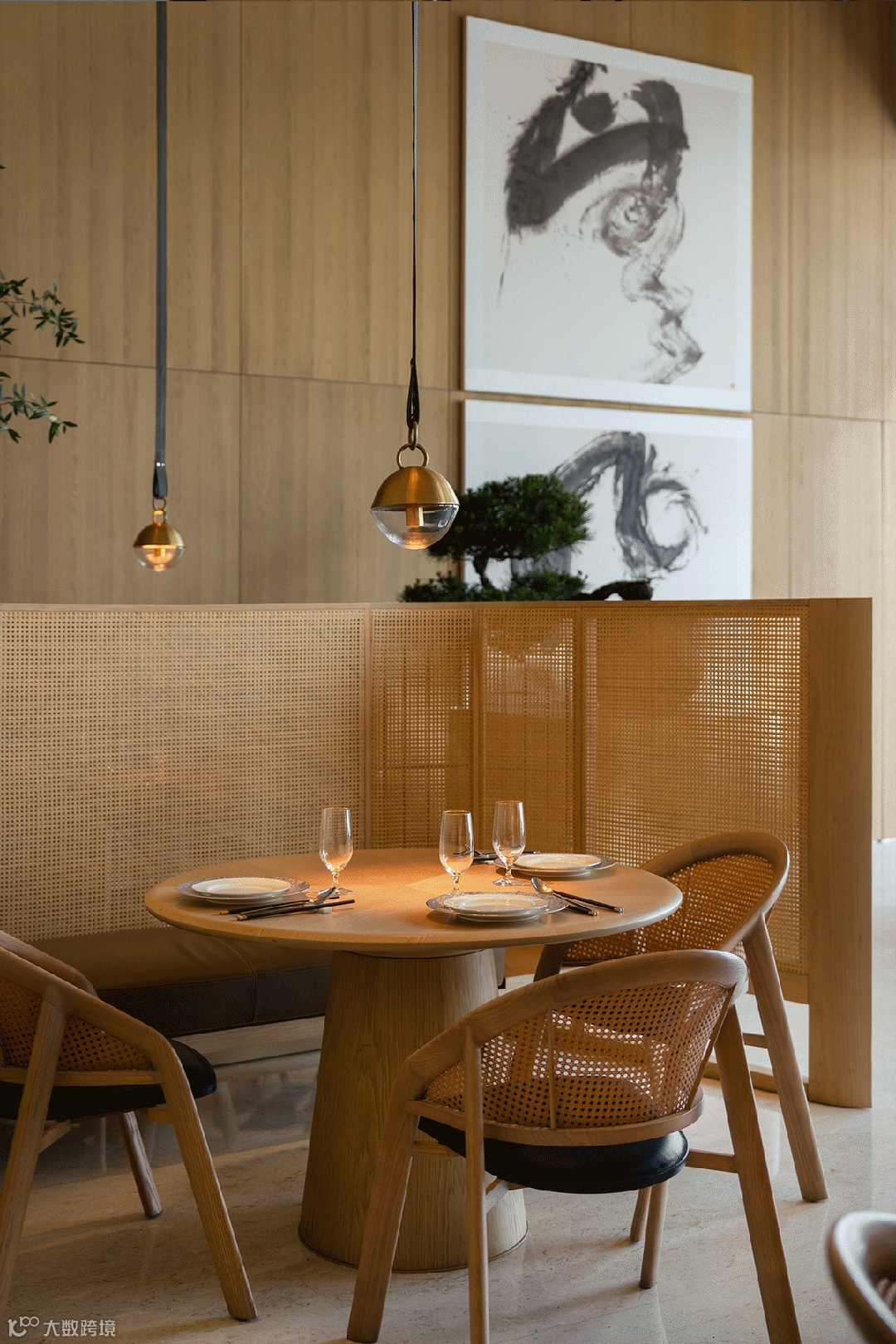
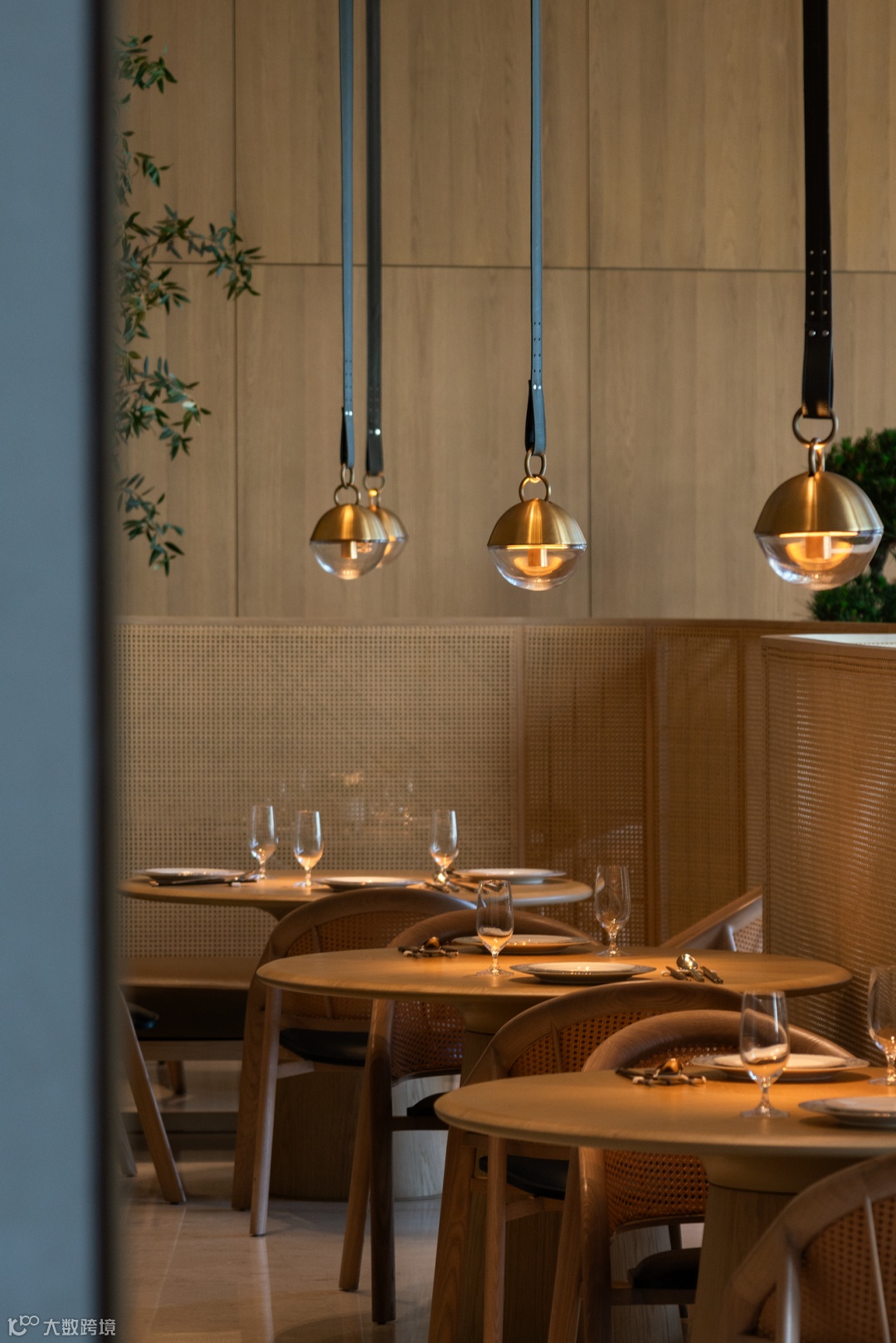
Exquisite BOCUSE SUZHOU offers an immersive experience of garden exploration. As guests move through the space, each design element and feature emphasizes the journey of traversing the border between void and solid, reconstructing the narrative of traditional gardens where each step reveals a new scene. The ebb and flow of rhythm elevate simple movement into a profound exploration of architectural boundaries, transforming the traditional essence of harmonizing movement and stillness into tangible bodily memories. Ultimately, this creates a unique culinary experience.
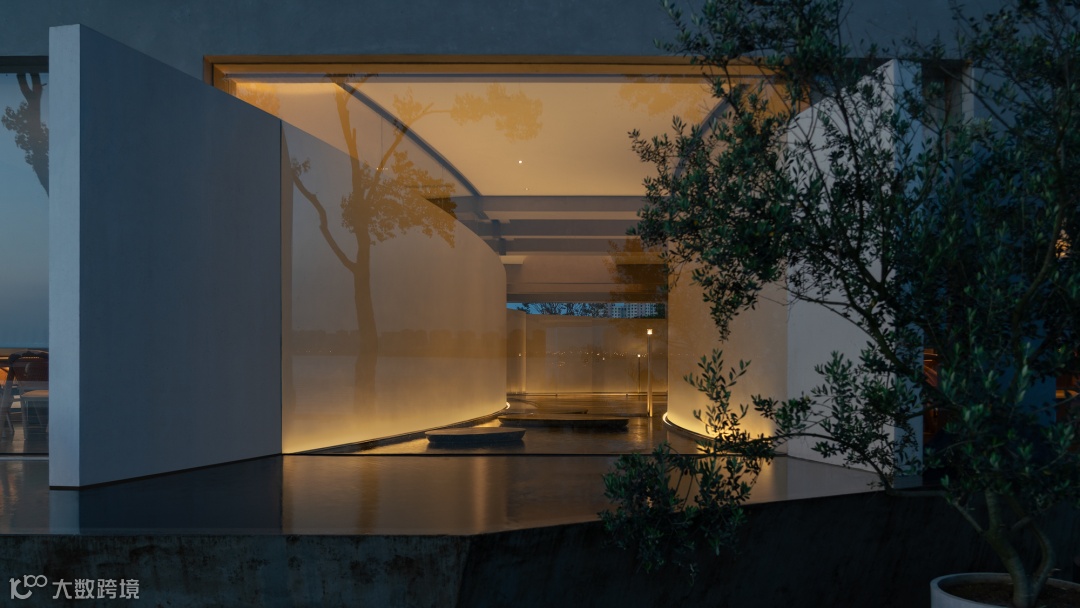
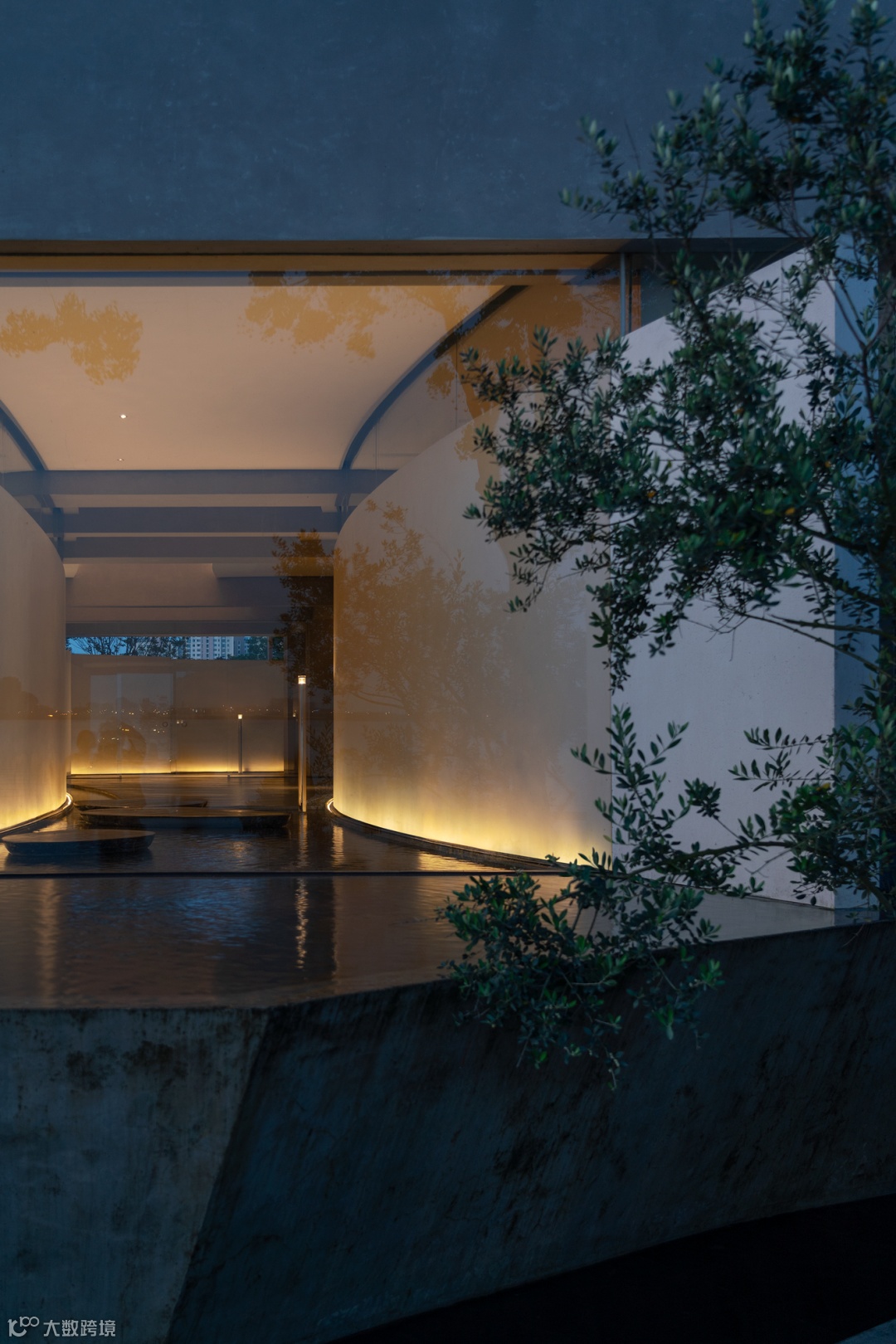
远岫环屏,春流到泽,人间姑苏。
Framing the natural landscapes into the interior is a secular enjoyment in Suzhou.
品牌介绍

创立于2005年的晶采轩以上海为起点,经过多年的稳步发展,目前已有九家分店,分别位于上海市、深圳市、北京市中心最繁华的商业区和金融区,其中上海恒隆店自2019年以来一直蝉联黑珍珠一钻荣誉,北京三星店入选2024米其林指南。
晶采轩以融合烹饪艺术与设计艺术,营造雅奢饮食文化艺术空间,成为中国高端餐饮品牌的代表。晶采轩室内设计则邀请了众多国内外知名设计师,根据不同设计风格搭配多样独特的艺术作品,让氛围感与故事性在整体就餐空间中有机渗透。

DOMANI东仓建设创始合伙人及创作总监,A&V桉和韦森创始人及创作总监,中国代表性青年建筑/室内设计师,致力于建筑景观与室内一体化研究,空间体感与实验性空间设计。擅长通过高创作度与强商业性平衡为众多企业实现商业空间的高溢价形象。自2008年起领队囊括百余项顶级国际设计大奖。

DOMANI东仓建设成立于2005年,坐落于中国广州。致力为不同行业的前瞻性客户提供顶级的建筑、室内及产品的创意与设计。并为市场贡献完整的高水准商业设计作品,来帮助众多企业获得全新的空间体验。及通过高溢价的空间作品带来卓越的市场反馈。东仓建设作品已囊括诸多国际权威赛事殊荣,并成为亚洲地区顶级设计机构之一。
Headquarted in Guangzhou, China, DOMANI has committed to provide design excellence for each and every forward-looking project in architecture, interior and products since its inception in 2005. We devise integrated, sustainable design solutions which exceed client’s expectations. With high premium commercial space solutions, our energy and competency have attained remarkable market feedbacks. Awared by prestigious international prizes, we have consistently ranked amongst the top architecture and integrated design studios in Asia.
DOMANI东仓建设秉持严谨的职业态度、卓越的设计团队与全面的项目控管模式,并结合庞大的项目顾问资源系统,通过多元化的空间作品呈现更具国际视野的企业态度。
domani_chn@163.com
Call us on the phone:
T . 020- 81806911
Visit us on our website: