
Paris is the city of lights. New York never sleeps. Shenzhen programs itself.
This, according to Lu Yiji, president of the China-Europe Digital Association, is more than a metaphor — it’s his observation of how Shenzhen has redefined what a city can be. In an exclusive interview with Shenzhen Daily, Lu shares his reflections on the city’s evolution, arguing that its most radical invention wasn’t a phone, a drone, or a microchip — but an idea: that a metropolis could function like software — able to observe, simulate, correct and update itself in real time.
巴黎是光之城。纽约是不眠之城。深圳则是自我编程之城。
对中欧数字协会主席鲁乙己而言,这不仅仅是一个比喻,而是他对深圳如何重新定义“城市”这一概念的观察。日前在接受《深圳日报》专访时,鲁乙己分享了他对这座城市演进的思考。他认为,深圳这座城市最激进的发明不是手机、无人机或微芯片,而是一个理念:即整个大都市可以像软件一样运行——能够实时地观察、模拟、修正和更新自身。
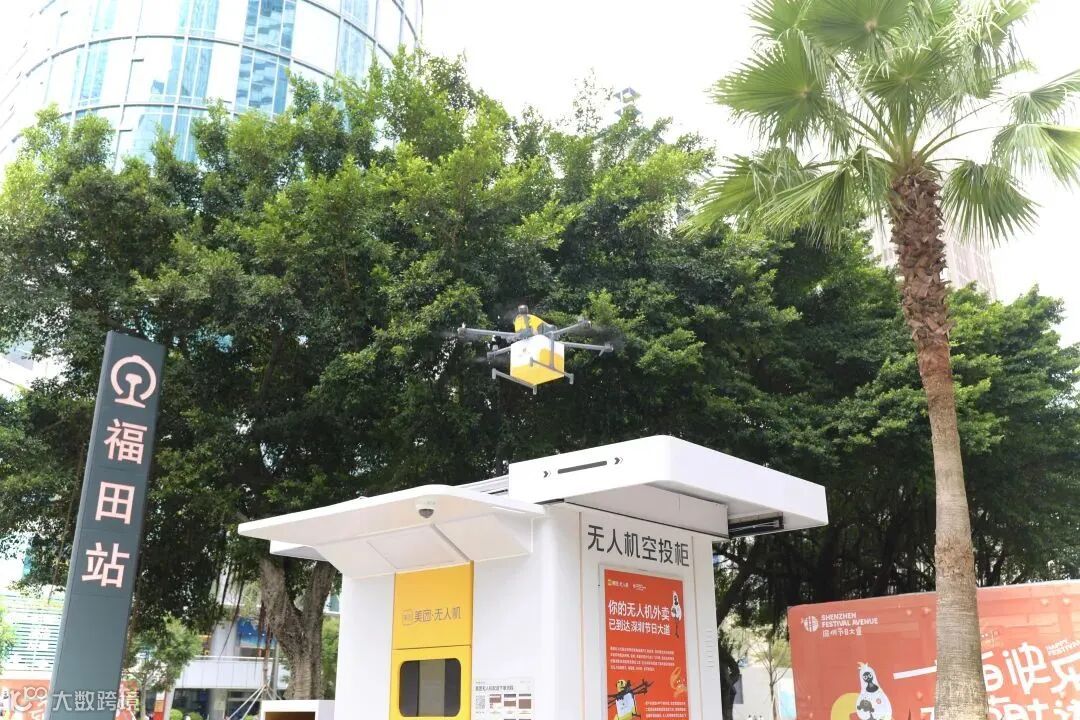
图片:A delivery drone is seen in Futian District. Photo from Shenzhen Special Zone Daily
一架快递无人机降落在福田区的空投柜。
Arriving in Shenzhen means feeling this difference immediately. As Lu describes it, the hum of drones hovering over rooftops, the uncanny silence of electric buses gliding down the streets, and the glow of digital billboards flashing like notifications all create an atmosphere where, even in traditional markets, the smell of freshly printed plastic mingles with the steam of noodles. “Shenzhen doesn’t look to the future,” he said. “It breathes the future.”
对鲁乙己而言,抵达深圳,就能立刻感受到这种不同。无人机在屋顶盘旋的嗡鸣,电动巴士滑过街道时不可思议的寂静,数字广告牌像手机通知一样闪烁发光:即使在传统市场里,新鲜打印塑料的气味也与面条的蒸汽交织在一起。“深圳并非展望未来,深圳呼吸的就是未来”,他说。
To Lu, the numbers only reinforce what the senses already suggest. According to official data, today the city has more than 17 million residents and a GDP exceeding US$500 billion. Its metro network — 609 kilometers across 20 lines and 428 stations — was built in under 20 years, a pace that would take generations in Europe. But what strikes him most is the research budget: more than 6% of GDP is invested in R&D, higher than Israel or South Korea and nearly three times the European average. These, he emphasizes, are not abstract statistics, but “the heartbeat of a city that feeds on continuous innovation.”
数据印证了体感事实。鲁乙己引用了一串官方数据来说明:如今深圳拥有超过1700万居民,GDP超过5000亿美元。涵盖20条线路、428个站点,总长609公里的地铁网络在不到二十年内建成,这种速度在欧洲需要几代人时间。但鲁乙己说,最让他印象深刻的数字是深圳的研发预算:超过GDP的6%用于研发,高于以色列或韩国,几乎是欧洲平均水平的三倍。他强调,这些并非抽象的统计数据,而是一个以持续创新为命脉的城市的心跳。
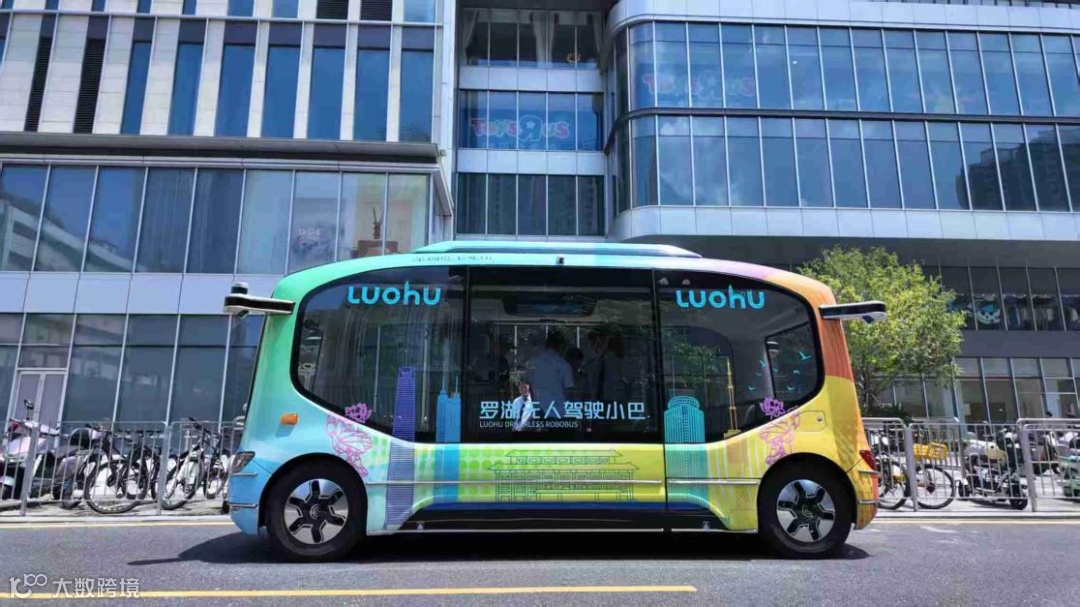
图片:A driverless bus in Luohu District. Photo from Shenzhen Economic Daily
一辆无人驾驶巴士在罗湖区行驶。
Lu argues that Shenzhen’s distinctiveness lies in its approach to urban governance — what he calls “iterative and experimental planning.” For centuries, cities have been conceived as finished works: a master plan approved, built, and left untouched until the next upheaval. Shenzhen, he says, took a different path.
Here, urban policies, public services, and mobility models are treated like prototypes: tested in pilot districts, corrected in real time, and rapidly scaled. Entire neighborhoods function as digital twins, simulating traffic, energy consumption, and service delivery — and adapting almost instantly.
“Shenzhen’s true infrastructure is not the cables,” he noted, quoting a local data bureau official. “It is transparency. Without it, no intelligent system can endure.”
在鲁乙己看来,几个世纪以来,城市被视为完成品:总体规划被批准、建造,然后保持不变,直到下一次剧变。而深圳选择了一条不同的道路。在这里,规划是迭代的、实验性的。城市政策、公共服务和出行模式被当作原型对待:在试点区域测试、实时修正并迅速推广。整个街区作为数字孪生体运行,模拟交通、能源消耗和服务提供,并几乎即时地适应。"深圳真正的基础设施不是电缆,而是透明度。没有它,任何智能系统都无法持久,"鲁乙己引述一位政数局官员的话说。
Shenzhen is not alone in this direction. As Lu points out, Singapore with its Smart Nation, Barcelona with open civic data, and Tallinn with digital governance are all exploring urbanism that behaves more like an algorithm than a blueprint. Yet, he argues, none have done so with Shenzhen’s combination of speed and scale.
“In 2024, Shenzhen installed over 20,000 rapid charging stations for electric vehicles,” he noted. “Almost the entire fleet of buses and taxis was electrified. In Berlin or Paris, something like that would have required years of debate and negotiation. Here, it took a few decisions to redesign mobility for millions.”
鲁乙己指出,深圳在这项征程中并非孤例。新加坡的"智慧国"、巴塞罗那的开放公民数据、塔林的数字治理,都在试验更像算法而非传统城市规划的城市形态。然而,没有哪个城市以同样的速度和规模进行。“2024年,深圳安装了超过2万个电动汽车快充站,几乎将其全部的公交车和出租车队电动化。在柏林或巴黎,类似的计划需要数年的辩论、磋商和政治角力。在这里,几项决策就足以重新规划数百万人的出行方式”, 他说。
He is also clear-eyed about the social consequences of such speed. “Programming a city like software carries social risks,” Lu acknowledged. “Not everyone can keep up with the pace.” A 2024 national survey backs that up: more than 40% of young workers in China’s high-tech cities reported feeling constant pressure. “Shenzhen is emblematic,” he said. “Its strength is innovation — and that’s also its vulnerability.”
当然,这样的速度有其代价。“像编程软件一样规划城市也伴随着社会风险。并非所有人都能跟上这种节奏,”鲁乙己说。他引述2024年的一项全国调查说,在中国高科技城市中,超过40%的年轻工作者表示感到持续的压力。“深圳是典型代表:创新既是其优势,也是其脆弱之处。促成激进变革的速度,同样也催生了不稳定性和不确定性”,他说。
Still, Lu believes Shenzhen remains a global laboratory — not a model to be copied blindly, but a provocation to rethink what a city is and who writes its code.
“Cities are no longer shaped just by architects and engineers,” he said. “Now, programmers, data scientists and systems designers are part of the process. The metropolis becomes dynamic, capable of updating itself like software.”
但鲁乙己相信,深圳仍然是一个独特的全球实验室 —— 它并非一个可以机械复制的模式,而是一个迫使我们重新思考城市根本概念的范例。“它展示了城市发展将不再仅仅由建筑师和工程师书写,还将由程序员、数据分析师和计算科学家参与。大都市变成了一个动态系统,能够像软件一样自我更新”。
Whether Europe can adapt remains, for Lu, an open and urgent question.
“The real issue isn’t whether Shenzhen is an exception,” he concluded. “It’s whether Europe has the courage to update its cities at the same frequency. While most European capitals are still bogged down in procedures and endless consultation, Shenzhen redesigns mobility in months.”
鲁乙己总结说,真正的问题不在于深圳是否是个例外,而在于欧洲是否有勇气以同样的频率更新其城市。目前,大多数欧洲首都仍深陷于程序、上诉和无休止的磋商之中,而深圳则在几个月内重新设计其城市出行模式和系统。
“Each day, the gap grows,” he said. “And in this race, starting the engine may no longer be enough. We must learn how to program.”
“每一天,差距都在拉大。而在这场竞赛中,或许仅仅启动引擎已经不够了。我们必须学会如何编程,”鲁乙己说。
人物介绍:

Luigi Gambardella, President, ChinaEU鲁乙己 中欧数字协会主席
Luigi Gambardella is President of ChinaEU, a business-led international association dedicated to strengthening digital cooperation between China and Europe. With a career spanning decades in the global telecommunications and digital sectors, he is recognized as a key figure in shaping digital policy across Europe, the Americas, the MENA region, and Asia-Pacific.
中欧数字协会是由商界引领的国际组织,致力于加强中欧之间的数字合作。鲁乙己在全球电信和数字领域拥有数十年的职业生涯,被公认为在欧洲、美洲、中东和北非地区以及亚太地区塑造数字政策的关键人物。

END
来源:EyeShenzhen
编辑:小G
往期精选