


《英语10000词》共180个章节,以音频、图片、中英双语对照方式,讲解人、外观、健康、家庭、城市生活、饮食、学习、工作、出行、体育、娱乐等日常生活中最常见的词汇。从听觉、视觉上加强对单词的记忆。每天1章,180天学习10000个英语词汇。
❤️ 关注播客学英语并设为星标🌟,及时接收更新
📖 往期节目可在文末的目录中回看
🎁 文末还有一条英语习语供学习
📈 截止本章,您已学习约8112个单词
点击▶️播放按钮,收听全文音频讲解
播放时可点击小窗,通过“倍速”选择适合的语速
中英双语对照图文稿
Hello, listeners! We now have the way to get the authentic book featured on this podcast. If you love learning with a printed book, now you can purchase the book directly from the shop card in the bottom of this article. It’s never been easier to get your hands on the book you need.
Hello everyone! You are listening to 'Learn 10000 English words with Ava'. My name is Ava, and I am a language enthusiast. The purpose of this podcast is to help you understand and remember over 10,000 English words and phrases in 180 days, enhancing your English skills. This program is a series, so to ensure you receive notifications for the latest episodes, please click the follow button and mark it as a star. You can also check the directory at the end of the article for previous episodes. At the end of our discussion, we will include an English proverb for you to learn and understand.
听众朋友们,本播客节目所讲解的引进版图书现在可以购买了。如果您喜欢使用纸质书学习,现在您可以点击文章末尾的购物卡片直接购买。非常便捷。
大家好!您正在收听《和艾娃一起学习一万英语单词》。我叫艾娃,我是一名语言爱好者。本播客的目的是帮助您在180天内理解和记忆超过10,000个英语单词和短语,提高您的英语技能。这个节目是一个系列,因此为了确保您能收到最新集数的通知,请点击关注按钮并将其标记为星标。您还可以在文章末尾的目录中查看之前的集数。在我们讨论结束时,我们会提供一个英语谚语供您学习和理解。
Alright, let's dive into today's topic! In this episode, we will be focusing on Chapter 146: Geography. We will explore two main sections: 146.1, which covers Geographical Features and Landscape, and 146.2, which delves into Caves and Caving.
好的,让我们进入今天的话题!在这一集中,我们将重点讨论第146章:地理。我们将探讨两个主要部分:146.1,涵盖地理特征和景观,以及146.2,深入探讨洞穴和洞穴探险。
146.1. GEOGRAPHICAL FEATURES AND LANDSCAPE
地理特征与景观
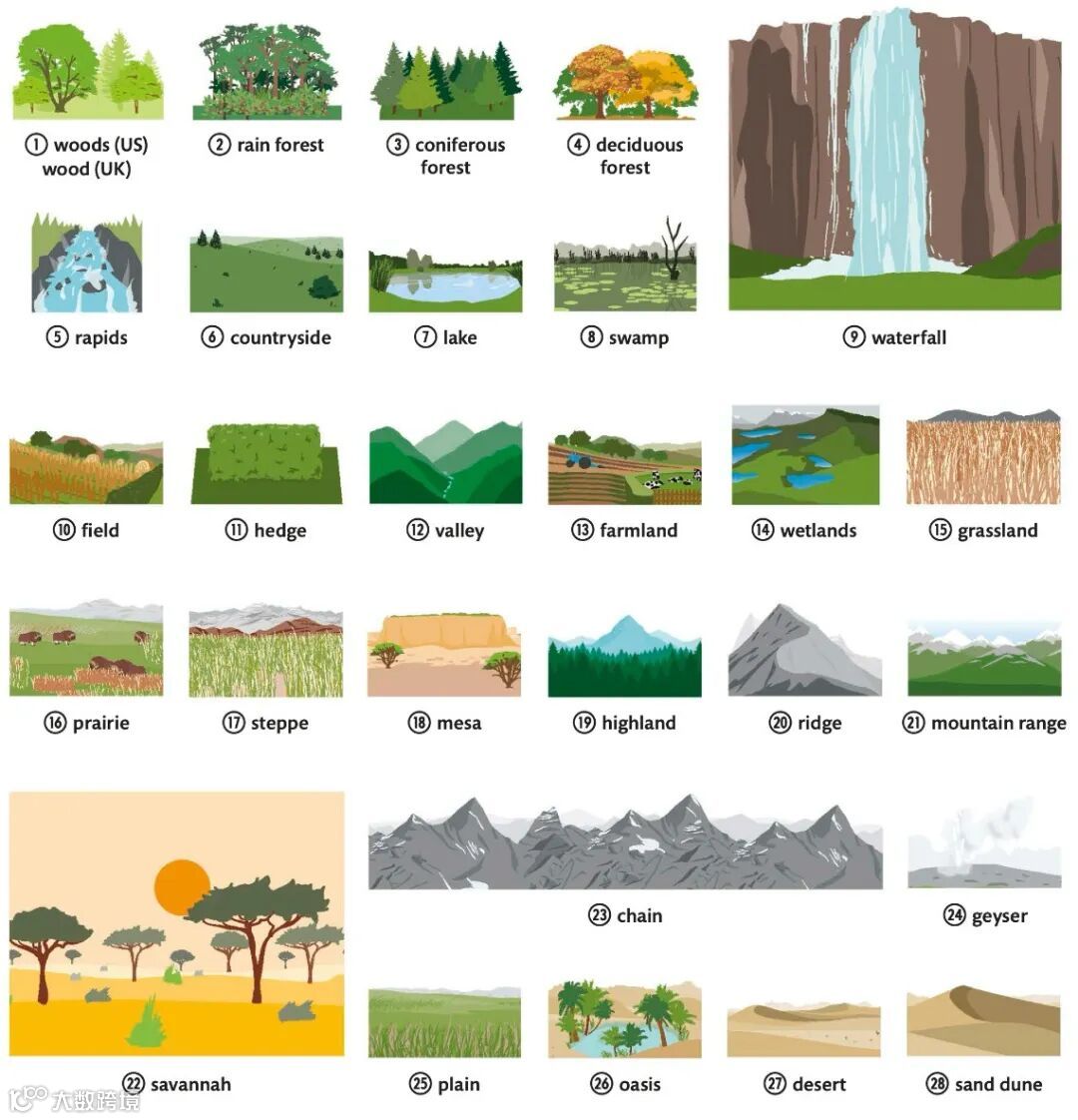
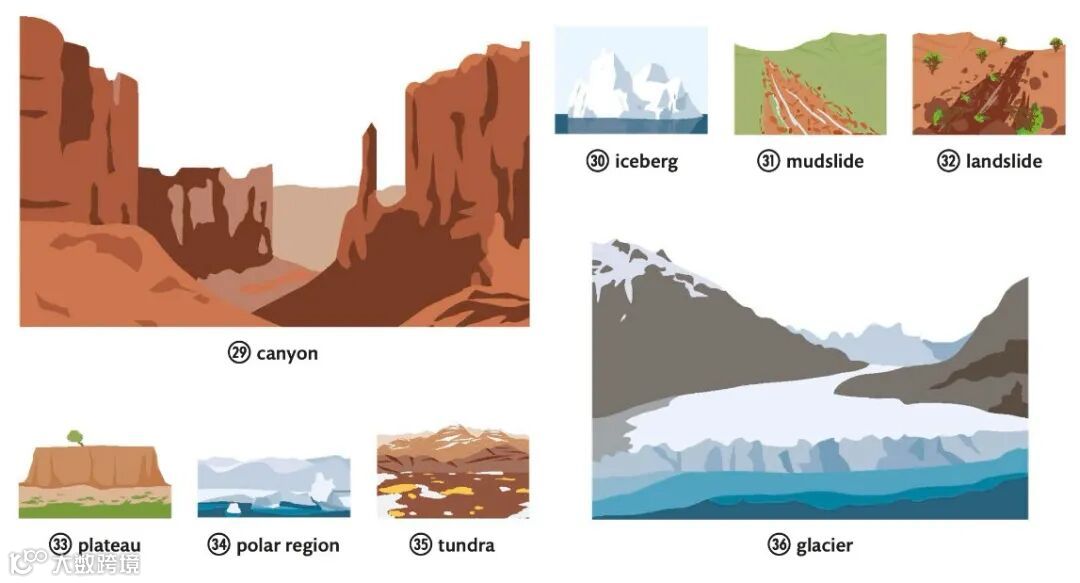
(图片可点击放大)
| 序号 | 词汇 | DJ音标(美音) | 含义 |
|---|---|---|---|
| 1 | woods (US) wood (UK) | /wʊdz/ /wʊd/ | n. 森林 |
| 2 | rain forest | /reɪn ˈfɔːrɪst/ | n. 雨林 |
| 3 | coniferous forest | /kəˈnɪfərəs ˈfɔːrɪst/ | n. 针叶林 |
| 4 | deciduous forest | /dɪˈsɪdʒuəs ˈfɔːrɪst/ | n. 落叶林 |
| 5 | rapids | /ˈræpɪdz/ | n. 急流 |
| 6 | countryside | /ˈkʌntrisaɪd/ | n. 乡村 |
| 7 | lake | /leɪk/ | n. 湖 |
| 8 | swamp | /swɑːmp/ | n. 沼泽 |
| 9 | waterfall | /ˈwɔːtərˌfɔːl/ | n. 瀑布 |
| 10 | field | /fiːld/ | n. 田野 |
| 11 | hedge | /hɛdʒ/ | n. 树篱 |
| 12 | valley | /ˈvæli/ | n. 山谷 |
| 13 | farmland | /ˈfɑːrmlænd/ | n. 农田 |
| 14 | wetlands | /ˈwɛtlændz/ | n. 湿地 |
| 15 | grassland | /ˈɡræslænd/ | n. 草原 |
| 16 | prairie | /ˈprɛri/ | n. 大草原 |
| 17 | steppe | /stɛp/ | n. 干草原 |
| 18 | mesa | /ˈmeɪsə/ | n. 平顶山 |
| 19 | highland | /ˈhaɪlənd/ | n. 高地 |
| 20 | ridge | /rɪdʒ/ | n. 山脊 |
| 21 | mountain range | /ˈmaʊntən reɪndʒ/ | n. 山脉 |
| 22 | savannah | /səˈvænə/ | n. 热带稀树草原 |
| 23 | chain | /tʃeɪn/ | n. 山链 |
| 24 | geyser | /ˈɡaɪzər/ | n. 间歇泉 |
| 25 | plain | /pleɪn/ | n. 平原 |
| 26 | oasis | /oʊˈeɪsɪs/ | n. 绿洲 |
| 27 | desert | /ˈdɛzərt/ | n. 沙漠 |
| 28 | sand dune | /sænd duːn/ | n. 沙丘 |
| 29 | canyon | /ˈkænjən/ | n. 峡谷 |
| 30 | iceberg | /ˈaɪsbɜːrɡ/ | n. 冰山 |
| 31 | mudslide | /ˈmʌdslaɪd/ | n. 泥石流 |
| 32 | landslide | /ˈlændslaɪd/ | n. 山体滑坡 |
| 33 | plateau | /plæˈtoʊ/ | n. 高原 |
| 34 | polar region | /ˈpoʊlər ˈriːdʒən/ | n. 极地 |
| 35 | tundra | /ˈtʌndrə/ | n. 苔原 |
| 36 | glacier | /ˈɡleɪʃər/ | n. 冰川 |
In this section, we will explore various geographical features and landscapes that make up our planet's diverse terrain. From forests and plains to deserts and polar regions, each type of landscape has its unique characteristics and significance. Let's delve into some key vocabulary related to these geographical features.
-
woods (US) wood (UK) : Refers to a forested area, where trees are the dominant plant form. -
rain forest : A dense, tropical forest with high amounts of annual rainfall, supporting a vast diversity of plants and animals. -
coniferous forest : A biome characterized by evergreen trees, such as pines and firs, often found in colder climates. -
deciduous forest : A type of forest where trees shed their leaves annually, typically found in temperate regions. -
rapids : Fast-flowing sections of a river, often with turbulent water. -
countryside : Areas outside of cities and towns, often characterized by rural and agricultural landscapes. -
lake : A large body of water surrounded by land. -
swamp : A wetland area that is permanently saturated with water and often hosts diverse ecosystems. -
waterfall : A vertical drop of water over the edge of a cliff or rock face, creating a cascade. -
field : Open land area that is typically used for agriculture. -
hedge : A row of shrubs or low trees planted as a boundary or fence. -
valley : A low area of land between hills or mountains, often with a river running through it. -
farmland : Land that is used for farming and agriculture. -
wetlands : Areas where the land is saturated with water, either permanently or seasonally, supporting aquatic plants. -
grassland : Open areas where grasses are the dominant vegetation, often found in regions with moderate rainfall. -
prairie : A type of grassland found in North America, characterized by tall grasses. -
steppe : A large area of flat, unforested grassland found in Eastern Europe and Central Asia. -
mesa : An isolated flat-topped hill with steep sides, found in arid regions. -
highland : Elevated areas of land, often associated with hills or mountains. -
ridge : A long, narrow hilltop or mountain range. -
mountain range : A series of mountains connected by high ground. -
savannah : A grassland ecosystem characterized by trees spaced widely apart, found in tropical regions. -
chain : A series of connected mountains or hills. -
geyser : A hot spring that periodically erupts with water and steam. -
plain : A large, flat area of land with few trees. -
oasis : A fertile area in a desert where water is found. -
desert : A barren area of land with little precipitation and sparse vegetation. -
sand dune : A hill of sand built by wind or water flow. -
canyon : A deep gorge, typically with a river flowing through it. -
iceberg : A large floating mass of ice detached from a glacier or ice shelf. -
mudslide : The rapid downhill movement of a mixture of water, rock, and soil. -
landslide : The sliding down of a mass of earth or rock from a mountain or cliff. -
plateau : An elevated flatland that rises sharply above the surrounding area on at least one side. -
polar region : Areas surrounding the Earth's poles, characterized by extremely cold climates. -
tundra : A cold, treeless biome with low-growing vegetation, found in polar regions. -
glacier : A large, slow-moving mass of ice, formed from compacted snow.
在这一部分,我们将探索构成我们星球多样地形的各种地理特征和景观。从森林和平原到沙漠和极地,每种类型的景观都有其独特的特征和重要性。让我们深入了解一些与这些地理特征相关的关键词汇。
-
森林 : 指的是一个树木为主的森林区域。 -
雨林 : 一种密集的热带森林,年降水量高,支持着丰富的植物和动物多样性。 -
针叶林 : 一种以常绿树木为特征的生物群落,如松树和冷杉,通常在寒冷气候中发现。 -
落叶林 : 一种树木每年落叶的森林,通常在温带地区发现。 -
急流 : 河流中快速流动的部分,通常伴有湍急的水流。 -
乡村 : 城市和城镇之外的区域,通常以乡村和农业景观为特征。 -
湖 : 被陆地环绕的大面积水体。 -
沼泽 : 一个湿地区域,永远被水饱和,通常拥有多样的生态系统。 -
瀑布 : 水从悬崖或岩壁的边缘垂直落下,形成水流。 -
田野 : 通常用于农业的开阔土地。 -
树篱 : 一排灌木或低矮树木作为边界或围栏种植。 -
山谷 : 两座山丘或山脉之间的低地,通常有河流流经。 -
农田 : 用于农业和种植的土地。 -
湿地 : 土地被水饱和的区域,可能是永久性或季节性,支持水生植物。 -
草原 : 开阔地区,草类是主要植被,通常出现在降水适中的地区。 -
大草原 : 一种在北美发现的草原,以高草为特征。 -
干草原 : 在东欧和中亚发现的大面积平坦、未植树的草地。 -
平顶山 : 在干旱地区发现的孤立的平顶山,四周陡峭。 -
高地 : 与丘陵或山脉相关的高地。 -
山脊 : 狭长的山顶或山脉。 -
山脉 : 一系列由高地连接的山。 -
热带稀树草原 : 一种草原生态系统,特征是树木间隔较大,通常在热带地区发现。 -
山链 : 一系列相连的山或丘陵。 -
间歇泉 : 一种定期喷发水和蒸汽的热泉。 -
平原 : 一大片平坦的土地,树木稀少。 -
绿洲 : 沙漠中一个肥沃的区域,水源丰富。 -
沙漠 : 一个降水稀少、植被稀疏的荒凉土地。 -
沙丘 : 由风或水流形成的沙堆。 -
峡谷 : 一条深邃的峡谷,通常有河流流经。 -
冰山 : 从冰川或冰架上脱落的大型浮冰块。 -
泥石流 : 水、岩石和土壤混合物的快速下坡运动。 -
山体滑坡 : 土地或岩石从山或悬崖上滑下。 -
高原 : 一种高地平坦的地区,至少在一侧急剧上升。 -
极地 : 环绕地球两极的区域,以极其寒冷的气候为特征。 -
苔原 : 一种寒冷、无树的生物群落,生长着低矮的植物,通常出现在极地地区。 -
冰川 : 一种缓慢移动的大型冰块,由压实的雪形成。
Okay, let's create a paragraph using the vocabulary we’ve just learned to help us understand the usage of these words and deepen our memory.
好吧,让我们用刚刚学到的词汇创建一个段落,以帮助我们理解这些单词的用法并加深记忆。
In a geography class, the teacher explained the different types of woods and their unique characteristics. "There are various environments," he said, "like the rain forest, which is rich in biodiversity, the coniferous forest, known for its pine trees, and the deciduous forest, where trees shed their leaves in autumn."
As the lesson continued, they discussed the powerful forces of nature, mentioning rapids found in fast-flowing rivers and the beauty of the countryside with its picturesque lake and the enchanting waterfall nearby. The students were fascinated by the swamp, teeming with wildlife, and the field lying just beyond the hedge where they could often see deer roaming through the valley.
They learned about farmland that supported agriculture, the importance of wetlands for ecosystems, and the vast grassland, which was home to many grazing animals. "Look at the prairie and the steppe, both showcase unique landscapes," the teacher pointed out. "In the mesa, we see plateaus rising dramatically, and the highland areas are also quite breathtaking."
As they looked at maps, the teacher described how mountains form a ridge and create a mountain range that shelters many creatures. Traveling farther, they encountered the savannah, distinguished by its scattered trees, and the scenic chain of mountains that includes a geyser found in some regions.
Next, he explained the plain, which lies flat and fertile, and how an oasis can provide life in a desert surrounded by sand dunes. The students were intrigued to learn about canyons, carved by rivers over millennia, and the incredible sight of an iceberg floating in the ocean.
Finally, they discussed natural disasters, such as mudslides and landslides, which can occur on a plateau or steep slopes. The teacher concluded by highlighting the wonders of the polar region with its extreme conditions and tundra where few plants grow, and how glaciers flow down into valleys, shaping the earth itself.
在地理课上,老师讲解了不同类型的森林及其独特特征。“环境有很多种,”他说,“比如雨林,它富含生物多样性;针叶林以松树闻名;而落叶林则是在秋天落叶的树木。”
随着课程的深入,他们讨论了自然的强大力量,提到了在快速流动的河流中发现的急流,以及乡村如画的湖泊和附近迷人的瀑布。学生们对沼泽很感兴趣,那是一处野生动物繁多的地方,树篱外的田野上,则经常可以看到鹿在山谷中漫游。
他们学习了支持农业的农田的知识,生态系统中湿地的重要性,以及宽广的草原,许多吃草动物的栖息地。“看看大草原和干草原,它们展示了独特的景观,”老师指出。“在平顶山中,我们看到了戏剧性上升的高原,而高地地区也同样令人叹为观止。”
当他们查看地图时,老师描述了山是如何形成山脊的,并创造出保护许多生物的山脉。往远处走,老师提到热带稀树草原,其特点是树木稀疏,以及一些区域内的山链中有一个间歇泉。
接着,他解释了平原躺得平坦而肥沃,以及如何在沙漠中发展出一个绿洲。学生们对峡谷非常着迷,那是经过千年河流雕刻而成的,雄伟的冰山漂浮在海面上也是令人惊奇的景象。
最后,他们讨论了自然灾害,比如在高原或陡坡上发生的泥石流和山体滑坡。老师总结时强调了极地的奇观,那里的极端环境和苔原上稀少的植物,以及如何冰川流向山谷,塑造了地球本身。
146.2. CAVES AND CAVING
洞穴与探洞
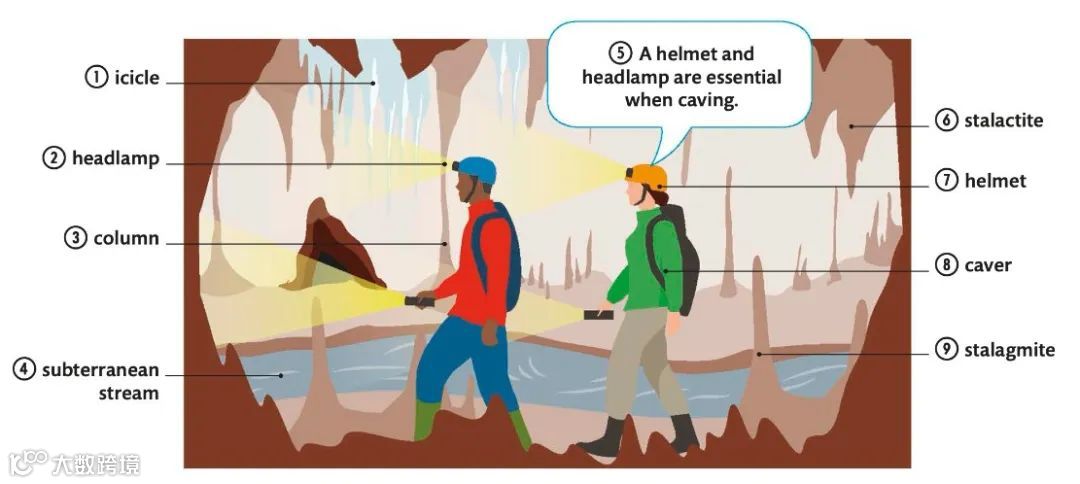
(图片可点击放大)
| 序号 | 词汇 | DJ音标(美音) | 含义 |
|---|---|---|---|
| 1 | icicle | /ˈaɪsɪkl/ | n. 冰柱 |
| 2 | headlamp | /ˈhɛdlæmp/ | n. 头灯 |
| 3 | column | /ˈkɑːləm/ | n. 石柱 |
| 4 | subterranean stream | /ˌsʌbtəˈreɪniən striːm/ | n. 地下河 |
| 5 | A helmet and headlamp are essential when caving. | 在洞穴探险时,头盔和头灯是必不可少的。 | |
| 6 | stalactite | /ˈstæləkˌtaɪt/ | n. 钟乳石 |
| 7 | helmet | /ˈhɛlmɪt/ | n. 头盔 |
| 8 | caver | /ˈkeɪvər/ | n. 洞穴探险者 |
| 9 | stalagmite | /ˈstæləɡˌmaɪt/ | n. 石笋 |
In this section, we're diving into the fascinating world of caves and caving. We'll explore some essential vocabulary that will help you better understand the features and equipment associated with exploring these natural wonders.
-
icicle : A pointed, hanging piece of ice formed by the freezing of dripping water, often found at the mouth of a cave. -
headlamp : A light source worn on the head, typically used by cavers to illuminate dark areas within caves. -
column : A naturally occurring vertical formation within a cave, formed when a stalactite and stalagmite meet and join. -
subterranean stream : A stream of water that flows beneath the earth's surface, often found within cave systems. -
A helmet and headlamp are essential when caving. : This sentence emphasizes the importance of wearing protective gear, such as a helmet and headlamp, for safety during cave exploration. -
stalactite : A tapering structure hanging from the roof of a cave, formed by the deposition of minerals from dripping water. -
helmet : A hard protective hat worn to protect the head from potential hazards while caving. -
caver : A person who explores caves as a hobby or profession. -
stalagmite : A mound or column rising from the floor of a cave, formed by the accumulation of minerals from dripping water.
在这一部分,我们将深入探索洞穴和探洞的迷人世界。我们将学习一些基本词汇,这将帮助你更好地理解与探索这些自然奇观相关的特征和设备。
-
冰柱 : 一种尖锐的悬挂冰块,由滴水冻结形成,通常在洞穴口发现。 -
头灯 : 一种佩戴在头上的光源,通常由洞穴探险者用于照亮洞穴内的黑暗区域。 -
石柱 : 洞穴内自然形成的垂直结构,形成于钟乳石和石笋相遇并结合时。 -
地下河 : 一条在地表下流动的水流,通常在洞穴系统内发现。 -
在洞穴探险时,头盔和头灯是必不可少的。 : 这句话强调佩戴保护装备(如头盔和头灯)在洞穴探索中的重要性,以确保安全。 -
钟乳石 : 悬挂在洞穴顶端的逐渐变细的结构,由滴水中的矿物质沉积形成。 -
头盔 : 一种坚硬的保护帽,用于保护头部免受探洞时潜在危险的伤害。 -
洞穴探险者 : 以探索洞穴为爱好或职业的人。 -
石笋 : 从洞穴地面上升起的土 mound 或石柱,由滴水中的矿物质积累形成。
Okay, let's create a paragraph using the vocabulary we’ve just learned to help us understand the usage of these words and deepen our memory.
好吧,让我们用刚刚学到的词汇创建一个段落,以帮助我们理解这些单词的用法并加深记忆。
As the cavers prepared for their adventure, Sarah adjusted her helmet and strapped on her headlamp. "Remember," she said, "safety is key! An extra layer is wise since we might encounter some icicles in the cave."
Once inside, they marveled at the magnificent columns of rock formed over centuries. "Look at that one!" exclaimed Tom, pointing at a beautiful stalactite hanging from the ceiling. "And over there, you can see a stalagmite rising from the ground!"
The group continued deeper into the cave, where they discovered a subterranean stream flowing quietly. "This is incredible," Sarah whispered, feeling the cool mist on her face. "Exploring caves is always an adventure!"
当洞穴探险者准备好他们的冒险时,莎拉调整了自己的头盔并系上了头灯。"记住,"她说,"安全是关键!多穿一层衣服是明智的,因为我们可能会在洞穴中遇到一些冰柱。"
一旦进入,他们惊叹于数百年来形成的壮丽石柱。"看看那个!"汤姆兴奋地指着挂在天花板上的美丽钟乳石。"还有那边,你可以看到一根石笋从地面上升起!"
小组继续深入洞穴,发现一条静静流淌的地下河。"这太不可思议了,"莎拉轻声说,感受到脸上的凉雾。"探索洞穴就是一次冒险!"
That wraps up this episode of the podcast. Thank you for listening! Don’t forget to check out the English proverb at the end of the article. If you found my explanation helpful, please continue to follow my show and share it with your friends. See you next time!
这就是本期播客的内容。感谢您的收听!别忘了查看文章末尾的英语谚语。如果您觉得我的解释有帮助,请继续关注我的节目并与您的朋友分享。下次见!
每日英语俗语成语谚语:
-
Take a back seat
退居幕后
【例】I'll take a back seat in the project.
【译】我将在这个项目中退居幕后。
如果本节目对您有帮助♥️
请点击 在看🌼 or 赞👍
您的支持就是最好的鼓励🙏