


The Money-Making Secrets Behind Hotel Design
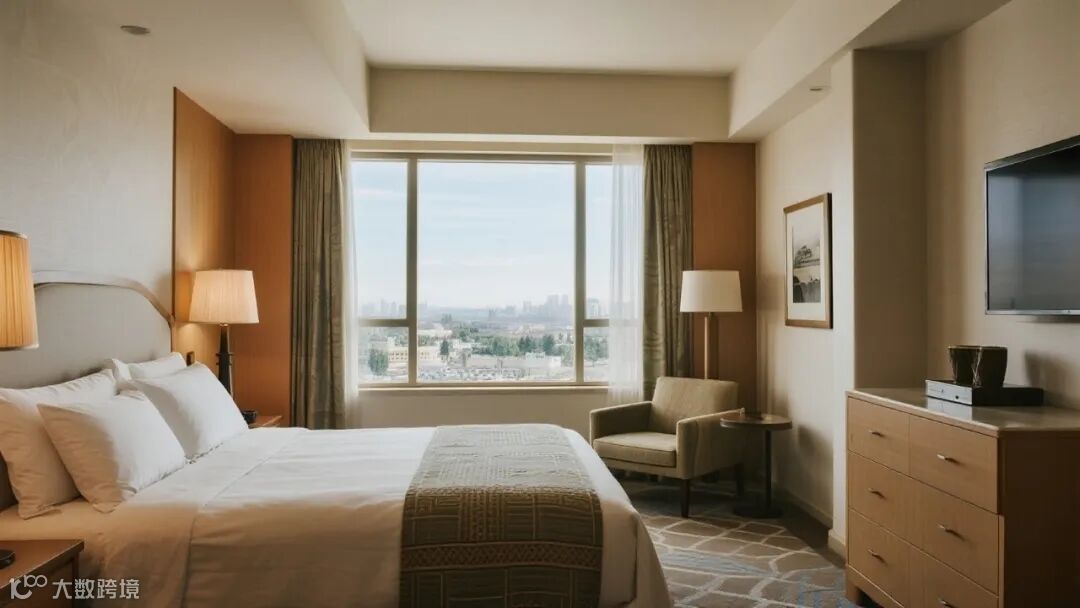
Narrator: Vanishing wardrobes, disappearing minibars, sinks in the entryway, and even this… your hotel room has been shrinking. See, with the rise of Airbnb and plateauing hotel occupancy rates, operators are on the hunt for the most profitable design, and select-service hotels, which offer scale-back amenities, are outpacing full-service hotels when it comes to profits. Take Marriott’s mid-tier Moxy brand, its rooms are a little over half of the size of the average American guest room, and yet its rooms generate up to 20% more revenue than its peers. But shrinking rooms and growing profits without eroding guest satisfaction isn’t easy. So how do hotel operators keep you happy with a smaller room?
To halve the size of a standard 348 square foot American hotel room, you need to get rid of a lot of stuff.
Ron Swidler: We’ve overcrowded the room a bit here to make the point.
Narrator: The first thing to go is the closet, which usually takes up around seven square feet of space.
Ron Swidler: The wardrobe can get eliminated if we utilize this hanging hook system along this wall.
Narrator: Other hotels choose to install more open plan closets.
Ron Swidler: This is much easier to clean. It’s also much less likely that a guest will forget something.
- [Narrator] Along with the closet, irons and ironing boards can also be removed and instead replaced with a shared laundry space in the lobby. And while it makes seem like a small cost saving for the hotel, removing items from every room soon adds up. Then there’s the work area. Instead of having a large fixed desk with a chair, which normally takes around eight square feet, designers can deploy fold-out desks and collapsible chairs. Gone too is the minibar saving 2.5 square feet. Because while it may seem like an obvious potential cash cow for a hotel...
Ron Swidler: They’re labor-intensive. They have to be checked and restocked on a daily basis.
Narrator: And keeping labor costs low by making rooms quicker and easier to turn down can drive big savings.
Ron Swidler: Can the housekeeper easily clean that glass surface, but also clean a wood surface with two different cleaning agents? All of those things are carefully considered.
Narrator: But there’s one part of the room that can’t be shrunk in the same way.
Ron Swidler: The bathroom is one of the key indicators of a quality of stay. If we can allocate more space to the bathroom, it does increase guest satisfaction.
Narrator: Even here though, it’s possible to make the room feel more spacious while still halving it, like opting for a barn door or moving the basin out of the bathroom entirely.
Ron Swidler: The notion here is that the circulation in the corridor from the entry could be utilized for other functions.
Narrator: By making these changes, designers can save over 70 square feet of space and remove a whole bunch of costly amenities from every room. And part of the reason why they’ve been able to remove so much is because the way consumers choose where to stay has evolved. See, traditionally guests used to rely on diamond and star ratings from groups like AAA and Mobile.
Ron Swidler: To achieve a four-star rating, you have to have a total cubic feet of storage, typically three drawers.
Narrator: But now travelers tend to rely on social media or ratings from sites like Google or TripAdvisor.
Ron Swidler: Those rating systems are no longer design parameters.
Narrator: But even though a hotel can now fit in more rooms, those rooms tend to command lower rates. So to improve guest satisfaction and profits...
Ron Swidler: You have to give them relief in the public areas. And remember, that creates an opportunity to sell.
Narrator: That’s why designers are putting more emphasis on expanding rating boosting, profit-driving areas. See the folding chair, the vanishing minibar, and even that disappearing iron didn’t just save space in the room, it also encouraged you to go down to the lobby to work, drink, or do laundry and spend money while you are down there. The minibar, for example, is instead replaced by an economical grab and go stand by the exit.
Ron Swidler: We’ve shortened the distance between restocking and purchasing.
Narrator: Marriott says the grab and go in its Moxy Hotel in Banff averages around $3,000 per month and bars with their low-staffing requirements and high market prices, can be a big source of revenue and a safer bet than gambling on a high-staffed restaurant.
Ron Swidler: Every single seat represents revenue potential, and in many projects, we maximize the total number of seats.
Narrator: Ron says, for example, that one bar he worked on sat 52 people and required three bartenders. Adding just one extra seat would’ve required a fourth bartender.
Ron Swidler: It is a design consideration as we’re trying to maximize number of seats versus minimize the amount of labor.
Narrator: A key trick to making the bar hit is to avoid making it seem vast and empty and instead use lighting and design to make it look and feel busy.
Ron Swidler: Part of the experience of arrival is the validation that you have chosen well, that you have selected a hotel that is a place that other people want to be.
Narrator: One very easy way to achieve this is to ditch the reception desk and have guests check in at the bar.
Ron Swidler: You’ll have people occupying the seats and you will be arriving at a place that already has some energy. There’s an efficiency associated with staffing, so the same person who might be checking you in could also be serving drinks at the bar.
Narrator: But all of these Design tricks are pointless if a hotel nearby is doing exactly the same thing. So Ron’s team conducts research about where a hotel sits in the community, mapping out rivals the size of their rooms and the number of amenities, and evaluating how satisfied guests are and how likely they are to recommend the hotel known as GSS and ITR.
Ron Swidler: The competitors, they might actually be things that were further away, but had ambitious intent to recommend their GSS scores.
Narrator: And to figure out how the bar should look and feel…
Ron Swidler: Now we have to look at all the restaurants and all the bars in order to understand what are the open opportunities for us to do something unique and different.
Narrator: The final step is to figure out demand generators, the museums, galleries, stadiums, transport hubs, and businesses in the area.
Ron Swidler: Who are the present guests that are coming to the market? Where are they staying? What services and amenities are they utilizing most?
Narrator: That then enables designers to figure out exactly how much to invest in the hotel,
where that money should be spent, and where there’s a lucrative gap.
Ron Swidler: How could we position this hotel effectively and where should we over-index or perhaps under index?
Narrator: And it’s by over-indexing on those public spaces that select service hotels can achieve high GSS and ITR scores with smaller rooms. But according to Ron, the design of the hotel can only go so far to attract guests. Once it’s been constructed, it’s down to the operators to keep guests happy.
Ron Swidler: So much of the ultimate experience relies upon the management company and the operator to deliver on that hospitality.