
Critic’s Pick
Review: A Chinese Classic Comes to Spectacular Operatic Life
Huang Ruo and David Henry Hwang’s “The Monkey King,” based on “Journey to the West,” brings an old superhero to the opera stage.

By Joshua Barone
Reviewing from San Francisco
Underestimate the Monkey King at your peril. Part trickster and part savior, he can tame the oceans and threaten the power of heaven itself. He is, basically, a superhero.
And as superheroes go, he’s one of the oldest, with a story preserved in the thousands of pages of “Journey to the West,” a classic Chinese novel from the 16th century. Over time, he has appeared in comics and graphic novels, TV shows and movies. Even in video games.
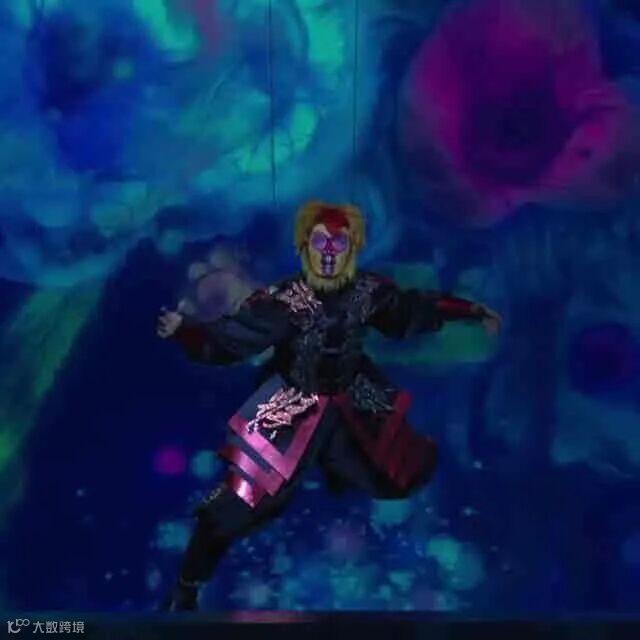
Now, his tale has been turned into a spectacular new opera by Huang Ruo and David Henry Hwang, “The Monkey King,” which premiered on Friday at San Francisco Opera. It’s a production that has been given resources to pull off a jaw-dropping feat of music theater, making a thrilling case for the vitality and potential of opera on a grand scale. And everyone can see it: The Nov. 18 performance will be streamed live online and available on demand later.
“The Monkey King” is an artistic triumph for the creators and performers alike. But congratulations are especially in order for San Francisco Opera, which has a recent track record of presenting shows that speak to its local audience with the ambition of an opera capital: works like Bright Sheng’s “Dream of the Red Chamber” and Gabriela Lena Frank’s “El Último Sueño de Frida y Diego,” not to mention anything by John Adams.
And here, the company has backed a world premiere that calls for a dizzying number of set changes, 68 performers onstage and more than 50 instrumentalists in the pit, led with dynamism by the Huang specialist Carolyn Kuan.
It’s also no small thing to sign on for an opera based on one of China’s greatest and most unwieldy works of literature. Across multiple volumes, “Journey to the West” tells an episodic story that begins with the misadventures of the Monkey King, Sun Wukong, before he sets off on the title voyage. Hwang focuses on those opening chapters, crafting them into an operatic picaresque from Sun’s birth to enlightenment, treating him not unlike Wagner’s Parsifal: a fool made wise.
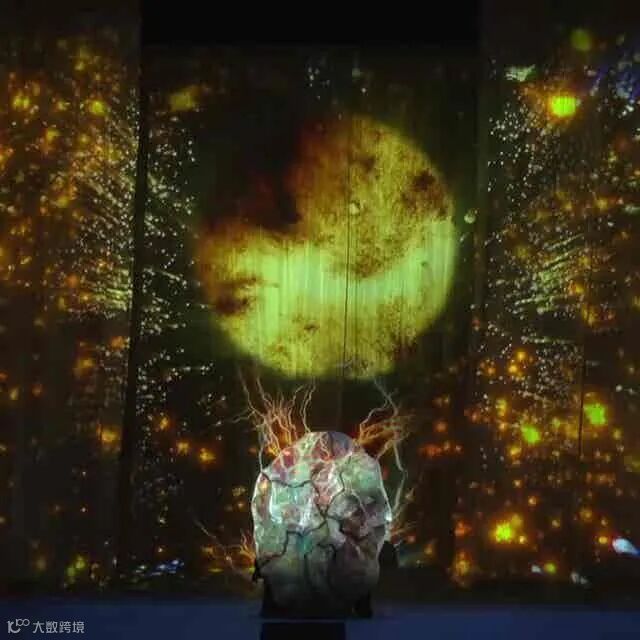
The libretto is still episodic, but the scenes are threaded together by a flashback structure. When we meet Sun at the beginning, he has been imprisoned for 500 years. To explain why he takes us back to his birth, hatching from a magic rock, through his life as a savior to fellow monkeys and as a pupil of the Master Subhuti, stately as sung by the baritone Jusung Gabriel Park, who teaches Sun that “power alone is not enough.”
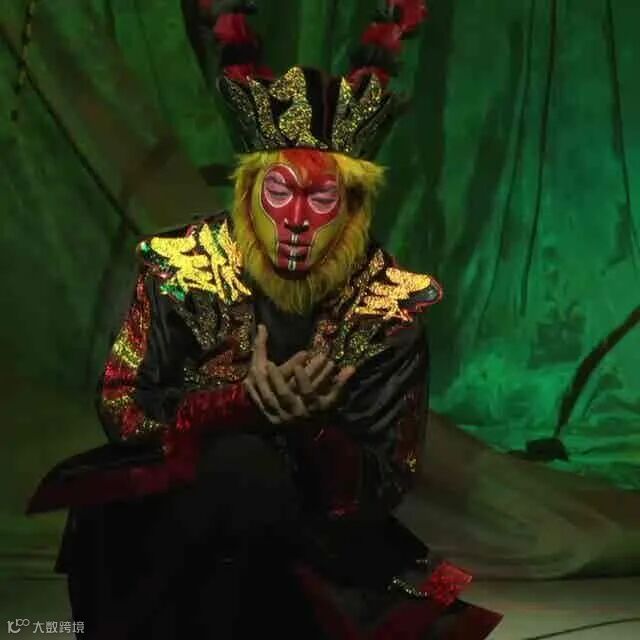
But the Monkey King, the tenor Kang Wang, is as arrogant and reckless as he is mighty. (He’s played at various points by a singer, a puppet and a dancer, Huiwang Zhang, an acrobatic delight in Ann Yee’s choreography.) And he’s not the fastest learner. He takes on the forces of the sea and the hedonistic gods of heaven, wreaking havoc wherever he goes, in the end subdued by Buddha himself, also sung by Park. Only when Sun truly listens to the teachings of the Diamond Sutra can he be freed.
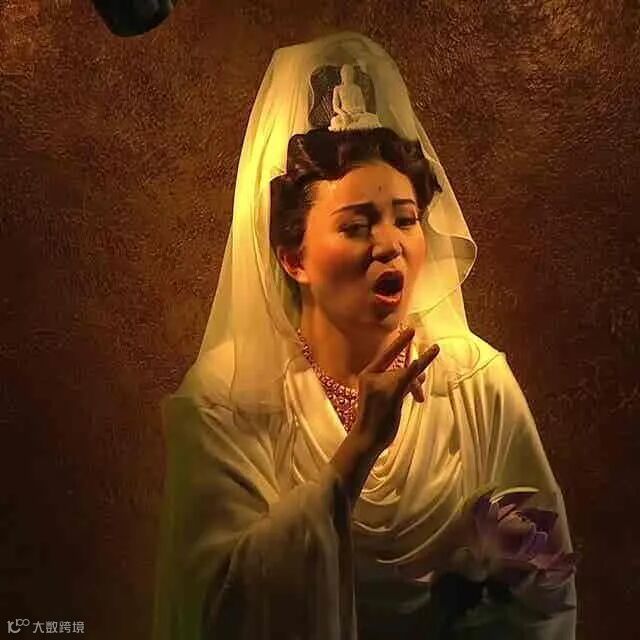
Huang’s score begins with that spiritual mood. As the curtain comes up, an Indonesian button gong sounds, and members of the San Francisco Opera Chorus chant text from the Diamond Sutra with the lushly elegant soprano Mei Gui Zhang as Guanyin, the Goddess of Mercy and something like Sun Wukong’s guardian. (The impressive chorus will take on many forms throughout the night, as monkeys, members of the court in the sea and heaven, soldiers and even horses.)
Eventually the orchestra awakens with churning violas, then winds and low brasses. And once the Monkey King enters, the music turns jagged and more restless, and the serenity of chanting gives way to the crass vernacular of Sun bragging that he “kicked all their butts.”
In that and other moments, Huang illustrates the environment onstage in a way that is only lightly abstracted, as when the underwater world is unveiled with cascading runs of 16th notes. At other times, the score can be frustratingly disconnected from the action and less dramatic than it should be. The Monkey King’s birth, surrounded by lightning strikes, is more mysterious than tempestuous or primordial; the collapse of the ocean, propulsive rather than chaotic.
This is a small complaint, though, about a score that is otherwise full of originality, irrepressible energy and stunning beauty. Huang has described “The Monkey King” as a “third culture” opera: neither Eastern nor Western, and definitely not an attempt to marry the two. Rather, it is something new, the natural product of intersecting cultures and layers of influence.

His orchestra includes a battery of instruments associated with Eastern music, like a Chinese opera gong and a microtonal pipa (played by Shenshen Zhang with scene-stealing brilliance in the second act). And Huang borrows from Peking opera, with bends of pitch at the ends of some phrases. But they are integrated with the Western elements of the score; maybe in a nod to the language- and culture-transcending music of Meredith Monk, he quotes a bit of vocalise from her opera “Atlas.”
Huang’s finest music is reserved for Guanyin and the chorus of Bodhisattvas, and for the moment when the Monkey King, in a performance of thrilling physicality and heroic musicality by Wang, discovers the Land of Bliss.
Before he gets there, the Monkey King encounters quite a lot of characters, each rendered vividly, even through singers juggling multiple roles. Among the standouts was Konu Kim, who brought an almost comically pleading, Italianate tenor to the corrupt Jade Emperor. His courtiers are costumed decadently by Anita Yavich, as if they lived in the Capitol of “The Hunger Games.” (If the dystopian allusion isn’t clear enough, Hwang’s libretto connects them unsubtly to the power-hungry and selfish elites of today.)
It’s a daunting task to keep this opera moving from scene to scene, and the director, Diane Paulus, brings a touch of Broadway fluidity to the production. She cleverly conjures the many worlds of “The Monkey King” in silk, 4,500 yards in all, that rise and fall in sheets, wave like water and float weightlessly like clouds.
That look carries to the characteristically ingenious puppetry by Basil Twist, whose contributions to the show are in gorgeous conversation with Huang’s music: mountains raised with sounds of sparkling awe, bucking horses released while the orchestra clops with rhythms out of Copland’s “Rodeo,” the hand of Buddha coming down on Sun with frightening, freely descending scales.

This is a team of artists who are at their most inspired. Remarkably, no matter what they strive for, they seem to pull it off. And, since “The Monkey King” covers just the beginning of “Journey to the West,” with dozens of characters and adventures to come for Sun Wukong, perhaps the creators have a superhero franchise on their hands.
Joshua Barone is an editor for The Times covering classical music and dance. He also writes criticism about classical music and opera.
https://www.nytimes.com/2025/11/17/arts/music/the-monkey-king-opera-review.html?campaign_id=9&emc=edit_nn_20251122&instance_id=166930&nl=the-morning®i_id=46372738&segment_id=211081&user_id=b0db77639e64a9efc80d6c004ecaed25
今日日签
日后再幸福吧?
扯淡!人生的每一个瞬间,只要错过了那一刻就会永远消失,所以,现在就要幸福起来。



“柯遇好物”,成立近20年的专业进出口公司安徽凯文纺织品有限公司专属品牌。
本公司及时跟进国际流行趋势,货品追求精致风格,均通过国际环保标准检测,目标受众是欧美、澳洲、日韩、港台等国家和地区中高端消费者。
货品涵盖包袋、围巾、披肩、棉毯、桌布、餐具、门挡、地垫、靠垫、床品四件套、食用油、洗浴用品、护肤品……
在柯遇好物和您的共生空间里
探索舒适、精致的物品
365日,每日24小时
柯遇好物,在身边
扫描二维码
见更多精美好物