When Did Everything Become So ‘Intentional’?
With endless demands on our time and attention, doing everyday things “intentionally” gives an illusion of control.
By Marie Solis
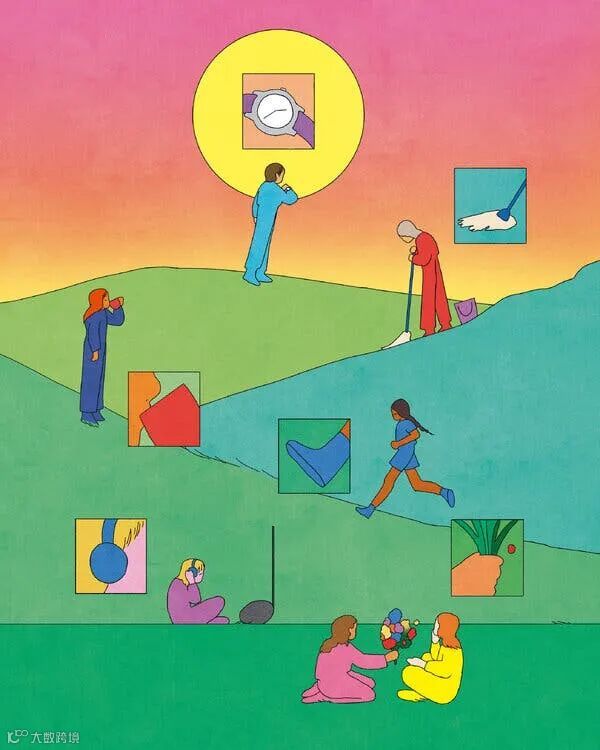
Dating, walking, working out, watching a movie at home, watching a movie in the theater, thrift shopping, grocery shopping, meal prepping, playing trivia, making coffee, drinking coffee, consuming alcohol, making friends, making plans with friends, playing the guitar, journaling, arguing, reading, thinking, scrolling, breathing.
You can just do all of these things. Or you can do them “intentionally,” as a growing chorus of lifestyle gurus, influencers and perhaps slightly overtherapized people you may know personally are preaching lately.
It’s a practice whose meaning most can agree on even as they apply it in vastly different ways. Consider a pair of videos on TikTok, both claiming to display an intentional lifestyle: In one, a young woman takes viewers through her Sunday of “slowmaxxing,” carefully selecting a Carole King record to listen to on a turntable, watering her plants and turning on various low-watt lamps around her home. In another, a working mother shows how she “intentionally” spends the four hours between the time she arrives home and when she goes to bed — cooking, cleaning up the kitchen and helping her children with their homework in a sped-up, one-minute blur.
A close linguistic relative to mindfulness, living intentionally suggests being present and self-aware. Your words and actions are in near-perfect alignment. Possibly, you’ve meditated recently. True to its literal definition, being “intentional” also implies a series of deliberate choices.
Those can feel hard to come by these days, when even mundane, everyday decisions appear more readily shaped by large political forces and faceless algorithms than by any sort of individual volition. One can’t help but feel that the word expresses a wider feeling of being disempowered and adrift.
“Think of how natural it is to pick up your phone when you’re bored,” said Jackie Garbe, a 28-year-old yoga and meditation instructor in Ridgewood, Queens. “In this world, we tend to be in our heads and be in autopilot, which is OK, it’s natural, but intentionality gets us out of that and into our present moment.”
That the word can be used either to slow down life into a series of luxurious, sensorial moments or to break it into individual, optimizable blocks of time is what gives “intentional” its distinctly 2025 flavor.
“There are four things I try to do every day that very much quote unquote fill my cup,” said Robert Capelluto, who lives in San Diego and works as a product designer at a big tech company. “Health, expression, relationships and purpose. All four of those things are fundamental to the foundation and happiness or general well-being of Rob.”
To that end, Mr. Capelluto, 35, explained over the phone this summer that he used to schedule nearly every hour of his day to make sure he was “growing and evolving as a person.”
When asked what would happen if this call ran over the allotted time, he said it was “a pertinent question.” Lately, he added, “I’m trying to allow some more spontaneity and flexibility to choose when certain things feel right.”
For some, avoiding wasted time is part of the point of being intentional, which may be why the word has gained a foothold in dating. Already fatigued with and distrustful of dating apps, many people have gravitated toward “intentional dating,” looking to take charge of their romantic fate.
Talia Koren, who hosts the podcast “Dating Intentionally,” describes it as a matter of “acting in a way that aligns with what you want.”
After a breakup years ago with a long-term partner, that meant staying focused on her goal of meeting someone who was interested in marriage. Ms. Koren, 33, said she would write down her impressions of each match, and developed an emoji system: Someone who gave her a “friend vibe,” for instance, would get the handshake emoji. The approach helped her pinpoint patterns that were not working for her.
“I didn’t pursue the hot guy who said he didn’t know what he was looking for because I did; I didn’t pursue the guy who was really wealthy who would send me mixed signals because I didn’t want that, and it gave me anxiety,” she said. Eventually, she met her husband, whom she lives with in the Bay Area. She didn’t feel “the spark” right away — it took a few weeks.
“It’s not the stuff of romance novels, that’s for sure,” she said, speaking more generally.
“It really comes down to emotional regulation,” she added, “and owning what you want.”
Over the last few years, a culture of indulgence has sprung up — think: martinis, cigarette-smoking and an appetite for all manner of “little treats.” But it has been outstripped by a stronger tendency toward control. Online, the wellness routine du jour is the “5 to 9,” that is, the stretch from 5 a.m. to 9 a.m. in which one sheds layers of overnight masks, under-eye patches and mouth tape; ingests various supplements; exercises; cold plunges; and more. The average fitness influencer exhorts that getting in shape is not a matter of desire or even motivation but one of discipline.
As fitness and wellness culture have intensified, people have begun to drink less — or to do so more “mindfully” or “intentionally” — and attend social gatherings with less frequency. It’s easy to make the argument that this lifestyle shift is healthier. But is it more pleasurable?
“Think we all need to stop being intentional and start having fun,” Cristina Vanko, the author of the book “Adult-ish,” an illustrated journal, wrote in a July post on X.
Ms. Vanko, 36, said she had noticed an emphasis on “intentionality” not only in dating and relationships but also in other elements of social life.
“People seem to love a themed event these days: ‘We are here, we have an agenda, we’re going to follow it,’” she said of “intentional” gatherings in New York, which tend to be centered on an activity (like running) or a goal (like making friends in your 30s). “It’s more organized fun versus fun that happens on its own.”
The word has crept into marketing, too. Rhode, Hailey Bieber’s billion-dollar beauty brand, has advertised itself as a line of “intentional skin care and beauty essentials.” Kendall Jenner has said that the philosophy of Alo Yoga, whose athletic wear she models, “really reflects how I try to live: being intentional and taking care of myself from the inside out.” In a May episode of their podcast “Good Thinking,” Chris Danton and Kirsten Ludwig, two brand strategy consultants who run In Good Co, praised a new matcha cafe, a tattoo shop specializing in tiny designs and the French department store Print Temps as some of New York City’s “most intentional” brands.
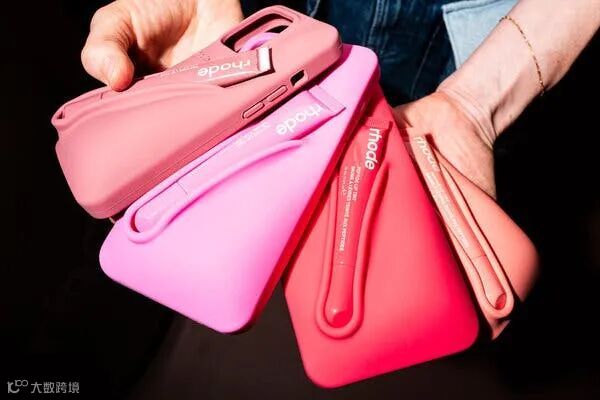
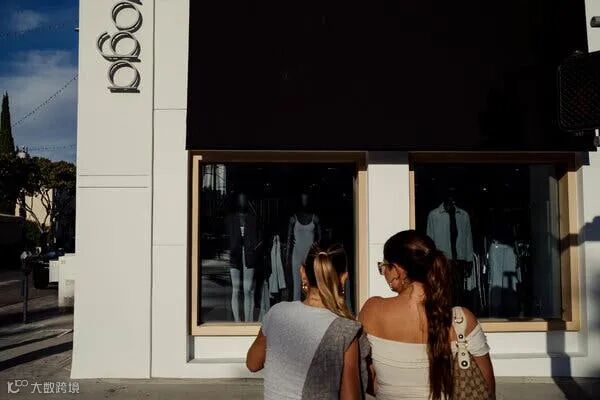
“Intentional” undoubtedly has the ring of therapy speak, though actual therapists are not sure where it came from — suggesting a kind of trickle-up effect from patients who pick up terms on social media and bring them into their therapists’ offices.
Yuxin Sun, a psychologist in Seattle, said she found “both myself and my patients using the word” but could not recall any research papers or theory on the subject from her schooling.
“I think the word ‘intentional’ might have come from the consumer and a general public who are tired of what’s going on and tired of being pushed forward by external forces,” said Dr. Sun.
“It feels more like a fuzzy cultural word that got picked up in wellness and self-help circles and then seeped into therapy and dating language,” said Jeff Guenther, better known on social media as Therapy Jeff. It seems to be true, however, that “therapists love this word.”
“I hope you’re not talking badly about it,” he added, with an expletive. “It’s the best word.”
Dr. Guenther, a licensed therapist in Portland, Ore., said that he had used it often over his two decades seeing patients, but that he had noticed more instances of it in the wake of the Covid-19 pandemic, particularly among Gen Z.
He said the research showing that young people did not drink or have sex as much as previous generations probably owed in part to their being “hyper-intentional.”
“I’m not judging it as good or bad,” he said. “I’m just saying it might be a thing.”
Perhaps the word’s most memorable antecedent is in intentional communities, the communal living arrangements that trace back to the 1960s and had a recent rise in popularity in the 2010s. To form these communities, the members drawn to them must agree: What is their guiding philosophy, and how will they put it into practice?
At Twin Oaks, an intentional community in Virginia, members typically work only 15 to 20 hours a week, freeing up everyone to “choose more intentionally how to spend their time and decide the things you can value as a community,” said Sky Blue, a onetime resident there and a former executive director of the Foundation for Intentional Community.

Mx. Blue, who uses the pronoun they, said that as one might expect, people who live in intentional communities use the word “intentional” quite a bit — mostly because they are “intentionally trying to do something different than the mainstream,” which requires a lot of considered decision-making.
It seems like a good thing that everyday people have picked up the word, Mx. Blue said: “I want people to think about, ‘How do I want to spend my time rather than just going down the path capitalism is leading me down?’”
Yet there’s almost nothing immune to the logic of intentionality, even shopping at a luxury store, even sinking an hour into Instagram. To do the latter “intentionally” — and avoid the inverse, “doomscrolling” — one need only set a time limit and a purpose.
The word is an assertion of free will, as well as a cushion against all of the unpredictable facets of life. How infinitely understandable then — if occasionally irritating — to be hearing this word so often.
More annoying, perhaps, is that the word can’t bring about all it seems to promise.
“I understand why people want that sense of safety and control,” said Dr. Sun, the Seattle-based therapist. “I would also say that, essentially as human beings, we don’t have the ability to set intentions so good, to make decisions so good, that we’re immune from heartbreak, pain, sickness and all the difficulties in life.”
https://www.nytimes.com/2025/09/29/style/when-did-everything-become-so-intentional.html?campaign_id=9&emc=edit_nn_20251004&instance_id=163809&nl=the-morning®i_id=46372738&segment_id=207135&user_id=b0db77639e64a9efc80d6c004ecaed25
今日日签
日后再幸福吧?
扯淡!人生的每一个瞬间,只要错过了那一刻就会永远消失,所以,现在就要幸福起来。
“柯遇好物”,成立近20年的专业进出口公司安徽凯文纺织品有限公司专属品牌。
本公司及时跟进国际流行趋势,货品追求精致风格,均通过国际环保标准检测,目标受众是欧美、澳洲、日韩、港台等国家和地区中高端消费者。
货品涵盖包袋、围巾、披肩、棉毯、桌布、餐具、门挡、地垫、靠垫、床品四件套、食用油、洗浴用品、护肤品……
在柯遇好物和您的共生空间里
探索舒适、精致的物品
365日,每日24小时
柯遇好物,在身边
扫描二维码
见更多精美好物