


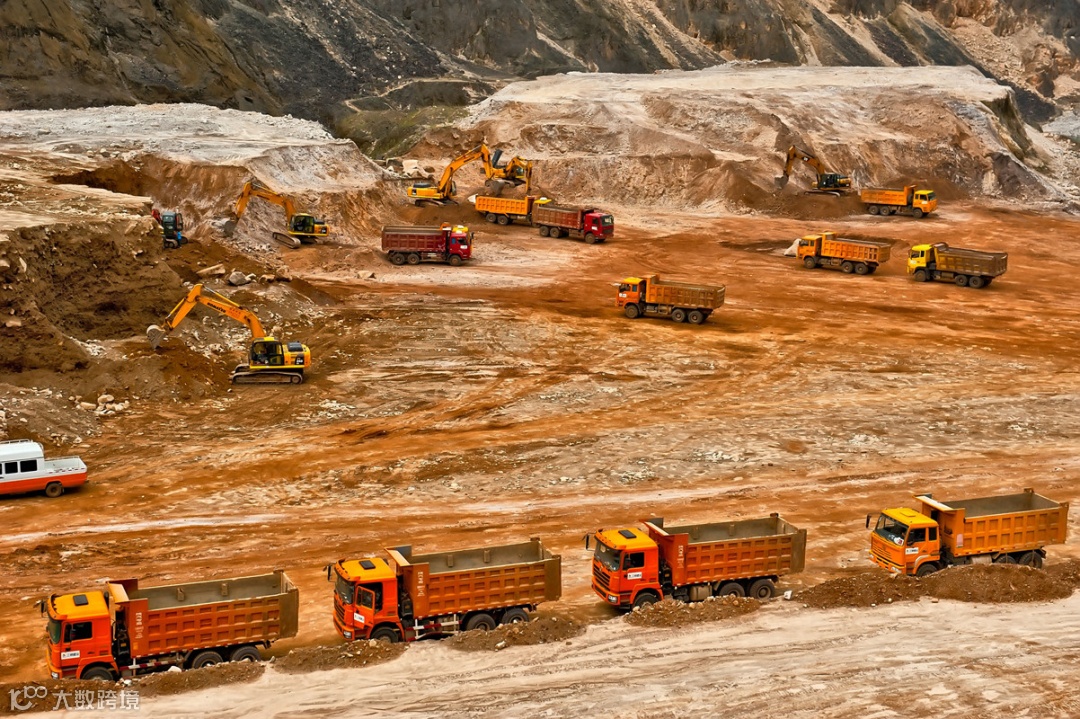
The Survival Battle of Foreign Trade "Sandwich Layer" Amidst Great Power Games
Left hand suffering from tenosynovitis from revising quotations, right hand developing the same from sending reassuring emails to American clients—this generation of foreign trade professionals might collectively master the "ambidextrous" skill. After all, Trump's tariff calculator seems to be smoking, and our quotation sheets are on the verge of collapse: in February, the US first wielded the tariff stick citing fentanyl issues, by April the cumulative tariff rate on China soared to a peak of 145%. After China retaliated with 125%, we got a 180-day truce from May to September. Just as the dawn of "technology for rare earths" discussions emerged, the US suddenly expanded technological blockades at the end of September, prompting China to announce full-chain rare earth export controls.
November 1st Critical Alert: The US announced a 100% additional tariff on all Chinese imports starting November 1st, pushing the total tax burden over 130%, covering approximately $500 billion in US-China trade for 2024. China precisely targeted high-end sectors, with export controls on lithium batteries and other items taking effect on November 8th.
The "180-day truce reversal" case mentioned in CF40 research already warned foreign trade professionals: this "price revision marathon" is no short-term battle. In this dynamic game where the US acts first and China retaliates later, tariffs fluctuate like a rollercoaster, with rare earth controls and technological blockades precisely interlocking. Caught in the middle, enterprises must not only cope with trade flow reshaping and cost fluctuations but also predict next month's policy trends—after all, a 130% tariff bill must ultimately be covered by profits.
Rare Earths: The Strategic Ace That Holds Global Technology Hostage
Rare earths are not ordinary earth—they're the "golden necklace" that holds global technology hostage. This critical resource, known as the "vitamins of industry," though composing less than one ten-thousandth of end products, is as indispensable as essential trace elements to the human body. From smartphone screens to aircraft engines, from new energy vehicles to chip manufacturing, nearly all high-end manufacturing relies on their "nourishment."
China controls 90% of global rare earth processing capacity, and this "smelting hegemony" has created deep global industrial chain dependence. While using Chinese rare earths to manufacture chip lithography equipment and F-35 engine components, the US simultaneously promotes "technological decoupling." When TSMC produces 3nm chips, it must apply for export licenses due to Chinese rare earth components—the October 2025 new regulations clearly stipulate: products containing just 0.1% Chinese-sourced rare earths must pass Chinese customs scrutiny. This absurd reality of "using Chinese rare earths to counter China" precisely demonstrates the strategic irreplaceability of rare earths.
This "golden necklace" links three technological lifelines: aircraft coating materials (ensuring engine high-temperature resistance), new energy vehicle permanent magnet motors (determining range and power), and chip manufacturing polishing processes (affecting yield and precision). Middle and heavy rare earth prices are entering an upward channel, with dysprosium oxide currently priced at approximately 1.65 million yuan/ton. Citibank predicts it may exceed 2 million yuan/ton by 2027, while neodymium-praseodymium oxide will rise to 900,000 yuan/ton8. As price curves intersect with geopolitical games, rare earths have long ceased being ordinary commodities—they're the "strategic ace" in great power competition.
US's Dual Strangulation: 100% Tariffs + Software Controls
Tariff Onslaught: How 130% Rates Double Costs?
On October 10, 2025, Trump suddenly announced a 100% additional tariff on all Chinese imports starting November . This means if a product currently has a 30% tariff rate, the combined total will reach 130%. Taking a $20 toy as an example: tariff = $20 × 130% = $26, instantly pushing the landed price to $46, nearly doubling costs. Market panic immediately ensued, with US stocks correcting and the VIX fear index rising to 22, a 5-month high.
130% Tariff Calculation Formula:
Final Rate = Current Rate + 100% Additional Tariff
(Example: $20 product × 130% rate = $26 tariff, total cost $46)
Software Cutoff: The "Confusing Strategic Sabotage" That Deserves Heritage Status
Simultaneously implemented "critical software export controls" reveal deeper contradictions: while claiming "not canceling meetings," the US imposed licensing requirements on "chokepoint" tools like EDA software. Even non-Chinese companies like TSMC must apply for licenses due to supply chain connections. The September "50% Rule" went further: overseas subsidiaries with over 50% ownership by entities on the Entity List automatically face restrictions, without needing to prove end-user relationships. This dual strangulation of "tariff roadblocks + technological starvation" is precisely targeting foreign trade enterprises.
Foreign Trade Professionals' Self-Rescue Manual: From Emergency Damage Control to Long-Term Breakthrough
Facing rare earth tariff impacts, foreign trade enterprises need to establish a three-tier response system: "Rapid Response - Stable Layout - Deep Rooting." The following action guide combines practical experience and expert strategies to help transform from passive response to active breakthrough.
✅ Immediate Action: 72-Hour Emergency Loss Mitigation Plan
Urgent Contract Clause Review
Overnight highlight three core tariff-related clauses in contracts: price adjustment mechanisms (specifying cost-sharing ratios when tariffs exceed 5%), rules of origin (supplementing alternative third-country processing clauses), and force majeure provisions (adding negotiation space for "performance difficulties due to policy changes"). A rare earth permanent magnet enterprise successfully reduced losses from 2024 US tariff increases by 40% by pre-adding a clause stating "both parties have the right to renegotiate when tariff fluctuations exceed 8%."
Implement Dynamic Cost Calculation Sheet
Immediately deploy an Excel calculation template with three dimensions: "tariff rates - raw material prices - exchange rate fluctuations" (core columns: real-time tariff rates (linked to Customs API), real-time rare earth oxide quotations (connected to Shanghai Metal Exchange data), logistics cost fluctuation coefficients (weighted by sea/air transport)). It is recommended to set up automatic warning formulas: trigger red alerts when comprehensive cost changes exceed 10%, pushing to decision-makers within 2 hours.
✅ Mid-Term Layout: Light Asset Model to Break Geographic Dilemmas
Beware the "Southeast Asia Vacation Base" Trap
A recent enterprise blindly built a factory in Vietnam but failed client audits for 6 months due to restricted rare earth material cross-border transportation and unqualified local workers, resulting in 3 million RMB in sunk costs. What truly works is the "1+N Light Asset Model" : centering on 1 domestic core technology base, deploying N "satellite assembly plants" in Malaysia, Thailand, etc., through technology licensing rather than direct investment, keeping fixed asset ratio below 30%. After adopting this model, a listed company reduced overseas operating costs by 28% while avoiding risks of plant equipment being implicated by tariff policies.
✅ Long-Term Cultivation: Building "Technology-Certification" Dual Moat Against Tariffs
CAS Expert Collaboration Channel Opened
Connect with expert resources through the "National Rare Earth Functional Materials Innovation Center" (led by Ningbo Institute of Materials, CAS), focusing on breakthroughs in "high-performance magnets with reduced rare earth usage." For example, an enterprise collaborated with CAS team to develop neodymium-iron-boron magnets that reduced dysprosium usage by 40% while maintaining performance, directly lowering tariff-sensitive material proportions.
ESG Certification to Seize Rule High Ground
Under the EU's Carbon Border Adjustment Mechanism (CBAM), ISO 14001 environmental management system certification qualifies for tariff reduction quotas. It is recommended to advance in three phases: complete carbon footprint verification by 2025 (recommended SGS or Intertek), achieve over 50% clean energy share by 2026, and obtain EU Ecovadis Platinum rating by 2027 (currently only 3 domestic rare earth enterprises meet this standard).
Industry Consensus: When tariffs become conventional weapons, only technological moats serve as the ultimate counter to tariffs. A leading enterprise relied on independently developed "rare earth-free permanent magnet technology" to achieve 12% market share growth after the 2024 EU tariff increase
From millimeter-level adjustments to contract clauses to disruptive innovations in technical routes, the breakthrough path for foreign trade professionals has never been a single tactic but a systematic campaign of "emergency response - layout - deep cultivation." Every preparation now creates a breakthrough point in future tariff barriers.
Warning Signals and Opportunity Windows: Who's Swimming Naked and Who's Picking Up Bargains
Danger⚠️: Betting on Tariff Removal Is Worse Than Buying Lottery Tickets
Enterprises hoping for "rapid replacement of overseas rare earth supply chains" are treading dangerously. While breakthroughs in southern China ionic rare earth exploration or mature overseas heavy rare earth separation technologies might alleviate supply shortages, global supply chain diversification remains a myth in the short term—mine development cycles spanning years, towering technical barriers, and ongoing environmental controversies ensure China will still dominate the global rare earth industry chain for the next 3-5 years. Staking enterprise survival on "sudden tariff removal" is essentially gambling with business decisions, ultimately risking "swimming naked" in market volatility.
Opportunity🚀: Chip Breakthroughs Open Doors to Emerging Markets
Breakthrough progress in China's chip industry is restructuring global competition patterns, creating new incremental space for foreign trade professionals. The Kirin 9020 chip in Huawei's Mate70 series achieved 100% localization, matching Apple A16 performance; SMIC's mature process capacity continues to expand, with domestic semiconductor equipment self-sufficiency rate increasing 3x compared to three years ago. Even more noteworthy is the rise of segment leaders: Innoscience holds 42.4% global market share in gallium nitride chips, becoming a core supplier for NVIDIA's 800V DC power architecture; BYD Semiconductor's IGBT chips have broken foreign monopolies, powering new energy vehicle "hearts".
As "de-Americanization" becomes a new global supply chain consensus, clients in emerging markets like Southeast Asia and Latin America are sending new inquiries—they need stable solutions independent of traditional rare earth supply chains, and China's chip technology breakthroughs provide the confidence to secure these orders.
In this industrial transformation, enterprises that can seize technological breakthrough dividends and preempt emerging market layout are picking up "bargains" others can't see.
Future Survival Guide: From Passive Response to Active Wave-Making
Facing changes in global rare earth trade patterns, foreign trade professionals need to shift from passive "temporary basket-switching" to active "chicken farm building"—instead of exhausting themselves in single-market fluctuations, construct multi-dimensional risk-resistant ecosystems. The 2024-2027 rare earth price curve (marked with purple background) shows the industry is in technological iteration and demand explosion: high-performance neodymium-iron-boron products have reached international levels in clinical validation, new energy vehicle drive motor penetration reached 60% in 2024 (up 30 percentage points from 2020), and enterprises like Northern Rare Earth are expanding into emerging fields like hydrogen storage materials, with projected 2025 capacity reaching 20,000 tons. This growth logic of "technological breakthrough + product matrix expansion" is the core paradigm of active wave-making.
Trend Prediction: From "Chokepoint Anxiety" to "Rule-Making Power Competition"
The transformation enlightenment from China's chip industry is highly instructive: from passive breakthroughs dependent on EUV lithography machines, to achieving 7nm-equivalent performance on DUV equipment through "dual-chip stacking" technology; from single-point technological breakthroughs, to the Ascend 910 chip building a "chip + framework + application" ecological closed-loop, and leapfrog development where photonic chip transmission speed reaches 1000 times that of electronic chips. This reveals a key trend—the essence of future competition is the battle for standard-setting power and industrial chain control, just as China established the world's strictest strategic resource system through "0.1% composition ratio" control standards. Foreign trade professionals must anticipate rule evolution in target markets.
Layout Checklist: Three "Wave-Making Projects" to Launch Immediately
Southeast Asia Capacity Investigation: Focus on rare earth separation and processing parks in Vietnam and Malaysia, leveraging local labor cost advantages to establish secondary supply chains and avoid single-market policy risks.
Domestic Alternative Tool Testing: Following the example of Gai Lun Electronics' EDA tools covering nine top global fabs, trial domestic rare earth testing software and supply chain management systems, completing core process replacement by 2025.
Hydrogen Energy Market Research: Targeting rare earth hydrogen storage material applications in fuel cell vehicles, establish segmented demand databases for hydrogen energy pilot regions like Japan, South Korea, and the EU.
Ultimate Principle: The Long-Termism of "Small Mahjong Wins"
The chip industry's "innovation + openness" dual-drive experience shows continuous accumulation beats single big bets. Just like mahjong players who avoid greedy big hands and steadily win small ones often laugh last, foreign trade professionals need to adhere to "small steps, quick iterations": collect 3 emerging market policy updates monthly, complete 1 domestic tool test quarterly, and implement 1 overseas capacity cooperation project annually. As Northern Rare Earth grew from a single smelting enterprise to a diversified industrial giant covering hydrogen storage, catalysis and other fields, it was this strategic patience of "accumulating small gains". In the changing tides of rare earth tariffs, active wave-makers are never those who predict storms, but long-termists who build their own ecosystems amidst fluctuations.