
The following article is from 中国欧盟商会European Chamber→
The road ahead
The Carbon Border Adjustment Mechanism (CBAM) represents a significant policy initiative by the European Union (EU) to limit carbon emissions and address climate change. The CBAM aims to level the playing field for EU producers by imposing a carbon cost on imports of certain goods from outside the EU, thereby preventing 'carbon leakage' – the transfer of production to countries with looser emission restrictions. In this article, Thanh Tran and Nora Zhang of TERAO set out what businesses need to do to prepare for the CBAM.
Set to be fully implemented in 2026, the EU’s CBAM is designed to ensure that imported goods are subject to the same carbon pricing as products produced in the EU.
The CBAM affects EU importers that import goods from the targeted sectors and non-EU producers exporting these goods to the EU. Companies in sectors such as automotive manufacturing, aerospace and capital goods, which rely on materials like steel and aluminium, are particularly impacted. They must adapt to the new regulations and potentially face big choices, such as finding suppliers with lower carbon emissions or investing in cleaner production methods. They will also need to plan for higher costs due to the need to buy CBAM certificates. Companies must also ensure that they report emissions correctly and buy the correct number of certificates.
The mechanism requires EU importers to purchase CBAM certificates that reflect the carbon price of EU Emissions Trading System (ETS) allowances. Importers can deduct any carbon costs already paid in the country of origin from their CBAM charge. The mechanism is designed to be compliant with World Trade Organization (WTO) rules and will replace the free allocation of EU ETS allowances currently provided to EU industries.
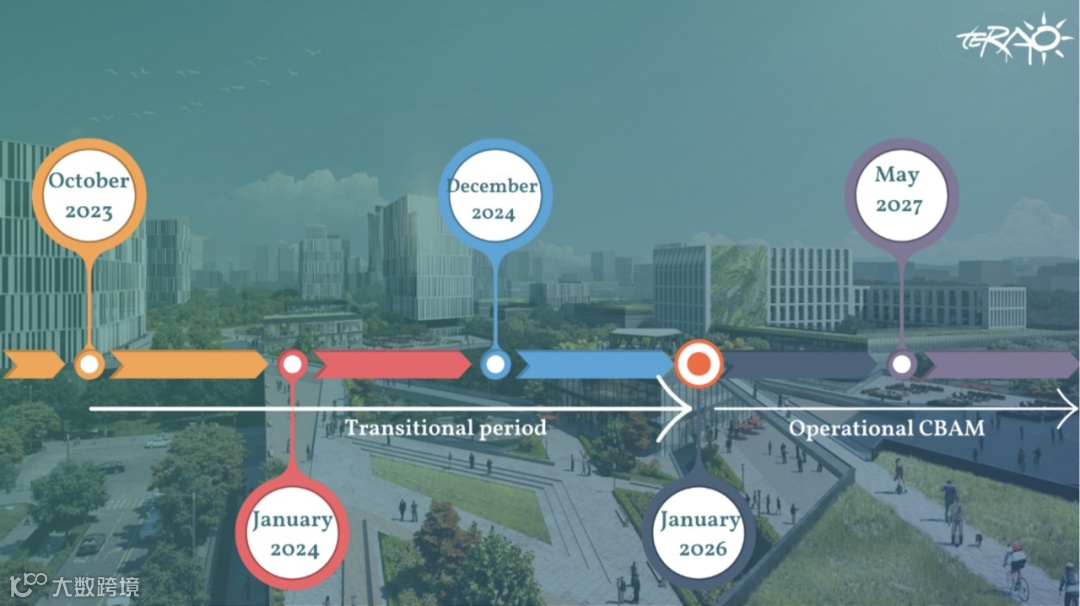
The transitional phase of the CBAM began on 1st October 2023 and will run until 31st December 2025. During this time, businesses must report the carbon emissions of their goods. It aims to help importers and producers prepare for the full implementation of the CBAM in 2026. From then on, reporting becomes mandatory and importers must purchase CBAM certificates. Non-compliance could lead to penalties, delayed customs clearance and negative records.
The calculation of CBAM charges involves determining the embedded emissions in imported goods. Companies must identify the goods subject to the CBAM, which typically include high-carbon products and then gather the necessary emissions data, which can be either estimated or actual data from suppliers using default values provided by the EU. If actual data is unavailable, emissions can be estimated by multiplying the weight of the imported goods (in tonnes) by the emissions factor, which represents emissions per tonne. This calculation is important for companies to comply with EU regulations and prepare for the financial period starting in 2026, when they need to purchase CBAM certificates corresponding to the carbon cost of imports. The price of CBAM certificates is pegged to the weekly average auction price of EU Emissions Trading System allowances. Importers must declare these emissions and submit the corresponding number of certificates annually.
The CBAM aims to level the playing field and reduce carbon leakage, but it presents several financial risks and challenges for European businesses operating in China, such as increased costs, supply chain disruption, market access risks and regulation complicance costs. (For further details, please click the "Read More" link at the bottom of the article.)
To comply with the CBAM, companies need to establish robust systems to monitor and report greenhouse gas emissions across their supply chains. This includes both direct and indirect emissions embedded in imported goods. Non-compliance could lead to increased carbon tax costs and reduced competitiveness in the EU market. Companies must proactively engage with the CBAM requirements to avoid potential fines and loss of market share.

Extract the QR code to read the article in full
Click the ‘Read more’ button below to read the full text