


导读:
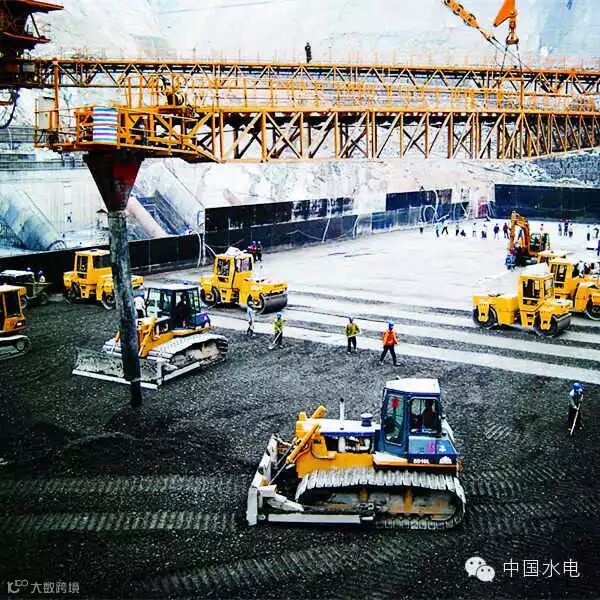
碾压混凝土坝(Roller-Compacted Concrete Dam)采用超干硬性的混凝土经逐层铺填碾压而成的混凝土坝,简称RCCD或RCD。碾压混凝土坝是将土石坝碾压设备和技术应用于混凝土坝施工的一种新坝型。
本期选择ENR杂志一期对RCC大坝的特别报道与大家分享。文中指出,在过去的40年中,RCC大坝是世界各大项目最偏好采用的坝型,这样的大坝大概建设了有650座之多。同时文章也指出,中国无疑是最领先的RCC大坝建设国,仅2012年就建设了165座,且其中40座超过100米高程。日本,美国、巴西和西班牙均排在其后。文章认为RCC大坝之所以让混凝土在经历了上世纪70年代大坝工程失宠后重回舞台,主要是这一坝型兼具混凝土的安全稳定以及土石坝的效率,更通过不断在工艺和流程上的改进,极大的降低了混凝土的成本,使它更有效的适应时代的需求。
中国水电(SINOHYDRO)作为中国水电行业建设的领军企业,亦是RCC大坝建设的先锐力量。我们不仅积累了丰富的经验和过硬的技术,在本文所列举的全球十大RCC大坝中,中国水电参建或独建项目达到7座。但值得注意的是,文中也列举了埃塞俄比亚的吉布(Gibe)III水电站、复兴(Renaissance)大坝以及安哥拉洛卡(Lauca)水电站等三个在建的巨型RCC大坝项目正在分别由意大利老牌建筑巨头英波基洛(Impregilo)和巴西最大的建筑承包商Odebrecht(此公司在上期世界水电大会的专题报道中亦有介绍)承建。从一个侧面暗示着,海外水电建筑业中国“走出去”企业所面临的激烈竞争与挑战。
下面,就让我们通过此文一起来了解RCC大坝的来历、特点及技术演变,并领略世界十大RCC大坝的风采吧。
Roller-compacted concrete dams have steadily taken their place in the menu of possible dam types over the past four decades, with over 650 of them completed or under construction, according to HydroWorld magazine. China is far and away the leading RCC dam builder, with 165 as of 2012; of those, 40 are higher than 100 meters. Japan, the United States, Brazil and Spain are the other most prolific RCC dam builders.
Roller-compacted concrete dams evolved in the 1970s to satisfy a particular need by dam builders and owners. The percentage of dams built with concrete dropped steadily between 1950 and the late 1970s, from 38 percent to 16.5 percent. This decline occurred “in wide-valley sites, where concrete-gravity dams were being replaced by less costly earth-and-rock embankments,” according to the 1991 book “Roller-Compacted Concrete Dams” by Kenneth D. Hansen and William G. Reinhardt.
The increased popularity of embankment dams led Engineering News-Record to editorialize in our March 6, 1969, issue, saying: The technology of mass concrete construction simply has not kept pace with the art and science of earthmoving. It is time for a study into ways of reducing the cost of concrete dams. … Dams must be conservatively designed and carefully built. But it does seem that in all the years since Hoover Dam, there should have been more change in the bucket-by-bucket method of moving mass concrete into place. What's needed is a lot more systems analysis and a bit less grandpa-ism.
The dam building community in the United States organized two conferences: A 1970 conference was titled “Rapid Construction in Concrete Dams,” and the second, in 1972, was called “Economical Construction of Concrete Dams.” Since embankment dams were more prone to failure, the conference attendees were looking for a new type of dam that could combine the safety advantages of concrete and the efficiencies of embankment-dam construction.
The first major step toward the development of RCC dams, a hybrid structure combining elements of both concrete and embankment dams, was Italy's 172-m-high Alpe Gera Dam, completed in 1964. It maintained the traditional cross section of a concrete gravity dam while reducing the cost of placing the concrete. Among other factors, the cost savings was achieved by reducing the cement content in the concrete mix used for the interior of the dam, where stresses are low and durability requirements are minimal.
The book “Roller-Compacted Concrete Dams” pinpointed the method used for that project, noting, “Placing this lean concrete mixture using earthfill construction methods was the greatest step forward.... Instead of building the concrete dam in vertical lifts to form cantilever blocks, horizontal placement was introduced. Dump trucks delivered the interior concrete to the dam, rather than buckets moved by crane or cableway. Side forms for blocks were eliminated, as were cooling coils. The consolidation of the lean concrete by internal immersion vibration, rather than external roller compaction, was about all that kept Alpe Gera from being the first RCC dam.”
Another critical step in the development of RCC dams was the design and construction of the Barney M. Davis cooling-water reservoir dike, completed in 1973, in Corpus Christi, Texas. The 6.7-m-tall, 10-kilometer-long ring dike was more economical than a conventional sandfill embankment and had soil-cement protection on both sides. “Besides being the only large dam constructed entirely of soil-cement, the Barney M. Davis reservoir embankment marked the first recorded use of vibratory rollers to compact soil-cement," note Hansen and Reinhardt.
RCC dam design evolved in three different directions during the 1970s. The U.S. Army Corps of Engineers conducted field tests that confirmed the basic construction method and yielded information on material properties and the strength of the bond between successive layers of RCC. After several less-than-perfect attempts, the Corps’ Willow Creek Dam, completed in 1982, in Oregon was the world’s first major dam to be built entirely of RCC.
Roller-compacted concrete shares the same ingredients as conventional concrete but in different ratios and with partial substitution of fly ash for portland cement.Containing less water, the produced mix is drier and essentially has no slump. By minimizing cement and/or pozzolan contents, costs are reduced.
And if no pozzolans or admixtures are used, storage, mixing and materials delivery are simplified. Lean mixes also eliminate the need for vertical joints, further reducing costs and complexity.
Other differences between RCC dams and conventional concrete dams involve construction methods. Because the RCC mix is too dry to be combined in ready-mix trucks, it is usually mixed at a temporary plant on-site, transported by conveyor belt and then compacted with a vibratory roller in 1-ft-thick layers, or lifts. Continuous placement of RCC is usually specified to minimize cold joints between the horizontal concrete layers that could inhibit bonding.
Several gigantic RCC dams are under construction in Ethiopia. The Gibe III Dam, the largest of a series of four dams on the Omo River, has been under construction since 2008 and is expected to be completed this year. The 243-m-tall, 630-m-long dam will contain 6.1 million cu m of RCC and generate 1,870 MW of electricity when the last of the 10 turbines is installed in 2016. Impregilo is the EPC contractor of the $2-billion project. It is expected to have a transformative impact on East Africa, double Ethiopia’s electric output and, once a 1,068-km-long transmission line is completed in 2018, supply lower-cost electricity to neighboring Kenya.
Casting an even longer shadow both physically and politically, the Grand Renaissance Dam, under construction on the Blue Nile in Ethiopia, is a $4.7-billion job. It includes a 170-m-tall, 1,800-m-long main dam that contains 10 million cu m of concrete; a 50-m-tall, 5,000-m-long rockfill saddle dam; and two powerhouses that generate a total of 6,000 MW of electricity. Construction started in 2010 and is expected to be completed in 2017. Impregilo is the contractor, while China is providing about $1.8 billion in turbines and equipment financing.
For several years, Egyptian officials protested that the Grand Renaissance Dam would disrupt the vital supply of the Nile, Egypt’s principal water source, in violation of the 1929 treaty governing water allotments from the Nile between East African nations. Ethiopian officials maintained that, when completed, the dam's reservoir would be filled slowly and not threaten Egypt's water supply. Last week, defusing tensions, Egyptian President Abdel Fattah al-Sisi addressed the Ethiopian Parliament and announced a three-way accord among Egypt, Ethiopia and Sudan concerning the water allotments from the river.
Elsewhere in Africa, the Lauca Dam, under construction on the Kwanza River in Angola, has been under construction since 2012. It will be 132 m tall, 1,075 m long and will contain 2.6 million cu m of RCC. It is expected to be completed in 2018. Its installed capacity of 2,070 MW will more than double Angola’s current hydroelectric generating capacity. It was designed by COBA, an Algerian engineering firm, in partnership with Lahmeyer International; the EPC contractor is Odebrecht of Brazil.
The World's Largest Roller-Compacted Concrete Dams
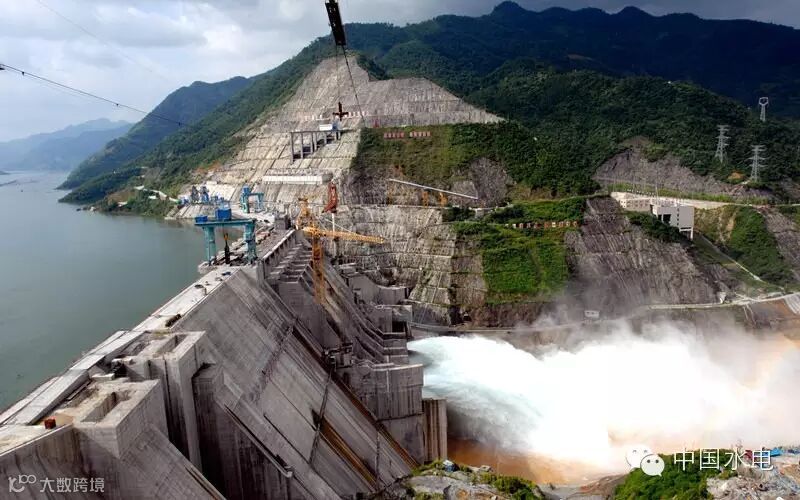
1. Longtan Dam, China(中国龙滩水电站), 4,952,000 cu m of RCC. Located on the Hongshui River in the Guangxi Zhuang Autonomous Region in southwest China, it was completed in 2009. It is 216 m tall and 849 m long. The construction involved the excavation of 20 million cu m of material. Its installed capacity is 6,426 MW. It is owned by Longtan Hydropower Development Co. Ltd. and cost $4.2 billion to build. The dam contains seven surface spillways, two bottom outlets and an underground power station and features two ship locks to allow navigation. Its construction displaced 80,000 Guizhou Province and Guangxi Zhuang Autonomous Region residents.
(Courtesy of City of Hechi, Guangxi)
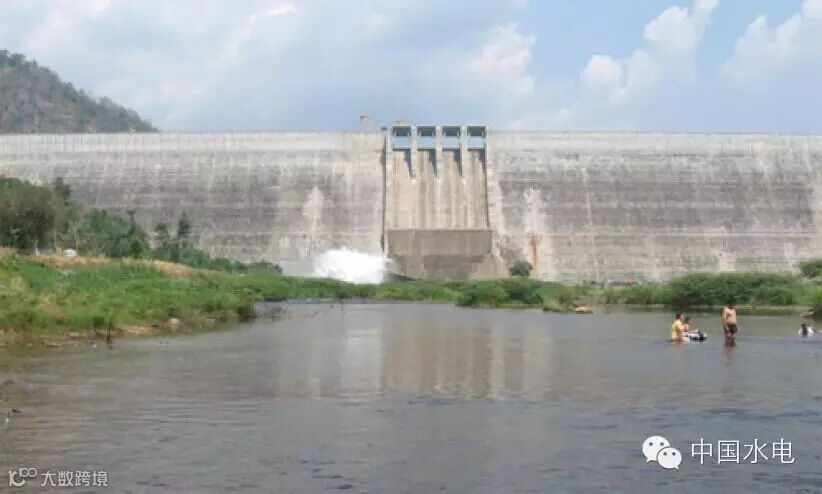
2. Tha Dan Dam, Thailand, 4,900,000 cu m of RCC. Formally called the Khun Dan Prakan Chon Dam, it is 93 m tall and 2,720 m long. Tractebel Engineering handled preliminary design and works supervision. TEAM Consulting Engineering and Management Co. Ltd. did the final design and supervised the construction. CCVK Joint Venture was the contractor; CCVK consisted of China National Water Resources and Hydropower Engineering Corp., China Electric Power Technology Import & Export Corp., Vichitbhan Construction Co. Ltd. and Krung Thon Engineers Co. Ltd. The Royal Irrigation Dept. is the owner. It was built using four Power Curber 8700s, which worked 20 hours per day for over three years to slipform the upper and lower dam faces. The dam, located on the Nakon Nayok River about 200 kilometers north of Bangkok, serves to reduce damage from seasonal flooding and provide a constant supply of water for irrigating crops. Construction began in 1993 and was completed in 2005. It has no hydropower component.
(Courtesy of Nakon Nayok Province)
3. Guandi Dam, China(中国官地水电站), 2,970,000 cu m of RCC. The 168-m-tall Guandi Dam, completed in 2013, is situated on the Yalong Jiang River, a tributary of the Yangtze in Sichuan Province in southwest China. With a power-generation capacity of 2,400 MW, it was an engineer-procure-construct project by Hydrochina Chengdu Engineering Corp. and Sinohydro No. 7. Ertan Hydropower Development Co. is the operator.
(Courtesy of Power Plants Around the World)
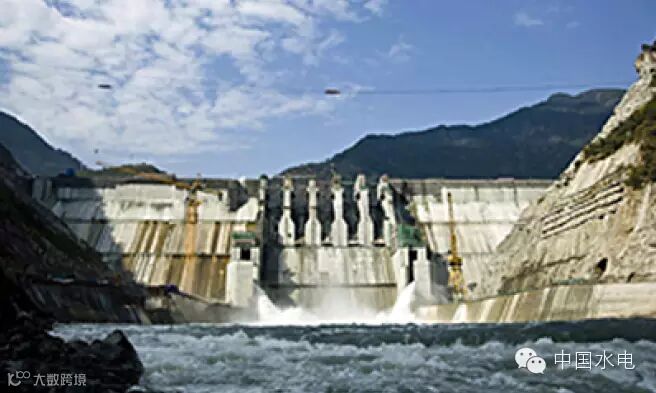
4. Longkaikou Dam, China(中国龙开口水电站), 2,840,000 cu m of RCC. Completed in 2013, the 113-m-tall Longkaikou Dam is located on the Jinsha River—the upper stretch of the Yangtze River—in Yunnan Province in southwest China. Its power-generation capacity is 1,800 MW. Huaneng Power and Huadian Power were the developers.
(Courtesy of Power China Huadong)
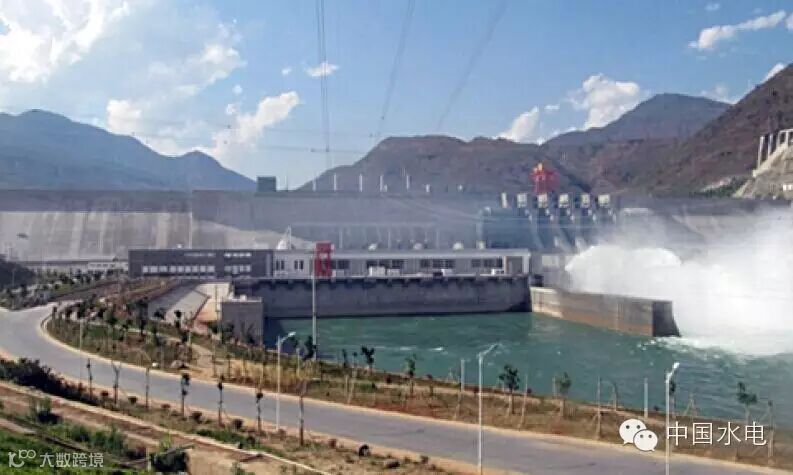
5. Son La Dam, Vietnam, 2,677,000. Completed in 2012, the 138-m-tall, 1,000-m-long Son La Dam is located on the Black River. Hydroproject of Russia was the designer, and Song Da Corp., a Vietnamese state-owned contractor, built it. With a power-generation capacity of 2,400 MW, it cost $2 billion to construct. Vietnam Electricity is the owner. Seven Potain tower cranes—supplied by Minh Chi, a dealer for Manitowoc—were used on the project. The dam's construction displaced 91,000 ethnic minority people, the largest resettlement in Vietnam’s history.
(Photo by Wikimedia Commons)
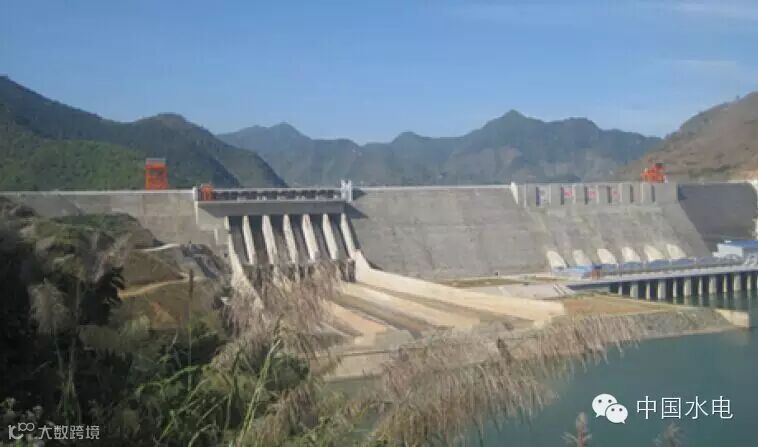
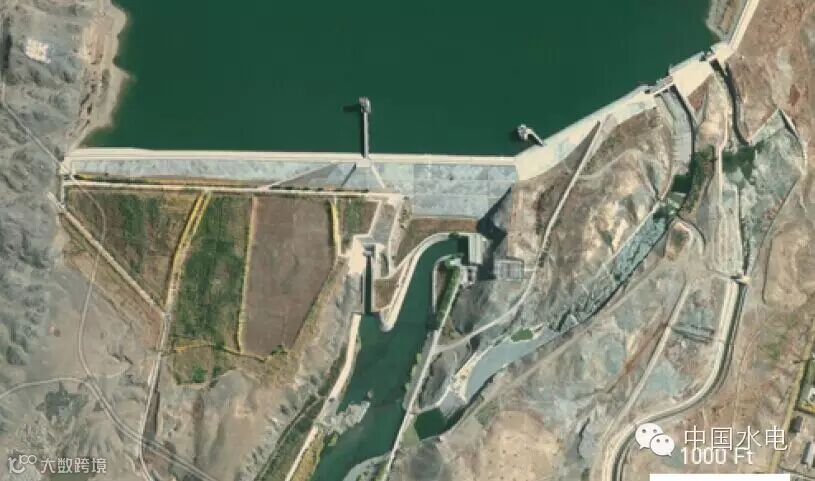
6. Kalashuke Dam, China(中国喀腊塑克水电站), 2,520,000 cu m of RCC. Situated on the E’erqisi River—also called the Irtysh—in Xinjiang Province in northwest China, near the border with Mongolia, it was completed in 2014. It is 121 m tall and 1,570 m long. With an installed capacity of 140 MW, its primary function is to store water for the irrigation of farms in a very arid region.
(Courtesy of Google Maps)
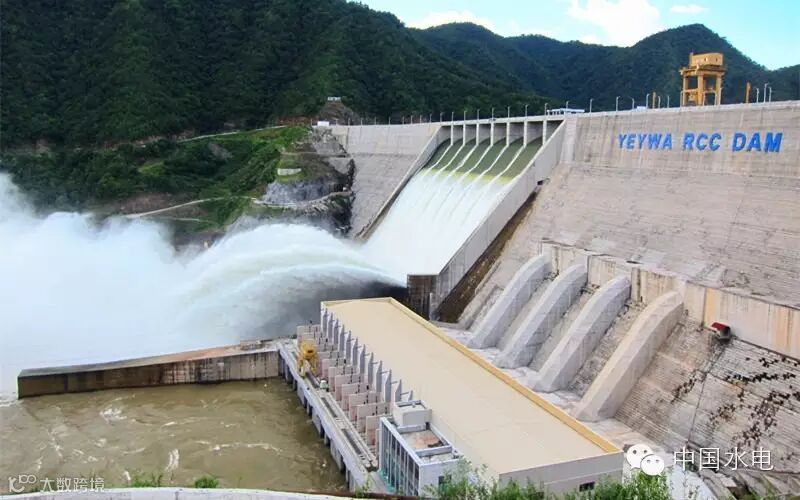
7. Yeywa Dam, Myanmar, 2,473,000 cu m of RCC. Completed in 2010, the Yeywa Dam is located on the Myitnge River in central Myanmar. It is the first roller-compacted concrete dam in the country. Its 790-MW capacity hydropower plant is the largest in Myanmar. Colenco Power Engineering Ltd. of Switzerland is the designer. The Myanmar Dept. of Hydropower, the owner, also acted as the general contractor. It is 134 m tall and 690 m long.
(Courtesy of Sinohydro)
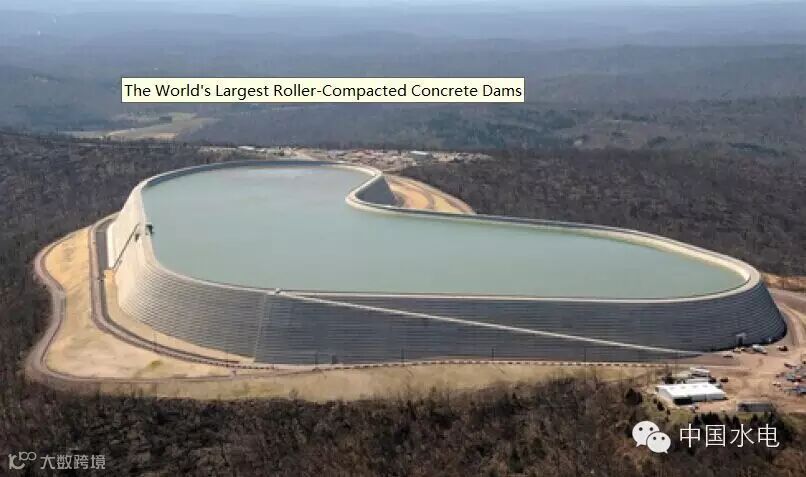
8. Taum Sauk Dike, the U.S., 2,448,000 cu m of RCC. The Taum Sauk Upper Reservoir Dike, atop Profitt Mountain in Missouri and originally built in 1963, was a 84-ft-tall, 6,562-ft-long concrete-faced, rockfilled structure. A 700-ft-long section failed in 2005 due to overtopping, destroying a state park and injuring three people. Part of a 450-MW pumped-storage project, it was owned by AmerenUE, which agreed to pay $177.35 million in compensation for the damage caused. Ameren rebuilt it as a roller-compacted concrete structure in 2010. At 6,652 ft long and 100 ft tall, the new dam encloses a 40-acre reservoir. Rizzo Associates Inc. was the designer. Built by a joint venture comprising ASI Constructors Inc. and Fred Weber Inc., it is North America’s largest roller-compacted concrete dam. Because it is ring–shaped, unlike most dams, and consists of nine monoliths with no abutments, the contractor used mobile telescoping conveyors to deliver concrete.
(Courtesy of Ameren Missouri)
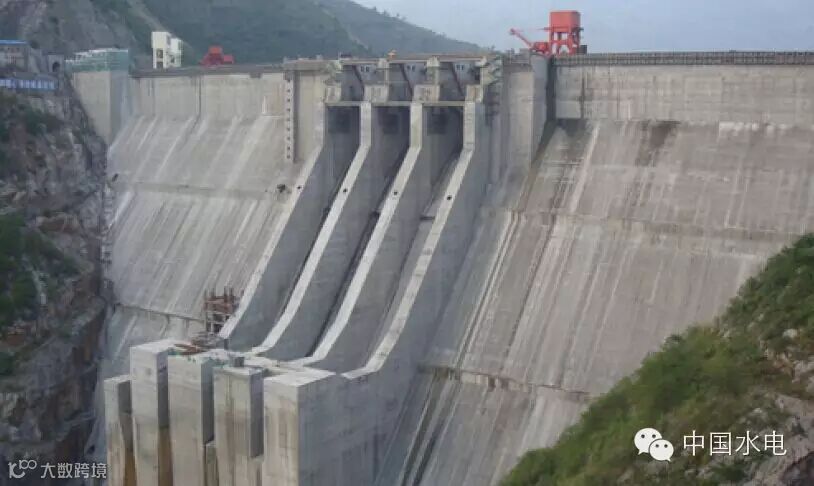
9. Guangzhao Dam, China(中国光照水电站), 2,420,000 cu m of RCC. Situated on the Beipan River in Guizhou Province, the 200-m-tall, 410-m-long dam was completed in 2008. Its power-generation capacity is 1,040 MW. The Guiyang Institute of Hydropower Reconnaissance and Design and the China Hydropower Consultant Group were the designers.
(Courtesy of Guizhou Quianyuan Power Co. Ltd.)
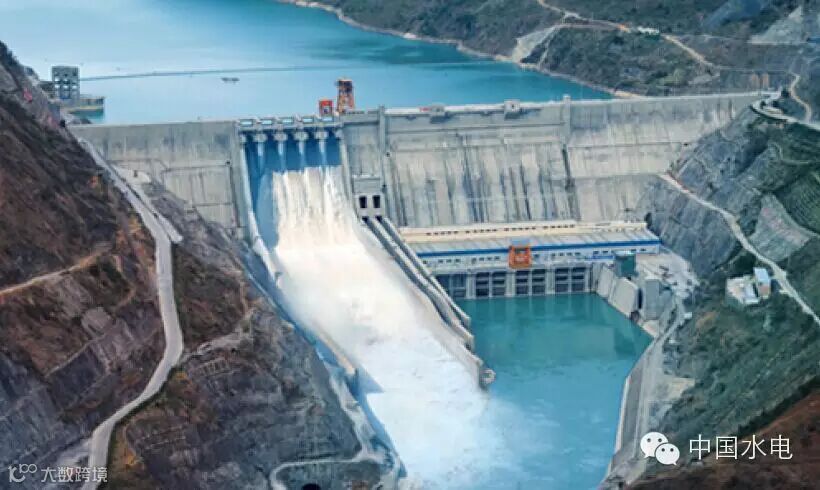
10. Jin’anqiao Dam, China(中国金安桥水电站), 2,400,000 cu m of RCC. Completed in 2011, the 160-m-tall, 640-m-long Jin’anqiao Dam is located on the Jinsha River—the upper stretch of the Yangtze River—in Yunnan Province in southwest China. Its power-generation capacity is 2,400 MW. Built by a joint venture of Hanergy Holding Group, Jinsha River Hydropower Development Co. Ltd. and Yunnan Development & Investment Co. Ltd., it cost $2.2 billion. It is the world’s largest private hydropower plant. (Hanergy Holding Group is the world’s largest thin-film solar-power company and also has interests in wind power.)
(Courtesy of Hanergy)
来源:ENR
编辑:SINOHYDRO