Frequently asked questions on the Energy Efficiency Existing Ship Index (EEXI) and the annual operational carbon intensity indicator (CII) and CII rating.
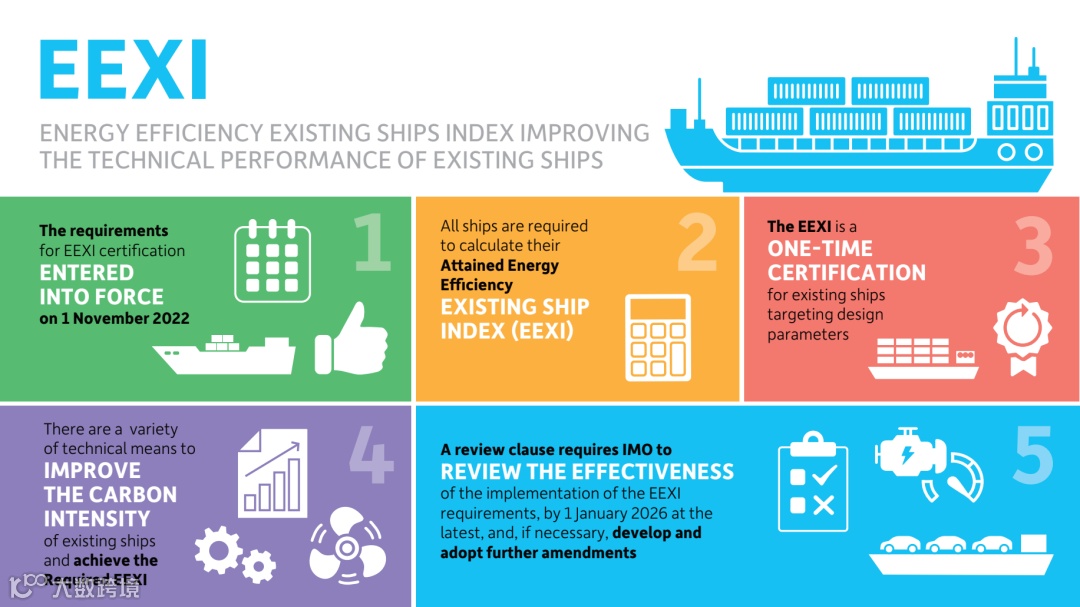
Amendments to the International Convention for the Prevention of Pollution from Ships (MARPOL) Annex VI entered into force on 1 November 2022. Developed under the framework of the Initial IMO Strategy on Reduction of GHG Emissions from Ships agreed in 2018, these technical and operational amendments require ships to improve their energy efficiency in the short term and thereby reduce their greenhouse gas emissions.
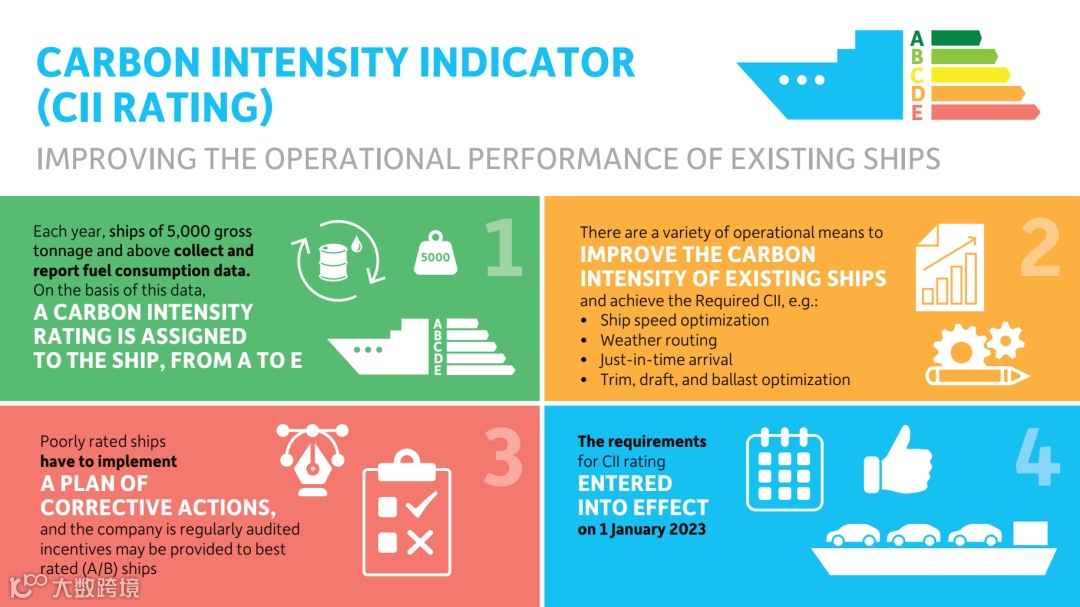
From 1 January 2023 it became mandatory for all ships to calculate their attained Energy Efficiency Existing Ship Index (EEXI) to measure their energy efficiency and to initiate the collection of data for the reporting of their annual operational carbon intensity indicator (CII) and CII rating.
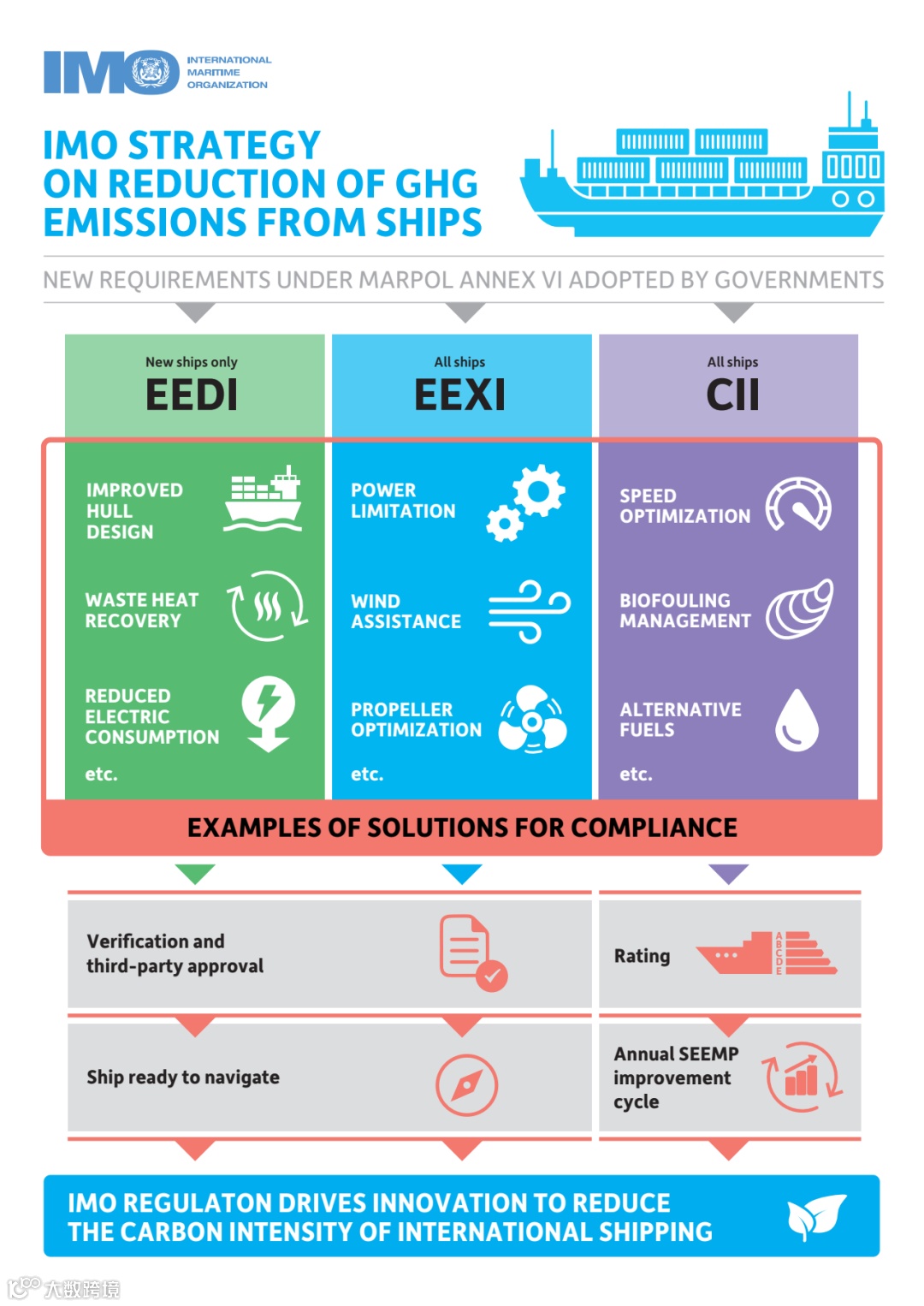
IMO Strategy on Reduction of GHG Emissions from Ships
Overview of energy efficiency and carbon intensity requirements
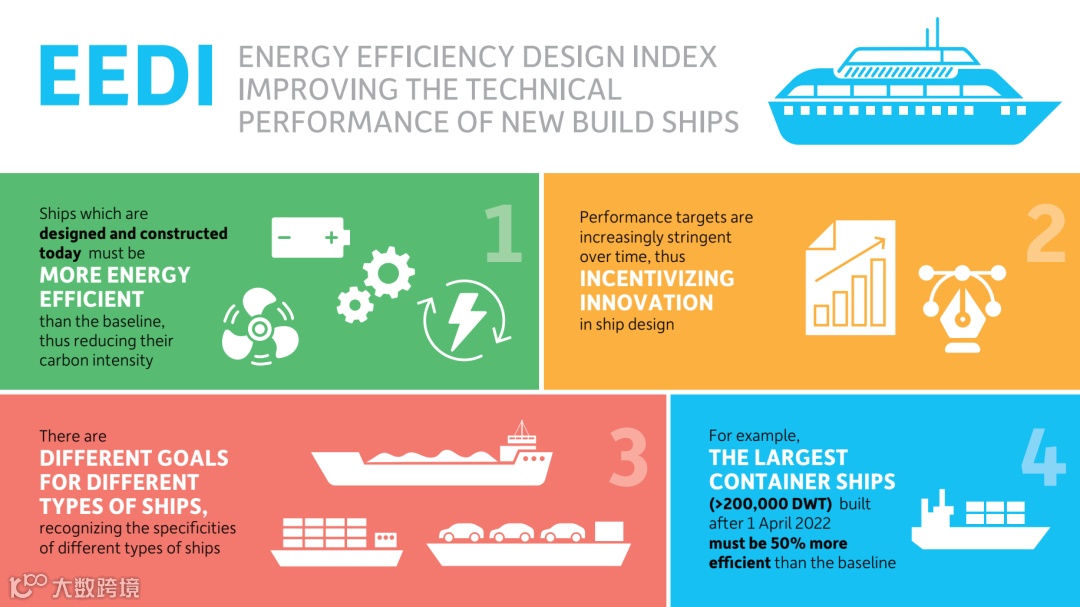
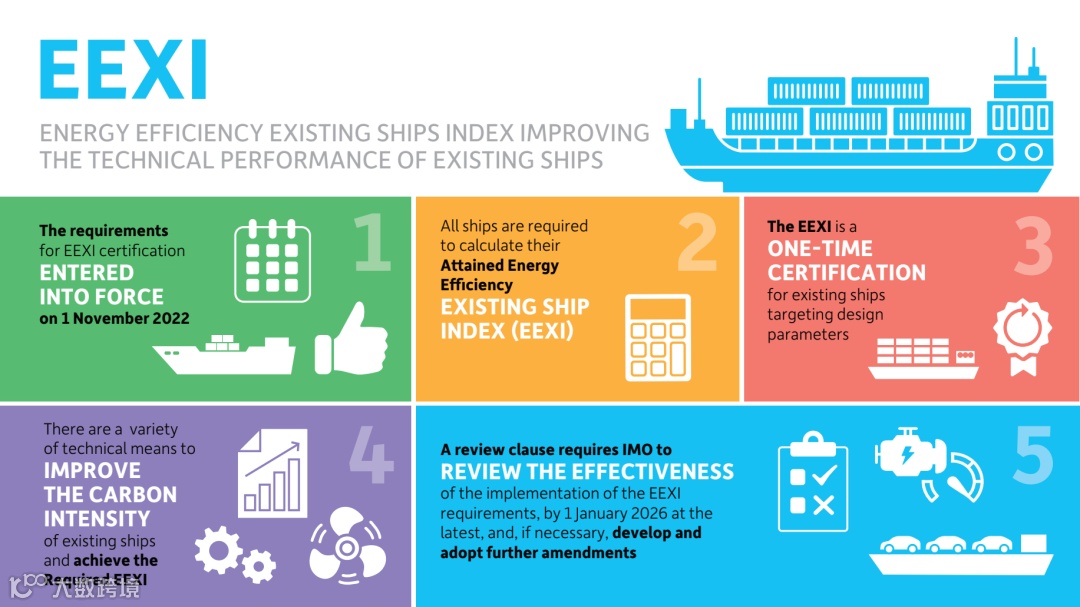
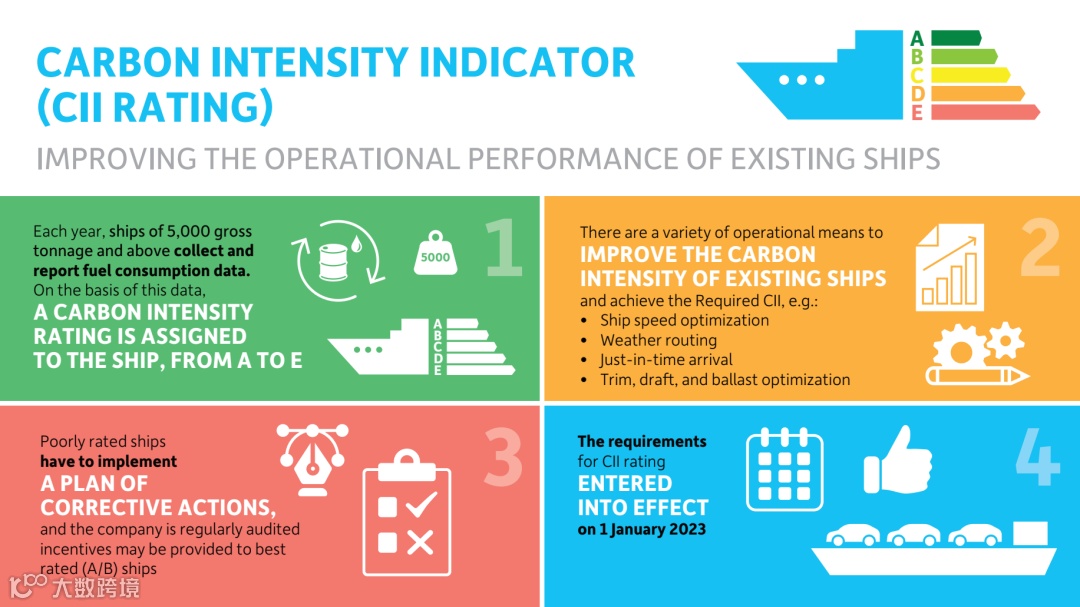
What are the mandatory measures?
As a stimulus to reduce carbon intensity of all ships by 40% by 2030 compared to 2008 baseline, ships are required to calculate two ratings: their attained Energy Efficiency Existing Ship Index (EEXI) to determine their energy efficiency, and their annual operational Carbon Intensity Indicator (CII) and associated CII rating. Carbon intensity links the GHG emissions to the amount of cargo carried over distance travelled.
When did the measures come into force?
The amendments to MARPOL Annex VI entered into force on 1 November 2022. The requirements for EEXI and CII certification came into effect on 1 January 2023. The first annual reporting is to be completed in 2023, with initial ratings given in 2024.
The measures are part of IMO's commitment under its 2018 Initial Strategy on Reduction of GHG Emissions from Ships to reduce carbon intensity from all ships.
The 2023 IMO GHG Strategy calls for carbon intensity of the ship to decline through further improvement of the energy efficiency for new ships - to review with the aim of strengthening the energy efficiency design requirements for ships; and for carbon intensity of international shipping to decline - to reduce CO2 emissions per transport work, as an average across international shipping, by at least 40% by 2030, compared to 2008.
The overall ambition is to reach net-zero GHG emissions by or around, i.e. close to, 2050.
A review of the measures is to be completed by 1 January 2026.
What is an Energy Efficiency Existing Ship Index (EEXI)?
A ship's attained EEXI indicates its energy efficiency compared to a baseline. The attained EEXI will then be compared to a required Energy Efficiency Existing Ship Index based on an applicable reduction factor expressed as a percentage relative to the Energy Efficiency Design Index (EEDI) baseline. It must be calculated for ships of 400 gt and above, in accordance with the different values set for ship types and size categories. The calculated attained EEXI value for each individual ship must be below the required EEXI, to ensure the ship meets a minimum energy efficiency standard.
What is a Carbon Intensity Indicator rating?
The CII determines the annual reduction factor needed to ensure continuous improvement of a ship's operational carbon intensity within a specific rating level. The actual annual operational CII achieved must be documented and verified against the required annual operational CII. This enables the operational carbon intensity rating to be determined.
How do the ratings work?
Based on a ship's CII, its carbon intensity is rated A, B, C, D or E (where A is the best). The rating indicates a major superior, minor superior, moderate, minor inferior, or inferior performance level. The performance level is recorded in a "Statement of Compliance" to be further elaborated in the ship's Ship Energy Efficiency Management Plan (SEEMP).
A ship rated D for three consecutive years, or E for one year, has to submit a corrective action plan to show how the required index of C or above will be achieved.
A ship run on a low-carbon fuel can clearly get a higher rating than one running on fossil fuel, but there are many things a ship can do to improve its rating, through measures such as:
hull cleaning to reduce drag;
speed and routeing optimization;
installation of low energy light bulbs; and
installation of solar/wind auxiliary power for accommodation services.
Incentives
Administrations, port authorities and other stakeholders as appropriate, are encouraged to provide incentives to ships rated as A or B.
How do the measures fit into IMO's decarbonization strategy?
The introduction of mandatory EEXI and CII comes under the framework of the Initial IMO Strategy for Reduction of GHG Emissions from Ships, adopted in 2018. The Initial Strategy set out candidate short- mid- and long-term measures.
When will the measures be reviewed?
IMO's Marine Environment Protection Committee (MEPC) is to review the effectiveness of the implementation of the CII and EEXI requirements by 1 January 2026 at the latest.
The Committee will develop and adopt further amendments as required.
The review paragraph states: Regulation 28 Operational carbon intensity:
Review
11 A review shall be completed by 1 January 2026 by the Organization to assess:
.1 the effectiveness of this regulation in reducing the carbon intensity of international shipping;
.2 the need for reinforced corrective actions or other means of remedy, including possible additional EEXI requirements;
.3 the need for enhancement of the enforcement mechanism;
.4 the need for enhancement of the data collection system; and
.5 the revision of the Z factor and CIIR values.
If based on the review the Parties decide to adopt amendments to this regulation, such amendments shall be adopted and brought into force in accordance with the provisions of article 16 of the present Convention.
In adopting the measure, MEPC also considered the outcomes of a comprehensive impact assessment of the measure which examined potential negative impacts on States, and agreed to keep the impacts on States of the measure under review so that any necessary adjustments can be made. MEPC also agreed that disproportionately negative impacts of the measure should be assessed and addressed, as appropriate.
What about support for developing States in particular small island developing States (SIDS) and least developed countries (LDCs)?
IMO has a comprehensive programme of support for developing States to implement IMO regulations. In addition to IMO's Integrated Technical Cooperation Programme (ITCP), the dedicated IMO GHG TC Trust Fund support developing countries with the implementation of the Initial IMO GHG Strategy, there are a number of global projects specifically targeting GHG reduction measures, including: GreenVoyage2050; GHG SMART; NEXTGEN; IMO CARES; the Global MTCC Network; Innovation Forum.
What about new and alternative fuels for ships?
New fuels will be crucial for decarbonizing the shipping sector. IMO held the Second IMO Symposium on low- and zero-carbon fuels for shipping: "Ensuring a just and inclusive transition towards low-carbon shipping" on 21 October 2022 to look at the challenges and opportunities that renewable fuel production represents in the context of shipping decarbonization, particularly for developing countries, SIDS and LDCs, while also assessing what other elements could constitute a just and equitable transition.
Where can I download the regulations and guidelines?
Please download the revised MARPOL Annex VI (2021 Revised MARPOL Annex VI) and related guidelines via this page: Index-of-MEPC-Resolutions-and-Guidelines-related-to-MARPOL-Annex-VI
Guidelines
The following comprehensive set of guidelines, adopted by MEPC 76/78, support the new requirements:
Resolution MEPC.350(78) - 2022 Guidelines on the method of calculation of the Attained Energy Efficiency Existing Ship Index (EEXI);
Resolution MEPC.351(78) - 2022 Guidelines on survey and certification of the Attained Energy Efficiency Existing Ship Index (EEXI);
Resolution MEPC.335(76) - 2021 Guidelines on the shaft/engine power limitation system to comply with the EEXI requirements and use of a power reserve;
Resolution MEPC.352(78) - 2022 Guidelines on operational carbon intensity indicators and the calculation methods (CII Guidelines, G1);
Resolution MEPC.353(78) - 2022 Guidelines on the reference lines for use with Operational Carbon Intensity Indicators (CII Reference Lines Guidelines, G2);
Resolution MEPC.338(76) - 2021 Guidelines on the operational carbon intensity reduction factors relative to reference lines (CII Reduction Factor Guidelines, G3);
Resolution MEPC.354(78) - 2022 Guidelines on the operational carbon intensity rating of ships (CII Rating Guidelines, G4);
Resolution MEPC.355(78) - 2022 Interim Guidelines on correction factors and voyage adjustments for CII calculations (CII Guidelines, G5).
Which ships do the CII and EEXI regulations apply to?
In general, MARPOL Annex VI regulations apply to "all ships except where otherwise stated" (MARPOL Annex VI Regulation 1 Application The provisions of this Annex shall apply to all ships, except where expressly provided otherwise.)
The regulations on carbon intensity of international shipping in Chapter 4 of MARPOL Annex VI apply to all ships of 400 gross tonnage and above. Notwithstanding, the provisions of Chapter 4 do not apply to ships solely engaged in voyages within waters subject to the sovereignty or jurisdiction of the State the flag of which the ship is entitled to fly. However, each Party should ensure, by the adoption of appropriate measures, that such ships are constructed and act in a manner consistent with the requirements of chapter 4 of this Annex, so far as is reasonable and practicable. (Regulation 19 Application 1 This chapter shall apply to all ships of 400 gross tonnage and above.)
While EEXI generally applies to each ship of 400 gross tonnage and above, CII applies to ships 5,000 gross tonnage and above. Ships at or above 400 gross tonnage will need to be surveyed and issued with the appropriate certificates.
For survey and certification purposes, MARPOL Annex VI applies to every ship of 400 gross tonnage and above. (MARPOL Annex VI Regulation 5 Surveys 1 Every ship of 400 gross tonnage and above and every fixed and floating drilling rig or other platform shall….be subject to the surveys specified…)
The ships covered include: bulk carrier, gas carrier, tanker, containership, general cargo ship, refrigerated cargo carrier, combination carrier, LNG carrier, Ro-ro cargo ship, ro-ro passenger ship, cruise passenger ship.
EEXI
EEXI applies to: ".1 each ship; and .2 each ship which has undergone a major conversion". (MARPOL Annex VI Regulation 23 Attained Energy Efficiency Existing Ship Index (attained EEXI) 1 The attained EEXI shall be calculated for: .1 each ship; and .2 each ship which has undergone a major conversion.)
CII
CII applies to ships of 5,000 gross tonnage and above (similar to the ships subject to Regulation 27 on mandatory annual fuel consumption reporting to the IMO Ship Fuel Oil Consumption Database).
(MARPOL Annex VI Regulation 28 Operational carbon intensity Attained annual operational carbon intensity indicator (attained annual operational CII) 1 After the end of calendar year 2023 and after the end of each following calendar year, each ship of 5,000 gross tonnage and above…. shall calculate the attained annual operational CII over a 12-month period from 1 January to 31 December for the preceding calendar year.)
How many countries are party to these regulations?
The CII and EEXI regulations are in the Annex VI of the International Convention for the Prevention of Pollution by Ships (MARPOL). Annex VI was adopted through a Protocol adopted in 1997. Amendments since then have been adopted under the "tacit acceptance" process, meaning they come into force on a set date (unless a specified number of Parties object). Currently, as of 1 November 2022, MARPOL Annex VI has 105 Parties, representing between them 96.81% of world merchant shipping by tonnage.
***
EEXI 和 CII - 船舶碳强度与评级机制
关于现有船舶能效指数 (EEXI) 和年度营运碳强度指标 (CII) 及 CII 评级的常见问题解答
《国际防止船舶造成污染公约》(MARPOL) 附则 VI 修正案已于 2022 年 11 月 1 日生效。这些技术行和营运性修正案是在 2018 年商定的《IMO船舶温室气体减排初步战略》框架下制定的,要求船舶在短期内提高能效,从而减少温室气体排放。
自 2023 年 1 月 1 日起,所有船舶必须计算其现有船舶能效指数 (EEXI)达到值以衡量其能效,并开始收集数据以报告其年度营运碳强度指标 (CII) 和 CII 评级。
IMO船舶温室气体减排战略
能效和碳强度要求概述
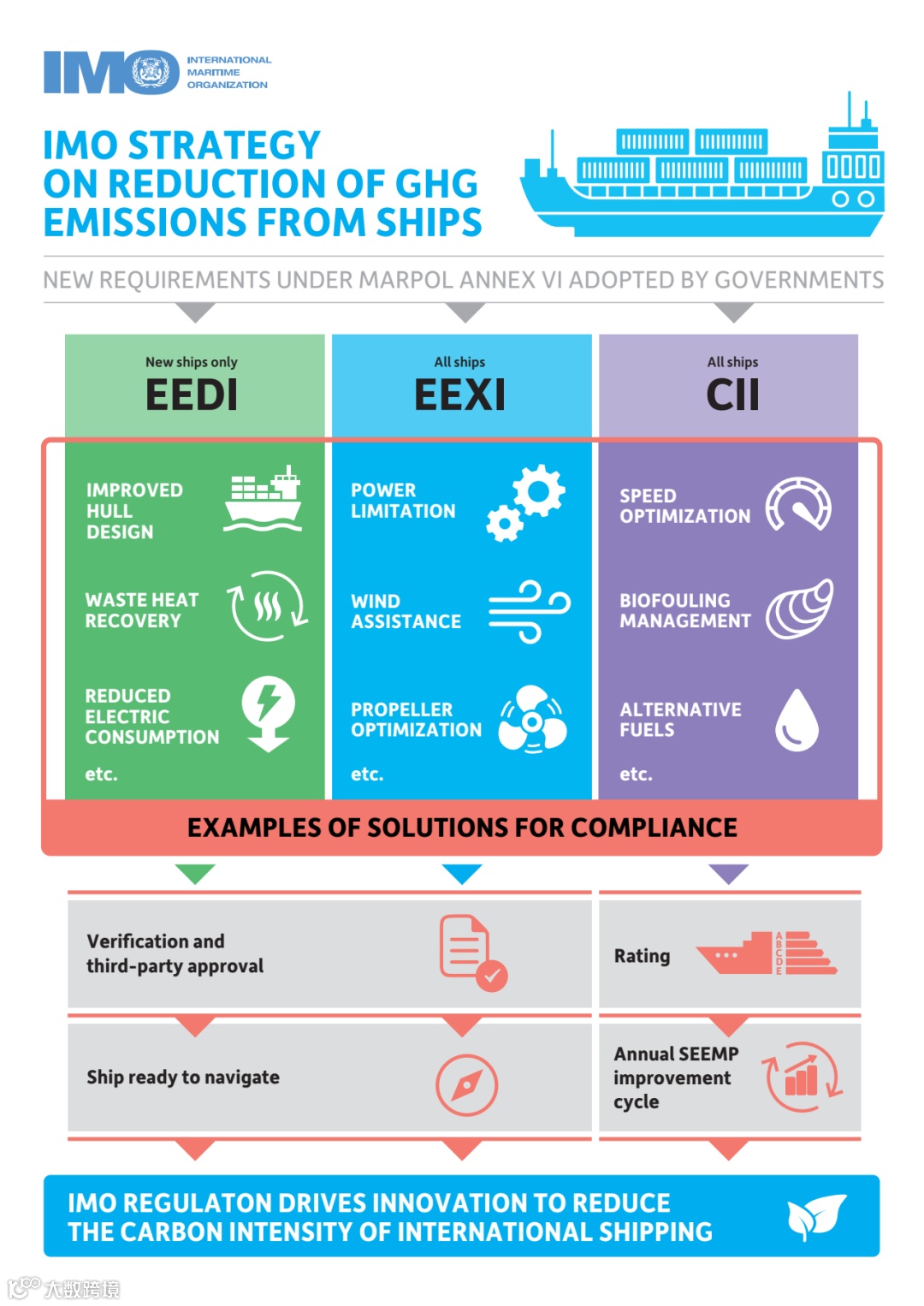
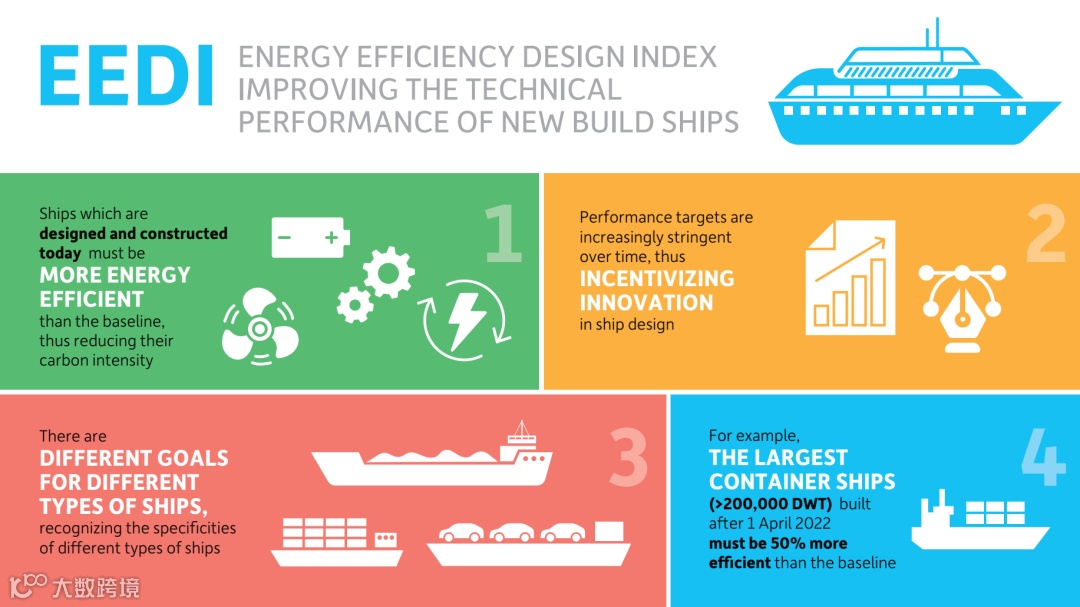
什么是强制性措施?
作为到 2030 年将所有船舶的碳强度较 2008 年基线降低 40% 的激励措施,船舶需要计算两个评级:其现有船舶能效指数 (EEXI)达到值以确定其能效,以及其年度营运碳强度指标 (CII) 及相关的 CII 评级。碳强度将温室气体排放量与运输的货物量和航行距离联系起来。
措施何时生效?
MARPOL 附则 VI 修正案于 2022 年 11 月 1 日生效。EEXI 和 CII 认证的要求于 2023 年 1 月 1 日生效。首次年度报告应在 2023 年完成,初始评级于 2024 年给出。
这些措施是 IMO 根据其《 2018 年船舶温室气体减排初步战略》所作承诺的一部分,旨在降低所有船舶的碳强度。
《2023 年 IMO 温室气体战略》要求通过进一步提高新船的能效来降低船舶的碳强度——旨在审查并加强船舶的能效设计要求;并要求降低国际航运的碳强度——到 2030 年,将国际航运平均每单位运输工作的 CO2 排放量较 2008 年至少减少 40%。
总体目标是到 2050 年或左右(即接近 2050 年)实现温室气体净零排放。
措施的审查将于 2026 年 1 月 1 日之前完成。
什么是现有船舶能效指数 (EEXI)?
船舶EEXI达到值表明其相对于基线的能效。然后,将计算出的EEXI达到值与现有船舶能效指数要求值进行比较,该要求值基于相对于能效设计指数 (EEDI) 基线的适用折减系数(以百分比表示)。 400 总吨及以上的船舶须依据为不同船型和尺寸类别设定的不同参数计算其EEXI达到值。每艘船舶计算出的EEXI 达到值必须低于EEXI要求值,以确保船舶满足最低能效标准。
什么是碳强度指标 (CII) 评级?
CII 确定了确保船舶在特定评级水平内持续改进其营运碳强度所需的年度折减系数。实际的年度营运CII达到值必须被记录,并根据年度营运CII要求值进行验证。由此可确定营运碳强度评级。
评级如何运作?
根据船舶的 CII,其碳强度被评为 A、B、C、D 或 E 级(其中 A 为最佳)。该评级表示极佳、较佳、中等、较差或极差的性能水平。性能水平记录在《符合声明》中,并将在船舶的《船舶能效管理计划》(SEEMP) 中进一步阐述。
连续三年被评为 D 级或一年被评为 E 级的船舶,必须提交一份整改行动计划,说明将如何达到 C 级或以上的要求指数。
使用低碳燃料运行的船舶显然比使用化石燃料的船舶获得更高的评级,但船舶可以通过多种措施来提高其评级,例如:
船体清洁以减少阻力;
航速和航线优化;
安装低能耗灯泡;
为生活设施安装太阳能/风能辅助电源。
激励措施
鼓励主管机关、港口当局和其他相关方为评级为 A 或 B 的船舶提供激励。
这些措施如何融入 IMO 的脱碳战略?
强制性 EEXI 和 CII 的引入属于 2018 年通过的《IMO船舶温室气体减排初步战略》框架。该初步战略提出了候选的短期、中期和长期措施。
措施何时进行审查?
IMO 海上环境保护委员会 (MEPC) 最迟将于 2026 年 1 月 1 日前审查 CII 和 EEXI 要求的实施效果。
委员会将根据需要制定并通过进一步的修正案。
审查条款规定(第 28 条 营运碳强度):
审查
11 本组织应在 2026 年 1 月 1 日前完成审查,以评估:
.1 本条规定在降低国际航运碳强度方面的有效性;
.2 加强整改行动或其他补救措施的必要性,包括可能的额外 EEXI 要求;
.3 加强执法机制的必要性;
.4 加强数据收集机制的必要性;
.5 Z 因子和 CIIR 值的修订。
如果基于审查结果,各缔约方决定对本条规定通过修正案,则该修正案应根据本公约第 16 条的规定通过并生效。
在通过该措施时,MEPC 还考虑了该措施综合影响评估的结果,该评估审查了对国家的潜在负面影响,并同意继续审查该措施对国家的影响,以便做出任何必要的调整。MEPC 还同意,应酌情评估和解决该措施可能产生的过度负面影响。
对发展中国家,特别是小岛屿发展中国家 (SIDS) 和最不发达国家 (LDCs) 的支持如何?
IMO 制定了一个全面的支持计划,协助发展中国家实施 IMO 法规。除了 IMO 的综合技术合作计划 (ITCP) 之外,专门的 IMO 温室气体技术合作信托基金支持发展中国家实施《IMO温室气体减排初步战略》,还有多个专门针对温室气体减排措施的全球项目,包括:GreenVoyage2050;GHG SMART;NEXTGEN;IMO CARES;全球 MTCC 网络;创新论坛。
船舶的新燃料和替代燃料情况如何?
新燃料对于航运业脱碳至关重要。IMO 于 2022 年 10 月 21 日举办了第二届 IMO 船用低碳和零碳燃料研讨会:“确保向低碳航运的公正包容转型”,旨在探讨可再生燃料生产在航运脱碳背景下带来的挑战和机遇(特别是对发展中国家、SIDS 和 LDCs),同时也评估构成公正公平转型的其他要素。
在哪里可以下载法规和导则?
请通过此页面下载经修订的 MARPOL 附则 VI(2021 年经修订的 MARPOL 附则 VI)和相关导则:Index-of-MEPC-Resolutions-and-Guidelines-related-to-MARPOL-Annex-VI(https://www.imo.org/en/OurWork/Environment/Pages/Index-of-MEPC-Resolutions-and-Guidelines-related-to-MARPOL-Annex-VI.aspx)
导则
MEPC 76/78 次会议通过的以下全套综合导则支持新要求:
决议 MEPC.350(78) - 2022 年现有船舶能效指数 (EEXI) 到达值计算方法导则;
决议 MEPC.351(78) - 2022 年现有船舶能效指数 (EEXI) 达到值检验和发证导则;
决议 MEPC.335(76) - 2021 年为满足 EEXI 要求的轴功率/发动机功率限制系统及储备功率使用导则;
决议 MEPC.352(78) - 2022 年营运碳强度指标及其计算方法导则 (CII 导则, G1);
决议 MEPC.353(78) - 2022 年用于营运碳强度指标的参考基线导则 (CII 参考基线导则, G2);
决议 MEPC.338(76) - 2021 年相对于参考基线的营运碳强度折减系数导则(CII 折减系数导则, G3);
决议 MEPC.354(78) - 2022 年船舶营运碳强度评级导则 (CII 评级导则, G4);
决议 MEPC.355(78) - 2022 年 CII 计算修正系数和航次调整临时导则 (CII 导则, G5)。
CII 和 EEXI 法规适用于哪些船舶?
一般而言,MARPOL 附则 VI 的规定适用于“所有船舶,除非另有说明”(MARPOL 附则 VI 第 1 条 适用范围 本附则的规定适用于所有船舶,除非另有明文规定。)
MARPOL 附则 VI 第 4 章关于国际航运碳强度的规定适用于所有 400 总吨及以上的船舶。尽管如此,第 4 章的规定不适用于仅在其有权悬挂其国旗的国家主权或管辖水域内航行的船舶。但是,各缔约国应通过采取适当措施,确保此类船舶的建造和运营在合理可行的情况下符合本附则第 4 章的要求。(第 19 条 适用范围 1 本章适用于所有 400 总吨及以上的船舶。)
虽然 EEXI 普遍适用于每艘 400 总吨及以上的船舶,但 CII 适用于 5000 总吨及以上的船舶。400 总吨及以上的船舶需要进行检验并颁发相应的证书。
出于检验和发证目的,MARPOL 附则 VI 适用于每艘 400 总吨及以上的船舶。(MARPOL 附则 VI 第 5 条 检验 1 每艘 400 总吨及以上的船舶以及每个固定和浮动钻井平台或其他平台应……接受规定的检验……)
涵盖的船舶包括:散货船、气体运输船、油船、集装箱船、杂货船、冷藏货船、兼用船、液化天然气运输船、滚装货船、滚装客船、邮轮。
EEXI
EEXI 适用于:“.1 每艘船舶;以及 .2 每艘进行了重大改建的船舶”。(MARPOL 附则 VI 第 23 条 现有船舶能效指数达到值(EEXI达到值) 1 EEXI达到值计算应适用于: .1 每艘船舶;以及 .2 每艘进行了重大改建的船舶。)
CII
CII 适用于 5000 总吨及以上的船舶(类似于需遵守向 IMO 船舶燃油消耗数据库强制性报告年度燃油消耗量的第 27 条规定的船舶)。
(MARPOL 附则 VI 第 28 条 营运碳强度 年度营运碳强度指标达到值 (年度营运 CII达到值) 1 在 2023 日历年之后以及此后每个日历年度之后,每艘 5000 总吨及以上的船舶……应计算上一个日历年 1 月 1 日至 12 月 31 日 12 个月期间年度营运 CII达到值。)
有多少国家是这些法规的缔约国?
CII 和 EEXI 法规包含在《国际防止船舶造成污染公约》(MARPOL) 附则 VI 中。附则 VI 是通过 1997 年通过的议定书采用的。此后的修正案均根据“默认接受程序”通过,这意味着它们将在设定日期生效(除非达到规定数量的缔约方反对)。目前,截至 2022 年 11 月 1 日,MARPOL 附则 VI 已有 105 个缔约国,占世界商船总吨位的 96.81%。
***
本公众号所载内容为原创或来源于研究机构报告、官方网站动态新闻等整理、翻译与转载,转载内容版权归原作者所有,如涉及作品内容、版权或其他问题,请与本公众号联系。转载内容不代表本公众号的观点。本公众号拥有对此声明的最终解释权。 |
***凡事多躬行,莫做纸上兵***