投稿邮箱:wenhuazongheng@gmail.com
《文化纵横》邮发代号:80-942
Center for Chinese Studies, Institute of Asia-Pacific Studies
Vietnam Academy of Social Sciences
We are living through a pivotal historical moment in which the world is undergoing a profound transformation from a unipolar order to a new one. Such shifts are rare yet consequential, and are often accompanied by violence or war. Regardless of whether they are welcomed or resisted, changes in the global order invariably bring uncertainty, loss of control, social upheaval, contestation of values, and reconstruction of identities and discourses. The future of the world depends partly on the choices we make today. Forecasting the future is an inherently difficult task, yet it is essential because it allows us to better prepare for an uncertain future.
▍The Transitional Period
▍The “Vacuum” period of universal values
A direct consequence of the transitional phase is that the world may enter a period marked by an absence of universal global values. Following the collapse of the Soviet Union, neoliberal internationalism expanded from a strictly Western order into a far more ambitious one at global level. The unipolar world order that emerged after the Cold War was referred to as the liberal order, and liberalism become the dominant ideology. However, for the first time in over 30 years, the global order does not reflect the order of Western countries. Alongside the relative decline of liberal democracies, liberalism - with its values of equality, freedom, democracy, and human rights - has gradually lost its appeal. The United States’ dominant role has steadily diminished over the past three decades, and the democracy it champions is facing increasing challenges. Western leaders have sought to legitimize the rules-based international order by aligning it with the principles enshrined in the United Nations Charter. They emphasize that this order is universal, not Western. Nevertheless, fewer and fewer non-Western governments are convinced by this argument. For them, the “liberal order” or the “rules-based international order” is shaped by Western interests, centered on Western power, and adhered to or disregarded by the West as they see fit. Shortly after Donald Trump won a second presidential term, Der Spiegel, one of Germany’s most well-known weekly magazines, published an editorial arguing that: “Donald Trump’s return to the White House shows that liberal democracy has failed. It proved unable to provide a coherent structure to the post postwar era… An old era is coming to an end, and a new one is beginning. Nothing marks this shift as clearly as the election of Donald Trump to a second term as president of the United States. The West has lost its dominance and the shared foundation of values, which has been crumbling for some time, is now collapsing.”[1]
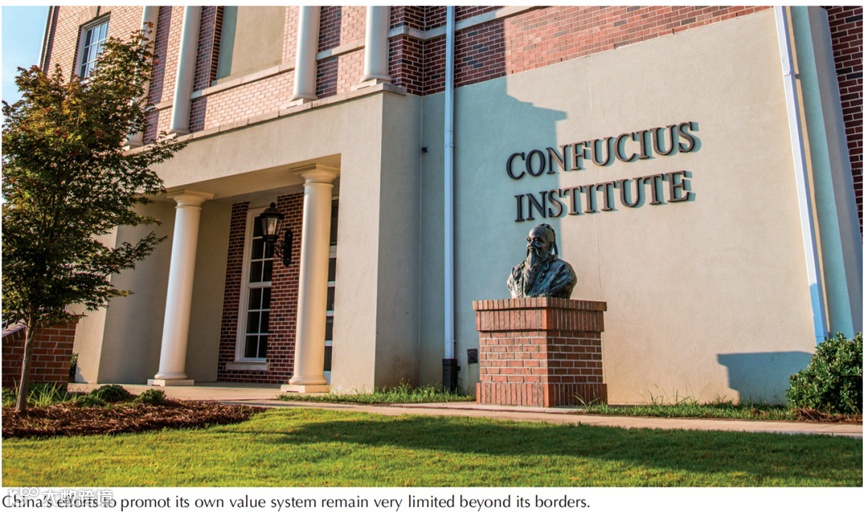
Meanwhile, China is the only rising power capable of challenging the United States’ status as the world’s superpower. However, it has yet to establish a system of universal global values. While some countries may admire China’s economic development and draw lessons from its economic miracle, it is difficult for them to adopt or replicate China’s development model.
Thus, neither the United States nor China can lead a universally accepted ideological movement, which may result in a global ideological “vacuum” in the coming years. The consequence is that: since universal values form the basis for constructing a global normative system, challenges to liberal values may also lead to a crisis in the current legal and regulatory systems built upon liberalism. Without a newly established value system, what will serve as the basis for global norms? As a result, states will face greater challenges in maintaining their commitments to existing norms, formulating new ones, addressing global challenges, and curbing escalating behaviors. The declining consensus among major powers may hinder efforts to denounce or penalize violations. In such a fluid legal environment, states and non-state actors may perceive lower risks in disregarding certain norms. This could lead some to engage in selective adherence or proposals of alternative norms. The establishment of multilateral norms will encounter growing obstacles in established international forums. Some actors may attempt to shift norm-setting discussions away from consensus-based intergovernmental institutions by advocating for majority-vote mechanisms or institutions led by regional or non-state actors. If international norms become more localized, applying only to some specific regions or groups of states, enforcing and complying with future agreements will be even more challenging. Thus, international norms risk fragmenting into localized or regional norms. The erosion of consensus among governments and political factions regarding adherence to fundamental principles complicates, or even hinders international cooperation on global challenges, ultimately weakening collective actions in response to those challenges. As normative consensus erodes, cooperation will likely take place within smaller groupings divided along regional or ideological lines. While this may facilitate coordinated responses to challenges at sub-global levels, it hinders states’ ability to jointly pursue effective solutions at the global level.
▍The Rise of Global South Countries and their role in the Future
The term “Global South” refers to developing countries, many of which were former colonies of Western powers. Early references to “the South”appeared in United Nations documents in the 1960s. After the Cold War, the term“global” was added to create “the Global South”. In the context of globalization, the term “Global South” emphasizes interconnectedness, and signifies transregional and multilateral coalitions such as the 1955 Bandung Conference, the Non-Aligned Movement, the Group of 77 at the United Nations, and the BRICS. The term also highlights the growing economic and political influence of countries in Asia, Africa, and Latin America.[2] The Global South accounts for over 85% of the world’s population and nearly 40% of the global GDP. By 2030, the combined GDP (PPP) of Indonesia, Brazil, Mexico, Turkey, and South Africa is expected to surpass that of Germany, Italy, Spain, the Netherlands, and Sweden combined.[3] Forecasts of global GDP distribution based on purchasing power parity (PPP) by 2050 suggest that developing countries will surpass developed countries in GDP share. A report by the Development Research Center of the State Council of China also highlights that Global South countries will play an increasingly important role in the global economy. The report forecasts that the GDP of Global South countries will surpass that of developed economies by 2035, accounting for nearly 60% of the global economy and investment.[4]
The global demographic landscape is poised for significant transformation. Over the next three decades, different regions of the world will experience varying rates of population growth. This will lead to a substantial redistribution of the global population. Central and South Asia are expected to become the world’s most populous regions by 2037. In contrast, Europe and North America are projected to reach their population peaks in the late 2030s, and then begin to decline due to prolonged low birth rates.[5] These demographic shifts highlight the rise of countries in the Global South.
Although Global South countries are not usually considered military or economic powers, they have diverse strengths, such as energy and natural resources, and they are emerging markets. Many nations, including Saudi Arabia and Qatar, control significant portions of the global oil and gas supply. This gives them considerable leverage in global economic and geopolitical negotiations, which they exercise through organizations like OPEC. Countries such as Indonesia, Brazil, and South Africa play crucial roles in developing markets and have higher economic growth rates than developed economies.[6] With a GDP exceeding $2.2 trillion in 2022, Brazil is the largest economy in South America and an important member of the BRICS. Additionally, countries such as Turkey, Malaysia, and Vietnam are leveraging their cultures, tourism, and diplomacy to increase their international influence. Looking ahead, countries in the Global South are expected to continue using their soft power, resources, and growing markets to amplify their voice in international organizations.
Many of Global South countries are located in strategically important regions and play pivotal roles in major power competitions. For example, as a central actor in the Middle East, the United Arab Emirates serves as a strategic partner in shaping regional security dynamics. Similarly, ASEAN countries, located at the heart of the Indo-Pacific, play a strategic role in maintaining regional stability amid growing competition between the United States and China. As the de-facto leader of ASEAN, Indonesia contributes substantially to the development of regional rules governing trade and security. Brazil, one of the largest nations in South America, can influence regional norms through organizations such as Mercosur and BRICS. Brazil is also a leading actor in global climate efforts, thanks to its vital role in preserving the Amazon rainforest. Many non-aligned states in the Global South are expected to increase their geopolitical influence by forming flexible coalitions, as exemplified by collaboration among ASEAN, Mercosur, and Gulf nations. These countries are also likely to assume intermediary roles in regional and global conflicts, offering diplomatic and reconciliatory solutions rather than engaging in direct competition.
Many of Global South countries are becoming more capable of shaping regional standards and promoting global initiatives in specific areas. OPEC, for instance, can influence oil production and pricing regulations. In the coming years, OPEC countries may also spearhead renewable energy initiatives, such as green hydrogen production. Brazil, South Africa, and small island states like the Maldives play key roles in climate change negotiations at the United Nations. These countries advocate for equitable emission reduction responsibility rules between developed and developing countries. Southeast Asian countries are developing regional standards through the Regional Comprehensive Economic Partnership (RCEP), in which Indonesia and Vietnam play substantial roles. The RCEP is expected to become the world’s largest free trade agreement by 2030, shaping trade and investment norms across Asia. The BRICS is establishing alternative institutions, such as the New Development Bank (NDB), to compete with Western-led organizations like the IMF and the World Bank. In the future, countries in the Global South will continue to advocate for rules that align with their regional and global interests. ASEAN and OPEC are expected to play a central role in shaping trade and energy regulations. Furthermore, these countries will leverage platforms like the BRICS and the UN to amplify their voices. Global South countries are now becoming an indispensable part of the international order. Amidst great-power competition, they are expected to use their intermediary positions to establish flexible and mutually beneficial rules for developed and developing states alike. As these countries grow in economic strength and geopolitical influence, they may gradually reshape global governance in areas such as energy, trade, and climate change.
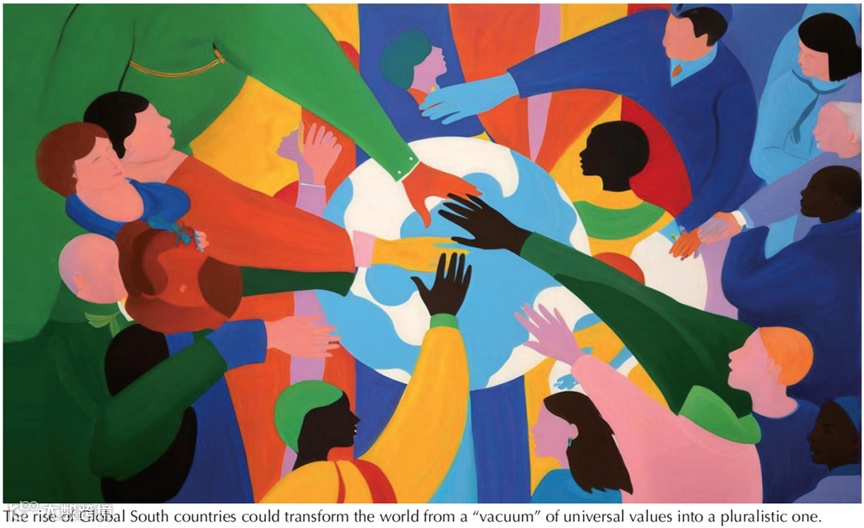
The rise of Global South countries could transform the world from a “vacuum” of universal values into a pluralistic one. In such a pluralistic world order, we must recognize the realities of complexity, contradictions, and opposing values. We are likely to witness the emergence of double standards or pluralistic perceptions regarding global issues and agendas. This pluralism may become a defining characteristic of the future world, where a new global order emerges amid challenges to Western-led norms and values arising from the diversity of development models and ideologies largely introduced by Global South countries.
China has actively mobilized Global South countries, over which it wields significant and growing economic and diplomatic influence, to support its agenda for reforming global governance. These countries often share China’s desire for a more equitable world order and harbor various grievances toward Western dominance. The BRI currently has 151 participating countries. The Group of Friends of the Global Development Initiative (GDI) currently has 81 members, while the Group of 77 (G77) and China includes 134 countries. The vast majority of members in all of these groups are from the Global South. At COP27, the divide between the G77 and Western governments highlighted a renewed determination and ability among developing countries to organize independently to defense of their own collective interests. [7] Notably, no Global South country has joined Western sanctions against Russia, indicating that they do not intend to isolate Russia in the international arena. By resisting Western pressure to condemn Russia, developing countries are asserting their independent stance in international relations. Global South countries want to demonstrate that their decisions are based on carefully calculated assessments of national interests rather than external pressure. This position does not necessarily indicate approval or endorsement of Russia’s policies. However, it weakens the West’s efforts to isolate Russia and undermines the effectiveness of its sanctions. Global South countries’ responses to the Russia-Ukraine conflict reflect their diverse values. These responses also signal the end of the unipolar order, in which interests of Global South countries have long been marginalized. This also underscores the need for a more equitable world order.
For decades, developing countries have largely been viewed as objects of international diplomacy rather than as actors with their own serious agendas. Although they constitute the majority in the United Nations General Assembly, they remain insignificant within key decision-making bodies such as the UN Security Council, the International Monetary Fund (IMF), the World Bank, and the G20. This situation is set to change profoundly. As developing countries’ overall influence grows amid an increasingly fragmented international power structure, the Global South is demanding influence commensurate with its elevated role. Thus far, the West’s acknowledgment of this reality has largely been rhetorical. For example, although U.S. President Joe Biden proposed granting the African Union a permanent seat in the G20,[8] the initiative has yet to materialize. Meanwhile, voting shares of developing countries in the IMF and the World Bank remain disproportionately low.[9] The Global South will increasingly shape a more representative international order. This is more important than ever as an “order” that lacks representation - wherein the majority of nations have minimal voice - is a prescription for disorder or even chaos. In such a context, countries will diverge in their positions and become incapable of addressing challenges such as climate change and pandemics, which require global cooperation.
The Global South is emerging as a unified region. The participation and engagement of Global South countries not only contribute to the birth of a new world order, but also help shape its structure and rules, which may differ significantly from the current system.
▍Chinese-style Modernization: A Contribution to Building a Pluralistic World
In the past, China often used the term “modernization with Chinese characteristics,” emphasizing the unique features of its modernization process. Today, the notion of “Chinese-style modernization” implies that it encompasses both unique characteristics and universal applicability. “Chinese-style modernization contains elements that are common to the modernization processes of all countries, but it is more characterized by features that are unique to the Chinese context”. Through this concept, China conveys that Chinese-style modernization can provide valuable insights for other nations seeking suitable paths to prosperity and development.
China achieved modernization in just a few decades - a process that took the West centuries. It has risen miraculously from a poor, underdeveloped nation to become the world’s second-largest economy. As mentioned above, while other countries may not be able to fully replicate Chinese model, the demonstrative effect of its modernization is significant. Many developing countries can be profoundly inspired by China’s modernization journey as they engage in globalization and search for a development path that suits their national conditions.
As the largest country in the Global South, China has made significant contributions to the diversification of global values through its theoretical system for national development. This has partly helped bridge the gaps during the “vacuum” period of universal values, paving the way for a more equitable international system of rules and norms in the future.
In the past, the West’s capitalist modernization was seen as the only path to modernization, and Western civilization was regarded as the final form of human civilization. For over 100 years, from the Opium War (1840) until the establishment of the People’s Republic of China (1949), China copied the West in every aspect, including tools, institutions, ideas, and culture. The Yangwu Movement, which began after the Opium War, marked the start of China’s modernization. Previously, the Chinese considered Europeans to be “barbarians” (蛮夷), belonging to a lower class. However, the attack on the Yuanmingyuan Summer Palace in Beijing by Western forces awakened the Chinese people. During the 30 years of the Yangwu Movement, China sought to learn from the West in the fields of science and technology, particularly acquiring knowledge related to firearms and warships. The Westernization Movement established several military and civilian industries, contributing to the early development of industrial sectors in China. In 1895, China was defeated by Japan in the First Sino-Japanese War. This defeat prompted another wave of self-reflection and renewed efforts to learn from Western institutional reforms, as seen during the Hundred Days’ Reform. Following the Xinhai Revolution, China became more aware of its cultural backwardness. The May Fourth Movement was a campaign to adopt Western cultural ideals. After the founding of the People’s Republic of China, the country took a distinct developmental path from the West. Nevertheless, the Chinese have maintained an open-minded attitude, viewing the West as a valuable source of developmental experience.
With the introduction of “Chinese-style modernization,” China has fully diverged from Western paradigms for the first time, striving to develop a new theoretical system that transcends Western-centric ideas and discourse systems. Chinese-style modernization demonstrates that modernization does not equate to Westernization. The five key characteristics of Chinese-style modernization include: the modernization of a huge population; the modernization of realizing common prosperity for all; the modernization of harmony between material and spiritual civilization; the modernization of harmony between humanity and nature; and the modernization of peaceful development. To successfully achieve Chinese-style modernization, China must overcome numerous challenges. As a developing country with a huge population, China faces the daunting task of guiding more than 1.4 billion people belonging to 56 ethnic groups into a modern society across 9.6 million square kilometers of land, a scale far exceeding any existing developed country. If China succeeds, it will be an admirable achievement. Furthermore, by fostering sustainable development, China could serve as a role model for other countries seeking to balance economic growth with environmental protection and social progress. While the ultimate effectiveness of Chinese-style modernization remains to be seen, developing a theoretical system based on China’s history and practical conditions is a significant contribution to shaping a future multipolar and pluralistic world.