



BDI Index



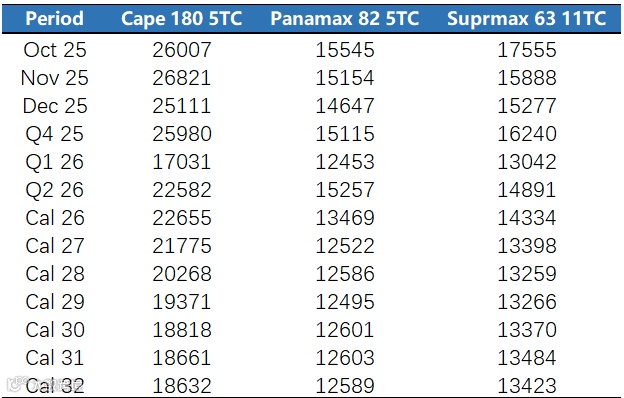
Dry FFA


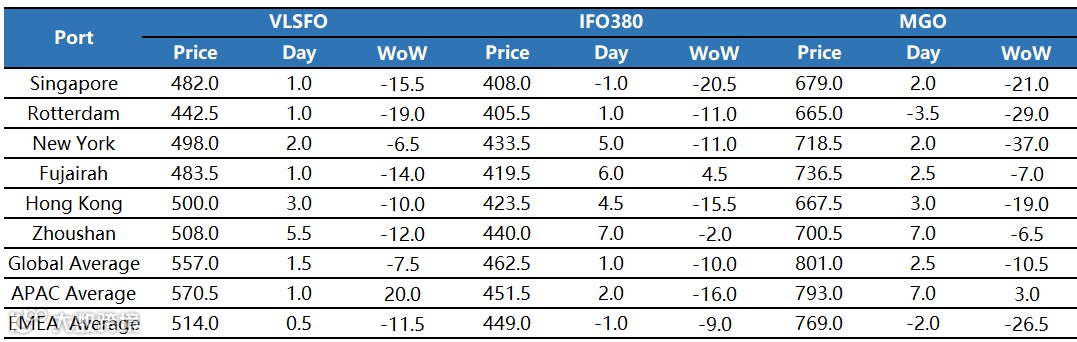
Bunker Price


Economy & Trade


EU Announces 50% Tariff on Steel Imports
On October 7, the European Union announced new restrictions on steel imports, significantly reducing the quota of steel eligible for tariff exemptions and raising the import tariff from 25% to 50%.
According to a statement released by the European Commission, the EU plans to set an annual steel import quota of 18.3 million tons, a 47% reduction compared to the 2024 quota. Steel imports exceeding this quota will be subject to a 50% tariff, double the current 25%. The statement also noted that the EU will strengthen traceability measures on the origin of melted and cast steel products to prevent so-called "circumvention" practices.
These proposed measures will replace the current steel safeguard measures set to expire in June 2026. The European Commission aims to implement the new rules as soon as possible, with the latest implementation date set for July 1, 2026. Meanwhile, the EU continues negotiations with the United States to secure an exemption from U.S. tariffs on European steel, with the goal of mutual support to better counteract what it sees as challenges from China.

Baowu Confirms First Export from Simandou Iron Ore Project by End of 2025
China Baowu Resources Group recently confirmed that it is advancing the Simandou iron ore project in Guinea and expects to complete the first shipment of iron ore by the end of 2025.
In an interview with Guinean media Guinéenews, Jiang Gongyang, Vice President of Baowu Resources and Deputy General Manager of Baowu West Africa, stated that the project has entered its final phase. The overall construction progress of the three core facilities—mine, railway, and port—has exceeded 80%. He said, “Our goal remains unchanged: to complete the first export by the end of the year. This is a solemn commitment Baowu has made to the Guinean government and a key part of our strategic deployment in Africa.”

International Shipping

U.S. Releases Latest Fee Rules Under Section 301 Investigation Targeting Chinese Ships
On October 4, 2025, the U.S. government announced updates to its Section 301 investigation, confirming that starting October 14, 2025, additional fees will be imposed on vessels owned, operated, or built by Chinese entities, as well as on all foreign-built vehicle carrier ships.
Following the initial publication on April 17, 2025, and subsequent revisions on June 12, the Federal Register has now finalized three appendices detailing the fee structure:
Appendix I: A fee of $50 per net ton on vessels owned or operated by Chinese entities.
Appendix II: A fee on Chinese-built vessels set at the higher of $18 per net ton or $120 per unloaded container.
Appendix III: A fee of $14 per net ton on vehicle carriers and roll-on/roll-off ships.
Notably, liquefied natural gas (LNG) carriers are explicitly exempt from these fees.
According to the notice, the vessel operator is solely responsible for payment, not U.S. Customs. This places the burden of compliance and fee payment entirely on the shipping companies. Operators must determine whether their vessels fall under the "Chinese-owned, operated, or built" category and pay accordingly. Failure to comply will result in consequences. This is a typical “self-reporting + retrospective enforcement” mechanism, similar to U.S. tax or export control regulations, aimed at reducing the regulatory burden on authorities and increasing compliance pressure on companies.
Vessels must complete payment and submit electronic proof before arriving at their first U.S. port. Otherwise, they may face refusal of loading/unloading operations or delays in customs clearance.
The U.S. authorities recommend that vessel operators complete payment at least three working days before arrival via the Treasury Department’s PAY.GOV website.
Compared to earlier versions, the newly released rules maintain the core framework but have tightened enforcement mechanisms and clarified billing methods. Overall, the rules are more enforceable and have stronger retroactive power, signaling that the U.S. Section 301 measures have moved from policy formulation to practical implementation.
China Suspends Purchases of BHP Iron Ore
According to a recent report by Bloomberg citing anonymous sources, China Minerals Group has instructed domestic buyers to suspend purchases of any BHP seaborne iron ore priced in U.S. dollars this week.
The report states that this suspension applies to all new contracts, including iron ore shipments already en route from Australian mines. Currently, only a small amount of BHP iron ore that has already arrived at Chinese ports remains available for trading, and these are priced in Chinese yuan. The decision follows several rounds of unsuccessful negotiations between the two parties that began late last week.
On October 1 local time, Australian Prime Minister Anthony Albanese commented that China’s suspension of BHP iron ore purchases was “disappointing” and expressed hope that the issue would be resolved quickly.
Analysts believe that Chinese steel mills could shift to other suppliers such as Rio Tinto, but at a higher cost. If the suspension lasts long, it could squeeze steel mill profits and even force production cuts, potentially disrupting the global iron ore supply chain.

Commodities Market Brief

Steel
Fresh trade-policy restrictions have steadily eroded China’s hot-rolled coil exports to Vietnam. Indonesian material has filled the gap and is now actively shipped across the border.
END